The Annapurna Base Camp trek draws thousands of trekkers every year, and a growing number are women traveling alone. You're probably wondering whether this iconic Himalayan route is genuinely safe for solo female trekkers or if the stories you've heard should make you reconsider. The short answer: ABC is one of Nepal's safer treks for solo women, but only when you understand what "safe" actually means on a mountain trail and make smart planning choices before you leave home.
This guide walks you through the real safety picture on ABC, not the sanitized version tour companies share, and not the horror stories that occasionally circulate online. You'll learn what feels safe (and what doesn't), how Nepal's permit rules affect solo trekkers, which planning choices reduce risk, how to stay comfortable navigating Nepali culture as a solo woman, what teahouse life really looks like, and how to manage mountain hazards and emergencies. You're ready for honest answers, practical strategies, and decision frameworks that help you trek confidently so let's get into it.
How Safe Is Annapurna Base Camp for Solo Female Trekkers, Really?
The honest verdict: what feels safe on ABC (and what doesn't)
Annapurna Base Camp is safer for solo female trekkers than most people assume, but it's not risk-free. The trek follows a well-established teahouse route with consistent foot traffic, visible support infrastructure, and a strong culture of mutual assistance among trekkers and locals. You'll encounter other solo travelers, many of them women at nearly every lodge, and the teahouse network creates natural checkpoints where people notice if someone doesn't arrive.
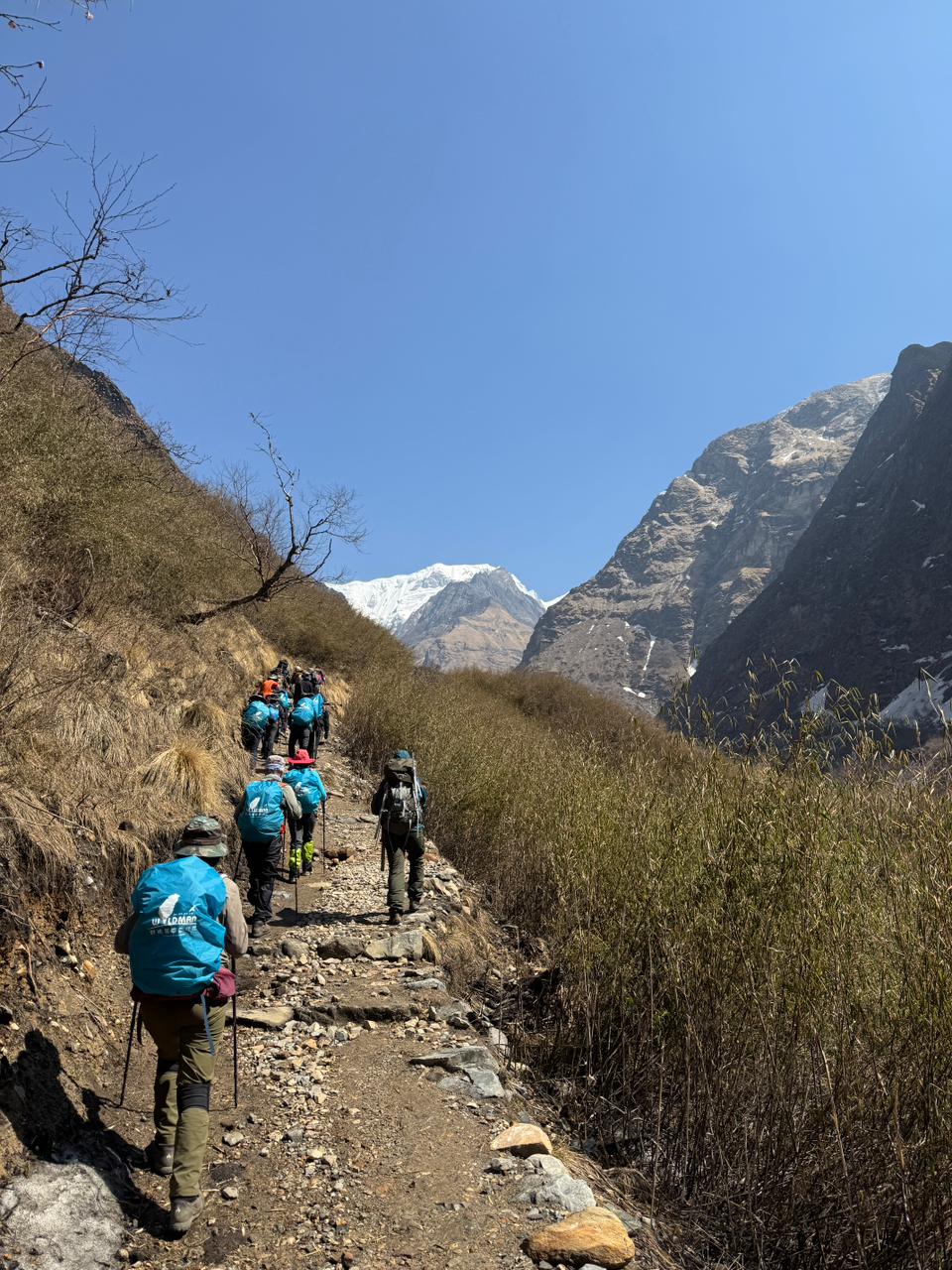
What feels safe: daytime trekking on the main trail, shared meals at lodges, the presence of guide groups and porters, and the genuine helpfulness of teahouse owners who treat solo women with respect. You'll rarely walk more than 90 minutes without seeing another person, and villages along the route (Chhomrong, Bamboo, Deurali) offer predictable rest points.
What doesn't always feel safe: walking alone after dark (trails are unlit and terrain becomes hazardous), navigating lower-altitude villages late at night, and handling unexpected situations without a support person. Physical safety from crime is generally high, but environmental risks, weather shifts, altitude sickness, and trail hazards require vigilance. You'll also need to manage occasional unwanted attention in lower villages, though it's usually limited to staring or awkward questions rather than aggressive behavior.
"Solo" on ABC: crowds, teahouse networks, and why you won't feel alone
"Solo" on ABC rarely means truly alone. The trek sees steady traffic from March to May and September to November, with groups, couples, and independent trekkers filling teahouses each night. You'll share dining rooms, swap trail stories, and often naturally join others for the next day's walk.
The teahouse system creates a social safety net: owners recognize returning trekkers, porters share updates about trail conditions, and guide groups offer informal support (asking if you're okay, suggesting acclimatization strategies). Trekkers often look out for each other lending gear, sharing altitude medication, or simply checking in when someone looks unwell.
You won't experience true wilderness solitude above Bamboo. The trail narrows and ascends through a well-worn corridor, so foot traffic remains visible. You'll feel more independent than on a heavily guided trek, but less isolated than on remote routes like Kanchenjunga or Manaslu.
Who should avoid going solo: red flags for beginners and intermediates
ABC is not suitable for every solo female trekker. You should reconsider going solo when you lack previous trekking experience at altitude (above 3,000 meters), have no confidence navigating trail junctions or reading weather, or feel uncertain about managing altitude sickness symptoms. First-time trekkers in Nepal benefit enormously from a guide not only for logistical support but for cultural context and safety judgment.
Red flags include: minimal multi-day hiking experience, anxiety about being alone in unfamiliar environments, medical conditions requiring close monitoring, or discomfort asserting boundaries with strangers. Solo trekking amplifies decision-making pressure; you'll need to recognize when to push forward, when to rest, and when to turn back, all without external input.
You should also avoid solo trekking during shoulder seasons (late November–February) when teahouses close, trails ice over, and rescue becomes difficult. The trek is doable for confident intermediate trekkers, but beginners should hire a guide or join a small group.
Quick readiness checklist: fitness, confidence, and risk tolerance
Before committing to solo ABC, assess yourself honestly across 3 dimensions:
-
Firstly, fitness: you should comfortably hike 5–7 hours daily on uneven terrain while carrying a daypack (6–8 kg). Test your endurance on local trails with elevation gain; ABC involves sustained uphill walking, and fatigue compounds altitude effects.
-
Secondly, confidence: you need baseline navigation skills (reading trail markers, asking locals for directions), comfort staying in unfamiliar lodges, and the ability to communicate basic needs (food, room, health concerns). You don't need fluent Nepali, but confidence asking questions and problem-solving independently matters.
-
Thirdly, risk tolerance: you should accept that things will go imperfectly weather delays, stomach issues, unexpected route changes and trust your ability to adapt. Solo trekking rewards self-reliance but punishes rigidity.
You're ready when you answer "yes" to: Can you walk uphill for hours without knee pain? Would you feel comfortable sleeping alone in a mountain lodge? Could you recognize altitude sickness symptoms and descend if needed? Can you manage boredom, loneliness, or fear without external reassurance?
You're ready for ABC solo when you've built this foundation. The trek challenges you, but it won't overwhelm you.
Rules, Permits, and the "Solo" Reality in Nepal
Can you do ABC without a guide right now? What "solo" legally means
Yes, you can trek ABC without a guide as of January 2026. Nepal's mandatory guide rule (effective April 1, 2023) applies to most trekking regions, but it does not universally prohibit solo trekking in open areas like the Annapurna Conservation Area. The regulation requires foreign trekkers to hire licensed guides in certain controlled or restricted zones, but ABC accessible via the Annapurna Conservation Area Project (ACAP) permit remains legally open to independent trekkers.

"Solo" in Nepal means you trek without booking through an agency, but you're still embedded in the teahouse network and must comply with permit requirements. You won't have a dedicated guide, but you're not isolated: teahouse staff, porters, and other trekkers form an informal support system. You handle logistics (permits, accommodation bookings, route planning) independently, and you carry responsibility for your own safety decisions.
Legally, the mandatory guide rule targets restricted zones (Upper Mustang, Manaslu, Kanchenjunga) and areas requiring Restricted Area Permits (RAP). ABC doesn't fall into these categories, so you can proceed solo. However, individual districts or conservation authorities sometimes update requirements, so verify current TAAN (Trekking Agencies' Association of Nepal) guidance or contact Nepal Tourism Board directly before departure.
Permits you'll need for ABC (and where to get them without stress)
You need 2 permits for ABC: the TIMS e-card (Trekkers' Information Management System) and the Annapurna Conservation Area Project (ACAP) entry permit.
-
TIMS e-card: costs NPR 2,000 (non-SAARC nationals) or NPR 1,000 (SAARC nationals). You apply online via the official TIMS portal, upload your passport photo and travel insurance details, and pay using credit/debit card. The system generates a QR-coded e-card within 24–48 hours; download and print 2 copies (one for checkpoints, one backup). TIMS tracks trekker movements for safety, so checkpoints scan your QR code at entry/exit points.
-
ACAP permit: costs NPR 3,000 (all nationalities). You obtain this at Nepal Tourism Board offices in Kathmandu (Pradarshani Marg, Kathmandu) or Pokhara (Damside), or through authorized trekking agencies. Bring 2 passport photos, your passport, and cash (NPR or USD). Processing takes 15–30 minutes. The permit covers the entire Annapurna Conservation Area, so you won't need separate permits for side routes like Poon Hill or Ghandruk.
Where to get them without stress: apply for TIMS online before arrival to avoid queues; collect ACAP at the Tourism Board office in Pokhara the day before your trek starts. Avoid third-party agents in Thamel (Kathmandu) who charge inflated "processing fees" ; official permits are fixed-price.
Solo-friendly setups: private guide vs porter-guide vs joining a small group
Solo doesn't have to mean completely unaccompanied. You can blend independence with support by choosing one of 3 setups:
-
Private guide: you hire a licensed trekking guide for the entire route. The guide navigates, books lodges, explains cultural context, monitors your health, and handles emergencies. Cost: USD $30–40/day plus food/accommodation (you cover both your costs and the guide's). This setup removes logistical stress and provides companionship, but it's the most expensive and reduces spontaneity.
-
Porter-guide: you hire a porter who carries your main pack (up to 15 kg) and provides basic guiding. Porter-guides cost USD $25–30/day; they're less conversational than licensed guides but handle navigation and reduce physical strain. This setup balances cost and supports you retain independence but avoid carrying heavy loads at altitude.
-
Joining a small group: you trek independently but coordinate with other solo trekkers met in Pokhara or at early-stage teahouses. This informal arrangement happens organically; shared meals lead to shared walking days. It's free, social, and flexible, but unreliable: people trek at different paces, rest on different days, and commitments dissolve quickly.
Solo-friendly strategy: start fully solo and hire a porter-guide from Chhomrong (the last large village before the ascent) if you're struggling with pack weight or loneliness. You can arrange this through teahouse owners for 5–7 days (Chhomrong to ABC and back). This keeps costs low while adding support during the trek's most challenging section.
Choosing a female guide: benefits, tradeoffs, and how to verify credentials
Hiring a female guide offers specific advantages for solo women: shared understanding of gendered safety concerns, more comfortable conversations about health issues (periods, bathroom logistics, harassment), and greater cultural sensitivity in conservative villages. Female guides often have direct experience navigating the challenges you'll face, and their presence can reduce unwanted attention from male trekkers or locals.
Tradeoffs: Nepal's guiding industry remains male-dominated, so the pool of experienced female guides is smaller. You may need to book further in advance, and rates are sometimes slightly higher due to demand. Female guides may also face their own biases from male porters or teahouse staff, though this rarely affects your trek experience.
How to verify credentials?
licensed guides hold a government-issued trekking guide license (Nepal Academy of Tourism and Hotel Management, or NATHM, certification). Ask to see the physical license card, which includes a photo, license number, and validity dates. Cross-check the license number via TAAN's directory (available online or through tourism offices). Avoid "guides" without formal credentials; they lack training in first aid, altitude sickness, and emergency protocols.
Recommended agency with female guide rosters: Nepal Intrepid Treks specialize in female-led treks and employ certified guides. Book directly through their websites or offices in Pokhara; confirm guide assignment, emergency contact protocols, and cancellation policies in writing.
Planning Choices That Make the Trek Safer (Season, Route, and Itinerary)
Best time to trek ABC for safety: weather stability, trail condition, and crowds
The safest windows for ABC are mid-March to May and mid-September to November. These periods offer the best combination of stable weather, clear trails, and open teahouses.
-
Spring (March–May) brings warmer temperatures, blooming rhododendrons, and excellent visibility. Snow melts from lower elevations by mid-March, and trails dry out. Teahouses operate at full capacity, so you'll never struggle to find accommodation. The tradeoff: afternoon cloud buildup obscures mountain views, and dust from dry trails irritates sinuses.
-
Autumn (September–November) delivers the clearest skies and most predictable weather. Post-monsoon trails are well-drained, temperatures are moderate, and mountain vistas are spectacular. Crowds peak in October, so popular teahouses fill early books ahead or arrive before 2 PM. Weather stability makes altitude acclimatization easier (less pressure from incoming storms).
-
Winter (December–February) is technically doable but risky for solo trekkers. Heavy snowfall above 3,000 meters closes trails, teahouses shut down above Deurali, and rescue becomes difficult. Avalanche risk increases in narrow valleys. Only experienced trekkers with cold-weather gear should consider winter ABC, and even then, hiring a guide is strongly advised.
-
Monsoon (June–August) brings rain, leeches, slippery trails, and obscured views. Landslides block routes, and the risk of getting stranded increases. Teahouses remain open, but few trekkers attempt ABC during monsoon meaning less social support and fewer rescue options.
-
Safety priority: choose spring or autumn. You'll trek in conditions that maximize visibility, trail stability, and human traffic all critical for solo safety.
Safer itinerary design: daily distance, daylight cutoffs, and smart rest days
A safe ABC itinerary spreads the trek over 9–11 days, with 2 acclimatization rest days and conservative daily distances. Rushing increases altitude sickness risk and leaves no buffer for bad weather or fatigue.
Daily distance guidelines: aim for 4–6 hours of walking per day below 3,000 meters, and 3–5 hours above. The steepest sections (Chhomrong to Bamboo, Deurali to ABC) demand slower pacing and frequent breaks. Never exceeding 7 hours of walking in a single day fatigue impairs judgment and increases accident risk.
-
Daylight cutoffs: always arrive at your next teahouse before 4 PM. Trails become dark and cold after sunset, visibility drops, and risk of getting lost spikes. Start walking by 7–8 AM to maximize daylight hours and allow flexibility for slower-than-expected progress.
-
Smart rest days: build in 2 rest days one at Chhomrong (2,170 m) and one at Deurali (3,230 m) or Machhapuchhre Base Camp (3,700 m). Rest days let your body acclimatize, reduce altitude sickness risk, and give you time to assess your condition. Use rest days for short acclimatization hikes (ascending 200–300 m and returning to sleep lower).
-
Sample safe itinerary (11 days):
- Day 1: Pokhara to Ghandruk (1,940 m);
- Day 2: Ghandruk to Chhomrong (2,170 m);
- Day 3: Rest day at Chhomrong;
- Day 4: Chhomrong to Bamboo (2,310 m);
- Day 5: Bamboo to Deurali (3,230 m);
- Day 6: Rest day at Deurali (acclimatization hike);
- Day 7: Deurali to Machhapuchhre Base Camp (3,700 m);
- Day 8: MBC to Annapurna Base Camp (4,130 m), return to MBC or Deurali;
- Day 9: Descend to Bamboo;
- Day 10: Bamboo to Chhomrong;
- Day 11: Chhomrong to Jhinu Danda (hot springs), exit to Pokhara.
This itinerary prioritizes safety over speed. You can shorten it to 9 days when you're experienced and acclimatized, but never compress it below 8 days.
Route options that reduce risk: common entry points and safer detours
The standard ABC route (Nayapul → Ghandruk → Chhomrong → Bamboo → Deurali → MBC → ABC) is the safest and most supported. Stick to this main trail unless you have specific reasons to deviate.
-
Entry points: most trekkers start at Nayapul (1 hour drive from Pokhara) and walk to Ghandruk. This entry offers the gentlest altitude gain and warmup days. Alternative: start at Kimche (30 minutes past Nayapul) to skip the first hour of road walking. It's safe and cuts tedious flat sections.
-
Safer detours: you can add Poon Hill (3,210 m) as a 2-day side trek before Ghandruk. Poon Hill offers sunrise views and helps with early acclimatization, but it adds distance. Only take this detour when you have extra days and stable weather.
Avoid the Chomrong to Jhinu Danda shortcut on ascent; it bypasses gradual altitude gain and increases altitude sickness risk. Use this route only on descent, when dropping elevation quickly is safe.
Never take the Annapurna Sanctuary via Ghorepani/Poon Hill loop in reverse (descending via Ghandruk and ascending via Tadapani). This route flips the natural acclimatization curve and confuses trail markers.
Solo safety tip: stick to the main Nayapul–Ghandruk–Chhomrong trail on ascent. It's the most-trekked, best-marked, and most-supported route, minimizing navigation errors and maximizing rescue access.
Transport safety: Kathmandu/Pokhara to trailheads without sketchy transfers
Transport safety matters poor drivers, overloaded vehicles, and night travel increase risk before you even start trekking.
-
Kathmandu to Pokhara: take a tourist bus (USD $10–15) or private car (USD $100–120). Tourist buses are safe, comfortable, and depart on schedule; book through reputable operators like Greenline or Shiva Shakti. Avoid night buses (higher accident risk) and ultra-cheap local buses (cramped, poorly maintained).
-
Pokhara to Nayapul: hire a private jeep (USD $35–50) or join a shared jeep (USD $5–10 per person). Private jeeps let you control departure time and avoid overloading; shared jeeps save money but may wait hours to fill. Book through your Pokhara hotel or a trusted agency. Avoid unlicensed drivers (no registration sticker on windshield).
-
Helicopter option: when you want to skip the Pokhara–Nayapul drive or exit quickly from ABC, helicopters fly Pokhara–Ghandruk or Pokhara–Bamboo (USD $400–600 per person, depending on group size). This is safe, fast, and reduces road risk, but it's expensive. Nepal Intrepid Treks offers heli-return packages for ABC that include mountain flights and contact them for current rates and safety protocols.
-
Red flags: drivers who speed recklessly, vehicles with bald tires, or drivers who ignore your request to slow down. You have the right to refuse transport and demand a different driver. Don't worry about offending anyone, your safety matters more.
-
Transport safety checklist: only use licensed vehicles (registration visible), confirm driver sobriety, insist on seatbelts (though often unavailable in jeeps), and refuse overloaded vehicles (more than 8 passengers in a standard jeep).
Personal Safety & Culture: Staying Comfortable and Confident as a Solo Woman
Kathmandu & Pokhara safety basics: common situations and simple rules
Kathmandu and Pokhara are generally safe for solo female travelers, but you'll need to manage common situations calmly and confidently. Petty theft (pickpocketing, bag snatching) occurs in crowded areas like Thamel (Kathmandu) and Lakeside (Pokhara). Avoid displaying expensive jewelry, keep your phone secure, and use a crossbody bag with zippers.
-
Common situations: touts offering trekking packages, taxi drivers overcharging, and shopkeepers using aggressive sales tactics. Handle these by politely declining ("No, thank you"), walking away without explanation, and never engaging in extended negotiations unless you're genuinely interested.
-
Simple rules: firstly, avoid walking alone after 10 PM in quieter neighborhoods stick to well-lit main streets or take taxis; secondly, use metered taxis or ride-sharing apps (Pathao, InDrive) to prevent fare disputes; thirdly, keep your hotel room locked and use the safe for passports/cash.
Harassment is usually verbal (staring, comments) rather than physical. Nepali culture values politeness, so overt aggression is rare. You'll feel safer in Pokhara (smaller, more tourist-friendly) than Kathmandu (chaotic, denser). Trust your instincts: move to busier areas when you feel uncomfortable, and don't hesitate to ask hotel staff or female shopkeepers for help.
Handling unwanted attention: boundaries, confidence scripts, and de-escalation
Unwanted attention on ABC is less common than in cities, but it happens usually from male trekkers, porters, or teahouse staff. Situations range from awkward flirting to persistent questions about your relationship status or travel plans.
-
Boundaries: you don't owe anyone an explanation for traveling alone. Keep responses brief and neutral: "I prefer trekking solo" or "I'm meeting friends later." Don't share detailed itinerary information with strangers; it invites unwanted follow-up.
-
Confidence scripts: practice firm, polite refusals: "I'm not interested, thank you" or "I'd rather walk alone today." You don't need to apologize or justify. Avoid smiling excessively when declining; it signals uncertainty and invites persistence.
-
De-escalation: when someone won't take no for an answer, shift to public spaces (lodge dining rooms, busy trail sections) and seek out other trekkers or teahouse owners. Nepali lodge owners, especially women, are protective of solo female guests and will intervene when you signal discomfort.
Physical harassment is extremely rare on ABC. You're protected by the teahouse network and the visibility of other trekkers. However, always lock your room door at night, keep your daypack with you (not hanging outside your room), and avoid late-night drinking with strangers.
Red flag situations: anyone offering to "guide" you off-trail, porters who insist on carrying your pack without your request, or male trekkers who follow you between lodges. Report these to lodge owners immediately.
What to wear on ABC as a solo female trekker: practical layers + village modesty
Balance practical trekking performance with cultural modesty especially in lower villages. Nepali culture is conservative in rural areas, and your clothing choices affect how locals perceive and treat you.
-
Lower villages (Ghandruk, Chhomrong): avoid tight leggings as standalone pants, low-cut tops, or shorts above the knee. Instead, wear loose trekking pants or capris with a breathable base layer or t-shirt. A lightweight long-sleeve shirt protects from sun and respects modesty norms.
-
Higher elevations (Bamboo to ABC): cold weather demands practical layers: base layer, fleece, down jacket and modesty concerns fade (you're bundled up). Leggings under windproof pants work well; add waterproof shell pants for rain or snow.
-
Layering system: base layer (merino wool or synthetic), insulating mid-layer (fleece or down), waterproof outer layer (jacket and pants). Bring 2–3 base layers (you can wash and dry at lodges, but backup options matter). Skip cotton; it stays wet and increases hypothermia risk.
-
Footwear: waterproof mid-height hiking boots with ankle support. Break them in before the trek (at least 50 km of local hiking) to prevent blisters. Pack sandals or lightweight camp shoes for wearing inside lodges.
-
Accessories: wide-brimmed hat (sun protection), warm beanie (cold mornings/evenings), buff or scarf (dust, wind, modesty when entering Buddhist shrines).
-
Practical tip: you can rent down jackets and sleeping bags in Pokhara for USD $1–2/day. This saves pack space and weight. Choose rental shops with clean, high-quality gear (ask to inspect before paying).
Money, documents, and phone safety: cash strategy, backups, and theft prevention
Cash dominates on ABC lodges and meals operate cash-only (Nepali Rupees). Plan your cash strategy carefully because ATMs don't exist above Pokhara.
-
Cash strategy: withdraw NPR 25,000–35,000 (USD $190–260) in Pokhara before starting the trek. This covers 9–11 days of lodging (NPR 500–800/night), meals (NPR 600–1,200/day), hot showers (NPR 200–300), and charging (NPR 300–500). Split cash into 2–3 hidden locations (money belt, daypack inner pocket, sock) to reduce theft impact. Carry USD $100–200 in small bills (USD $20s) as backup. Teahouses accept USD at unfavorable rates, but it works in emergencies.
-
Documents: carry a laminated photocopy of your passport and permit pages. Store originals in your hotel safe in Pokhara, and carry only copies on trek. You'll need to show copies at checkpoints (TIMS, ACAP entry).
-
Phone safety: keep your phone charged (carry a 10,000–20,000 mAh power bank) and store emergency contacts offline (screenshots). Buy a local SIM (Ncell or Nepal Telecom) in Pokhara for USD $5–10 coverage is spotty above Chhomrong but works intermittently at lodges.
-
Theft prevention: use a small TSA-approved lock for your room door (teahouse locks are often flimsy). Keep valuables (passport copy, cash, phone, power bank) in your daypack, not your main pack carried by porters. Never leave expensive items visible in your room. Lodge theft is rare but opportunistic.
-
Backup strategy: email yourself scans of your passport, permits, travel insurance, and credit cards. Store emergency contact numbers (embassy, insurance, Nepal Intrepid Treks 24/7 ops desk) in multiple places.
Teahouse Life and Women-Specific Practicalities (What People Don't Tell You)
Teahouse privacy: single rooms, locks, and choosing safer places to stay
Teahouses on ABC offer private rooms (single or twin beds) at most lodges, but "private" is relative. Walls are thin plywood or fabric partitions, so you'll hear neighbors clearly. Doors lock, but locks are basic padlocks or sliding bolts bring your own small combination lock for added security.
-
Single room availability: you can request single rooms at most lodges, but they're limited (2–3 per teahouse). You'll pay single-occupancy rates (NPR 500–800/night vs. NPR 300–500 shared). Book ahead when possible by calling lodges or asking the previous night's owner to phone ahead. Arrive before 2 PM to secure a room during peak season.
-
Choosing safer lodges: look for teahouses with female staff, family-run operations, and visible security (owners sleep on-site, lodge doors lock at night). Avoid lodges with heavy drinking among staff or porters, or lodges where you're the only guest (isolation increases risk).
-
Safer lodge indicators: clean dining areas, female lodge owners, visible fire extinguishers, sturdy doors with working locks, and recommendations from other solo female trekkers (ask in lodge guestbooks or online forums).
-
Privacy tips: use your own lock on the room door at night, keep valuables in your daypack (not hung outside the room), and avoid changing clothes near windows (curtains are often thin). You can request a room away from shared bathrooms for added privacy.
-
Red flags: lodges with drunk staff, rooms with broken locks, or owners who seem overly interested in your travel plans. Trust your instincts and move to a different lodge when something feels off.
Showers, toilets, charging, Wi-Fi, and laundry: what's realistic on the route
Teahouse amenities decline as you ascend. Lower villages (Ghandruk, Chhomrong) offer hot showers, flush toilets, reliable electricity, and Wi-Fi. Higher lodges (Bamboo, Deurali, MBC) provide bucket showers (hot water extra), squat toilets, limited charging, and spotty Wi-Fi.
-
Showers: cost NPR 200–300 for hot water (gas-heated or solar). Availability decreases above 3,000 meters except cold-water bucket showers or no showers at all near ABC. Bring wet wipes or a small towel for sponge baths. You can shower every 2–3 days; daily showers aren't realistic or necessary.
-
Toilets: flush toilets (Western-style) exist in lower villages; squat toilets dominate above Chhomrong. Toilet paper is rarely provided, bring your own and pack out used paper in ziplock bags (burning is discouraged due to fire risk). Some lodges have designated waste bins.
-
Charging: electricity is available at most lodges, but it's expensive (NPR 300–500 per device per charge above 3,000 meters). Power cuts are common, so charge devices during daylight hours (solar panels work best in sunlight). Bring a power bank (10,000+ mAh) to reduce dependence on lodge electricity.
-
Wi-Fi: available in lower villages (NPR 300–500 for 24-hour access), but speeds are slow (good for messaging, poor for video calls). Wi-Fi disappears above Deurali. Buy a local SIM card in Pokhara for emergency connectivity Ncell and Nepal Telecom work intermittently at lower elevations but fail near ABC.
-
Laundry: you can wash clothes at lodges (hand-wash in sinks or basins), but drying is difficult above 3,000 meters (cold, humid air). Bring quick-dry fabrics (merino wool, synthetic), and plan to wear items multiple days. You can wash socks and underwear daily; larger items (shirts, pants) dry overnight at lower elevations.
-
Realistic expectations: you won't shower daily, charging costs add up, and Wi-Fi is unreliable. Plan offline entertainment (downloaded books, music, podcasts) and accept that hygiene becomes basic.
Periods on trek: packing list, disposal, cramps, and staying comfortable
Managing your period on ABC is doable with preparation. Teahouses lack disposal facilities for tampons or pads, and toilets don't accommodate flushing these items. You'll need to pack everything out.
-
Packing list: bring a menstrual cup (Diva Cup, Lunette) or reusable cloth pads they reduce waste and last the entire trek. You can carry disposable pads or tampons as backup, but you must pack them out in double-sealed ziplock bags. Bring 5–7 ziplock bags (gallon-size), pain relievers (ibuprofen or paracetamol), and hand sanitizer.
-
Disposal: burn bins don't exist above Chhomrong, so you'll carry used products in sealed bags. Store these in an outer compartment of your pack (not mixed with food or clothes). Dispose of sealed bags in Pokhara trash bins after the trek.
-
Cramps and discomfort: altitude and physical exertion can worsen cramps. Take ibuprofen proactively (follow dosage instructions), drink extra water, and rest when cramps spike. Hot water bottles (available at lodges for NPR 100–200) help with pain management.
-
Privacy: you can change menstrual cups or pads in lodge bathrooms, but lighting is poor and space is tight. Bring a small headlamp for nighttime changes. Wipe hands with sanitizer after handling products (soap and water aren't always available).
-
Staying comfortable: menstrual cups reduce the need for frequent changes (you can go 8–12 hours), so you won't need to stop mid-trek. Track your cycle before departure and bring supplies even when you don't expect your period altitude and stress can trigger early or irregular cycles.
Food and water hygiene: avoiding stomach issues without overthinking it
Stomach issues (diarrhea, nausea, food poisoning) are common on ABC, but you can reduce risk with simple hygiene practices. Don't let fear of sickness ruin your trek, lodge food is generally safe when you follow basic rules.
-
Water: never drink untreated water from taps, streams, or rivers. Use one of 3 purification methods: firstly, boiled water (lodges sell boiled water for NPR 100–200/liter safest option); secondly, water purification tablets (Aquatabs, chlorine dioxide cheap, effective, slight taste); thirdly, filter bottles or UV purifiers (SteriPEN, Sawyer fast, no taste). Carry 1–2 liters of purified water daily. Refill at lodges using boiled water or treat stream water during lunch breaks. Avoid buying plastic bottled water (environmental impact).
-
Food: Stick to hot, freshly cooked meals. Dal Bhat (rice, lentils, vegetables) is the safest choice because it's cooked to order and served boiled. Avoid raw salads, unpeeled fruits, and cold dairy above 3,000 meters (refrigeration is unreliable, and spoilage risk increases).
-
Hand hygiene: wash hands with soap before eating, or use hand sanitizer when soap isn't available. Lodges provide handwashing stations, but soap quality varies, bring your own small soap bar or sanitizer.
-
Red flag foods: fried rice (often made from leftover rice sitting at room temperature), fresh cheese (yak cheese is usually safe when served hot, but avoid cold cheese), and meat dishes (chicken, buffalo lodge refrigeration is inconsistent, so meat spoils quickly).
-
Safe meal strategy: order Dal Bhat, noodle soup, or Sherpa stew at every meal. These dishes cook quickly, stay hot, and provide balanced nutrition. You can supplement with packaged snacks (crackers, chocolate, energy bars) brought from Pokhara.
-
Stomach issue prevention: you'll reduce risk by 80% when you drink only purified water, eat hot cooked food, and wash hands regularly. Don't stress about perfect hygiene Nepal's food is safe within reasonable precautions.
Mountain Risk Management & Emergencies (Altitude, Hotspots, and What to Do)
Altitude sickness on ABC: symptoms, acclimatization, and when to descend
Altitude sickness (Acute Mountain Sickness, or AMS) is the most serious risk on ABC. You ascend from 1,940 meters (Ghandruk) to 4,130 meters (ABC) in 5–7 days, crossing the threshold where AMS becomes common (above 3,000 meters). Recognizing symptoms early and descending promptly saves lives.

-
Symptoms: mild AMS includes headache, nausea, fatigue, dizziness, and loss of appetite. These symptoms feel like a hangover and usually appear 6–12 hours after arriving at a new altitude. Moderate AMS adds vomiting, severe headache unrelieved by painkillers, and difficulty sleeping. Severe AMS (High Altitude Pulmonary Edema or High Altitude Cerebral Edema) causes confusion, difficulty breathing at rest, blue lips, and loss of coordination.
-
Acclimatization strategy: ascend slowly (no more than 300–500 meters of elevation gain per day above 3,000 meters), sleep lower than your highest point of the day, and take rest days every 2–3 days. Drink 3–4 liters of water daily, avoid alcohol, and eat even when appetite drops.
-
When to descend: descend immediately when you experience moderate AMS symptoms that don't improve after 12 hours of rest, or any severe symptoms (confusion, difficulty breathing, loss of coordination). Descend at least 300–500 meters even walking downhill 1–2 hours makes a dramatic difference.
-
Decision rule: "Climb high, sleep low" works until symptoms appear. Then: "When in doubt, go down." Never ascend with worsening symptoms. Altitude sickness kills when you ignore symptoms or delay descent.
-
Preventive medication: Acetazolamide (Diamox) helps prevent AMS take 125 mg twice daily starting 1 day before ascent. Consult your doctor before trekking. Carry Dexamethasone (emergency descent drug) in case symptoms escalate.
Hazard hotspots to take seriously: snow, avalanche/landslide zones, and narrow valleys
ABC crosses several natural hazard zones where weather and terrain create serious risk. You can't eliminate these hazards, but you can minimize exposure by timing your trek carefully and recognizing danger signs.
-
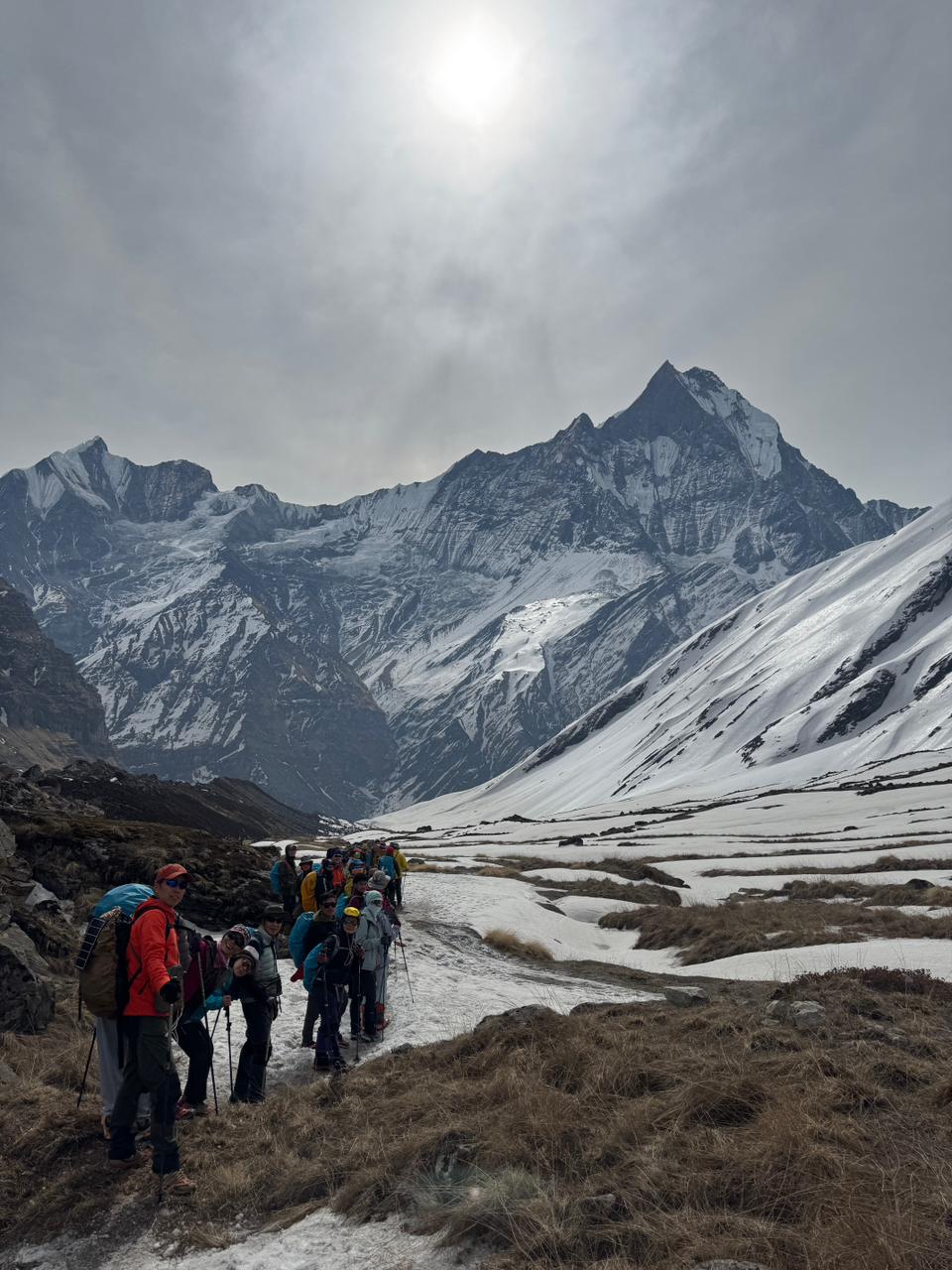
Snow: above 3,500 meters, trails become snow-covered from December to March. Packed snow is slippery, and fresh snow hides trail markers. Trekking poles prevent slips, and microspikes (traction devices for boots) help on icy sections. Avoid trekking after fresh snowfall. Wait 1–2 days for the trail to repack.
-
Avalanche and landslide zones: the Modi Khola valley (between Bamboo and Deurali) is a narrow gorge with steep walls prone to avalanches in winter and landslides during monsoon. You'll pass through this section in 4–6 hours, but timing matters. Walk through hazard zones early in the morning (before 10 AM) when snow is stable, and avoid afternoons (when warming temperatures increase avalanche risk).
-
Narrow valleys: the trail between Deurali and MBC follows a narrow valley floor. Rockfall occurs unpredictably, never stopping to rest directly under steep cliffs, and move quickly through exposed sections. Listen for falling rocks (they make a distinct cracking sound) and watch for fresh debris on the trail (sign of recent rockfall).
-
River crossings: most bridges are stable, but monsoon floods wash out footbridges. Never cross flooded rivers and wait for water levels to drop or turn back. Lodge owners provide updates on bridge conditions.
-
Hazard avoidance: trek during stable weather (spring/autumn), start early to pass avalanche zones in cold morning hours, and listen to lodge owners' advice about trail conditions.
When to turn back: decision rules for visibility, weather shifts, and fatigue
Knowing when to turn back separates safe trekkers from those who get into trouble. ABC seduces trekkers into pushing too far; you've invested days of effort, and base camp feels tantalizingly close. But turning back is often the smartest decision.
-
Visibility: turn back when visibility drops below 50 meters (you can't see trail markers ahead). Fog, snow, or blizzards obscure the trail above Deurali, and getting lost is easy. Wait at the nearest lodge until visibility improves. Never navigate by GPS alone, trails aren't always where maps show them, and GPS loses accuracy in narrow valleys.
-
Weather shifts: turn back when you see rapid weather deterioration, dark clouds moving in fast, sudden temperature drops, or increasing wind. Mountain weather changes in minutes, and storms trap trekkers at high altitude. You can wait out short weather at lodges, but turn back when storms persist for 6+ hours.
-
Fatigue: turn back when you feel exhausted before reaching your planned stop. Fatigue impairs judgment, increases fall risk, and makes altitude sickness worse. Rest days exist for a reason, take them even when you feel pressure to keep moving.
-
Decision rules: firstly, if you're struggling to maintain pace, stop for the day; secondly, if weather worsens, descend to the last safe lodge; thirdly, if you feel dizzy or nauseous, don't ascend higher.
-
Mental framework: reaching ABC is optional; staying safe is mandatory. You can return to another season when conditions are better. Ego kills trekkers.
Emergency plan essentials: insurance, rescue expectations, contacts, and check-ins
Every solo trekker needs a clear emergency plan before starting ABC. Accidents, illness, and weather emergencies happen, and your response determines outcomes.
-
Travel insurance: buy comprehensive travel insurance that covers trekking up to 5,000 meters and helicopter evacuation. Policies cost USD $50–150 for 2–3 weeks. Verify coverage includes: emergency medical treatment, helicopter rescue (up to USD $10,000–$50,000), trip cancellation, and repatriation. Recommended insurers: World Nomads, Global Rescue, IMG Global. Carry insurance details (policy number, emergency contact) in your daypack and email a copy to yourself.
-
Rescue expectations: helicopter rescue is the primary emergency evacuation method on ABC. Helicopters can land at MBC and Deurali, but weather delays are common rescues take 6–24 hours after calling. Rescue costs USD $3,000–$5,000 per flight, and you must provide insurance details or cash deposit before evacuation. Lodge owners coordinate rescues when you can't; they'll call rescue companies (Altitude Air, Simrik Air) and arrange pickup.
-
Emergency contacts: store these numbers offline (screenshots): Nepal Intrepid Treks 24/7 ops desk (+977–9851002409, verify current number before departure), rescue companies (Altitude Air +977-1-4465215), and your embassy (US Embassy Kathmandu +977-1-423-4000).
-
Check-ins: establish a check-in schedule with a trusted contact (friend, family, hotel in Pokhara). Message them every 2 days with your location and next planned stop. You can use lodge Wi-Fi or phone signals at lower elevations. Your contact should alert authorities when you miss 2+ consecutive check-ins.
-
Emergency supply essentials: carry a basic first-aid kit (blister care, pain relievers, altitude medication, anti-diarrheal, bandages), headlamp with extra batteries, emergency whistle, and emergency cash (USD $200).
-
Final preparation: brief someone at your Pokhara hotel on your itinerary before departure. Leave a photocopy of your passport, permits, and emergency contacts at the hotel desk this speeds rescue coordination when you're unreachable.
Ready to Trek ABC Safely? Here's How to Start
You've now got the honest safety picture on ABC of the real risks, the planning choices that reduce them, and the decision frameworks that keep you safe on the mountain. ABC is absolutely doable for solo female trekkers when you prepare thoughtfully, respect the mountains, and trust your judgment.
The trek rewards confidence and punishes recklessness, so approach it with realistic expectations: you'll face weather delays, stomach discomfort, and moments of doubt. You'll also experience stunning landscapes, genuine hospitality, and the satisfaction of navigating Nepal's mountains on your own terms. You're capable of this trek when you've assessed your readiness honestly, built a safe itinerary, and packed the right mindset.
When you're ready to book ABC with expert support, licensed guides, safety equipment (oximeters and medical oxygen on higher routes), curated lodges, and 24/7 emergency backup Nepal Intrepid Treks offers solo-friendly packages starting from USD $899 for 11 days. You can trek independently or add a private guide or porter-guide for specific sections. Contact the team via WhatsApp or email (check the website for current details) to discuss your itinerary, ask questions, and confirm availability.
The mountains are waiting to trek them safely, trek them confidently, and make ABC your own adventure.