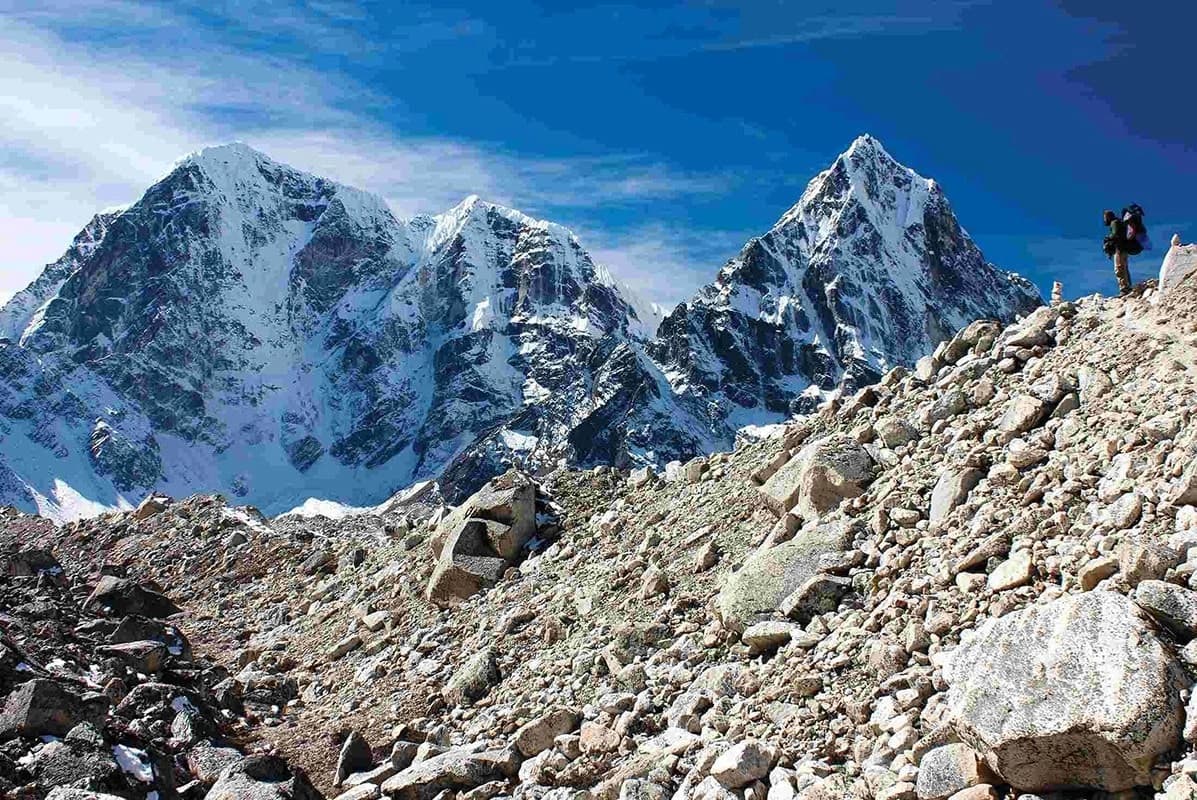
Training for Everest Base Camp requires a structured approach to building cardiovascular endurance, leg strength, and muscular stamina for the demanding trails of Nepal's Khumbu region. The 130 km round-trip trek to Everest Base Camp (5,364 m) involves consecutive days of uphill hiking, steep descents, uneven terrain, and walking at high altitude. A progressive training plan combining aerobic exercises, strength workouts, and loaded hiking helps prepare your body for these physical demands.
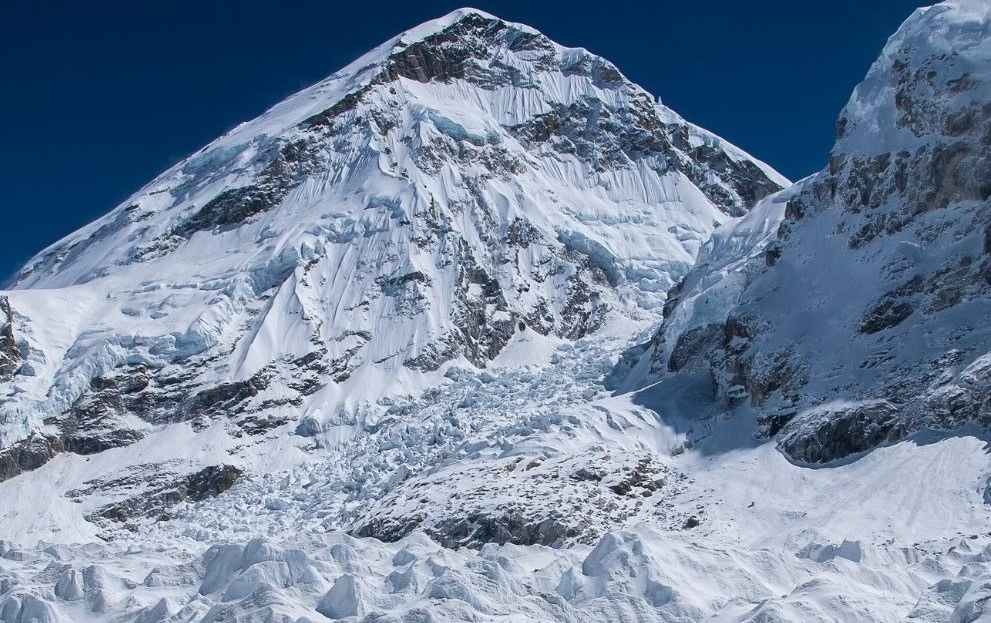
Successful Everest Base Camp preparation also involves more than physical fitness. Gradual altitude acclimatization, proper nutrition, hydration, recovery, and familiarity with trekking equipment all contribute to a safer and more comfortable journey. Whether you are a beginner or an experienced hiker, understanding these preparation requirements will help you develop the endurance, confidence, and practical skills needed for the trek.
What Level of Fitness Do You Need for the Everest Base Camp Trek?
You need the endurance to walk 5 to 7 hours a day on 10 trekking days in a row, climb 400 to 800 m on several of those days, and recover overnight at altitude. Speed is irrelevant. Durability decides the outcome.
Fitness for this trek means repeating moderate effort without breaking down. Healthy trekkers from their teens to their seventies reach Base Camp every season, and the gap between a strong trek and a miserable one is almost always training volume and pacing discipline.
How Physically Demanding Is the Everest Base Camp Trek?
The Everest Base Camp trek is a moderate-to-demanding, non-technical trek of roughly 130 km round trip, with repeated ascents, long descents, and thin air that makes ordinary effort feel heavier above 4,000 m. It requires no ropes, crampons, or climbing experience.
Three factors create the difficulty. The first is duration: you walk day after day, so fatigue accumulates. The second is terrain: stone staircases, suspension bridges, loose moraine, and rocky switchbacks load your ankles, knees, and hips unevenly. The third is altitude. At Everest Base Camp (5,364 m), the air delivers roughly half the oxygen pressure found at sea level, so the same pace costs far more effort.
What most people overlook is how slowly the body climbs at height. In training you gain 400 to 600 m of vertical per hour. Above 4,500 m on the trek, 200 to 300 m per hour is a normal pace. A 2022 study in the International Journal of Environmental Research and Public Health interviewed 366 trekkers on the route and found that 40.5% had at least one medical incident, almost half of them altitude sickness. The route punishes rushing more than it punishes modest fitness.
How Many Hours Do You Walk Each Day During EBC Trek?
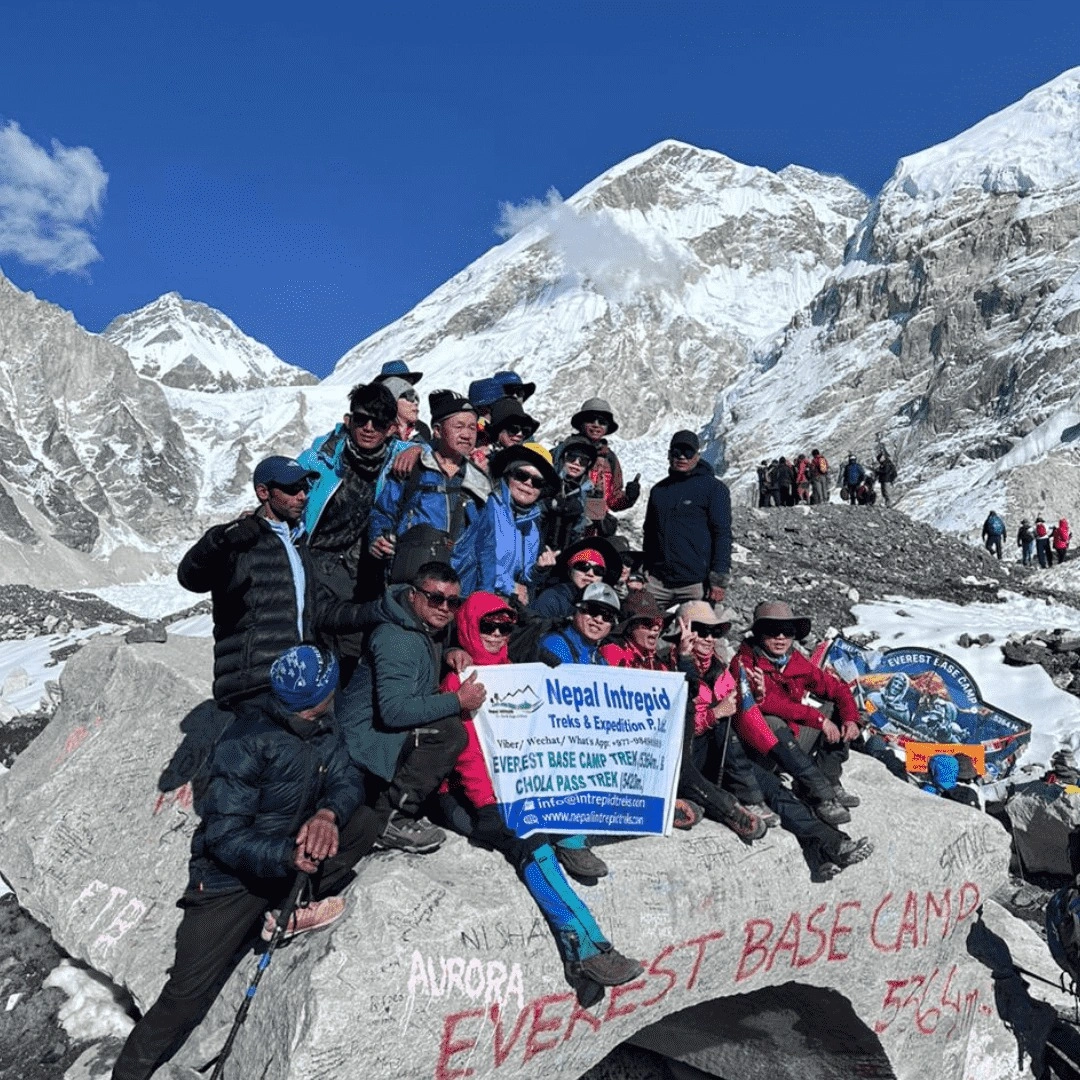
Expect 4 to 8 hours of walking per day, with the longest days, 7 to 8 hours, falling on the Everest Base Camp day and the Kala Patthar descent day. Nepal Intrepid Treks' 16-day itinerary lists the same 4-to-8-hour range.
The table below shows the 11 trekking days of that itinerary, with typical walking times and the change in sleeping altitude each night. Times vary with pace, season, and trail conditions.
Trek day | Route | Sleeping altitude | Change vs. previous night | Typical walking time |
1 | Lukla (2,850 m) to Phakding | about 2,610 m | −240 m | 3–4 h |
2 | Phakding to Namche Bazaar | 3,443 m | +830 m | 5–6 h |
3 | Namche rest day, hike to Everest View Hotel (3,880 m) | 3,443 m | 0 m | 2–4 h |
4 | Namche to Tengboche | about 3,865 m | +420 m | 5–6 h |
5 | Tengboche to Dingboche | 4,450 m | +590 m | 5–6 h |
6 | Dingboche rest day, hike toward Nangkartshang Hill (about 5,100 m) | 4,450 m | 0 m | 3–4 h |
7 | Dingboche to Lobuche | 4,910 m | +460 m | 5–6 h |
8 | Lobuche to Gorak Shep, Base Camp (5,364 m), back to Gorak Shep | 5,180 m | +270 m | 7–8 h |
9 | Kala Patthar (5,545 m) to Pheriche | 4,250 m | −930 m | 7–8 h |
10 | Pheriche to Namche | 3,443 m | −810 m | 6–7 h |
11 | Namche to Lukla | 2,850 m | −590 m | 6–7 h |
Three patterns stand out. The largest sleeping-altitude gain (+830 m) arrives on trek day 2, when you feel strongest and tempted to hurry. The two longest days arrive late, when fatigue and thin air peak together. Descent days match ascent days in length: Kala Patthar to Pheriche drops roughly 1,300 m. A sound plan therefore includes 6- to 8-hour hikes and sustained downhill work.
Can Beginners Train for Everest Base Camp?
Yes. Beginners complete the trek every season after 16 to 24 weeks of progressive training, provided a doctor clears them first and the plan starts with walking rather than running.
A beginner is anyone who exercises less than once per week. Start with a medical check covering heart health, blood pressure, lung function, and current medication. Then follow the 10% rule: raise weekly training time by no more than 10% to protect tendons and joints.
Week 1 is simple: walk 30 minutes, 3 days a week. By week 8, walk 60 to 90 minutes on weekdays and hike 2 hours on weekends, then join the 12-week plan below. The World Health Organization's 2020 guidelines set the adult baseline at 150 to 300 minutes of moderate activity per week plus muscle-strengthening on 2 days, and your base phase builds toward that range first.
Common mistakes we see: beginners jump straight into running and gym circuits, develop shin or knee pain by week 3, and lose momentum. Walking builds the exact tissues the trek stresses. Use one simple benchmark before you commit: walk 90 minutes on a hilly route with a 3 kg pack, without stopping. A trekker who finishes that comfortably starts the 12-week plan. A trekker who struggles adds 4 to 8 weeks of base work first.
How Long Should You Train for Everest Base Camp?
Train for 12 to 16 weeks if you are already active, and 20 to 24 weeks if you exercise less than once a week. Aerobic fitness improves in 6 to 8 weeks, tendons and joints adapt over 12 weeks or more, and boots need 4 weeks of break-in. Those three clocks set the timeline.
Is 8 Weeks Enough to Prepare for Everest Base Camp?
Eight weeks is enough only when you already exercise 3 times a week and can hike 2 hours today. For that trekker, a compressed plan works. For everyone else, 8 weeks forces load increases faster than tendons adapt, and overuse injuries follow.
The 8-week structure for an already-active trekker:
Weeks 1–3: 4 cardio sessions of 45 minutes, 2 strength sessions, and a weekend hike of 90 to 150 minutes.
Weeks 4–6: 4 cardio sessions of 60 minutes, 2 strength sessions, and weekend hikes of 3 to 5 hours with a 5 to 6 kg pack.
Week 7: Saturday 6 hours and Sunday 4 hours with a 7 kg pack.
Week 8: taper to 50% volume.
The trade-off is a thin safety margin: one week lost to illness removes 12% of the plan. In real-world use, the limiting factor after 8 weeks is almost never the lungs. It is the knees, ankles, and feet, so prioritize hiking and single-leg strength.
How Should You Structure a 12-Week Everest Base Camp Training Plan?
Structure 12 weeks in 3 phases: Base (weeks 1–4), Build (weeks 5–8), and Peak plus taper (weeks 9–12). Each phase raises hiking time, pack weight, and vertical gain while holding strength work steady.
The following table lists weekly targets per phase. Cardio runs at zone 2, which means 60 to 70% of maximum heart rate, a pace where you still hold a full conversation.
Phase | Weeks | Cardio (zone 2) | Strength | Long hike | Approx. weekly total |
Base | 1–4 | 3 × 40–50 min | 2 × 40 min | 60–120 min, 0–3 kg pack | 4–5 h |
Build | 5–8 | 4 × 45–60 min | 2 × 45 min, heavier loads | 2–4 h, 4–6 kg, 500–800 m gain | 6–8 h |
Peak | 9–11 | 3 × 60 min | 2 × 40 min, maintain | Saturday 5–6 h, 7–8 kg, 900–1,200 m gain; Sunday 3–4 h | 9–11 h |
Taper | 12 | 3 × 30–40 min, easy | 1 × 20 min, light | 90 min, light pack | 3–4 h |
Four rules keep the plan working. Take one full rest day every week. Cut volume by about 25% in weeks 4 and 8. Add a Sunday hike from week 9, because the trek demands consecutive long days. Run a benchmark in week 10: carry 7 kg for 6 hours with about 1,000 m of climbing, then repeat 4 hours the next morning. A trekker who finishes both pain-free is on track. Week 12 is a taper: roughly half volume, easy intensity, no new exercises.
When Should You Start Training Before Your EBC Trek?
Start 12 to 16 weeks before you land in Kathmandu, and 24 weeks before if you are new to exercise. Count backward from the arrival date, not the first trekking day.
The two main trekking seasons are spring (March to May) and autumn (late September to November). A trekker landing in early April 2027 begins week 1 in the second week of January. A trekker landing in mid-October 2027 begins in late July. Starting earlier does no harm. Starting later compresses the plan.
Book the medical check in week 1, buy boots by week 4, and test your daypack and poles on a full-day hike by week 8.
What Are the Best Cardiovascular Exercises for Everest Base Camp?
The best cardio for Everest Base Camp is long, steady zone 2 work, meaning hiking, stair climbing, incline walking, and easy running, done 3 to 5 times weekly at a pace where you can still hold a conversation. Add one weekly interval session to raise your ceiling.
Zone 2 training builds the aerobic engine that carries you through 6-hour days. The weekly interval session, such as 6 hill repeats of 3 minutes hard with 3 minutes easy, makes steady effort feel easier. By the peak phase, weekly aerobic time reaches 5 to 8 hours.
Is Hiking the Best Cardio Training for Everest Base Camp?
Yes. Hiking is the most specific training because it loads the same muscles, joints, and energy systems for the same duration as the trek itself. No gym machine replicates a 6-hour day on stone steps.
Specificity decides results. Weekly hikes train your feet, your pack posture, and your pacing, and they expose gear problems early. Choose routes with sustained climbs of 300 m or more.
Trekkers without hills still have options. Set a treadmill to a 10 to 15% incline at 4 to 5 km/h with a loaded pack for 45 to 60 minutes, or climb the stairwell of a tall building. One floor equals about 3.5 m of height, so 300 m of climbing equals roughly 85 floors.
How Can Running Improve Your Trekking Endurance?
Running improves trekking endurance by raising aerobic capacity and heart efficiency; two easy runs of 30 to 45 minutes per week deliver most of the benefit. Running also burns calories efficiently when time is short.
Keep runs easy. A pace that allows full sentences keeps you in zone 2. Replace one run with hill repeats every 7 to 10 days. Trekkers with knee, shin, or Achilles history use a run-walk method, such as 4 minutes running and 1 minute walking, or skip running entirely.
Running has two limits. It does not train the downhill braking muscles, and it does not load your back with a pack. Cap running at 3 sessions weekly and let hiking, strength work, and cycling fill the remaining time.
Is Cycling or Swimming Good for Everest Base Camp Training?
Cycling and swimming are good supplementary options: both build aerobic capacity with almost no joint impact, but neither replaces hiking. Use them for no more than 30 to 40% of your weekly cardio.
Cycling develops the quadriceps and suits recovery days or knee rehabilitation. A 60 to 90 minute spin at zone 2 adds volume without pounding the joints. Cycling lacks weight-bearing and eccentric loading, so legs still need hiking and step-downs.
Swimming trains rhythmic breathing, shoulders, and upper back, which helps with pole use and pack carrying. It has the weakest specificity of the three and works best as an injury-friendly alternative.
How Can You Improve Your Stamina for Long Uphill Walks?
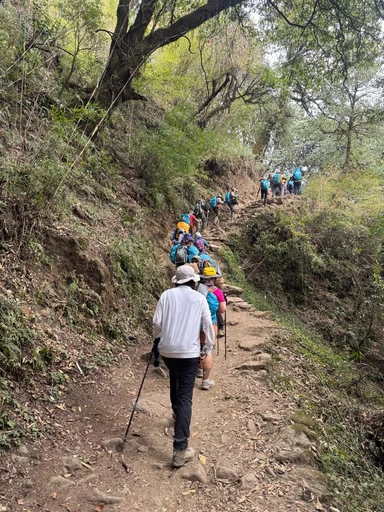
Improve uphill stamina by raising weekly vertical gain step by step, adding pack weight gradually, and holding a pace that keeps your heart rate in zone 2. Target 1,500 to 2,500 m of total climbing per week by the peak phase.
Use a vertical budget. Week 1 starts at roughly 500 m of weekly climbing and rises about 10% each week. By weeks 9 to 11, Saturday alone covers 900 to 1,200 m. Pace matters more than gain: climb at 300 to 500 m per hour with short steps and steady breathing.
Learn the Nepali guide's mantra: bistarai-bistarai, meaning slowly, slowly. Trekkers who charge up the first two days often fade by day 5. Test pace with the nose-breathing check: slow down when nasal breathing fails on a climb.
What Strength Training Exercises Prepare You for Everest Base Camp?
Prepare with 2 strength sessions weekly of 40 to 45 minutes focused on single-leg strength, posterior chain, core, and eccentric control: step-ups, squats, lunges, deadlifts, planks, and calf raises. Do 3 sets of 8 to 12 repetitions.
Strength training protects the joints that absorb roughly 130 km of stone steps. Start in week 1, not week 6, because tendons adapt more slowly than muscles. Heavy loads are unnecessary; controlled movement and consistency produce the gains.
Which Leg Exercises Build Strength for Mountain Trekking?
The 6 most useful leg exercises for mountain trekking are step-ups, goblet squats, walking lunges, Romanian deadlifts, calf raises, and glute bridges. Each trains a different part of the stride.
The table below lists each exercise with a trek-specific purpose and a starting prescription.
Exercise | Sets × reps | Trek purpose |
Weighted step-up (knee-height box) | 3 × 10 per leg | Mimics stone staircases; builds quadriceps and glutes |
Goblet squat | 3 × 10–12 | Builds bilateral strength base |
Walking lunge | 3 × 10 per leg | Trains balance and hip stability |
Romanian deadlift | 3 × 8–10 | Strengthens hamstrings and lower back for uphill drive |
Standing calf raise | 3 × 15 | Prepares calves and Achilles for sustained climbs |
Glute bridge or hip thrust | 3 × 12 | Powers each step and protects the lower back |
Step-ups rank first. Every stride on the trail is a single-leg effort, so single-leg exercises transfer better than two-leg lifts. Start with body weight, then add a loaded pack, then dumbbells of 8 to 12 kg.
How Do Squats and Lunges Improve Trekking Performance?
Squats and lunges strengthen the quadriceps, glutes, and hamstrings, the muscles that lift your body up each step and brake it on every descent. They also improve hip and knee control under fatigue.
Squats build the bilateral strength base. Lunges convert that base into single-leg control, which is what walking demands. Reverse lunges load the knee more gently than forward lunges and suit beginners.
Keep the knee tracking over the second toe, the heel on the floor, and the depth to parallel. A common mistake: heavy back squats with shallow depth and no single-leg work. Progress from body weight (2 weeks) to a loaded pack (3 weeks) to dumbbells, adding load only when every repetition looks clean.
Why Should You Strengthen Your Core and Back?
A strong core and back keep your pack stable, your posture upright, and your hips efficient across 6 to 8 hours of loaded walking. Weak trunks transfer stress to the shoulders and lower back.
Desk-bound trekkers commonly report lower back and hip tightness by day 4. A 6 to 8 kg daypack is light, but 7 hours of carrying it exposes weak trunk endurance. Train endurance, not maximum strength.
Use these 6 exercises:
Hold planks for 3 × 45–60 seconds.
Hold side planks for 3 × 30–45 seconds per side.
Perform bird dogs for 3 × 10 per side.
Press Pallof presses for 3 × 10 per side.
Perform back extensions for 3 × 12.
Carry farmer's walks of 10 to 15 kg per hand for 3 × 40 m.
How Can You Train Your Knees for Long Descents?
Train your knees for descents with eccentric exercises, meaning slow step-downs, tempo squats, and downhill walking, plus poles and shorter steps. Eccentric strength lets the quadriceps absorb impact instead of passing it to the joint.
Descents load the knee with several times your body weight at each step. The trek includes roughly 1,300 m of descent from Kala Patthar to Pheriche and a further 590 m from Namche to Lukla.
Use slow step-downs from a 20 cm box: lower for 3 seconds, tap, rise, 3 sets of 10 per leg. Add tempo squats, tibialis raises for the shins, and hamstring curls. From week 5, add one 30 to 45 minute downhill session weekly, and place it at least 3 days before your peak hike, because muscle soreness peaks 24 to 72 hours after eccentric work.
Dull muscle soreness is normal. Sharp joint pain is not. Stop and consult a physiotherapist when sharp pain persists for more than 48 hours.
How Can You Prepare for High Altitude on the Everest Base Camp Trek?
Prepare for altitude by planning a slow ascent, adding optional pre-exposure to real or simulated altitude, and learning to recognize altitude illness, because training alone does not prevent it. The itinerary sleeps between 2,610 m and 5,180 m.
Altitude illness is a failure of acclimatization, the body's adjustment to lower oxygen pressure. Fit and unfit trekkers suffer it at similar rates. The sections below separate what training changes from what only pacing and behavior change.
Can Physical Training Prevent Altitude Sickness?
No. Physical training does not prevent altitude sickness. The Wilderness Medical Society, the CDC Yellow Book, and the Merck Manual (professional edition, reviewed July 2026) each state that fitness does not reduce altitude-illness risk.
The numbers show the scale. According to the Xtreme Everest research group at University College London and the University of Southampton, 73.5% of 332 trekkers ascending to Everest Base Camp reached the Lake Louise threshold for acute mountain sickness (AMS) during the trek. The participants were healthy volunteers. Susceptibility is partly genetic, and no screening test predicts it.
What most people overlook is the fit-trekker trap. Strong trekkers ascend faster, push through headaches, and skip rest days. The Merck Manual notes that fitness is sometimes associated with higher risk for exactly that reason. Fitness does help in 3 ways: it lowers perceived effort, speeds recovery between days, and reduces fatigue that mimics AMS.
How Can You Improve Your Breathing and Endurance at Altitude?
Improve breathing and endurance at altitude with diaphragmatic and pursed-lip breathing practice, a solid aerobic base, and, for some trekkers, supervised hypoxia pre-exposure. Real ventilatory acclimatization happens on the mountain, not at home.
Practice diaphragmatic breathing for 5 minutes daily: inhale through the nose so the belly rises, then exhale slowly. On hill sessions, use pursed-lip exhalation and the rest-step, pausing one breath with the rear leg straight.
Pre-acclimatization has real but limited support. According to Burtscher, Millet, and Burtscher in a 2022 review in the Journal of Science in Sport and Exercise, 7 hours of hypoxia conditioning works in some cases, 60 or more hours produces stronger effects, and the program must finish no earlier than 1 to 2 weeks before departure, with medical monitoring. A 2026 review in Experimental Physiology notes that about 200 hours of accumulated exposure has been proposed, while the benefit of different intermittent-hypoxia methods remains disputed.
A cheaper option exists. According to the CDC Yellow Book, at least 2 nights above 2,750 m within 30 days before departure helps, and the closer to departure the better. A weekend in a mountain hut qualifies. Neither method replaces acclimatization on the trail.
Why Is Acclimatization Important During the Everest Base Camp Trek?
Acclimatization is the process by which your body adapts to lower oxygen pressure over 1 to 5 days at each new altitude, and it is the only proven protection against altitude illness. Breathing rate rises, blood chemistry shifts, and red-cell production increases over days to weeks.
According to the Wilderness Medical Society's 2024 guidelines, once you sleep above 3,000 m, raise your sleeping altitude by no more than 500 m per night and take a rest day for every 1,000 m gained. Sleeping altitude matters more than the height reached during the day. A cross-sectional study of 550 trekkers at Pheriche (4,234 m) found AMS in 29.8%, and each extra night spent between Lukla and Pheriche cut AMS risk by 18.7%.
Two jumps in the itinerary exceed the 500 m benchmark: Phakding to Namche (about 830 m) and Tengboche to Dingboche (about 590 m). The rest days at Namche and Dingboche offset them through climb-high, sleep-low hikes to Everest View Hotel (3,880 m) and toward Nangkartshang Hill (about 5,100 m). Skipping a rest day removes the trek's main safety feature. Adding an extra day lowers risk further.
How Can You Recognize and Prevent Acute Mountain Sickness?
Recognize AMS by a headache plus at least one of nausea, dizziness, fatigue, or poor sleep after arriving at a new altitude; prevent it with slow ascent, 3 to 4 L of fluid daily, no alcohol, and, where a doctor prescribes it, acetazolamide. This section is general education, not medical advice.
Treat any new symptom at altitude as altitude illness until proven otherwise. Three rules follow from the UK's TravelHealthPro guidance: never ascend to sleep higher with symptoms, descend when symptoms worsen, and never leave a sick trekker alone.
Two conditions demand immediate descent. High-altitude pulmonary edema (HAPE) shows as breathlessness at rest, a cough that turns wet, chest tightness, and sometimes pink sputum. High-altitude cerebral edema (HACE) shows as stumbling, confusion, and severe drowsiness.
Medication needs a doctor's input. The Wilderness Medical Society lists acetazolamide at 125 mg every 12 hours for prevention. In the PHAIT trial of 614 trekkers on the Everest approach, AMS affected 12% of the acetazolamide group and 34% of the placebo group, while ginkgo matched placebo. Sulfa-drug allergy and kidney disease change the decision. Discuss it at a travel clinic 4 to 6 weeks before departure.
A prospective study at Pheriche linked higher reported fluid intake with lower AMS risk. Aim for pale-yellow urine without overdrinking.
How Should You Train for Hiking at High Altitude?
Train for high-altitude hiking by rehearsing the trek's real demands: sustained climbs, long descents, a loaded daypack, 5 to 8 hour days, and uneven terrain, in progressively longer sessions each weekend. The sessions below translate trail realities into training.
How Can You Practice Walking Uphill and Downhill?
Practice uphill walking at 300 to 500 m of climbing per hour in zone 2, and downhill walking with short steps, soft knees, and poles, on the same hike every week. Both skills decay without practice.
Uphill cues: lean slightly from the ankles, shorten the stride, plant the whole foot, and keep poles close. Downhill cues: shorten the stride further, bend the knees, keep the chest over the feet, and let poles take load. The route's steepest descents come when you are already tired, so practice descending in the second half of long hikes, not only at the start.
Should You Train With a Backpack Before Everest Base Camp?
Yes. Train with a loaded backpack, building from 3 kg to 7 or 8 kg, because the daypack changes your gait, posture, and heart rate. A pack that feels trivial on day 1 feels heavy on day 6.
On the trek, the daypack typically carries 2 to 3 L of water, a down jacket, a rain shell, snacks, sunscreen, a camera, a power bank, and a small first-aid kit, totaling 6 to 8 kg. A porter carries the main duffel on supported treks. Add 1 kg every 1 to 2 weeks, and keep total weight near or below 10% of body weight.
Common mistake: carrying 15 to 20 kg in training because more feels better. It raises injury risk and teaches a gait you never use on the trail. Train with the exact pack you will carry, hip belt tightened.
How Can You Prepare for Long Days of Walking?
Prepare for 6 to 8 hour days with back-to-back long hikes, Saturday 5 to 6 hours and Sunday 3 to 4 hours, in weeks 9 to 11, practicing eating, drinking, and layering as you walk. Time on feet is a skill.
A typical trek day starts with breakfast around 6:30, walking by 7:30, a one-hour lunch stop near midday, and arrival at the lodge by mid-afternoon. Rehearse that rhythm. Eat a snack every 60 to 90 minutes, sip every 15 to 20 minutes, and adjust layers before you overheat or chill.
Consecutive days matter because fatigue carries over. The back-to-back format reproduces the Dingboche, Lobuche, Gorak Shep sequence better than any single long hike. Mental preparation counts too: cold mornings and a slow pace test patience more than fitness.
Why Should You Practice Trekking on Uneven Terrain?
Practice on uneven terrain because Khumbu trails, with stone steps, moraine, loose rock, and suspension bridges, demand ankle stability and constant micro-adjustments that pavement never trains. Ankle sprains end more treks than lung capacity does.
Choose trails with rocks and roots. Add balance work 3 times weekly: single-leg stands for 3 × 30 seconds, then on a pillow or balance pad. Strengthen ankles with resistance-band eversion and inversion, 2 × 15 per side.
Learn trail etiquette. When yaks or mules approach, step to the inner side of the trail, on the mountain side, and wait. On suspension bridges, wait for animal trains to cross first. These habits prevent accidents that no amount of fitness avoids.
What Should You Eat and Drink During Everest Base Camp Training?
Eat a carbohydrate-centered diet with 1.2 to 1.6 g of protein per kg of body weight, drink to pale-yellow urine, and practice trek-day fueling in every long session. Training is not the time to diet aggressively.
Under-fueling slows recovery and raises injury risk. Weight loss, if wanted, belongs outside the final 8 weeks.
What Foods Help Build Trekking Endurance?
The best endurance foods are complex carbohydrates, such as oats, rice, potatoes, whole-grain bread, and lentils, paired with protein from eggs, yogurt, beans, fish, or chicken, plus healthy fats from nuts and olive oil. Carbohydrates fuel the work; protein repairs it.
Sports-nutrition guidelines place carbohydrate intake at about 5 to 7 g per kg body weight on days with around an hour of exercise, and 6 to 10 g per kg on days with 1 to 3 hours. A 70 kg trekker on a long-hike day therefore eats roughly 420 to 700 g of carbohydrate, spread through the day.
Two overlooked details matter. First, check iron status, particularly for women and vegetarian trekkers. Ask your doctor for a ferritin test 8 to 12 weeks before departure and supplement only if the result is low. Second, practice eating when not hungry. Appetite drops above 4,000 m, and daily energy use on trek days commonly runs 3,000 to 4,500 kcal. Dal bhat, noodles, eggs, porridge, and momos form the teahouse menu, so test similar meals in training.
How Much Water Should You Drink During Training?
Drink 400 to 800 ml per hour during training sessions and 2 to 3 L across the day, aiming for pale-yellow urine; on the trek, 3 to 4 L daily is the standard guide recommendation. Dark urine signals dehydration.
Match intake to sweat, and add electrolytes to one bottle on sessions longer than 90 minutes. Avoid overdrinking: forcing 6 L or more in a day dilutes sodium and causes headaches that mimic AMS. Limit alcohol during peak weeks.
One practical trick pays off. Hydration bladder hoses freeze in the early-morning cold above 4,500 m. Practice with insulated bottles, stored upside down so ice forms at the base rather than the lid. Choose the system you will use on the trail and test it in cold weather.
How Can You Fuel Your Body for Long-Distance Hiking?
Fuel long hikes with 30 to 60 g of carbohydrate per hour, about 120 to 240 kcal, eaten every 60 to 90 minutes, starting within the first hour and before hunger appears. Early, small, regular snacks keep energy stable.
Examples: 1 banana (about 27 g of carbohydrate), 2 Medjool dates (about 36 g), or a 40 g cereal bar (about 25 g). Mix sweet and salty options because taste fatigue sets in on long days.
Eat breakfast 2 to 3 hours before a long hike, with oats, eggs, and fruit. After the hike, combine carbohydrates and protein within 60 minutes: rice with lentils and eggs, or yogurt with fruit and nuts. On the trek, carry snacks you have already tested, because trail menus vary and appetite is unpredictable.
What Gear Should You Practice With Before Everest Base Camp?
Practice with every item you carry or wear daily, namely boots, socks, daypack, poles, and layers, for at least 4 weeks, because untested gear fails on day 3, not day 1. Gear failures are the most preventable cause of a ruined trek.
For a complete list of required items, see the Nepal Intrepid Treks Equipment Checklist. The three sections below focus on what to test in training.
Which Trekking Boots Should You Train In?
Train in mid-weight trekking boots with ankle support and a stiff-enough sole, fitted half to one size larger than street shoes, and wear them for 50 to 100 km before departure. Feet swell on long days and at altitude, so a snug fit in the shop becomes tight on the trail.
Check fit at the end of the day, with trek socks on. Leave a thumb's width in front of the toes, and confirm that your heel stays locked on downhills. Wear a mid-weight merino sock over a thin liner, tape hot spots immediately, and change socks at lunch on wet days.
Buy boots by week 4 and break them in with progressively longer walks. A common mistake: buying new boots 10 days before departure. Trail runners suit some trekkers in stable autumn weather, but mid-weight boots protect better on moraine and cold mornings.
How Should You Choose and Adjust Your Trekking Backpack?
Choose a 25 to 35 L daypack with a padded hip belt, adjustable torso length, and a rain cover, then adjust it so the hip belt carries most of the load. An ill-fitting pack causes shoulder pain by day 3.
Adjust in 5 steps:
Load the pack with 6 to 8 kg and loosen every strap.
Position the hip belt on top of the hip bones and tighten it first.
Tighten the shoulder straps until the pack hugs the back without lifting.
Set the load lifters at about 45 degrees.
Clip and tighten the sternum strap lightly.
Pack heavy items close to your back at mid-height. Keep documents, snacks, sunscreen, and layers in the lid or outer pockets. Weight allowances on Lukla flights are strict, so the daypack must hold daily essentials while the duffel handles the rest.
Which Trekking Poles and Clothing Should You Practice Using?
Practice with adjustable trekking poles and a 3-layer clothing system, a moisture-wicking base, an insulating mid layer, and a windproof shell, so adjustments become automatic. Poles and layers earn their value only when they are second nature.
Poles reduce knee load on descents; biomechanics studies report reductions often cited between 12% and 25%. Set poles with elbows at 90 degrees on flat ground, shorten them 5 to 10 cm uphill, and lengthen them downhill. Use them on every training hike from week 5.
For clothing, pack a merino base, a fleece, a down jacket, and a shell, plus gloves, a warm hat, a sun hat, and glacier glasses rated category 3 or 4. Night temperatures at Gorak Shep commonly fall to −10 to −20 °C in the main seasons. Train in layers to learn sweat management: start slightly cold, and vent early to stay dry.
How Can Nepal Intrepid Treks Help You Prepare for Everest Base Camp?
Nepal Intrepid Treks prepares you through a 16-day itinerary with 2 acclimatization days, a Kathmandu trek briefing, guide and porter support, and fitness guidance before you book. We are a Kathmandu-based operator with more than 12 years of experience, a 5.0 TripAdvisor rating across more than 150 reviews, and listed associations with the Nepal Tourism Board, the Trekking Agencies' Association of Nepal (TAAN), and the Nepal Mountaineering Association (NMA).
Can Nepal Intrepid Treks Help You Prepare for the Everest Base Camp Trek?
Yes. We support your preparation in 4 ways: itinerary design, trek briefing, on-trail support, and gear.
Itinerary design. Our 16-day private Everest Base Camp Trek builds in dedicated acclimatization days at Namche Bazaar (3,443 m) and Dingboche (4,450 m), with hikes to Everest View Hotel (3,880 m) and toward Nangkartshang Hill (about 5,100 m). Daily walking runs 4 to 8 hours, the same range this guide trains you for.
Trek briefing. In Kathmandu, your guide reviews the itinerary, baggage, altitude rules, and daily rhythm before the Lukla flight. The package includes 4 nights in a 3-star Kathmandu hotel, so you start rested.
On-trail support. An experienced English-speaking guide sets the pace and watches for altitude symptoms. Porter support runs at 1 porter per 2 trekkers, so you walk with a daypack only. The package includes permits, round-trip Lukla flights from Kathmandu or Ramechhap, 3 daily meals with tea, and a sleeping bag and down jacket for the cold nights. Private departures start from a single trekker, so the pace follows your group.
Gear and logistics. Our Equipment Checklist separates what we provide from what you bring, and our Lukla Flights for EBC: Kathmandu vs Ramechhap (Manthali) guide explains the flight setup. Read Travel Insurance for Everest Base Camp: Costs & Cover 2026 before you buy a policy.
The 16-day package starts from US$1,485 per person for groups of 2 to 4 trekkers, and prices vary with group size. Send your current activity level and target month by WhatsApp at +977 9849009919, and our team will tell you whether the 16-day itinerary fits or whether a longer schedule suits you better. Our office is at Nayabazar-16, Kathmandu. For the full itinerary, see the Everest Base Camp Trek page.
What Are the Key Training Tips for a Successful Everest Base Camp Trek?
The 10 key tips to train for Everest Base Camp: start 12 to 16 weeks early, build a zone 2 base, hike weekly with a loaded pack, strengthen your legs and core, train descents, respect acclimatization, fuel and hydrate, and test all gear.
Start 12 to 16 weeks before arrival, and 24 weeks before if you are new to exercise.
Build an aerobic base with 3 to 5 zone 2 sessions weekly.
Hike every weekend, and add back-to-back long hikes in weeks 9 to 11.
Load your daypack gradually from 3 kg to 7 or 8 kg.
Strengthen legs, core, and back twice weekly, focusing on step-ups, lunges, and planks.
Train your knees for descents with slow step-downs and downhill walking.
Practice the trek's pace: 300 to 500 m of climbing per hour at home, and slower on the mountain.
Respect acclimatization: keep every rest day, sleep no more than 500 m higher per night above 3,000 m, and descend if symptoms worsen.
Fuel with 30 to 60 g of carbohydrate per hour and drink to pale-yellow urine.
Break in boots, poles, pack, and layers for at least 4 weeks.
Two final points matter most. Book a medical check before week 1, and confirm that your travel insurance covers trekking to 5,500 m including helicopter evacuation.
To train for Everest Base Camp well, treat the 12 weeks as a rehearsal of the trek itself: the same hours, the same pack, the same food, the same slow pace. Fitness gets you to the trailhead strong. Patience, pacing, and good decisions get you to Base Camp.