Getting to Everest Base Camp (5,364m) in the Khumbu region of Nepal is a structured high-altitude journey that begins in Kathmandu and continues with a domestic flight or overland approach to Lukla, the main gateway to the Himalayas. From there, the route follows the classic Khumbu Valley trekking corridor through established settlements such as Phakding, Namche Bazaar, Tengboche, Dingboche, Lobuche, and Gorak Shep before reaching Everest Base Camp inside Sagarmatha National Park. This is a continuous, multi-day ascent rather than a single transfer, requiring careful progression through rapidly increasing elevations.
Completing the Everest Base Camp trek typically takes 12 to 14 days, with mandatory acclimatization stops designed to reduce altitude sickness risk above 3,000 meters. The journey involves coordinated logistics including flights, trekking permits, teahouse accommodation, guide requirements, seasonal planning, and cost considerations, all of which directly affect safety and success. Understanding the sequence of travel, elevation gain, and regulatory requirements is essential before attempting one of the world’s most iconic high-altitude trekking routes.
Where Does the Everest Base Camp Trek Start?
The trek starts in Lukla, a small trading village at 2,860m in the Solukhumbu District of northeastern Nepal. Nearly all trekkers reach Lukla by a 35-minute domestic flight from Kathmandu or a 20-minute flight from Ramechhap Airport (Manthali), roughly 132km east of the capital.
Kathmandu serves as the logistical entry point. International flights land at Tribhuvan International Airport (TIA), and from there a domestic connection carries you east into the Himalayas. Most trekkers spend 1 to 2 nights in Kathmandu before flying to Lukla. That window is enough to collect permits from the Nepal Tourism Board office, finalize gear at Thamel's trekking shops, and meet any hired guide or porter.
How Do You Get from Kathmandu to Lukla?
The route from Kathmandu to Lukla runs by a 35-minute propeller aircraft flight operated by airlines including Tara Air, Summit Air, and Sita Air. Flights depart from Tribhuvan International Airport's domestic terminal. A one-way fixed-wing ticket costs approximately $250 to $255 USD from Kathmandu, or $210 USD from Ramechhap per person in 2026.
Lukla's Tenzing-Hillary Airport sits at 2,860m with a 527m runway that ends at a stone wall on one end and drops off a sheer cliff on the other. It is one of the most technically demanding airstrips in the world. Flights cancel without warning when cloud cover drops below visual flight rule minimums, which is why experienced trekkers build at least one buffer day into their Kathmandu schedule rather than booking a connecting departure the same afternoon.
During peak season (April to May, October to November), Lukla flights sell out 4 to 6 weeks in advance. Book the moment your travel dates are confirmed. Groups traveling together need to coordinate bookings on the same aircraft, because rebooking after a cancellation follows a waitlist order and same-day slots go to passengers who waited longest at the terminal.
Since 2019, the Civil Aviation Authority of Nepal has rerouted a portion of EBC-bound flights through Ramechhap Airport to reduce congestion at TIA. The Ramechhap flight to Lukla takes 20 minutes and costs slightly less, but requires a 4.5-hour road transfer from Kathmandu that departs before 3:00 AM to meet morning departure windows.
Can You Reach Everest Base Camp Without Flying to Lukla?
Yes. Trekkers who want to avoid the flight drive or take a jeep from Kathmandu to Salleri or Phaplu (6 to 8 hours overland), then walk to Lukla in 2 to 3 additional days. This route adds roughly 3 trekking days to the total itinerary but eliminates flight uncertainty entirely.
The overland approach also gives the body more time to acclimatize before hitting Namche Bazaar. The altitude jump from Kathmandu (1,400m) to Lukla (2,860m) in 35 minutes by air is abrupt. Walking that gain over 2 to 3 days reduces the physiological shock, which some trekkers and guides argue is worth the extra time.
Helicopter transfers to Lukla or directly to higher points like Namche Bazaar (3,440m) are available for $500 to $1,200 per person one way, depending on route and seat availability. Helicopters are the preferred option for trekkers with medical evacuations, time constraints, or those who need to return quickly from the trail.
What Route Do Most Trekkers Take to Everest Base Camp?
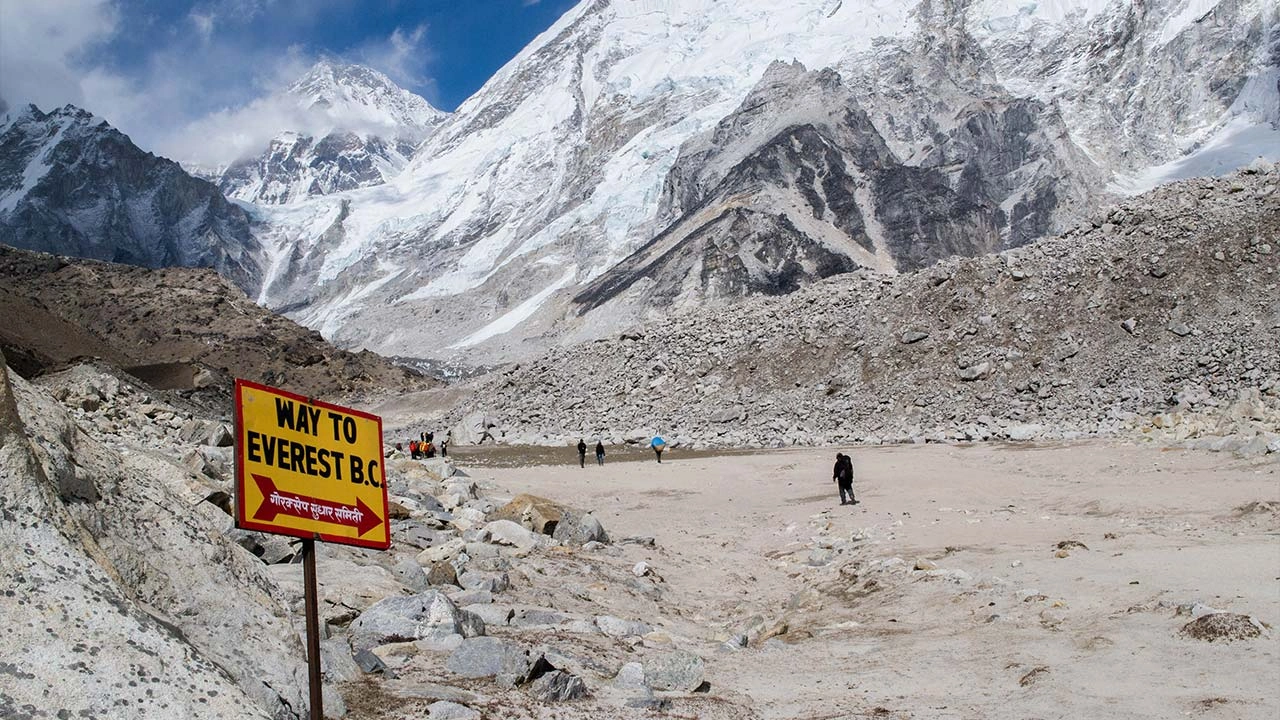
Most trekkers follow the standard Khumbu Valley route from Lukla north through Phakding, Namche Bazaar, Tengboche, Dingboche, Lobuche, and Gorak Shep before reaching base camp at 5,364m. This trail covers approximately 65km one way, all on foot through Sagarmatha National Park.
The path is well-marked, and teahouses appear every few hours. The trail initially follows the Dudh Koshi River upstream through dense pine and rhododendron forest, then transitions into high-altitude scrubland and moraine above Dingboche. No technical climbing equipment is needed. Every meter of the route is walkable terrain.
Which Villages Do You Pass on the Standard EBC Trail?
The 7 main overnight stops on the standard route are Phakding (2,610m), Namche Bazaar (3,440m), Tengboche (3,860m), Dingboche (4,410m), Lobuche (4,940m), Gorak Shep (5,164m), and Everest Base Camp (5,364m). Each village has teahouses serving meals and basic accommodation with shared or private rooms.
Phakding is a short 3-hour walk from Lukla, mostly downhill, and functions as the warm-up day. Namche Bazaar is the largest settlement in the Khumbu and the most important logistical hub on the trail. It holds the only reliable ATMs above Kathmandu, along with gear shops, bakeries, and a Saturday morning market where local farmers sell produce. Most trekkers spend 2 nights here.
Tengboche sits at 3,860m and holds Tengboche Monastery, the highest active Buddhist monastery in Nepal. The monastery opens for morning and evening puja ceremonies that trekkers can attend. The landscape changes noticeably at this elevation: fewer trees, more exposed stone, and the bulk of Ama Dablam (6,812m) directly ahead.
Dingboche marks a fork in the trail. One path continues toward EBC; the other leads to the Island Peak (6,189m) base camp and the Chhukung Valley. This is where the second major acclimatization day falls, and where the daily air temperature begins to feel genuinely cold even at midday.
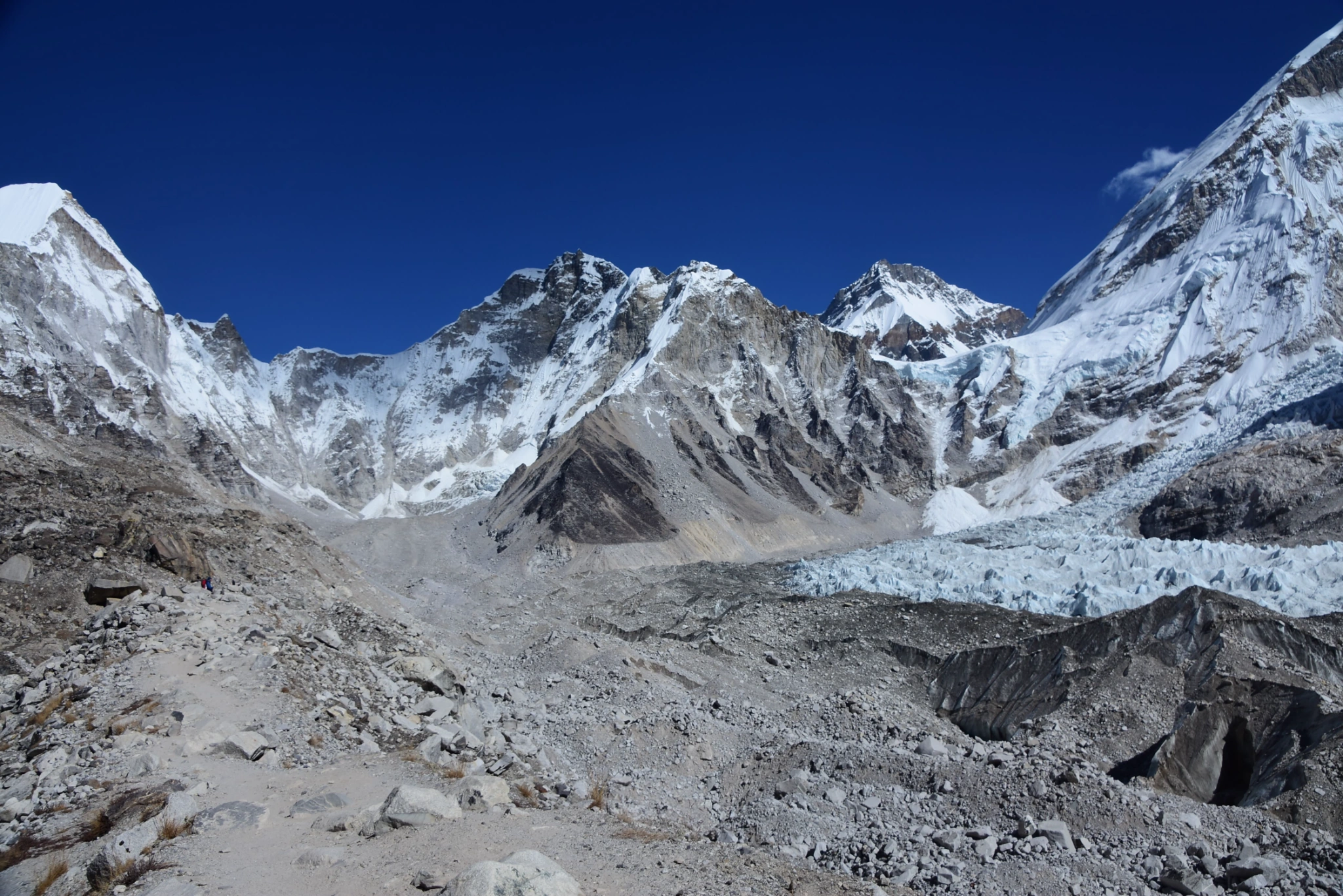
Gorak Shep is the final overnight stop. At 5,164m, the village sits on the edge of the Khumbu Glacier's lateral moraine and is entirely above the permanent vegetation line. Accommodation is spartan and expensive relative to lower elevations. Most trekkers push to EBC the next morning and return the same day before descending.
How Many Days Does the Classic EBC Itinerary Take?
The classic EBC itinerary takes 12 to 14 days from Lukla to base camp and back. A 14-day plan is the safer structure for most trekkers because it includes 2 acclimatization days at Namche Bazaar and 1 to 2 days at Dingboche, with no forced marches above 4,000m.
A 12-day itinerary is achievable but leaves no buffer for poor weather, delayed flights, or slower-than-expected acclimatization. Trekkers who compress the ascent above 4,000m face a measurably higher incidence of acute mountain sickness.
A practical 14-day structure from Lukla:
Day 1: Fly Kathmandu to Lukla, trek to Phakding (2,610m), 3.5 hours
Day 2: Trek to Namche Bazaar (3,440m), 5 hours
Days 3 and 4: Acclimatize in Namche; day hike to Everest View Hotel (3,880m) on Day 3
Day 5: Trek to Tengboche (3,860m), 5 hours
Day 6: Trek to Dingboche (4,410m), 5 hours
Day 7: Acclimatize in Dingboche; day hike toward Chhukung (5,000m) and back
Day 8: Trek to Lobuche (4,940m), 4.5 hours
Day 9: Trek to Gorak Shep (5,164m), visit Everest Base Camp (5,364m), 7 hours total
Day 10: Hike Kala Patthar viewpoint (5,545m) at dawn for the highest unrestricted mountain panorama on the trek, then descend to Pheriche (4,371m)
Days 11 and 12: Descend from Pheriche to Namche Bazaar
Day 13: Descend from Namche to Lukla
Day 14: Fly Lukla to Kathmandu
Where Should You Schedule Acclimatization Days During EBC Trek?
Schedule 2 full acclimatization days at Namche Bazaar (3,440m) and 1 to 2 days at Dingboche (4,410m). These 2 rest stops fall at the exact elevations where altitude-related complications most commonly appear, making them the highest-value investment in the entire itinerary.
On acclimatization days, apply the "climb high, sleep low" method. From Namche, hike up to the Everest View Hotel (3,880m) and return to sleep at 3,440m. From Dingboche, hike toward the upper Chhukung Valley to approximately 5,000m before returning to sleep at 4,410m. For a full breakdown of rest days, elevation thresholds, and risk signs by stage, see our detailed guide to the EBC acclimatization schedule.
The medical standard is set out in the Wilderness Medical Society's 2024 altitude-illness guidelines: do not increase sleeping altitude by more than 500m per day above 3,000m. Trekkers who violate this guideline account for the majority of helicopter evacuations from the Khumbu each season.
When Is the Best Time to Go to Everest Base Camp?
The 2 best seasons for the EBC trek are spring (March to May) and autumn (September to November). Spring brings warmer temperatures and rhododendron blooms; autumn delivers the clearest skies and most stable weather of the year, with the post-monsoon air stripped clean of haze.
Both seasons draw the heaviest trail traffic. Teahouses at Lobuche and Gorak Shep fill 2 to 3 weeks in advance during April and October. Book accommodation before leaving Kathmandu, especially above Namche Bazaar.
What Is Spring Like on the EBC Trail?
Spring (March to May) offers warming daytime temperatures, blooming rhododendrons from 2,500m to 3,500m, and extended daylight hours. Temperatures at Namche Bazaar average -2°C to 10°C in March and climb to 2°C to 15°C by May. April is the busiest month on the trail.
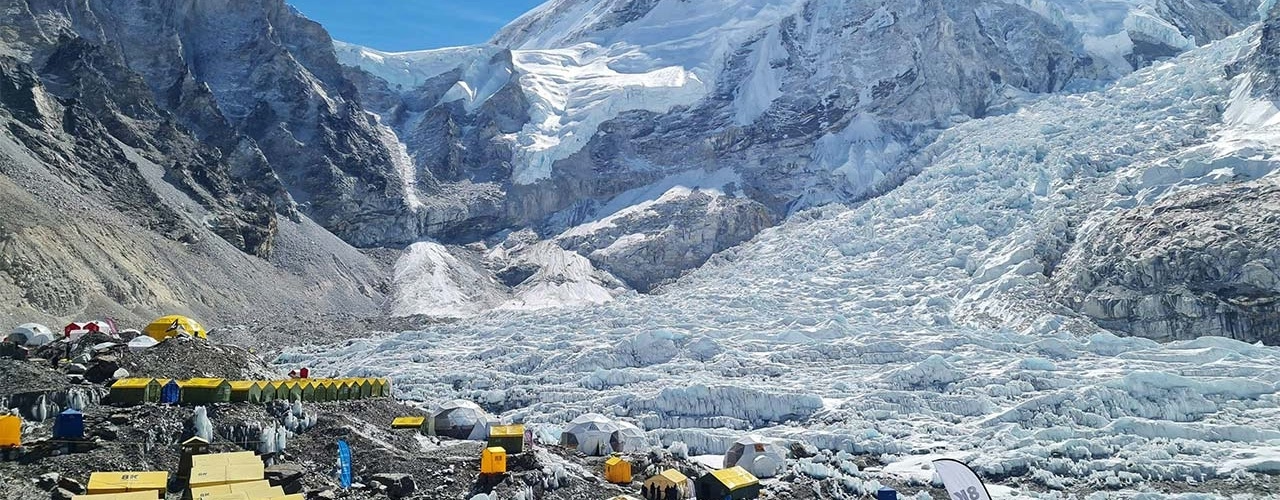
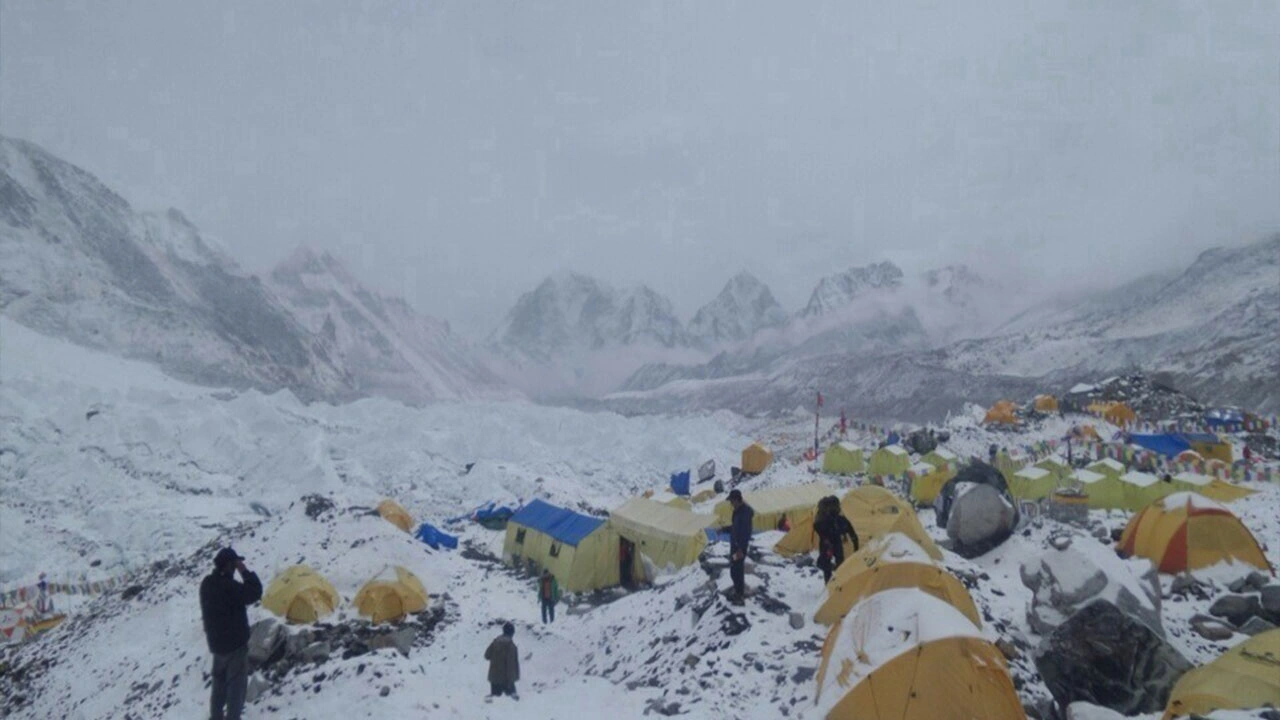
Spring coincides with the Everest pre-monsoon climbing window. Expedition teams move through the Khumbu during March and April, which makes base camp itself lively and visually dramatic, with hundreds of tents dotting the Khumbu Glacier. Trekkers who want to see base camp at its most active prefer spring over autumn.
The practical drawback: higher lodges at Lobuche and Gorak Shep run at full capacity from late March through mid-May. Trail dust on the lower section below Namche is also more noticeable in spring than after the monsoon has settled the path.
What Is Autumn Like on the EBC Trail?
Autumn (September to November) delivers the most consistently clear conditions on the EBC trail. Post-monsoon air is dry and transparent, mountain views are sharp from the first morning in Lukla, and daytime temperatures remain manageable at most elevations through October. November nights above 4,500m drop below -15°C.
October is the peak month for photographic clarity. The monsoon withdraws fully by mid-September, and the atmosphere over the Khumbu stays clean and dry for 6 to 8 weeks. Trekkers who prioritize mountain views and photography time their trips for the second and third weeks of October.
Early November is the quieter option. Trail traffic drops after the first week, accommodation is easier to book, and the cooler temperatures sort out self-selecting trekkers who are genuinely comfortable in cold conditions. The trade-off is that nights above 4,000m become genuinely harsh, and some high-altitude teahouses begin reducing their heating by mid-November.
Can You Trek to EBC in Winter or Monsoon?
Winter trekking (December to February) to EBC is possible but demanding. Temperatures at Gorak Shep drop below -20°C at night in January. Some teahouses above Lobuche close by late December. Trails above 4,500m are icy and require traction devices. A smaller percentage of trekkers complete the route in winter compared to the main seasons.
Monsoon season (June to August) brings continuous rainfall, leeches on lower sections below 3,500m, reduced visibility, and occasional trail flooding at river crossings. Several teahouses operate at reduced capacity or close for maintenance during these months. That said, monsoon trekkers encounter almost no other hikers, pay lower teahouse rates, and walk through a Khumbu draped in green vegetation at lower altitudes.
For monsoon trekking, pack a Gore-Tex waterproof jacket, waterproof trousers, and knee-high gaiters. Trails become slick on roots and wet stone, and stream crossings after heavy rain can add hours to a planned route.
What Permits Do You Need for Everest Base Camp?
The 2 permits all EBC trekkers carry in 2026 are the Sagarmatha National Park Entry Permit and the Khumbu Pasang Lhamu Rural Municipality Fee, with current rates published in the Nepal Tourism Board park entry fee schedule. The old TIMS card (Trekkers' Information Management System) has been completely discontinued for the Everest/Khumbu region in 2026; you only need the National Park and rural municipality permits.
Trail checkpoints at Monjo and Namche Bazaar inspect all documents. Trekkers without valid permits face on-the-spot fines at both locations. There is no way to purchase permits on the trail itself above the Monjo park entrance gate.
Which Permits Are Required for the Khumbu Region?
The 2 permits all EBC trekkers carry in 2026 are the Sagarmatha National Park Entry Permit (NPR 3,000 plus 13% VAT for non-SAARC nationals) and the Khumbu Pasang Lhamu Rural Municipality Fee (NPR 3,000). The TIMS card is no longer used in this region.
SAARC nationals (citizens of India, Sri Lanka, Pakistan, Bangladesh, Bhutan, Maldives) pay a reduced Sagarmatha National Park entry fee of NPR 1,500. Children under 10 years of age pay no national park entry fee regardless of nationality.
The rural municipality fee is a locally administered charge that funds community infrastructure in the Khumbu Pasang Lhamu region. Collectors at trail checkpoints issue receipts on-site. Keep receipts visible with your other permit documents.
Where Can You Get Your Everest Base Camp Permits?
Get the Sagarmatha National Park permit from the Nepal Tourism Board office in Kathmandu (Bhrikutimandap, Pradarshani Marg) or at the park entrance gate at Monjo (2,835m) on the trail. The rural municipality fee is collected directly at checkpoints between Lukla and Phakding.
Bring 2 passport-size photos and a photocopy of your passport and Nepal visa when visiting the Kathmandu permit office. Processing takes under 1 hour during weekday office hours. Trekking agencies that organize the trek handle all permit applications as part of their standard service, which removes this step from your Kathmandu to-do list entirely.
How Do You Prepare for Altitude on the Way to EBC?
Preparing for altitude on the EBC trek means following a controlled ascent schedule, drinking 3 to 4 liters of water per day, avoiding alcohol above 3,500m, and recognizing the early symptoms of acute mountain sickness (AMS) before they progress to life-threatening stages.
Altitude is the single biggest variable separating a successful EBC trek from an early evacuation. Physical fitness matters less than acclimatization pace. Experienced marathon runners have been evacuated from the Khumbu while slow, methodical first-timers walked to base camp without incident. The difference is almost always pace and hydration.
What Are the Signs of Altitude Sickness?
The 5 most common signs of acute mountain sickness (AMS) are headache, nausea, fatigue, dizziness, and loss of appetite, per the Wilderness Medical Society's 2024 Clinical Practice Guidelines for Acute Altitude Illness. These symptoms appear within 6 to 12 hours of arriving at a new altitude and typically resolve within 24 to 48 hours of rest at the same elevation.
Two more serious altitude conditions exist above AMS. High Altitude Cerebral Edema (HACE) occurs when fluid builds in brain tissue. Signs of HACE include confusion, loss of coordination, inability to walk in a straight line, and altered mental status. High Altitude Pulmonary Edema (HAPE) involves fluid buildup in the lungs. Signs of HAPE include breathlessness at rest, a persistent wet cough, pink or frothy sputum, and rapid deterioration of overall condition.
Both HACE and HAPE develop fast, sometimes within hours. Both require immediate descent of at least 500m and rapid medical evaluation. The Himalayan Rescue Association clinic in Pheriche (4,371m) staffs trained high-altitude physicians during spring and autumn seasons.
How Can You Acclimatize Safely on the Everest Base Camp Trail?
The 3 core rules for safe acclimatization on the EBC trail are: do not gain more than 500m of sleeping altitude per day above 3,000m, take at least 1 full rest day for every 1,000m of net altitude gain, and descend immediately if AMS symptoms worsen rather than improve after 24 hours of rest.
Drink water consistently throughout each trekking day. Tea, plain water, and hot lemon all count toward the 3 to 4 liter daily target. Avoid alcohol from Namche Bazaar upward. Alcohol dehydrates and disrupts the sleep architecture the body uses to adapt to thinner air. Eat carbohydrate-heavy meals. Dal bhat (rice with lentil soup and vegetables), available at every teahouse from Lukla to Gorak Shep, is calorie-dense, easily digestible at altitude, and costs less than most other menu items.
Acetazolamide (Diamox) is a prescription diuretic that accelerates acclimatization by stimulating faster, deeper breathing. Many trekkers use 125mg to 250mg twice daily, starting 24 hours before ascending above 3,000m. Discuss the dosage and contraindications with a travel medicine physician before departure. Diamox is contraindicated in people with sulfonamide allergies and carries side effects including increased urination and mild tingling in the extremities.
When Should You Turn Back or Seek Help During Everest Base Camp Trek?
Turn back or seek medical help immediately when AMS symptoms do not improve after 24 hours of rest at the same altitude, when any symptoms of HACE or HAPE appear, or when a companion shows signs of confusion, severe breathlessness at rest, or loss of coordination.
The Khumbu has one rule that every experienced guide repeats without variation: never ascend when symptomatic. No view, no schedule, no sunk cost justifies going up with a headache that has not resolved. The trekkers who ignore this rule account for the majority of the 3 to 5 helicopter evacuations that occur from the upper Khumbu on a busy spring week.
Register with the Himalayan Rescue Association on arrival in Pheriche or at their office in Namche Bazaar. Their altitude medicine briefings are free and take 45 minutes. The briefing alone has prevented evacuations.
How Fit Do You Need to Be for Everest Base Camp?
The EBC trek requires solid aerobic fitness. An average trekking day covers 12 to 18km with 500 to 900m of net elevation gain and 4 to 7 hours of continuous walking. No mountaineering skills or technical climbing ability are needed at any point on the standard route.
The trail is a walk, not a climb. Every section from Lukla to base camp is walkable with standard hiking boots. The challenge is not technical; it is cumulative. Eight consecutive days of sustained uphill walking at elevating altitude, carrying an 8 to 12kg day pack, demands a specific kind of endurance that casual weekend walking does not build.
What Training Helps Before the Everest Base Camp Trek?
Start training 3 to 4 months before the trek departure date. The most effective training combination for EBC fitness uses stair climbing (30 to 60 minutes, 4 days per week), long hiking days with an 8 to 12kg loaded pack, sustained cycling, and running or jogging for base cardiovascular capacity.
Train uphill specifically. Flat running builds general cardio but does not prepare the hip flexors, glutes, and calves for 6 consecutive hours of ascent. Use a treadmill on a 10 to 15% incline or hike real terrain with a pack that matches your planned trail weight.
Complete at least 2 back-to-back hiking days in the final 4 to 6 weeks before departure, carrying a full pack and walking for 5 to 8 hours each day. These sessions prepare the cardiovascular system and the connective tissue in knees and ankles for the repetitive strain of the trail, and they surface any footwear or gear problems before you are 4,000m above sea level.
How Difficult Is the EBC Trek for Beginners?
The EBC trek is achievable for beginners with 3 to 4 months of targeted preparation and a proper 14-day acclimatization itinerary. The technical difficulty is moderate. The primary challenge is sustained altitude exposure over multiple days, not the steepness or technical complexity of the terrain.
Every spring and autumn season, thousands of first-time high-altitude trekkers complete the route successfully. What separates them from those who turn back early is almost never fitness level. It is pace. Trekkers who walk slowly, eat every meal, drink water consistently, and decline to rush past scheduled rest days complete the trek far more reliably than those who push hard.
The mental dimension of the trek is something first-timers frequently underestimate. Days 6 through 10 involve cold teahouse rooms, a narrow menu dominated by dal bhat and noodle soup, basic sanitation facilities, and the slow, grinding weight of altitude on energy and mood. Knowing this in advance is half the preparation.
What Should You Pack for Everest Base Camp?
Pack for temperatures ranging from +15°C at Lukla to -20°C at Gorak Shep on a winter night, with the core system built around a 3-layer clothing approach, a sleeping bag rated to -10°C or colder, broken-in hiking boots with ankle support, trekking poles, a headlamp, and high-altitude sun protection.
Total pack weight, including clothing, water, snacks, camera, and personal items, sits between 8 and 12kg for a trekker carrying their own gear without a porter. If you hire a porter (which most guides recommend), the porter carries the main duffel bag and you carry a light day pack of 4 to 6kg.
Which Clothing Layers Matter Most at High Altitude?
The 3 clothing layers that matter most on the EBC trail are a moisture-wicking base layer (merino wool or synthetic), a down or fleece insulating mid layer rated to at least -10°C, and a waterproof and windproof outer shell in Gore-Tex or an equivalent membrane fabric.
Merino wool base layers justify their cost on a 14-day trek. They resist odor significantly longer than synthetics and regulate temperature across the wide range of conditions encountered between Lukla and base camp. At altitude, the body sweats hard during the ascent and chills within minutes of stopping. The base layer manages that transition better than any other single piece of gear.
Extremity protection is where most trekkers under-pack. Bring insulated gloves rather than thin liner gloves, a warm hat that fully covers the ears, a neck gaiter or balaclava, and glacier-rated sunglasses with side shields. UV radiation levels increase by roughly 10% per 1,000m of elevation gain, according to the World Health Organization, so intensity at 5,000m on the upper Khumbu Glacier approach is meaningfully higher than at sea level and corneal sunburn (photokeratitis) is a real risk. Apply SPF 50+ sunscreen on exposed skin from Namche Bazaar upward.
What Gear Can You Rent in Kathmandu or Lukla?
Thamel, Kathmandu's main trekking district, rents sleeping bags, down jackets, trekking poles, gaiters, and crampons. Daily rental costs range from NPR 100 to 500 per item depending on quality and season. Gear is also available from shops in Lukla and Namche Bazaar, though selection narrows at higher elevations.
Sleeping bags and down jackets are the 2 items most worth renting rather than purchasing for a single trek. A quality -15°C sleeping bag retails for $300 to $600 new; renting the same bag runs NPR 200 to 400 per day in Kathmandu. Inspect rented gear carefully before accepting it. Check zip function, insulation loft, and liner cleanliness.
Trekking boots are not worth renting. Blisters from stiff, unbroken boots on day 3 at 3,500m are a serious and common problem that ruins itineraries. Buy boots and break them in for at least 8 weeks before departure, using the same socks and insoles you plan to wear on the trail.
How Much Does It Cost to Get to Everest Base Camp?
A full 14-day EBC trek budget, excluding international airfare, ranges from $1,200 to $3,500 USD for most trekkers. For a complete category-by-category breakdown including gear rental, hidden fees, and group vs. solo pricing, see our full guide to Everest Base Camp trek cost. Trekkers who join budget group departures to share mandatory guide costs come in at the lower end; premium or private agency-organized treks with a dedicated guide and porter typically run $1,800 to $3,000 all-inclusive from Kathmandu.
Cost varies most sharply based on whether you join a group trek or hire a private guide, use a standard teahouse or premium lodge, and how many days you add for acclimatization or weather delays.
What Are the Main Costs for Flights, Permits, and Lodges for Everest Base Camp Trek?
The 5 main cost categories with 2026 approximate figures are:
Domestic flights, Kathmandu/Ramechhap to Lukla return: $420 to $510 USD round trip
Permits (National Park + Rural Municipality): Approximately $50 to $60 USD total (inclusive of VAT and the new 2026 environmental green fee).
Teahouse accommodation: NPR 200 to 1,500 per night per person (accommodation is often free or nominal if you eat all meals at the same lodge)
Meals, 3 per day: NPR 500 to 2,500 per meal depending on elevation (food costs increase by 30 to 50% above Namche because of porter and helicopter supply costs)
Guide and porter: $25 to $35 USD per day for a licensed guide, $18 to $25 USD per day for a porter carrying up to 25kg
A budget-conscious trekker sharing mandatory guide costs in a group setting, eating modestly, and sleeping in standard teahouse rooms can complete the 14-day route for approximately $1,200 to $1,400 from Kathmandu, excluding international airfare.
How Much Cash Should You Carry on the Everest Base Camp Trail?
Carry a minimum of NPR 80,000 to 100,000 (approximately $600 to $750 USD) in Nepali Rupees for a 14-day EBC trek. ATMs exist in Namche Bazaar but run out of cash frequently during peak season. Above Namche, the entire trail operates on cash only.
Exchange USD to NPR at a licensed money changer in Thamel, Kathmandu, before departure. Rates at licensed changers are 3 to 5% better than at hotel desks. Namche's ATMs charge NPR 500 to 800 in foreign transaction fees per withdrawal and have a per-transaction limit of NPR 25,000.
Above Namche, there are no ATMs at Dingboche, Lobuche, or Gorak Shep. Build an emergency cash reserve of at least NPR 20,000 beyond your planned spending. Helicopter rescue from the Khumbu costs $3,000 to $6,000 USD if your travel insurance does not cover evacuation or if you do not carry a valid policy.
Do You Need a Guide for Everest Base Camp?
Yes. As of the strict enforcement rules in 2026, going to Everest Base Camp with a licensed guide is a legal requirement for all foreign nationals. Beyond the legal mandate, a Sherpa guide navigates the route, monitors acclimatization symptoms, arranges accommodation, and provides real-time health assessments that are difficult to self-administer above 4,500m. As of the guide requirement introduced on April 1, 2023 and now fully enforced, going to Everest Base Camp with a licensed guide is a legal requirement for all foreign nationals, per the U.S. Embassy in Nepal's official trekking-guide alert.
Independent, guideless trekking is no longer legal anywhere in Nepal's national parks, including the EBC route. All foreign nationals must be accompanied by a licensed guide affiliated with a registered trekking agency. Even though the trail is well-signed and teahouses are closely spaced, the guide requirement is strictly enforced for safety. This distinction matters most above 4,000m, where altitude impairs judgment in ways that are difficult for the affected person to self-detect. A guide catches the early signs faster than you do. The distinction matters most above 4,000m, where altitude impairs judgment in ways that are difficult for the affected person to self-detect. A guide catches the early signs faster than you do.
Could a Trekking Agency Help You Get to Everest Base Camp?
A registered Nepali trekking agency handles permit applications, domestic flight bookings, guide and porter arrangements, teahouse reservations, and emergency coordination in one package. This is the most practical approach for first-time EBC trekkers who cannot dedicate weeks to independent logistics planning.
Agencies range from budget operations charging $800 to $1,200 for a standard 14-day package, to premium operators charging $3,000 to $5,000 with high-altitude Sherpa guides, private teahouse rooms, satellite communication equipment, and pre-assigned acclimatization physicians. Choose an agency registered with the Trekking Agencies' Association of Nepal (TAAN) and holding a valid Nepal Tourism Board license.
Ask any agency 3 specific questions before signing a contract: Does the assigned guide hold a government-recognized trekking guide license issued by the Tourism Department? What is the emergency evacuation protocol if a trekker needs medical descent? Does the package include rescue insurance, or is that the trekker's responsibility? The answers separate competent operators from underprepared ones.
What Should You Remember Before Going to Everest Base Camp?
Confirm 6 things before leaving Kathmandu for EBC: permits organized, travel insurance with helicopter rescue coverage above 5,000m, domestic flights booked and reconfirmed, adequate cash in Nepali Rupees, broken-in trekking boots, and a 14-day itinerary that caps daily sleeping altitude gain at 500m above 3,000m.
Travel insurance is not optional for EBC. A helicopter evacuation from the Khumbu costs $3,000 to $6,000 USD without insurance. Policies covering high-altitude trekking above 5,000m are available from providers including World Nomads and ISOS. Read the altitude limit clause before purchasing. Some standard adventure policies cap coverage at 4,000m, which is 1,364m below base camp.
Register your trek details with your country's embassy in Kathmandu before departure. The process takes under 10 minutes online for most nationalities and ensures that someone outside Nepal holds your planned route, team names, and expected return date. This step is free and directly aids search and rescue coordination in an emergency.
The EBC trail rewards preparation and punishes impatience. Trekkers who spend 3 months training, research the permit process, book logistics early, and follow a conservative acclimatization schedule reach base camp and return safely the vast majority of the time. If you're ready to plan, explore our fully guided Everest Base Camp Trek package with acclimatization days, permits, and licensed Sherpa guides included. Those who compress the itinerary or skip rest days to save a day or two often end the trek at Pheriche or Namche, watching a helicopter carry someone faster out.
Walk slowly. The Khumbu does not reward the hurried.