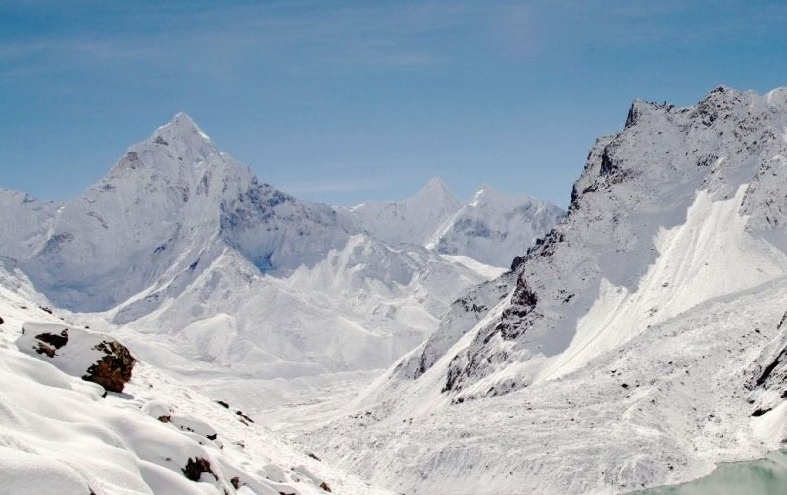
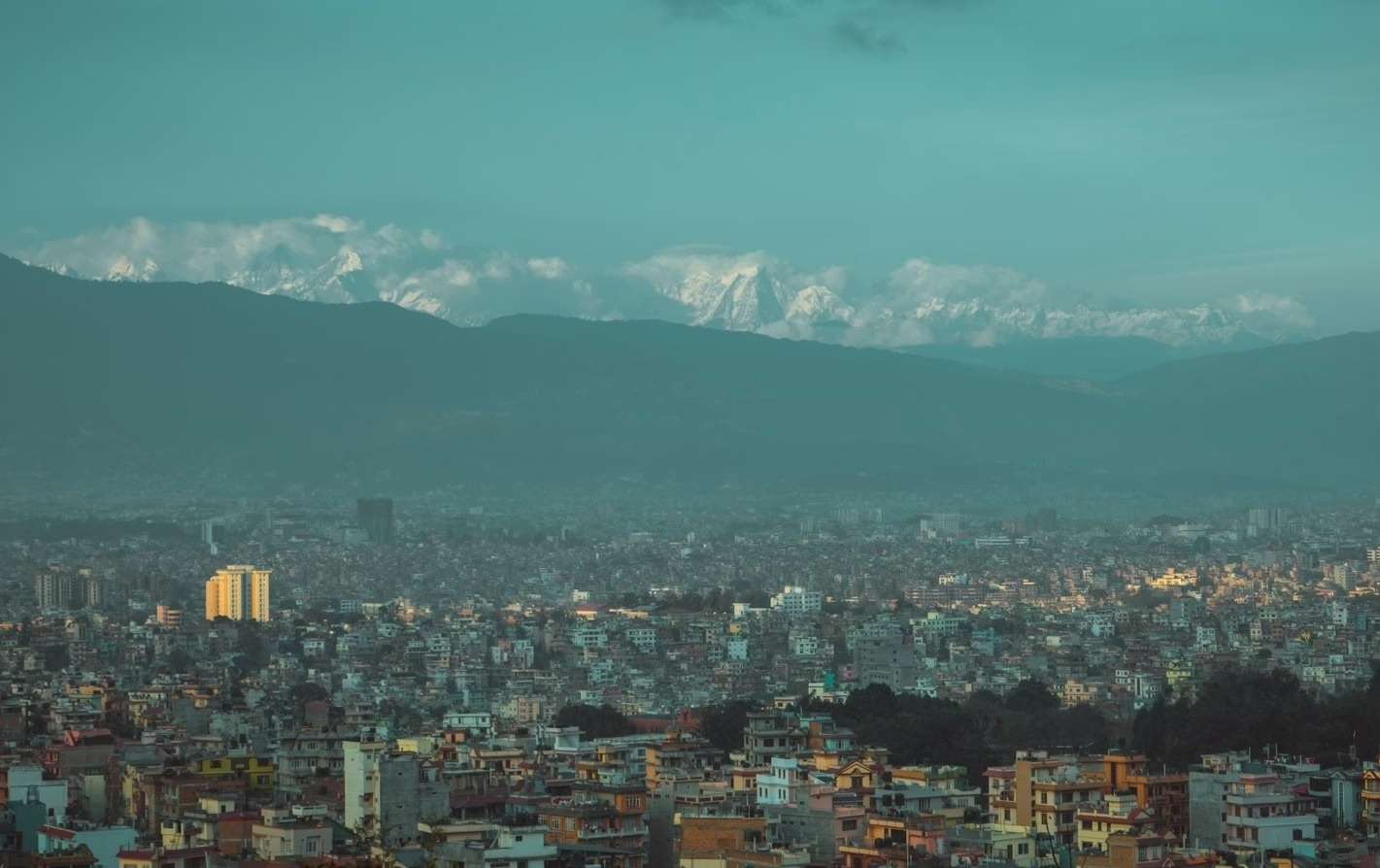
The Annapurna Base Camp trek is one of Nepal’s most popular high-altitude teahouse treks, leading through the Annapurna Conservation Area to Annapurna Base Camp (ABC) at 4,130 meters (13,550 feet). In 2026, the Annapurna Base Camp trek cost usually ranges from $500 to $2,500 per person, with total spending shaped by trek style, season, itinerary length, group size, and service level. Budget trekkers using local transport and basic teahouses can keep costs low, while mid-range and premium trekkers spend more on private rooms, flights, licensed guides, porters, better food, and agency support. A standard 12-day ABC trek for most travelers typically falls around $900 to $1,200, making it one of the more accessible Himalayan treks for both independent and guided hikers.
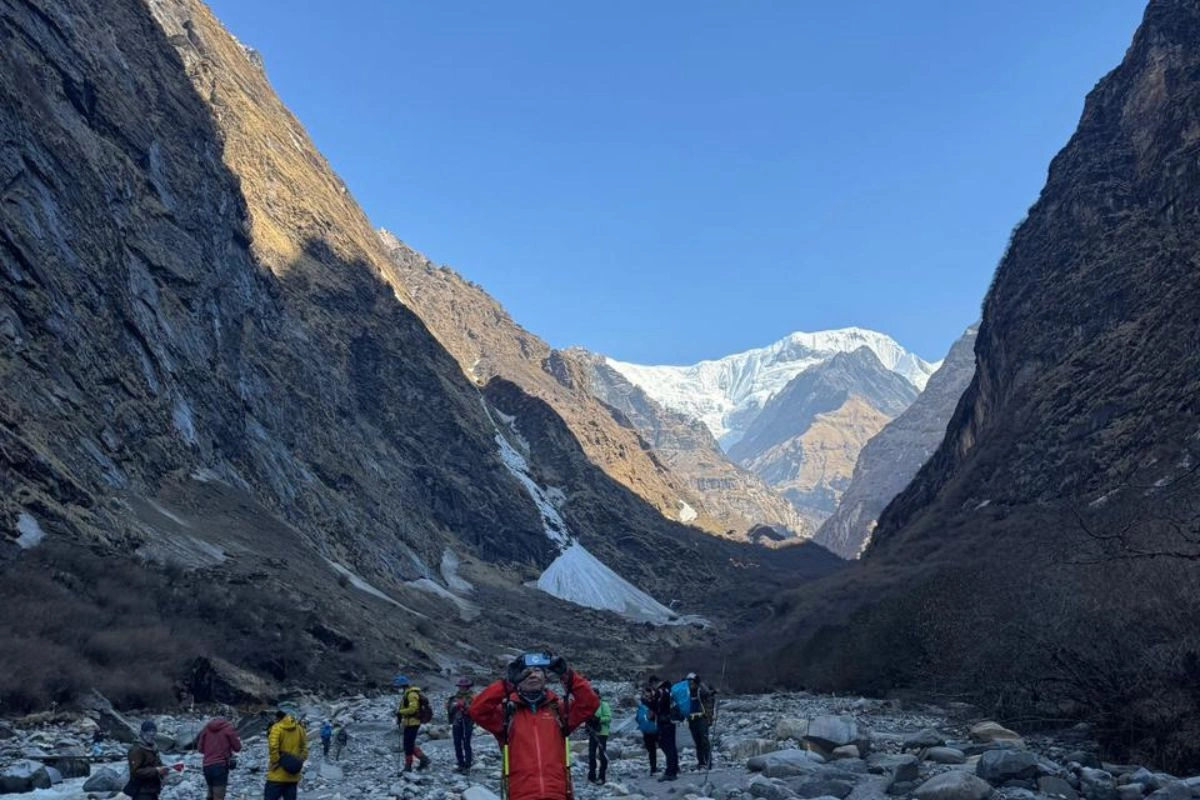
A realistic Annapurna Base Camp (ABC) trek budget includes far more than the headline package price. Trekkers need to account for Annapurna Conservation Area Permit (ACAP) and the Trekkers' Information Management System (TIMS) card permits, Kathmandu–Pokhara transport, Pokhara–Nayapul or Phedi transfers, teahouse accommodation, meals on the trail, guide and porter wages, gear rental, charging and Wi-Fi fees, tips, travel insurance, and emergency costs such as weather delays or helicopter evacuation. Seasonal demand in spring and autumn can push prices higher, while winter and monsoon departures often reduce lodging and transport costs. Understanding each of these cost categories helps trekkers choose the right budget level, avoid hidden expenses, and plan an Annapurna Base Camp trek that matches both their comfort level and their total travel budget.
What Is the Average Cost of the Annapurna Base Camp Trek?
The average Annapurna Base Camp trek costs $900–$1,200 per person for a standard 12-day itinerary, covering permits, transport, accommodation, food, a licensed guide, and a porter. This figure applies to independent trekkers choosing mid-range teahouses in 2026.
The Annapurna Base Camp (ABC) trek is a high-altitude trail in the Annapurna Conservation Area of Nepal, reaching an elevation of 4,130 meters (13,550 feet). The trail begins near Nayapul or Phedi, south of Pokhara, and passes through the Modi Khola river valley before ascending to the base camp amphitheater. Total trek distance ranges from 110 km to 115 km (68–71 miles) depending on the route variant chosen.
The 3 primary cost categories that control total ABC trek spending are:
Fixed costs: ACAP permit, TIMS card, flights or bus from Kathmandu
Daily costs: teahouse accommodation, meals, guide and porter wages
Variable costs: gear rental, tips, travel insurance, emergency evacuation coverage
How much should budget travelers expect to spend on ABC Trek?
Budget trekkers spend $500–$800 total on a 12-day ABC trek, staying in the cheapest teahouses, and eating dal bhat twice daily. This figure excludes international flights.
A budget itinerary allocates costs across 4 core components: $47 for ACAP and TIMS permits combined, $30–$50 for Kathmandu-to-Pokhara bus transport, $150–$200 for 11 nights of teahouse accommodation at $5–$8 per night, and $180–$250 for meals at $4–$7 per meal across 36 daily meals.
How much does a mid-range ABC trek usually cost?
Mid-range ABC trekkers spend $900–$1,500 total, hiring a licensed guide at $30/day, engaging a porter at $22/day, and staying in teahouses priced at $8–$15/night with private rooms where available.
Mid-range spending allocates $350–$450 to guide and porter wages across 12 days, $120–$180 to accommodation, $250–$350 to food, and $47 to permits. The remaining $150–$350 covers transport, gear rental, tips, and personal expenses.
How much do private or premium ABC treks cost?
Premium ABC treks cost $1,500–$2,500 per person and include a senior licensed guide, a dedicated porter, private jeep transfers, lodge-style teahouses with attached bathrooms, and a pre-planned itinerary managed by a registered Nepali trekking agency.
Premium packages booked through Pokhara-based agencies, such as those registered with the Trekking Agencies' Association of Nepal (TAAN), include airport pickup, permit processing, insurance verification, and a daily trek briefing. Agency margins add 20–35% above the self-arranged cost.
Which Factors Change the Cost of the Annapurna Base Camp Trek?
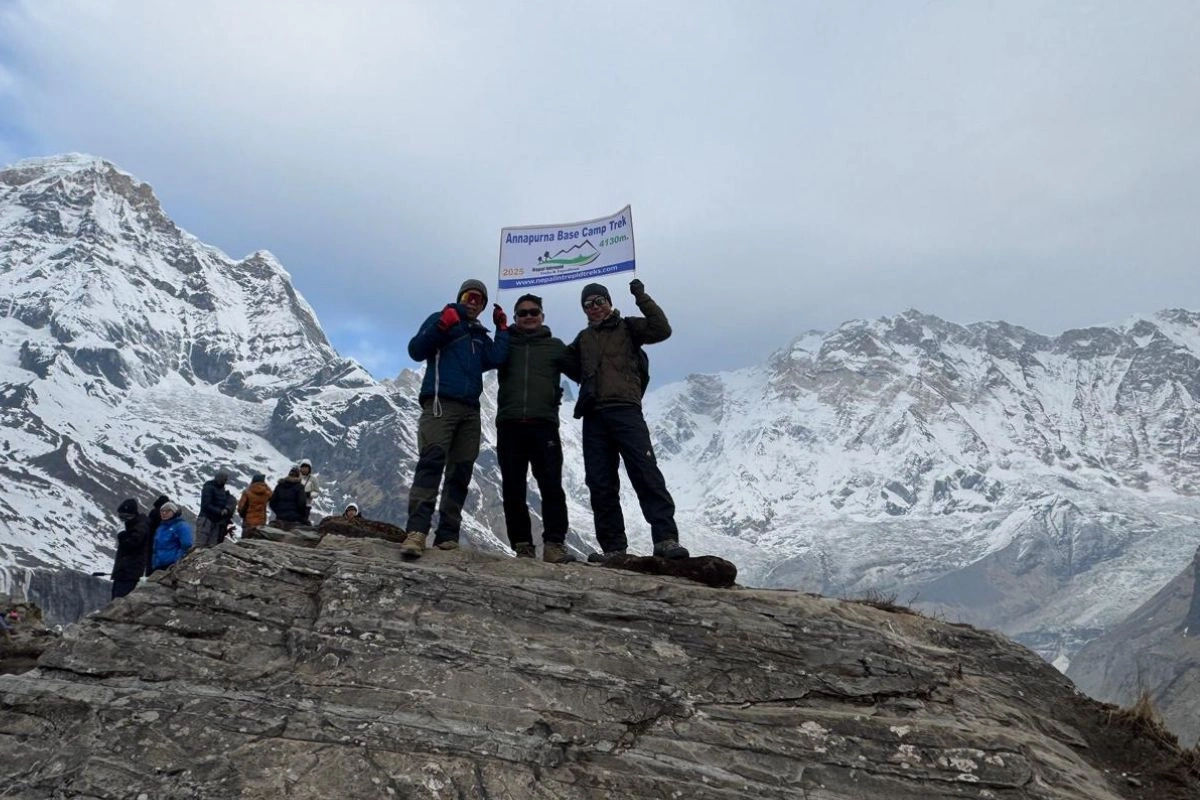
5 primary factors change the total ABC trek cost: trek duration, travel season, group size, accommodation grade, and whether a guide and porter are hired. Each factor independently shifts the total budget by $100–$500.
How does Annapurna Base Camp trek duration affect the total budget?
Each additional trek day adds $40–$80 to the total budget, accounting for accommodation ($8–$15), food ($12–$20), and guide/porter wages ($50–$55 combined). A 7-day express itinerary costs $350–$500 less than a 14-day acclimatization itinerary.
The standard ABC itinerary runs 12–14 days from Pokhara. Extended routes via Poon Hill or Mardi Himal Base Camp add 2–4 days and $100–$200 to the budget. If you're weighing both options on difficulty and cost, our detailed Mardi Himal vs ABC trek comparison covers every factor. A 7-day itinerary exists but demands higher daily elevation gain and reduces acclimatization time significantly.
How does the season change ABC trek prices?
Peak seasons (March–May and September–November) raise teahouse prices by 15–25% compared to off-season months. Flights to Pokhara cost $20–$40 more during peak season due to demand from international trekking groups.
The 4 trekking seasons in Nepal carry distinct price profiles:
Spring (March–May): Highest demand; teahouse rooms cost $10–$15/night; rhododendron forests are in full bloom
Autumn (September–November): Clearest skies; peak prices match spring; most popular season for international trekkers
Winter (December–February): Prices drop 10–20%; temperatures at ABC reach –15°C (5°F); fewer trekkers on trail
Monsoon (June–August): Lowest prices; 30–50% teahouse discounts available; trail sections are slippery due to rainfall
How does group size affect per-person cost of Annapurna Base Camp Trek?
Groups of 4 or more reduce the per-person guide cost by 40–60% because one licensed guide serves the entire group at a flat daily rate of $30–$35. A single trekker pays $30–$35/day for a guide; a group of 4 pays $7.50–$8.75 per person per day for the same guide service.
Porter costs do not decrease proportionally. Each porter carries a maximum load of 20–25 kg across the 3 standard porter weight categories defined by Nepal's porter welfare guidelines. A group of 4 with 20 kg of combined luggage requires 1 porter; 40 kg requires 2 porters.
How Much Do Annapurna Base Camp Trek Permits Cost?
The total ABC permit cost for foreign nationals in 2026 is $32–$47 USD, covering 2 mandatory documents: the Annapurna Conservation Area Permit (ACAP) and the Trekkers' Information Management System (TIMS) card.
What permits do trekkers need for ABC?
ABC trekkers require 2 permits: the ACAP and the TIMS card. Both are mandatory checkpoints on the trail. Rangers at Birethanti (elevation: 1,025 m) check both documents before allowing entry into the Annapurna Conservation Area.
The Annapurna Conservation Area Permit (ACAP) is issued by the National Trust for Nature Conservation (NTNC), a government-authorized conservation body established in 1982. ACAP revenue funds trail maintenance, wildlife protection, and community development programs across the 7,629 sq km conservation area.
The TIMS card is issued by the Trekking Agencies' Association of Nepal (TAAN) and the Nepal Tourism Board (NTB). TIMS registers each trekker's identity, contact information, and intended route to support search-and-rescue operations.
How much do foreign trekkers pay for Annapurna Base Camp permits?
Foreign (non-SAARC) trekkers pay NPR 3,000 ($22) for ACAP and NPR 2,000 ($15) for TIMS, totaling NPR 5,000 ($37) at 2025–2026 exchange rates of approximately NPR 134–136 per USD.
Both permits are obtained at the Nepal Tourism Board office in Kathmandu (Bhrikutimandap, Pradarshani Marg) or at the ACAP entry checkpost in Birethanti, Pokhara.ACAP is handled through NTNC’s permit system and official counters, while TIMS is issued through the current NTB/TAAN system. Processing time is 15–30 minutes per permit. Trekkers present 2 passport-size photographs and a valid passport at the counter.
How much do SAARC travelers pay for Annapurna Base Camp permits?
SAARC trekkers currently pay NPR 1,000 for the ACAP permit and NPR 1,000 for TIMS under the current online TIMS and ACAP sources. SAARC (South Asian Association for Regional Cooperation) member nationals, from India, Bangladesh, Bhutan, Sri Lanka, Maldives, and Pakistan, receive a discount on the ACAP fee. Indian trekkers considering the longer route can also explore our complete breakdown of the Annapurna Circuit cost for Indians.
Nepali nationals pay no ACAP fee. They pay NPR 1,000 ($7.35) for the TIMS card. Nepali nationals also benefit from local teahouse pricing, which runs 20–40% below the foreigner rate at most establishments above Chomrong (2,170 m).
How Much Does Transport to the Annapurna Base Camp Trailhead Cost?
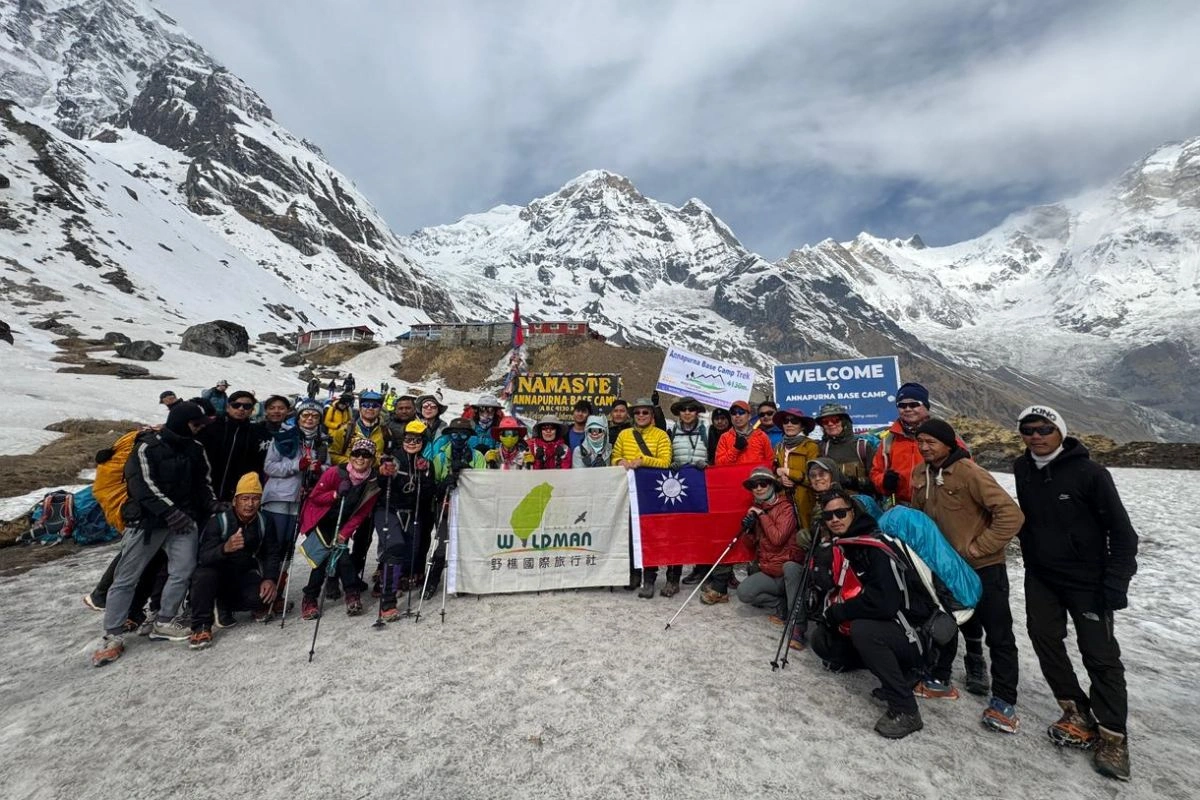
Transport to the ABC trailhead costs $20–$130 per person from Kathmandu, depending on mode of travel and whether a private vehicle or shared service is used. The route runs Kathmandu → Pokhara → Nayapul or Phedi.
How much does it cost to get from Kathmandu to Pokhara?
Kathmandu to Pokhara costs $8–$12 by tourist bus, $15–$20 by private car, and $80–$120 by domestic flight. Pokhara lies 200 km west of Kathmandu via the Prithvi Highway. Bus travel takes 6–8 hours. Flights take 25–30 minutes.
Tourist bus services depart from Thamel (Kathmandu) daily at 6:30 AM and 7:00 AM. Greenline Nepal and Mountain Overland operate the most frequently reviewed tourist bus routes at NPR 1,300–2,000 ($9.60–$14.70) per seat. Night sleeper buses cost NPR 1,400–1,800 ($10.30–$13.20).
Yeti Airlines, Buddha Air, and Shree Airlines operate Kathmandu–Pokhara flights from Tribhuvan International Airport (TIA). One-way fares range NPR 10,500–16,000 ($77–$118). Mountain weather delays affect 15–20% of Pokhara-bound flights between June and September.
How much does it cost to reach the ABC starting point?
Pokhara to Nayapul costs $8–$25 by shared jeep or private taxi. Nayapul (elevation: 1,070 m) is the primary trailhead for the ABC trek, located 42 km south of Pokhara via the Kaskikot road.
The 3 common trailhead routes from Pokhara carry distinct price points:
Nayapul via shared jeep: NPR 400–600 ($3–$4.40) per person; departs from Baglung Bus Park, Pokhara
Nayapul via private taxi: NPR 2,500–3,500 ($18–$26) for the vehicle
Phedi via taxi (Ghandruk loop start): NPR 800–1,200 ($5.90–$8.80) per person
Should you choose bus, jeep, or flight transfers?
The flight option saves 6–7 hours of travel time and costs $70–$110 more than the bus. Trekkers on a 10-day itinerary gain measurable value from flying; trekkers on a 14-day itinerary absorb bus travel without compressing the schedule.
4 criteria determine the right transport choice:
Total budget: Bus at $8–$12 fits budget itineraries; flight at $80–$120 fits mid-range budgets
Time constraint: A 10-day itinerary benefits from the flight's time savings
Motion sickness susceptibility: The Prithvi Highway includes 72 km of winding mountain curves between Mugling and Pokhara
Luggage volume: Jeep transfers accommodate large bags more efficiently than public buses
How Much Do Guides and Porters Cost on the ABC Trek?
A licensed guide costs $30–$35/day and a porter costs $20–$25/day in 2026. A combined guide-porter (one person performing both roles) costs $28–$35/day and is suitable for solo trekkers carrying light luggage.
Is a guide required for the ABC trek?
As of the current Nepal Tourism Board and TAAN guidance, trekkers on Annapurna-region routes such as the Poon Hill–ABC trek should plan on using a licensed guide and obtaining TIMS through the current system. Independent trekkers with a GPS device, offline map app (Maps.me or Gaia GPS), and basic trail knowledge navigate the route without a guide. For a full safety breakdown, read our dedicated guide on the ABC trek for solo trekkers.
However, the Annapurna region recorded 14 trekker fatalities in 2023, according to Nepal Tourism Board annual reports, with disorientation and altitude-related illness accounting for 6 of those cases. A licensed guide provides immediate decision-making support in weather deteriorations and medical incidents.
How much does a licensed guide cost per day on Annapurna Base Camp Trek?
A licensed ABC guide charges $30–$35/day including their accommodation and food. This all-inclusive rate is standard across TAAN-registered agencies. The guide's daily cost to the trekker does not include their tip, which is customarily $3–$5/day.
Licensed guides in Nepal hold a government-issued trekking guide license from the Ministry of Tourism. Licensing requires completion of a 40-day training course at the Nepal Academy of Tourism and Hotel Management (NATHM) or an approved institute. Language-specialized guides (Japanese, Chinese, German) charge $35–$45/day due to higher demand.
How much does a porter cost per day on Annapurna Base Camp Trek?
A porter charges $20–$25/day for carrying a maximum load of 20–25 kg. This rate includes their food and accommodation on the trail. Porters hired through TAAN-registered agencies receive insurance coverage of NPR 500,000 ($3,676) per incident under Nepal's Porter Welfare Policy.
The 3 standard porter roles on the ABC trek are:
Trail porter: Carries luggage between teahouses; meets trekker at each night stop
High-altitude porter: Trained for routes above 3,500 m; charges $25–$30/day
Combined guide-porter: Carries bags and leads navigation; suitable for groups of 1–2
Is hiring a guide or porter worth the extra cost on Annapurna Base Camp Trek?
Hiring a porter is worth the cost for trekkers carrying bags over 8 kg. Trail research by the Annapurna Conservation Area Project (ACAP) shows that trekkers with porters complete the trail in fewer rest days and report lower incidence of knee pain on the descent from ABC to Bamboo (2,310 m).
A licensed guide delivers 4 measurable advantages on the ABC trail:
Teahouse negotiation: Guides secure room rates 15–25% below walk-in foreigner prices at 60% of teahouses above Dovan (2,600 m)
Medical triage: Guides trained in Wilderness First Aid identify acute mountain sickness (AMS) symptoms before they escalate
Route accuracy: The Machhapuchhre Base Camp (MBC) to ABC section (4 km, 750 m elevation gain) has 3 unmarked trail splits in poor visibility
Cultural access: Guides facilitate homestay access and cultural exchanges not available to unaccompanied foreign trekkers
How Much Do Food and Accommodation Cost on the ABC Trek?
Food and accommodation together cost $20–$45 per day on the ABC trail. A standard day includes 3 meals at $3.50–$8 each and one teahouse night at $5–$15. Daily food and lodging costs increase by 20–40% above Deurali (3,230 m) due to supply chain elevation.
How much do teahouses charge per night on Annapurna Base Camp Trek?
Teahouses charge $5–$8/night below 2,500 m and $8–$15/night above 3,000 m. A teahouse, locally called a "bhatti", is a family-operated lodge providing a bed, blanket, and pillow. Rooms below Chhomrong are predominantly dormitory-style (4–8 beds per room). Rooms above Deurali are predominantly twin or single rooms.
The Annapurna region teahouse network includes 180+ registered teahouses across 22 trail villages between Nayapul and ABC. Teahouses affiliated with the Annapurna Sanctuary Trekking Facilities Improvement Program offer standardized pricing printed on a menu board at the reception desk.
4 teahouse pricing tiers operate across the ABC elevation range:
Elevation Zone | Representative Villages | Room Rate (USD) |
1,000–2,000 m | Tikhedhunga, Ghorepani | $4–$7 |
2,000–3,000 m | Chhomrong, Sinuwa, Bamboo | $6–$10 |
3,000–3,500 m | Deurali, Machhapuchhre Base Camp | $8–$12 |
3,500–4,130 m | Annapurna Base Camp | $10–$15 |
The table above shows room rates exclusive of meals. Most teahouses below 3,000 m offer rooms free of charge on the condition that trekkers eat both dinner and breakfast at the establishment.
How much do meals cost along the Annapurna Base Camp trail?
Meals cost $3.50–$6 per dish below 3,000 m and $6–$10 per dish above 3,000 m. Dal bhat (rice, lentil soup, vegetables, and pickles) is the most calorie-dense and cost-efficient meal on the trail at $4–$7 per plate with free refills at most teahouses.
A standard daily meal plan on the ABC trail covers 3 eating occasions:
Breakfast: Porridge, eggs, or pancakes at $2.50–$5
Lunch: Noodle soup, fried rice, or sandwiches at $4–$8
Dinner: Dal bhat, pasta, or pizza at $4–$10
Beverages add $1.50–$4 per item. Hot lemon tea costs $1–$2. Bottled mineral water (1 liter) costs $1.50–$3.50. Purification tablets ($3 for a pack of 50 at Pokhara pharmacies) eliminate the bottled water cost entirely.
Why do prices rise at higher elevations on Annapurna Base Camp Trek?
Prices rise at higher elevations because all supplies above 2,200 m are carried by human porter or pack mule, adding NPR 3–10 ($0.02–$0.07) in transport cost per 100 grams of food per kilometer. A gas canister costing NPR 350 ($2.57) in Pokhara costs NPR 700–900 ($5.15–$6.62) at ABC due to the 4,130 m transport distance.
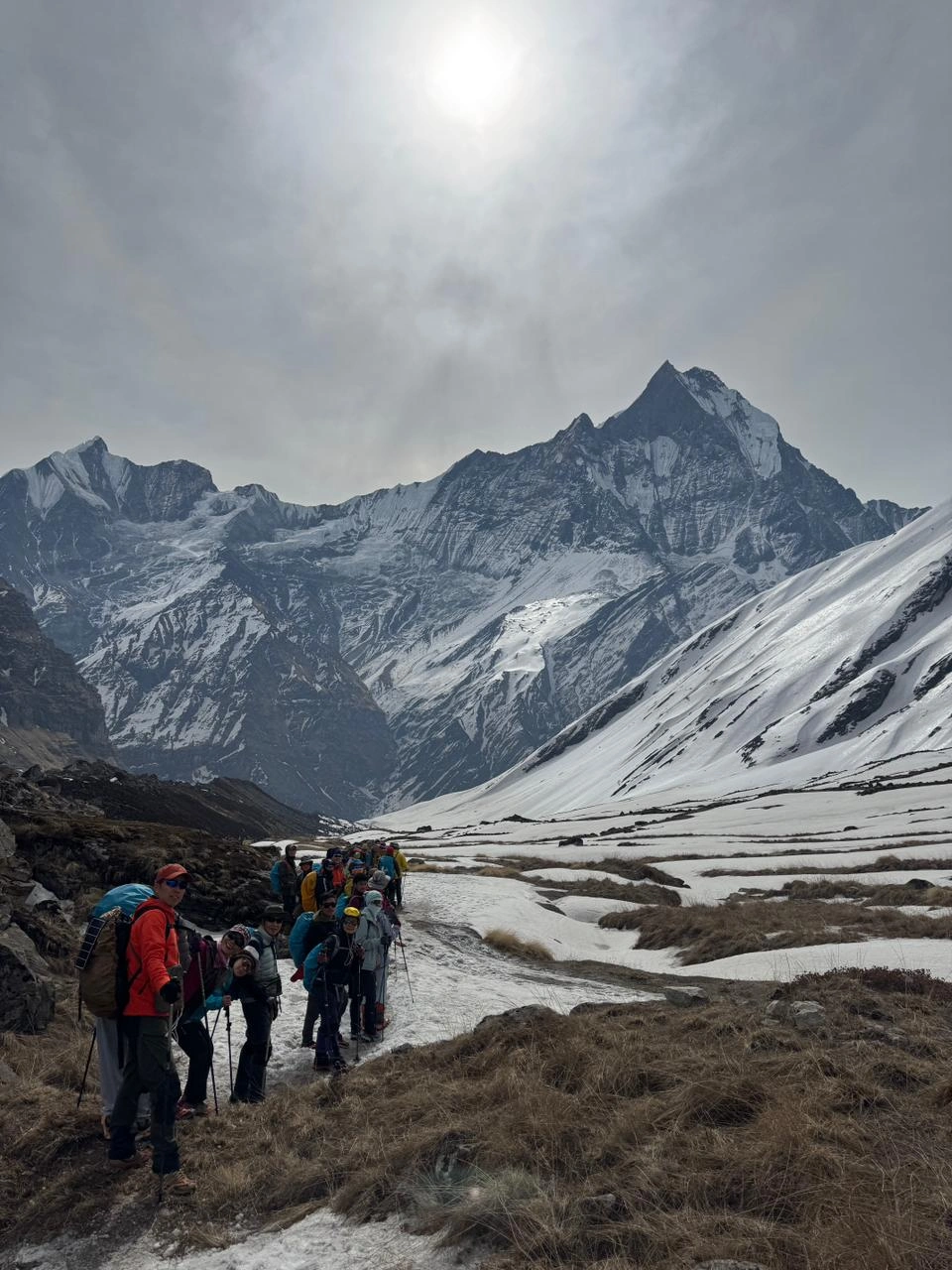
The Annapurna Base Camp sits 38 km by trail from the nearest road terminus at Jhinu Danda (1,780 m). Every ingredient, from cooking oil to vegetables to propane canisters, travels that distance on a porter's back. Teahouse operators at ABC also pay winter closure costs, maintaining the infrastructure for a 9-month operating season while absorbing 3 months of zero revenue.
What Gear and Personal Expenses Should You Budget For Annapurna Base Camp Trek?
Gear and personal expenses add $100–$400 to the total ABC trek budget, covering equipment purchase or rental, charging fees, Wi-Fi costs, hot shower fees, and personal snacks and drinks.
What clothing and equipment might you need to buy or rent?
Essential ABC trek gear costs $200–$600 to purchase new or $30–$80 to rent in Pokhara's Lakeside district. The 6 essential equipment categories for the ABC trek are:
Sleeping bag (–10°C rated): Purchase NPR 3,500–8,000 ($26–$59); rent NPR 150–250/day ($1.10–$1.84/day)
Trekking poles: Purchase NPR 2,000–5,000 ($15–$37); rent NPR 100–150/day ($0.74–$1.10/day)
Down jacket (800 fill power minimum): Purchase NPR 4,500–12,000 ($33–$88)
Trekking boots (ankle-support, waterproof): Purchase NPR 5,000–15,000 ($37–$110)
Rain poncho or Gore-Tex jacket: Purchase NPR 1,500–6,000 ($11–$44)
Headlamp with extra batteries: Purchase NPR 800–2,500 ($6–$18)
Thamel (Kathmandu) and Lakeside (Pokhara) both offer Sherpa Adventure Gear, North Face, and The North Face-licensed products alongside lower-cost local brands. Local brand quality is sufficient for the ABC trail, which is a non-technical trekking route.
How much should you budget for charging, Wi-Fi, and showers on Annapurna Base Camp Trek?
Charging, Wi-Fi, and shower fees together add $15–$40 to the total ABC trek budget across a 12-day itinerary. These are 3 separate paid services at most teahouses above Ghorepani (2,860 m).
The standard rates at teahouses in 2025–2026:
Device charging: NPR 150–300 ($1.10–$2.20) per charge session
Wi-Fi (1 hour): NPR 100–300 ($0.74–$2.20) per device
Hot shower: NPR 200–400 ($1.47–$2.94) per person
A solar power bank (20,000 mAh capacity) purchased in Kathmandu for NPR 2,500–4,000 ($18–$29) eliminates 60–70% of teahouse charging fees across a 12-day trek.
What extra cash should you carry for snacks and drinks?
Carry an extra $30–$60 cash in Nepali rupees for trail snacks and beverages. ATMs are available in Pokhara and Nayapul but are absent on the trail between Tikhedhunga and Jhinu Danda (a 10-day trail stretch). All teahouse transactions above Nayapul are cash-only.
Trail snacks available at teahouses include Snickers bars (NPR 200–300/$1.47–$2.20), Pringles (NPR 400–600/$2.94–$4.41), and local biscuits (NPR 80–150/$0.59–$1.10). Energy drink sachets (Wai Wai noodles, local brand) cost NPR 50–80 ($0.37–$0.59) and are the most calorie-efficient trail snack available on the route.
What Hidden Costs Can Increase Your ABC Trek Budget?
4 hidden costs add $80–$300 to the ABC trek budget: guide and porter tips, travel insurance, emergency evacuation, and weather-related itinerary extensions. Each of these costs is predictable and budgetable before departure.
How much should you budget for tips on Annapurna Base Camp Trek?
Budget $3–$5/day for the guide and $2–$3/day for the porter as tip. On a 12-day trek, this totals $60–$96 for guide tips and $24–$36 for porter tips. Tipping is a standard practice in the Nepali trekking industry and constitutes 10–15% of a guide's monthly income.
Trekkers present tips in a sealed envelope on the final trek day at Nayapul or Jhinu Danda. Tips are paid in Nepali rupees. US dollars are accepted but exchanged at a 3–5% loss by porters and guides at local moneychangers.
Does travel insurance add a high cost to the Annapurna Base Camp Trek?
Travel insurance with helicopter evacuation coverage costs $80–$200 for a 2-week Nepal trek policy. Standard travel insurance without evacuation coverage is insufficient for the ABC trek; helicopter evacuation from ABC to Pokhara costs $3,000–$6,000 without insurance.
World Nomads (Policy Explorer plan) and Safety Wing (Adventure plan) are 2 insurance providers offering Nepal trek-specific coverage including helicopter evacuation, trip cancellation, and altitude illness hospitalization. Policies are priced per day of coverage, ranging $5–$14/day depending on nationality and coverage scope.
What emergency or weather-related costs can come up on the ABC Trail?
Emergency and weather costs add $0–$500 to the ABC trek budget. 3 common unplanned cost scenarios on the ABC trail are:
Weather extension (1–3 extra days): Heavy snowfall at ABC blocks descent for 24–72 hours in January, February, and October–November. Each extension day costs $35–$55 for food, accommodation, and guide wages.
Medical descent: Acute mountain sickness (AMS) requiring descent from MBC (3,700 m) to Bamboo (2,310 m) by guide assistance costs an extra 1–2 guide days at $30–$35/day.
Helicopter rescue: From ABC (4,130 m) to Pokhara costs $3,000–$6,000 uninsured. Insurance reduces out-of-pocket cost to the policy excess, typically $100–$300.
How Can You Save Money on the Annapurna Base Camp Trek?
ABC trek costs decrease by 20–40% through 4 money-saving strategies: traveling in off-season months, trekking independently with a rented guide shared among 4+ people, preparing gear from home, and eating dal bhat twice daily.
Should you trek independently or book a package for Annapurna Base Camp Trek?
Independent trekking saves $300–$700 compared to an agency package on the same 12-day ABC itinerary. Trekkers pressed for time should also look at the 10-day Annapurna Base Camp trek, which trims the itinerary without cutting the base camp experience. The cost savings come from eliminating agency commission (20–35%), booking teahouses directly on arrival, and self-managing permit collection.
Independent trekking is viable for trekkers with 2 key assets: prior high-altitude experience above 3,000 m and offline navigation capability using Maps.me or Gaia GPS pre-loaded with the Annapurna Sanctuary GPX track. First-time high-altitude trekkers reduce risk meaningfully by hiring a licensed guide even when forgoing a full agency package.
When is the cheapest time to do the ABC trek?
December, January, and June–August offer the lowest ABC trek prices, with teahouse room rates 15–30% below peak-season prices and fewer competing trekkers for lodge space. December and January bring clear morning skies but sub-zero temperatures above 3,500 m.
Winter trekking (December–February) requires a sleeping bag rated to –15°C (5°F), adding NPR 300–400/day ($2.20–$2.94) to rental costs but reducing accommodation costs by $2–$5/night. The net saving over a 12-day winter trek versus a peak-season trek is $80–$180.
Which costs can you reduce without hurting safety?
4 costs are reducible without affecting safety: accommodation grade, snack purchasing location, transport mode, and permit self-processing.
Accommodation: Choosing the cheapest teahouse over premium lodge saves $3–$8/night across 11 nights ($33–$88 total)
Snacks: Purchasing trail snacks in Pokhara before departure saves 40–60% versus buying the same items at teahouses above Deurali
Transport: The Kathmandu–Pokhara tourist bus at $10 versus the domestic flight at $95 saves $85 with a 6-hour time trade-off
Permits: Self-processing permits at the NTB office saves the agency processing fee of NPR 500–1,000 ($3.70–$7.35) per permit
What Is a Realistic Budget for Different ABC Trek Styles?
3 realistic budget tiers apply to the ABC trek in 2026: a $540–$650 low-budget independent itinerary, a $1,050–$1,350 mid-range guided itinerary, and a $1,600–$2,100 full-service agency package. All 3 figures cover 12 trekking days and exclude international airfare.
What is a sample low-budget ABC trek budget?
The following budget covers a 12-day solo ABC trek with no guide, shared teahouse rooms, and dal bhat twice daily.
Cost Category | Unit Cost | Total (12 days) |
ACAP Permit | $22 once | $22 |
TIMS Card | $15 once | $15 |
Kathmandu–Pokhara bus | $10 once | $10 |
Pokhara–Nayapul jeep | $4 once | $4 |
Nayapul–Pokhara return jeep | $4 once | $4 |
Accommodation ($6/night × 11) | $6/night | $66 |
Food ($14/day × 12) | $14/day | $168 |
Snacks and water | — | $30 |
Charging and Wi-Fi | — | $20 |
Gear rental (poles, sleeping bag) | — | $60 |
Emergency cash buffer | — | $100 |
Total |
| $499–$600 |
The table above shows a minimum-spend budget for a physically experienced solo trekker. Accommodation costs reflect teahouses below 3,000 m where rooms are free with meal purchase.
What is a sample mid-range ABC trek budget?
The following budget covers a 12-day ABC trek with a licensed guide, a shared porter, private teahouse rooms, and a varied meal plan.
Cost Category | Unit Cost | Total (12 days) |
ACAP + TIMS Permits | $37 once | $37 |
Kathmandu–Pokhara flight | $95 once | $95 |
Pokhara–Nayapul private taxi | $20 once | $20 |
Return jeep Nayapul–Pokhara | $4 once | $4 |
Accommodation ($10/night × 11) | $10/night | $110 |
Food ($20/day × 12) | $20/day | $240 |
Licensed guide ($32/day × 12) | $32/day | $384 |
Porter ($22/day × 12, split 2 pax) | $11/day | $132 |
Tips (guide + porter, 12 days) | — | $72 |
Travel insurance | — | $120 |
Personal expenses (gear, snacks) | — | $100 |
Total |
| $1,150–$1,400 |
The table above applies to a 2-person group sharing a porter. Single trekkers pay the full porter rate, raising the total to $1,350–$1,600.
What is a sample guided ABC package budget?
The following budget covers a 12-day ABC package booked through a TAAN-registered Pokhara agency with all logistics pre-arranged.
Cost Category | Included in Package | Package Cost |
Permits (ACAP + TIMS) | Yes | — |
Airport pickup (Pokhara) | Yes | — |
Senior licensed guide | Yes | — |
Dedicated porter | Yes | — |
Teahouse accommodation (twin) | Yes | — |
Breakfast and dinner | Yes | — |
Emergency evacuation insurance | Yes | — |
Agency fee and profit margin | Yes | — |
Kathmandu–Pokhara flight | Add-on | $95 |
Lunches on trail | Not included | $80 |
Tips | Not included | $96 |
Total Package + Add-ons |
| $1,600–$2,100 |
The table above reflects standard 2026 package pricing from agencies in Lakeside, Pokhara. Premium packages including Kathmandu hotel stays pre- and post-trek add $100–$200.
How Should You Plan Your ABC Trek Budget With Expert Help?
A TAAN-registered local trekking agency reduces permit errors, over-payment, and logistical gaps in ABC trek planning. Local agencies in Pokhara and Kathmandu process permits, arrange licensed guides, and confirm teahouse availability on peak-season dates when walk-in rooms are limited. Browse our fully supported Annapurna Base Camp trek package to see what's included, pricing tiers, and available departure dates.
Can a local trekking agency help you reduce ABC trek costs?
A local agency reduces total costs by $100–$250 for groups of 3 or more trekkers through bulk permit processing, group guide rates, and pre-negotiated teahouse discounts. Agencies affiliated with TAAN and the Nepal Mountaineering Association (NMA) carry price transparency obligations under Nepal's tourism regulations.
3 agency services that reduce costs for group trekkers:
Group guide allocation: 1 guide for 4 trekkers at $35/day splits to $8.75/person/day versus $35/person/day for solo hikers
Teahouse pre-booking: Agencies with established teahouse relationships secure rooms on peak-season October weekends when walk-in availability reaches zero above Chhomrong
Permit batch processing: Agencies processing 5+ permits simultaneously reduce NTB office visit time from 2 hours to 30 minutes
What Are the Key Takeaways About Annapurna Base Camp Trek Costs?
The Annapurna Base Camp trek costs $500–$2,500 in 2026 depending on trek style, group size, season, and service level. Budget independent trekkers spend $500–$650. Mid-range guided trekkers spend $1,050–$1,400. Full-service agency packages cost $1,600–$2,100.
The 6 key cost facts every ABC trekker applies before departure:
Permits total $37 for foreign nationals: $22 ACAP + $15 TIMS, obtained at Kathmandu NTB or Birethanti checkpost
Guides cost $30–$35/day all-inclusive: food, accommodation, and wages are bundled in the guide's daily rate
Porters cost $20–$25/day: legally limited to 20–25 kg maximum load under Nepal porter welfare guidelines
Teahouses charge $5–$15/night: rates increase by 30–50% above 3,000 m due to supply porter costs
Travel insurance costs $80–$200: helicopter evacuation from ABC costs $3,000–$6,000 without coverage
Peak season (March–May, September–November) raises prices 15–25%: off-season trekking in December–January or June–August reduces accommodation and transport costs
The Annapurna Base Camp trek remains one of the most cost-accessible high-altitude treks in Nepal's central Himalayas, with a well-developed teahouse network that eliminates camping costs and supports a broad range of budgets across all 4 travel seasons.