The Mardi Himal Trek is a short-to-moderate Himalayan trek in Nepal’s Annapurna region that usually covers 48 to 55 km and takes 3, 5, or 7 days, depending on the itinerary, starting point, and descent route. Most trekkers complete the route on the standard 5-day itinerary, which begins at Kande, climbs through Forest Camp, Low Camp, and High Camp, reaches Mardi Himal Base Camp at 4,500 m, and descends to Siding village or back to the original trailhead. This trek combines manageable daily distances with major elevation change, making it one of the most popular short treks near Pokhara for trekkers who want mountain views, ridge walking, and teahouse access without the length of longer Annapurna routes.
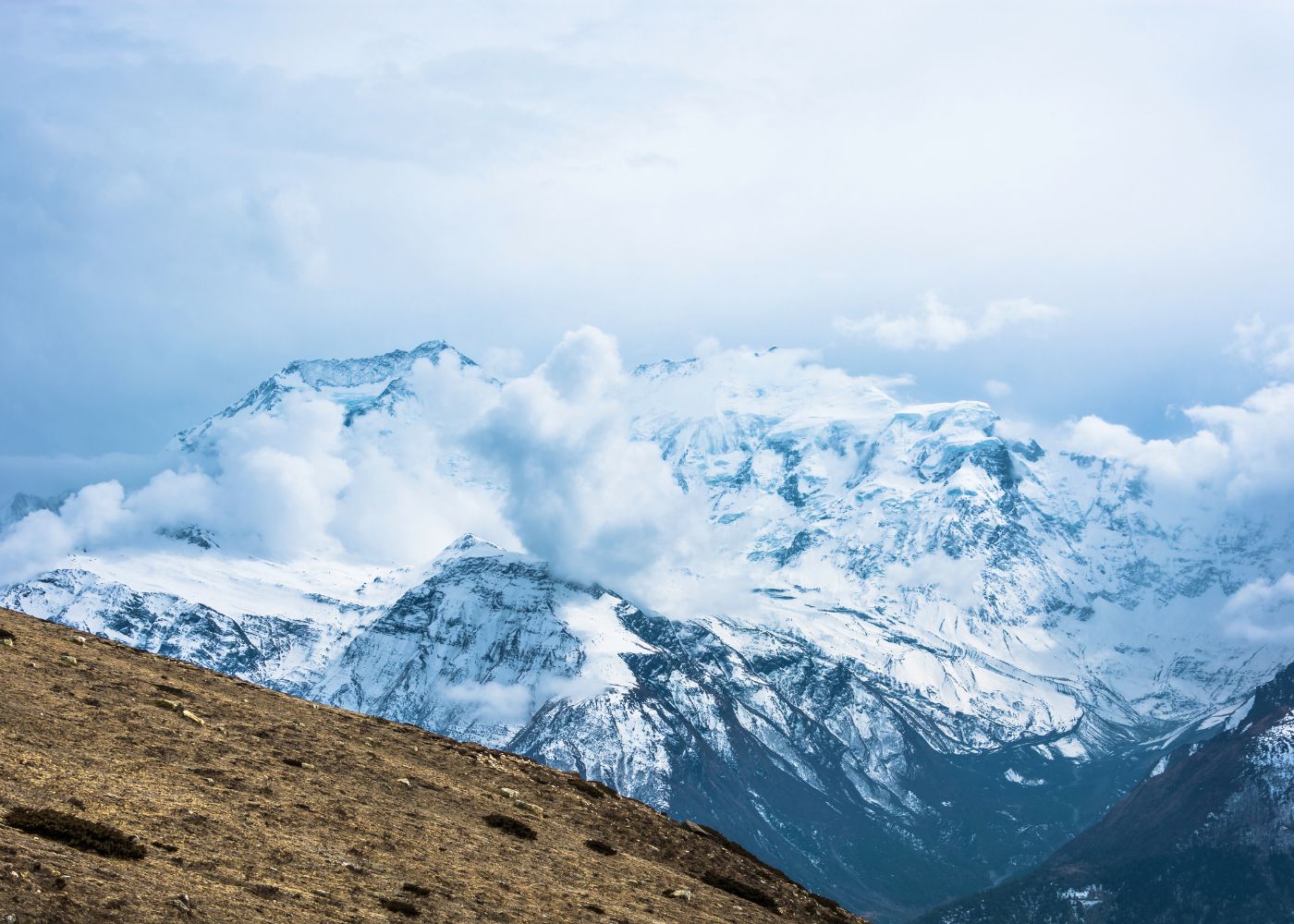
Understanding the distance and duration of the Mardi Himal Trek requires more than a single number, because the total time depends on daily walking hours, altitude gain, acclimatization, weather, transport timing, and itinerary choice. Trekkers comparing the 3-day express trek, 5-day standard plan, and 7-day beginner-friendly itinerary need to know how far they walk each day, how the High Camp to Base Camp section affects effort, and how route choices such as Kande–Siding or Kande–Kande change the total distance. This guide explains the full trek length day by day, including route stages, walking time, elevation profile, key camp stops, and the logistics that determine the right Mardi Himal plan for your schedule and fitness level.
How Many Days Does the Mardi Himal Trek Usually Take?
The Mardi Himal Trek takes 5 days on the most common itinerary. The 5-day plan allocates 3 days for ascent from Kande to Mardi Himal Base Camp, 1 day at High Camp for acclimatization, and 1 day for descent to Siding village via the alternate lower trail.
The 5-day format balances altitude gain with walking hours. Trekkers ascend approximately 2,730 m of vertical elevation across 3 ascending days. The descent to Siding covers a different trail from the ascent route, reducing the total repeat-section distance by 12 km compared to returning the same way.
The 5-day itinerary applies to trekkers starting from Kande, which lies 1.5 hours by road from Pokhara. Groups starting directly from Pokhara add 1 transit day at the beginning, extending the trip to 6 days total.
How Do 3-Day, 5-Day, and 7-Day Mardi Himal Itineraries Compare?
The 3 standard Mardi Himal itineraries are the 3-day express, 5-day standard, and 7-day extended plan. Each version covers the same core route from Kande to Mardi Himal Base Camp but differs in daily elevation gain, rest stops, and descent options.
The following table shows the key differences between all 3 itinerary lengths:
|
Itinerary |
Total Trekking Days |
Max Daily Elevation Gain |
Descent Route |
Suitable For |
|
3-Day |
3 |
1,500 m |
Same route (Kande) |
Experienced trekkers only |
|
5-Day |
5 |
900 m |
Alternate (Siding) |
Most trekkers |
|
7-Day |
7 |
600 m |
Alternate (Siding) |
First-timers, acclimatization focus |
The 3-day plan compresses the ascent into 2 days and the descent into 1 day. The maximum single-day elevation gain on this plan reaches 1,500 m, between Low Camp (2,985 m) and Base Camp (4,500 m). This gain exceeds the recommended 300–500 m per day above 3,000 m and raises the risk of acute mountain sickness (AMS).
The 7-day plan adds 2 extra days: 1 rest day at Low Camp (2,985 m) and 1 rest day at High Camp (3,580 m). These rest days reduce the daily elevation gain to 600 m maximum and allow physiological adjustment to reduced oxygen levels above 3,000 m.
How Many Hours Do You Walk Each Day on the Trek?
Trekkers walk 4 to 7 hours per day on the Mardi Himal Trek. The shortest walking day covers 4 hours on the descent from High Camp to Siding village. The longest walking day reaches 7 hours on the ascent from Low Camp to Mardi Himal Base Camp and back to High Camp.
Daily walking hours across the 5-day standard itinerary break down as follows:
-
Day 1 (Kande to Forest Camp): 4 to 5 hours, 830 m ascent over 10 km
-
Day 2 (Forest Camp to Low Camp): 3 to 4 hours, 385 m ascent over 6 km
-
Day 3 (Low Camp to High Camp): 4 to 5 hours, 595 m ascent over 8 km
-
Day 4 (High Camp to Base Camp and return): 6 to 7 hours, 920 m ascent and descent over 10 km round trip
-
Day 5 (High Camp to Siding): 4 to 5 hours, 2,600 m descent over 14 km
Walking pace on this route averages 2 km per hour above 3,500 m due to reduced oxygen partial pressure. Below 3,000 m, trekking pace averages 3 to 4 km per hour on maintained trail.
How Far Is the Mardi Himal Trek From Start to Finish?
The Mardi Himal Trek covers 48 to 55 km total walking distance depending on the itinerary and start point. The standard one-way distance from Kande (1,770 m) to Siding village (1,600 m) via Mardi Himal Base Camp (4,500 m) measures 48 km across 5 days.
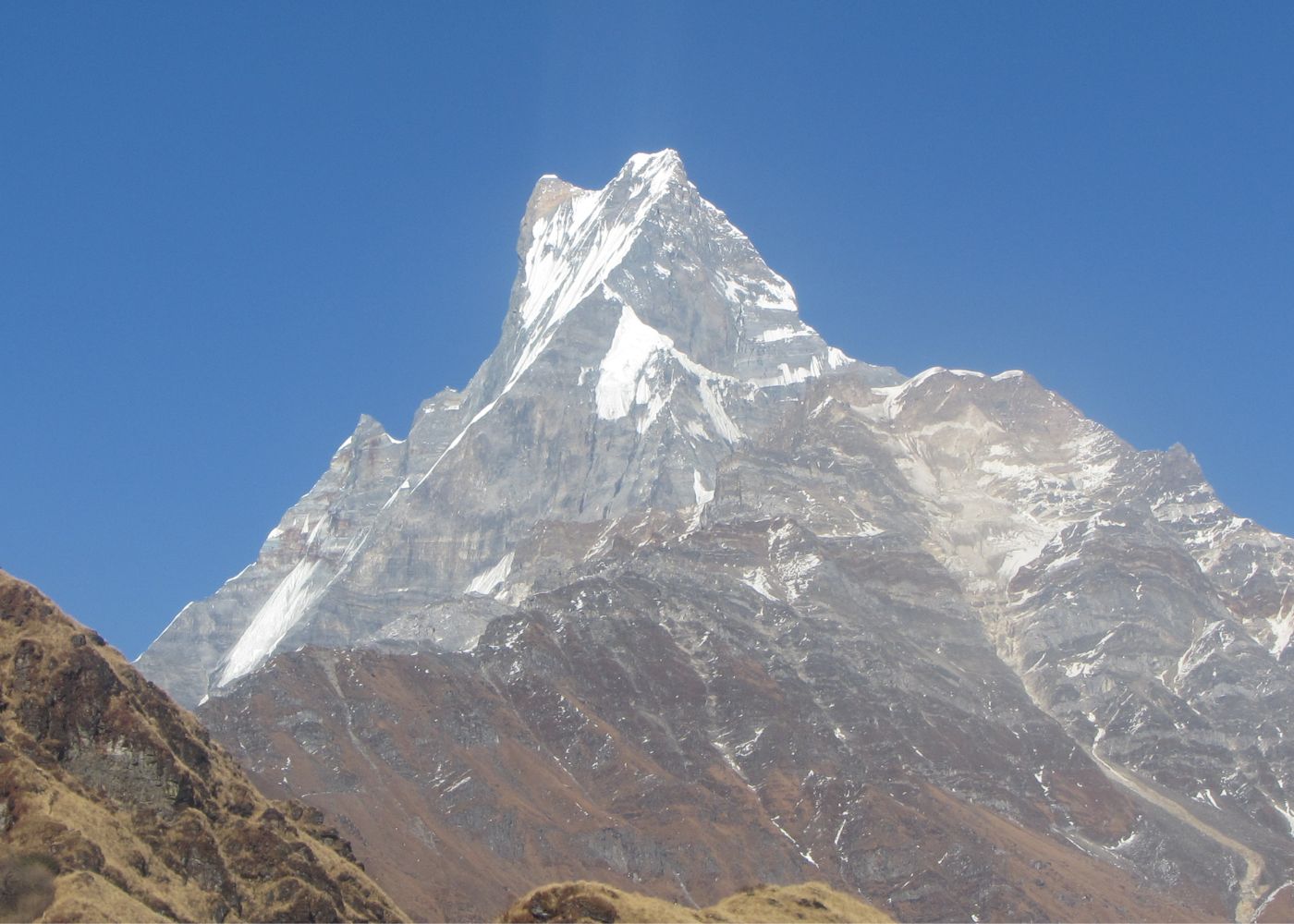
Trekkers who return via the same ascent route from Base Camp back to Kande cover 55 km in total. The Kande-to-Siding traverse uses 2 different trail segments: the upper ridge trail for ascent and the Siding valley trail for descent. These 2 trails share only the High Camp section, making the traverse more varied and efficient.
The total elevation change on the standard route accumulates to 5,800 m of combined ascent and descent across all trekking days. Day 5 alone accounts for 2,600 m of descent from High Camp (3,580 m) to Siding village (1,600 m) via Low Camp.
Which Start and End Points Change the Total Distance?
4 common start and end point combinations change the total Mardi Himal Trek distance by 8 to 22 km. The 4 combinations are: Kande–Siding (48 km), Kande–Kande (55 km), Pokhara–Siding (52 km), and Lwang–Siding (44 km).
Kande serves as the most frequently used start point. It sits at 1,770 m on the Pokhara–Baglung Highway and reaches Pokhara by taxi or local bus in 45 minutes. Starting from Kande saves 4 km compared to starting from the alternate Lwang village trailhead on the eastern approach.
Ending at Siding village reduces total distance by 7 km compared to returning to Kande. Siding (1,600 m) lies in the Modi Khola valley and connects to Pokhara by road in 1.5 hours. Trekkers ending at Siding avoid repeating 14 km of the upper ridge trail used on the ascent.
The Lwang trailhead (1,850 m) on the eastern approach shortens the total distance to 44 km and reduces the road travel time from Pokhara to 1 hour. Lwang is less used than Kande but provides an equally valid entry point with full teahouse accommodation.
How Far Is the Walk From High Camp to Base Camp?
The walk from High Camp (3,580 m) to Mardi Himal Base Camp (4,500 m) covers 5 km one way and takes 3 to 4 hours. The round trip from High Camp to Base Camp and back measures 10 km and requires 6 to 7 hours total.
High Camp is a cluster of 4 teahouses positioned on an open ridge at 3,580 m. Base Camp sits at 4,500 m on a rocky promontory above the tree line. The trail between them ascends 920 m of vertical elevation along an exposed southeast ridge with 2 intermediate viewpoints: Badal Danda (3,980 m) and Upper Viewpoint (4,200 m).
The final 1 km section from Upper Viewpoint to Base Camp traverses loose scree and requires 45 to 60 additional minutes due to elevation and terrain. Trekkers departing High Camp before 6:00 AM reach Base Camp before cloud cover forms over the Annapurna South (7,219 m), Hiunchuli (6,441 m), and Machhapuchhre (6,993 m) summit views.
What Route Does the Mardi Himal Trek Follow Day by Day?
The Mardi Himal Trek follows a 5-stage route from Kande (1,770 m) through 4 consecutive camps to Mardi Himal Base Camp (4,500 m) and descends to Siding village (1,600 m). The route ascends the Mardi Himal southeast ridge through forest, rhododendron, and alpine zones across 48 km.
The day-by-day route on the 5-day standard itinerary progresses as follows:
-
Day 1: Kande (1,770 m) → Forest Camp (2,600 m), 10 km, 830 m ascent through oak and rhododendron forest
-
Day 2: Forest Camp (2,600 m) → Low Camp (2,985 m), 6 km, 385 m ascent through dense rhododendron
-
Day 3: Low Camp (2,985 m) → High Camp (3,580 m), 8 km, 595 m ascent entering open ridge and meadow terrain
-
Day 4: High Camp (3,580 m) → Base Camp (4,500 m) → High Camp (3,580 m), 10 km, 920 m ascent and descent on exposed scree ridge
-
Day 5: High Camp (3,580 m) → Low Camp (2,985 m) → Siding (1,600 m), 14 km, 2,600 m descent through valley trail
The route crosses 3 ecological zones: the subtropical forest zone (1,770–2,600 m), the temperate rhododendron zone (2,600–3,200 m), and the subalpine meadow zone (3,200–4,500 m). Each zone represents a distinct vegetation type and temperature range.
Where Do the Main Stops Fit Into the Trek Timeline?
The 5 main stops on the Mardi Himal Trek are Forest Camp, Low Camp, High Camp, Base Camp, and Siding, positioned across 5 consecutive trekking days. Each stop functions as a tea house settlement with accommodation and meals available for trekkers.
Forest Camp (2,600 m) marks the end of Day 1. It contains 6 tea houses and serves as the first overnight stop above the cloud line. Low Camp (2,985 m) closes Day 2 and sits at the transition between dense forest and open ridge. High Camp (3,580 m) ends Day 3 and provides the staging point for the Base Camp push on Day 4.
Base Camp (4,500 m) is a day-use destination only. No permanent tea houses operate at Base Camp due to the exposed terrain and high snowfall risk between November and April. Trekkers reach Base Camp on Day 4 morning and return to High Camp for the overnight stay.
Siding village (1,600 m) concludes Day 5. It contains 8 tea houses and a road connection to Pokhara. The drive from Siding to Pokhara takes 1.5 hours via local jeep, which trekkers arrange through their tea house the previous evening.
How Do Ascent and Descent Days Affect Total Time?
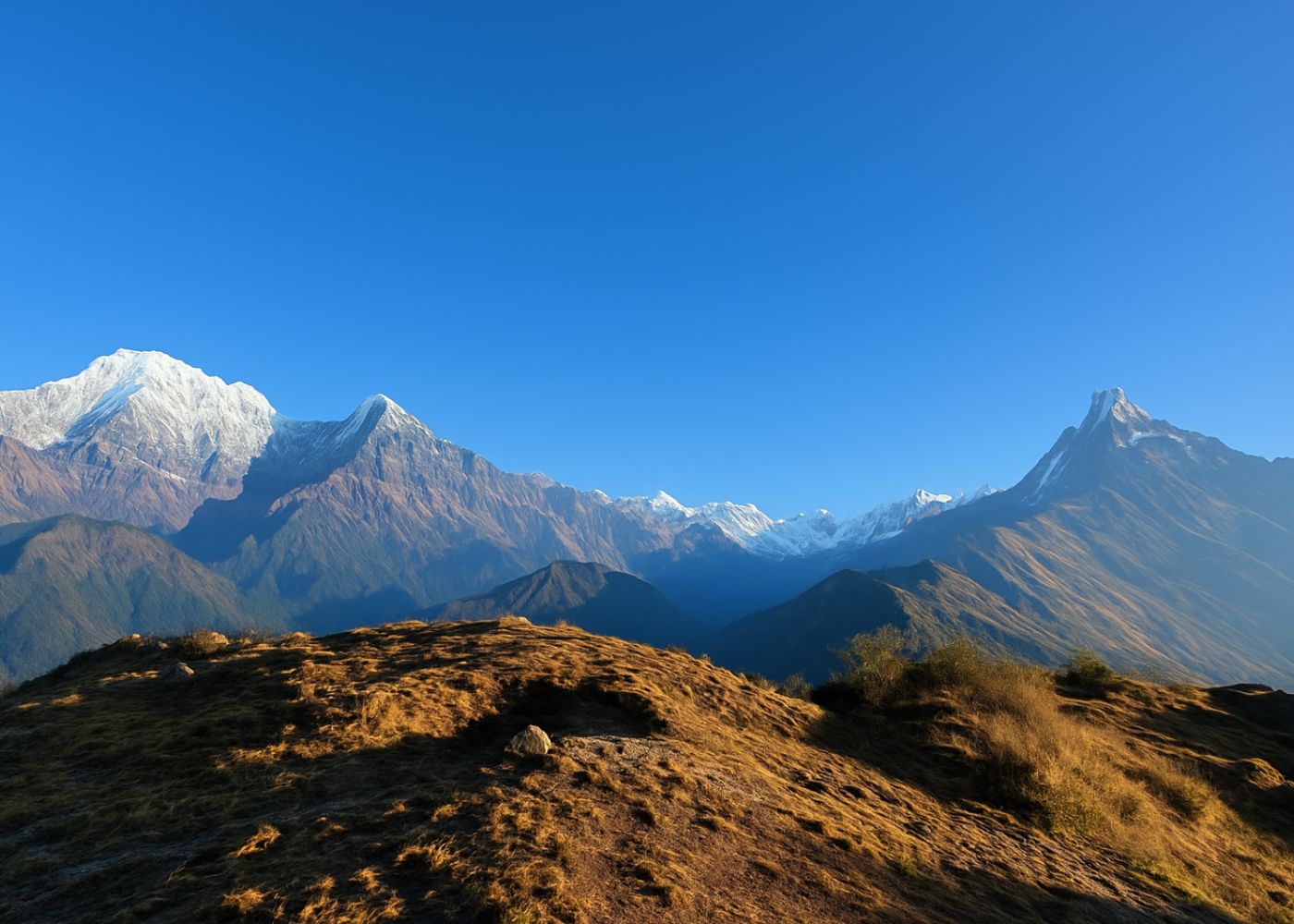
Ascent days on the Mardi Himal Trek average 5 hours of walking; descent days average 4 hours. The total trek spans 3 ascent days, 1 summit-push day (both ascent and descent to High Camp), and 1 full descent day.
The 3 ascent days (Days 1–3) accumulate 1,810 m of total vertical gain across 24 km. The summit-push day (Day 4) adds 920 m of ascent and 920 m of descent in a single day, making it the most physically demanding day in terms of total elevation change.
The descent day (Day 5) covers the greatest horizontal distance at 14 km but requires the least technical effort. Descending 2,600 m from High Camp to Siding stresses the knees on the steep lower valley section. Trekkers with prior knee injuries take 5 to 6 hours on Day 5 compared to the standard 4 hours.
Total ascent across the full trek reaches 2,730 m. Total descent reaches 3,510 m on the Kande–Siding traverse, reflecting the lower elevation of Siding (1,600 m) compared to Kande (1,770 m).
What Can Make the Trek Shorter or Longer?
6 key factors change the Mardi Himal Trek duration: fitness level, altitude response, weather, transport delays, permit processing time, and trail conditions. Each factor adds between half a day and 2 full days to the planned schedule.
How Do Fitness and Altitude Affect Trek Duration?
Trekkers with high cardiovascular fitness complete the 5-day itinerary in 4 days by combining Forest Camp and Low Camp into a single day. Trekkers with limited high-altitude exposure require 1 additional rest day at High Camp (3,580 m) to allow hemoglobin concentration to adjust to the reduced oxygen partial pressure at altitude.
Acute mountain sickness (AMS) affects approximately 25% of trekkers above 3,500 m on Himalayan routes, according to wilderness medicine research. AMS symptoms include headache, nausea, and disturbed sleep. Trekkers experiencing AMS at High Camp descend 600 m to Low Camp immediately, which adds 1 extra day to the itinerary.
Physical fitness level determines daily walking pace. A trekker with 3 to 4 months of aerobic training covers the Kande–Forest Camp section (10 km) in 4 hours. An untrained trekker covers the same section in 6 hours. This 2-hour daily difference accumulates to 8–10 additional hours across the full 5-day route.
How Do Weather and Transport Delays Affect Timing?
Weather delays add 1 to 2 days to the Mardi Himal Trek schedule between December and February when snowfall closes the High Camp to Base Camp trail. Monsoon season (June to August) adds 1 extra day through mud, leeches, and reduced visibility on the upper ridge.
The 2 optimal trekking seasons for the Mardi Himal route are the pre-monsoon season (March to May) and the post-monsoon season (September to November). Pre-monsoon season offers rhododendron blooms at Forest Camp and Low Camp between late March and mid-April. Post-monsoon season provides the clearest summit views of Annapurna South and Machhapuchhre from Base Camp.
Transport delays between Pokhara and Kande affect starting time on Day 1. The Pokhara–Kande road journey takes 45 minutes by taxi (NPR 1,500–2,000) or 1.5 hours by local bus (NPR 150). Late departures from Pokhara after 10:00 AM reduce Day 1 trekking time and may force an overnight stop at an intermediate tea house below Forest Camp.
Is Mardi Himal a Good Short Trek for Beginners?
Yes, the Mardi Himal Trek is a suitable short trek for beginners on the 5-day or 7-day itinerary. The maximum altitude of 4,500 m at Base Camp is 1,000 m lower than Everest Base Camp (5,364 m) and 635 m lower than Annapurna Base Camp (5,135 m), reducing the altitude risk profile significantly.
The Mardi Himal Trek is classified as a moderate-difficulty trek by the Annapurna Conservation Area Project (ACAP). The classification reflects the combination of a manageable maximum altitude, continuous tea house infrastructure across all 5 camps, and clear trail markers throughout the route.
What Pace Works Best for First-Time Trekkers?
First-time trekkers on the Mardi Himal route walk at 2 to 3 km per hour on ascent days and rest 10 minutes for every 60 minutes of walking above 3,000 m. This pace covers the standard daily distances of 6 to 10 km within 4 to 6 hours and prevents early-onset fatigue.
The 7-day itinerary paces the route to 6 to 8 km per day. This daily distance matches the physical capacity of trekkers with no prior Himalayan experience but basic aerobic fitness from activities such as regular hiking, cycling, or swimming. The 7-day plan also distributes the elevation gain across 4 ascent days instead of 3, keeping the maximum single-day gain below 600 m.
When Should You Add a Buffer Day to the Itinerary?
Trekkers add 1 buffer day to the Mardi Himal itinerary when traveling during October–November peak season, when High Camp tea houses reach full capacity. A buffer day also applies when weather forecasts show a 60% or higher probability of snowfall above 3,500 m during the planned summit-push day.
Buffer days are best inserted at High Camp (3,580 m) rather than at lower camps. A rest day at High Camp serves 2 functions: it extends physiological acclimatization above 3,500 m and provides a second attempt window for the Base Camp summit push if cloud cover obscures the view on Day 4 morning.
What Logistics Affect Your Planned Trek Length?
4 logistical factors directly affect the total planned length of the Mardi Himal Trek: permit processing, transport scheduling, accommodation availability, and guide or porter arrangements. Each factor requires confirmation at least 24 hours before departure from Pokhara.
What Permits Should You Arrange Before the Trek?
Trekkers on the Mardi Himal Trek require 2 permits: the Annapurna Conservation Area Permit (ACAP) and the Trekkers' Information Management System (TIMS) card. Both permits are issued in Pokhara at the Nepal Tourism Board (NTB) office on Damside Road or at the Pokhara Tourist Service Center.
The ACAP permit costs NPR 3,000 (approximately USD 22) for international trekkers as of 2026. The TIMS card costs NPR 2,000 (approximately USD 15) for trekkers affiliated with registered trekking agencies. Processing both permits at the Pokhara NTB office takes 30 to 60 minutes with a valid passport and 2 passport-sized photographs.
Trekkers who arrange permits on the same morning as their departure reduce Day 1 trail time by 2 to 3 hours. Arranging both permits the day before departure ensures a full-day first stage from Kande to Forest Camp.
What Should You Pack for Your Planned Number of Days?
Trekkers on the 5-day Mardi Himal itinerary carry 8 to 10 kg of base weight, including sleeping bag rated to -10°C, down jacket, waterproof layer, 3 changes of trekking clothes, and trekking poles. The 7-day plan adds 2 extra days of snack supplies and 1 additional set of base layers, increasing pack weight to 10 to 12 kg.
Tea houses on the Mardi Himal route supply blankets, but blanket insulation at High Camp (3,580 m) rates insufficient below -5°C overnight temperatures. A personal sleeping bag rated to -10°C adds 1.2 to 1.8 kg to pack weight but eliminates the risk of cold-related sleep disruption on Days 3 and 4.
Trekking poles reduce knee stress on the 14 km descent on Day 5 by distributing 22% of downhill body load to the upper body, according to biomechanical research published by the Journal of Sports Sciences. Both poles are practical; a single pole provides limited benefit on steep descent trails.
How Should You Choose the Right Mardi Himal Trek Plan?
Trekkers select the right Mardi Himal plan by matching 3 variables: available days in Pokhara, prior trekking experience, and target altitude goal. The 3-day plan suits experienced trekkers with 3 available days; the 5-day plan suits most trekkers with 5 to 6 available days; the 7-day plan suits first-timers with 7 available days.
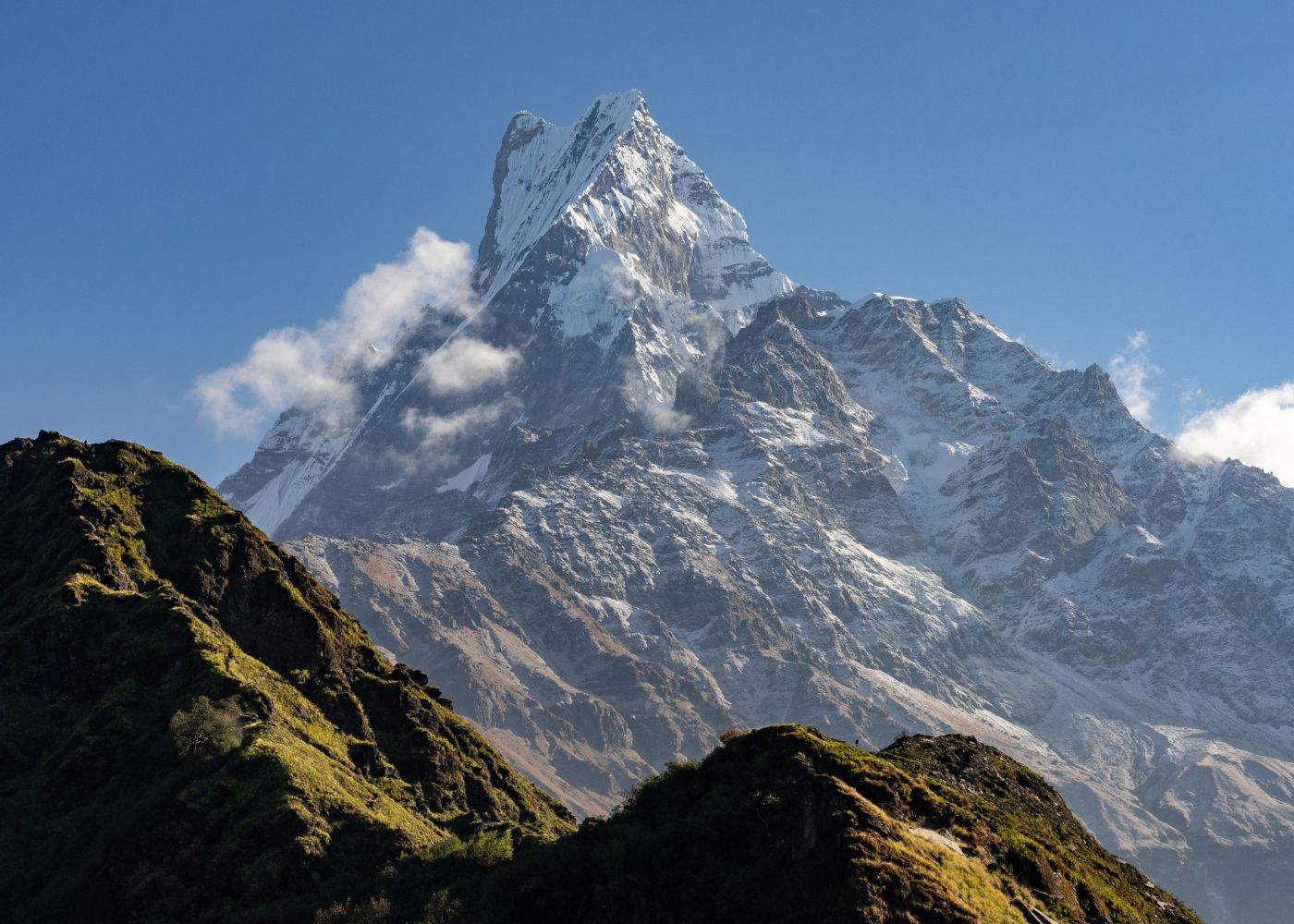
The Mardi Himal Trek fits into a broader Pokhara travel itinerary with 5 to 8 total days in the region. Trekkers combining the Mardi Himal route with the Poon Hill trek (4 days) or the Annapurna Base Camp trek (7 days) allocate Mardi Himal as the first or last segment of the combined itinerary.
Can a Guided Mardi Himal Trek Package Match Your Schedule?
Yes, guided Mardi Himal Trek packages are available in 3-day, 5-day, and 7-day formats from registered trekking agencies in Pokhara's Lakeside district. Guided packages include licensed guide fees, porter services, ACAP and TIMS permit fees, tea house accommodation, and 3 daily meals from Day 1 dinner to final day breakfast.
The standard 5-day guided package costs USD 350 to USD 500 per person as of 2026, based on bookings with agencies holding Nepal Tourism Board registration. Solo trekkers hiring a licensed guide directly pay USD 25 to USD 35 per day for guide services and USD 20 to USD 25 per day for porter services, exclusive of accommodation and permits.
Guided packages match custom schedules through departure date flexibility. Most Lakeside agencies confirm departures within 24 hours of booking for groups of 2 or more trekkers. Solo trekkers joining a group departure pay the per-person rate without a solo supplement at most agencies.
What Are the Key Takeaways on Mardi Himal Length and Time?
The Mardi Himal Trek covers 48 to 55 km total distance, reaches 4,500 m maximum altitude, and completes in 3, 5, or 7 days depending on fitness and schedule. The 5-day standard itinerary suits the majority of trekkers, balancing daily walking hours of 4 to 7 hours with manageable elevation gain of 600 to 900 m per ascent day.
The route ascends from Kande (1,770 m) through Forest Camp, Low Camp, and High Camp to Mardi Himal Base Camp (4,500 m) and descends to Siding village (1,600 m) via an alternate valley trail. The High Camp to Base Camp section covers 5 km one way with 920 m ascent and requires 3 to 4 hours in each direction.
Permit acquisition (ACAP and TIMS), transport scheduling from Pokhara, and altitude response are the 3 logistical factors that most directly affect the final trek duration. Trekkers who arrange both permits the day before departure and depart Pokhara by 8:00 AM on Day 1 complete the 5-day standard Mardi Himal Trek on schedule.
The Mardi Himal Trek is a moderate-difficulty trekking route in Nepal's Annapurna region, accessible to first-time trekkers on the 5-day or 7-day itinerary, with maximum distances, elevations, and daily walking hours that fall within the capacity of trekkers with basic aerobic fitness.