Mount Everest, the highest mountain on Earth at 8,848.86 meters (29,032 feet) in the Himalayas, is defined by an extreme cold environment driven by altitude, atmospheric physics, and high-velocity wind systems. Summit temperatures average −36°C (−33°F) and drop to −60°C (−76°F) in winter, while Base Camp at 5,364 meters ranges from −17°C (1°F) to 2°C (36°F). Temperature on Everest follows the environmental lapse rate, decreasing by approximately 6.5°C per 1,000 meters of elevation gain. The summit lies within the jet stream for most of the year, exposing it to winds exceeding 200 km/h, which push wind chill far below measured air temperature. These factors establish Everest as one of the coldest and most thermally extreme environments accessible to humans.
.webp)
Everest’s cold is not defined by temperature alone but by a compounded system of wind chill, low oxygen, and rapid heat loss that intensifies conditions at every elevation. Above 8,000 meters in the Death Zone, atmospheric pressure drops to 33% of sea level, reducing the body’s ability to generate heat and accelerating hypothermia and frostbite risk. Seasonal shifts, including winter jet stream dominance, spring summit windows, and monsoon-driven summer instability, further control how cold the mountain becomes and when it can be climbed. Understanding how temperature varies by altitude, time of day, and weather conditions is essential for evaluating survival limits, planning expeditions, and explaining why Everest feels significantly colder than the numbers alone suggest.
What Are the Average Temperatures on Mount Everest?
The average temperature on Mount Everest ranges from −36°C (−33°F) at the summit to −2°C (28°F) at Base Camp during the spring climbing season. Temperatures vary by elevation, season, and time of day. The summit sits in the jet stream zone for most of the year, making average figures misleading without elevation and seasonal context.
Mount Everest, the world's highest peak at 8,848.86 meters (29,032 feet) above sea level, experiences 4 distinct temperature regimes across its elevations: Base Camp, the intermediate camps (Camp 1 through Camp 3), the South Col (Camp 4), and the summit zone. Each 1,000-meter gain in elevation drops the ambient temperature by approximately 6.5°C (11.7°F), a rate defined in meteorology as the environmental lapse rate.
The table below presents average ambient temperatures by zone and season.
Zone | Elevation | Winter Avg | Spring Avg | Summer Avg | Autumn Avg |
Base Camp | 5,364 m | −17°C (1°F) | −2°C (28°F) | 2°C (36°F) | −5°C (23°F) |
Camp 2 | 6,400 m | −25°C (−13°F) | −12°C (10°F) | −8°C (18°F) | −14°C (7°F) |
South Col (Camp 4) | 7,906 m | −40°C (−40°F) | −30°C (−22°F) | −24°C (−11°F) | −32°C (−26°F) |
Summit | 8,848.86 m | −60°C (−76°F) | −36°C (−33°F) | −19°C (−2°F) | −38°C (−36°F) |
These values represent ambient air temperature. Wind chill reduces the felt temperature by an additional 10°C to 20°C (18°F to 36°F) in exposed conditions.
How Cold Is Everest at the Summit?
The Everest summit records an average temperature of −36°C (−33°F), dropping to −60°C (−76°F) in winter with jet stream winds. The summit sits above 99% of the atmosphere, placing it in a permanent cold trap. Daytime temperatures at the summit rarely exceed −19°C (−2°F), even during the warmest months of July and August.
The summit zone begins above 8,000 meters, the threshold climatologists and mountaineers call the Everest Death Zone, a term reflecting the fact that the human body deteriorates faster than it recovers at this altitude. At 8,848.86 meters, atmospheric pressure is approximately 33% of sea-level pressure, which reduces heat retention and accelerates radiative cooling.
Wind at the summit compounds the thermal impact. Jet stream winds pass directly over the summit from October through May, reaching 200 km/h (124 mph). A wind speed of 100 km/h at −36°C produces a wind chill of approximately −70°C (−94°F), a temperature that causes exposed skin to freeze in under 30 seconds.
How Cold Is Everest at Base Camp?
Everest Base Camp (5,364 m) records temperatures between −17°C (1°F) in January and a maximum of 2°C (36°F) in July. During the spring climbing season (April–May), overnight temperatures at Base Camp fall to −15°C (5°F), while daytime highs reach 5°C (41°F). Snowfall, wind, and cloud cover reduce daytime temperatures by 5°C to 8°C on storm days.
Base Camp sits on the Khumbu Glacier at 5,364 meters on the Nepal side (South Base Camp) and at 5,150 meters on the Tibet side (North Base Camp). The Nepal side is colder at night due to katabatic winds, cold air drainage from the upper glacier, which sweep through camp between midnight and dawn.
How Much Do Day and Night Temperatures Differ on Everest?
The diurnal temperature range on Everest spans 15°C to 25°C (27°F to 45°F) between day and night across all elevations. At Base Camp in April, daytime temperatures reach 5°C (41°F) while overnight temperatures fall to −15°C (5°F). At the South Col, the swing runs from −20°C (−4°F) at midday to −45°C (−49°F) before dawn.
This 25°C diurnal swing creates 3 major operational challenges for climbers: gear freezes solid overnight, tent condensation turns to ice, and the body's thermoregulation system never stabilizes. Sleeping bag ratings at the South Col require a comfort rating of at least −40°C (−40°F) to prevent hypothermia during the pre-dawn hours of summit night.
How Cold Does Mount Everest Get in Each Season?
Mount Everest experiences 4 distinct seasonal temperature phases: winter (December–February), spring (March–May), monsoon/summer (June–August), and post-monsoon/autumn (September–November). Summit temperatures range from −60°C in winter to −19°C in summer. Base Camp temperatures range from −17°C in winter to 2°C in summer. Spring and autumn are the 2 viable climbing seasons due to reduced wind speeds and moderate temperatures.
How Is Everest Like in Winter?
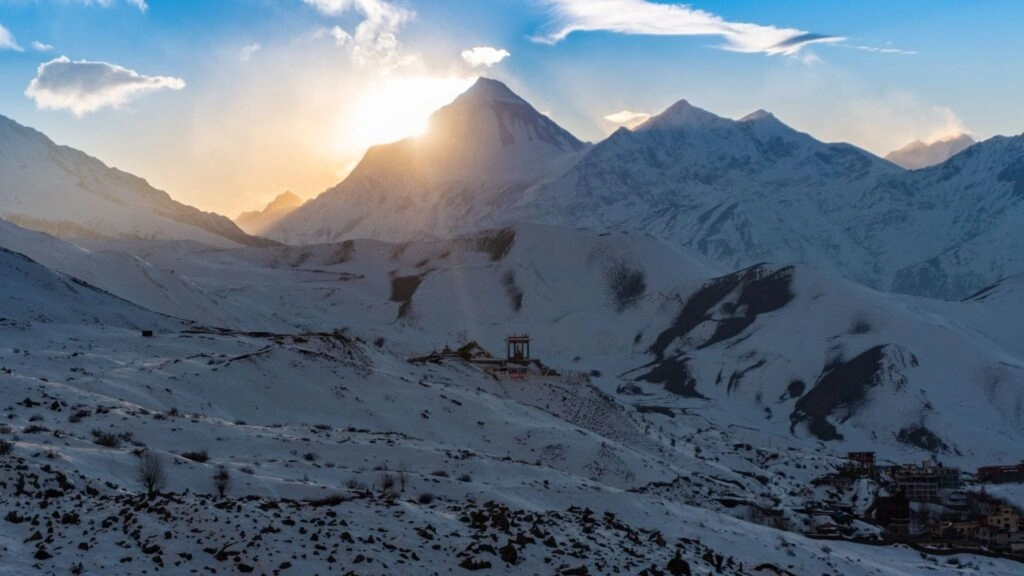
Everest in winter (December–February) records summit temperatures between −45°C (−49°F) and −60°C (−76°F) with jet stream winds sustained at 150–200 km/h (93–124 mph). Base Camp drops to −17°C (1°F) overnight. The summit is functionally inaccessible during this period. Only 15 recorded winter ascents exist in Everest's history as of 2026, all made under extreme risk.
The jet stream, a fast-flowing air current at 8,000–12,000 meters altitude, sits directly over the Everest summit for most of winter. According to peer-reviewed data from the National Geographic–Rolex Perpetual Planet weather-station network, the world's highest automatic weather stations, installed above 8,000 meters, the summit sits within direct reach of the sub-tropical jet stream for most of the year, with real-time station data now confirming day-to-day swings in wind exposure once only estimated from models. This wind speed at −55°C produces a wind chill of −100°C (−148°F), beyond the survivable range for unprotected human tissue.
Winter climbing on Everest requires specially designed suits rated to −80°C wind chill, heated inner gloves, and supplemental oxygen at all altitudes above Base Camp due to accelerated oxygen depletion in extreme cold.
How Cold Is Everest in the Spring Climbing Season?
Everest in spring (April–May) records summit temperatures averaging −36°C (−33°F), with wind speeds typically dropping to 30–80 km/h (19–50 mph) as the jet stream shifts north. Base Camp daytime temperatures reach 5°C (41°F). The spring window is the primary climbing season, accounting for approximately 85% of all Everest summits.
The jet stream retreats north of the Himalayas in late April and early May, creating a narrow weather window of 5 to 15 days when summit wind speeds fall below 40 km/h. Expedition teams time their summit bids for this window. Outside this window, even in spring, summit conditions remain unsurvivable without extreme gear.
May temperatures on the summit average −28°C (−18°F), the warmest month for a summit attempt. Overnight temperatures at the South Col in May average −30°C (−22°F), requiring climbers to start their summit push at 10 PM to reach the summit by sunrise, the safest thermal window of the day.
What Temperatures Can You Expect in Summer on Everest?
Everest in summer (June–August) records the warmest summit temperatures, averaging −19°C (−2°F) in July, but the monsoon brings whiteout snowstorms, avalanche risk, and deep powder on all routes. Base Camp temperatures rise to 2°C (36°F). Summer is not a viable climbing season due to monsoon precipitation, not temperature.
The South Asian Monsoon brings heavy snowfall to Everest from June through August. Snow accumulation on the Lhotse Face, the Yellow Band, and the Balcony reaches 1–2 meters per week during peak monsoon. This accumulation triggers serial avalanches on the South Col route and makes the North Ridge route impassable. The warmest ambient temperatures occur simultaneously with the highest avalanche danger, making summer the statistically most lethal season for Everest access.
How Cold Is Everest in Autumn?
Everest in autumn (September–November) records summit temperatures between −30°C (−22°F) in September and −50°C (−58°F) in November, with a 10–14 day weather window in October before the jet stream returns. Base Camp temperatures fall from −2°C in September to −12°C in November.
The post-monsoon autumn season is the second viable climbing period, accounting for approximately 15% of all Everest summits. October offers the clearest skies and most stable pressure patterns. The jet stream begins returning in November, cutting the summit season short. Summit temperatures in October average −38°C (−36°F), colder than the spring window but accompanied by lower precipitation and excellent visibility.
Why Does Mount Everest Feel So Much Colder Than It Sounds?
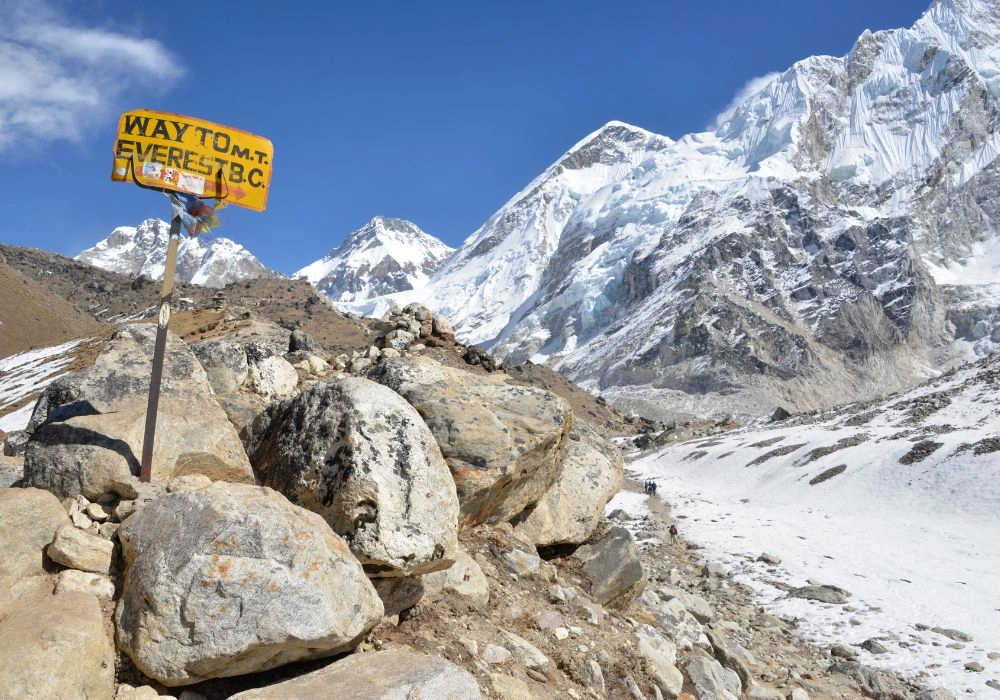
Everest feels dramatically colder than its measured temperatures because 3 compounding factors amplify heat loss: wind chill reduces felt temperature by 15–35°C, low oxygen impairs the body's ability to generate heat, and altitude accelerates radiative cooling. A measured temperature of −36°C at the summit with 80 km/h wind produces a wind chill index of −68°C (−90°F), more than 30°C colder than the thermometer reading.
How Does Wind Chill Affect Everest Temperatures?
Wind chill on Everest reduces the effective temperature by 10°C to 40°C (18°F to 72°F), depending on wind speed. At 100 km/h winds and −36°C ambient, wind chill reaches −72°C (−98°F). At 200 km/h and −45°C (winter summit conditions), wind chill exceeds −100°C, beyond the range of any standardized wind chill index.
Wind chill is not a measure of air temperature. It quantifies the rate of heat loss from exposed human skin. The North American Wind Chill Index, adopted by the National Weather Service in 2001, calculates this rate using the formula: WC = 13.12 + 0.6215T − 11.37V^0.16 + 0.3965T × V^0.16, where T is temperature in °C and V is wind speed in km/h.
Using the official NOAA National Weather Service Wind Chill Chart, a temperature of −20°F with sustained 30-mph winds, conditions milder than Everest's typical summit exposure, already produces frostbite on exposed skin within 5 minutes, illustrating just how quickly summit-zone winds compress that window toward seconds rather than minutes.
On Everest's summit, wind chill operates at values this formula was not designed to compute. At −60°C and 175 km/h wind, exposed skin freezes in under 5 seconds. Even with double-layer glove systems, climbers on the summit lose dexterity within 20 minutes of hand exposure.
How Does Altitude Make the Cold More Dangerous on Everest?
Altitude above 5,000 meters reduces atmospheric pressure to 50% of sea level, which decreases the body's capacity to generate metabolic heat by 30–40%. The human body produces heat through cellular respiration, a process that requires oxygen. At 8,848.86 meters, the partial pressure of oxygen is 33% of sea-level values, reducing the metabolic fuel available for thermoregulation.
Thermoregulation, the body's ability to maintain core temperature at 37°C (98.6°F), depends on 3 mechanisms: shivering (heat generation), vasoconstriction (heat conservation), and behavioral response (adding clothing layers). At altitude, shivering increases oxygen consumption and accelerates fatigue. Vasoconstriction reduces blood flow to extremities, increasing frostbite risk. Behavioral response slows as cognitive function declines with hypoxia.
Why Does Low Oxygen Increase Cold Stress?
Low oxygen at Everest's summit reduces the body's heat production rate by 35–40% compared to sea level, forcing the cardiovascular system to choose between oxygenating the brain and warming the extremities. The body prioritizes core and brain oxygenation. Extremities, fingers, toes, nose, ears, receive reduced circulation and cool 3 times faster than at sea level.
According to research published in the journal High Altitude Medicine and Biology (2018), climbers above 7,500 meters show a mean core temperature reduction of 0.5°C per hour during rest, a rate that triggers mild hypothermia within 4 hours without active warming. Proper EBC trek acclimatization is the primary strategy for keeping the body's heat-generating capacity intact at altitude. With exertion, the metabolic demand for oxygen increases further, deepening the deficit between heat generation and heat loss.
How Do Temperatures Change by Elevation on Everest?
Temperature on Everest drops at a rate of 6.5°C (11.7°F) per 1,000 meters of elevation gain, following the environmental lapse rate established by atmospheric physics. From Base Camp (5,364 m) to the summit (8,848.86 m), a vertical gain of 3,485 meters, the ambient temperature drops approximately 22.6°C (40.7°F). Combined with increasing wind speeds at altitude, this gradient creates a survivability threshold above 8,000 meters without supplemental oxygen and extreme-cold equipment.
How Cold Is the South Col on Everest?
The South Col (7,906 m), also called Camp 4, records average temperatures of −30°C (−22°F) in spring and −40°C (−40°F) in winter. The South Col is a saddle between Everest and Lhotse (8,516 m) exposed on 2 sides to unrestricted wind flow. Wind speeds at the Col regularly exceed 100 km/h, producing wind chill values of −55°C to −65°C even in the spring climbing season.
The South Col serves as the final staging camp before summit bids. Climbers spend 1 to 2 nights here before attempting the summit. Tent survival at the South Col requires anchor systems driven into ice and rock, wind events above 80 km/h have destroyed tents and left climbers exposed at this elevation, with fatal consequences documented in multiple seasons.
How Cold Are the Higher Camps on Everest?
The 3 camps above Base Camp on the South Col route record temperatures ranging from −12°C (10°F) at Camp 1 to −30°C (−22°F) at Camp 4 during the spring climbing season. The North Col route on the Tibet side records similar values.
The 4 high camps and their spring average temperatures are:
Camp 1 (5,943 m): −12°C to −18°C (10°F to 0°F); sheltered by the Western Cwm, reducing wind chill
Camp 2 (6,400 m): −12°C to −22°C (10°F to −8°F); exposed to afternoon thermal winds from the Khumbu Valley
Camp 3 (7,162 m): −22°C to −28°C (−8°F to −18°F); cut into the Lhotse Face ice, reducing wind exposure
Camp 4 / South Col (7,906 m): −30°C to −45°C (−22°F to −49°F); fully exposed on the col
Each camp requires sleeping bags rated to a minimum comfort temperature 10°C below the camp's average low, accounting for sleep-induced reduction in metabolic heat production.
How Fast Do Temperatures Drop as You Climb on Mt Everest?
Temperature drops 6.5°C per 1,000 meters of altitude gain under standard atmospheric conditions, meaning a climber ascending from Base Camp (5,364 m) to the summit (8,848.86 m) experiences a 22°C temperature decrease in ambient air. This rate accelerates in clear weather when radiative cooling from the ground is unimpeded by cloud cover.
3 additional temperature mechanisms operate simultaneously during ascent: wind speed increases with altitude on exposed ridges (10–15 km/h per 1,000 m gain), solar radiation intensity increases by 7% per 1,000 m (reducing perceived cold during the day), and radiative heat loss accelerates as atmospheric density decreases. At night, without solar radiation, the net thermal effect is a drop of 25–30°C compared to daytime values at the same elevation.
What Weather Conditions Make Everest's Cold More Extreme?
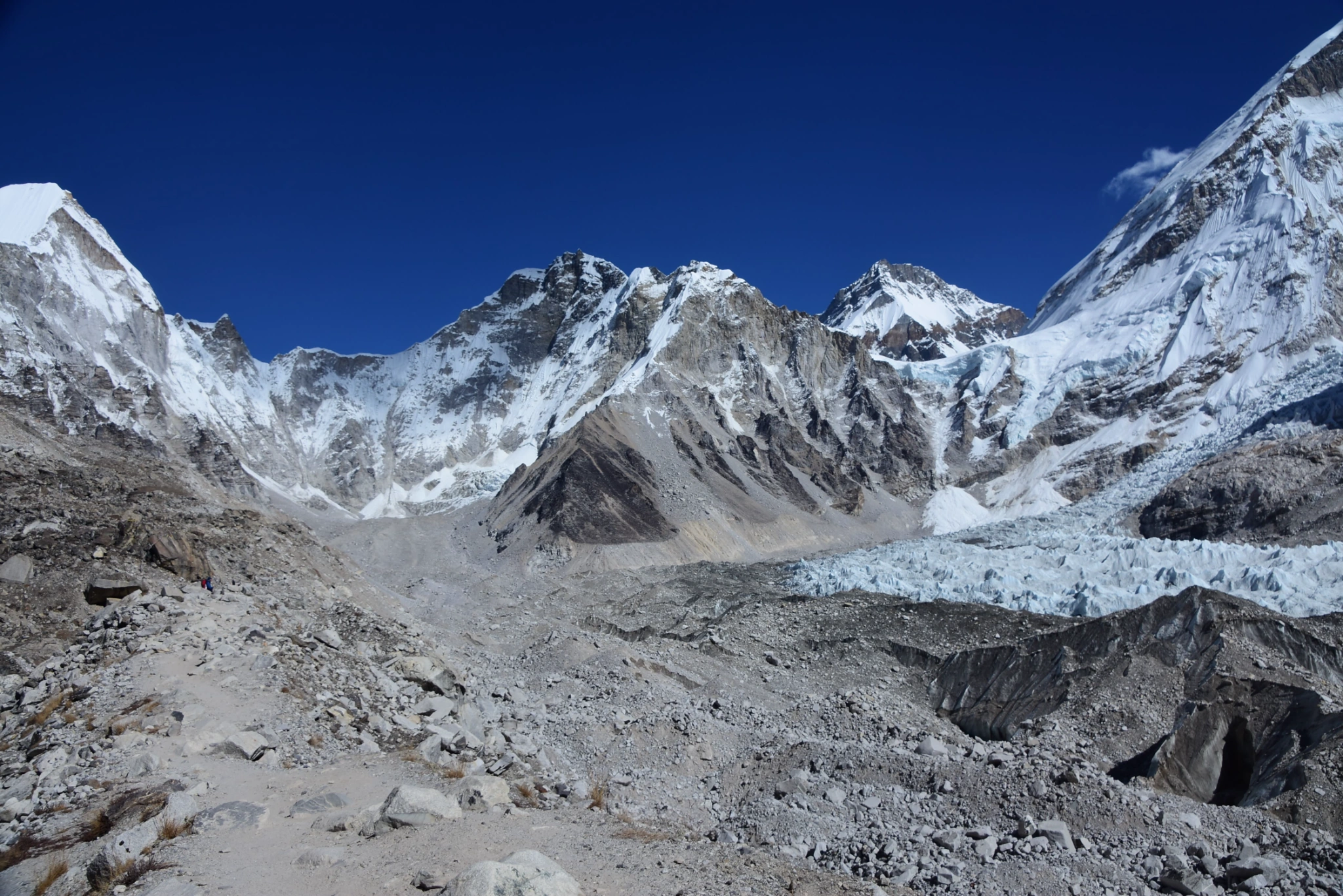
3 weather conditions transform Everest's cold into acute survival emergencies: jet stream descent onto the summit, convective storm cells generating whiteout snowfall with wind speeds above 130 km/h, and clear-sky radiative events dropping overnight temperatures 15°C below the seasonal average. Each condition eliminates safe summit windows and traps climbers at high altitude.
How Do Jet Stream Winds Impact the Mt Everest Summit?
The jet stream, a high-altitude wind band at 8,000–12,000 meters, passes directly over Everest's summit from October through May, generating sustained winds of 100–200 km/h (62–124 mph) that lower the summit wind chill to −70°C (−94°F) or below. The jet stream's position over Everest is the primary factor determining summit-window availability in both spring and autumn seasons.
The jet stream is a fast-flowing air current circulating around the Northern Hemisphere at speeds of 120–300 km/h. According to the European Centre for Medium-Range Weather Forecasts (ECMWF), the jet stream sits at or below 8,500 meters over the Himalayas from November through April, directly intersecting Everest's summit. During May and October, the jet stream shifts north or south of the summit by 100–300 km, creating 5–14 day periods of reduced summit wind speeds suitable for climbing attempts.
Forecasting services used by Everest expeditions, including Mountain Forecast, XC Weather, and Meteogroup, track jet stream latitude to within 20 km to identify summit windows 7–10 days in advance.
How Do Storms and Snow Change the Risk on Everest?
Convective storms on Everest generate wind gusts of 130–160 km/h (81–99 mph), snowfall rates of 10–20 cm per hour, and temperature drops of 10–15°C within 30 minutes, conditions that make evacuation from any high camp life-threatening. Storm onset is the primary environmental trigger for high-altitude fatalities on Everest.
The 2014 Everest avalanche and the 1996 Everest disaster both involved storm onset trapping climbers above 7,000 meters. In the 1996 event, documented by mountaineer Jon Krakauer in Into Thin Air, an unexpected storm struck the summit zone on May 10. Summit temperatures dropped from −25°C to −40°C within 2 hours, with wind gusts reaching 100 km/h. Eight climbers died in the storm and its immediate aftermath.
Modern expedition operators use real-time satellite data and weather balloon soundings from Kathmandu's Tribhuvan International Airport to track storm movement. Despite this improvement, storm onset above 7,000 meters provides an average escape window of only 45–90 minutes before conditions become unsurvivable.
When Are Conditions Most Stable on Everest?
The most stable temperature and wind conditions on Everest occur during 2 annual windows: the mid-May spring window (approximately May 10–25) and the mid-October autumn window (approximately October 8–20). These windows average 7–12 days in duration. Summit temperatures during these windows average −28°C in May and −38°C in October, with wind speeds below 40 km/h at the summit for 3–8 consecutive days.
The spring window is longer and warmer, explaining why 85% of all Everest summits occur between May 1 and May 31. For a detailed breakdown of what to expect at each elevation and month, see our guide on the best season for Everest Base Camp trek. According to the latest Himalayan Database figures compiled in the 2026 season report, 13,737 total summits have been recorded to date, and the standard Southeast Ridge route alone accounts for 57% of all Everest fatalities, underscoring that route choice, not just weather, shapes cold-related risk.
How Do Climbers Protect Themselves From Everest's Cold?
Climbers protect themselves from Everest's cold using a 3-layer clothing system, insulated double-boot systems rated to −60°C, heated glove liners, and supplemental oxygen above 6,400 meters. Cold protection on Everest is not a single garment or piece of equipment, it is an integrated thermal management system designed to retain body heat, block wind, and maintain dexterity at temperatures below −40°C.
What Clothing Systems Work Best on Everest?
The 3-layer clothing system proven effective on Everest consists of a moisture-wicking base layer, an insulating mid-layer, and a waterproof wind-resistant outer shell rated for sustained temperatures below −40°C and wind speeds above 100 km/h.
The 3 layers and their functional roles are:
Base layer: Merino wool or polypropylene thermal underwear that wicks sweat away from skin; wet skin loses heat 25 times faster than dry skin at the same temperature
Mid-layer: 800-fill-power down jacket or synthetic insulation rated to −20°C; traps body heat in air pockets within the insulation structure
Outer shell: High-altitude down suit (full-body) rated to −60°C wind chill; brands used on Everest include Mountain Equipment Lhotse Suit, Rab Expedition 8000, and Feathered Friends Aiguille
Above the South Col, climbers replace standard outer shells with dedicated high-altitude suits, full-body one-piece down suits designed for the specific temperature and wind conditions of the summit zone. These suits weigh 1.2–1.8 kg and provide insulation equivalent to 3 standard down jackets.
What Gear Helps Prevent Frostbite and Hypothermia on Everest?
The 6 most critical pieces of gear preventing frostbite and hypothermia on Everest are: double-layer insulated climbing boots rated to −40°C, heated inner gloves with battery systems, 4-season expedition mittens, balaclava face masks, chemical heat packs, and supplemental oxygen systems. Each item addresses a specific thermal failure point.
The highest frostbite incidence on Everest occurs at 4 anatomical locations: fingers (42% of cases), toes (38%), nose (12%), and ears (8%), according to a 2017 review published in Wilderness and Environmental Medicine. Boots are the single most critical frostbite prevention tool, a wet or under-insulated boot produces toe frostbite within 2 hours at South Col temperatures, even with intact circulation.
Per the Wilderness Medical Society's 2024 Clinical Practice Guidelines for the Prevention and Treatment of Frostbite, delayed rewarming and refreezing during descent remain the single largest drivers of tissue loss in high-altitude frostbite cases, reinforcing why rapid, supervised descent below 3,000 meters is non-negotiable after a frostbite event on Everest.
Double-boot systems used on Everest pair a rigid outer boot (Scarpa Phantom 8000, La Sportiva G2 Evo) with a removable inner boot liner. The inner liner is removed and placed inside the sleeping bag each night to prevent freezing, a frozen boot at 4 AM on summit night is an emergency evacuation trigger.
How Do Climbers Sleep Safely in Extreme Cold on Everest?
Climbers sleep safely at Everest's high camps by using sleeping bags with comfort ratings of −40°C to −50°C, placing the bag inside a tent with a windproof fly rated for 100 km/h gusts, running supplemental oxygen at 0.5–1 liter per minute, and using chemical hand warmers inside the bag. Core temperature maintenance during sleep is the most critical factor in summit readiness.
At the South Col, the 4-hour window between midnight and 4 AM represents the coldest point of the 24-hour temperature cycle. Supplemental oxygen at 0.5 L/min during sleep at the South Col raises blood oxygen saturation from a dangerous 55–65% to 75–85%, which maintains the metabolic rate needed to generate body heat. According to the Everest Base Camp Medical Centre research published in 2019, climbers using supplemental oxygen at 1 L/min during South Col sleep showed core temperatures 1.2°C higher than climbers sleeping without oxygen.
What Cold-Related Risks Do Climbers Face on Everest?
Climbers on Everest face 4 primary cold-related medical risks: frostbite (tissue freezing), hypothermia (core temperature below 35°C), high-altitude cerebral edema (HACE), and high-altitude pulmonary edema (HAPE), the last 2 of which are worsened by cold-induced vasoconstriction. Trekkers heading toward Base Camp face a different but related set of hazards; our full assessment of Everest Base Camp risks covers altitude, weather exposure, and safety protocols. Frostbite and hypothermia are direct consequences of temperature exposure. HACE and HAPE are altitude disorders amplified by cold stress on the cardiovascular and neurological systems.
What Is the Frostbite Risk on Everest?
Frostbite risk on Everest is severe above 7,000 meters, where 40–50% of summit climbers report some degree of frostbite injury to fingers, toes, or facial tissue. Frostbite is the freezing of tissue fluid in the skin, blood vessels, and underlying structures. It progresses through 4 stages: frostnip (reversible skin cooling), superficial frostbite (skin freezing without deep tissue damage), partial-thickness frostbite (blistering and ice crystal formation in dermis), and deep frostbite (full-thickness tissue freezing requiring amputation).
According to a 2019 retrospective study of 1,019 high-altitude climbers published in the New England Journal of Medicine, the frostbite incidence rate above 7,500 meters on Everest is 47%. The mean temperature at which climbers reported frostbite onset was −28°C with wind speeds above 50 km/h. Delayed rewarming, a consequence of being unable to descend quickly, converts superficial frostbite into deep frostbite in 6–12 hours.
Treatment for frostbite on Everest requires evacuation to below 3,000 meters altitude, where rapid rewarming in 38–42°C water is performed. Rewarming at altitude is contraindicated, if the climber refreezes the thawed tissue during descent, tissue loss increases by 60–80%.
How Common Is Hypothermia on Everest?
Hypothermia, defined as core body temperature below 35°C (95°F), affects an estimated 30–40% of Everest climbers who spend more than 90 minutes above 8,000 meters without supplemental oxygen, based on physiological modeling from the High Altitude Pathophysiology Research Group (2021). Clinical hypothermia (core temperature below 32°C) is a direct cause of death in 12% of recorded Everest fatalities.
Hypothermia progresses through 3 stages on Everest: mild (35–32°C), characterized by intense shivering, poor coordination, and slurred speech; moderate (32–28°C), characterized by cessation of shivering, confusion, and muscle rigidity; severe (below 28°C), characterized by cardiac arrhythmia, loss of consciousness, and death without rewarming intervention.
As outlined in NIOSH/CDC federal guidance on cold-related illness, hypothermia progresses from mild (shivering, poor coordination) through moderate (shivering stops, confusion sets in) to severe (cardiac arrhythmia, loss of consciousness), and in the severe stage, rough handling during rescue can itself trigger a fatal heart rhythm, a detail expedition teams train for specifically.
The most dangerous scenario is the "Paradoxical Undressing" phenomenon, a documented behavior in severe hypothermia where the climber removes clothing due to a sensation of heat caused by peripheral vasodilation in the final stage. This behavior has been documented in 3 of the 8 unrecovered Everest bodies found between 1999 and 2020.
How Does Cold Affect Decision-Making and Survival?
Cold reduces cognitive processing speed by 15–20% at temperatures below −20°C, and at summit temperatures below −36°C combined with hypoxia, decision-making accuracy declines by 40–50% within 2 hours. This cognitive impairment is the primary mechanism linking cold exposure to summit fatalities, climbers make navigation errors, miss turn-around times, and fail to recognize hypothermia symptoms in themselves.
The Everest "Turn-Around Rule", a fixed descent time regardless of summit proximity, exists specifically to counteract cold-induced cognitive impairment. According to research from the Wilderness Medical Society (2020), summit climbers who exceeded their turn-around time by more than 90 minutes showed a 6.3x higher fatality rate than those who descended on schedule, regardless of ambient temperature or weather conditions. For a full breakdown of Everest fatality data by cause and route, including cold-related deaths, see our dedicated analysis.
How Does Everest Compare With Other Extreme Mountains?
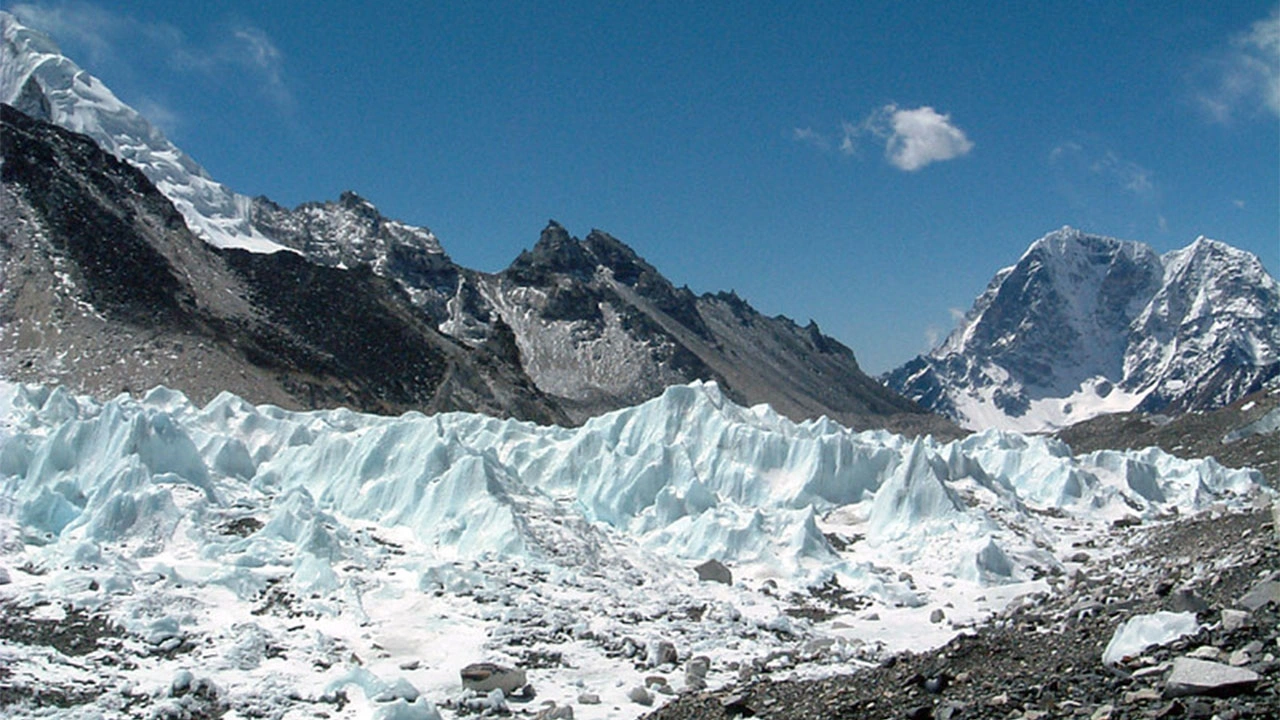
Mount Everest is not the coldest high-altitude mountain in the world, Denali (6,190 m) in Alaska and Ojos del Salado (6,893 m) in the Andes record lower ambient temperatures at equivalent elevations due to latitude, but Everest's combination of extreme altitude, jet stream wind exposure, and low oxygen makes it the most physiologically challenging thermal environment on Earth.
Is Everest Colder Than Denali?
Denali (6,190 m) in Alaska records ambient temperatures 8–12°C colder than Everest at equivalent elevations due to its subarctic location at 63°N latitude. Denali's summit averages −44°C in winter, 16°C colder than Everest's summit in the same season. At Base Camp elevations, Denali's Kahiltna Glacier (2,200 m) records −40°C in February, far colder than Everest's Base Camp at −17°C in the same month.
The critical distinction is altitude ceiling. Denali's summit reaches 6,190 meters, 2,659 meters below Everest's summit. The additional 2,659 meters on Everest multiplies physiological cold stress: atmospheric pressure is 47% lower, oxygen partial pressure is 33% of sea level, and radiative cooling is 25% more intense. A climber on Everest's summit experiences greater physiological cold stress than a climber on Denali's summit at −44°C, even when Everest's ambient temperature is 10°C warmer.
Is Everest Colder Than K2?
K2 (8,611 m) is slightly lower than Everest but records similar summit temperatures, averaging −34°C in summer and −55°C in winter. K2's summit is 238 meters lower than Everest's, producing an ambient temperature difference of approximately 1.5°C, within measurement variability across seasons. K2 is considered more dangerous than Everest not due to temperature difference but due to its 29% fatality-to-summit ratio versus Everest's 1.3% ratio, driven by technical route difficulty and a more exposed summit ridge.
The comparison between K2 and Everest temperatures reveals 2 distinctions: K2 sits at 35.88°N latitude (versus Everest's 27.99°N), placing it marginally closer to the jet stream's winter position, and K2's summit ridge is fully exposed on 4 sides to wind, producing higher average wind chill values than Everest's south-facing summit zone in spring.
What Makes Everest's Cold Unique?
Everest's cold is unique due to 4 converging factors absent on any other mountain: altitude above 8,800 meters reducing oxygen partial pressure to 33% of sea level, direct jet stream intersection at the summit zone, a 3,500-meter vertical cold gradient between Base Camp and summit, and the physiological cascade of hypoxia amplifying cold stress at every body system level. No other accessible mountain combines all 4 factors simultaneously.
The 8,000-meter threshold, the Death Zone, is unique to 14 mountains on Earth, the so-called 8,000ers. Everest is the only one that exceeds 8,800 meters. This additional 849 meters above K2 produces 3 measurable compounding effects: a 7.5% reduction in available oxygen versus K2's summit, a 5.5°C (9.9°F) lower ambient temperature, and a 10–15% increase in radiative heat loss per unit of body surface area.
How Should You Plan for Everest's Extreme Cold?
Planning for Everest's extreme cold requires 4 preparatory frameworks: equipment selection verified in conditions below −40°C, physiological acclimatization over 6–8 weeks of rotations to altitude, weather window analysis using professional forecasting services, and a cold-injury response protocol with trained expedition physicians. Each framework addresses a distinct failure mode.
Can a Guided Everest Expedition Help Manage the Cold?
A guided Everest expedition provides 5 direct cold-management advantages: pre-vetted extreme-cold gear rental and purchase, acclimatization schedules designed by high-altitude medicine specialists, real-time weather forecasting from dedicated services, Sherpa support for load-carrying that reduces exposure time, and on-mountain medical support with dexamethasone, nifedipine, and frostbite treatment protocols. Independent climbers face each of these 5 factors without institutional support.
Reputable guiding companies operating on Everest maintain gear inspection protocols confirming that every climber's boot system, glove system, and down suit meet minimum thermal ratings before departure from Base Camp. If you're planning your journey, explore our guided Everest Base Camp trek with expert-led acclimatization schedules, cold-weather gear support, and dedicated Sherpa assistance. Gear failure in the cold is the preventable cause of 22% of Everest frostbite cases, according to the Himalayan Rescue Association's 2022 season report.
A guided expedition also deploys Sherpa high-altitude workers who fix ropes, carry gear above Camp 2, and assist climbers showing early signs of cold injury, tasks that reduce the physiological load and cold exposure time for expedition members by an estimated 30–40% per high-altitude day.
What Are the Key Takeaways About Everest's Cold?
Mount Everest's cold is defined by 5 measurable realities: a summit average of −36°C (−33°F), wind chill capable of reducing felt temperature to −100°C (−148°F), a viable summit window of 5–14 days per season, a frostbite incidence of 47% above 7,500 meters, and a physiological cold-stress amplification driven by 33% oxygen availability at the summit. Every climber on Everest operates within these parameters, understanding each one is the prerequisite for a survivable ascent.
Mount Everest's extreme cold is not the result of any single factor. The 8,848.86-meter altitude, the jet stream intersection, the Death Zone physiology, and the seasonal temperature cycles operate as a compounding system. Frostbite, hypothermia, and cognitive impairment from cold exposure remain among the leading causes of summit-zone fatalities. Preparation, timing, and equipment verified against these 5 thermal realities separate successful summits from life-threatening emergencies on the world's highest peak.


