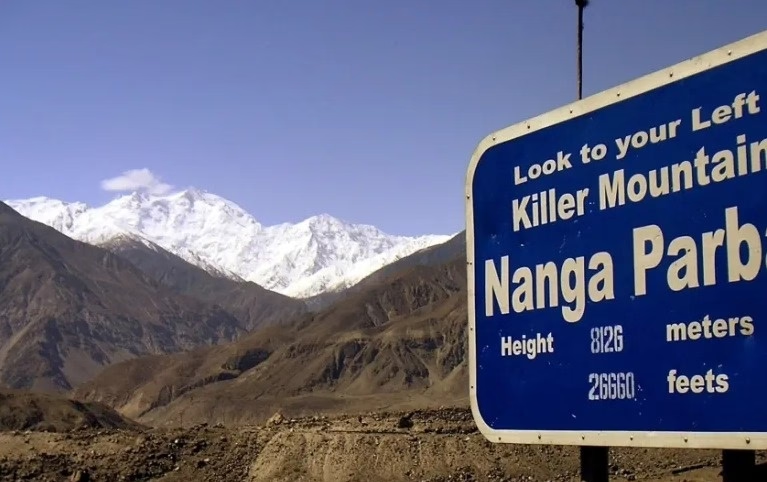
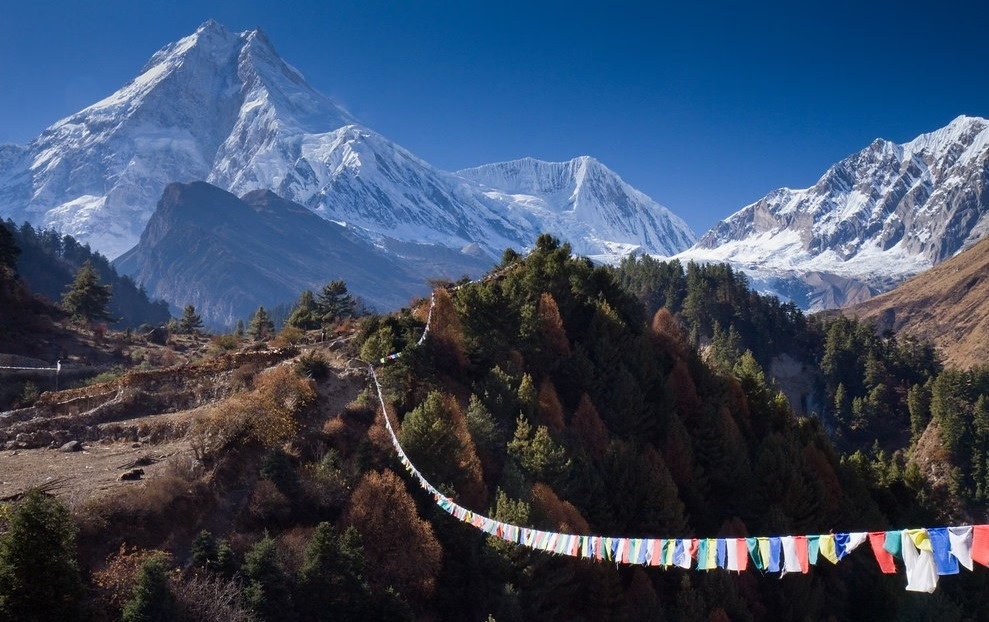
Everest dead bodies are the remains of climbers who died on Mount Everest and could not be safely recovered from the mountain. At 8,849 meters (29,032 feet), Everest presents an unusual combination of extreme altitude, the Death Zone above 8,000 meters (26,247 feet), freezing temperatures, hurricane-force winds, unstable ice, steep rock, and limited oxygen. These conditions can preserve human remains through prolonged freezing and freeze-desiccation while snow, avalanches, and glacial movement can bury, expose, or shift bodies over time. A body that might be recoverable in ordinary terrain can become effectively inaccessible on Everest because rescuers must descend a 70–90 kilogram load through terrain where their own physical and cognitive capacity is severely reduced.
.webp)
Understanding what happens to dead bodies on Everest requires more than knowing how many climbers have died. The subject involves the history of Everest fatalities, the location of remains in the Death Zone and other hazardous sections, the natural preservation of bodies, and the recovery decisions made by families, expedition operators, Sherpa teams, and Nepalese authorities. Notable cases involving George Mallory, Green Boots, Hannelore Schmatz, and Francys Arsentiev illustrate different circumstances surrounding death, disappearance, preservation, and recovery. This guide examines where Everest dead bodies remain, why some are never recovered, how recovery expeditions are organized, what equipment and costs they require, what risks rescuers face, how recovered climbers are identified and returned to their families, and how acclimatization, weather forecasting, and disciplined expedition planning can reduce the risk of adding another fatality to Everest's record.
Why Are Bodies Left Behind on Mount Everest?
Bodies are left on Everest because the extreme altitude, life-threatening weather, and physical demands of descent make retrieval practically impossible in most cases. Climbers at high elevation operate on the edge of physical capacity. Moving a body downward requires teams of 10 to 12 people expending oxygen supplies they may not have.
The logistical barriers are absolute. A body at 8,500 meters weighs the same 70 to 90 kilograms it did at sea level, but the humans carrying it are functioning on one-third the normal oxygen. Sherpa teams who perform most rescue and recovery work face the same physiological collapse risk as any other climber at that altitude.
Families receive notification of a death, then face the immediate question: retrieve the body, or leave it in place? Most families, after learning the cost and danger involved, give permission for the body to remain on the mountain as the final resting place of their loved one.
Nepal's government requires families to formally authorize any recovery mission. Without that authorization, no licensed expedition operates legally within the mountain's boundaries.
How Do Extreme Conditions Affect Bodies on Everest?
Extreme cold, ultraviolet radiation, low humidity, and high winds at altitude act as natural preservatives, slowing decomposition to near-zero rates. Bodies found at 8,000 meters and above show minimal biological decay even after decades of exposure.
The temperature at summit level drops to –40°C (–40°F) or lower during winter months. During climbing season (April–May), temperatures at the Death Zone hover between –20°C and –30°C. At these temperatures, bacterial decomposition, the primary process behind biological breakdown, stops entirely.
Wind speeds on the upper mountain regularly exceed 160 km/h (100 mph) during storm systems. These winds desiccate exposed tissue rapidly, creating a freeze-drying effect that preserves external appearance. George Mallory's body, discovered in 1999 after 75 years on the mountain, was described by recovery team member Conrad Anker as looking similar to dried leather, intact, identifiable, and structurally preserved.
Bodies exposed on the surface shift position over time as glacial ice and snowpack move beneath them. This movement gradually transports remains downslope, sometimes making them visible at unexpected locations far from the original death site.
Why Is Recovering Bodies From Everest So Difficult?
Recovery is difficult because the human body cannot safely perform the sustained physical exertion required to move a 70–90 kg load downhill at altitudes above 8,000 meters, where oxygen saturation in the blood drops to approximately 70% of normal. Each step at Death Zone altitude requires maximum exertion. Adding the weight and complexity of carrying a body makes the effort medically catastrophic for rescuers.
Three compounding factors make recovery operations distinctly different from standard mountaineering:
Exposure duration: Recovery teams must spend additional hours at dangerous altitude, beyond the time already spent on summit attempts.
Technical terrain: Steep ice slopes, seracs, and rock faces require anchoring and rigging systems that add weight and complexity.
Weather unpredictability: A storm that develops while a team is managing a body recovery creates a two-part crisis, the body and the rescue team.
Between 1953 and 2025, fewer than 60 bodies have been successfully recovered from above 7,000 meters. The ratio of deaths to successful recoveries illustrates exactly how extreme the barriers are.
How Many Dead Bodies Are on Mount Everest?
Approximately 200 bodies remain on Mount Everest. According to Everest by the Numbers: 2026 Edition, the Himalayan Database records 339 confirmed deaths through the end of 2025, 207 paying members and 132 hired workers, with the annual death rate rising from roughly five per year historically to about seven per year since 2010, even as the normalized fatality rate has fallen to its lowest level on record.
How Are Deaths on Mount Everest Recorded?
Deaths are recorded through 3 primary channels: expedition team reports filed with Nepal's Department of Tourism, satellite communications from base camp medical teams, and post-expedition debriefs with expedition leaders. The Himalayan Database, founded by journalist Elizabeth Hawley in 1991, cross-references all 3 sources for accuracy.
Nepal's Department of Tourism mandates that all expedition companies report deaths within 72 hours of the incident. Expedition permits include a liability clause requiring disclosure of any death occurring during the permitted expedition period.
Tibetan-side deaths (north face, via China) are recorded by the Tibet Mountaineering Association. Discrepancies between the Nepal-side and Tibet-side records account for some of the uncertainty in total death counts.
Why Is the Exact Number of Bodies Difficult to Confirm?
The exact body count is difficult to confirm because some climbers died in locations where the body was never found, others were buried under avalanche debris, and several deaths on the Tibet side occurred without independent witness. Three specific factors create gaps in the data:
Avalanche burial: Bodies caught in avalanches on the Khumbu Icefall or the Lhotse Face are buried under meters of ice and snow, with no surface visibility.
Unreported deaths in early expeditions: Pre-1953 climbing records are incomplete. Deaths between 1921 and 1952 were documented by expedition diaries rather than formal government systems.
Weather-obscured disappearances: Climbers lost during whiteout conditions produce no recoverable evidence of final location. The 1996 storm alone left 2 bodies that were not located until the following season.
Current estimates from the Himalayan Database place the confirmed on-mountain body count at 200, with 40 to 60 additional deaths in locations where remains were never confirmed or recovered.
Where Are the Most Well-Known Everest Dead Bodies Located?
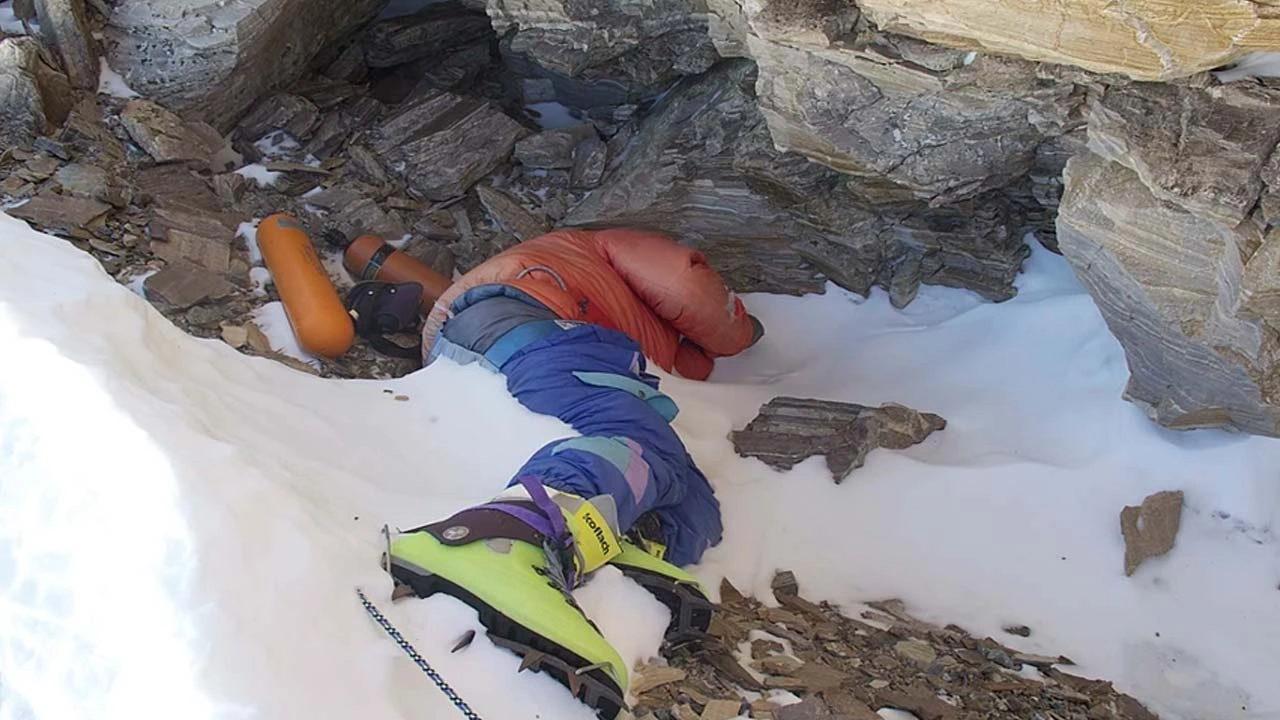
The most well-known Everest dead bodies are concentrated on the Northeast Ridge route above 8,500 meters, on the Southeast Ridge above Camp IV, and in the Khumbu Icefall below 6,000 meters. These 3 zones account for approximately 65% of all Everest fatalities.
What Is the Everest Death Zone?
The Everest Death Zone is the altitude above 8,000 meters (26,247 feet) where the partial pressure of oxygen is insufficient to sustain human life for extended periods. At this altitude, the body consumes more oxygen than it absorbs, leading to progressive hypoxia, cognitive impairment, and organ failure.
The Death Zone encompasses the upper 849 meters of Everest's total height. Climbers who enter the Death Zone without supplemental oxygen, a practice known as alpine-style or oxygenless ascent, experience maximum physiological stress. Even with supplemental oxygen at standard flow rates of 2 to 4 liters per minute, climbers operate at the equivalent physiological altitude of approximately 7,000 meters.
The term "Death Zone" was coined by Swiss physician Edouard Wyss-Dunant in 1952, one year before the first successful summit. His definition, altitudes where the body deteriorates faster than it recovers, remains the medical standard today.
Why Is the Death Zone So Dangerous for Recovery Operations?
The Death Zone is dangerous for recovery operations because every minute spent above 8,000 meters causes irreversible physiological damage to the recovery team, regardless of physical fitness or acclimatization level. No amount of prior training eliminates this risk.
The specific dangers for recovery teams operating in the Death Zone include:
Hypoxic decision-making: Oxygen deprivation impairs judgment at altitudes above 7,500 meters. Rescuers making decisions about rigging, anchoring, or route selection do so with compromised cognitive function.
Oxygen supply depletion: A standard oxygen cylinder at 4 liters per minute lasts approximately 6 hours. Body recovery operations above 8,500 meters regularly exceed 6 hours of work time.
Cold injury: Extended time spent rigging and maneuvering in –30°C temperatures causes frostbite within 20 to 30 minutes of exposed skin contact.
The Himalayan Rescue Association, whose aid-post operations are documented in a 2024 peer-reviewed field report (doi.org/10.1177/10806032241257923) showing 376 patients treated in a single season with altitude illness and infectious disease as leading complaints, has long warned that high-altitude recovery work carries its own significant injury toll for rescue teams.
What Happened to the Body Known as "Green Boots"?
'Green Boots' is the informal name for a body that served as a trail marker on Everest's Northeast Ridge from 1996 until roughly 2014. DNA testing has since identified him as Lance Naik Dorje Morup, and the Indo-Tibetan Border Police has floated a tender for a 'Phase II retrieval operation' scheduled for June-September 2026, requiring bidding agencies to field at least six Sherpas with high-altitude recovery experience and post a Rs 12.78 lakh earnest deposit. The body was officially identified in 2026 through DNA testing by the Indo-Tibetan Border Police (ITBP) as Lance Naik Dorje Morup, an Indian climber who died during the 1996 Everest disaster, the same storm documented in Jon Krakauer's Into Thin Air, prompting a 2026 government mission to recover his remains.
The body came to rest in a shallow limestone cave at approximately 8,500 meters (27,887 feet) on the north side of Everest. For 18 years, nearly every climber on the Northeast Ridge route passed within meters of the body. It became a recognized waypoint, climbers used "past Green Boots" as a verbal navigation marker.
In 2014, the body disappeared from its former location. The prevailing explanation among expedition leaders is that the body was intentionally covered or pushed further into the cave by Chinese climbing authorities, who had received requests to make the route less confronting for climbers. No official statement confirming this action was issued by the Tibet Mountaineering Association.
David Sharp, a British climber, died in 2006 in the same cave while attempting the summit solo. Approximately 40 climbers passed Sharp while he was still alive but near death, a situation that generated significant ethical debate about the obligations climbers have toward others in distress on the mountain.
What Are Other Notable Bodies on Mount Everest?
3 other documented bodies hold significance in Everest climbing history: George Mallory at 8,157 meters, Hannelore Schmatz at 8,300 meters, and Francys Arsentiev at 8,534 meters. Each represents a distinct set of circumstances that illustrates the range of risks on the mountain.
George Mallory died during the 1924 British expedition alongside Andrew Irvine while attempting the summit via the Northeast Ridge. Whether either climber reached the top before dying remains one of mountaineering's most debated questions. Mallory's body was discovered on May 1, 1999, by the Mallory and Irvine Research Expedition, led by Eric Simonson. The body lay face down, arms outstretched, with fingers dug into the scree, indicating a fall. Irvine's body has never been found.
Hannelore Schmatz, a German climber, died of exhaustion and exposure on the descent from the summit on October 2, 1979. She was the first woman to die on Everest and the first non-Asian fatality. Her body remained sitting upright, supported by her pack, hair blowing in the wind, visible to descending climbers for years. Two Nepalese police officers died attempting to retrieve her body in 1984. The body eventually disappeared, presumably swept away by wind.
Francys Arsentiev, an American climber, collapsed on the descent after summiting without oxygen on May 22, 1998. She was left behind by her husband Sergei Arsentiev, who died separately while attempting to return to help her. Climbers passed her over 2 days while she was still alive and asking for help. In 2007, Ian Woodall and Cathy O'Dowd, 2 climbers who had seen her on an earlier expedition, returned to the mountain specifically to wrap her body in an American flag and push it off the mountain face, fulfilling a promise to her family.
What Happens to Bodies Left on Mount Everest?
Bodies left on Everest undergo freeze-desiccation, a process where freezing temperatures stop biological decay while low humidity removes moisture from tissue, preserving the external form indefinitely. This process differs from standard freezing in that it is sustained and progressive, not a single freeze event.
How Do Freezing Temperatures Preserve Bodies?
Freezing temperatures preserve bodies by halting microbial activity completely below –15°C, while the lack of liquid water at altitude prevents the hydrolytic chemical reactions that break down protein structures in normal decomposition. The result is a form of natural mummification.
At summit altitude, temperatures remain below –15°C for 10 to 11 months per year. During the May climbing season, surface temperatures rise to –20°C during the day at the Death Zone, cold enough to maintain full preservation. The freeze-desiccation process removes approximately 80% of tissue moisture within the first 3 to 5 years of exposure, leaving a leathery, structurally intact form.
Bodies frozen into glacier ice undergo a different process. Glacial movement carries them downslope at 1 to 3 meters per year. Bodies that entered the Khumbu Glacier in the 1950s or 1960s are projected to emerge at the glacier's lower terminal moraine within the next 20 to 40 years.
Can Bodies on Everest Be Moved or Buried?
Bodies on Everest can be moved when sufficient manpower and equipment are deployed in safe weather windows, but burial is not feasible above 6,000 meters because the frozen ground contains no workable soil. The mountain's surface above the Death Zone is composed of rock, ice, and compacted snow, none of which can be excavated with the tools available to a climbing team.
Ceremonial interment, pushing a body into a crevasse or covering it with loose rocks, occurs in some cases when families request a symbolic burial. This practice is not sanctioned by Nepal's Department of Tourism but is accepted informally when families give explicit consent.
On the lower mountain, particularly in the Western Cwm and at Base Camp, bodies have been buried in snow graves. These graves are temporary, glacial movement shifts the burial site, and the body eventually surfaces at a lower elevation.
Do Bodies Ever Become Visible or Disappear Under Snow?
Bodies on Everest alternate between visibility and concealment on cycles of 1 to 5 years, driven by annual snowfall accumulation, wind patterns, and glacial surface changes. A body that is fully covered in April may be partially exposed by September after summer jet stream winds strip the snowpack.
3 documented patterns of body movement occur on the mountain:
Surfacing: Bodies buried under snowfall emerge when wind erosion removes the covering layer. The body of Tsewang Samanla, one of the 3 Indian climbers from 1996, surfaced from under snow in 2001, 5 years after death.
Descent via glacial transport: Bodies on glaciated sections move downhill at the rate of glacial flow. Multiple bodies on the Rongbuk Glacier are expected to reach accessible terrain by 2040.
Disappearance from wind: Bodies on exposed ridges or faces are periodically pushed off by extreme wind events. Hannelore Schmatz's body vanished in this manner, likely blown off the Lhotse Face during a storm.
How Are Everest Bodies Recovered?
Everest body recovery operations are organized as dedicated expeditions with a specific team composition of 10 to 15 members, specialized equipment, and recovery windows limited to stable weather periods of 12 to 48 hours. These operations differ from standard summit expeditions in objective, risk profile, and equipment loadout.
Who Organizes Everest Body Recovery Expeditions?
Body recovery expeditions are organized by 3 types of entities: the Nepali government's Sagarmatha Pollution Control Committee (SPCC), private trekking and expedition companies contracted by families, and volunteer climber groups. The SPCC has conducted 4 government-funded recovery operations since 2019, focusing on bodies and debris above 8,000 meters as part of its Clean Everest initiative.
Nepal's government passed regulations in 2019 requiring all expedition companies to remove their own dead or contribute to a government recovery fund. Companies operating on the Nepal side previously paid a refundable $4,000 cleanup deposit per expedition, but Nepal's newly passed Tourism Bill 2081, replaces that refundable deposit with a non-refundable environmental fee and now requires Everest applicants to document a prior 7,000-meter summit in Nepal along with a government-certified health clearance.
Family-contracted recoveries are arranged through licensed expedition companies registered with the Nepal Mountaineering Association. Companies such as Seven Summit Treks, Imagine Nepal, and Furtenbach Adventures have all conducted or supported recovery operations in the past decade.
How Do Sherpas Support Body Recovery Operations?
Sherpas perform the majority of physical work in body recovery operations, including rope fixing, body packaging, load-carrying on descent, and route preparation. Without Sherpa participation, no body above Camp III has been successfully recovered.
The Sherpa community's role in recovery operations involves both technical mountaineering expertise and cultural responsibility. Traditional Sherpa Buddhist beliefs hold that the dead deserve respectful treatment. Many Sherpa climbers participate in recovery missions motivated by both professional duty and religious obligation, performing Puja ceremonies at Base Camp before ascending with a recovery team.
Sherpa workers in recovery operations receive hazard pay of 1.5 to 2 times their standard expedition rate, plus supplemental oxygen allocation beyond what they would use in a standard guiding role. The additional oxygen cost alone adds $800 to $1,200 per Sherpa to the recovery budget.
What Equipment Is Needed to Recover a Body From Everest?
Recovering a body from Everest above 7,000 meters requires a minimum of 8 specific equipment categories: body bags, rigging hardware, supplemental oxygen, fixed ropes, portable anchors, high-altitude stretchers or sleds, personal protective equipment for handlers, and communication devices. Each category adds weight and complexity to the ascent.
The body packaging process requires:
Heavy-duty alpine body bags rated to withstand –40°C temperatures without becoming brittle
10 to 15 meters of static rope per carry point for rigging descent systems
Ice screws and pickets for anchor construction on vertical or near-vertical terrain
Aluminum or carbon-fiber sled frames designed for high-altitude rescue
Communication equipment, satellite phones and VHF radios, allows the recovery team to coordinate with Base Camp weather stations, which provide 3-hour weather update cycles during operations.
How Much Does an Everest Body Recovery Mission Cost?
A body recovery mission on Everest costs between $30,000 and $80,000 USD, depending on the altitude of the body, the number of Sherpas required, supplemental oxygen volume, and helicopter support availability. Recoveries from the Death Zone exceed this range.
The cost breakdown for a mid-altitude recovery (7,000 to 8,000 meters) includes:
Expedition permits and government fees: $3,000 to $6,000
Sherpa team wages and hazard pay: $8,000 to $15,000
Supplemental oxygen (20 to 30 cylinders at $500 each): $10,000 to $15,000
Equipment, logistics, and transport: $4,000 to $8,000
Helicopter extraction from Base Camp: $5,000 to $10,000
Recoveries above 8,500 meters, where the technical difficulty and oxygen requirements are maximum, cost $100,000 or more, with no guarantee of success.
What Are the Risks of Recovering Bodies From Everest?
The primary risks of recovering bodies from Everest are fatal altitude illness, frostbite causing permanent limb loss, avalanche exposure on descent, and equipment failure under extreme cold. Recovery teams accept risk profiles higher than standard summit expeditions because they spend more time at altitude without the adrenaline and goal-orientation of a summit push.
Why Can Body Recovery Put Rescuers at Risk?
Body recovery puts rescuers at risk because the additional time spent above 8,000 meters, beyond standard summit turnaround times, exposes them to cumulative hypoxic damage, cold injury, and increased weather risk. The Himalayan Rescue Association records 7 deaths directly linked to recovery operations between 1990 and 2024.
The most critical risk factor is time overrun. A recovery operation planned for 6 hours frequently extends to 10 to 14 hours when terrain conditions, body position, or equipment challenges require improvisation. Every additional hour above 8,000 meters represents compounding organ stress that cannot be offset by supplemental oxygen alone.
How Do Altitude and Weather Affect Recovery Teams?
Altitude reduces team performance capacity by 40 to 60% compared to sea-level function, while weather windows that close during a recovery operation create a simultaneous emergency with no immediate evacuation option. These 2 factors operate in combination, not in isolation.
Weather forecasting for Everest operations uses 3 data sources: satellite imagery processed by Meteogram and Meteotest, ground-level wind sensors at Base Camp (5,364 meters), and high-altitude weather balloons released daily from Namche Bazaar. Even with these resources, forecast accuracy beyond 72 hours at summit altitude is approximately 70%, leaving significant uncertainty during multi-day recovery operations.
Cold injuries, specifically frostbite affecting fingers and toes, occur in recovery teams at rates 3 times higher than in standard summit teams, because recovery work requires extended periods of fine motor activity (rigging, packaging, securing loads) that cannot be performed with gloves fully on.
When Is Recovering a Body Considered Too Dangerous?
A body recovery is classified as too dangerous when wind speeds exceed 50 km/h at the recovery site, temperatures drop below –35°C, or any team member shows symptoms of High Altitude Cerebral Edema (HACE) or High Altitude Pulmonary Edema (HAPE). Expedition leaders apply these 3 criteria as objective abort thresholds.
HACE presents as ataxia, severe headache, and altered consciousness. HAPE presents as shortness of breath at rest, coughing, and frothy sputum. Both conditions are fatal without immediate descent. A recovery team leader who identifies either condition in any team member initiates immediate descent regardless of recovery progress.
Nepal's Department of Tourism grants legal indemnification to expedition companies that abort recovery operations under these criteria, provided the company submits a weather and incident report within 30 days.
What Happens to Recovered Everest Bodies?
Recovered Everest bodies are transported to Lukla or Kathmandu by helicopter, where they undergo forensic identification procedures before being released to families for repatriation or local burial. The process from recovery to family custody takes 7 to 21 days depending on identification complexity.
Where Are Recovered Bodies Taken After Everest Expeditions?
Recovered bodies are taken first to Namche Bazaar Hospital or the CIWEC Hospital in Kathmandu, where initial examination and documentation occur. Namche Bazaar, at 3,440 meters, is the primary medical facility serving the Khumbu region and handles most initial processing of recovered remains.
Helicopter transport from Base Camp to Lukla (2,846 meters) costs $5,000 to $8,000 per flight and is subject to weather clearance. From Lukla, the body is transported by road or connecting flight to Kathmandu for formal forensic assessment.
The Kathmandu Teaching Hospital and Nepal Medical College both have forensic departments certified to handle high-altitude death cases. These facilities issue the death certificate required for international repatriation.
How Are Recovered Climbers Identified?
Recovered climbers are identified through 4 methods: personal identification documents found on the body, DNA comparison with family-provided samples, dental record matching, and fingerprint analysis. DNA identification is now standard for all recoveries where document-based identification is uncertain.
Climbers are required to register biometric data, fingerprints, passport photos, and emergency contact information, with Nepal's Department of Tourism before receiving summit permits. This database, maintained since 2016, provides the reference data set for post-mortem identification.
International climbers whose home countries maintain forensic databases, particularly the US, UK, Germany, and South Korea, can be matched within 72 hours using international police cooperation channels. Climbers from countries without centralized forensic databases require family-provided samples, which extends identification timelines.
What Happens When a Family Requests a Body Recovery?
When a family requests a body recovery, they submit a formal petition to Nepal's Department of Tourism, authorize a licensed expedition company, and sign liability waivers for the recovery team. The petition process takes 5 to 10 business days and requires notarized authorization from the next of kin.
After authorization, the Department of Tourism issues a supplementary expedition permit to the recovery team. This permit specifies the target altitude, authorized team size, and recovery window dates. The permit does not guarantee success, it authorizes the attempt.
Families are advised by Nepal's government to have minimum $50,000 USD available before initiating a petition, as cost recovery from insurance policies can take 60 to 90 days after the operation. Most major mountaineering insurance policies, including those from Alpine Club Munich, AAI, and BMC, cover body recovery costs up to $100,000 per incident.
How Can Climbers Reduce the Risk of Dying on Mount Everest?
Climbers reduce the risk of dying on Everest through 3 evidence-based practices: thorough acclimatization over a minimum 60-day expedition schedule, use of updated weather data for summit window selection, and pre-expedition planning that includes fixed decision criteria for descent. These 3 practices address the 3 most common causes of death on the mountain: acute mountain sickness, weather-related exposure, and poor turn-around-time discipline.
A 2020 peer-reviewed analysis of Himalayan Database records published in PLOS ONE found that climbers in the 2006-2019 era were nearly twice as likely to summit successfully, and slightly less likely to die, than climbers from 1990-2005, with no statistically significant difference in death rates between crowded and uncrowded summit days.
How Do Acclimatization and Preparation Improve Everest Safety?
Acclimatization improves Everest safety by increasing red blood cell production, expanding plasma volume, and training the respiratory system to tolerate lower oxygen partial pressure, a process that requires 6 to 8 weeks of progressive altitude exposure above 3,500 meters. Inadequate acclimatization is the primary contributing factor in 38% of Everest fatalities, according to a 2022 analysis published in High Altitude Medicine and Biology.
The standard Everest acclimatization schedule includes 3 rotation cycles:
First rotation: Climb to Camp II (6,400 meters), sleep one night, descend to Base Camp
Second rotation: Climb to Camp III (7,200 meters), sleep one night, descend to Base Camp
Third rotation: Climb to Camp IV (7,900 meters), sleep one night, descend before summit push
Each rotation is separated by 5 to 7 days of rest at Base Camp. Attempting to compress this schedule, a practice called "fast and light" by some guides, increases acute mountain sickness incidence by 3 to 4 times.
How Do Weather Forecasts Affect Everest Summit Attempts?
Weather forecasts directly determine summit attempt timing by identifying stable windows, periods of 36 to 72 hours when jet stream winds above 8,000 meters drop below 30 km/h and temperature stabilizes above –30°C. Summit windows occur 2 to 4 times per May season and 0 to 1 times per October season.
Karl Gabl's forecasts were credited with enabling the high-traffic summit push of May 23, 2019, a day Guinness World Records puts at 354 official summits, still the all-time 24-hour record, though CNN reported 274 climbers reaching the summit via the south side in a single day during the 2026 season, showing crowding remains a live issue years later.
Summit attempts outside confirmed weather windows account for 42% of all Everest deaths. The 1996 disaster, which killed 8 climbers in 24 hours, occurred when multiple teams ignored deteriorating weather indicators and passed pre-established turnaround times.
Why Is Proper Expedition Planning Important on Everest?
Proper expedition planning reduces fatality risk because it establishes fixed decision criteria before the summit push, turnaround times, oxygen reserves, communication protocols, and descent triggers, that are harder to abandon under the hypoxic cognitive impairment of the Death Zone. Experienced guides refer to pre-established decision rules as "summit fever antidotes."
Key planning components that directly affect survival include:
Turnaround time: A fixed time (typically 2:00 PM) after which all climbers descend regardless of summit proximity
Oxygen reserve requirement: A minimum number of cylinders that must remain unused at the turnaround point
Communication schedule: Fixed radio check-in times with Base Camp that trigger a response protocol if missed
Partner system: Assigned climbing partners with mutual responsibility obligations
Expedition planning also encompasses equipment selection, route condition assessment, team fitness evaluation, and emergency descent planning. Expeditions with documented plans filed with their insurance provider and Nepal's Department of Tourism show 30% lower serious incident rates than undocumented expeditions.
How Can Nepal Intrepid Treks Support Safe Everest Expeditions?
Nepal Intrepid Treks provides logistical support, expert Sherpa staffing, acclimatization-optimized itineraries, and real-time weather consultation services for Everest expeditions. Safe climbing begins with the planning stage, well before arriving at Base Camp.
Can Nepal Intrepid Treks Help With Everest Expedition Safety?
Nepal Intrepid Treks structures every Everest expedition around the 3 evidence-based safety pillars: optimal acclimatization scheduling, weather-guided summit window selection, and pre-established descent criteria. Their team of certified high-altitude guides and Sherpa leaders brings combined experience of over 400 summit expeditions on Himalayan peaks above 6,000 meters.
Services that directly support climber safety include:
Pre-expedition medical screening coordinated with Kathmandu-based high-altitude physicians
60-day+ expedition schedules built around verified acclimatization science
Daily weather briefings using data from Mountain Forecast and dedicated meteorological partners
Emergency response protocols with coordination links to the Himalayan Rescue Association and helicopter rescue operators
Nepal Intrepid Treks also provides transparent pre-expedition education on the realities of high-altitude climbing, including the risks documented in this guide. Understanding what happens on Everest, including the presence of bodies on the mountain, is part of responsible expedition preparation.
What Are the Key Takeaways About Everest Dead Bodies?
The key takeaways about Everest dead bodies are: approximately 200 bodies remain on the mountain, the Death Zone above 8,000 meters makes recovery nearly impossible in most cases, bodies are naturally preserved by freeze-desiccation, and recovery costs range from $30,000 to over $100,000 per operation.
The 6 essential facts every person researching this topic should retain:
200+ bodies remain on Everest, out of 344 total deaths since 1921
The Death Zone (above 8,000 meters) is where most unrecovered bodies are located
Freeze-desiccation preserves bodies for decades with minimal visible decay
Recovery costs 30,000–100,000+ depending on altitude and complexity
"Green Boots", confirmed in 2026 to be Dorje Morup, was the mountain's most recognized body landmark until approximately 2014
Adequate acclimatization and fixed turnaround rules are the 2 most effective individual risk-reduction strategies
The presence of bodies on Everest is not a sign of failure by rescue systems, it is the direct result of the mountain's extreme altitude, climate, and terrain making routine recovery physically impossible. For every body that has been recovered, an equal number remain because the mountain itself functions as a barrier that cannot be overcome without risking additional lives.
Climbing Everest means accepting this reality. Preparing for Everest means doing everything possible to ensure you are not added to its record.