The Everest Base Camp trek is a high-altitude Himalayan trekking route in Nepal's Khumbu region, covering approximately 130 km (81 miles) round trip from Lukla and taking 12–16 days to complete from Kathmandu and back. The trail begins at Lukla (2,850 m / 9,350 ft), passes through Namche Bazaar, Tengboche, Dingboche and Gorak Shep, and reaches Everest Base Camp at 5,364 m (17,598 ft). Kala Patthar, at 5,545 m (18,192 ft), marks the highest point of the standard trekking route.
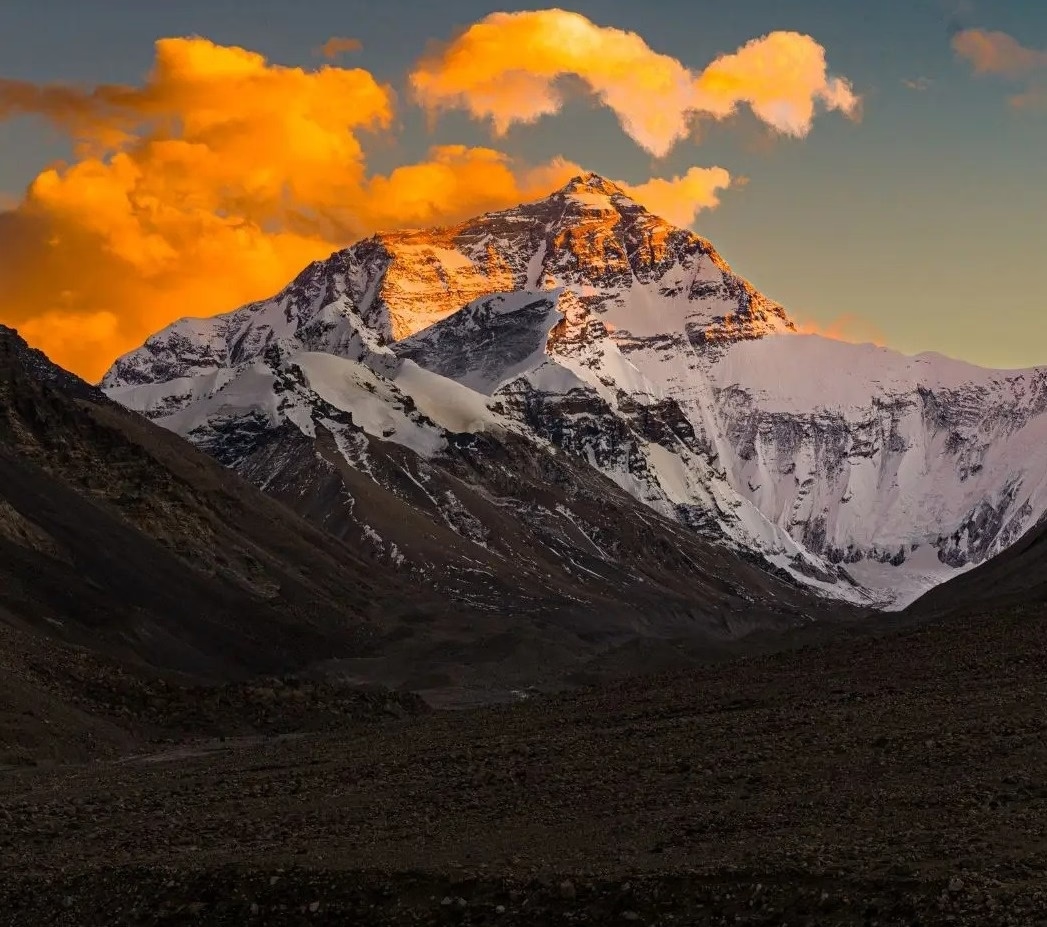
The distance, duration and elevation of the Everest Base Camp trek determine its physical difficulty, with altitude presenting a greater challenge than walking distance. Trekkers cover approximately 8–19 km daily, spend 3–8 hours walking, and need two acclimatization days at Namche Bazaar and Dingboche to adapt to decreasing oxygen levels. This guide covers total trekking distance, daily walking stages, itinerary duration, elevation gains and losses, altitude challenges, and preparation requirements to help you plan your Everest Base Camp adventure.
How Far Is the Everest Base Camp Trek?
The Everest Base Camp trek is about 130 km (81 miles) round trip from Lukla, or roughly 65 km (40 miles) each way. Daily walking distances range from 5 km to 19 km, and the longest days fall on the descent rather than the ascent.
Published totals range from 115 km to 140 km, and the spread has 3 causes. Return routes differ (a loop via a different valley is shorter than retracing the trail). Side hikes differ (Everest View Hotel, Nangkartshang Hill, Kala Patthar). GPS devices drift 5-10% on switchbacks, so two watches on the same trail disagree.
The next table lists common route variations and their approximate total distances, so you can match a quoted figure to the route behind it.
Route variation | Approximate total distance |
Classic route, same trail up and down | 130 km / 81 miles |
Classic route with a different return path | 115 km / 71 miles |
Classic route with helicopter return from Gorak Shep | 66 km / 41 miles |
Everest Base Camp plus Gokyo Lakes | 135 km / 84 miles |
Everest Base Camp plus Three Passes | 182 km / 113 miles |
What Is the Total Everest Base Camp Trek Distance in Kilometers and Miles?
The total Everest Base Camp trek distance is 130 km (81 miles) round trip, and the one-way trail from Lukla to Everest Base Camp measures 57-65 km (35-40 miles). The 130 km total equals roughly 3 marathons (3 x 42.2 km) spread across 11 walking days.
Conversion matters for a global audience, so here are sample values: 8 km = 5.0 miles, 11 km = 6.8 miles, 15 km = 9.3 miles, 19 km = 11.8 miles, 65 km = 40.4 miles, 130 km = 80.8 miles. One kilometer equals 0.621 miles.
Kilometers mislead on this trail because altitude changes the cost of each one. For planning, use Naismith's rule, the 1892 mountaineering formula that allows 1 hour per 5 km plus 1 hour per 600 m of ascent, then add 30% for rest stops and thin air below 4,000 m and 60% above 4,500 m. Phakding to Namche shows the method: 11 km gives 2.2 hours, 950 m of climbing adds 1.6 hours, and the 30% adjustment brings the total to 5 hours.
How Many Kilometers Do You Walk Each Day on the Everest Base Camp Trek?
You walk 8 to 19 km on a trekking day, averaging 11.5 km across 11 walking days, plus 5-6 km hikes on the 2 acclimatization days. The 16-day itinerary below shows each day's distance, walking time and sleeping elevation.
Days 1-2 cover arrival and briefing in Kathmandu (1,400 m), and days 14-16 cover the flight back, a spare Kathmandu day and departure. The table lists the 11 days on foot. Distances vary by 5-10% between GPS devices.
Day | Route | Distance | Walking time | Sleeping elevation |
3 | Fly to Lukla, walk to Phakding | 8 km / 5.0 mi | 3-4 h | 2,610 m |
4 | Phakding to Namche Bazaar | 11 km / 6.8 mi | 5-6 h | 3,443 m |
5 | Acclimatization at Namche (Everest View Hotel hike) | 6 km / 3.7 mi | 3-4 h | 3,443 m |
6 | Namche Bazaar to Tengboche | 10 km / 6.2 mi | 5-6 h | 3,870 m |
7 | Tengboche to Dingboche | 11 km / 6.8 mi | 5-6 h | 4,450 m |
8 | Acclimatization at Dingboche (Nangkartshang Hill hike) | 5 km / 3.1 mi | 4-5 h | 4,450 m |
9 | Dingboche to Lobuche | 8 km / 5.0 mi | 4-5 h | 4,910 m |
10 | Lobuche to Gorak Shep, Everest Base Camp and back | 15 km / 9.3 mi | 7-8 h | 5,180 m |
11 | Kala Patthar sunrise, descent to Pheriche | 16 km / 9.9 mi | 7-8 h | 4,250 m |
12 | Pheriche to Namche Bazaar | 19 km / 11.8 mi | 7-8 h | 3,443 m |
13 | Namche Bazaar to Lukla | 18 km / 11.2 mi | 6-7 h | 2,850 m |
What most people overlook: the 3 final walking days cover 53 km, which is 42% of the total distance in 27% of the walking days. Trekkers train for the climb to base camp, then start day 12 with tired knees and a 19 km descent ahead. Plan the return legs as seriously as the ascent.
Effective speed across a full day, rest stops included, runs about 2 km/h from Lukla to Gorak Shep. Use that number to convert any distance into walking time.
What Is the Distance From Lukla to Everest Base Camp?
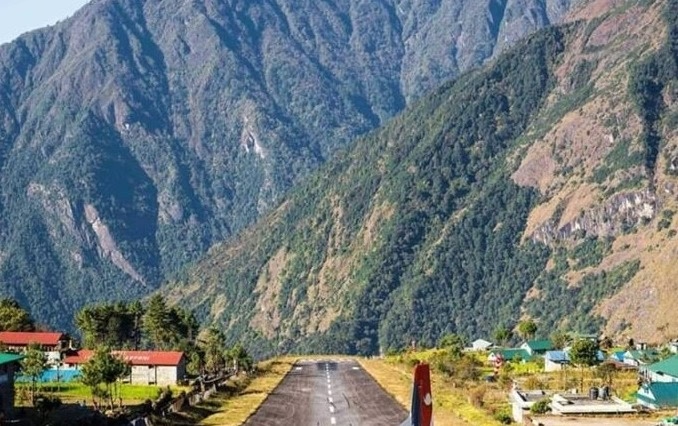
Lukla to Everest Base Camp is 57-65 km (35-40 miles) one way, and the pure trail distance measures about 57 km. The 65 km figure is half of the 130 km round-trip total, which already includes acclimatization hikes and Kala Patthar.
The stage-by-stage sum shows the origin of the 57 km figure: Lukla to Phakding 8 km, Phakding to Namche 11 km, Namche to Tengboche 10 km, Tengboche to Dingboche 11 km, Dingboche to Lobuche 8 km, Lobuche to Gorak Shep 5 km, and Gorak Shep to Everest Base Camp 4 km. The total is 57 km.
Reaching base camp takes 8 days on the 16-day schedule (days 3-10), including 2 rest days. The flight itself covers the gap from Kathmandu: 30-35 minutes from Tribhuvan International Airport, or 12-15 minutes from Manthali Airport in Ramechhap.
In 2026, most peak-season Lukla flights depart from Manthali, a 4-5 hour pre-dawn drive from Kathmandu. The Civil Aviation Authority of Nepal routes flights there from roughly mid-March to mid-May and late September to late November to ease congestion at Tribhuvan. Outside those windows, flights usually leave Kathmandu directly. Confirm your departure airport before booking, because the Manthali drive pushes the day 3 wake-up to the small hours.
How Far Is the Walk From Gorak Shep to Everest Base Camp?
The walk from Gorak Shep to Everest Base Camp is about 4 km (2.5 miles) one way, takes 1.5-2.5 hours, and gains 184 m from 5,180 m to 5,364 m. The round trip measures 8 km and takes 3-4.5 hours.
The terrain explains the time. The trail follows the lateral moraine of the Khumbu Glacier, a rocky, undulating surface where the real climbing exceeds the 184 m net gain because the path rises and falls repeatedly.
Two facts surprise first-time trekkers. First, Everest's summit stays hidden from base camp itself, because the shoulder of Nuptse blocks the view. The panorama belongs to Kala Patthar. Second, the camp's character depends on the season: climbing expeditions pitch tents there in spring (April-May), while autumn trekkers find a quiet, nearly empty glacier.
A common mistake is leaving Gorak Shep for base camp late in the afternoon. Wind and cloud build over the Khumbu, so guides schedule the leg early and plan the return before temperatures drop.
How Much Distance Does the Kala Patthar Hike Add?
The Kala Patthar hike adds about 3.5-4 km (2.2-2.5 miles) round trip from Gorak Shep and 365 m of climbing, from 5,180 m to 5,545 m, taking 2.5-4 hours. The ascent takes 1.5-2 hours and the descent about 1 hour.
Kala Patthar is short but severe. The climb is a steady, steep slope at an elevation where the air carries about half the oxygen found at sea level. Most trekkers climb it before sunrise, starting around 4:30-5:30 a.m. in temperatures well below -10°C (14°F).
Photographers favor sunrise, because first light turns Everest, Lhotse and Nuptse gold. Trekkers who sleep poorly at Gorak Shep (common at 5,180 m) can climb in late morning after breakfast and trade flatter light for a calmer body. Skipping Kala Patthar removes the best view of Everest on the entire route.
How Long Does the Everest Base Camp Trek Take?
The Everest Base Camp trek takes 12 to 16 days from Kathmandu to Kathmandu: 8 days to reach base camp from Lukla and 3 days to walk back. A 16-day itinerary adds 4 Kathmandu nights, 2 acclimatization days and buffer for flight delays.
Duration measures how gradually your body gains altitude and how much slack the schedule holds for weather. A 12-day schedule has no spare days. A 16-day schedule suits most trekkers.
How Many Days Does It Take to Reach Everest Base Camp?
It takes 8 days of walking and acclimatization to reach Everest Base Camp from Lukla, or 10 days from arrival in Kathmandu on a 16-day itinerary. The 8 days include 6 walking days and 2 rest days.
Compressed schedules reach base camp in 7 walking days by removing one rest day, but they raise the risk of altitude illness (see the acclimatization section below). The classic Jiri route, which starts with a bus ride and walks to Lukla, adds 5-7 days and builds superior acclimatization for trekkers with time to spare. A helicopter return from Gorak Shep cuts the trek to about 8 trekking days and 66 km.
How Long Does the Complete Everest Base Camp Trek Take?
The complete Everest Base Camp trek takes 12-16 days, including 11 walking days, 2 acclimatization days and a flight day each way on a 16-day schedule. Shorter versions drop rest days or buffer days, and longer versions add both.
The following table compares the common lengths, so you can match a schedule to your risk tolerance and calendar.
Schedule | Total days | Rest days | Typical buffer |
Fast itinerary | 12 | 1 | None |
Standard itinerary | 14 | 2 | 0-1 day |
Full itinerary (Nepal Intrepid) | 16 | 2 | 2 days |
Extended itinerary | 18+ | 3 | 2+ days |
Helicopter return | 8-9 | 1-2 | 1 day |
A 12-day itinerary leaves zero margin, and one cancelled Lukla flight consumes the entire buffer. Build 1-2 spare days before any international flight home.
How Many Hours Do You Walk Each Day During Everest Base Camp Trek?
You walk 3 to 8 hours per day, averaging 5 to 6 hours, with the longest days (7-8 hours) on the Gorak Shep day and the final descent days. Rest-day hikes take 3-5 hours.
Pace slows with altitude. A trekker walks 4-5 km/h on flat ground at low elevation and 1.5-2.5 km/h above 4,500 m, because each breath delivers less oxygen. A 15 km day at 5,000 m therefore consumes 7-8 hours, while a 15 km day near Lukla would take 4.
The daily rhythm holds steady: breakfast at 6:30-7:00 a.m., walking from 7:30 a.m., lunch at midday, arrival at the next teahouse by 2:00-3:00 p.m. Early finishes matter because afternoon cloud and wind arrive on schedule in the upper Khumbu.
Walk at a pace that allows full sentences. When you cannot talk while climbing, slow down. Guides call this the talk test, and it prevents more early exits than any other habit.
What Is the Typical Everest Base Camp Trek Itinerary?
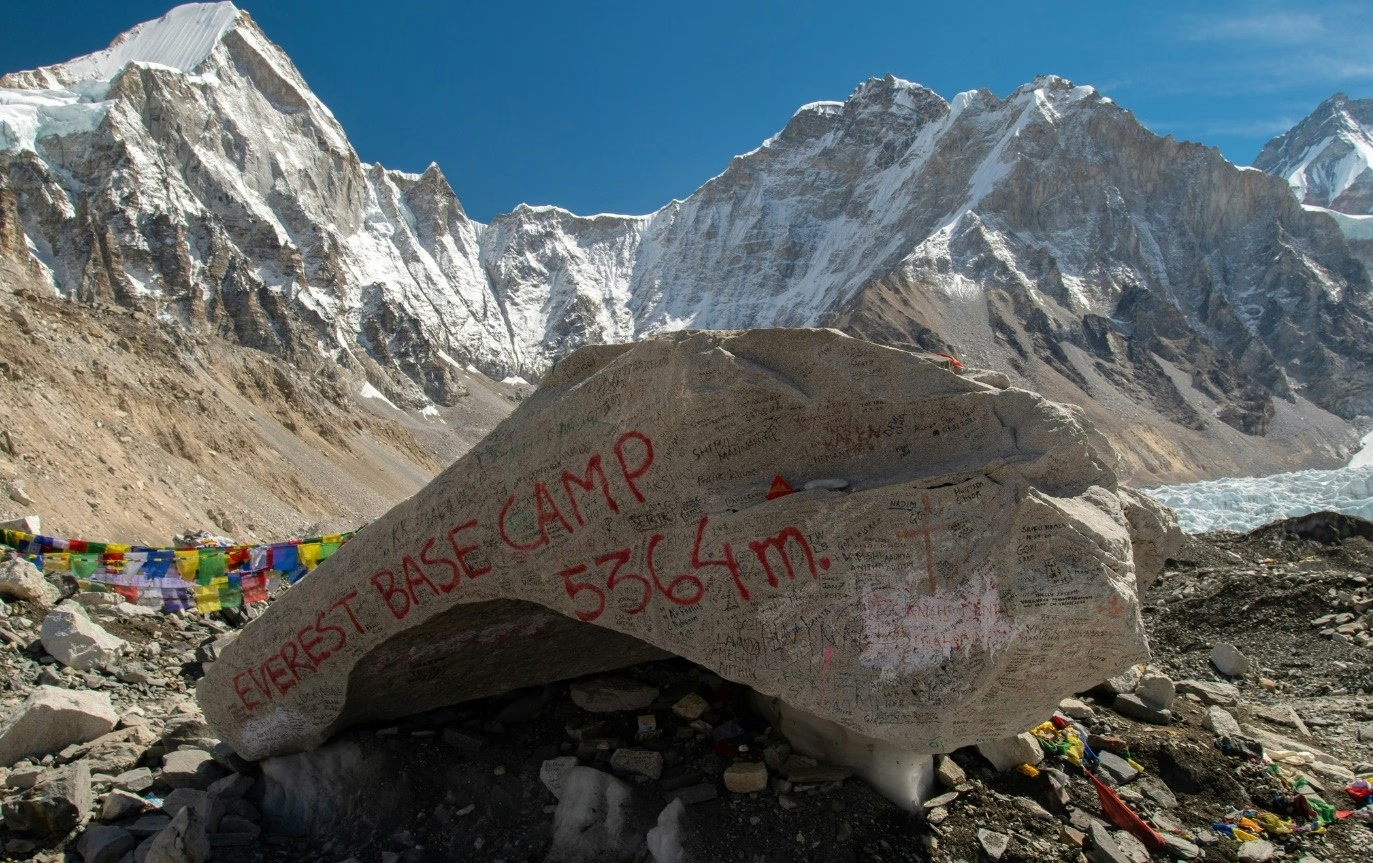
The typical Everest Base Camp itinerary flies to Lukla, treks through Phakding, Namche Bazaar, Tengboche, Dingboche and Lobuche to Gorak Shep and Everest Base Camp, climbs Kala Patthar, then descends through Pheriche and Namche to Lukla. The standard schedule spans 16 days with Kathmandu bookends.
The ordered list below shows each stage with its sleeping elevation.
Fly from Kathmandu to Lukla (2,850 m) and walk to Phakding (2,610 m).
Climb to Namche Bazaar (3,443 m), the Sherpa trading hub.
Rest at Namche and hike to the Everest View Hotel (3,880 m).
Walk to Tengboche (3,870 m) and visit the monastery below Ama Dablam.
Continue to Dingboche (4,450 m) above the treeline.
Rest at Dingboche and hike toward Nangkartshang Hill (5,100 m).
Trek to Lobuche (4,910 m) past the memorials at Thukla.
Cross the moraine to Gorak Shep (5,180 m), reach Everest Base Camp (5,364 m) and return.
Climb Kala Patthar (5,545 m) at sunrise and descend to Pheriche (4,250 m).
Descend through Namche Bazaar to Lukla and fly to Kathmandu.
The route is non-technical: no ropes, crampons or glacier skills, and teahouses at every stage.
How Many Acclimatization Days Are Needed on the Everest Base Camp Trek?
Two acclimatization days are the minimum on the Everest Base Camp trek: one at Namche Bazaar (3,443 m) and one at Dingboche (4,450 m). A third rest day at Lobuche adds safety margin for trekkers with a history of altitude illness.
The arithmetic supports the number. According to the Wilderness Medical Society guidelines, trekkers above 3,000 m limit sleeping-altitude gain to 500 m per night and take a rest day every 3-4 days. According to the CDC Yellow Book 2026 edition (chapter by Peter Hackett and David Shlim), travelers add one extra night for every 1,000 m of sleeping-altitude gain. The climb from Phakding (2,610 m) to Gorak Shep (5,180 m) totals 2,570 m, which calls for 2-3 extra nights. Two rest days sit at the lower edge of that range.
Acclimatization days are active, not idle. The method is "climb high, sleep low": hike to 3,880 m from Namche or toward 5,100 m from Dingboche, then return to sleep lower. The CDC notes that hypoxemia is deepest during sleep, so a day trip with an evening return strains the body far less than sleeping at the higher point.
What Is the Elevation of the Everest Base Camp Trek?
The Everest Base Camp trek starts at Lukla (2,850 m / 9,350 ft), reaches Everest Base Camp at 5,364 m (17,598 ft) and peaks at Kala Patthar (5,545 m / 18,192 ft), a total climb of 2,695 m from start to high point. Sleeping elevations climb from 2,610 m to 5,180 m.
What Is the Elevation of Everest Base Camp in Meters and Feet?
Everest Base Camp (South) sits at 5,364 m (17,598 ft) on the Khumbu Glacier in Nepal. The Tibetan North Base Camp lies lower, near 5,150 m (16,900 ft).
Everest's summit stands at 8,848.86 m (29,031.7 ft), according to the joint Nepal-China survey announced in December 2020. Base camp therefore sits 3,485 m below the summit, at 60.6% of its height.
Air pressure follows the elevation. Using the International Standard Atmosphere model, pressure at 5,364 m equals about 51% of the sea-level value, and at 5,545 m about 50%. Each breath delivers roughly half the oxygen available at sea level.
The camp location shifts slightly each season because the Khumbu Glacier flows beneath the tents, so GPS readings vary by 10-30 m between visits.
What Is the Starting Elevation of the Everest Base Camp Trek?
The Everest Base Camp trek starts at Lukla, 2,850 m (9,350 ft), after a 12-35 minute flight from Manthali (Ramechhap) or Kathmandu, which sits at 1,400 m (4,593 ft). Some sources list Lukla between 2,845 m and 2,860 m.
The flight raises you 1,450 m in under an hour, which sounds aggressive. The itinerary solves the problem with the first night: you sleep at Phakding (2,610 m), below the 2,750 m threshold that the CDC and the Wilderness Medical Society identify as the limit for a first night at altitude. The first day therefore complies with international guidance.
What Is the Highest Elevation Reached During the Everest Base Camp Trek?
Kala Patthar at 5,545 m (18,192 ft) is the highest point on the standard route, and Gorak Shep at 5,180 m (16,995 ft) is the highest overnight stay. Everest Base Camp itself, at 5,364 m, ranks second among day-time destinations.
Benchmarks put the number in context. Kala Patthar stands 739 m above the summit of Mont Blanc (4,806 m) and 350 m below the summit of Kilimanjaro (5,895 m). The Three Passes variation adds Kongma La (5,535 m) and Cho La (5,420 m), which approach Kala Patthar's height.
How High Is Kala Patthar Compared to Everest Base Camp?
Kala Patthar stands 181 m (594 ft) higher than Everest Base Camp: 5,545 m versus 5,364 m. From Gorak Shep, base camp rises 184 m while Kala Patthar rises 365 m, so the viewpoint demands twice the climbing.
The two destinations serve different goals. Base camp delivers the arrival: the glacier, the expedition tents (in spring), the prayer flags and the satisfaction of reaching the foot of Everest. Kala Patthar delivers the view: the pyramid of Everest framed by Nuptse and Lhotse, which base camp cannot show.
The 16-day itinerary sleeps at Gorak Shep between the two objectives, so each climb starts from the same 5,180 m base instead of a long approach from Lobuche.
What Are the Elevations of Major Stops Along the Everest Base Camp Route?
The route passes 13 key stops, from Kathmandu at 1,400 m to Kala Patthar at 5,545 m, and the sleeping stops climb in steps of 270-833 m. The table lists each stop in meters and feet.
The elevations below follow the Nepal Intrepid Treks itinerary values. Other sources differ by up to 50 m for the same village (Dingboche appears between 4,360 m and 4,450 m, for example), because settlements span a range of altitudes.
Stop | Elevation (m) | Elevation (ft) |
Kathmandu | 1,400 | 4,593 |
Lukla | 2,850 | 9,350 |
Phakding | 2,610 | 8,563 |
Namche Bazaar | 3,443 | 11,296 |
Everest View Hotel | 3,880 | 12,730 |
Tengboche | 3,870 | 12,697 |
Dingboche | 4,450 | 14,600 |
Nangkartshang Hill high point | 5,100 | 16,732 |
Pheriche | 4,250 | 13,944 |
Lobuche | 4,910 | 16,109 |
Gorak Shep | 5,180 | 16,995 |
Everest Base Camp | 5,364 | 17,598 |
Kala Patthar | 5,545 | 18,192 |
The rest-day hikes (3,880 m and 5,100 m) rise 437 m and 650 m above their sleeping villages, which matches the climb-high-sleep-low method. Lobuche to Gorak Shep adds only 270 m, the gentlest sleeping step on the upper route.
How Difficult Is the Everest Base Camp Trek Based on Distance, Duration and Elevation?
The Everest Base Camp trek rates moderate to challenging: 130 km is a manageable distance, 11 walking days demand sustained endurance, and elevation above 5,000 m is the real difficulty. Rank the three factors in that order: elevation first, consecutive days second, distance third.
The CDC Yellow Book 2026 reports that altitude illness prevalence approaches 30% at higher elevations even on standard acclimatization schedules. That statistic, not the kilometer count, defines the risk. Trekkers who prepare for altitude, pace themselves and accept rest days finish the route at high rates. Trekkers who prepare only for distance often do not.
Does Trekking Distance Make Everest Base Camp Difficult?
No. Distance is the smallest difficulty factor on the Everest Base Camp trek, because 11.5 km per walking day is within reach of any trekker who walks 5-6 hours on consecutive days. Annapurna Base Camp (110 km) and Langtang Valley (120 km) cover similar distances at lower altitude.
Three things turn a modest distance into a serious trek. The first is repetition: 11 walking days in a row, with no zero-effort day until day 14. The second is cumulative climbing: roughly 6,000-7,000 m of ascent across the route, based on our stage estimates. The third is terrain: moraine, stone steps, suspension bridges and yak-dung-strewn paths slow progress and tire the ankles.
Day 4 makes the point: Phakding to Namche covers only 11 km, but the 950 m of climbing makes it feel far longer.
How Does High Altitude Affect Walking Speed and Endurance?
High altitude cuts walking speed by roughly half and shortens endurance, because air above 5,000 m carries about half the oxygen of sea level. Pace drops from 4-5 km/h at low elevation to 1.5-2.5 km/h above 4,500 m.
The body responds with faster breathing, a higher heart rate, poorer sleep and reduced appetite. These responses are normal. Dangerous responses are different: Acute Mountain Sickness (AMS) brings a headache plus fatigue, dizziness, nausea or insomnia, and it demands a stop in ascent.
Fitness does not protect against altitude illness. According to the CDC Yellow Book and the wider clinical literature, sea-level fitness confers no protection, and strong young trekkers who climb too fast suffer as often as anyone. Two trekkers of equal fitness can respond very differently on the same day, so guides watch symptoms rather than athletic ability.
Pulse oximeters appear in many teahouse dining rooms. Clinical factsheets built on a 2026 BMJ review of altitude illness prevention (Adhikari et al.) advise against diagnosing illness from oxygen saturation, because readings correlate poorly with symptoms. Treat the number as context and let symptoms and the guide's judgment decide.
How Much Daily Elevation Gain and Loss Should Trekkers Expect?
Expect 250-950 m of climbing on most walking days, up to 1,600 m of descent on the return days, and a sleeping-altitude rise of 270-833 m per night on the way up. The biggest single jump is Phakding to Namche Bazaar (+833 m).
The table below lists approximate daily figures. They are estimates compiled from route data, and GPS devices vary by 5-10%.
Day | Route | Approx. ascent | Approx. descent | Net sleeping change |
3 | Lukla to Phakding | +250 m | -500 m | -240 m (from Lukla) |
4 | Phakding to Namche | +950 m | -120 m | +833 m |
5 | Namche rest-day hike | +450 m | -450 m | 0 m |
6 | Namche to Tengboche | +800 m | -370 m | +427 m |
7 | Tengboche to Dingboche | +700 m | -120 m | +580 m |
8 | Dingboche rest-day hike | +650 m | -650 m | 0 m |
9 | Dingboche to Lobuche | +560 m | -100 m | +460 m |
10 | Lobuche to Gorak Shep and base camp | +600 m | -330 m | +270 m |
11 | Kala Patthar to Pheriche | +450 m | -1,300 m | -930 m |
12 | Pheriche to Namche | +800 m | -1,600 m | -807 m |
13 | Namche to Lukla | +500 m | -1,100 m | -593 m |
Two numbers in that table exceed the 500 m-per-night guideline: Phakding to Namche (+833 m) and Tengboche to Dingboche (+580 m). The Namche rest day on day 5 therefore carries real weight, and skipping it is the most common way trekkers compromise their acclimatization.
Descents deserve respect. Days 11 and 12 drop 1,300-1,600 m, which loads the quadriceps and knees for hours, and trekking poles move part of that load to your arms.
Is the Everest Base Camp Trek Suitable for Beginners?
Yes, the Everest Base Camp trek suits first-time trekkers who build endurance for 11 walking days of 4-8 hours, because the route is non-technical, teahouse-supported and requires no climbing skills. Beginners to trekking succeed regularly. Beginners to fitness struggle.
Three questions test readiness. Can you walk 5-6 hours on 2 consecutive days? Can you sleep in a basic, unheated room at -5°C to -10°C? Can you accept a slow pace and a daily schedule dictated by altitude? Three yes answers mean the trek is realistic.
A medical check-up comes first for trekkers over 50, trekkers with heart or lung conditions, and anyone with a history of altitude illness, because the CDC identifies prior high-altitude pulmonary or cerebral edema as a high-risk marker that calls for specialist advice before travel.
How Fit Should You Be for the Everest Base Camp Trek?
Fitness for the Everest Base Camp trek means hiking 5-6 hours with a 6-8 kg daypack and 600-1,000 m of ascent on consecutive days. The target is steady endurance, not athletic speed.
Four benchmarks guide the assessment:
Endurance: hike 5-6 hours on 2 consecutive days without joint pain
Climbing: ascend 600-1,000 m on a single hike at a conversational pace
Descending: descend 800 m on foot without knee strain
Load: carry a 6-8 kg pack comfortably for a full day
The weekend test works well. Hike 5-6 hours on Saturday and again on Sunday with your trekking pack and boots. A trekker who finishes day two tired but intact has the base for this route.
How Can You Prepare for the Everest Base Camp Trek Distance, Length and Elevation?
Prepare with a 12-16 week endurance plan, a layered gear system built for 5,545 m, a slow-ascent itinerary with 2 rest days, and a medical check-up before departure. Each of the four parts addresses one of the three variables: distance, duration and elevation.
What Training Is Recommended Before the Everest Base Camp Trek?
Train 12-16 weeks with 3-4 sessions per week: 2 cardio sessions, 1 strength session and 1 long loaded hike that grows from 2 hours to 5-6 hours. Add back-to-back long hikes in the final 4 weeks.
The table below shows a progression. Adjust the volume to your starting fitness, and extend the plan to 20 weeks if you begin as a non-exerciser.
Weeks | Cardio (2 sessions) | Strength (1 session) | Long hike (weekend) |
1-4 | 30-40 min brisk walk or cycle | Squats, lunges, planks | 2-3 hours, 300 m ascent |
5-8 | 40-50 min, with hills | Step-ups, calf raises, core | 3-4 hours, 500 m ascent |
9-12 | 50-60 min, with hills | Loaded step-ups with 6-8 kg pack | 4-5 hours, 700 m ascent |
13-16 | 60 min, including stair climbing | Maintain, reduce volume | 5-6 hours on 2 consecutive days, 800-1,000 m ascent |
Break in your boots over at least 50 km before departure. Practice descending, because the return days punish untrained quadriceps, and favor real hills over treadmill incline walking. Common mistakes we see: runners who never hike, trekkers who start a plan 4 weeks out, and walkers who skip downhill work. Endurance matters far more than speed.
What Gear Helps You Handle Long Walking Days and High Elevation?
Five items carry the most weight on long days at altitude: broken-in waterproof boots, trekking poles, a three-layer clothing system, a sleeping bag rated for Gorak Shep nights, and sun protection. Operators often supply the sleeping bag and down jacket.
Match the gear to the problem. The table below pairs each trail challenge with the item that solves it.
Trail challenge | Gear solution |
18-19 km descents on tired knees | Trekking poles and knee supports |
Mornings at -10°C to -15°C (14°F to 5°F) | Down jacket, insulated gloves, wool hat |
UV radiation at 5,000 m | Category 3-4 sunglasses, SPF 50, lip balm |
3-4 L of daily fluid needs | Two 1 L bottles and a purification method |
Moraine and stone steps | Waterproof boots with ankle support |
Cold nights in unheated rooms | Sleeping bag rated to -15°C (5°F), liner |
According to the World Health Organization, UV radiation rises 10-12% for every 1,000 m of elevation, so exposure at Gorak Shep far exceeds a sea-level beach, and cold air hides the burn.
Weight limits shape the packing list. Lukla flights allow roughly 10 kg of checked baggage plus 5 kg of hand baggage, so a 15 kg total. Pack the daypack for the day (water, layers, snacks, camera, medication) and the duffel for the night.
How Can You Reduce the Risk of Altitude Sickness?
Reduce altitude sickness risk by limiting sleeping-altitude gain to 500 m per night above 3,000 m, taking a rest day every 3-4 days, drinking 3-4 L of fluid daily and descending when symptoms worsen. Slow ascent is the single most effective prevention.
According to the Wilderness Medical Society, the sleeping altitude matters more than the altitude reached during the day. The CDC Yellow Book 2026 supports the same principle and adds that travelers avoid alcohol for the first 48 hours at altitude.
Follow these 7 practices:
Ascend gradually and honor both rest days.
Climb high during the day and sleep lower.
Drink 3-4 L of fluid daily, and eat even when appetite fades.
Avoid alcohol and sleeping pills at altitude.
Report headache, nausea, dizziness or unusual fatigue to your guide the same day.
Discuss acetazolamide with your doctor before departure, since the CDC lists it as an option for speeding acclimatization.
Descend immediately when symptoms worsen, confusion appears, balance fails or breathlessness persists at rest.
Mild AMS means one rule: stop climbing until symptoms clear. High-altitude cerebral edema (HACE) and high-altitude pulmonary edema (HAPE) are life-threatening, and the only reliable treatment is descent. Warning signs include stumbling, confusion, a wet cough and breathlessness while resting.
Travel insurance must cover trekking to 6,000 m and helicopter evacuation. Verify the wording before you buy, since many standard policies stop at 4,000 m.
What Is the Best Season for the Everest Base Camp Trek?
The best seasons for the Everest Base Camp trek are autumn (late September to November) and spring (March to May), when skies are clearest and flights run most reliably. Night temperatures at Gorak Shep fall to -10°C to -15°C (14°F to 5°F) in both seasons.
The table compares the four seasons.
Season | Months | Strengths | Trade-offs |
Autumn | Late Sept-Nov | Clearest mountain views, stable weather | Busiest trails, Ramechhap flights |
Spring | March-May | Warmer days, rhododendron forests, expedition tents at base camp | More afternoon haze and cloud |
Winter | Dec-Feb | Quiet trails, sharp skies | Temperatures to -20°C, snow on trails |
Monsoon | June-Aug | Lush lower valleys | Rain, cloud-covered peaks, flight cancellations |
Peak-season Lukla flights run through Manthali in Ramechhap and sell out early, so industry booking guidance recommends securing spring seats by January for a March-May departure.
How Can Nepal Intrepid Treks Help You Plan the Everest Base Camp Trek?
Nepal Intrepid Treks plans the trek as a 16-day private itinerary with 2 acclimatization days, Lukla flights, permits, an English-speaking guide, porter support and teahouse stays, from US$1,485 per person for groups of 2-4. The numbers in this guide match that itinerary.
The 16-day private itinerary follows the schedule described above: 11 walking days, rest days at Namche Bazaar and Dingboche, base camp at 5,364 m and Kala Patthar at 5,545 m, plus 4 nights at a 3-star hotel in Kathmandu. Package inclusions cover private airport transfers, round-trip Lukla flights (Kathmandu or Ramechhap) including departure taxes, permits, breakfast, lunch and dinner with tea on the trek, an experienced guide, 1 porter for every 2 trekkers, a sleeping bag, down jacket, duffel bag and trekking map.
International flights, the Nepal visa, travel insurance, tips, personal gear, Kathmandu lunches and dinners, and bottled drinks stay outside the price. The website price depends on dates and group size, so confirm the current rate when you enquire. The company has operated in Nepal for 12+ years and holds a 5.0 rating on TripAdvisor.
Read the full day-by-day plan at Everest Base Camp Trek 16 Days.
Two rest days satisfy the acclimatization arithmetic, 16 days leave buffer for delayed Lukla flights, and the private format lets the guide watch your symptoms rather than a crowd's pace.
Can Nepal Intrepid Treks Customize Your Everest Base Camp Trek Itinerary?
Yes. Nepal Intrepid Treks runs the Everest Base Camp trek as a private trip from a minimum of 1 traveler, so the pace, group size and add-ons (such as a personal Sherpa guide) are arranged around your group. Solo travelers can book, and a single supplement applies when no group is available for the date.
Raise specifics early. Useful questions cover whether a third acclimatization day fits your history, how the pace adapts to a mixed-fitness group, how many spare days to hold before an international flight, and how vegetarian or vegan meals are arranged (the package asks for advance notice). Couples with different walking speeds and families with older members benefit most from a private structure.
Plan your dates. Message the team on WhatsApp or Viber at +977 9849009919, or use the Contact Us page, to discuss your schedule, group size and fitness background.
What Should You Know About Everest Base Camp Trek Distance, Length and Elevation Before Booking?
Before booking, know 5 numbers: 130 km round trip, 12-16 days, 5,364 m at base camp, 5,545 m at Kala Patthar and 2 acclimatization days, then confirm that the operator's itinerary matches them. An itinerary that conflicts with these numbers deserves questions.
Ask these questions before you pay a deposit, and compare each answer against the numbers above.
Count the rest days and where they fall.
Confirm the number of nights at each altitude above 3,000 m.
Check whether the Lukla flight departs from Kathmandu or Ramechhap.
Request the plan for delayed or cancelled flights.
Verify that permits, guide, porter and meals are included.
Review the evacuation procedure and insurance requirements.
Ask how the guide monitors altitude symptoms.
Everest Base Camp trek distance, length and elevation form a connected system: 130 km is a modest distance, 16 days is a protective length, and 5,364 m is a demanding elevation. Trekkers who respect all three numbers finish the route, and trekkers who respect only the distance often do not.

