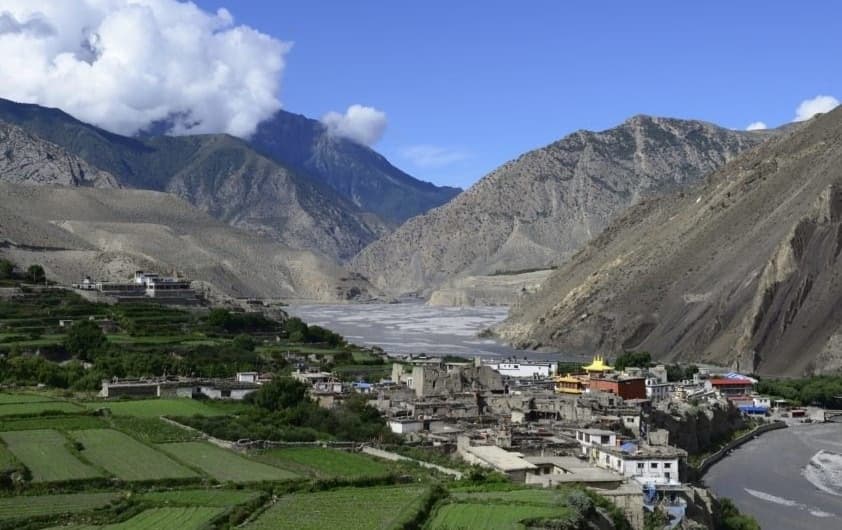
Best trek food ideas for Nepal treks combine traditional Nepali meals, high-energy snacks, and lightweight packable foods that help trekkers maintain stamina, recover faster, and adapt to high-altitude conditions. From tea house routes like Everest Base Camp, Annapurna Circuit, Langtang, and Manaslu Circuit to remote camping expeditions in Dolpo and Kanchenjunga, food choices directly influence energy levels, hydration, digestion, and overall trekking performance. Nutrient-dense carbohydrates, quality protein sources, healthy fats, and proper electrolyte intake all play an important role in supporting long days of walking through the Himalayas.
Choosing the right foods for a Nepal trek involves more than simply carrying snacks or ordering meals at tea houses. Factors such as altitude, route accessibility, weather, dietary preferences, and pack weight determine which foods work best before, during, and after each day's hike. Local favorites like dal bhat, Thukpa, Tibetan bread, and momos provide dependable nutrition on the trail, while nuts, dried fruits, energy bars, and other portable foods help bridge the gap between meals. This guide covers the best foods to eat, snacks to pack, traditional Nepali dishes to try, hydration strategies, and practical meal-planning tips for both tea house and multi-day trekking adventures in Nepal.
Why Is Food Planning Important for Nepal Treks?
Food planning directly affects energy output, altitude acclimatization, and safety on Nepal treks. Trekkers without a food plan face energy crashes, impaired decision-making at high altitude, and a significantly higher risk of gastrointestinal illness. The right food plan keeps you fueled through 6–8 hours of daily walking on steep terrain.
How Does Proper Nutrition Support Trekking Performance?
Proper nutrition on a Nepal trek delivers 3 measurable performance benefits: sustained energy output, faster muscle recovery, and a stronger immune response at altitude.
At elevations above 3,500 meters, your body consumes more calories to maintain core temperature and support increased breathing. Carbohydrates are the primary fuel at altitude because they require less oxygen to metabolize than fats or protein. A trekker covering 15–20 km daily at altitude burns an estimated 600–900 extra calories compared to the same walk at sea level.
Iron-rich foods like lentils support higher red blood cell production, which your body demands for oxygen transport above 3,000 meters. Electrolytes, sodium and potassium, prevent the headaches and muscle cramps that closely mimic early altitude sickness symptoms.
What most trekkers overlook is caloric timing. Eating every 1.5–2 hours maintains steadier blood glucose than 3 large meals. This rhythm eliminates the post-lunch energy crash that consistently slows trekkers on steep afternoon climbs.
What Factors Affect Food Choices on Nepal Treks?
5 main factors affect food choices on Nepal treks: altitude, trail accessibility, personal digestion history, weather conditions, and budget.
Trail accessibility determines what tea houses actually stock. On popular routes like Everest Base Camp and Annapurna Base Camp, tea houses carry abundant fresh vegetables up to roughly 3,800 meters. While high-altitude greenhouses in villages like Dingboche (4,410 meters) have extended the availability of potatoes and certain greens, fresh produce largely disappears beyond these settlements, and most meals rely on dry staples, rice, lentils, noodles, and canned goods.
Temperature is a factor most first-time trekkers underestimate. At 4,000 meters in November, overnight temperatures drop to -10°C. Appetite decreases as altitude rises even though caloric demand increases, a documented condition called altitude-induced anorexia. Choosing calorie-dense, easy-to-eat foods directly counters this effect.
Budget is real. Food prices at high-altitude tea houses run 30–60% higher than in Kathmandu. A dal bhat plate that costs NPR 350–450 (approximately USD 2.60–3.30) in Pokhara can cost NPR 800–1,500 above 4,000 meters.
What Foods Provide Energy During Nepal Treks?
The best energy foods for Nepal treks are complex carbohydrates for sustained fuel, lean proteins for muscle repair, and healthy fats for long-duration endurance. All three macronutrients together, not carbs alone, give trekkers consistent output across full trekking days.
Which Carbohydrate-Rich Foods Are Best for Trekkers?
The 5 best carbohydrate-rich foods for Nepal trekkers are rice, oats, whole-grain bread, pasta, and potatoes.
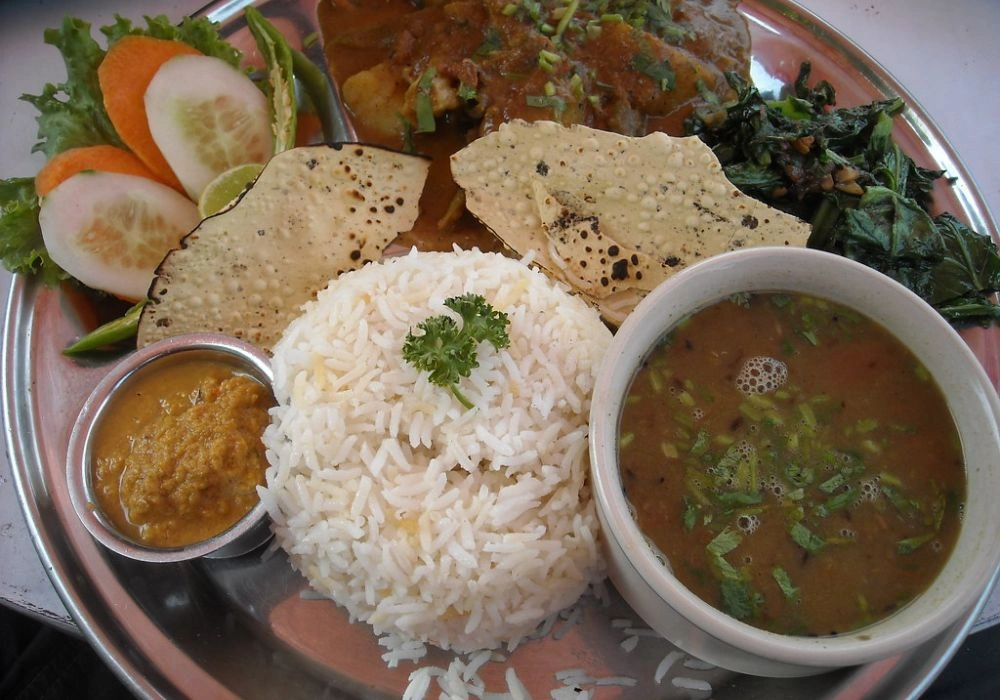
Rice is the backbone of every tea house menu in Nepal. A 200g serving of cooked rice delivers around 260 calories with a medium glycemic index, providing sustained energy without sharp blood sugar spikes. Dal bhat, rice paired with lentil soup, is the most complete carbohydrate-protein combination available on Nepali trails.
Oats work particularly well for breakfast because they digest slowly. A 100g serving of raw oats contains 66g of carbohydrates and 17g of protein. A bowl of porridge with honey and dried fruit takes 5 minutes to prepare and fuels 3+ hours of walking.
Potatoes are the most underrated trek food on Nepali trails. They're available at tea houses across all major routes, affordable, and gentle on sensitive stomachs. One medium boiled potato (150g) contains 26g of carbohydrates and 3g of protein, more than most trekkers realize.
Pasta and whole-grain bread round out the carbohydrate options above 3,000 meters, where rice becomes the dominant choice. Below 3,000 meters, fresh bread is available at bakeries in trail towns like Lukla, Namche Bazaar, and Manang.
Which Protein Sources Are Easy to Carry on Treks?
The 4 most practical protein sources for Nepal trekkers are lentils, eggs, peanut butter, and dried meat or jerky.
Lentils form the base of dal, Nepal's most common dish, and are available at every tea house. 100g of cooked red lentils contains 9g of protein and digests easily at altitude, a critical quality when your gut is already under stress from elevation change.
Eggs are reliably available on most trail sections below 4,500 meters. Two boiled eggs deliver 12g of protein and are one of the few complete protein sources in tea house kitchens. They cook in under 10 minutes and add zero extra weight to your pack.
Peanut butter is the most calorie-efficient packable protein available in Kathmandu's trekking supply stores. Two tablespoons contain 7g of protein and 16g of fat, require no refrigeration, and pair with local bread or crackers for a filling trail snack.
Dried meat or jerky, available in Kathmandu's Thamel district, works well for remote sections where tea house availability is limited. 30g of beef jerky delivers roughly 9g of protein with minimal pack weight.
Which Healthy Fats Help Maintain Energy Levels?
3 healthy fat sources best suited for Nepal trekkers are mixed nuts, ghee, and dark chocolate.
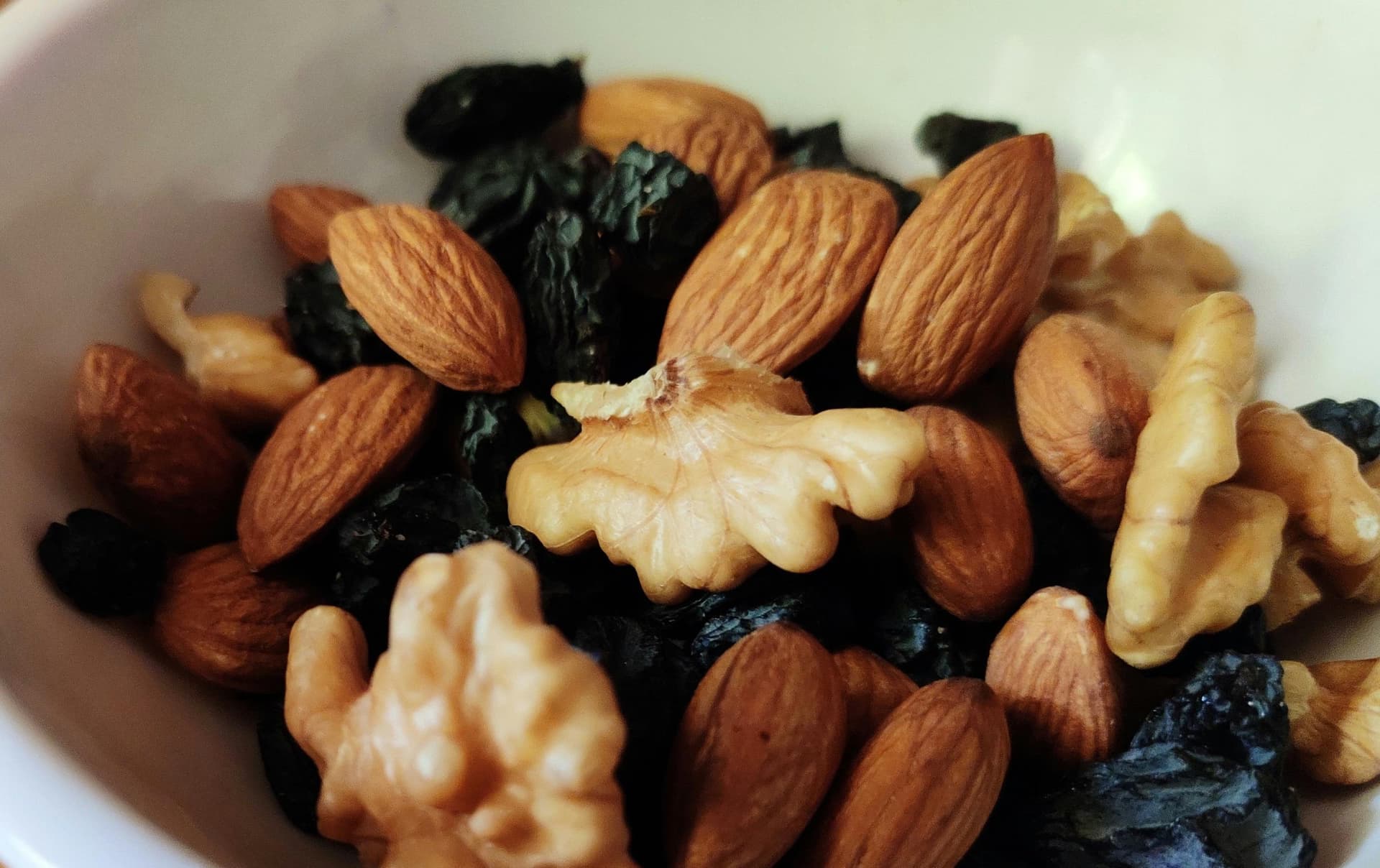
Nuts average 550–650 calories per 100g across almonds, walnuts, and cashews. They require no refrigeration, don't crush in a day pack, and deliver sustained energy during afternoon climbs. A 50g handful of mixed nuts gives you roughly 280 calories in a format that weighs nothing meaningful.
Ghee (clarified butter) is widely available at Nepali tea houses. Adding ghee to rice, potatoes, or bread increases caloric density without increasing meal volume. In cold temperatures above 3,500 meters, ghee also helps maintain body heat. One tablespoon of ghee contains 112 calories and 13g of fat.
Dark chocolate with 70%+ cocoa content provides around 42–44g of fat per 100g along with magnesium, which supports muscle function during heavy daily exertion. It doubles as a morale booster on hard days, a small but genuinely useful tool after 8 hours of climbing.
What Snacks Are Ideal for Nepal Treks?
Ideal Nepal trek snacks are lightweight, high-calorie, non-perishable foods consumed every 1.5–2 hours on the trail. Snack frequency matters as much as snack quality. Regular small portions prevent the energy crashes that cause people to slow significantly on long ascents.
Which Dry Fruits and Nuts Are Popular Among Trekkers?
The 6 most popular dry fruits and nuts among Nepal trekkers are almonds, cashews, walnuts, raisins, dried apricots, and dates.
Raisins and dates are the fastest-acting energy sources in this group. A 50g portion of raisins provides 150 calories from natural sugars, which enter the bloodstream quickly, useful before a steep 400-meter climb. Dried apricots offer the same quick energy with the added benefit of iron and beta-carotene.
Walnuts are one of the few plant-based sources of omega-3 fatty acids, which support recovery and reduce inflammation in heavily worked leg muscles. Almonds and cashews deliver longer-lasting energy due to their higher fat content.
A common packing mistake is bringing too many sugary dried fruits without enough nuts. Pure sugar snacks spike blood glucose and lead to crashes 30–40 minutes later. A practical trail mix ratio is 60% nuts to 40% dried fruit, which gives both the quick hit and the sustained energy.
Which Energy Bars and Chocolates Are Worth Packing?
The best energy bars for Nepal trekking have 250+ calories per bar, a 3:1 or 4:1 carbohydrate-to-protein ratio, and no refrigeration requirement.
Snickers bars are a running joke among Everest circuit regulars, and for good reason. A 50g bar delivers 250 calories with a solid carb-fat ratio and is available at most tea houses along major routes. It's not a nutritional ideal, but it's reliable, familiar, and easy to eat when appetite is low.
Cliff Bars, Lärabars, and KIND bars, purchased in Kathmandu or carried from home, work well for structured snacking. A standard Cliff Bar contains 250 calories, 44g of carbohydrates, and 9g of protein. That's a solid mid-morning trail snack at altitude.
Dark chocolate remains the best value-per-gram packable luxury food. 70g of 85% dark chocolate contains 420 calories and works both as a snack and a small psychological reward after a hard day. Trekkers who dismiss the morale value of good food at altitude tend to revise that opinion by day 4.
Which Local Snacks Are Suitable for Trekking?
4 local Nepali snacks suited for trekking are chiura (beaten rice), sel roti, roasted corn, and peanuts.
Chiura, flattened, dried rice, is one of the most overlooked trek foods in Nepal. It weighs almost nothing, requires no cooking, and pairs with yogurt at lower elevations, jaggery, or peanuts. 100g of chiura contains approximately 350 calories. Nepali porters and locals have eaten it on long mountain walks for generations, which is a strong endorsement on its own.
Sel roti is a ring-shaped fried rice bread available at lower-altitude villages and some tea houses. It keeps for 1–2 days and delivers a calorie-dense alternative to packaged snacks. At NPR 50–100 per piece, it remains one of the cheapest and most reliable calorie sources on the trail.
Roasted corn and peanuts, sold at small shops throughout trail towns and villages, cost NPR 50–100 and deliver 300–350 calories per 100g. They're the cheapest high-calorie snacks available and require nothing from your pack.
What Meals Can You Eat During Nepal Treks?
Tea houses across Nepal's major trekking routes serve 3 structured meals daily: breakfast, a midday lunch (often at a different tea house partway through the day's walk), and dinner. Menus are consistent across routes, though quality and variety decrease noticeably above 4,000 meters.
What Breakfast Foods Are Common on Trek Routes?
The 5 most common trek breakfast foods in Nepal are porridge, eggs, Tibetan bread, pancakes, and toast with peanut butter or jam.
Tibetan bread, thick, fried flatbread found exclusively at mountain tea houses, is denser than ordinary bread and holds up through a long morning of walking. One serving contains 400–450 calories and provides steady energy for a 3–4 hour morning section. It pairs well with honey, peanut butter, or tea house cheese.
Porridge with honey and dried fruit is the warmest, most digestible breakfast at altitude. Cold mornings at 3,000–4,000 meters suppress appetite strongly, and a warm bowl of oats is far easier to eat than a heavy egg dish when you're cold and your stomach isn't fully awake.
Two eggs on toast deliver 350–400 calories and 18–20g of protein. It's the most protein-dense breakfast option on the standard tea house menu and sets you up well for a physically demanding morning.
What Lunch Options Are Available for Trekkers?
Trekkers typically eat lunch partway through the day's walk at a trail tea house. The 4 most practical lunch options are dal bhat, noodle soup, fried rice, and sandwiches with eggs or cheese.
Dal bhat stands out from every other lunch option because of unlimited refills, offered at most tea houses. No other item on the menu offers this. On a high-output day, 8 hours of walking, 1,200 meters of elevation gain, a full plate with two refills covers the full caloric cost of the day's effort.
Noodle soup (Thukpa or Sherpa stew) is lighter than dal bhat and easier to eat when altitude suppresses appetite. It rehydrates you while delivering 300–400 calories in a warm, manageable format.
Sandwiches are practical at lower-altitude stops (below 2,500 meters) and in larger trail towns like Namche Bazaar and Manang. Above these elevations, reliable sandwich ingredients become inconsistent.
What Dinner Meals Are Popular in Tea Houses?
The most popular dinner meals at Nepali tea houses are dal bhat, momos, pasta, fried rice, and vegetable curry with chapati.
Momos, steamed dumplings filled with vegetables, yak meat, or paneer, are among the most satisfying dinners on any Nepali trail. A plate of 8–10 momos delivers 400–500 calories and provides one of the few genuine protein servings available in mountain kitchens.
Pasta with tomato or garlic sauce appears on nearly every tea house menu from Lukla to Gorak Shep. It's not traditional Nepali food, but it's familiar, calorie-dense at 450–500 calories per serving, and available even on remote upper sections of the Everest circuit.
One piece of guidance experienced guides consistently give: eat slightly more than you feel like eating at dinner. Altitude suppresses appetite by early evening, but overnight recovery depends on caloric intake. The trekkers who feel strongest on day 5 and 6 are usually those who pushed through the appetite suppression at dinner on days 1–4.
Which Traditional Nepali Foods Are Best for Trekkers?
The best traditional Nepali foods for trekkers are dal bhat, Thenthuk (Sherpa hand-pulled noodle soup), sel roti, and gundruk soup. These dishes were developed for physical labor in high-altitude mountain conditions, they deliver calories, nutrients, and digestibility that imported packaged food rarely matches.
Why Is Dal Bhat a Favorite Among Trekkers?
Dal bhat is the most nutritionally complete single meal available on Nepal's trekking routes. A full plate delivers 700–900 calories, 30–40g of protein, and a complete amino acid profile from the rice-lentil combination.
The refill policy is the practical advantage that no other meal on the menu matches. On a big day, steep terrain, full load, altitude, a standard plate with two refills covers the full caloric cost of 8 hours of hard walking.
Dal bhat also passes through the gut cleanly at altitude. Lentils are one of the most digestible legumes available, the rice absorbs well, and the warm broth supports hydration. Trekkers who skip dal bhat in favor of pasta and noodles consistently report more digestive discomfort above 3,500 meters.
The nutritional pairing is precise. Rice alone is low in lysine (an essential amino acid). Lentils alone are low in methionine. Together, they form a complete protein, the same complementary pairing that underlies rice-and-beans cuisine in cultures from South Asia to Latin America.
Which Soups and Noodle Dishes Help With Recovery?
3 soups and noodle dishes best suited for post-trek recovery are Thenthuk, Thukpa, and garlic soup.
Thenthuk, Sherpa hand-pulled noodle soup with vegetables and often yak meat or egg, is the warming recovery meal of the Himalayan highlands. A bowl contains 350–450 calories and is easy on a tired digestive system after a long day. The broth replaces fluid and electrolytes lost through elevated breathing and sweat.
Thukpa is a thinner Tibetan noodle broth at 250–300 calories per bowl. It's lighter than Thenthuk and better suited for evenings when your stomach is unsettled or your appetite is particularly low.
Garlic soup deserves specific mention. Available at many high-altitude tea houses, garlic contains allicin compounds that support circulation. Mountain guides and Sherpa staff across Everest treks use it consistently as an acclimatization aid. Clinical evidence is limited, but the practice is consistent enough among experienced high-altitude guides to take seriously, and it fits naturally alongside the rest days and gradual ascent built into a proper acclimatization schedule.
What Foods Should You Pack for Multi-Day Treks?
For multi-day Nepal treks with limited resupply points, pack foods under 200g per 1,000 calories, with shelf life above 6 months and no refrigeration requirement. The practical benchmark for self-supported trekking is 600–800g of food per person per day for full caloric coverage.
Which Lightweight Foods Are Easy to Carry?
The 6 most weight-efficient trek foods are peanut butter, mixed nuts, energy bars, instant oats, dried lentils, and protein powder.
Peanut butter packs 588 calories per 100g, one of the highest calorie-to-weight ratios of any real food. A 500g jar delivers nearly 3,000 calories. It's the most calorie-dense food available in Kathmandu's trekking supply stores in Thamel.
Mixed nuts average 560–650 calories per 100g. 300g of almonds, cashews, and walnuts covers your full caloric snack needs for 2 full trekking days.
Instant oats weigh 380 calories per 100g and require only boiling water. Add 30g of peanut butter and 50g of raisins to a 100g oat serving for a 780-calorie breakfast that weighs 180g total and takes 5 minutes to prepare.
Which Ready-to-Eat Foods Save Time on the Trail?
4 ready-to-eat food formats that save the most time on Nepal trails are instant noodles, energy bars, trail mix, and single-serve peanut butter packets.
Instant noodles, Wai Wai brand is available across Nepal at trail-side shops, require 3 minutes in hot water or can be eaten dry in an emergency. One packet delivers 350–400 calories and takes up almost no space.
Single-serve peanut butter packets (available in Kathmandu and larger trail towns) eliminate mess and portioning effort. They're the quickest high-calorie food you can eat at a moving rest stop.
Energy bars require no preparation at all. 2 bars per day, eating one mid-morning and one mid-afternoon, delivers 500 calories of reliable trail fuel without stopping at a tea house.
Which Foods Have the Longest Shelf Life?
The 5 longest shelf-life foods for multi-day Nepal treks are dried lentils (2–3 years), instant noodles (12–24 months), energy bars (12–18 months), hard dark chocolate (12–18 months), and mixed nuts (6–12 months).
Dried lentils are often overlooked as packable food. For camping treks outside tea house networks, Dolpo, Humla, remote Kanchenjunga sections, 200g of dried red lentils delivers 680 calories, 45g of protein, and cooks in 20 minutes. The 2–3 year shelf life means you buy them in Kathmandu without any concerns about freshness.
Dark chocolate with 85%+ cocoa content outlasts milk chocolate in warm packs because lower dairy and sugar content reduces spoilage. In Himalayan temperatures, cool during the day, cold at night, 85% chocolate lasts the full length of most treks without quality loss.
Which Foods and Drinks Should Trekkers Avoid?
Trekkers on Nepal routes avoid raw salads, unfiltered water, excessive fried food, and alcohol above 3,000 meters. These 4 categories cause the majority of food-related illnesses on Nepali trails.
Which Foods May Cause Digestive Problems?
5 food types most likely to cause digestive problems on Nepal treks are raw salads, uncooked dairy, high-fiber meals in the first 48 hours, heavily fried foods, and caffeinated beverages on an empty stomach.
Raw salads above 2,500 meters are one of the most common causes of traveler's diarrhea on Nepali trails. The water used to wash vegetables is often untreated, and waterborne bacterial contamination, E. coli and Giardia specifically, is well-documented in high-altitude tea house settings. Cooked vegetables carry significantly lower risk.
Excessive fiber intake in the first 2 days of a trek causes predictable digestive distress. Many trekkers try to "eat clean" immediately and load up on lentils, vegetables, and whole grains before their gut adjusts to altitude and physical demand. Moderate fiber intake for the first 48–72 hours, then gradually increasing, prevents most early-trek digestive complaints.
Fried foods sit heavily in the stomach at altitude where digestion slows measurably. Limiting fried dishes to once per day, especially above 3,500 meters, noticeably reduces bloating and discomfort. The dal bhat plate is, again, the better choice.
How Can You Prevent Dehydration During Treks?
Trekkers prevent dehydration by drinking 3 to 4 liters of water per day at altitude, starting before the day's walk and continuing through dinner.
Altitude accelerates fluid loss through 3 simultaneous mechanisms: increased breathing rate (more water vapor expelled with each breath), reduced thirst sensation (the brain's thirst signal weakens above 3,000 meters), and drier air at elevation. You lose water faster than you feel thirsty, and the resulting dehydration can compound the headaches and fatigue that overlap with early altitude sickness.
Oral Rehydration Salts (ORS) are the most underused tool in a trekker's kit. One ORS packet dissolved in 1 liter of water replaces electrolytes lost through sweat and elevated breathing, plain water alone does not accomplish this. ORS packets are available at pharmacies in Kathmandu, Lukla, Namche Bazaar, and most trail-side medical posts.
Avoid alcohol above 3,000 meters. Alcohol suppresses antidiuretic hormone (ADH) production, which increases urine output and directly worsens dehydration. One beer at altitude has the dehydrating effect of 2–3 beers at sea level, and altitude already impairs your judgment, so the cognitive effects compound.
Black tea with salt, a common Nepali mountain preparation, functions as a simple electrolyte drink, costs nothing extra at tea houses, and works well for maintaining hydration balance during long walking days.
How Can You Choose Food Options for Nepal Treks?
Choosing the right food for a Nepal trek depends on your route length, elevation profile, dietary restrictions, and whether you're on a tea house route or a camping trek. These 4 variables determine whether you rely entirely on trail menus, supplement with packed food, or carry full rations.
For tea house treks, like the Everest Base Camp Trek, Annapurna Circuit, Langtang, and Manaslu Circuit, you rely primarily on tea house menus, supplemented with 200–400g of personal snacks per day. This covers the caloric gap between what tea houses serve and what your body burns at altitude.
For camping treks or remote routes, like the Upper Dolpo Trek, Kanchenjunga, Humla, and Upper Mustang, you carry 3–5 days of food at a time. The pack weight benchmark is 600–800g of food per person per day for full caloric coverage across breakfast, trail snacks, and dinner.
Dietary restrictions require advance planning. Vegetarian food is the default at many Nepali tea houses and widely available across all major routes. Vegan options become limited above 3,500 meters where eggs and dairy are the primary protein sources. Carrying vegan protein powder from Kathmandu fills that gap reliably.
Can Trek Planning Services Help With Meal Preparation?
Trek planning services and licensed trekking companies provide practical meal support in 3 specific ways: pre-planned food kits for remote routes, dietary-restriction accommodations confirmed in advance, and guides who know exactly which tea houses stock which foods on specific route sections.
For first-time trekkers on major routes, worth reading our complete first-time trekker's guide before you go, a local guide's knowledge of tea house menus, food quality at altitude, and water safety points is more valuable than any packaged food list. Experienced guides on the Everest and Annapurna circuits know which tea houses serve fresh dal bhat versus reheated portions, and where water sources require purification tablets versus where boiled water from the tea house is safe.
For remote or off-circuit treks, working with an experienced trekking agency in Kathmandu eliminates 2–4 days of food planning and removes the risk of supply shortages above resupply points. Agencies in Thamel specialize in food planning for extended camping treks, packing calorie-dense rations, coordinating with local porters who carry kitchen equipment, and sourcing foods that survive altitude and temperature variation.
What Are the Key Takeaways About Trek Food Ideas?
The key takeaways about trek food for Nepal routes are direct:
Daily caloric need at altitude runs 3,500–5,000 calories, roughly double your normal baseline.
Dal bhat with unlimited refills is the single best-value meal on any Nepali route and the most nutritionally complete option available.
Complex carbohydrates, rice, oats, and potatoes, are the primary fuel at altitude because they require less oxygen to metabolize.
Snack every 1.5–2 hours with a 60/40 nuts-to-dried-fruit mix to maintain blood glucose and prevent energy crashes.
Avoid raw vegetables above 2,500 meters to reduce the risk of waterborne bacterial infection.
Drink 3–4 liters of water daily, use ORS packets for electrolyte balance, and avoid alcohol above 3,000 meters.
Peanut butter, mixed nuts, and instant oats are the 3 most weight-efficient supplemental foods to carry regardless of route.
Eat slightly more than your appetite suggests at dinner, altitude suppresses hunger at the exact time your body needs calories for overnight recovery.
Nepal's trails offer genuinely good food, and most of it, dal bhat, Sherpa stew, Tibetan bread, mountain honey, was built for exactly these conditions. The trekkers who struggle most with energy and digestion are those who resist local food and rely entirely on packaged snacks. Eating what the mountains offer, supplemented strategically with a few things from your pack, is both the most effective and the most enjoyable way to fuel a Nepal trek.