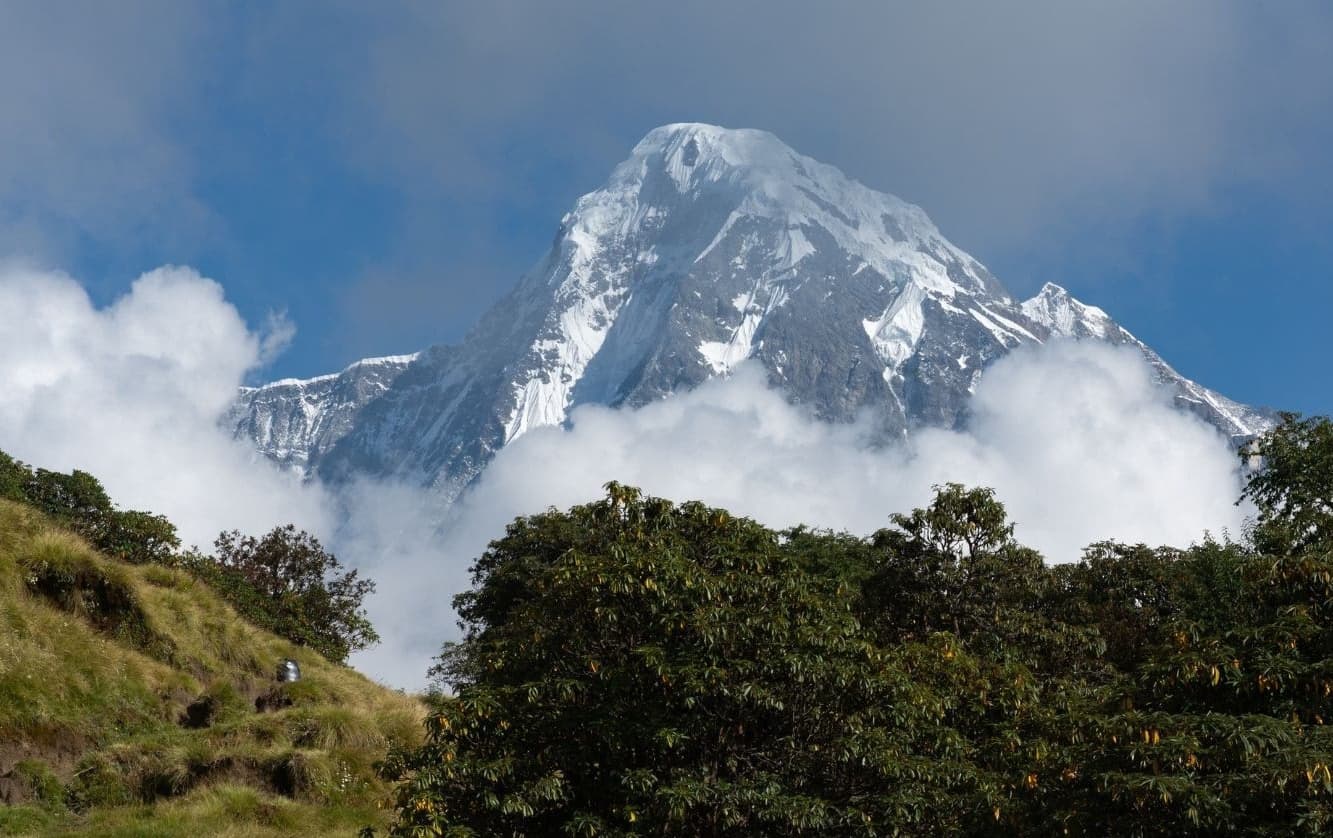
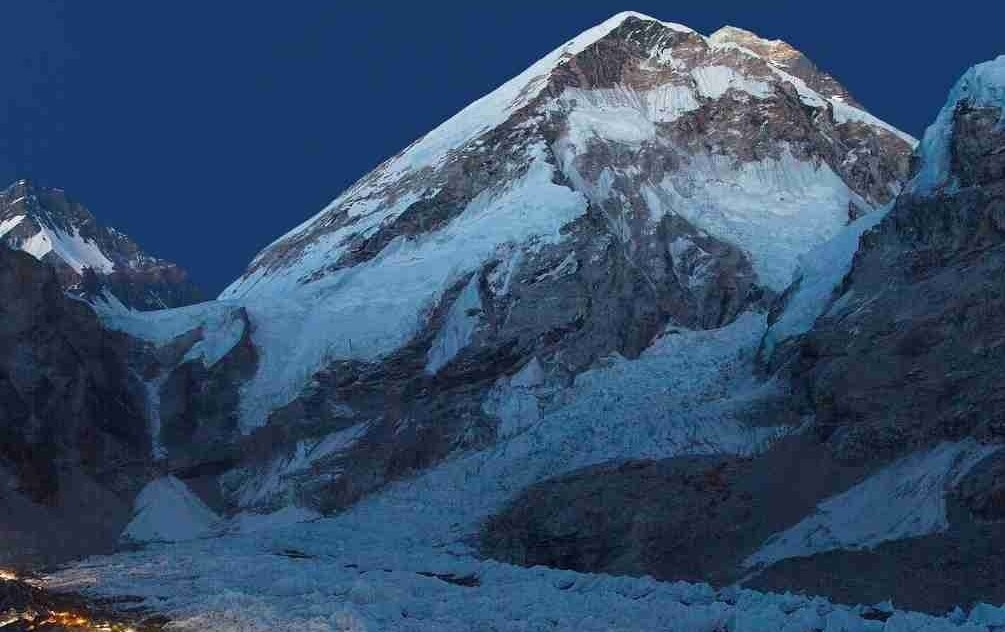
Tilicho Lake is a high-altitude glacial lake in Nepal’s Annapurna Conservation Area at 4,919 meters, and the best time to visit is October to November or March to April. These 4 months offer the best combination of dry trails, clearer mountain views, moderate daytime temperatures, and safer access compared with the monsoon season or the winter snow period. As one of the highest lakes in the world and a major side trip on the Annapurna Circuit, Tilicho Lake demands careful seasonal timing because weather, visibility, and trail stability change sharply across the year.
Choosing the right time to visit Tilicho Lake depends on more than scenery alone. Autumn usually provides the most stable trekking conditions, while spring offers longer daylight, accessible trails, and strong morning visibility. Monsoon months increase landslide risk, cloud cover, and wet trail exposure, while winter brings snow closure, ice, avalanche danger, and limited teahouse support. Trekking to Tilicho Lake requires the Annapurna Conservation Area Permit (ACAP), issued via the National Trust for Nature Conservation's official e-permit portal, the permit actually verified at every Annapurna checkpoint. A TIMS card is still issued alongside it, though as of 2026 it is not consistently checked on Annapurna routes.
Which Months Offer the Best Weather for Tilicho Lake?
The 4 optimal months for Tilicho Lake weather are October, November, March, and April. These months deliver daytime temperatures between 5°C and 15°C at lake level, precipitation below 30mm per month, and post-sunrise visibility of 40 to 80 kilometers across the Annapurna and Himalayan ranges.
The following table shows monthly weather characteristics at Tilicho Lake (4,919m) by season, including average daytime temperature, precipitation, and trail status.
Month | Avg. Daytime Temp | Avg. Precipitation | Trail Status |
March | 5°C to 10°C | 35mm | Open, snow patches possible |
April | 8°C to 14°C | 40mm | Open, stable |
May | 10°C to 15°C | 60mm | Open, pre-monsoon haze |
June | 8°C to 12°C | 120mm | Open but risky (rain shadow varies) |
July | 6°C to 10°C | 160mm | High landslide risk |
August | 6°C to 10°C | 145mm | High landslide risk |
September | 8°C to 13°C | 70mm | Reopening, damp trails |
October | 8°C to 15°C | 25mm | Peak season, dry |
November | 3°C to 10°C | 15mm | Prime, cold nights |
December | -5°C to 3°C | 20mm | Snow accumulation begins |
January | -10°C to 0°C | 20mm | Closed for most trekkers |
February | -8°C to 2°C | 20mm | Transitional, avalanche risk |
These figures apply specifically to the Tilicho Lake base area. Most trekkers overnight at Tilicho Base Camp, around 4,110–4,150 m, and make an early out-and-back hike to Tilicho Lake. From Manang, the Tilicho detour is usually split via Shree Kharka and Tilicho Base Camp rather than a ‘High Camp’ three hours above the village.
Is Spring the Best Time for Clear Views and Safer Tilicho Lake Trails?
Spring (March–May) delivers clear morning views and accessible trails, with daytime temperatures reaching 14°C by April. Pre-sunrise starts from High Camp, timed before 6:00 AM, maximize the 4 to 6 hours of cloud-free visibility that typically precede afternoon cloud build-up between 11:00 AM and 1:00 PM.
Rhododendron forests below Manang bloom from late March through April, creating a visual corridor of red and pink canopy between Dharapani (1,943m) and Chame (2,714m). This bloom period makes spring a dual-interest window combining wildflower trekking at lower altitude with high-altitude lake access above 4,000m.
Trail conditions in March carry residual snow patches on the section between Shree Kharka (4,050m) and the lake. By mid to late April, most of the main trail is usually free of snow, although lingering snow patches may remain after winters with heavier snowfall. Trail width from Shree Kharka to Tilicho Base Camp averages 1.2 meters on switchback sections, narrowing to 0.6 meters on the exposed ridge traverse.
Is Autumn Better for Stable Weather and Easier Tilicho Lake Trekking?
Autumn (September–November) provides the most stable weather window at Tilicho Lake, with October delivering average precipitation of just 25mm and daytime temperatures between 8°C and 15°C. Post-monsoon skies clear completely by late September, giving unobstructed views of Annapurna II (7,937m), Annapurna III (7,555m), and Gangapurna (7,455m).
October and November rank as the 2 driest months in the Manang valley. Dry conditions reduce trail hazards across the landslide-prone section between Khangshar village and Tilicho Base Camp, a 4-kilometer traverse exposed to rockfall after heavy rain. Trekkers combining this side trip with a full loop can explore the complete Annapurna Circuit with Tilicho Lake, which adds the Thorong La crossing and the Mustang descent to a single 16-day itinerary. By October, this section dries completely, reducing loose-stone surface hazards. Dry autumn conditions significantly reduce the likelihood of slippery trails and rockfall-related hazards compared with the monsoon season.
What Is Tilicho Lake Like in Spring?
Tilicho Lake in spring shows a partially frozen surface through mid-March, thawing to open water by late April, with surrounding snowfields contrasting against clear blue skies. The lake surface remains ice-free from late April through October, revealing the glacial blue-green water fed by snowmelt from Tilicho Peak's 3 main glaciers.
How Are Temperatures, Skies, and Trail Conditions of Tilicho Lake Trail From March to May?
Temperatures at Tilicho Lake in spring range from -8°C at pre-dawn (5:00 AM) to 14°C by midday in April, with clear skies prevailing until 11:00 AM on 80% of days. March brings residual winter snowpack on the trail above 4,200m, requiring traction devices (microspikes or crampons) on the 1.4-kilometer ridge section leading to the lake.
April eliminates most trail snow below 4,600m. By mid-April, the trail is usually walkable without traction devices, although conditions vary depending on late-season snowfall. May increases daytime temperature to 15°C but introduces afternoon cloud build-up by 12:00 PM on most days, reducing clear-sky viewing windows to 3 to 4 hours per morning.
Winds at the lake level strengthen from March through May, averaging 25 to 40 km/h at the lakeshore by mid-afternoon. Trekkers who arrive before 9:00 AM experience winds below 15 km/h, creating calmer photography conditions and safer crossing of the exposed ridge section above Shree Kharka.
How Busy Is the Tilicho Lake Route in Spring?
The Tilicho Lake trail sees 40 to 60 trekkers per day at Tilicho Base Camp teahouse during peak spring weeks (late March through late April). This crowd level reflects the Annapurna Circuit's overall spring trekking volume, the Annapurna Conservation Area recorded 222,141 international arrivals in fiscal year 2023/24 alone, per the National Trust for Nature Conservation's 2024 Annual Report.
Teahouse beds at Tilicho Base Camp (4,150m) number 30 to 45 per lodge across 3 operational lodges, totaling 90 to 135 beds at base camp level. Booking in advance is not available at these teahouses. Arriving at Tilicho Base Camp by mid-afternoon generally provides the best chance of securing accommodation during peak trekking season. Trekkers arriving after 5:00 PM face capacity shortfalls during the last 2 weeks of April specifically.
The trail from Manang to Tilicho Base Camp covers 11 kilometers with 1,200 meters of elevation gain. Two trail variants exist: the lower route via Khangsar (3,734m) and the upper ridge route via Shree Kharka (4,050m). The ridge route adds 200 meters of elevation gain but reduces exposure to the rockfall section and delivers panoramic views of the Khangsar Kang (7,485m) massif.
What Is Tilicho Lake Like in Autumn?
Tilicho Lake in autumn presents the clearest water reflection conditions of the year, with October skies staying cloud-free for 8 to 10 hours per day and temperatures reaching 15°C at the lakeshore by noon. The post-monsoon clarity eliminates the atmospheric haze that reduces visibility to 15 to 20 kilometers in spring and pre-monsoon periods.
How Are Temperatures, Visibility, and Crowds From Sept to Nov During Tilicho Lake Trek?
Temperatures at Tilicho Lake in autumn drop from 13°C (September) to 3°C (November) at midday, with nighttime lows falling to -15°C at High Camp by late November. October often provides exceptionally clear long-distance mountain views across the Annapurna and Dhaulagiri ranges, enabling clear sightlines to Dhaulagiri (8,167m) at 38 kilometers distance and Manaslu (8,163m) at 62 kilometers distance.
September offers warm temperatures but carries residual monsoon moisture, with occasional afternoon rain showers persisting through mid-September. The Manang valley receives its final monsoon precipitation by September 20 on average, marking the reliable start of the autumn trekking window. October is typically one of the driest and clearest months for trekking in the Annapurna region, but day-to-day weather still varies and should not be described with impossible weekly figures.
Trail conditions in autumn rank as the driest and most stable of any season. The rockfall section between Khangsar and Tilicho Base Camp dries completely by early October. All 3 teahouses at Tilicho Base Camp (4,150m) operate at full capacity from late September through mid-November, with electricity and hot water available at 2 of the 3 lodges.
Crowd levels in autumn exceed spring by 25 to 30%. October trails at Tilicho Base Camp see 75 to 90 trekkers per day at peak, particularly during Dashain festival weeks in October, when Nepali domestic trekkers join international visitors on the route.
Does Autumn Offer the Safest Window for Most Tilicho Lake Trekkers?
Autumn delivers the safest trekking window for Tilicho Lake, combining dry trails, stable temperatures, full teahouse operations, and evacuation access via Manang airstrip (3,519m) on emergency days. Trekkers planning a broader Nepal itinerary around this window can review the full guide on best time to visit the Himalayas, which covers pass-closure dates, region-by-region weather patterns, and the optimal months for long multi-day treks. The Manang airstrip connects to Pokhara (820m) via 20-minute STOL aircraft flights operated by Tara Air and Summit Air on weather-permitting days.
3 safety factors make October and November superior to other months:
Dry trail surfaces reduce ankle-injury risk by eliminating wet-rock sections on the 400-meter exposed ridge above 4,400m
Consistent weather windows allow descent completion before afternoon weather deterioration above 4,500m
Full emergency infrastructure operates from mid-September through November, with Himalayan Rescue Association (HRA) medical posts staffed in Manang and Pheriche
Can You Visit Tilicho Lake in Monsoon?
Visiting Tilicho Lake during monsoon (June–August) is possible but carries high risk from active landslides, 50 to 80% cloud cover at lake level, and trail degradation on 6 known unstable sections below 4,000m. The Annapurna Circuit trail between Dharapani (1,943m) and Manang (3,519m) crosses 14 major landslide-prone gullies that become active with precipitation above 50mm per day.
How Do Rain, Landslides, and Cloud Cover Affect the Tilicho Lake Trek?
Rainfall at Manang during monsoon peaks at 160mm in July, triggering landslides on 8 to 12 trail sections between Chamje (1,430m) and Khangshar. Cloud cover at Tilicho Lake level (4,919m) reaches 70 to 90% from 8:00 AM onward on monsoon days, eliminating mountain views and reducing photography conditions to near zero on most days.
The section between Timang (2,750m) and Chame (2,714m) records the highest landslide frequency on the Annapurna Circuit, with 3 to 6 trail blockages per monsoon season according to Annapurna Conservation Area Project (ACAP) trail reports. Trail reconstruction after blockages takes 3 to 14 days depending on blockage severity. Trekkers caught at blockage points require rerouting via jeep track on the opposite Marsyangdi River bank, adding 4 to 8 hours of travel per blockage.
The trail from Khangsar to Tilicho Base Camp becomes a mud channel above 3,700m during active monsoon rainfall, with water flowing directly on the trail surface on the 2.2-kilometer section crossing multiple seasonal stream channels. Waterproof footwear with ankle support handles conditions on this section; standard trail shoes absorb water within 30 minutes on monsoon days.
Does the Rain Shadow Help Parts of the Tilicho Lake Trek Route?
The Annapurna massif creates a rain shadow effect in the Manang valley above 3,400m, reducing monsoon precipitation by 60 to 70% compared to south-facing slopes below Chame. Manang records 130 to 160mm of precipitation in July, while Pokhara (820m) on the south side of the range records 800 to 900mm in the same month, a 6-to-1 ratio confirming the rain shadow's effectiveness.
The rain shadow protection applies specifically to the zone between Manang (3,519m) and Tilicho Base Camp (4,150m). This zone receives 40 to 60% fewer rain hours per day than the lower Annapurna Circuit sections below Pisang (3,185m). Trekkers who transit the lower sections quickly, covering Besisahar to Manang in 5 to 6 days instead of 8 to 9, reduce monsoon exposure time on the most landslide-active sections by 30 to 40%.
Leech activity on forested sections below 2,800m intensifies during monsoon, particularly between Jagat (1,300m) and Dharapani (1,943m). Gaiters and insect-deterrent spray on footwear reduce leech contact on this 12-kilometer section.
Can You Visit Tilicho Lake in Winter?
Visiting Tilicho Lake in winter (December–February) requires full mountaineering equipment, guide support, and the ability to self-rescue in whiteout conditions, as trail access above 4,000m closes under 1 to 3 meters of snowpack. Winter closes the trail to Tilicho Lake for most trekkers without high-altitude experience, specialized cold-weather gear, and avalanche awareness.
How Do Snow, Ice, and Cold Affect Access to Tilicho Lake?
Snowfall above 4,000m accumulates at 20 to 50 centimeters per week during January and February, covering all trail markers on the 4-kilometer ridge section above Shree Kharka (4,050m). Temperatures at Tilicho High Camp (4,925m) drop to -25°C on the coldest January nights, requiring sleeping systems rated to -30°C for safe bivouacking.
Ice forms on the north-facing trail sections above 4,200m from December through March, creating a continuous glazed surface on the 600-meter descent from the lake back to the High Camp route. Trekkers without 10-point or 12-point crampons and ice axe training cannot safely traverse this section in winter conditions. The Tilicho Lake surface freezes completely by December 20 on average years, forming ice 20 to 40 centimeters thick by late January.
Teahouses at Tilicho Base Camp (4,150m) close by December 1 on most years, removing shelter options for the 11-kilometer section from Manang to base camp. The 3 teahouses at Manang remain open year-round, serving the small population of winter trekkers on the lower Annapurna Circuit.
When Do Tilicho Lake Trail Closures and Avalanche Risks Become More Likely?
Trail closures on the Tilicho Lake section begin in December at the Shree Kharka ridge traverse (4,050m–4,400m), where avalanche runout zones from 3 active avalanche paths cross the main trail directly. The 3 avalanche paths originate from the Tilicho Peak (7,134m) northwest glacier and discharge down gullies at 4,600m, 4,450m, and 4,200m, converging within 200 meters of the main trail.
The Nepal Department of Hydrology and Meteorology issues avalanche bulletins for the Manang district from December 15 through March 15 annually. Avalanche events on the Tilicho approach section occur at a rate of 4 to 8 per winter season based on ACAP incident records. Trekkers who proceed beyond Manang after December 15 without guide support and avalanche safety equipment (transceiver, probe, shovel) accept significant risk on the upper trail sections.
Rescue helicopters from Manang airstrip cannot operate in wind speeds above 25 km/h or visibility below 1 kilometer, which conditions occur on 40 to 60% of winter days above 4,000m. Ground evacuation from above 4,200m in winter takes 6 to 10 hours with a porter rescue team, compared to 2 to 3 hours in summer conditions.
How Does Altitude Affect the Best Time to Visit Tilicho Lake Trek?
Altitude at Tilicho Lake (4,919m) creates acclimatization requirements that directly influence timing: trekkers ascending too fast risk Acute Mountain Sickness (AMS) regardless of season, requiring 2 scheduled acclimatization days at Manang (3,519m) before proceeding higher. AMS incidence among Annapurna Circuit trekkers surveyed at the Manang Aid Post reaches 45% by the standard Lake Louise Score threshold, according to a 2026 36-year follow-up study in High Altitude Medicine & Biology, underscoring why the mandatory acclimatization days matter before continuing to Tilicho Lake.
Why Does Acclimatization Matter at Nearly 5,000 Meters?
Atmospheric pressure at 4,919 meters equals 54% of sea-level pressure, reducing available oxygen per breath by 46%, which triggers AMS symptoms, headache, nausea, fatigue, and dizziness, in unacclimatized trekkers within 6 to 12 hours of rapid ascent. Understanding altitude sickness in Himalaya, including how AMS progresses to HACE and HAPE, and what warning signs to recognize, is essential preparation before attempting any route above 4,000m. AMS progresses to High Altitude Cerebral Edema (HACE) or High Altitude Pulmonary Edema (HAPE) in 1 to 3% of cases when trekkers ignore early symptoms and continue ascending.
Acclimatization at Manang (3,519m) works by stimulating erythropoietin production in the kidneys, increasing red blood cell count by 10 to 15% over 48 to 72 hours at altitude. This adaptation improves oxygen delivery to muscles and the brain before ascending to 4,919m. Trekkers skipping the Manang acclimatization day, arriving on day 6 and departing on day 7, increase AMS risk by 3 times compared to those who stay 2 nights.
The Himalayan Rescue Association (HRA) operates a medical aid post in Manang from October 1 through November 30 and from March 15 through May 30, staffed by 2 altitude medicine physicians. Outside these dates, medical support at Manang reduces to local health post level, where altitude-specific treatment (supplemental oxygen, Gamow bag hyperbaric treatment, dexamethasone) may be unavailable.
How Many Extra Days Should You Allow for Altitude Safety on Tilicho Lake Trek?
The Tilicho Lake trek requires 2 mandatory acclimatization days, 1 at Manang (3,519m) and 1 acclimatization hike to Gangapurna Lake (3,540m) or Ice Lake (4,600m), bringing total trek duration from Besisahar to 10 to 14 days. The standard 8-day itinerary skips the acclimatization hike, increasing AMS incidence from the 10% baseline to 35 to 40%.
The recommended altitude gain protocol above 3,000m limits ascent to 500 meters per day with 1 rest day every 3 days. Trekkers following this protocol reach Manang on day 7 from Besisahar, rest on day 8, trek to Tilicho Base Camp on day 9, summit Tilicho Lake on day 10, and return to Manang on day 11.
Diamox (acetazolamide) at 125mg to 250mg twice daily aids acclimatization by stimulating faster breathing, increasing blood oxygen saturation by 2 to 4%. A 2025 Bayesian network meta-analysis of 28 randomized trials found that 250mg acetazolamide twice daily cuts AMS odds substantially (OR 0.31) with a five-day preventive window, meaning timing matters as much as the dose itself. Diamox does not substitute for proper acclimatization pacing but supports the body's adaptation process during the critical 48-hour window above 3,500m.
Which Permits and Logistics on Tilicho Lake Trek Affect Your Timing?
Trekking to Tilicho Lake requires 2 permits, the Annapurna Conservation Area Permit (ACAP) and the Trekkers' Information Management System (TIMS) card, both obtainable in Kathmandu or Pokhara within 1 working day. Permit offices in Kathmandu open at Bhrikutimandap, Pradarshani Marg, and operate from 10:00 AM to 5:00 PM, Sunday through Friday.
What Permits Do You Need for Tilicho Lake?
The 2 mandatory permits for Tilicho Lake are the ACAP permit (NPR 3,000 / USD 22 for foreign nationals) and the TIMS card (NPR 2,000 / USD 15 for individual trekkers), totaling NPR 5,000 (USD 37) in permit costs. For a full breakdown of where to buy, what documents to bring, and how to avoid checkpoint fines, see our step-by-step guide on the ACAP permit in Nepal. SAARC nation citizens pay reduced rates: NPR 1,000 for ACAP and NPR 1000 for TIMS.
The ACAP permit covers all trekking within the Annapurna Conservation Area boundary, which encompasses 7,629 square kilometers including Tilicho Lake, the Annapurna Circuit, and the Annapurna Sanctuary. The Nepal Tourism Board issues TIMS cards through its Kathmandu office at Bhrikutimandap and its Pokhara office on Damside. Online TIMS applications became available from 2023 at the Nepal Tourism Board portal but require in-person physical card collection before the trek.
Permit checks occur at 4 checkpoints along the Tilicho route: Besisahar (823m), Chame (2,714m), Manang (3,519m), and the Tilicho trail junction at Khangsar (3,734m). Trekkers without both permits at the Khangsar checkpoint face return to Manang for permit documentation. Carrying physical permit copies prevents checkpoint delays; digital copies on a phone are not accepted at all 4 checkpoints.
How Do Transport and Teahouse Openings Vary by Season on Tilicho Lake Trek?
Jeep transport from Besisahar (823m) to Chame (2,714m) operates year-round at NPR 800 to 1,500 per person but suspends during active landslide events from July through September, when 3 to 8 days of road closure per month occur. The jeep road reaches Manang (3,519m) from 2017 onward, allowing trekkers to reduce transit time from 5 to 6 walking days to 6 to 8 driving hours.
Teahouse availability by season across the 4 key staging points:
Manang (3,519m): 12 teahouses open year-round, 400 total beds, electricity and WiFi at 8 lodges
Khangsar (3,734m): 3 teahouses open March–November, 60 total beds, no electricity
Tilicho Base Camp (4,150m): 3 teahouses open April–November, 90 to 135 total beds, solar-powered electricity at 2 lodges
Tilicho High Camp (4,925m): 1 teahouse open May–October only, 20 beds, no running water
Transport to Besisahar from Kathmandu covers 174 kilometers via the Prithvi Highway, taking 5 to 6 hours by tourist bus (NPR 800 to 1,200) or 4 hours by private jeep (NPR 12,000 to 18,000 for the full vehicle). Buses from Kathmandu's New Bus Park depart daily at 6:00 AM, 6:30 AM, and 7:00 AM. Flight to Pokhara followed by a 2.5-hour jeep ride to Besisahar reduces travel time for international arrivals from Kathmandu's Tribhuvan Airport.
How Should You Plan a Tilicho Lake Trek With a Guide?
A licensed guide for Tilicho Lake trek costs NPR 2,500 to 4,000 (USD 18 to 30) per day, reduces AMS risk through daily health monitoring, and ensures trail navigation accuracy on the 3 unmarked sections above 4,200m where GPS waypoints replace physical markers. Trekkers still deciding on their Nepal travel window can also compare trekking conditions across all regions in our guide to the best time to trek in Nepal. Nepal Tourism Board regulations from 2023 require registered guides for all trekkers in restricted and conservation areas; Tilicho Lake falls within the ACAP boundary where this regulation applies.
Can a Guided Tilicho Lake Trek Help You Pick the Right Season?
A licensed Tilicho Lake guide draws on direct seasonal trail knowledge, teahouse contacts, and real-time weather pattern recognition to recommend specific departure dates, rest day placement, and contingency routes, eliminating the 3 most common planning errors: insufficient acclimatization, wrong teahouse timing, and monsoon miscalculation. Experienced guides with 5 or more Tilicho Lake seasons know the 2 to 3-day weather windows that precede incoming precipitation fronts, windows that online forecasts at sea level fail to capture at 4,919m accuracy.
Guides registered with the Nepal Mountaineering Association (NMA) or Trekking Agencies Association of Nepal (TAAN) hold Wilderness First Responder (WFR) or Wilderness First Aid (WFA) certification, enabling on-trail AMS assessment and evacuation coordination. Guides with UIAA mountain guide certification have additional technical rescue competency for winter and early spring conditions above 4,400m.
Hiring through a TAAN-registered trekking agency provides 3 protections absent in street-hire arrangements: government liability insurance for the guide, fixed daily rate enforcement, and 24-hour emergency contact with the agency's operations team. TAAN-registered agencies number 1,400 in Nepal as of 2024, with 180 agencies specializing in Annapurna Circuit itineraries.
What Are the Key Takeaways About Visiting Tilicho Lake?
Tilicho Lake (4,919m) rewards trekkers who visit in October–November or March–April with dry trails, clear Himalayan views spanning 40 to 80 kilometers, and full teahouse infrastructure across all 4 staging points from Manang to the lake. The 4 non-negotiable planning elements, correct permits (ACAP + TIMS), 2-day Manang acclimatization, teahouse reservation planning, and a TAAN-registered guide, determine trek safety and success regardless of which optimal season a trekker selects.
The 6 core facts that define Tilicho Lake trek planning:
Altitude: 4,919 meters, requiring 2 acclimatization days at Manang (3,519m)
Best season: October and November (primary), March and April (secondary)
Trek duration: 10 to 14 days from Besisahar (823m) with proper acclimatization
Permits: ACAP (NPR 3,000) + TIMS (NPR 2,000) = NPR 5,000 total
Teahouse capacity: 90 to 135 beds at Tilicho Base Camp (4,150m), no advance booking
Guide cost: NPR 2,500 to 4,000 per day through a TAAN-registered agency
Tilicho Lake trekking conditions, permit fees, and teahouse availability change seasonally. Verifying current ACAP permit rates at the Nepal Tourism Board office in Kathmandu or Pokhara before departure confirms the most accurate entry requirements for the planned trekking season. Those ready to book can explore our fully guided Annapurna Circuit Trek package, which includes all permits, acclimatization days, experienced guides, and teahouse logistics across the full 18-day route.