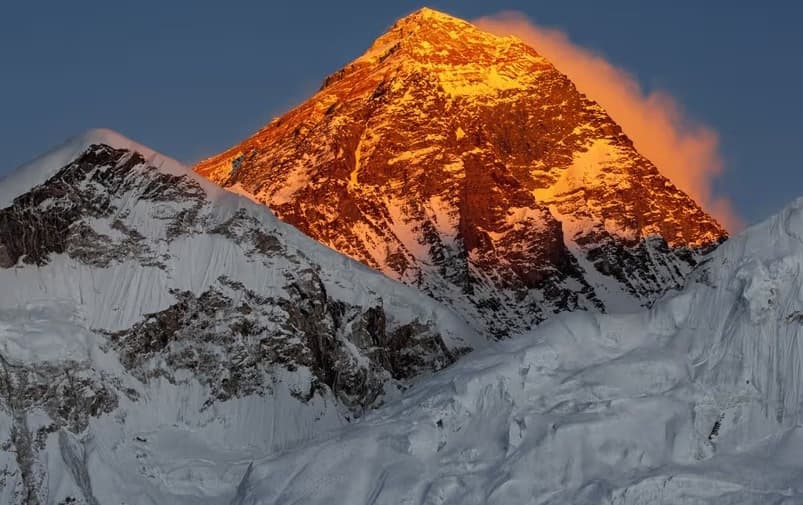
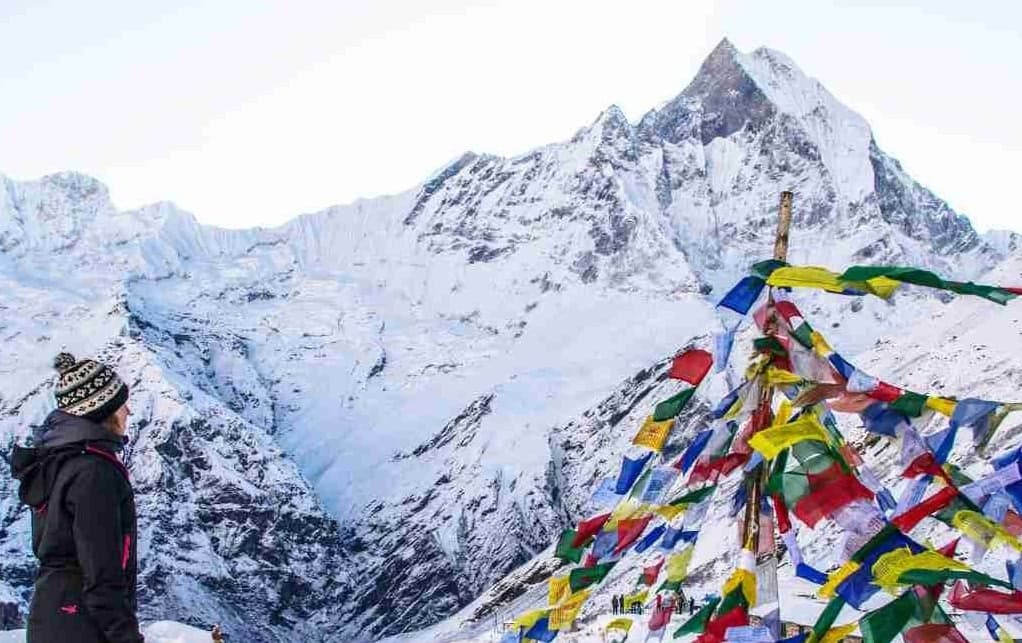
Nepal is one of the best Himalayan destinations for winter snow travel, with the most reliable snowfall arriving from December to February. Snow becomes consistent above 2,500 meters during these months, giving travelers the clearest mountain views, the strongest chance of seeing snow-covered trails, and access to winter landscapes across the Everest, Annapurna, Langtang, and Mustang regions.
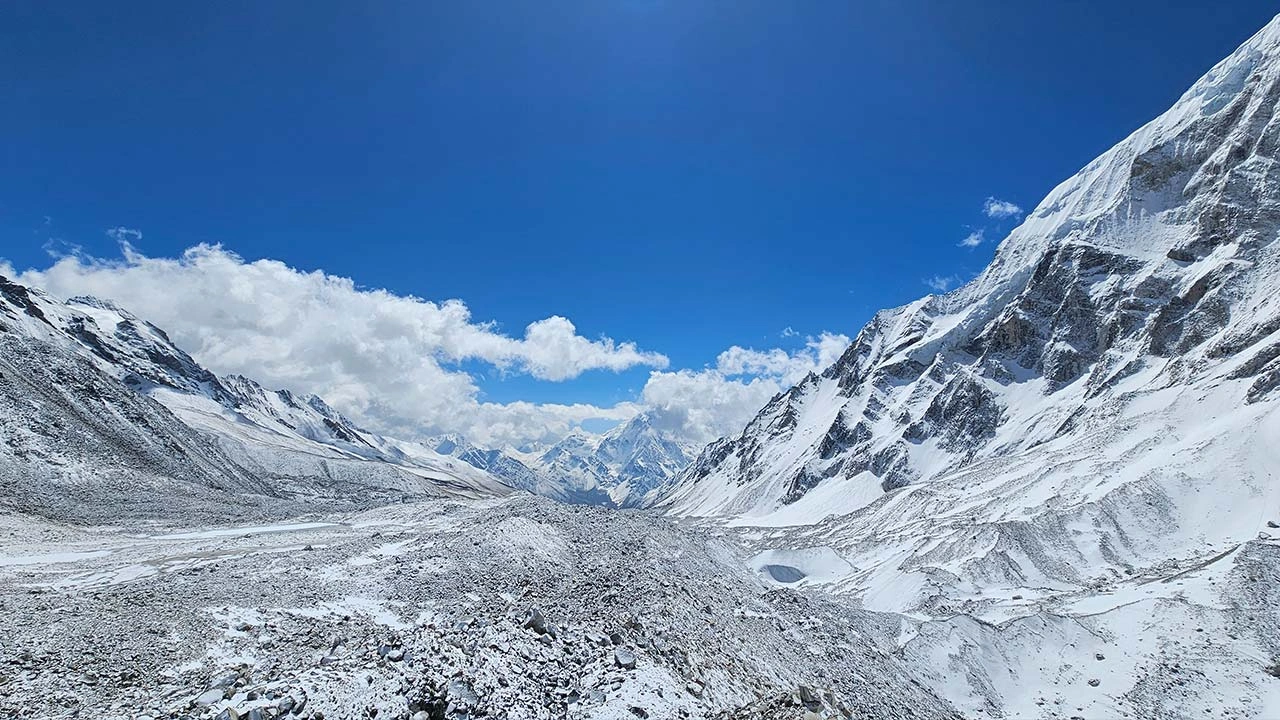
December offers early-season snow with better trail access, January brings the deepest snowpack at high altitude, and February balances strong snow cover with longer daylight and more stable walking conditions. Snow travel in Nepal ranges from easy viewpoints near Kathmandu to multi-day treks such as Everest Base Camp, Annapurna Circuit, and Langtang Valley, so the best time to visit depends on your preferred region, elevation, fitness level, route difficulty, and winter planning needs such as permits, gear, transport, and safety.
Which Months Offer the Best Chance of Seeing Snow in Nepal?
The 3 months with the highest probability of snow in Nepal are December, January, and February. Elevations above 3,000 meters receive snowfall on 12 to 18 days per month during this period. Below 2,500 meters, snowfall occurs on 2 to 4 days per year and only during severe cold spells.
Nepal's climate divides into 5 seasons: spring (March–May), summer/monsoon (June–August), autumn (September–November), winter (December–February), and pre-spring (late February–early March). Snow travel focuses on the winter season because the monsoon season, which delivers 80% of Nepal's annual rainfall, ends by September, leaving the atmosphere dry and skies clear from October onward. Snow travel focuses on the winter season because, per the DHM State of the Nepal Climate 2025, winter 2024–25 received just 20.6% of Nepal's normal winter precipitation, its third consecutive dry winter, leaving the atmosphere dry and skies clear for snow-viewing.
Is December a Good Time for Snow in Nepal?
December marks the start of reliable snowfall in Nepal above 3,500 meters. Passes such as Thorong La (5,416 m) on the Annapurna Circuit and Renjo La (5,360 m) in the Everest region accumulate 20 to 40 centimeters of snow by mid-December. Temperatures at Namche Bazaar (3,440 m) drop to a minimum of −8°C (18°F) at night.
December offers 3 specific advantages over other winter months: the trails remain accessible before heavy January snowfall, permit queues at Trekkers' Information Management System (TIMS) offices are shorter, and lodge availability is higher. The first 2 weeks of December see daytime highs of 5°C to 10°C (41°F to 50°F) at mid-altitude zones, making trail conditions firm but walkable.
Is January the Snowiest Month in Nepal?
January is typically the snowiest month in much of Nepal's Himalayas, although snowfall can peak in late December or February depending on seasonal weather patterns. Khumbu region temperatures at Lobuche (4,940 m) fall to −20°C (−4°F) at night. Gorak Shep (5,164 m), the last settlement before Everest Base Camp, records lows of −25°C (−13°F) in January.
January snowfall follows a measurable pattern: snowfall occurs on 15 to 20 days at altitudes above 4,000 meters. Some high passes, including Amphu Lapcha (5,845 m) and Tashi Lapcha (5,755 m), close entirely. Lower trekking routes such as the Langtang Valley trail (base elevation 1,430 m at Syabrubesi) remain open, with snowfall visible from 2,500 meters onward.
Is February Better Than December for Snow Travel?
Many trekkers consider February a good balance of established snow cover, gradually warmer daytime temperatures, and improving daylight hours, although the best month depends on route and seasonal conditions. By February, accumulated snowpack on north-facing slopes reaches its seasonal peak, while daytime temperatures at Namche Bazaar recover to 3°C to 8°C (37°F to 46°F).
February delivers 2 conditions not present in December or January: stabilized trail surfaces with compacted snow instead of fresh powder, and longer daylight hours, 11 hours 20 minutes compared to 10 hours 40 minutes in December. Rhododendron forests at elevations between 2,500 and 3,500 meters begin showing buds, creating a snow-and-bloom landscape found only in late February.
Where Can You See Snow in Nepal During Winter?
Snow in Nepal is visible across 4 primary geographic zones during winter: the high Himalayan trails above 4,000 meters, mid-mountain trekking routes between 2,500 and 4,000 meters, hill stations near Kathmandu between 1,500 and 2,500 meters, and Himalayan viewpoints accessible by road or short hike. Each zone delivers a different snow experience in terms of depth, accessibility, and visual scale.
Which Nepal Regions Get the Most Reliable Snowfall?
The 3 regions with the most reliable winter snowfall are the Khumbu (Everest) region, the Annapurna region, and the Langtang region. These areas generally receive the most reliable snowfall between December and February, although snowfall amounts and timing vary from year to year depending on winter weather patterns.
The following table presents snowfall reliability by region and elevation:
The table below compares 3 major trekking regions by elevation band, average monthly snowfall days in January, and trail accessibility.
Region | Elevation Range | Snow Days in January | Trail Status in January |
Khumbu (Everest) | 2,800 m – 5,364 m | 12–18 days | Open to EBC; high passes closed |
Annapurna | 800 m – 5,416 m | 10–16 days | Thorong La often closed |
Langtang | 1,430 m – 4,984 m | 8–14 days | Kyanjin Gompa accessible |
Manaslu | 700 m – 5,160 m | 10–15 days | Larkya La (5,160 m) risky |
Mustang (Upper) | 3,800 m – 4,200 m | 4–8 days | Roads accessible; dry cold |
The Khumbu region is widely regarded as one of Nepal's most reliable winter destinations for seeing snow because of its high elevations and extensive alpine terrain.
Can You See Snow Near Kathmandu?
Snow near Kathmandu is visible from the city on clear winter days, but snowfall within Kathmandu Valley (elevation 1,400 meters) occurs on average only 1 to 2 times per decade. Kakani (2,073 m), located 29 kilometers northwest of Kathmandu, receives light snowfall on 2 to 4 days per year. Nagarkot (2,175 m), a popular hill station 32 kilometers east of Kathmandu, records snowfall on 3 to 5 days annually.
From both Kakani and Nagarkot, the panoramic Himalayan view spans 13 mountain peaks above 6,000 meters, including Ganesh Himal (7,422 m), Langtang Lirung (7,227 m), and Dorje Lakpa (6,966 m). These peaks appear snow-covered year-round, providing a snow landscape without requiring high-altitude trekking. Bus fare from Kathmandu to Nagarkot costs NPR 150 to 300 (USD 1.10 to 2.25). Jeep hire costs NPR 3,000 to 5,000 (USD 22 to 37) for a full day.
Which Trekking Areas Offer Snow Without Extreme Difficulty?
The 4 trekking areas offering snow access at moderate difficulty are Langtang Valley, Ghorepani-Poon Hill, Annapurna Base Camp (ABC) lower section, and Helambu Circuit. Each route reaches snow-visible elevations between 2,500 and 3,700 meters without requiring technical climbing skills or specialized equipment beyond standard trekking boots and gaiters.
Langtang Valley Trek: 7 to 10 days, maximum elevation 3,870 m at Kyanjin Gompa, consistent snow above 3,000 m from December
Ghorepani-Poon Hill Trek: 4 to 6 days, maximum elevation 3,210 m, snowfall at Ghorepani on 8 to 12 days per January
Annapurna Base Camp lower section: stopping at Deurali (3,230 m) or Machapuchare Base Camp (3,700 m) gives snow access without the steep final push
Helambu Circuit: 6 to 8 days, maximum elevation 3,640 m at Tharepati, accessible from Kathmandu in 3 hours by road to trailhead
How Do Altitude and Region Affect Snowfall in Nepal?
.webp)
Altitude is the primary determinant of snowfall in Nepal, with elevations above 2,500 meters receiving snow on 60 to 90% of winter days and elevations below 1,500 meters receiving snow on fewer than 5% of winter days. Region affects snowfall through 2 secondary variables: proximity to moisture-bearing westerly winds from Central Asia and aspect (north-facing vs. south-facing slope orientation).
Does Higher Altitude Guarantee Snow?
Higher altitude does not guarantee snow in all Nepal regions equally. The Mustang district (Upper Mustang) sits at 3,800 to 4,200 meters but receives only 250 millimeters of annual precipitation because the Annapurna and Dhaulagiri massifs block monsoon moisture. Mustang's January snowfall averages 4 to 8 days compared to 15 to 18 days in the Khumbu region at similar elevations.
The rain shadow effect, a meteorological phenomenon where a mountain range blocks precipitation from reaching the leeward side, renders Upper Mustang, Dolpo, and Manang drier than their elevations suggest. Trekkers who prefer open trails, desert-like landscapes, and Tibetan plateau aesthetics in winter will find the Upper Mustang trek a compelling alternative to deep-snow routes.
How Does Weather Differ in Everest, Annapurna, and Langtang?
The Everest, Annapurna, and Langtang regions produce 3 distinct winter weather patterns defined by wind exposure, precipitation levels, and temperature ranges.
Khumbu (Everest) region weather in January: average daytime temperature at Namche Bazaar −2°C to 5°C (28°F to 41°F), wind speeds at Kala Patthar (5,644 m) averaging 40 to 70 km/h, snowfall totals at Lobuche 30 to 60 cm per month. The Khumbu icefall (5,486 m) and Western Cwm receive near-daily snowfall above 5,000 m.
Annapurna region weather in January: average daytime temperature at Chomrong (2,170 m) 4°C to 12°C (39°F to 54°F), wind speeds lower than Everest due to valley protection, snowfall at Annapurna Base Camp (4,130 m) averaging 20 to 45 cm per month. Thorong La Pass may close temporarily during periods of heavy snowfall, with closures varying considerably between winters.
Langtang region weather in January: average daytime temperature at Kyanjin Gompa (3,870 m) −5°C to 4°C (23°F to 39°F), wind speeds moderate, snowfall 15 to 35 cm per month. Langtang's position north of Kathmandu gives it the shortest access time, 7 to 8 hours by road, of the 3 major regions.
Do Lower-Elevation Hill Stations Get Snow Every Year?
Lower-elevation hill stations in Nepal between 1,500 and 2,500 meters do not receive snow every year. Snowfall at these elevations depends on the arrival of Western Disturbances, low-pressure weather systems originating over the Mediterranean Sea that bring winter precipitation to the Indian subcontinent and Nepal.
Western Disturbances produce snowfall at Pokhara (822 m) approximately once every 15 to 20 years. Bandipur (1,030 m) records snowfall once every 8 to 12 years. Dhulikhel (1,552 m) near Kathmandu receives light snow on 1 to 3 days in years with strong Western Disturbance activity. Chisapani (2,215 m) on the Shivapuri-Nagarjun National Park boundary receives measurable snowfall on 3 to 6 days annually.
What Are the Pros and Cons of Visiting Nepal for Snow?
Visiting Nepal for snow in winter delivers 4 clear advantages: superior mountain visibility, minimal trekking crowds, lower travel costs, and authentic local interaction. The 4 primary disadvantages are extreme cold at high altitude, reduced daylight hours, limited lodge availability on remote routes, and the closure of select high-altitude passes.
Are Winter Views Clearer Than in Other Seasons?
Winter views in Nepal are clearer than views in any other season. Post-monsoon autumn (October–November) is the second clearest period, but winter surpasses it in atmospheric clarity because residual monsoon humidity drops to near zero by December. Visibility in the Khumbu region reaches 100 to 150 kilometers on clear winter days, allowing unobstructed sightlines from Kala Patthar (5,644 m) across Everest (8,848.86 m), Lhotse (8,516 m), and Makalu (8,485 m) simultaneously.
The aerosol optical depth (AOD), a measure of atmospheric particle density affecting visibility, in the Himalayas drops to 0.05 to 0.10 in January compared to 0.40 to 0.60 during monsoon season. Instrument data back up the clarity claim: at the Nepal Climate Observatory-Pyramid station (5,079 m, Everest region), Marcq et al., Atmospheric Chemistry and Physics measured an annual mean aerosol optical depth of just 0.04–0.05, roughly a tenth of the value recorded at lower-elevation Pokhara. Snow-covered ridges reflect light, amplifying the photographic contrast between white peaks and deep blue winter sky. Photography in winter delivers results impossible to replicate in spring or summer.
What Cold-Weather Risks Should Travelers Expect?
Travelers in Nepal's winter season face 5 documented cold-weather risks: hypothermia, frostbite, high-altitude pulmonary edema (HAPE), high-altitude cerebral edema (HACE), and acute mountain sickness (AMS).
Hypothermia: body core temperature falling below 35°C (95°F), triggered by wet clothing and wind chill above 4,000 m
Frostbite: tissue freezing in extremities (fingers, toes, nose, ears) at temperatures below −10°C (14°F) with wind
HAPE: fluid accumulation in lungs, occurring in 1 to 2% of trekkers ascending above 4,500 m without proper acclimatization
HACE: fluid accumulation in brain, occurring in 0.5 to 1% of trekkers above 4,500 m
AMS: altitude sickness in Himalaya affects 25 to 40% of trekkers above 3,000 m on first ascent day, producing headache, nausea, and fatigue
The standard acclimatization protocol reduces HAPE and HACE risk: ascend no more than 300 to 500 meters per day above 3,000 meters, rest one extra day for every 1,000-meter altitude gain, and descend immediately at any sign of HAPE or HACE symptoms.
AMS risk is not evenly distributed: a peer-reviewed Everest Base Camp cohort study of 332 trekkers ascending to 5,300 m, the Xtreme Everest Step-Test study, recorded AMS in 73.5% of participants, with just over half classified moderate-to-severe.
How Do Crowds and Prices Change in Winter?
Winter generally attracts significantly fewer trekkers than the peak autumn season, resulting in quieter trails and greater lodge availability. Winter generally attracts significantly fewer trekkers than the peak autumn season, the Nepal Tourism Board’s Tourism Insights, October 2025 recorded 128,443 international arrivals in October 2025 alone, illustrating just how sharply arrivals taper off by January. This 60% reduction in permit volume translates directly into shorter queues, quieter lodges, and more personalized trekking experiences.
Price reductions in winter are measurable across 3 categories:
Teahouse accommodation: NPR 200 to 500 (USD 1.50 to 3.75) per room in winter vs. NPR 500 to 1,500 (USD 3.75 to 11.25) in peak autumn
International flights to Kathmandu (TIA): 15 to 30% lower airfare from European and Asian hubs in January vs. October
Guided trekking packages: 20 to 25% lower daily rates from licensed trekking agencies in Thamel, Kathmandu
How Should You Plan a Nepal Snow Trip?
Planning a Nepal snow trip requires 5 sequential steps: booking international flights to Tribhuvan International Airport (TIA) at least 6 weeks in advance, obtaining the correct trekking permits, selecting a route matching fitness level and snow access goals, assembling altitude-rated gear, and registering with the nearest Himalayan Rescue Association (HRA) clinic before ascending above 3,500 meters.
What Gear Is Essential for Snow Travel in Nepal?
Snow travel in Nepal above 2,500 meters requires 12 essential gear items organized across 3 categories: thermal protection, footwear, and safety equipment.
Thermal protection:
Down jacket rated to −20°C (−4°F): 600-fill power minimum
Moisture-wicking base layer in merino wool or synthetic fleece
Waterproof hard-shell outer layer with sealed seams
Insulated gloves rated to −15°C (5°F) with liner gloves underneath
Balaclava or insulated hat covering ears and neck
Thermal trekking socks: 2 pairs minimum per day
Footwear:
Waterproof trekking boots with B1 crampon-compatible sole above 3,500 m
Gaiters for snow depths above 20 cm
Microspike traction devices for icy trail sections between 2,500 and 4,000 m
Safety equipment:
Pulse oximeter (costs USD 15 to 40) for monitoring blood oxygen saturation, target above 90% at altitude
Emergency bivouac sack rated to −25°C
Trekking poles with snow baskets for balance on snowpack
Gear rental is available in Thamel, Kathmandu, at costs of NPR 150 to 300 (USD 1.10 to 2.25) per day for down jackets, NPR 200 to 400 (USD 1.50 to 3.00) per day for trekking boots, and NPR 50 to 100 (USD 0.40 to 0.75) per day for trekking poles.
How Should You Choose Between Sightseeing and Trekking?
The choice between sightseeing and trekking for Nepal snow travel depends on 2 primary factors: physical fitness level and available trip duration.
Sightseeing routes: visiting Nagarkot, Kakani, Dhulikhel, or Sarangkot near Pokhara, suit travelers with 3 to 5 days available, limited trekking experience, or physical conditions incompatible with daily 5 to 8-hour walks at altitude. These routes deliver Himalayan snow panoramas without overnight stays above 2,200 meters.
Trekking routes: Langtang Valley, Ghorepani-Poon Hill, Annapurna Base Camp, Everest Base Camp, suit travelers with 7 to 21 days available, prior hiking experience with day-hike distances of 12 to 18 kilometers, and access to altitude-appropriate gear. Trekking delivers direct contact with snow, walking through snowpack, crossing snow-covered passes, and sleeping in lodges surrounded by snow-laden forests.
A combined itinerary spanning 10 to 14 days allocates 3 days to Kathmandu cultural sightseeing and Himalayan panorama viewpoints, then transitions to 7 to 10 days of trekking in the Langtang or Annapurna region. For a broader look at things to do in winter in Nepal beyond snow trekking, including cultural experiences and city-based activities, our dedicated guide covers the full range of options.
What Permits, Transport, and Safety Checks Matter in Winter?
Winter trekking in Nepal requires 3 permit categories, 2 transport options, and 3 safety registration steps.
Permits:
TIMS (Trekkers' Information Management System) card: costs USD 10 to 20, issued by Nepal Tourism Board offices in Kathmandu and Pokhara
ACAP (Annapurna Conservation Area Permit) for Annapurna region: costs NPR 3,000 (USD 22.50) for SAARC nationals, NPR 10,000 (USD 75) for other nationals
SNPBZ (Sagarmatha National Park and Buffer Zone) permit for Everest region: costs NPR 3,000 (USD 22.50) for SAARC nationals, NPR 3,000 for others (included in Khumbu Pasang Lhamu Rural Municipality fee of NPR 2,000)
Transport:
Tourist buses from Kathmandu to Pokhara: NPR 700 to 1,500 (USD 5.25 to 11.25), journey 6 to 7 hours
Domestic flights from TIA Kathmandu to Lukla (LUA) for Everest region: USD 165 to 215 one-way; winter cancellation rate 8 to 15% due to wind and visibility
Safety registrations:
Register trekking route, emergency contact, and return date with the Nepal Police checkpoint at route entry
Check in with Himalayan Rescue Association (HRA) clinic at Pheriche (4,288 m) or Manang (3,519 m) for altitude briefing
Purchase travel insurance covering high-altitude helicopter evacuation up to USD 10,000 minimum, helicopter evacuation from Khumbu region costs USD 4,000 to 7,000
How Can You Plan Nepal Snow Travel With Expert Help?
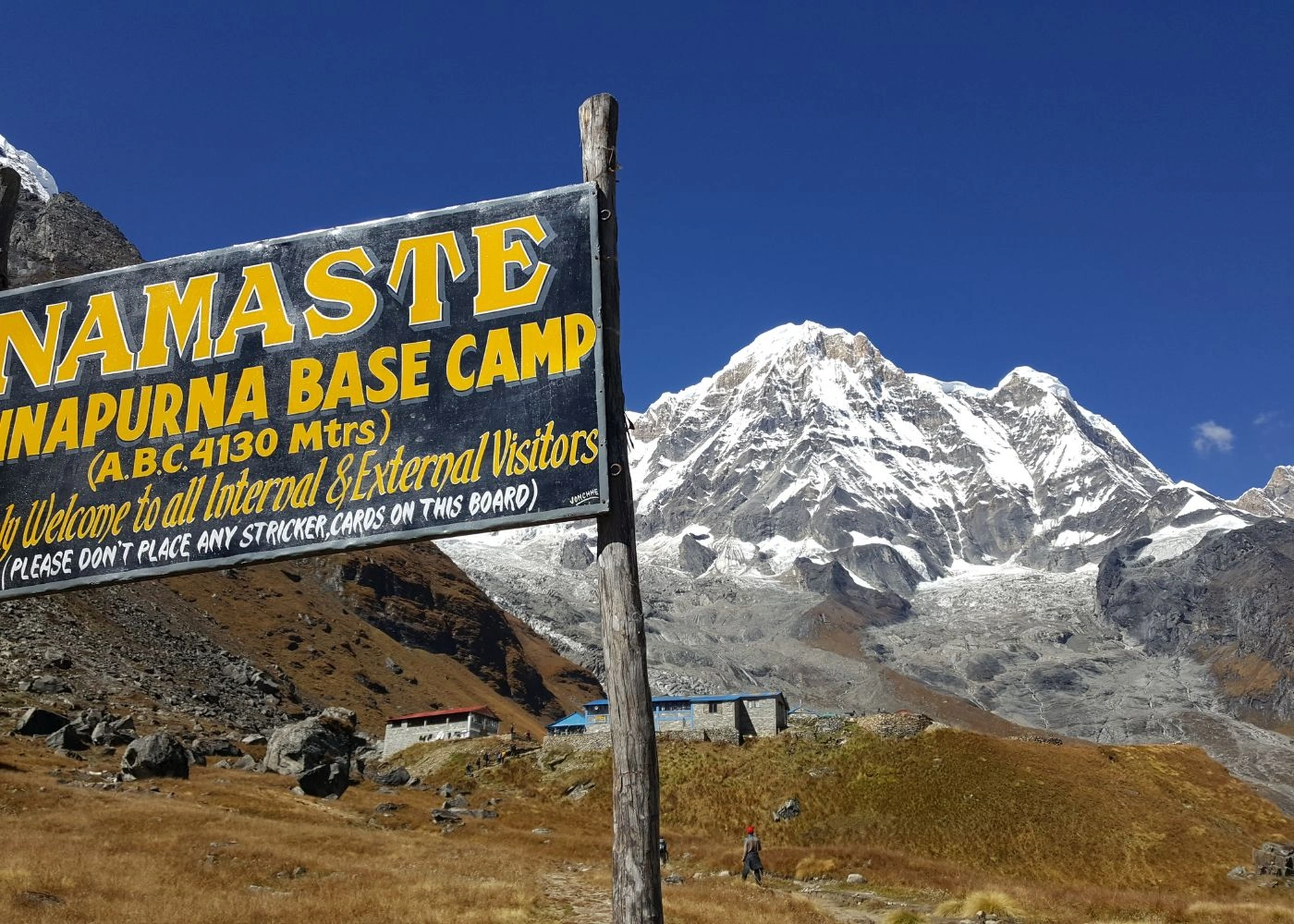
Nepal snow travel planning with expert help reduces logistical errors, permit delays, and gear shortfalls across all 3 winter months. Licensed trekking agencies registered with the Trekking Agencies' Association of Nepal (TAAN) provide route-specific knowledge, teahouse booking networks, licensed guide assignments, and emergency evacuation protocols unavailable through self-planning.
Can a Guided Nepal Snow Tour Help You Pick the Right Month?
A guided Nepal snow tour from a TAAN-registered agency delivers 4 tangible benefits over independent travel: month-specific route optimization, weather window selection, pre-booked lodge prioritization, and government-licensed guide expertise.
Month optimization from a guide perspective: guides with 5 or more years of winter trek experience match client fitness levels and snow experience preferences to the optimal month within the December–February window. Clients seeking deep snowpack and dramatic photography receive January departure scheduling. Clients prioritizing open passes and flexible logistics receive December or late February scheduling.
Weather window selection: experienced guides monitor the Nepal meteorological Forecasting Division's 10-day forecast and hold departure flexibility of 2 to 3 days to avoid peak snowstorm windows. This reduces trail risk on days when snowfall exceeds 15 cm in 24 hours.
Pre-booked lodge access: in January, lodges at Kyanjin Gompa (Langtang), Annapurna Base Camp, and Gorak Shep (Everest) operate at 40 to 60% capacity. Guides with established teahouse relationships secure rooms in advance, preventing the 3 to 5% occurrence of trekkers arriving at full lodges after 8-hour days.
Guide fee structures: a licensed trekking guide in Nepal earns NPR 3,000 to 5,000 (USD 22.50 to 37.50) per day. A porter earns NPR 1,500 to 2,500 (USD 11.25 to 18.75) per day. A fully guided Everest Base Camp Trek, spanning 14 to 16 days, ranges from USD 1,200 to 2,500 per person, including permits, teahouse accommodation, guide, and porter.
What Are the Key Takeaways About Visiting Nepal for Snow?
Nepal snow travel centers on 3 winter months, December, January, and February, across 4 primary regions: Khumbu (Everest), Annapurna, Langtang, and Mustang. January delivers the deepest snowpack at high altitudes, December provides the best combination of access and accumulation, and February offers stabilized trails with increasing daylight.
The 6 core facts to retain about Nepal snow travel:
Elevations above about 2,500–3,000 meters have a high likelihood of snowfall during winter, although frequency varies by region, altitude, and individual weather systems
Kathmandu Valley (1,400 m) receives snowfall fewer than 2 times per decade; Nagarkot (2,175 m) receives snow on 3 to 5 days per year
January is Nepal's snowiest month, passes above 5,000 meters accumulate 40 to 80 centimeters of snowpack
Trekking permit volumes drop 60% from October to January, reducing trail congestion and accommodation costs by 20 to 35%
12 essential gear items across 3 categories, thermal protection, footwear, and safety equipment, are required for snow travel above 2,500 meters
TIMS cards, national park permits, and travel insurance covering helicopter evacuation are non-negotiable prerequisites for all winter trekking routes
Nepal snow travel, whether by short hill-station day trips from Kathmandu or 16-day high-altitude treks to Everest Base Camp, delivers Himalayan landscapes accessible across a range of fitness levels, budgets, and available time. The winter season from December through February is the defining period for snow in Nepal.