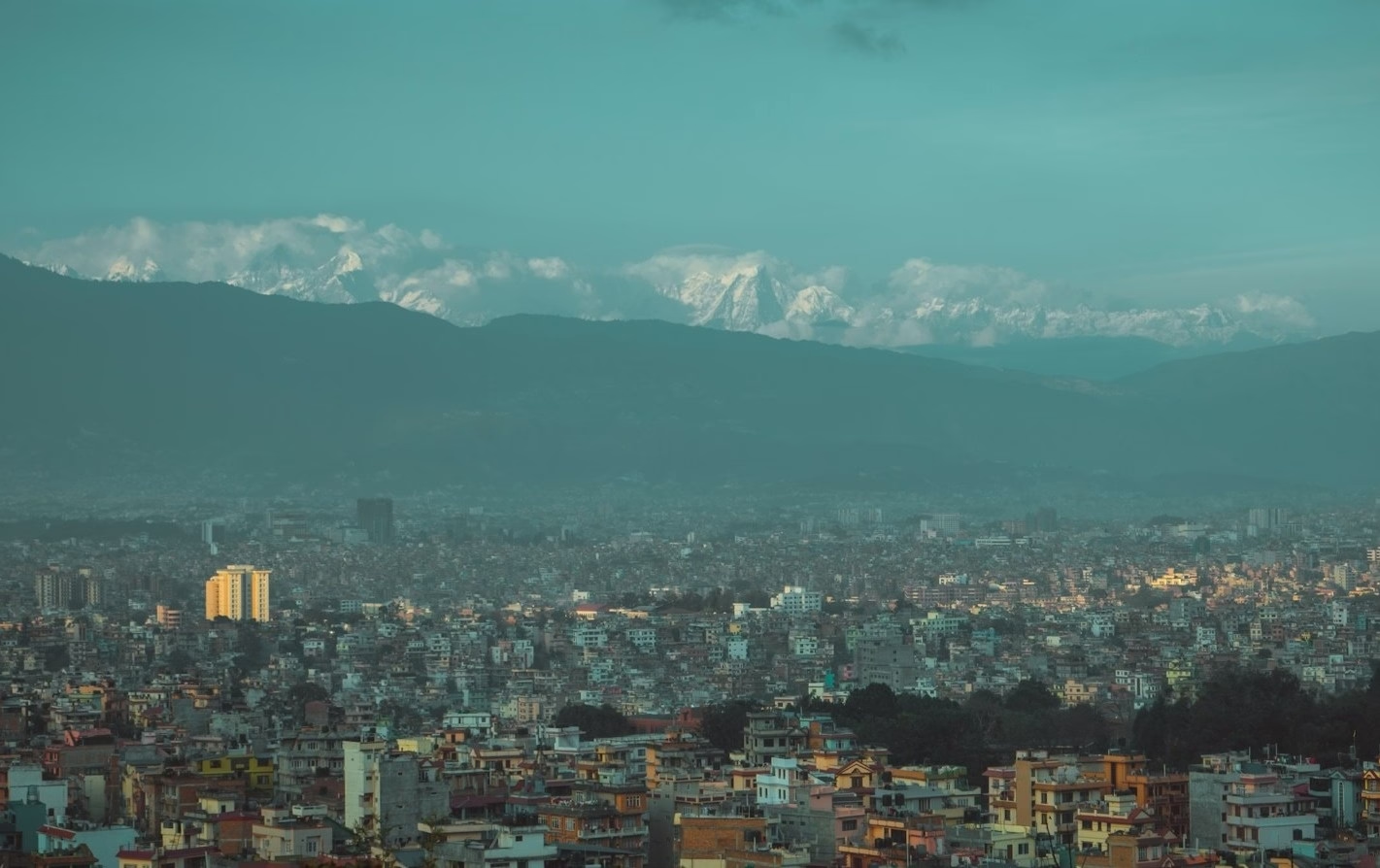
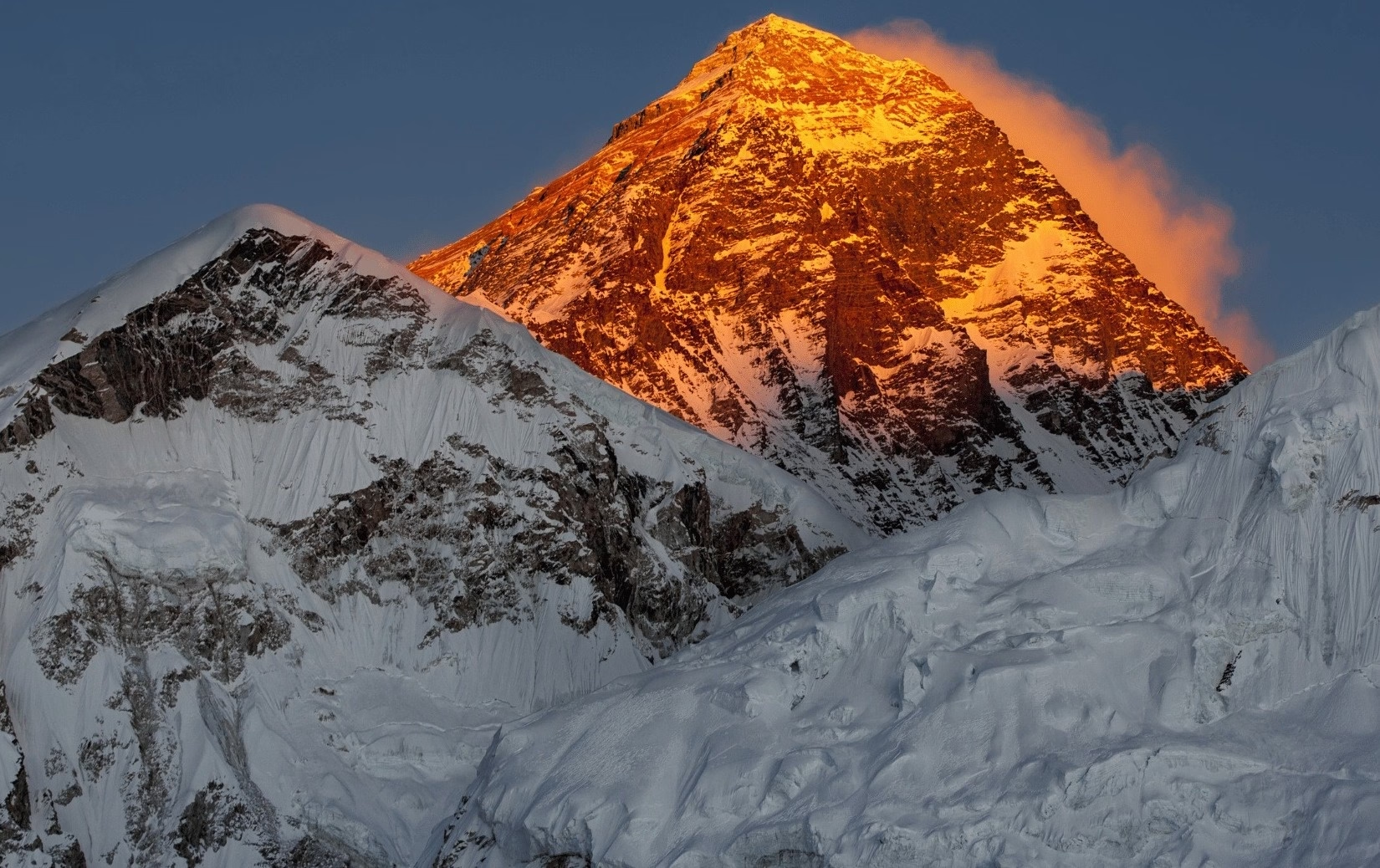
Gangtok snowfall trips are best planned in January, when nearby high-altitude Himalayan destinations such as Tsomgo Lake, Nathula Pass, Baba Mandir, and North Sikkim receive the most consistent snow cover, the coldest temperatures, and the highest chance of active snowfall. Gangtok city itself, at 1,650 meters, rarely gets dependable snow, so most travelers use the capital of Sikkim as a base for reaching snow zones above 3,500 meters. The broader snowfall season near Gangtok runs from December to March, with late December, January, and February offering the strongest conditions for snow views, winter landscapes, and day trips from the city.
A well-planned Gangtok snow trip depends on more than timing alone. Travelers also need to understand which destinations offer the most reliable snowfall, how road conditions and permits affect access, what temperatures to expect from Gangtok to Nathula Pass, and what to pack for sub-zero weather at altitude. From the easier Tsomgo Lake day trip to deeper snow experiences in North Sikkim, the best Gangtok snowfall itinerary combines the right month, the right route, and the right preparation for winter travel in the eastern Himalayas.
Does Gangtok Get Snowfall or Is It Better Nearby?
Gangtok city itself receives snowfall rarely, primarily because it sits at 1,650 meters (5,413 feet) elevation, too low for consistent winter snow accumulation. Gangtok city itself does not offer dependable snowfall every winter. Most travelers use Gangtok as a base and head to much higher-altitude places such as Tsomgo Lake and Nathula Pass when they want to see snow. Travelers who visit for snowfall experiences access it through day trips to higher-altitude destinations within 40 to 56 kilometers of the city center.
Gangtok is the capital of Sikkim state, located in the eastern Himalayas of northeastern India. The city functions as the primary base for exploring snow-covered terrain at elevations above 3,500 meters. Its elevation places it in a subtropical highland climate zone, which produces winter fog and frost but not sustained snowfall at street level.
Which Spots Near Gangtok Offer the Most Reliable Snow?
The 4 most reliable snow destinations near Gangtok are Tsomgo Lake, Nathula Pass, Baba Mandir, and the Lachen and Lachung valleys in North Sikkim. Tsomgo Lake, about 40 kilometers from Gangtok, often experiences snowfall from late November through March, with the most reliable snow cover occurring between December and February. Nathula Pass, about 56 kilometers from Gangtok, can receive snowfall from October through April, although the heaviest and most consistent snowfall usually occurs between December and February. Baba Mandir, located 2 kilometers beyond Tsomgo Lake at 4,200 meters, records snow from November through March. North Sikkim destinations such as Gurudongmar Lake at 5,183 meters receive snow from October through May.
Why Do Tsomgo Lake and Nathula Pass Get More Snow?
Tsomgo Lake and Nathula Pass receive more snow because their elevations exceed 3,780 meters, placing them above the regional snowline during winter months. Travelers planning a broader Sikkim trip can explore the best time to visit Sikkim to match snowfall conditions with other seasonal highlights across Gangtok, Pelling, and Darjeeling. Tsomgo Lake sits at 3,780 meters (12,400 feet), and Nathula Pass sits at 4,310 meters (14,140 feet). At these altitudes, winter temperatures drop to −15°C at Nathula and −5°C at Tsomgo, enabling snow to accumulate and persist. The Indo-China border geography at Nathula also channels cold winds from the Tibetan Plateau, accelerating snow deposition from October onward.
Which Months Give You the Best Chance of Seeing Snow?
January generally offers the highest likelihood of snowfall near Gangtok, making it the most popular month for travelers seeking snow around Tsomgo Lake and Nathula Pass. December, February, and March also offer active snowfall windows at these high-altitude sites. The main snowfall season near Gangtok typically runs from December through March, with January and early February usually offering the best snow conditions. For travelers who want to extend their Himalayan winter experience beyond Sikkim, our Nepal snowfall travel guide covers the most reliable snow regions across the Everest, Annapurna, and Langtang areas.
The table below defines the snowfall conditions across 4 key months at the 2 primary snow destinations near Gangtok.
Month | Tsomgo Lake Snow Depth | Nathula Pass Status | Gangtok City Temp (°C) |
December | 10–30 cm | Open, snow-covered | 5°C to 12°C |
January | 30–60 cm | Open, heavy snowfall | 2°C to 8°C |
February | 20–50 cm | Open, active snowfall | 4°C to 10°C |
March | 5–20 cm | Open, melting phase | 8°C to 14°C |
The months in this table rank from highest to lowest snow depth at Tsomgo Lake based on seasonal patterns widely reported by regional operators, a trend consistent with the rising visitor-arrival growth rates projected in Sikkim's official Strategic Urban Development Plan (Government of Sikkim, 2024).
Is Late December a Good Time for Early Snowfall Views?
Late December usually marks the beginning of reliable winter snow conditions at Tsomgo Lake and Nathula Pass, although snowfall amounts vary each year. Late December often experiences multiple snowfall events, though their timing and frequency vary from year to year. Roads to both destinations remain operational through December in most years, with occasional closures lasting 12 to 24 hours after heavy snowfall events. Visitors arriving in late December also benefit from the Christmas and New Year travel window, when local tourism infrastructure operates at full capacity.
Is January the Most Reliable Month for Snowfall?
January is generally considered the most reliable month for snowfall near Gangtok, with frequent snowfall and persistent snow cover at higher elevations. Nathula Pass temperature drops to −15°C in January, producing dry powder snow that accumulates rapidly after each storm. Visitors traveling in January have the highest chance of experiencing fresh snowfall, a pattern consistent with the 30-year winter baselines published in the India Meteorological Department's official Climatological Normals (1981–2010), though yearly conditions vary. January typically provides the longest period of continuous snow cover around Tsomgo Lake, depending on seasonal weather conditions.
Can February or March Still Offer Snow Near Gangtok?
February continues to offer favorable snowfall conditions, although snowfall frequency generally begins to decline toward the end of the month. March transitions into the melting phase, with snow depths falling from 20 centimeters to 5 centimeters by month-end. Significant snowfall can still occur in March, although conditions gradually transition toward spring as the month progresses. North Sikkim destinations including Gurudongmar Lake remain snow-covered through March and into early April, extending the snowfall access window for travelers who plan beyond the standard Tsomgo route.
Where Should You Go Near Gangtok for a Snowfall Trip?
The 4 primary snowfall destinations near Gangtok are Tsomgo Lake, Nathula Pass, Baba Mandir, and North Sikkim, located between 40 and 120 kilometers from the city. Tsomgo Lake requires a Protected Area Permit (PAP) for Indian nationals and is restricted to Indian citizens at Nathula. North Sikkim requires an Inner Line Permit (ILP) obtainable in Gangtok within 2 hours. Each destination offers distinct snowfall characteristics, elevation profiles, and road accessibility conditions.
Is Tsomgo Lake the Easiest Day Trip for Snow From Gangtok?
Tsomgo Lake is the easiest snow day trip from Gangtok, located 40 kilometers east of the city along NH 310, accessible by shared jeep in 90 minutes. The lake sits at 3,780 meters in a glacial cirque and stays snow-covered from November through March. Shared jeep services typically depart early in the morning and return to Gangtok in the afternoon, though schedules may vary by season and operator. The PAP permit for Tsomgo Lake costs ₹100 per Indian national and takes 30 minutes to process at the Sikkim Tourism office on M.G. Marg. Foreign nationals access Tsomgo Lake with a standard Inner Line Permit but cannot proceed to Nathula Pass.
Is Nathula Pass Worth Planning Around for Snowfall?
Nathula Pass at 4,310 meters delivers the deepest snowfall within day-trip range of Gangtok, with accumulations reaching 60 to 90 centimeters during peak January conditions. The pass sits 56 kilometers from Gangtok and takes 2.5 hours by jeep from Tsomgo Lake. Nathula opens to Indian civilians on Wednesdays, Thursdays, Saturdays, and Sundays between 7:00 AM and 3:00 PM. Access requires a separate Nathula Pass Permit costing ₹200 per person for Indian nationals. The pass closes completely from January 10 to February 5 in years of extreme snowfall, with closure decisions announced by the 8th Mountain Division of the Indian Army 48 hours in advance.
Are Baba Mandir and North Sikkim Good Snow Alternatives?
Baba Mandir and North Sikkim provide 2 strong snow alternatives for travelers who face Nathula closures or seek multi-day snowfall experiences. Baba Mandir sits at 4,200 meters, 2 kilometers beyond Tsomgo Lake, and records snow cover from November through March with depths of 15 to 40 centimeters. North Sikkim, encompassing Lachen, Lachung, Gurudongmar Lake at 5,183 meters, and Zero Point at 4,428 meters, requires a 2-day minimum itinerary from Gangtok. Zero Point near Lachung records snowfall from October through May and averages snow depths of 90 centimeters in January. North Sikkim ILP permits cost ₹100 per Indian national and are available from the District Collector's office in Gangtok.
What Should You Expect From Weather and Road Conditions of Sikkim?
Gangtok's snowfall season spans December through March, with temperatures in Gangtok city ranging from 2°C to 14°C and temperatures at snow destinations ranging from −15°C to −2°C. Road conditions between Gangtok and Tsomgo Lake remain operational 85% of the time during the snowfall season, with short closures of 12 to 36 hours following heavy snowfall. Travelers prepare for 3 distinct weather zones: the Gangtok valley at 1,650 meters, the mid-mountain zone between 2,500 and 3,500 meters, and the snow zone above 3,500 meters.
How Cold Does Gangtok Get During the Snowfall Season?
Gangtok records minimum temperatures of 2°C in January, its coldest month, with maximum temperatures averaging 8°C. December minimums average 5°C, February minimums average 4°C, and March minimums average 8°C. At Tsomgo Lake, January temperatures range from −5°C to −2°C during daytime hours and drop to −10°C at night. Nathula Pass records daytime January temperatures between −15°C and −8°C, with windchill values reducing apparent temperatures to −20°C on storm days. The Border Roads Organisation clears the Tsomgo road quickly after snowfall events as part of its wider Project Swastik mandate in Sikkim, which has built more than 1,000 km of roads and 80 major bridges in the state (Press Information Bureau, Government of India, 2026).
How Do Permits and Road Closures Affect Winter Trips of Gangtok?
3 permit types govern access to snowfall destinations near Gangtok: the Inner Line Permit (ILP) for entry into Sikkim, the Protected Area Permit (PAP) for Tsomgo Lake and Nathula zone, and the Restricted Area Permit (RAP) for North Sikkim, administered under the framework set out in the Government of Sikkim's official Ecotourism Policy, which regulates access to high-altitude ecotourism zones such as the Tsomgo–Nathula corridor. Indian nationals obtain ILP from 5 checkpoints: New Jalpaiguri railway station, Bagdogra Airport, Rangpo, Melli, and Ranipool. PAP processing takes 30 minutes at Gangtok's Tourism office and requires a government-issued photo ID. Road closures at the Tsomgo–Nathula route occur on average 12 days per January due to snowfall, with advance closure announcements issued by the Sikkim Tourism department's official WhatsApp bulletin at 6:00 AM.
What Should You Pack for a Snowfall Trip to Gangtok?
A Gangtok snowfall trip requires 8 essential equipment categories: thermal base layers, insulated mid-layers, waterproof outer shells, insulated boots with grip soles, thermal gloves rated to −15°C, UV-protective snow goggles, SPF 50+ sunscreen, and energy-dense snacks. For a full gear breakdown suitable for high-altitude Himalayan conditions, our trekking equipment checklist covers every layer from base to outer shell. Thermal base layers of merino wool or synthetic polypropylene provide core temperature regulation at high altitude. Waterproof boots with ankle support are mandatory at Tsomgo Lake, where snow depth reaches 60 centimeters and ice patches form on the lakeside walking path from December through February. Travelers ascending above 3,500 meters are at risk for acute mountain sickness, particularly on the Nathula Pass and North Sikkim routes. Diamox (Acetazolamide 250mg) is the most commonly used medication for altitude sickness prevention, travelers concerned about altitude sickness should consult a healthcare professional before their trip, as medications such as acetazolamide (Diamox) may not be suitable for everyone.
How Should You Plan a Gangtok Snowfall Trip Smoothly?
A Gangtok snowfall trip requires 3 to 5 days minimum to access all primary snow destinations, Tsomgo Lake, Nathula Pass, and Baba Mandir on days 2 and 3, with North Sikkim requiring days 4 and 5. Travelers combining Gangtok with a broader eastern Himalayan circuit can consult our guide on Himalayan winter travel planning for a full seasonal breakdown of the Everest, Annapurna, and Langtang regions. Flights operate to Bagdogra Airport (IXB) in West Bengal, 124 kilometers from Gangtok, with shared taxis completing the transfer in 3 hours for ₹250 to ₹350 per seat. The Darjeeling Himalayan Railway also connects New Jalpaiguri to Siliguri, from which shared taxis reach Gangtok in 3.5 hours. Hotel accommodation in Gangtok ranges from ₹800 per night for guesthouses near M.G. Marg to ₹8,000 per night for hotel properties with mountain views.
Can a Local Travel Service Help You Reach Snowfall Spots near Gangtok?
Local Gangtok travel agencies manage permit processing, jeep bookings, and road condition updates for snowfall itineraries from a single point of contact. Registered tour operators in Gangtok hold standing allocations for PAP permits, enabling same-day processing for groups of up to 6 travelers. A standard Tsomgo Lake and Nathula Pass day tour costs ₹2,500 to ₹3,500 per person, including shared jeep, permits, and guide service. North Sikkim 2-day packages from registered operators cost ₹4,500 to ₹6,500 per person, including ILP, accommodation in Lachen or Lachung, jeep transfer to Zero Point, and return to Gangtok. Operators registered with the Sikkim Tourism Development Corporation (STDC) provide permit processing guarantees and real-time road condition updates via WhatsApp 48 hours before departure.
What Are the Key Takeaways About Best Time to Visit Gangtok for Snowfall?
Gangtok snowfall trips deliver the best results in January, when Tsomgo Lake records 30 to 60 centimeters of snow, Nathula Pass reaches −15°C, and the probability of active snowfall on any given day exceeds 80%. Gangtok city at 1,650 meters receives snow on only 2 to 4 days per year, making nearby high-altitude destinations the primary snowfall targets. The 4 top snow destinations within 120 kilometers of Gangtok are Tsomgo Lake at 3,780 meters, Nathula Pass at 4,310 meters, Baba Mandir at 4,200 meters, and Zero Point in North Sikkim at 4,428 meters.
3 key planning factors determine the success of a Gangtok snowfall trip:
Permit processing timelines: PAP requires 30 minutes, North Sikkim ILP requires up to 2 hours
Road closure windows: Tsomgo road closes 12 days per January on average due to snowfall
Nathula Pass schedule: open only 4 days per week, with full closures between January 10 and February 5 in high-snowfall years
Gangtok snowfall travel rewards visitors who plan permit logistics and road conditions in advance, book accommodation in Gangtok's city center for flexible itinerary adjustment, and carry gear rated for temperatures as low as −15°C. If Sikkim is part of a wider South Asia winter trip, explore our full guide to the best winter destinations in Nepal for snow, Himalayan panoramas, and cultural experiences within a single journey. The December-to-March snowfall window near Gangtok provides 4 months of access to Himalayan snowscapes, with January standing as the single most consistent month for snowfall depth, frequency, and scenic impact.