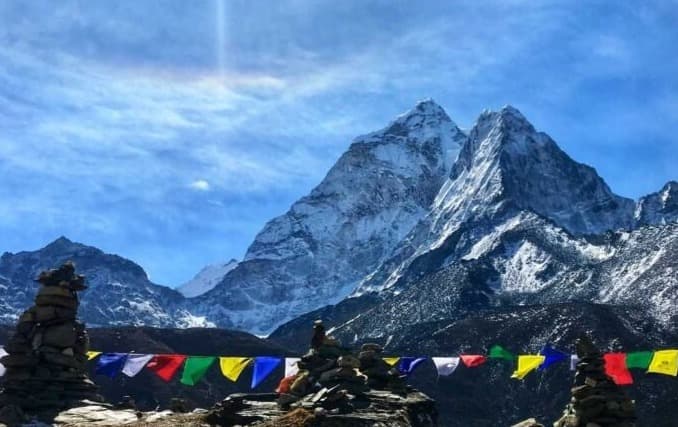
Mardi Himal Trek is a short-to-moderate Himalayan trek in Nepal’s Annapurna Conservation Area, ending at Mardi Himal Base Camp at 4,500 meters. The best time for the Mardi Himal Trek is October and November in autumn, and March and April in spring, when the route offers the clearest mountain views, drier trails, safer walking conditions, and the most reliable teahouse access from Pokhara to High Camp and Base Camp.
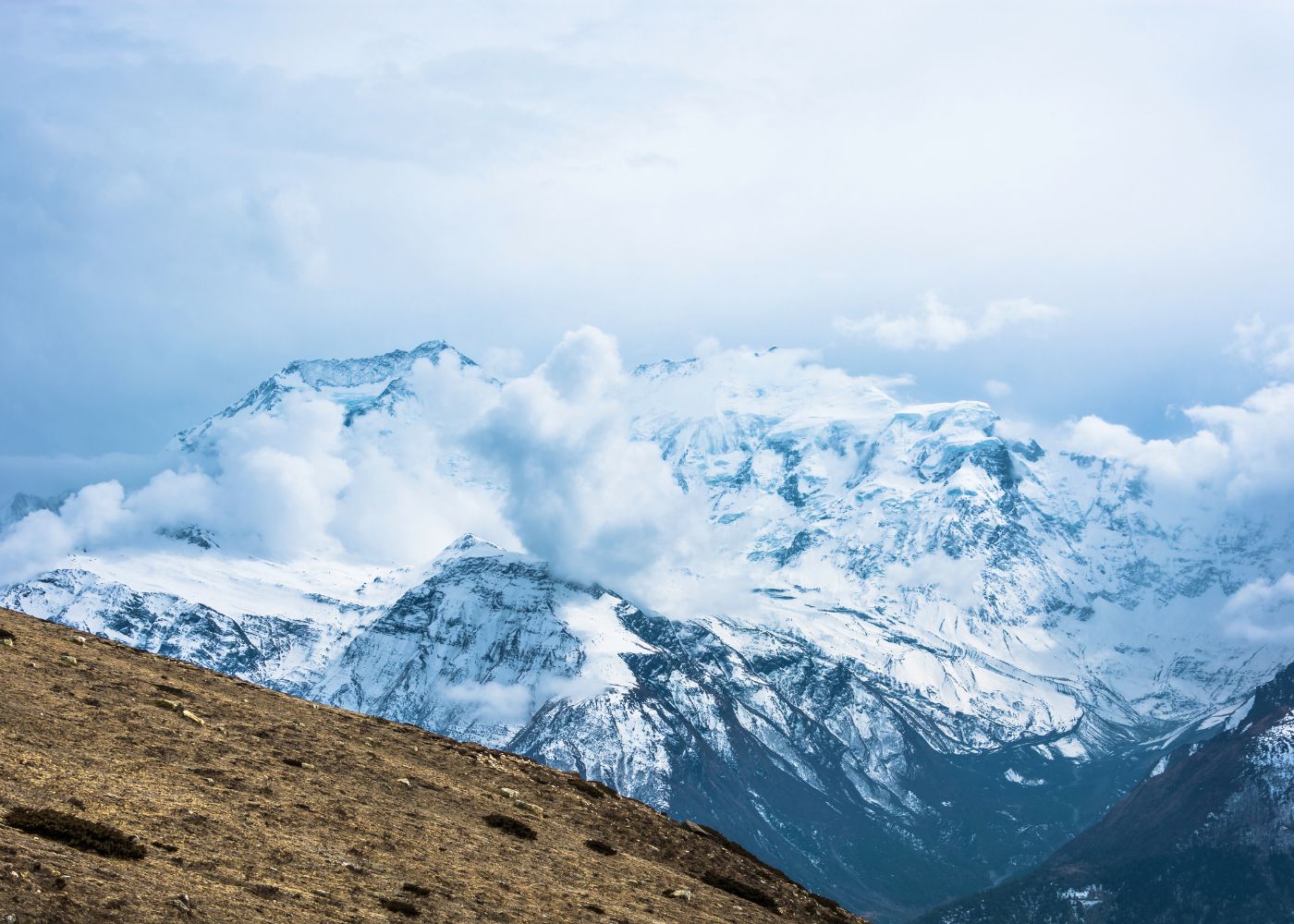
Month-by-month conditions on the Mardi Himal route change sharply with rainfall, snowfall, temperature, cloud cover, trail surface, and crowd levels. This guide explains the best month for beginners, photographers, budget trekkers, and off-season hikers by comparing visibility, weather stability, rhododendron blooms, monsoon risk, winter snow, teahouse availability, and overall trekking comfort across all 12 months.
Which Months Are Best Overall for the Mardi Himal Trek?
The 4 best months for the Mardi Himal Trek are October, November, March, and April. October delivers the clearest skies and most stable post-monsoon conditions. April combines rhododendron blooms with strong visibility. November extends autumn clarity into cooler, crowd-free conditions. March opens spring trekking with manageable temperatures.
These 4 months fall within 2 defined trekking seasons recognized by the Department of Tourism of Nepal. The autumn season runs from September through November. The spring season runs from March through May. Both seasons produce post-precipitation clarity at high elevation, with daytime temperatures between 5°C and 18°C at Mardi Himal Base Camp (4,500m).
The following table shows the 4 best months rated by 4 key trekking criteria: visibility, trail conditions, temperature comfort, and crowd levels.
|
Month |
Visibility |
Trail Condition |
Temperature at Base Camp |
Crowd Level |
|
March |
Good |
Dry, clear |
2°C to 12°C |
Moderate |
|
April |
Excellent |
Dry, clear |
5°C to 15°C |
High |
|
October |
Excellent |
Dry, firm |
3°C to 14°C |
High |
|
November |
Very Good |
Dry, cold |
-2°C to 10°C |
Moderate |
Trekkers choosing between these 4 months base their decision on 3 factors: tolerance for cold nights, preference for floral scenery, and budget sensitivity to peak-season pricing.
What Changes on the Mardi Himal Trek from Month to Month?
Visibility, rainfall, snowfall, temperature, and trail surface change across all 12 months on the Mardi Himal Trek. Monsoon season (June to September) brings 80 to 90 percent of Nepal's annual rainfall, reducing visibility to near zero on most days above 3,000 meters. Winter months (December to February) bring sub-zero nights and snow coverage above 3,500 meters.
How Do Visibility, Rain, and Snow Shift Through the Year?
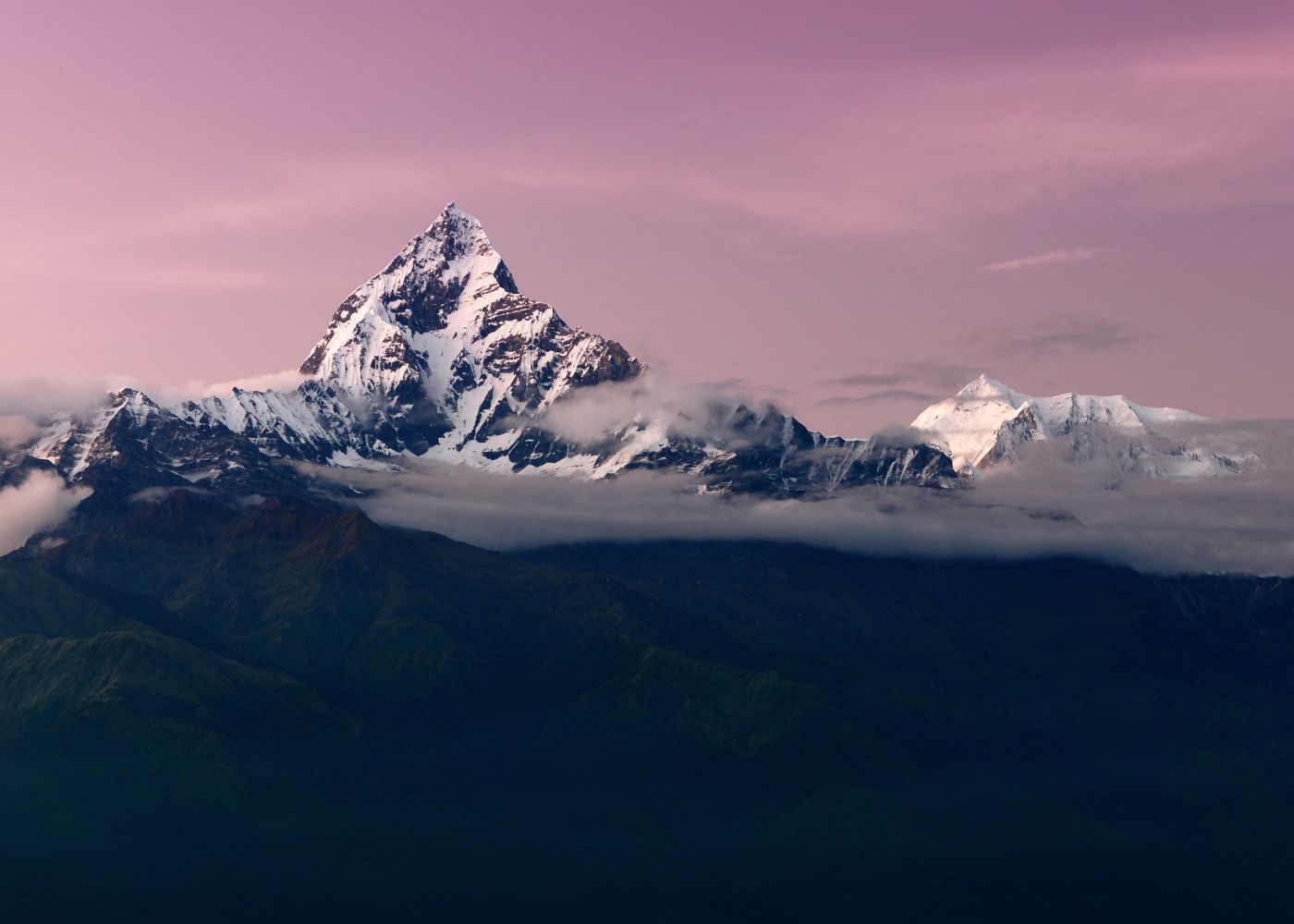
Visibility on the Mardi Himal Trek depends directly on 2 atmospheric conditions: precipitation and haze. The Himalayan range, which includes Mardi Himal (5,587m), Machhapuchhre (6,993m), and Annapurna South (7,219m), becomes fully visible only during periods of low humidity and minimal cloud cover.
The following table shows monthly precipitation averages recorded at Pokhara (822m), the nearest weather station with consistent data, along with estimated visibility quality at High Camp (3,580m).
|
Month |
Avg. Rainfall in Pokhara (mm) |
Visibility at High Camp |
|
January |
20 |
Good to Very Good |
|
February |
38 |
Moderate to Good |
|
March |
55 |
Good |
|
April |
100 |
Good to Excellent |
|
May |
185 |
Moderate |
|
June |
540 |
Poor |
|
July |
680 |
Very Poor |
|
August |
620 |
Very Poor |
|
September |
380 |
Poor to Moderate |
|
October |
90 |
Excellent |
|
November |
20 |
Very Good to Excellent |
|
December |
12 |
Good to Very Good |
Snow above 3,500 meters appears regularly from December through February. Snowfall blocks the trail between High Camp and Mardi Himal Base Camp on an average of 15 to 20 days per year. April and October record the lowest combined risk of both rain and snow at altitude.
When Are Teahouses Busiest and Trails Most Crowded?
The Mardi Himal Trek teahouses reach peak occupancy in October and April. Both months attract the highest volume of international trekkers. Teahouse capacity along the Mardi Himal route ranges from 8 to 30 beds per lodge, depending on elevation. During October, advance booking of teahouses at Forest Camp (2,520m), Low Camp (3,010m), High Camp (3,580m), and View Point (4,200m) reduces wait times significantly.
October records the highest concentration of trekking permit applications processed at the Annapurna Conservation Area Project (ACAP) checkpoint in Lwang. April ranks second. Trekkers seeking quieter trails choose November, December, January, or March, which record 40 to 60 percent lower foot traffic than peak October.
Which Months Need the Most Caution for Mud, Ice, or Storms?
3 specific hazard types dominate different months: mud (June to September), ice (December to February), and pre-monsoon storms (May). Mud on the Mardi Himal trail becomes a serious hazard above Forest Camp during monsoon, when daily rainfall exceeds 30mm. Ice forms on trail sections above 3,500 meters from late December through early March, requiring microspikes or traction devices. Pre-monsoon thunderstorms in May form rapidly in the afternoon between 13:00 and 16:00 Nepal Standard Time.
What Is Mardi Himal Like in Spring from March to May?
Spring on the Mardi Himal Trek delivers rhododendron blooms from 2,000 to 3,500 meters, rising temperatures, and progressively longer daylight hours. March, April, and May each present distinct conditions. Daytime temperatures at High Camp rise from 8°C in March to 15°C in May. Morning clarity peaks in March and April before afternoon pre-monsoon clouds reduce visibility in May.
Is March a Good Month for Clear Trails and Rhododendrons?
March is a reliable month for the Mardi Himal Trek, with dry trails, early rhododendron blooms, and clear morning views. Rhododendron arboreum, Nepal's national flower, begins blooming at 2,000 to 2,500 meters in early March. By mid-March, blooms extend to 3,000 meters along the Mardi Himal trail between Pothana (1,890m) and Forest Camp (2,520m).
Trail surfaces remain firm and dry in March. Average daytime temperature at Mardi Himal Base Camp (4,500m) stays between 2°C and 12°C. Night temperatures drop to -5°C at High Camp. Snowfall risk exists above 4,000 meters in early March but decreases by the final week of the month.
Crowd levels in March fall below April and October by approximately 35 percent. ACAP permit fees apply year-round at NPR 3,000 per trekker (approximately USD 23). March offers the lowest teahouse prices of the spring season.
Is April the Best Month for Views, Color, and Mild Weather?
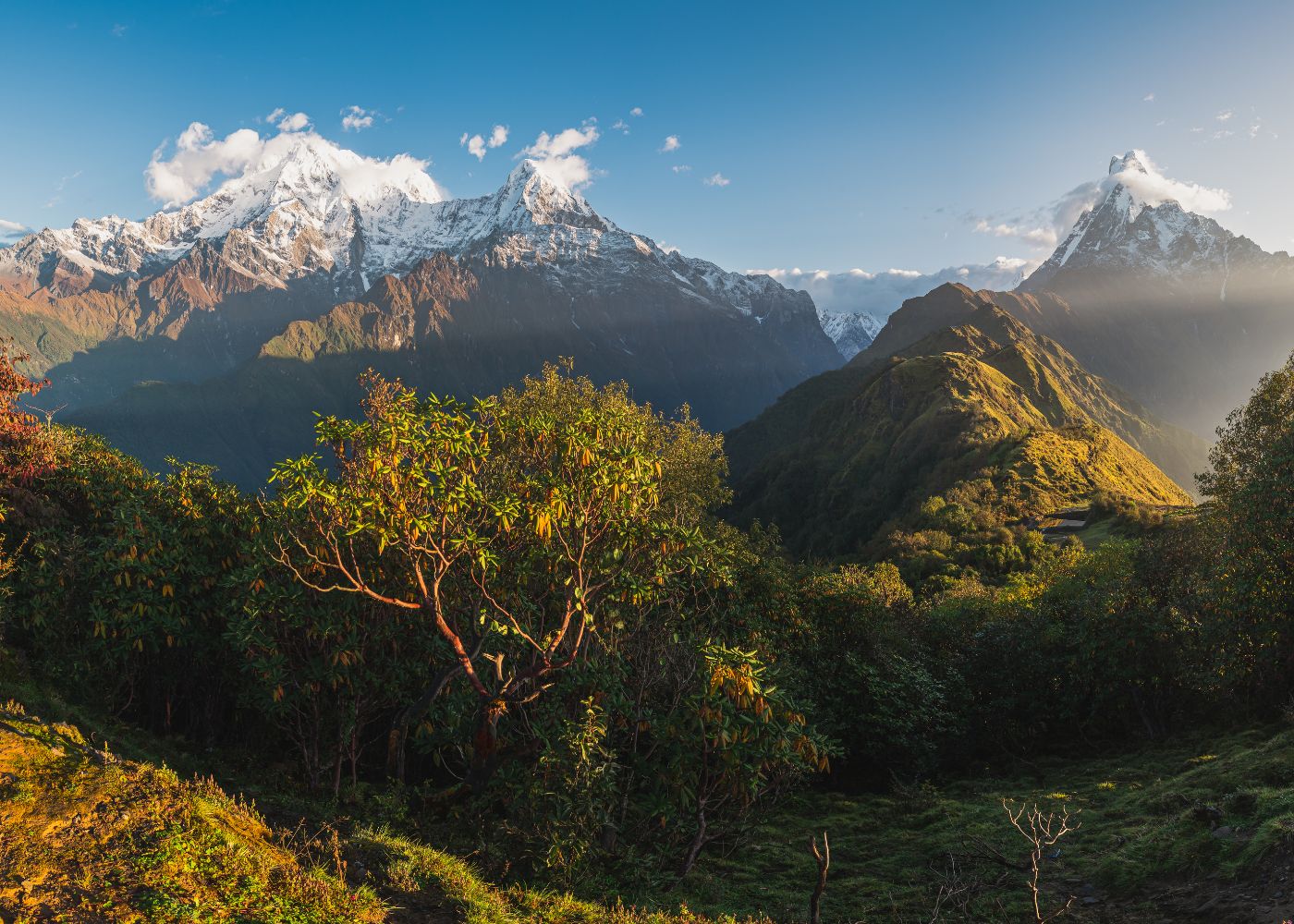
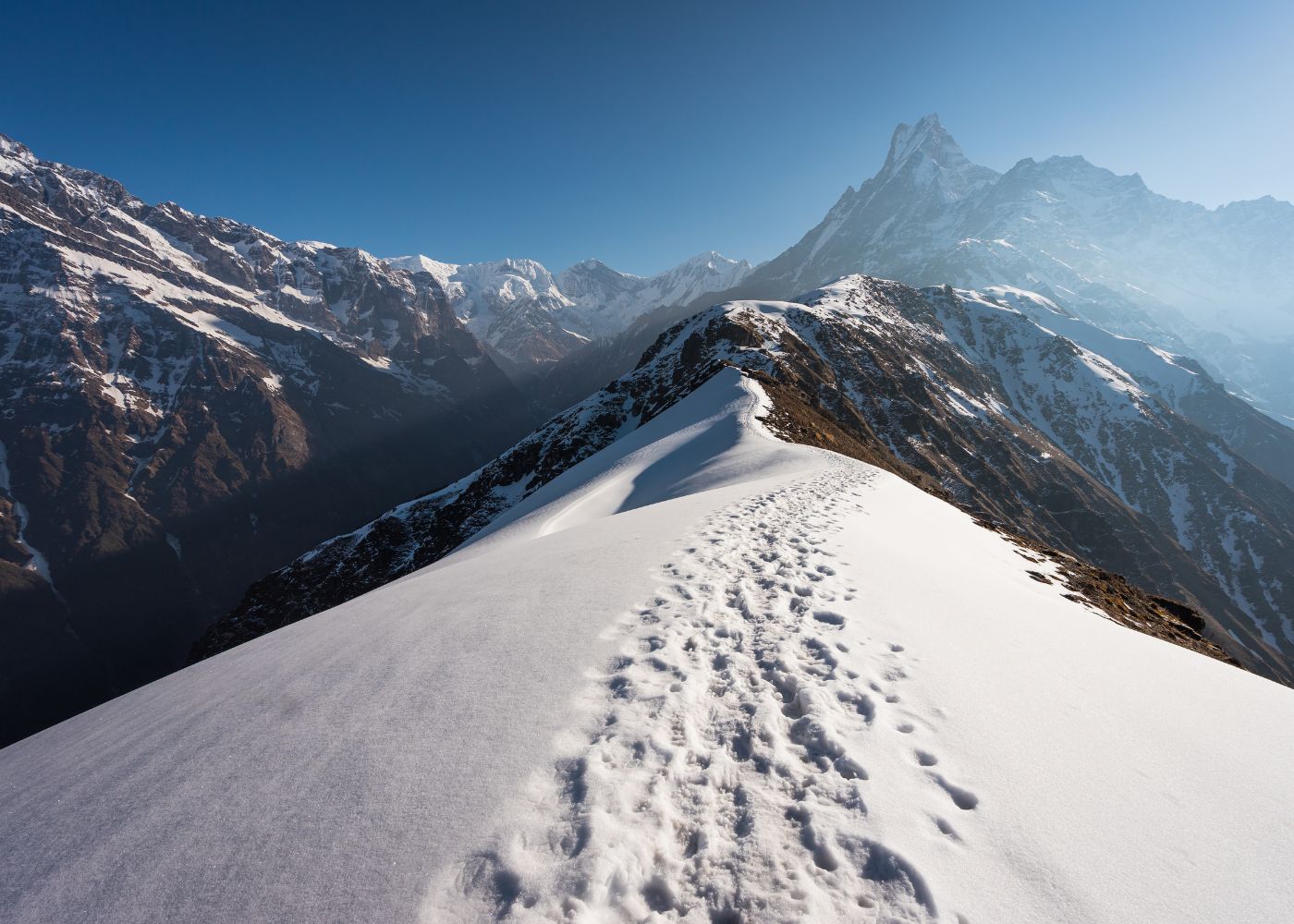
April is the single most visually rewarding month on the Mardi Himal Trek, combining peak rhododendron blooms at 2,500 to 3,500 meters, stable morning skies, and the highest ratio of clear summit days recorded at View Point (4,200m). Mardi Himal (5,587m) and Machhapuchhre (6,993m) remain visible on 22 to 25 days in April on average.
Daytime temperature at High Camp (3,580m) rises to 10°C to 15°C in April. Night temperature at High Camp averages -2°C to 3°C. These temperatures fall within the comfort range of a 3-season sleeping bag rated to -5°C.
3 rhododendron species bloom simultaneously along the Mardi Himal trail in April: Rhododendron arboreum (red), Rhododendron barbatum (crimson), and Rhododendron campanulatum (purple). This bloom window closes by late April at elevations above 3,200 meters. April is peak season: teahouses book out 1 to 2 weeks in advance at High Camp and View Point.
Does May Bring Warmer Days but More Pre-Monsoon Cloud?
May delivers warmer temperatures on the Mardi Himal Trek but reduces summit visibility due to pre-monsoon cloud buildup from 11:00 Nepal Standard Time onward. Clear summit views require early morning starts, departing High Camp by 05:30 to reach View Point before cloud cover closes in. Morning visibility window narrows to 3 to 4 hours in May, compared to 6 to 8 hours in October.
Average temperature at Mardi Himal Base Camp reaches 15°C to 20°C in May. Trail conditions remain dry, but humidity rises to 65 to 75 percent above 3,000 meters. May records pre-monsoon rainfall of 185mm in Pokhara, nearly double March's 55mm. Afternoon thunderstorms develop 8 to 12 days per month in May at elevations above 3,500 meters.
May attracts budget-conscious trekkers: teahouse rates drop 15 to 25 percent compared to April peak pricing. Crowd levels fall to moderate.
What Is Mardi Himal Like in Summer from June to August?
Summer monsoon conditions make the Mardi Himal Trek significantly more difficult from June through August. The South Asian Monsoon, which reaches Nepal between 10 and 15 June annually, delivers 680mm of rainfall in July alone at Pokhara. Trail erosion, landslide risk, leech presence, and near-zero mountain visibility define the 3 summer months.
Is June Workable Before Peak Monsoon Arrives?
June is marginally workable on the Mardi Himal Trek during the first 10 days before peak monsoon onset. Early June records lower rainfall than July and August, with average precipitation of 540mm at Pokhara. The trail above Forest Camp remains passable in early June, though cloud coverage reduces summit visibility to 2 to 3 clear hours per day at best.
Leeches become active above 1,800 meters from early June through September. Trekkers use leech socks and salt as primary deterrents. Teahouses along the route see minimal occupancy in June, with some lower-elevation teahouses remaining open while upper-route lodges at High Camp reduce staff.
ACAP permits remain active year-round. June trekking requires waterproof gear rated to at least 10,000mm hydrostatic head. Trail sections between Pothana and Forest Camp accumulate mud depths of 10 to 20 cm after consecutive rain days.
Is July Too Wet, Leech-Prone, and Cloudy for Most Trekkers?
July is the least suitable month for the Mardi Himal Trek. Pokhara receives 680mm of average rainfall in July, the highest of any month. Mountain visibility above 3,000 meters drops to near zero for 25 to 28 days in July. The trail between Forest Camp and High Camp becomes severely eroded and slippery.
Leeches reach maximum density along the lower trail sections in July. Trekkers report 15 to 30 leech encounters per hour on forest sections below 2,500 meters. Landslide risk on the route to Lwang Ghalel increases due to saturated hillside soil.
4 specific risks define July trekking: trail washouts above Low Camp, visibility failure above High Camp, leech exposure below Forest Camp, and teahouse closures on the upper route. Most experienced guides and trekking agencies in Pokhara classify July as a non-recommended trekking month for Mardi Himal.
Is August Still Risky or Does the Weather Start Improving?
August maintains high monsoon risk on the Mardi Himal Trek, with improvement appearing only in the final week. Average rainfall in Pokhara reaches 620mm in August, only 60mm less than July. Trail conditions above 3,000 meters remain unstable through most of August. The final 5 to 7 days of August occasionally produce brief weather windows with 1 to 2 days of partial summit visibility.
Temperatures in August rise to the warmest levels of the year at low elevations. Pokhara records average daytime temperatures of 27°C to 29°C in August. High Camp stays at 12°C to 16°C during the day, making altitude heat less of a concern. However, rain gear and waterproof boots remain essential throughout August.
Trekking agencies in Pokhara classify August as a high-risk month but offer discounts of 20 to 30 percent on guided Mardi Himal packages compared to October rates.
What Is Mardi Himal Like in Autumn from September to November?
Autumn delivers the most consistent and reliable trekking conditions on the Mardi Himal Trek across all 3 months. September transitions from monsoon to clarity. October reaches peak visibility and trail quality. November extends favorable conditions into a quieter, colder phase. The 3-month autumn season runs from 1 September through 30 November.
Does September Improve After the Monsoon on Mardi Himal?
September improves steadily on the Mardi Himal Trek, with the final 2 weeks producing conditions suitable for experienced trekkers. Monsoon rainfall retreats from Nepal between 20 and 25 September on average. The first 3 weeks of September still record high precipitation, 380mm average for the full month at Pokhara. Clear days above High Camp increase from 2 to 3 per week in early September to 4 to 5 per week by late September.
Leeches remain active on lower trail sections through mid-September. Trail erosion from the June-August monsoon requires trekkers to navigate damaged sections between Low Camp and High Camp with heightened caution. Rhododendron leaves display early autumn coloring from mid-September, offering secondary visual interest along the forested lower trail.
Late September trekking on Mardi Himal suits trekkers with flexibility to wait out bad-weather days, carrying 8 to 10 days of itinerary buffer.
Is October the Top Month for Views and Trail Conditions?
October is the top month for Mardi Himal trekking based on 4 measurable advantages: maximum visibility, optimal trail firmness, post-monsoon freshness, and comfortable temperature range. Mardi Himal (5,587m), Machhapuchhre (6,993m), Annapurna I (8,091m), Annapurna South (7,219m), and Hiunchuli (6,441m) all become consistently visible from View Point (4,200m) for 22 to 26 days in October.
Trail conditions in October reach annual peak quality. Post-monsoon rain has washed and resettled the trail surface. Vegetation remains lush and green. Daytime temperature at High Camp (3,580m) averages 5°C to 14°C. Night temperature drops to -4°C to 0°C, requiring a sleeping bag rated to -10°C.
October is peak season: ACAP checkpoint at Lwang processes the highest monthly permit volume of the year. Teahouses at High Camp and View Point require advance booking 7 to 14 days ahead. Daily trekker volume on the main Mardi Himal trail reaches 80 to 120 trekkers between Forest Camp and High Camp during the first 3 weeks of October.
Is November Ideal for Crisp Skies and Fewer Rain Risks?
November offers crisp skies, zero rain risk, and 40 to 50 percent fewer trekkers than October on the Mardi Himal Trek. Rainfall in Pokhara drops to 20mm in November, the second-lowest monthly average after December's 12mm. Mountain visibility at View Point remains excellent on 20 to 24 days in November. Cloud formation is rare in November above 3,000 meters.
Night temperatures at High Camp (3,580m) fall to -8°C to -12°C in November, requiring a sleeping bag rated to -15°C and insulated sleeping pad. Daytime temperatures at High Camp range from 0°C to 8°C. Trekkers experience clear, cold, dry air on the trail throughout November.
3 advantages define November trekking: lower teahouse prices compared to October, uncrowded trails, and the highest ratio of full-day cloudless skies of any autumn month. The main disadvantage is colder nights above 3,000 meters compared to October.
What Is Mardi Himal Like in Winter from December to February?
Winter on the Mardi Himal Trek brings cold temperatures, snow above 3,500 meters, minimal crowds, and clear mountain views on 18 to 22 days per month. December, January, and February each present different balances of cold, clarity, and snow coverage. Trekkers on the winter route require cold-weather gear rated to -15°C for nights at High Camp (3,580m).
Is December a Good Balance of Clear Skies and Fewer Crowds?
December delivers a strong balance of clear skies, low rainfall, and significantly reduced trekking crowds on the Mardi Himal route. Pokhara records 12mm of average rainfall in December, the lowest monthly total of the year. Summit views from View Point remain clear on 18 to 22 days. Crowd levels drop to 20 to 30 percent of October volume.
Snow accumulation above 3,500 meters begins in December, averaging 15 to 30 cm depth at High Camp by late December. Trail sections above View Point require traction devices from mid-December. Daytime temperatures at High Camp stay between -2°C and 6°C. Night temperatures drop to -10°C to -15°C.
December teahouses remain open along the full Mardi Himal route, though fewer upper-elevation teahouses maintain full meal service. Trekkers confirm teahouse operating status in advance through local trekking agencies in Pokhara before departure.
Is January Too Cold or Snowy for Most Trekkers?
January is the coldest month on the Mardi Himal Trek and presents the highest snow hazard above 3,500 meters. Night temperatures at High Camp fall to -15°C to -20°C in January. Snow depth above 4,000 meters reaches 40 to 80 cm on average. Trail conditions above Low Camp require microspikes, gaiters, and insulated trekking boots throughout January.
January suits only well-equipped, experienced winter trekkers. 3 essential gear items apply for January trekking: a sleeping bag rated to -20°C, insulated and waterproof trekking boots rated below -15°C, and microspikes rated to 20-degree slopes. The upper trail from High Camp to Mardi Himal Base Camp becomes inaccessible during heavy snowfall periods that occur 4 to 6 times per month.
Mountain views in January rank among the clearest of the year due to low humidity and minimal cloud cover. Trekkers who prioritize unobstructed Himalayan panoramas and tolerate extreme cold choose January as a niche option.
Does February Offer a Quieter Start to the Spring Season?
February marks the beginning of Mardi Himal's transitional period, with warming daytime temperatures, early rhododendron buds below 2,000 meters, and decreasing snow depth above 3,500 meters. Average daytime temperature at High Camp rises from -3°C in early February to 5°C by the final week. Snow depth above 4,000 meters decreases as solar radiation increases from mid-February onward.
February trail conditions remain cold and partially snow-covered above 3,500 meters through the first 3 weeks. The final week of February, known locally as late Magh to early Falgun in the Bikram Sambat calendar, often produces stable weather windows of 3 to 5 consecutive clear days. Rhododendron buds appear at elevations below 1,800 meters in late February, signaling the approach of spring bloom season.
Crowd levels in February rank among the lowest of the year. Teahouse prices in February fall 20 to 35 percent below October peak rates. February suits trekkers seeking solitude, winter clarity, and early spring hints without peak-summer heat.
Which Month Fits Your Mardi Himal Trekking Style Best?
The right month for the Mardi Himal Trek depends on 3 personal trekking priorities: weather tolerance, scenic preference, and crowd sensitivity. Beginners prioritize weather stability. Photographers prioritize visual conditions. Budget trekkers prioritize off-peak pricing. Each priority maps to specific calendar months on the Mardi Himal route.
Which Months Suit Beginners Who Want Stable Weather?
October is the top month for beginners on the Mardi Himal Trek, offering the most reliable combination of dry trails, clear skies, and moderate temperatures at all elevations. April ranks second for beginners. Both months deliver conditions where trail hazards, mud, ice, storm risk, remain at annual minimums.
Beginners trekking Mardi Himal for the first time benefit from October's predictable 5-day weather patterns, full teahouse availability across all 6 camps, and the highest concentration of other trekking groups on the trail (providing safety visibility). April offers equivalent trail safety with the added sensory reward of rhododendron blooms.
November suits beginners comfortable with cold nights but seeking fewer crowds. March suits beginners comfortable with early spring variability and occasional afternoon clouds.
Which Months Suit Photographers Chasing Views or Blooms?
Photographers targeting Himalayan panoramas prioritize October for maximum summit visibility. Photographers targeting botanical subjects prioritize April for peak rhododendron bloom. These 2 photographic objectives map to different months because peak bloom (April) and peak clarity (October) do not overlap on the Mardi Himal trek calendar.
October delivers 22 to 26 cloudless days at View Point (4,200m), ideal for sunrise and golden-hour shots of Mardi Himal (5,587m) and Machhapuchhre (6,993m). Golden-hour light on the east-facing High Camp to View Point section peaks between 06:00 and 07:30 Nepal Standard Time in October.
April delivers 3 simultaneous rhododendron species in bloom between 2,000 and 3,500 meters, Rhododendron arboreum (red), Rhododendron barbatum (crimson), and Rhododendron campanulatum (purple). The bloom-to-mountain-backdrop combination on the Mardi Himal ridge between Forest Camp and Low Camp peaks from 5 to 20 April.
Photographers seeking combined bloom-and-clarity conditions target the first week of April, when residual winter clarity intersects with early bloom at lower elevations.
Which Months Are Best for Fewer Crowds or Lower Costs?
The 4 lowest-crowd, lowest-cost months on the Mardi Himal Trek are January, February, June, and November. November delivers low crowds with excellent weather. December adds minimal crowds with strong views but colder nights. January and February deliver maximum solitude at the cost of cold conditions. June offers budget pricing but poor conditions.
Teahouse pricing on the Mardi Himal route operates on seasonal tiers. High season (October and April) charges NPR 600 to 900 per night per bed (approximately USD 4.50 to USD 6.80). Low season (December through February, June through August) charges NPR 300 to 500 per night (approximately USD 2.30 to USD 3.80). Mid-season (March, May, September, November) charges NPR 400 to 700 per night (approximately USD 3.00 to USD 5.30).
Guided Mardi Himal Trek packages from Pokhara range from USD 280 to USD 450 in high season and USD 200 to USD 320 in low season for a 6-day itinerary, including ACAP permit (NPR 3,000), TIMS card (NPR 2,000), guide, and teahouse accommodation.
How Should You Book the Right Mardi Himal Trek for Your Month?
Booking a Mardi Himal Trek requires 3 confirmed arrangements: ACAP permit, TIMS card, and teahouse reservations. The Annapurna Conservation Area Project (ACAP) permit costs NPR 3,000 per person (approximately USD 23). The Trekkers' Information Management System (TIMS) card costs NPR 2,000 per person (approximately USD 15). Both documents process at the Tourism Management Information Office in Pokhara, located at the Lakeside tourist district.
Teahouse bookings on the Mardi Himal route, specifically at High Camp and View Point, require advance confirmation during October and April. Bookings are confirmed via phone or WhatsApp directly with teahouse operators or through trekking agencies in Pokhara's Lakeside district. No online booking platform covers the full Mardi Himal teahouse network.
Can a Guided Mardi Himal Trek Help You Choose the Right Month?
A guided Mardi Himal Trek provides 4 month-specific advantages: real-time trail condition updates, local weather pattern knowledge, emergency route alternatives, and teahouse network access. Licensed Nepali trekking guides, certified under the Nepal Tourism Board's guide licensing program, carry current knowledge of trail closures, seasonal hazards, and teahouse operating status, all of which change month to month.
Guides working the Mardi Himal route update their seasonal assessments based on 3 sources: daily reports from the Annapurna Conservation Area Project (ACAP), communication with teahouse operators, and firsthand trail conditions from prior groups. This information directly influences day-to-day itinerary decisions, particularly in transitional months like September, May, and February where weather windows change rapidly.
Trekkers hiring a guide for the Mardi Himal Trek pay between NPR 2,500 and NPR 3,500 per day (approximately USD 19 to USD 27) for a licensed guide. A porter carries loads up to 25 kilograms for NPR 1,800 to NPR 2,500 per day (approximately USD 14 to USD 19).
What Are the Key Takeaways About Mardi Himal Timing?
The Mardi Himal Trek is best completed in October, April, November, or March, listed in order of overall trekking quality. Each of these 4 months delivers dry trails, clear mountain views, and open teahouses across the full route from Kande (1,770m) to Mardi Himal Base Camp (4,500m).
6 key timing facts define the Mardi Himal trek calendar:
-
October delivers the clearest skies and most stable post-monsoon trail conditions, with 22 to 26 summit-visible days.
-
April combines peak rhododendron bloom at 2,500 to 3,500 meters with strong morning visibility.
-
November extends autumn clarity into a quieter, colder season with 40 to 50 percent fewer trekkers than October.
-
March opens spring trekking with firm trails, early blooms, and 35 percent lower crowd density than April.
-
June through August present monsoon hazards including 540 to 680mm of monthly rainfall, trail erosion, and near-zero mountain visibility.
-
December through February require cold-weather gear rated to -15°C but deliver clear skies and near-empty trails.
Trekkers choosing the Mardi Himal Trek in any of the 4 recommended months, October, April, November, March, arrive at Mardi Himal Base Camp with the highest probability of clear summit views, safe trail surfaces, and available teahouse accommodation across the full 5 to 7 day route in Nepal's Annapurna Conservation Area.