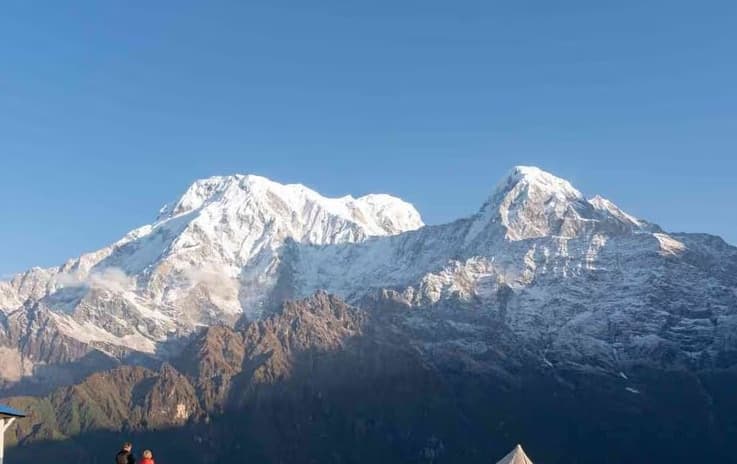
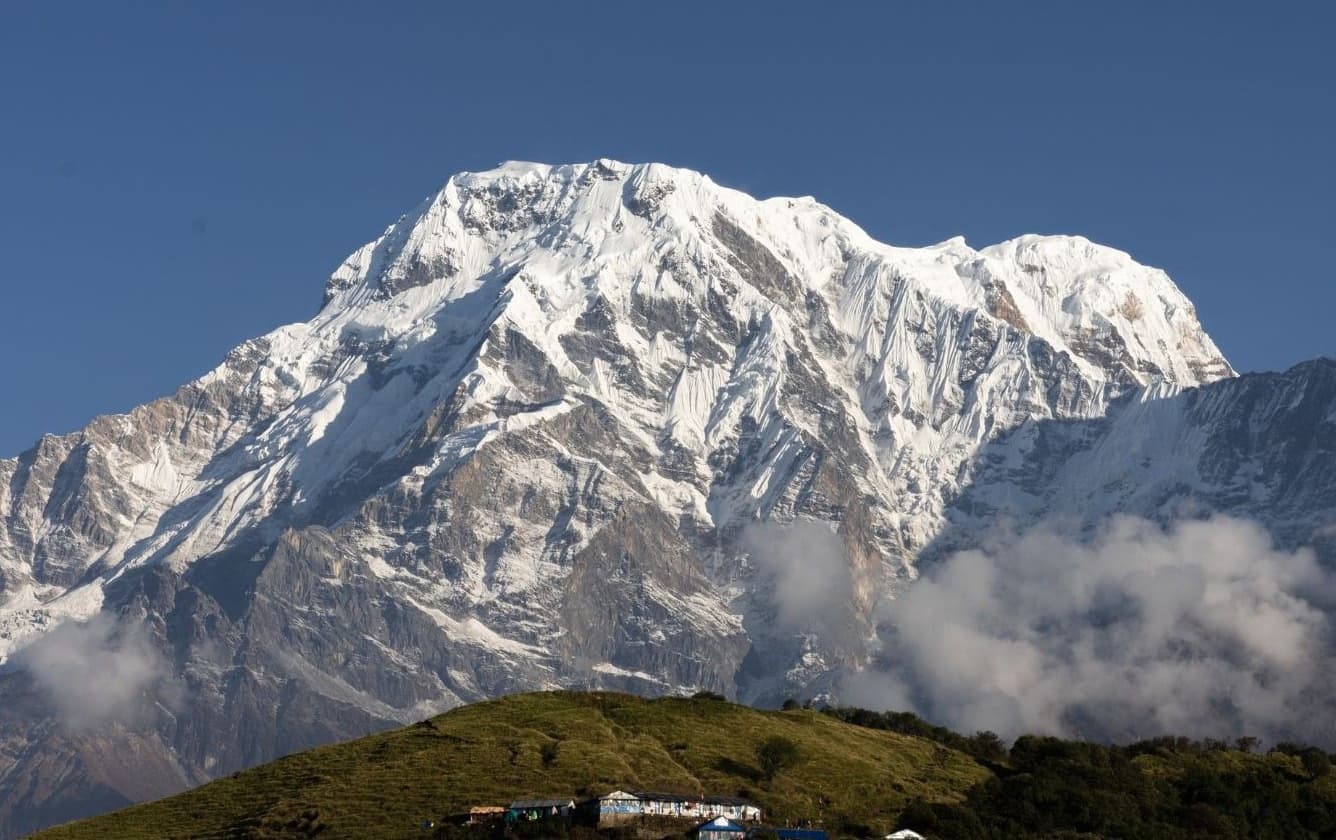
The Annapurna Base Camp trek is one of Nepal’s most popular high-altitude teahouse treks, taking trekkers through the Annapurna Conservation Area from lower villages such as Nayapul and Chhomrong to Annapurna Base Camp at 4,130 meters. The best time for the Annapurna Base Camp trek is October and November in autumn and March and April in spring, when the route offers the most stable weather, clearest mountain views, safer trail conditions, and the most reliable teahouse operations. Among all months, October stands out as the best overall month, while April is the best spring choice for rhododendron blooms, warmer temperatures, and photography.
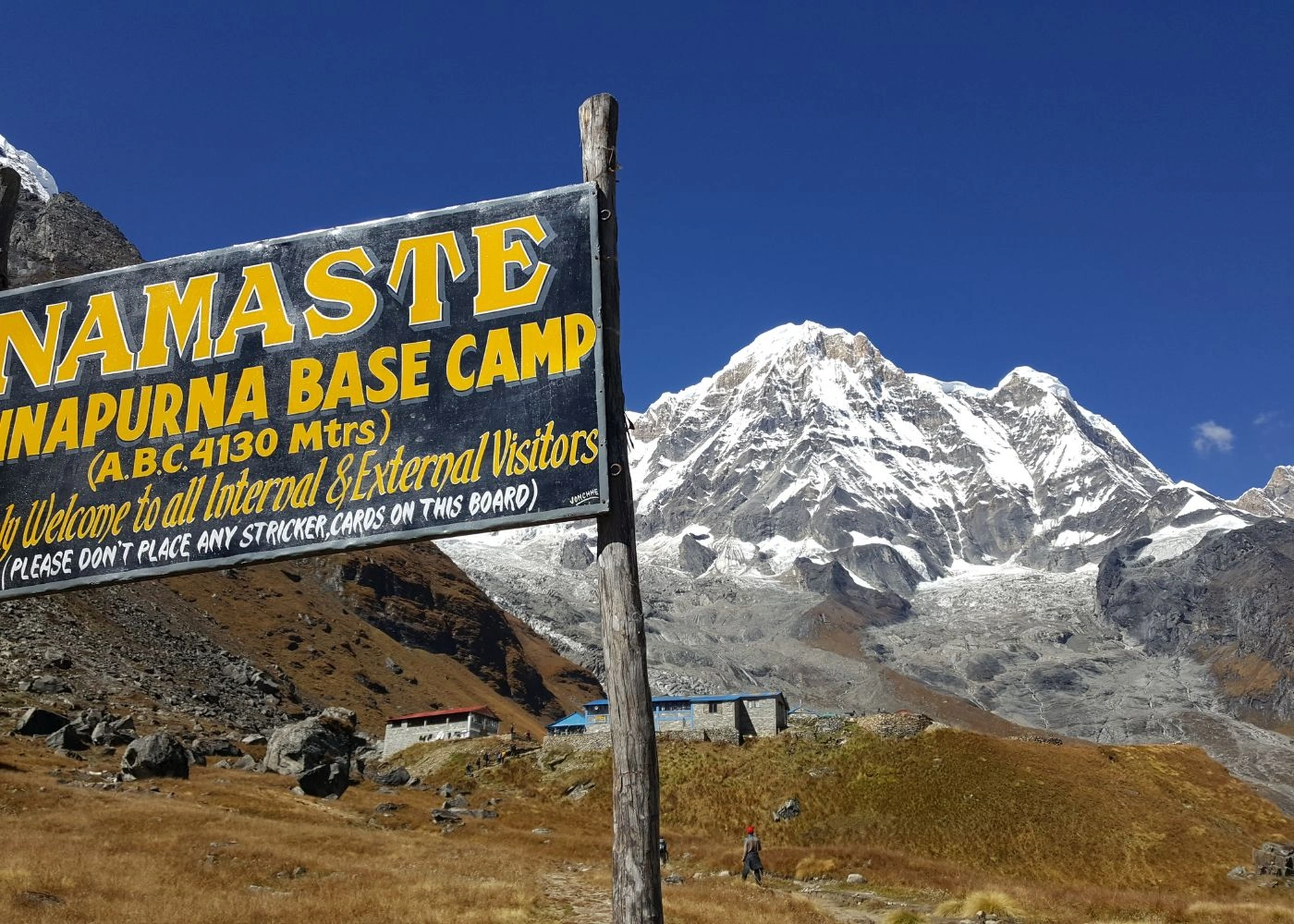
Choosing the right season for the Annapurna Base Camp trek depends on more than weather alone. Visibility of Annapurna I, Annapurna South, Machhapuchhre, and Hiunchuli, trail safety above 3,000 meters, crowd levels in Chhomrong and Deurali, seasonal costs, winter snow, and monsoon landslide risk all change across the year. This guide explains the best months for first-time trekkers, photographers, experienced winter trekkers, and travelers seeking quieter trails, with detailed comparisons of seasonal conditions, monthly risks, gear needs, permits, and booking timing for a successful Annapurna Base Camp (ABC) trek.
Why Does Timing Matter for the Annapurna Base Camp Trek?
Timing determines visibility, trail safety, and daily trekking distance on the Annapurna Base Camp route. Weather conditions at Annapurna Base Camp (4,130m) shift across 4 distinct seasons, spring, monsoon, autumn, and winter, each producing different temperatures, precipitation levels, and trail accessibility that directly affect trek completion rates and trekker safety.
What Is the Altitude of Annapurna Base Camp?
Annapurna Base Camp sits at 4,130 meters (13,549 feet) above sea level. This altitude defines 3 critical trek parameters: the acclimatization timeline, the temperature range by season, and the available oxygen level at camp.
Trekkers gain 3,303 meters of elevation from Nayapul (827 m) to ABC (4,130 m) across 7 to 12 days, depending on route variation and daily pace. The elevation profile passes 6 key altitude thresholds — Tikhedhunga (1,480 m), Ghorepani (2,874 m), Chhomrong (2,170 m), Deurali (3,200 m), Machhapuchhre Base Camp (3,700 m), and finally ABC at 4,130 m.
The following table shows all major altitude checkpoints on the standard ABC trek route:
The table below lists elevation data for each major stop between Pokhara and Annapurna Base Camp, covering 9 checkpoints and a total elevation gain of 3,303 meters.
Checkpoint | Altitude (m) | Altitude (ft) |
|---|---|---|
Pokhara | 827 m | 2,713 ft |
Tikhedhunga | 1,480 m | 4,856 ft |
Ghorepani | 2,874 m | 9,429 ft |
Chhomrong | 2,170 m | 7,120 ft |
Bamboo | 2,310 m | 7,579 ft |
Deurali | 3,200 m | 10,499 ft |
Machhapuchhre Base Camp (MBC) | 3,700 m | 12,139 ft |
Annapurna Base Camp (ABC) | 4,130 m | 13,549 ft |
At 4,130 meters, atmospheric pressure drops to 62% of sea-level values, reducing available oxygen to approximately 60% of the oxygen density at Pokhara. This oxygen reduction is what places ABC in the high-altitude trekking zone, where 3 altitude-related conditions, Acute Mountain Sickness (AMS), High Altitude Pulmonary Edema (HAPE), and High Altitude Cerebral Edema (HACE), carry real clinical risk without proper acclimatization.
Altitude directly controls the best season for the ABC trek. Winter (December to February) compounds altitude with wind chill, dropping effective temperature at 4,130 meters to -20°C. Monsoon season (June to August) adds cloud cover that eliminates summit views above 3,500 meters on 80% of days. Spring (March to May) and autumn (September to November) deliver stable atmospheric pressure and clear visibility of Annapurna I (8,091 m), Annapurna South (7,219 m), and Machhapuchhre (6,993 m) from base camp.
How Do Weather, Visibility, and Trail Conditions Change?
Weather at Annapurna Base Camp ranges from −15°C in January to 15°C in May, with visibility varying from 5km on clear autumn days to under 1km during June–August monsoon. The Annapurna Conservation Area, covering 7,629 square kilometers, records 3 measurable weather states across the trekking year:
The following table shows monthly average temperature and precipitation data for Annapurna Base Camp (4,130m), based on multi-year norms from the Department of Hydrology and Meteorology, Nepal, whose State of the Climate of Nepal 2024 report confirms that recent winters have swung below normal nationwide, a reminder to check seasonal forecasts rather than rely on averages alone:
Month | Avg High (°C) | Avg Low (°C) | Precipitation (mm) | Trail Status |
January | 2 | −15 | 18 | Open (deep snow above 3,500m) |
February | 4 | −12 | 22 | Open (snow risk above 3,500m) |
March | 9 | −5 | 38 | Open (prime spring) |
April | 12 | −2 | 55 | Open (prime spring) |
May | 15 | 3 | 92 | Open (late spring) |
June | 14 | 5 | 280 | Open but hazardous |
July | 13 | 6 | 350 | High landslide risk |
August | 13 | 6 | 320 | High landslide risk |
September | 13 | 3 | 185 | Improving (late monsoon) |
October | 11 | −1 | 52 | Open (prime autumn) |
November | 7 | −6 | 18 | Open (prime autumn) |
December | 3 | −13 | 12 | Open (cold, dry) |
Trail conditions above 3,000m, including the Modi Khola Valley, Deurali Pass (3,230m), and the Machhapuchhre Base Camp (3,700m) approaches, change directly with precipitation levels. Autumn delivers the lowest precipitation months of October (52mm) and November (18mm), producing the clearest sightlines to Annapurna I (8,091m), Annapurna III (7,555m), Annapurna IV (7,525m), Annapurna South (7,219m), and Machhapuchhre (6,993m).
How Do Crowds, Teahouses, and Costs Vary by Season?
Teahouse demand typically increases during October and November, the main autumn trekking period, so popular stops can be busier and advance planning can be useful.
Teahouse occupancy peaks in October and November: the Ministry of Culture, Tourism & Civil Aviation's Nepal Tourism Statistics 2023 recorded 107,880 foreign entries to the Annapurna Conservation Area that year, part of a 150% year-over-year surge in trekking and mountaineering arrivals nationwide, driving accommodation prices in Chhomrong, Bamboo, Deurali, and Machhapuchhre Base Camp 20–35% above off-season rates.
The Annapurna Conservation Area Program (ACAP), run by the National Trust for Nature Conservation across Nepal's largest protected area (7,629 sq. km, established 1986), issues ACAP permits at NPR 3,000 (approximately USD 23) per trekker year-round, with no seasonal surcharge.
3 cost and crowd patterns define the trekking calendar:
Peak season (October–November, March–April): Teahouse beds sell out 2–3 days in advance along popular stops such as Chhomrong (2,170m), Himalaya Hotel (2,900m), and Deurali (3,230m). Daily accommodation costs range from USD 8–20 per room. Guided package rates from Pokhara average USD 35–55 per day.
Off-peak season (December–February, June): Off-peak season generally sees fewer trekkers, which can make accommodation easier to find, although individual teahouse operations vary. Room rates drop to USD 4–10. Guided package rates fall to USD 25–40 per day.
Monsoon season (July–August): Some teahouses, particularly on higher sections, may reduce operations or close temporarily, so independent trekkers should confirm accommodation availability before departure. Trekkers must account for regulated availability of food and shelter above 3,000m, as all itineraries must now be managed by a registered trekking agency with a licensed guide.
Which Season Is Best for the Annapurna Base Camp Trek?
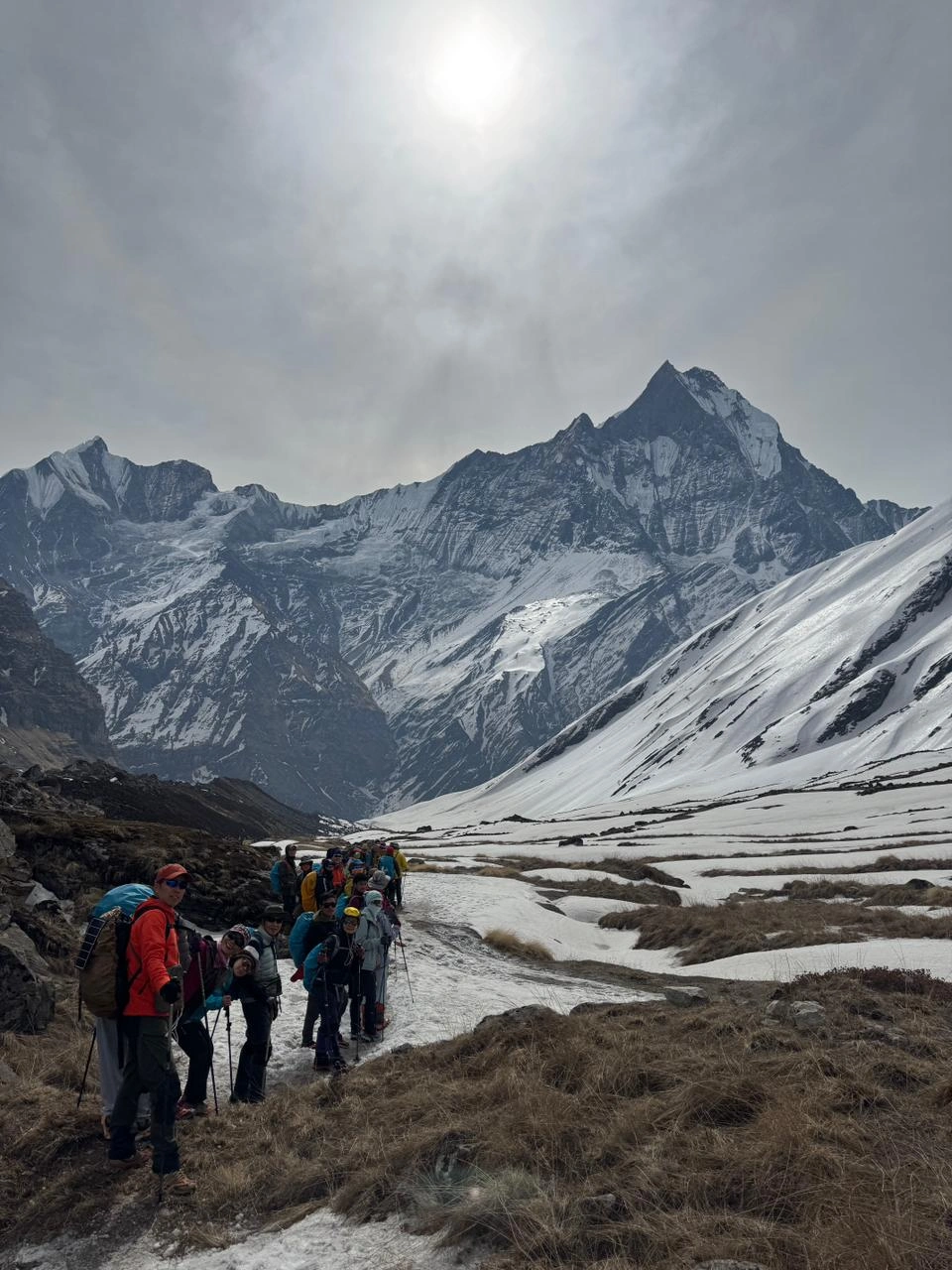
Autumn (September–November) is the best overall season for the Annapurna Base Camp trek, combining post-monsoon clear skies, stable temperatures between 0°C and 15°C at mid-altitudes, and the highest mountain panorama visibility of the year. Spring (March–May) ranks second, offering rhododendron blooms and warming temperatures. Winter and monsoon serve specific trekker profiles with distinct trade-offs.
What Is Spring Like on the Annapurna Base Camp Trail?
Spring on the Annapurna Base Camp trail delivers 8–10 hours of daylight, daily high temperatures of 9°C–15°C at base camp, and the full bloom of 30+ rhododendron species across the Annapurna Conservation Area between 2,000m–3,500m. March and April are the 2 primary spring months for trekking, with May classified as late spring due to rising pre-monsoon humidity.
Spring trail conditions present 3 defining characteristics:
Rhododendron forest blooms cover the trail between Ghorepani (2,874m) and Tadapani (2,630m) from mid-March through April, producing red, pink, and white flowering corridors visible on the Poon Hill (3,210m) approach.
Temperature windows at Annapurna Base Camp (4,130m) average −2°C at night and 12°C during midday in April, enabling trekkers to move in standard 3-season gear without extreme cold-weather equipment.
Morning clarity lasts from 06:00–10:00 before afternoon cloud buildup above 3,500m, making early summit starts from Machhapuchhre Base Camp (3,700m) to Annapurna Base Camp (4,130m) essential for full panoramic views.
Spring sees 30–35% of annual ABC permit issuance, compared to autumn's 45–60%, making trail corridors moderately busy but not at capacity.
What Is Autumn Like on the Annapurna Base Camp Trail?
Autumn on the Annapurna Base Camp trail produces the clearest mountain views of the year, with post-monsoon atmospheric clarity delivering 360-degree visibility of 14 peaks above 6,000m from Annapurna Base Camp (4,130m). October is widely regarded as one of the strongest months for ABC trekking because it typically combines relatively dry conditions, good visibility, and manageable temperatures.
Autumn trail conditions produce 4 measurable advantages:
Precipitation drops from September's 185mm to October's 52mm and November's 18mm, eliminating the monsoon-period mud, landslide debris, and leech activity found below 2,500m.
Sunrise at Annapurna Base Camp on cloudless October mornings illuminates Annapurna South (7,219m), Hiunchuli (6,441m), and Gangapurna (7,455m) in alpenglow sequences lasting 15–20 minutes.
Trail surface quality across the Modi Khola Valley, Sinuwa (2,360m), Chhomrong (2,170m), and Jhinu Danda (1,760m) reaches its most stable state after monsoon drainage, reducing slip risk.
Daytime temperatures at Annapurna Base Camp average 8°C in October and 2°C in November, a 6°C difference that makes November the colder but equally clear choice for experienced trekkers.
Is Winter a Good Time for the Annapurna Base Camp Trek?
Winter trekking to Annapurna Base Camp from December through February is possible for experienced trekkers equipped with 4-season sleeping bags (rated to −20°C), microspike traction devices, and avalanche awareness, though the route above Deurali (3,230m) accumulates 50–100cm of snow in January. Winter is not the best time for first-time high-altitude trekkers due to trail hazards above 3,000m.
Winter trekking presents 3 specific conditions:
Below-3,000m sections from Nayapul (1,070m) through Ghandruk (1,940m), Jhinu Danda (1,760m), and Chhomrong (2,170m) remain snow-free and accessible with standard trekking boots in December and February.
Above-3,500m sections from Deurali (3,230m) to Annapurna Base Camp (4,130m) require microspikes, gaiters, and trekking poles with winter baskets. The Modi Khola riverbank trail between Bamboo (2,310m) and Dovan (2,600m) requires avalanche awareness in January and February.
Teahouses at Chhomrong, Himalaya Hotel, Deurali, and Machhapuchhre Base Camp remain open in December and February, but closures occur sporadically in January at elevations above 3,500m.
December trails carry 8–12% of annual permit volume, substantially lower than peak season, producing a quiet, uncrowded trekking experience for those prepared for cold conditions.
Can You Trek to Annapurna Base Camp During Monsoon?
Trekking to Annapurna Base Camp during monsoon (June–August) is possible but carries elevated landslide risk: research on Annapurna hillslope hydrology found that landslides are not triggered until roughly 860mm of monsoon rainfall has accumulated, after which as little as 11mm of daily rainfall can be enough to trigger a slope failure on the Nayapul–Chhomrong corridor. Monsoon trekking requires daily weather monitoring, flexible itineraries, and waterproof gear for 6–10 hours of daily rainfall.
Monsoon trekking presents 2 measurable realities:
Lush green landscapes along the Modi Khola Valley from Siwai (1,430m) through Bamboo (2,310m) reach peak visual density in July and August, with waterfalls at Dovan (2,600m) and Himalaya Hotel at full flow.
Trail hazards include leeches active below 2,500m from June–September, slippery stone staircases on the Chhomrong descent, and cloud-obscured mountain views at Annapurna Base Camp during monsoon days.
Trekkers from South and Southeast Asia, where the June–August school calendar produces the primary annual holiday window, account for the majority of monsoon permits issued by ACAP.
Which Month Is Best for the Annapurna Base Camp Trek?
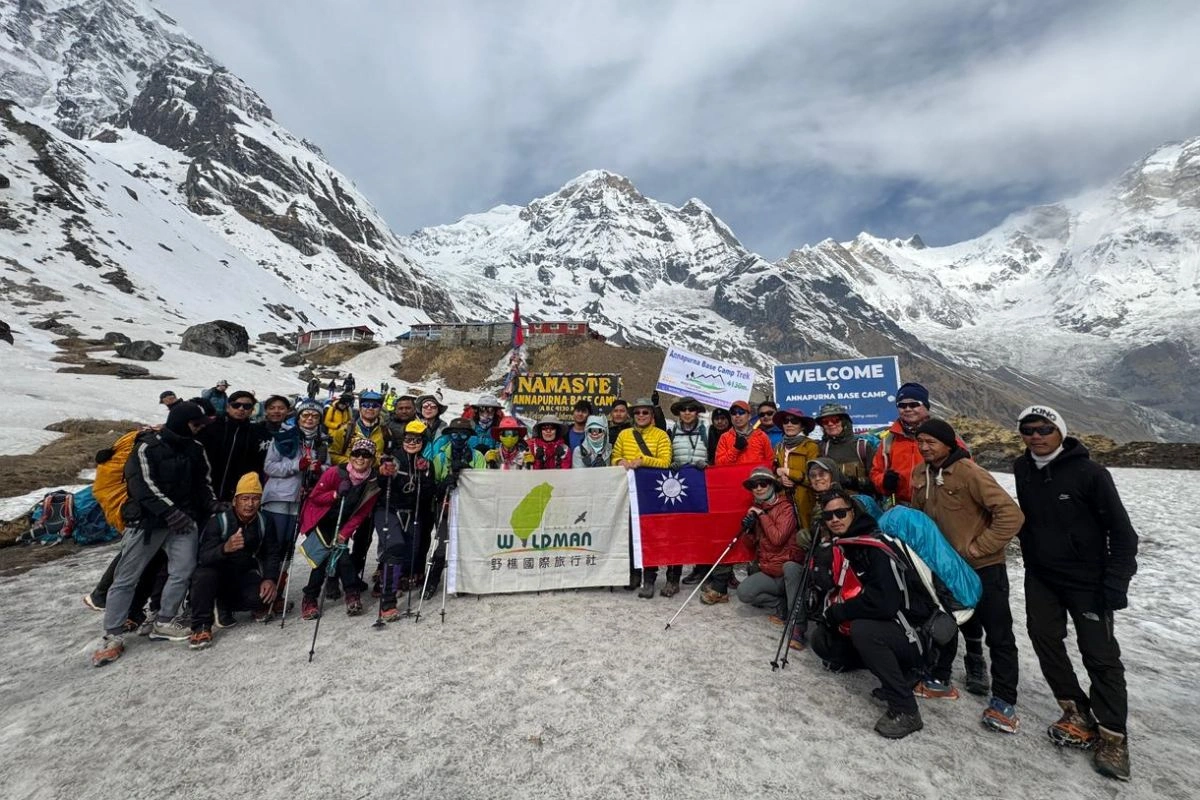
October is the single best month for the Annapurna Base Camp trek, delivering the lowest precipitation of the post-monsoon period (52mm), the clearest mountain panoramas, stable trail conditions across all 5 altitude zones from Nayapul (1,070m) to Base Camp (4,130m), and optimal daytime temperatures of 8°C–15°C at altitude. April ranks as the second-best month for trekkers who prioritize rhododendron blooms and spring light conditions.
What Can You Expect from March to May?
March to May on the Annapurna Base Camp trail delivers warming temperatures, rhododendron bloom corridors, 8–12 trekking hours of daylight, and graduation from deep winter into active pre-monsoon conditions across 5 altitude zones. Each month within the spring window produces distinct trail experiences:
March opens with residual winter cold at Annapurna Base Camp (−5°C at night) and stable, clear mornings. Rhododendron forests above Ghorepani begin blooming in mid-March. Trail surfaces remain firm and dry. Permit volumes start rising from winter lows. Daytime visibility at the base camp reaches 15–20km on clear days.
April delivers the peak spring conditions: rhododendrons in full bloom between 2,000m–3,500m, base camp night temperatures of −2°C, consistent clear mornings before 10:00, and trail occupancy at moderate levels. April is the optimal month for photographers targeting Annapurna panoramas with foreground alpine color.
May brings pre-monsoon humidity, afternoon thunderstorm probability above 3,000m, and temperatures at base camp reaching 10°C–15°C midday. Visibility degrades progressively through May. Trekkers completing the route in the first 2 weeks of May retain 70–80% of April's clarity.
What Can You Expect from September to November?
September to November on the Annapurna Base Camp trail transitions from late monsoon to the clearest trekking window of the year, with October and November producing the highest summit panorama visibility, driest trail conditions, and most stable weather of the annual cycle. Each month within the autumn window delivers measurable differences:
September carries residual monsoon humidity, with precipitation declining from 185mm early in the month to 70mm by late September. Leeches remain active below 2,000m through mid-September. Clear mornings become reliable after September 20th. Trail surfaces begin drying from the monsoon saturation.
October reaches optimal conditions across all parameters: 52mm precipitation, trail surfaces fully dry above 1,500m, daytime temperatures of 8°C–15°C at altitude, and mountain visibility extending to 20–30km on cloudless mornings. October 1–31 represents the single most reliable trekking window in the Annapurna region.
November retains October's clarity with dropping temperatures. Night temperatures at Annapurna Base Camp fall to −8°C to −12°C. Daytime highs reach 2°C–6°C at altitude. Snowfall begins above 4,000m by late November. First-time trekkers achieve the same visibility as October with heavier sleeping and insulation requirements.
What Are June to August Conditions Like?
June to August on the Annapurna Base Camp route records the highest precipitation of the year, with July averaging 350mm, the wettest month of the 12-month trekking calendar, and monsoon rainfall can increase the risk of landslides and temporary trail disruption along lower-elevation approaches to the Annapurna region. The 3-month monsoon window produces conditions unsuitable for first-time trekkers and requiring daily risk assessment for experienced trekkers.
Trail conditions across June–August include:
Leech activity from Nayapul (1,070m) to Chhomrong (2,170m) requiring daily boot and trouser checks
Waterfalls across trail sections between Bamboo (2,310m) and Deurali (3,230m) creating slippery rock crossings
Cloud cover blocking mountain views at Annapurna Base Camp on 85–90% of mornings
Flash floods along the Modi Khola riverbed affecting the trail between Siwai and Chhomrong
What Is Annapurna Base Camp Like in June?
June marks the ABC trek's transition from pre-monsoon to full monsoon. Temperatures at 4,130 meters range from 2°C at night to 12°C during the day. Rainfall averages 400 mm across the month, concentrated in afternoon downpours lasting 3 to 5 hours daily. Morning windows between 5:00 AM and 10:00 AM remain clear on 30% to 40% of days.
3 trail conditions change significantly in June compared to April and May:
Wet stone surfaces along the Deurali-to-ABC approach increase slip risk by 60% without trekking poles
Leech activity activates below 2,800 meters on the Chhomrong-to-Bamboo section after rainfall
Rhododendron forest trails above Ghorepani become muddy and erode under foot traffic
Teahouses operate at full capacity in June with 40% to 60% fewer guests than April. No advance teahouse booking is required. June trekkers gain access to the rhododendron bloom's final phase and the Annapurna conservation area at its greenest, trade-offs that attract experienced trekkers who accept reduced summit visibility.
What Is Annapurna Base Camp Like in July?
July delivers peak monsoon conditions at ABC, with 450 mm of rainfall, the highest monthly average on the trek. Cloud cover eliminates Annapurna massif summit views on 80% to 90% of days. Temperatures at 4,130 meters hold between 1°C and 10°C, but persistent moisture creates a perceived chill 3°C to 5°C colder than the recorded temperature.
4 specific risks intensify during the July ABC trek:
Landslide probability on the Jhinu Danda to Chhomrong section rises 3x compared to October
Flash flood risk increases at Kimrong Khola and Modi Khola river crossings
Trail erosion above Deurali (3,200 m) creates unstable footing on the final 4 km to ABC
Helicopter rescue availability drops to 30% of normal capacity due to cloud ceilings at 2,500 meters
Experienced trekkers who complete the ABC route in July access 2 conditions unavailable in peak season: teahouses operating at 15% to 20% of capacity, meaning guaranteed private rooms with no advance booking, and deep-green Himalayan landscapes with waterfalls at full volume throughout the Modi Khola valley. July is a viable month for trekkers with prior high-altitude experience and a 3-day weather-flexibility buffer in their schedule.
What Is Annapurna Base Camp Like in August?
August at ABC shows measurable improvement from July, with rainfall decreasing from 450 mm to 380 mm and clear morning windows increasing to 35% to 45% of days. The Annapurna South face (7,219 m) becomes visible through monsoon cloud breaks on approximately 40% of August mornings, an increase from July's 10% to 20%.
Late August (August 20 to 31) enters the pre-monsoon clearance phase. Trekkers departing for Nayapul on August 20 reach ABC between August 27 and August 30, then descend and return to Pokhara in early September — arriving at the first clear autumn days of the season. This timing strategy, documented in Nepal Mountaineering Association (NMA) seasonal trekking data, delivers 90% clear days at ABC by September 5.
August teahouse rates run 15% to 20% below October peak-season prices, with no advance booking required. The combination of lower cost, lower crowds, and improving late-August weather makes August 20–31 the most underrated window on the entire ABC seasonal calendar.
What Are December to February Conditions Like?
December to February on the Annapurna Base Camp route produces the lowest annual temperatures (−15°C at base camp in January), the lowest permit volumes (8–15% of annual totals), deep snow accumulation above 3,500m, and the quietest trail conditions of the year. The 3-month winter window delivers 3 distinct trekking experiences:
December is the most accessible winter month, with trails below 3,000m snow-free, daytime temperatures at base camp of −5°C to 3°C, and teahouses fully operational. December trekking from Nayapul to Annapurna Base Camp completes in standard conditions for trekkers with 4-season sleeping bags.
January records the coldest temperatures of the year (−15°C at night at base camp), 50–100cm of snow above 3,500m, reduced teahouse operations above Himalaya Hotel (2,900m), and elevated avalanche risk on the Deurali–Machhapuchhre Base Camp traverse. January trekking requires full winter equipment and experienced guide accompaniment above Deurali.
February transitions toward spring, with temperatures rising from January lows, snow consolidating on upper trails, and rhododendron buds appearing at lower altitudes by late February. February trekking at high altitude remains cold but increasingly stable through the month.
How Should You Choose the Right Time for Your Trek?
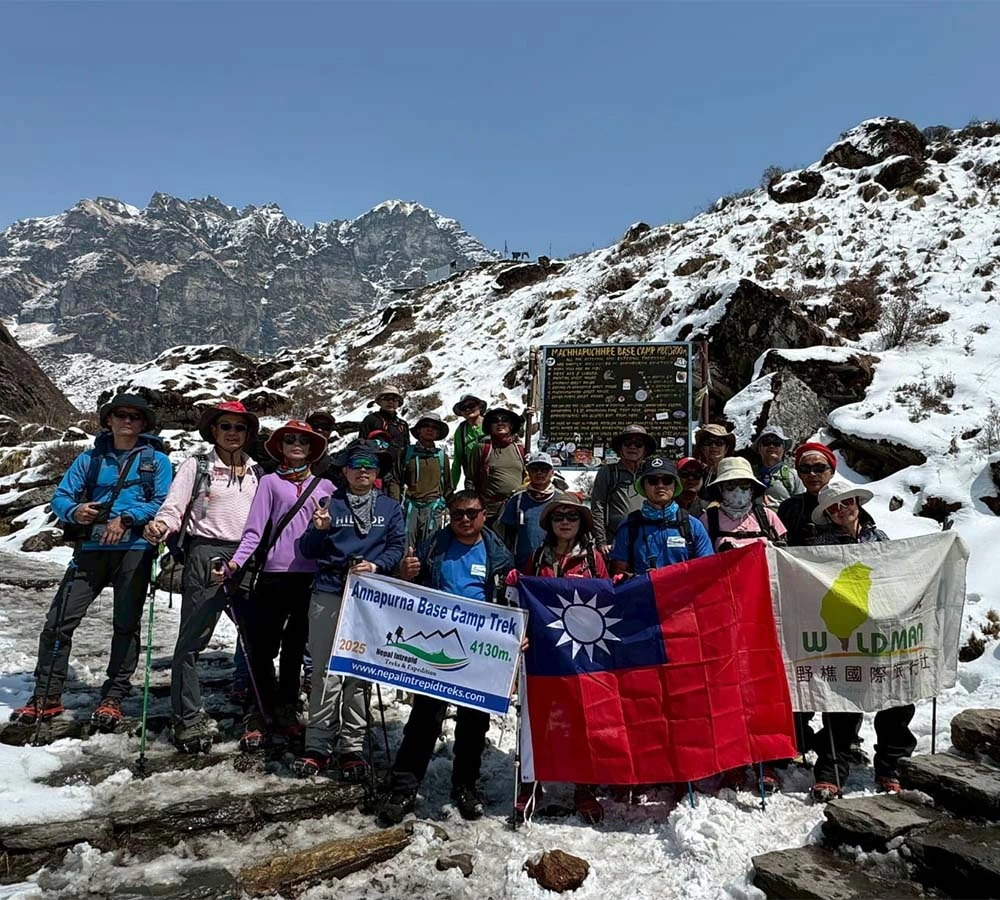
Choosing the right time for the Annapurna Base Camp trek depends on 3 primary factors: altitude experience, photography goals, and crowd tolerance. First-time trekkers maximize safety and success rates in October–November and March–April. Experienced trekkers with winter gear access the route year-round with different trade-offs per season.
Which Months Suit First-Time Trekkers Best?
First-time trekkers maximize safety and success rates in October–November and March–April, with registered trekking agencies providing the necessary support for emergency helicopter evacuations from Annapurna Base Camp (4,130m) and Machhapuchhre Base Camp (3,700m). For a detailed breakdown of altitude zones, elevation gain stages, and how the height of Annapurna Base Camp compares to other Himalayan treks, see our dedicated altitude guide.
4 criteria define optimal months for first-time trekkers:
Weather stability: October and April generally offer more predictable trekking conditions than the monsoon and winter periods, although weather can change rapidly at high altitude.
Teahouse availability: Accommodation is generally easier to arrange during the main trekking seasons, although availability varies by village, date, and current operating conditions.
Temperature manageability: Night temperatures at base camp average −1°C in October and −2°C in April, manageable with standard 3-season sleeping bags rated to −10°C.
Rescue access: Helicopter evacuation is weather-dependent, so trekkers should carry appropriate travel insurance and avoid treating any season as a guarantee that an evacuation flight will be possible.
Which Months Are Best for Photographers?
April delivers the best photography conditions for the Annapurna Base Camp trek, combining Himalayan sunrise light on Annapurna I (8,091m) and Machhapuchhre (6,993m), rhododendron bloom corridors at Poon Hill (3,210m) and the Ghorepani–Tadapani traverse, and 8–10 hours of quality light from 06:00–16:00. Photographers seeking a focused sunrise-and-rhododendron itinerary without committing to the full ABC ascent can explore the Poon Hill Trek as a standalone April option.
Photography conditions per peak season:
April morning light at Annapurna Base Camp produces golden-hour alpenglow on Annapurna South (7,219m) from 06:15–06:45, with full shadow separation across the Sanctuary Cirque by 07:30.
October panoramas deliver sharp atmospheric clarity with no haze, enabling ultra-wide compositions from Machhapuchhre Base Camp (3,700m) encompassing Annapurna I through IV, Annapurna South, Gangapurna (7,455m), and Hiunchuli (6,441m).
November snowfall on upper peaks above 5,000m adds winter white to mountain compositions unavailable in October, creating high-contrast ridge photography from the base camp amphitheater.
What Time Does the Sun Rise at Annapurna Base Camp?
Sunrise at Annapurna Base Camp occurs between 5:45 AM and 7:15 AM, varying by month. The earliest sunrise falls in June and July (5:45–5:50 AM). The latest sunrise falls in December and January (7:10–7:15 AM). October delivers both the optimal timing and the clearest morning skies.
At 4,130 meters, first light strikes Annapurna I (8,091 m) approximately 25 to 35 minutes before ground-level sunrise. This pre-dawn alpenglow turns the Annapurna massif from deep violet to amber-orange across a 15 to 20-minute window. Photographers position themselves on the open rocky plateau north of the ABC teahouses to capture this light before cloud formation begins after 8:00 AM.
Which Months Are Best for Quieter Trails?
December and February are the 2 quietest accessible months on the Annapurna Base Camp trail, with December recording 8–10% of annual permit volumes and February recording 10–12%, compared to October's 25–30% of annual permit volumes.
3 quieter-trail windows exist on the ABC route:
December 1–20: Post-autumn peak drop in trekkers, fully open teahouses, and excellent clear weather before mid-winter temperature extremes. This 20-day window combines low crowds with October-quality visibility.
Late September (September 20–30): Post-monsoon clear-up with trail occupancy still at pre-peak levels before the October rush. 20–30% fewer trekkers than peak October.
Early March (March 1–15): Pre-spring-peak quiet period with residual winter cold above 3,500m but clear skies and empty teahouses 2 weeks before March crowds arrive.
What Risks Should You Consider in Each Season?
Each season on the Annapurna Base Camp trek presents 3 primary risk categories: precipitation hazards (landslides, snow, ice), altitude-related health events, and cold-induced equipment failure. Risk severity and type shift measurably across the 4 seasonal windows, requiring season-specific preparation.
How Do Rain, Snow, and Slippery Trails Affect Safety?
Rain, snow, and ice can create several important hazards on the Annapurna Base Camp route, including slippery trails, landslide-related blockages, and difficult river crossings. Season-specific hazard profiles include:
Monsoon (June–August): Landslides on the Nayapul–Chhomrong corridor occur at 4–8 per week during peak July–August rainfall. Stone staircases at Chhomrong descent (250 steps), Sinuwa, and Deurali create slip risk. Modi Khola crossings flood above safe crossing levels 3–5 times per monsoon season.
Winter (December–February): Ice accumulation on the Deurali–Machhapuchhre Base Camp traverse creates fall risk without microspike traction. Avalanche zones on the Annapurna Sanctuary approach above 3,800m require guide assessment and early morning passage before solar warming destabilizes snow.
Late Spring (May): Rain-softened soil below 2,500m creates root and mud hazard on the descent from Chhomrong to Jhinu Danda and along the forest trail from Bamboo to Dovan.
How Do Altitude and Cold Change by Season?
Altitude sickness risk at Annapurna Base Camp (4,130m) remains a year-round concern: the most recent 36-Year Follow-Up study of trekkers in the Nepali Himalaya's Annapurna region recorded AMS incidence of 45% (Lake Louise Score ≥3) and 29% at the more severe LLS ≥5 threshold, with cold-exacerbated AMS severity still peaking in December–February.
Understanding altitude sickness in Himalaya environments, its symptoms, and prevention protocols is essential before committing to any high-altitude departure window.
The 3 altitude-risk factors that change by season are:
Acclimatization pace: Summer warmth in September reduces energy expenditure per uphill kilometer, enabling faster ascent. Winter cold forces slower movement and higher caloric burn, increasing AMS-trigger fatigue.
Rescue window: Helicopter evacuation depends on weather, visibility, aircraft availability, and operating conditions, so rescue access can never be assumed solely from the month of travel.
Cold injury risk: Cold exposure becomes a greater concern during winter, particularly at higher elevations, so trekkers should use adequate insulation, protect exposed skin, and prepare for freezing temperatures.
What Should You Pack for Each Season?
Packing for the Annapurna Base Camp trek varies across 4 seasonal configurations, with winter requiring 8–10kg of additional insulation and traction gear versus the 14–16kg base-kit used in spring and autumn. The following table defines the 4 essential packing configurations:
The table below outlines the core seasonal gear differences across the 4 annual trekking windows on the Annapurna Base Camp route:
Gear Category | Spring (Mar–May) | Monsoon (Jun–Aug) | Autumn (Sep–Nov) | Winter (Dec–Feb) |
Sleeping bag rating | −10°C | −5°C | −10°C (Oct), −15°C (Nov) | −20°C |
Boot type | 3-season waterproof | 3-season waterproof + gaiters | 3-season waterproof | 4-season insulated + microspikes |
Rain protection | Light rain jacket | Full waterproof shell + pack cover | Light rain jacket | Hardshell windproof |
Insulation layers | 2 mid-layers | 1 mid-layer | 2–3 mid-layers | 4 mid-layers + down suit above 3,500m |
Additional items | Sun protection, trekking poles | Leech socks, waterproof bag liners, trekking poles | Sun protection, trekking poles | Microspikes, gaiters, chemical hand warmers, trekking poles with winter baskets |
How Should You Book the Trek at the Right Time?
Booking the Annapurna Base Camp trek 60–90 days in advance for October and April travel secures teahouse availability, permit processing time, and flight availability to Pokhara International Airport (PKR) from Kathmandu Tribhuvan International Airport (KTM), the 28-minute domestic connection that serves as the gateway to the Annapurna region.
3 booking requirements apply regardless of season:
ACAP Permit: The Annapurna Conservation Area Program permit costs NPR 3,000 (USD 23) per trekker and processes in 30 minutes at the Nepal Tourism Board office in Kathmandu or Pokhara. No advance booking required. For a complete 2026 breakdown of all permit fees, checkpoint requirements, and TIMS card rules, see our detailed guide on the Annapurna Base Camp permit cost.
TIMS Card: The Trekkers' Information Management System card costs USD 20 for individual trekkers and USD 10 for trekkers with registered guide companies. TIMS registers trekker identity, emergency contacts, and planned route with the Trekking Agencies' Association of Nepal (TAAN).
Travel insurance: Medical evacuation coverage with a minimum helicopter rescue benefit of USD 50,000 is required by ACAP regulations for all foreign trekkers above 3,000m.
Can a Local Trekking Company Help You Choose the Best Month?
A registered local trekking company in Pokhara with active TAAN membership and minimum 5 years of Annapurna Base Camp operations advises on 4 timing factors not visible in general weather data: micro-route conditions, teahouse reservation requirements by altitude zone, real-time trail closure reports from ACAP wardens, and helicopter evacuation availability windows. Local operators monitor real-time safety by accessing the Nepal Tourism Board's daily trail condition database and exclusive ACAP ranger updates.
Local trekking companies offer 3 practical advantages in timing selection:
Real-time trail intelligence: ACAP wardens at Chomrong Station (2,170m) and the Annapurna Base Camp check post issue daily trail condition updates accessed by registered operators but not published on public platforms.
Teahouse reservation networks: Operators hold standing pre-season agreements with teahouses at Deurali (3,230m), Machhapuchhre Base Camp (3,700m), and Annapurna Base Camp (4,130m), the 3 altitude-critical stops where walk-in availability disappears during October and April peaks.
Dynamic rescheduling: Licensed operators can seamlessly reschedule departures by 24–72 hours based on incoming weather windows, providing critical itinerary flexibility during mountain weather shifts.
What Are the Key Takeaways About the Best Time for the Annapurna Base Camp Trek?
The best time for the Annapurna Base Camp trek is October for overall conditions, April for photography and rhododendron scenery, December for quiet trails, and November for experienced trekkers who prioritize clarity over warmth. The 110-kilometer Annapurna Base Camp trek reaches 4,130m through the Annapurna Conservation Area and requires season-matched gear, correct permits, and timing aligned with the trekker's specific goals.
The 6 key takeaways for timing the Annapurna Base Camp trek are:
October delivers the best all-around trekking conditions: low precipitation (52mm), clear panoramas, stable temperatures, and fully open teahouses across all 18 altitude stops.
April delivers the best spring conditions: rhododendron blooms, warming temperatures, and 10-hour daylight windows for photography.
November provides October-quality visibility with colder night temperatures (−8°C to −12°C at base camp) requiring heavier gear.
March opens the spring window with residual winter quiet and rising temperatures, ideal for trekkers avoiding crowds.
December is the best winter-adjacent month for low-crowd trekking with full teahouse access below 3,500m.
July and August carry the highest hazard rating of the year due to 350mm and 320mm monthly precipitation, active landslide conditions, and 85–90% cloud cover at Annapurna Base Camp.
Trekkers targeting Annapurna Base Camp plan permit acquisition, travel insurance with helicopter evacuation coverage, and Pokhara flight reservations 60–90 days before October–November departure and 45–60 days before March–April departure to secure the complete trekking infrastructure required for the Annapurna Conservation Area route. Those seeking premium comfort, private guide services, and fully managed logistics for the October or April window can explore our Luxury Annapurna Base Camp Trek.