Choosing between Annapurna Base Camp (ABC) and Everest Base Camp (EBC) is one of the biggest decisions first-time trekkers face when planning a Nepal adventure. Both treks offer stunning Himalayan scenery, teahouse accommodations, and life-changing mountain experiences but they differ significantly in difficulty, cost, logistics, and the kind of journey you'll have.
This guide compares ABC and EBC across every dimension that matters: scenery, altitude, difficulty, cost, permits, best seasons, and daily trekking life. Whether you're a beginner wondering which trek is safer, a budget traveler comparing costs, or someone chasing that iconic Everest moment, you'll find clear, practical information to help you choose the right trek.
ABC vs EBC: The Quick Decision Guide (Who Should Choose What?)
ABC vs EBC in one sentence: what's the real difference?
Annapurna Base Camp is a shorter, lower-altitude trek through diverse landscapes and Gurung villages into a natural mountain amphitheater, while Everest Base Camp is a longer, higher-altitude journey through Sherpa country to the foot of the world's tallest peak.
Choose ABC if: You have 7-10 days, want lower altitude risk, prefer a more intimate mountain experience, or are trekking on a tighter budget.
Choose EBC if: You have 12-16 days, want the prestige of reaching Everest Base Camp, are comfortable with higher altitude challenges, or are drawn to Sherpa culture and the Khumbu region.
Both treks are achievable for fit beginners, but EBC demands more time, acclimatization awareness, and logistical planning.
Which trek is better for beginners: Annapurna Base Camp or Everest Base Camp?
Annapurna Base Camp is generally better for first-time trekkers. Here's why:
ABC reaches a maximum altitude of 4,130 meters at Annapurna Base Camp itself, with most nights spent below 3,500 meters. The lower elevation means less altitude pressure, fewer acclimatization concerns, and a gentler introduction to high-altitude trekking. The itinerary is also more flexible; you can complete ABC in 7-9 days if time is limited, or stretch it to 10-12 days for a more comfortable pace.
EBC takes you to 5,364 meters at Base Camp (or 5,545 meters if you climb Kala Patthar for the classic Everest view). You'll sleep multiple nights above 4,000 meters, which increases altitude sickness risk. The standard itinerary requires 12-14 days minimum, with built-in acclimatization days that aren't optional they're essential for safety.
That said, EBC is still doable for beginners who are physically fit, willing to prepare properly, and comfortable committing two weeks to the trek. The key difference is margin for error: ABC forgives rushed itineraries or mild altitude symptoms more readily than EBC does.
Fitness readiness for both:
-
You should be comfortable walking 5-7 hours daily with a daypack
-
Basic cardiovascular fitness (able to jog 30 minutes or hike uphill for an hour without stopping)
-
No technical climbing skills required for either trek
ABC vs EBC for budget travelers: which costs less overall?
Annapurna Base Camp costs significantly less, typically 30-40% cheaper than EBC.
Here's a realistic cost comparison for independent trekkers:
ABC total cost range: $400-$800 USD
-
Permits: ~$45-60 (ACAP + local fees)
-
Transport: $30-50 (bus/jeep to/from Pokhara)
-
Accommodation + food: $25-35/day (teahouse lodging is ~$3-5/night, meals $15-25/day)
-
Guide/porter (optional but recommended): $150-250 for the trek
EBC total cost range: $800-$1,500 USD
-
Permits: ~$60-80 (Sagarmatha National Park + Khumbu Pasang Lhamu trek card)
-
Transport: $350-400 (roundtrip Lukla flights) or $60-100 (bus/jeep if trekking from Jiri/Salleri)
-
Accommodation + food: $30-45/day (higher prices as you gain altitude)
-
Guide/porter (optional): $250-400 for the longer trek
The Lukla flight alone makes EBC more expensive. Even if you choose the budget alternative of busing to Salleri or Jiri and trekking in, you're adding 3-5 extra days of food and accommodation costs.
Food prices also increase with altitude on both treks, but EBC's higher elevations and remote location mean a dal bhat that costs $5-6 in Namche Bazaar might cost $10-12 at Gorak Shep.
Budget-saving tips for either trek:
-
Travel in shoulder season (late spring/early winter) for lower crowds and sometimes negotiable rates
-
Carry your own pack to skip porter fees
-
Order dal bhat (Nepali lentil-rice plate) instead of Western menu items, it's cheaper and usually unlimited refills
-
Stay where you eat (teahouse owners often discount or waive room fees)
ABC vs EBC for "bucket list" experience: which feels more iconic?
Everest Base Camp holds more global recognition and delivers that "I made it to Everest" moment. For many people, standing at the base of the world's tallest mountain is the draw, it's a name that carries weight when you tell the story back home.
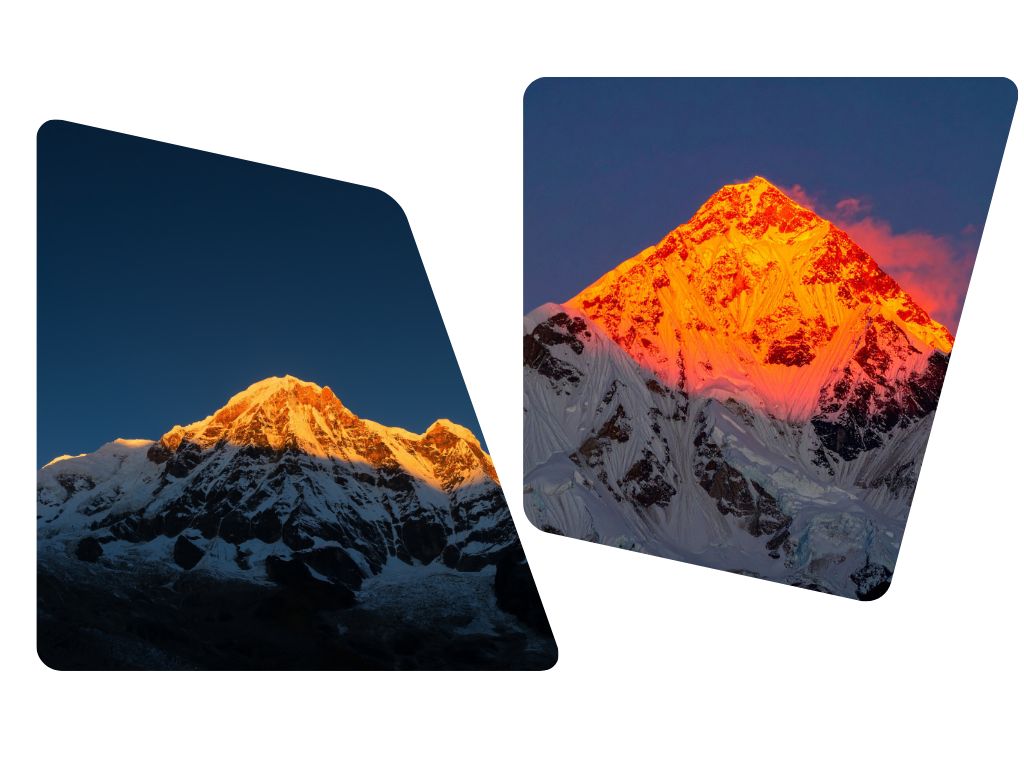
EBC also offers more dramatic "milestone moments": your first glimpse of Everest from Namche Bazaar, crossing high suspension bridges over the Dudh Koshi River, sunrise from Kala Patthar with the Everest summit glowing orange. The Sherpa culture, with its deep connection to mountaineering history, adds another layer of significance.
But Annapurna Base Camp offers a different kind of magic that many trekkers find equally powerful. You're walking into a natural mountain sanctuary, a 360-degree amphitheater surrounded by massive peaks including Annapurna I (8,091m), Annapurna South, Machapuchare (Fishtail Mountain), and Hiunchuli. The feeling is intimate and enclosed rather than vast and expansive. Some trekkers prefer this "you're inside the mountains" sensation to the more distant Everest views.
ABC also offers more landscape variety. you start in subtropical forests with rhododendrons and bamboo, pass through terraced farmland and traditional villages, and climb into alpine zones and eventually the high sanctuary. EBC stays in the high alpine/barren zone for most of the trek.
If your bucket list item is specifically "Everest," then EBC is the obvious choice. If your bucket list item is "epic Himalayan trek with mind-blowing mountain scenery," either delivers, and ABC might surprise you with how powerful the experience feels despite being less famous.
Scenery & Trek Experience: Mountains, Culture, and Daily Vibe
What you see on ABC: Annapurna Sanctuary, Machapuchare, and close-up giants
The Annapurna Base Camp trek is defined by its incredible diversity of landscapes packed into a relatively short journey.
Lower elevations (Day 1-3): You start in lush subtropical forests filled with rhododendron trees (stunning if you trek during spring bloom season), bamboo groves, and cascading waterfalls. The Modi Khola river valley provides a green, humid, almost jungle-like atmosphere. You'll pass terraced farmland where locals grow millet, corn, and rice.
Mid-elevations (Day 4-5): As you climb through villages like Chhomrong, Bamboo, and Deurali, the landscape transitions to cloud forest and alpine meadows. The valley narrows dramatically, and you start getting glimpses of the massive peaks ahead.
The Sanctuary (Day 6-7): The final approach to Annapurna Base Camp is breathtaking. You enter what trekkers call the Annapurna Sanctuary a natural mountain amphitheater formed by a ring of peaks. From ABC itself (4,130m), you're surrounded 360 degrees by giants: Annapurna I (the 10th highest mountain in the world), Annapurna South, Machapuchare (the iconic "Fishtail" peak that's never been summited), Hiunchuli, and Gangapurna.
Best viewpoints:
-
Machapuchare Base Camp (MBC): Your last stop before ABC, offering incredible close-up views of Machapuchare's distinctive double-peak
-
Annapurna Base Camp at sunrise: Watch the peaks turn golden as the sun hits them one of the most photographed moments in Nepal trekking
-
Poon Hill (optional extension): A popular sunrise viewpoint if you're combining ABC with the Ghorepani-Poon Hill route
The scenery feels intimate and immersive, you're not viewing mountains from a distance but standing among them.
What you see on EBC: Khumbu Valley, Everest views, and high Himalayan landscapes
The Everest Base Camp trek offers consistently spectacular high-altitude mountain scenery, though the landscape is more uniform and barren than ABC's varied zones.
Lower Khumbu (Day 1-4): After landing in Lukla (2,860m), you descend into the Dudh Koshi river valley, crossing dramatic suspension bridges decorated with prayer flags. The trail passes through pine forests, small villages, and eventually arrives in Namche Bazaar (3,440m), the Sherpa capital. From Namche, you get your first clear view of Everest, Lhotse, and Ama Dablam.
Mid-Khumbu (Day 5-8): The trail climbs steadily through Tengboche (home to a famous monastery with a stunning mountain backdrop), Dingboche, and Lobuche. The landscape becomes increasingly barren and rocky with less vegetation, more glacial moraine, and constant views of massive peaks. Ama Dablam (often called the "Matterhorn of the Himalayas") dominates the skyline for days.
High Khumbu (Day 9-10): The final push to Everest Base Camp takes you alongside the Khumbu Glacier to Base Camp itself (5,364m). The view from Base Camp is actually somewhat anticlimactic; you're too close to Everest to see the summit clearly. The real payoff comes from climbing Kala Patthar (5,545m), a nearby viewpoint that offers the classic Everest sunrise shot with the summit pyramid fully visible.
Best viewpoints:
-
Kala Patthar at sunrise: The definitive Everest view worth the pre-dawn wake-up call
-
Tengboche Monastery: Ama Dablam framed by the monastery is one of Nepal's most iconic scenes
-
Namche Bazaar viewpoint: Your first Everest sighting, often emotional for trekkers
-
Gokyo Lakes (alternative route): If you take the Gokyo variation, you get turquoise glacial lakes with Cho Oyu and Everest views from Gokyo Ri
The scenery is consistently dramatic but feels more austere and "moonscape-like" compared to ABC's green valleys and enclosed sanctuary.
2.3 Which trek has better village culture and variety (Gurung/Magar vs Sherpa routes)?
Both treks offer rich cultural experiences, but they're quite different in character.
Annapurna region: Gurung and Magar villages
The ABC trek passes through traditional Gurung and Magar villages like Ghandruk, Chhomrong, and Sinuwa. These communities maintain agricultural lifestyles; you'll see terraced fields, water buffalo, and locals harvesting crops. The architecture is distinct, with stone houses featuring slate roofs.
Gurung culture is warm and welcoming. You'll encounter friendly locals, children playing outside schools, and working farms. The villages feel lived-in and authentic rather than tourism-focused. Many teahouse owners are local families who farm during the day and host trekkers at night.
The cultural variety is also greater on ABC because you're passing through multiple elevation zones with different ethnic groups, from Hindu communities in the lowlands to Buddhist influences at higher elevations.
Everest region: Sherpa heartland
The EBC trek is firmly in Sherpa territory. Sherpa culture is deeply tied to Buddhism and mountaineering history, you'll pass countless chortens (Buddhist shrines), prayer wheels, and monasteries. The villages of Namche Bazaar, Khumjung, and Pangboche have a different feel than Gurung villages: more prosperous due to trekking and mountaineering tourism, with better infrastructure but also a more commercial atmosphere.
Namche Bazaar is particularly fascinating; it's a bustling mountain town with bakeries, gear shops, Irish pubs, and even a museum dedicated to Everest expeditions. You'll meet Sherpa guides who've summited Everest multiple times, hear stories of famous climbers, and feel the weight of mountaineering legacy.
The monasteries add cultural richness. Tengboche Monastery, where monks perform evening prayers while Ama Dablam looms in the background, is a highlight for many trekkers.
Which is "better" depends on what you value:
-
ABC feels more authentically village-focused and agricultural
-
EBC feels more connected to mountaineering culture and Buddhist spirituality
-
ABC offers more ethnic and landscape diversity
-
EBC offers deeper immersion in one specific culture (Sherpa) with more developed tourism infrastructure
Crowds and atmosphere: is ABC or EBC more crowded (and why)?
Everest Base Camp is significantly more crowded than Annapurna Base Camp, especially during peak season (October-November and March-April).
Why EBC is busier:
The "Everest" name attracts massive numbers of trekkers. In peak season, popular teahouses in Namche Bazaar, Dingboche, and Gorak Shep can feel like hostels during spring break, loud dining halls, competition for charging outlets, and pre-dawn traffic jams on the trail to Kala Patthar. The Lukla flight bottleneck also means hundreds of trekkers start the trail within the same few-hour window each day, creating wave-like crowds.
That said, the crowds thin out as you gain altitude, and by the time you reach Lobuche and Gorak Shep, the atmosphere is quieter (partly because everyone's exhausted).
ABC's quieter appeal:
Annapurna Base Camp sees healthy traffic but nothing like EBC's numbers. The lack of a single-entry bottleneck (like Lukla) means trekkers spread out more naturally. Even in peak season, you'll have moments of solitude on the trail, especially in the sanctuary itself. The teahouses are smaller and more intimate, often family-run.
Crowd management tips:
-
Trek in shoulder seasons (late November, early March, December) for thinner crowds
-
Start early each day to avoid bottlenecks at popular lunch stops
-
Choose less-popular teahouses (ask your guide for recommendations)
-
For EBC, consider the Gokyo Lakes alternative route, which sees fewer trekkers
Atmosphere difference: ABC feels like a mountain adventure with other trekkers around. EBC can feel like a pilgrimage with hundreds of fellow pilgrims, which some people love (community atmosphere) and others find overwhelming.
Difficulty, Altitude, and Safety: What Feels Hard (and What's Risky)
Difficulty comparison: daily walking hours, steepness, and trail conditions
Both treks are non-technical with no ropes, ice axes, or climbing skills required but they differ in daily demands.
Daily walking hours:
-
ABC: 5-7 hours per day average, with the longest day being the push from Deurali to ABC (or MBC to ABC if you split it)
-
EBC: 5-7 hours per day average, with the longest stretches being Dingboche to Lobuche and the Kala Patthar climb
Neither trek is a walk in the park, but the hours are manageable for anyone with decent fitness.
Steepness and terrain:
ABC has more varied terrain. The famous "Chhomrong stairs" (3,000+ stone steps) are legendary among ABC trekkers, a steep descent followed by a steep climb that tests your knees and quads. The trail alternates between ascents, descents, and flat valley walking. This variety keeps things interesting but also means your legs work in different ways each day.
The trail is generally well-maintained, though it can be muddy and slippery during monsoon season or after rain. Some sections involve boulder-hopping along the Modi Khola river.
EBC has more consistent uphill trudging. While there are descents (notably the initial drop from Lukla to the river valley), the overall profile is steady uphill for 8-9 days, then downhill for 3-4 days on the return. The terrain is rockier and more barren—think glacial moraine, river valleys, and high-altitude desert.
The "Three Passes Trek" variation of EBC adds technical difficulty, but the standard route is straightforward walking.
Trail conditions: Both trails are well-established "teahouse treks" with clear paths. EBC has slightly better infrastructure (more lodges, more developed trails) due to higher traffic.
Which is harder? It's roughly equal, but in different ways:
-
ABC challenges your knees (steep ups and downs)
-
EBC challenges your lungs (sustained altitude + uphill)
Most trekkers find EBC slightly harder overall due to the altitude factor, which we'll discuss next.
Altitude comparison: highest points, acclimatization needs, and how to prepare safely
This is the biggest difference between the two treks, and it matters for your health and safety.
Altitude Profile Comparison:
|
Trek |
Highest Sleeping Point |
Highest Point Reached |
Days Above 4,000m |
|
ABC |
4,130m (ABC itself) |
4,130m |
1-2 nights |
|
EBC |
5,140m (Gorak Shep) |
5,545m (Kala Patthar) |
4-5 nights |
Why this matters: Acute Mountain Sickness (AMS) risk increases significantly above 3,500 meters, and serious conditions like HACE (High Altitude Cerebral Edema) and HAPE (High Altitude Pulmonary Edema) become risks above 4,500 meters.
ABC altitude strategy:
You'll sleep one or two nights above 4,000 meters (at MBC and ABC), which is manageable for most people if you ascend slowly. The standard itinerary naturally builds in acclimatization by gradually gaining elevation over 5-6 days before reaching ABC.
Most trekkers experience mild symptoms (headache, fatigue, slight nausea) but nothing serious. The quick descent back to lower elevations means symptoms resolve rapidly.
EBC altitude strategy:
You'll spend multiple nights above 4,000 meters and sleep at 5,140 meters (Gorak Shep), which pushes many trekkers into moderate AMS territory. The risk is real, evacuation helicopters are common on the EBC trail.
Mandatory acclimatization days on EBC:
-
Rest day in Namche Bazaar (3,440m) with acclimatization hike
-
Rest day in Dingboche or Pheriche (4,410m) with acclimatization hike
These aren't optional skipping them significantly increases your risk of severe altitude sickness.
How to prepare safely for both treks:
1. Ascend slowly: The golden rule is "climb high, sleep low" and don't gain more than 500 meters of sleeping elevation per day above 3,000 meters
2. Stay hydrated: Drink 3-4 liters of water daily at altitude
3. Recognize AMS symptoms early:
-
Mild: headache, fatigue, nausea, dizziness, trouble sleeping
-
Moderate: severe headache, vomiting, weakness
-
Severe: confusion, difficulty walking, fluid in lungs (HAPE) or brain (HACE)
4. Descend if symptoms worsen: Don't push through moderate or severe symptoms. Descent is the only reliable treatment.
5. Consider Diamox (acetazolamide): This medication aids acclimatization. Discuss with your doctor before the trek. It's not a substitute for proper acclimatization but can help.
6. Get travel insurance that covers helicopter evacuation up to 6,000 meters
Altitude risk is real on both treks, but EBC demands more respect. If you're sensitive to altitude, have a history of AMS, or feel anxious about high-elevation trekking, ABC is the safer choice.
Weather and temperature differences: which trek is colder and more unpredictable?
Everest Base Camp is colder and more exposed to harsh weather.
Temperature comparison:
ABC temperatures:
-
Lower elevations (Ghandruk-Chhomrong): 10-20°C during the day, 5-10°C at night
-
Higher elevations (MBC-ABC): -5 to 10°C during the day, -10 to -5°C at night in peak season
-
Winter (December-February): Can drop to -15°C at night at ABC
EBC temperatures:
-
Lower Khumbu (Lukla-Namche): 5-15°C during the day, 0-5°C at night
-
Higher Khumbu (Lobuche-Gorak Shep): -10 to 5°C during the day, -15 to -20°C at night
-
Winter: Can drop below -25°C at Gorak Shep
You'll need warmer gear for EBC, especially if you're climbing Kala Patthar for sunrise (leaving at 4 AM in sub-zero temperatures).
Weather predictability:
ABC sits in a more sheltered valley and benefits from slightly more stable weather patterns. That said, the Annapurna region can get more monsoon precipitation than the Khumbu, so if you trek during shoulder season (May-June or September), expect more rain.
EBC is more exposed to high-altitude weather systems. Wind is a constant factor, especially above Dingboche. Cloud cover can move in quickly, and snowfall is common even in peak season at higher elevations. The Lukla flight is famously weather-dependent; flights are often delayed or canceled due to fog or wind, which can disrupt your schedule.
Best weather windows:
-
Spring (March-May): Warmer temperatures, clearer skies post-monsoon, rhododendrons blooming on ABC
-
Autumn (October-November): Most stable weather, clearest mountain views, peak season crowds
-
Winter (December-February): Cold but clear, fewer crowds, teahouses may be closed higher up on ABC
-
Monsoon (June-September): Rain, leeches, cloud-obscured views—generally avoid unless you're experienced
Fitness & training plan: how to prepare for ABC vs EBC (beginner/intermediate)
You don't need to be an athlete, but both treks require solid cardiovascular fitness and leg strength.
Minimum fitness baseline for both treks:
-
Able to walk 5-7 hours with short breaks
-
Comfortable hiking uphill for 1-2 hours without stopping
-
No knee or ankle issues that would be aggravated by steep terrain
Training timeline: 8-12 weeks before your trek
Weeks 1-4: Build base aerobic fitness
-
3-4 cardio sessions per week: running, cycling, swimming, or stair climbing (30-45 minutes)
-
1 long hike per week: start with 2-3 hours, build to 4-5 hours by week 4
-
Carry a light daypack (5-7 kg) during hikes
Weeks 5-8: Build strength and endurance
-
Continue cardio but increase one session to interval training (uphill sprints, stair intervals)
-
2 strength sessions per week: focus on legs (squats, lunges, step-ups), core (planks), and shoulders (if carrying your own pack)
-
Increase long hike duration to 5-6 hours with 10 kg daypack
-
Practice hiking downhill to strengthen knees
Weeks 9-12: Peak and taper
-
One "test" hike: 6-7 hours with elevation gain (1,000m+) if possible
-
Continue cardio but reduce volume slightly
-
Final week: taper down to rest before travel
ABC-specific training tips:
-
Practice steep downhills (stairs, hiking trails) to prep for Chhomrong
-
Focus on leg endurance over raw cardio, you'll be walking all day
EBC-specific training tips:
-
Train at elevation if possible (simulate altitude with slower breathing, altitude training masks, or high-altitude hikes)
-
Build mental endurance for long, monotonous uphill stretches
-
Practice cold-weather hiking if trekking in winter
If you can't train properly:
-
Build extra rest days into your itinerary
-
Hire a porter to carry your pack
-
Start the trek slowly and listen to your body
-
Consider ABC over EBC if you're unsure about your fitness
Logistics & Cost Breakdown: Permits, Routes, Transport, and Time
Trek duration comparison: shortest realistic itineraries vs comfort itineraries
Annapurna Base Camp:
Shortest realistic itinerary: 7 days
-
Day 1: Nayapul to Ghandruk
-
Day 2: Ghandruk to Chhomrong
-
Day 3: Chhomrong to Bamboo
-
Day 4: Bamboo to Deurali
-
Day 5: Deurali to ABC (via MBC)
-
Day 6: ABC to Bamboo
-
Day 7: Bamboo to Nayapul
This is aggressive and doesn't include buffer days for weather or altitude adjustment.
Comfort itinerary: 10-12 days
-
Add rest days in Chhomrong or after reaching ABC
-
Split longer sections (e.g., stop at Sinuwa instead of pushing to Bamboo)
-
Include Ghorepani-Poon Hill extension for sunrise views
-
Travel days from Kathmandu/Pokhara
Everest Base Camp:
Shortest realistic itinerary: 12 days
-
Day 1: Fly to Lukla, trek to Phakding
-
Day 2: Phakding to Namche Bazaar
-
Day 3: Acclimatization day in Namche
-
Day 4: Namche to Tengboche
-
Day 5: Tengboche to Dingboche
-
Day 6: Acclimatization day in Dingboche
-
Day 7: Dingboche to Lobuche
-
Day 8: Lobuche to Gorak Shep, visit EBC
-
Day 9: Climb Kala Patthar, descend to Pheriche
-
Day 10: Pheriche to Namche
-
Day 11: Namche to Lukla
-
Day 12: Fly to Kathmandu
This is the minimum recommended itinerary with proper acclimatization.
Comfort itinerary: 14-16 days
-
Add extra rest day in Namche or Dingboche
-
Split longer sections (stay in Deboche instead of Tengboche, stop in Dugla before Lobuche)
-
Include buffer days for weather delays (especially important for Lukla flights)
-
Consider side trips: Gokyo Lakes, Ama Dablam Base Camp viewpoint
The verdict: ABC fits into a shorter Nepal trip (2 weeks total including Kathmandu/Pokhara time), while EBC requires 3 weeks minimum to trek comfortably and account for travel days and potential delays.
Getting there: Pokhara access for ABC vs Lukla flights/alternatives for EBC
Getting to ABC (Annapurna region):
Start point: Nayapul or Kimche (depending on route)
From Kathmandu:
-
Bus or tourist coach to Pokhara (6-8 hours, $10-25 USD)
-
Overnight in Pokhara
-
Private jeep or local bus to Nayapul (1.5-2 hours, $15-30 for jeep, $3-5 for bus)
-
Start trekking from Nayapul
Alternative: Fly Kathmandu to Pokhara (25 minutes, $100-150), though buses are reliable and scenic.
The Pokhara approach is straightforward, affordable, and reliable. Buses run daily, roads are decent (by Nepal standards), and there's no weather-dependent bottleneck.
Getting to EBC (Khumbu region):
Start point: Lukla (Tenzing-Hillary Airport)
The Lukla flight option (standard):
-
Fly Kathmandu to Lukla (30-40 minutes, $175-200 USD one-way)
-
Start trekking immediately from Lukla
The Lukla flight reality check:
-
Lukla Airport is one of the world's most dangerous airports (short runway, mountain weather)
-
Flights are frequently delayed or canceled due to fog, wind, or clouds, sometimes for days
-
During peak season, flights may be rerouted through Ramechhap (4-5 hour drive from Kathmandu), adding time and hassle
-
You MUST build 2-3 buffer days into your itinerary for flight delays
Budget alternative trek from Jiri or Salleri:
If you want to avoid the Lukla flight (cost or experience reasons), you can bus to Jiri or Salleri and trek into the Khumbu.
-
Bus Kathmandu to Jiri (10-12 hours) or Salleri (8-10 hours)
-
Trek 3-5 days to reach Namche Bazaar
This adds significant time (and cost for extra food/accommodation) but removes the flight bottleneck. It's also a beautiful, less-traveled route through lowland villages.
The verdict: ABC logistics are simpler, cheaper, and more predictable. EBC logistics require flexibility, patience, and buffer days for the notorious Lukla flight.
Permit requirements overview: what documents you typically need for each region
Permit rules in Nepal change periodically, so always verify current requirements before your trek. Here's what you typically need:
Annapurna Base Camp permits:
-
ACAP (Annapurna Conservation Area Permit):
-
Cost: NPR 3,000 (~$22 USD) for foreign nationals
-
Obtained from: Nepal Tourism Board office in Kathmandu or Pokhara, or online via NTNC e-permit portal
-
Required for: Entering the Annapurna Conservation Area
-
TIMS Card (Trekkers' Information Management System):
-
The requirement and cost vary depending on whether you're trekking independently or with a guide
-
Check current rules via Nepal Tourism Board's TIMS page, as regulations have evolved
-
Local entry fees:
-
Some villages charge small local entry or development fees (typically NPR 20-100)
Documents needed:
-
Passport (with at least 6 months validity)
-
Passport-size photos (2-3)
-
Completed permit application forms
Everest Base Camp permits:
-
Sagarmatha National Park Entry Permit:
-
Cost: NPR 3,000 (~$22 USD) for foreign nationals
-
Obtained from: Nepal Tourism Board office in Kathmandu or at the park entry checkpoint in Monjo
-
Required for: Entering Sagarmatha (Everest) National Park
-
Khumbu Pasang Lhamu Rural Municipality "Trek-Card":
-
Cost: NPR 2,000 (~$15 USD)
-
Required from: Khumbu Pasang Lhamu Rural Municipality (checkpoint in Lukla)
-
Purpose: Local area entry fee
-
You'll need your passport for this
-
TIMS Card:
-
Similar to ABC, check current TIMS requirements as rules have changed
Documents needed:
-
Passport (with at least 6 months validity)
-
Passport-size photos (2-3)
-
Nepal visa (obtained on arrival at Kathmandu airport or in advance)
Important notes:
-
Permits and rules can change; verify before you go via official sources
-
Your guide or trekking agency can obtain permits on your behalf
-
Keep permits with you at all times, there are multiple checkpoints on both treks
-
Some teahouses require you to show permits when checking in
Cost comparison: guide/porter, teahouses, food, transport, gear, and hidden expenses
Let's break down costs category by category for a realistic budget.
Cost Comparison Table:
|
Category |
ABC (Budget) |
ABC (Mid-Range) |
EBC (Budget) |
EBC (Mid-Range) |
|
Permits |
$45 |
$45 |
$60 |
$60 |
|
Transport |
$30 (bus to Pokhara + jeep to Nayapul) |
$150 (flight to Pokhara + private jeep) |
$350 (Lukla flight) |
$400 (Lukla flight + buffer) |
|
Accommodation |
$3-5/night ($21-35 total) |
$8-12/night ($56-84 total) |
$5-8/night ($60-96 total) |
$10-15/night ($120-180 total) |
|
Food |
$20-25/day ($140-175 total) |
$30-40/day ($210-280 total) |
$25-35/day ($300-420 total) |
$40-60/day ($480-720 total) |
|
Guide |
N/A (independent) |
$25-30/day ($175-210 total) |
N/A (independent) |
$30-35/day ($360-420 total) |
|
Porter |
N/A (carry own pack) |
$20-25/day ($140-175 total) |
N/A (carry own pack) |
$20-25/day ($240-300 total) |
|
Gear rental |
$0-50 (if you own gear) |
$50-100 |
$0-50 |
$100-150 |
|
Misc |
$30-50 (water, snacks, charging, tips) |
$50-100 |
$50-80 |
$80-150 |
|
TOTAL |
$420-600 |
$900-1,200 |
$825-1,100 |
$1,840-2,600 |
Hidden costs and budget traps:
-
Drinks and extras: Bottled water, soft drinks, beer, chocolate bars, and coffee become expensive at altitude. Budget $3-10 per day for extras.
-
Charging devices: Many teahouses charge $2-5 per device to charge phones, cameras, and power banks. Bring a solar charger or spare batteries.
-
Hot showers: Not always included. Cost: $2-5 per shower at higher elevations.
-
Wi-Fi: Available in most lodges but often requires payment ($3-5 per day). Consider buying a local SIM card with data (Ncell or NTC) before the trek.
-
Tips: Customary to tip guides ($10-15/day total) and porters ($8-10/day total) at the end of the trek.
-
Lukla flight delays: If stuck in Lukla or Kathmandu due to weather, you're paying for extra accommodation and meals. Budget $50-100 buffer.
-
Emergency evacuation: Travel insurance that covers helicopter rescue up to 6,000m costs $50-150 depending on coverage. This is non-negotiable, get it.
Cost-saving strategies:
-
Trek independently without a guide (if you're comfortable with navigation and altitude management)
-
Carry your own pack to skip porter fees
-
Eat dal bhat at every meal (unlimited refills, nutritious, cheapest option)
-
Stay in basic rooms without attached bathrooms
-
Bring your own snacks, water purification tablets, and reusable water bottle
-
Trek in shoulder season when some teahouses offer discounts
When to spend more:
-
Hire a guide if you're a first-time trekker, nervous about altitude, or want cultural insights
-
Hire a porter if you have knee issues, want to enjoy the trek more, or are carrying camera gear
-
Pay for better rooms/food if you're older, value comfort, or want hot showers daily
Planning Checklist: Best Seasons, Itineraries, and FAQs People Actually Ask
Best time to trek: ABC vs EBC by month (spring, autumn, winter, monsoon shoulder)
Peak seasons (best weather, most crowds):
October-November (Autumn):
-
Weather: Clear skies, stable weather, excellent mountain views
-
Temperature: Moderate days (10-20°C lower, 5-15°C higher), cold nights
-
Crowds: Highest of the year, book teahouses ahead on EBC
-
Best for: First-time trekkers, photographers, guaranteed good weather
March-April-May (Spring):
-
Weather: Clear mornings, afternoon clouds common, warming temperatures
-
Temperature: Warmer than autumn (15-25°C lower, 10-20°C higher)
-
Crowds: High but less than autumn
-
Best for: Rhododendron blooms (ABC), warmer trekking, avoiding peak crowds
Shoulder seasons (fewer crowds, variable weather):
Late November-December (Early winter):
-
Weather: Clear and cold, stable but harsh at high elevations
-
Temperature: Cold days (0-10°C), very cold nights (-15 to -20°C at EBC)
-
Crowds: Much quieter, some teahouses close at high elevations (check ahead)
-
Best for: Experienced trekkers, solitude seekers, those with proper cold-weather gear
February (Late winter):
-
Weather: Clear skies but extremely cold, especially at EBC
-
Temperature: Slightly warmer than December/January but still harsh
-
Crowds: Very quiet
-
Best for: Hardcore trekkers, avoiding crowds, those comfortable with extreme cold
Late September/Early October (Monsoon tail-end):
-
Weather: Transitioning from monsoon some rain/cloud, improving daily
-
Temperature: Mild and comfortable
-
Crowds: Low but building
-
Best for: Risk-tolerant trekkers who don't mind occasional rain, budget travelers (discounts possible)
Avoid:
June-August (Monsoon):
-
Weather: Heavy rain, leeches, muddy trails, cloud-covered mountains
-
Temperature: Warm but humid and wet
-
Crowds: Lowest of the year (for good reason)
-
Why avoid: Poor visibility, increased landslide risk, uncomfortable conditions
Month-by-month quick guidance:
-
⭐⭐⭐ October, November, March, April: Best overall months
-
⭐⭐ December, February, May, late September: Good with caveats
-
⭐ January: Possible but very cold, especially EBC
❌ June, July, August: Avoid unless you have specific reasons
5 Sample itineraries: classic ABC route vs classic EBC route (with rest/acclimatization days)
Classic Annapurna Base Camp Itinerary (10 days)
Day 1: Kathmandu to Pokhara (bus/flight), drive to Nayapul, trek to Tikhedhunga (1,540m) — 1-2 hours trekking
Day 2: Tikhedhunga to Ghorepani (2,874m) — 5-6 hours
-
Climb the Ulleri stairs (3,000+ steps), pass through rhododendron forest
Day 3: Ghorepani to Poon Hill (3,210m) sunrise, trek to Tadapani (2,630m) — 5-6 hours
-
Pre-dawn climb to Poon Hill for panoramic sunrise views
Day 4: Tadapani to Chhomrong (2,170m) — 5-6 hours
-
Descend through forest, cross river, climb to Chhomrong village
Day 5: Chhomrong to Bamboo (2,310m) — 5-6 hours
-
Famous Chhomrong stairs descent and ascent, enter the bamboo and rhododendron forest zone
Day 6: Bamboo to Deurali (3,230m) — 4-5 hours
-
Gradual climb through forest, pass Himalaya Hotel, reach alpine zone
Day 7: Deurali to Annapurna Base Camp (4,130m) via Machapuchare Base Camp (3,700m) — 4-5 hours
-
Enter the Annapurna Sanctuary, dramatic mountain amphitheater views
Day 8: Annapurna Base Camp to Bamboo — 6-7 hours
-
Sunrise at ABC, descend rapidly to lower elevation
Day 9: Bamboo to Jhinu Danda (1,780m) — 5-6 hours
-
Option to visit natural hot springs
Day 10: Jhinu Danda to Nayapul, drive to Pokhara — 4-5 hours trek + 1.5-hour drive
Classic Everest Base Camp Itinerary (14 days)
Day 1: Kathmandu to Lukla flight (2,860m), trek to Phakding (2,610m) — 3-4 hours
-
Gentle descent along Dudh Koshi river
Day 2: Phakding to Namche Bazaar (3,440m) — 6-7 hours
-
Cross suspension bridges, enter Sagarmatha National Park, steep final climb to Namche
Day 3: Acclimatization day in Namche Bazaar
-
Hike to Everest View Hotel (3,880m) or Khumjung village, return to Namche to sleep
Day 4: Namche Bazaar to Tengboche (3,867m) — 5-6 hours
-
Pass through Phunki Tenga, climb to Tengboche Monastery
Day 5: Tengboche to Dingboche (4,410m) — 5-6 hours
-
Pass through Pangboche, first views of Ama Dablam up close
Day 6: Acclimatization day in Dingboche
-
Hike to Nagarjun Hill (5,100m) or Chhukung village, return to Dingboche to sleep
Day 7: Dingboche to Lobuche (4,940m) — 5-6 hours
-
Pass memorial stupas for climbers, increasingly barren landscape
Day 8: Lobuche to Gorak Shep (5,140m), afternoon visit to Everest Base Camp (5,364m), return to Gorak Shep — 7-8 hours total
-
Early morning trek to EBC, return to sleep at Gorak Shep
Day 9: Gorak Shep to Kala Patthar (5,545m) at sunrise, descend to Pheriche (4,371m) — 7-8 hours
-
Pre-dawn climb for classic Everest sunrise view, long descent
Day 10: Pheriche to Namche Bazaar (3,440m) — 6-7 hours
-
Rapid descent, noticeable increase in oxygen
Day 11: Namche Bazaar to Lukla (2,860m) — 6-7 hours
-
Final day of trekking, return to Lukla for overnight
Day 12: Lukla to Kathmandu flight — weather dependent
Day 13-14: Buffer days for flight delays (absolutely necessary)
Teahouse comfort & food: what to expect (rooms, showers, charging, Wi-Fi)
Both ABC and EBC are teahouse treks, meaning you sleep in basic lodges and eat at their attached dining halls each night. No camping required.
Room accommodations:
What you get:
-
Basic rooms with two twin beds, thin mattresses, pillow, and blanket (quality varies)
-
Shared or attached bathrooms (attached bathrooms more common at lower elevations)
-
Increasingly basic as you gain altitude, don't expect luxury at ABC or Gorak Shep
Temperature: Rooms are unheated. You'll sleep in your sleeping bag or under multiple blankets. At high elevations (above 4,000m), rooms can be freezing at night.
Noise: Thin walls mean you'll hear other trekkers. Bring earplugs.
Bedbugs/cleanliness: Most teahouses are clean, but bring a sleeping bag liner for peace of mind.
Food:
What's available:
-
Dal bhat: The staple Nepali meal (lentil soup, rice, vegetable curry, pickle). Unlimited refills, nutritious, and the best value. Eat this daily and you'll save money and stay energized.
-
Western options: Pasta, pizza, burgers, pancakes, sandwiches—available but expensive and mediocre quality at high elevations.
-
Breakfast: Porridge, eggs, Tibetan bread, toast, hash browns
-
Snacks: Chocolate, biscuits, chips (prices increase with altitude)
-
Drinks: Tea, coffee, hot lemon, beer (expensive at high elevation)
Food quality: Good at lower elevations, increasingly basic and bland as you climb. Everything is carried up by porters or yaks, so fresh vegetables disappear above 4,000m.
Vegetarian/vegan: Easy to accommodate. Most dal bhat are vegetarian by default.
Hot showers:
-
Available at most teahouses but often cost extra ($2-5)
-
Heated by solar power (best in afternoon) or gas (more reliable but pricier)
-
Water pressure and temperature decrease with altitude—don't expect reliable hot showers above 4,000m
-
Many trekkers skip showers for 2-3 days at high elevation (it's normal)
Charging devices:
-
Most teahouses offer charging for $2-5 per device
-
Electricity often runs on solar power unreliable on cloudy days
-
Bring a power bank or solar charger to reduce dependence
-
Some teahouses have shared charging stations (watch your devices)
Wi-Fi:
-
Available in most teahouses on both treks
-
Cost: $3-5 per day for a password, or free (but slow) in some lodges
-
Speed: Adequate for messaging, very slow for video calls or uploads
-
Reliability: Decreases with altitude
-
Alternative: Buy a Nepali SIM card (Ncell or NTC) in Kathmandu or Pokhara. Data works at lower elevations but coverage is spotty above 3,500m.
Bathroom facilities:
-
Lower elevations: Western-style flush toilets (sometimes)
-
Higher elevations: Squat toilets (bring your own toilet paper)
-
Cleanliness varies, carry hand sanitizer
-
At night in cold temperatures, many trekkers use a pee bottle rather than brave the outdoor toilet
Dining hall atmosphere:
-
Communal dining halls with a central stove (bukhari) burning wood or yak dung
-
Social atmosphere, you'll meet other trekkers, share stories, play cards
-
Expect to spend evenings here (your room is too cold)