Trekking in Nepal with children is a family adventure that combines Himalayan mountain scenery, village life, local culture, and outdoor exploration with trekking conditions adapted to younger travelers. Nepal offers family-friendly routes across the Annapurna, Langtang, and lower Everest regions, as well as shorter trails near Kathmandu and Pokhara, ranging from gentle one- to three-day walks to longer mountain journeys for experienced teenagers. The right trek depends on the youngest child's age, fitness, previous hiking experience, walking hours, sleeping altitude, and tolerance for changing mountain conditions. Established teahouses, manageable trails, and experienced local guides make many Nepal trekking routes practical for families when the itinerary is designed around the children's needs rather than an adult trekking pace.

A successful family trek in Nepal requires more than choosing a scenic route. Parents need to consider altitude and acclimatization, trekking season, daily walking distance, rest days, footwear and layered clothing, lightweight backpacks, hydration, food, hygiene, weather, and early signs of fatigue or altitude-related illness. Shorter walking stages, regular breaks, appropriate sleeping elevations, and a flexible descent plan help children stay comfortable and safe, while trail games, village encounters, mountain viewpoints, and teahouse evenings keep the experience engaging. This guide explains how to choose a child-friendly Nepal trek, prepare children for the trail, pack the right gear, manage altitude and mountain weather, handle accommodation and meals, plan realistic daily stages, and arrange professional guide and porter support for a safer and more enjoyable family trekking experience.
Why Is Trekking in Nepal With Children a Great Family Adventure?
Trekking in Nepal gives children direct, unscripted contact with mountains, farming villages, and Himalayan culture in a way that screens and classrooms cannot replicate. The experience builds physical resilience, cultural awareness, and family closeness in a single trip, and it does so on trails that range from a gentle half-day walk to a multi-week expedition.
Nepal's trekking regions sit close to Kathmandu and Pokhara, so a family can leave a city hotel in the morning and reach a mountain trailhead by afternoon. Teahouse lodges appear every few hours on the main family routes, which removes the need to carry tents, stoves, or bulk food. Trekking also teaches children patience and pacing in a way that theme parks or beach holidays rarely do: a child who struggles on hour one of a trek often finds a rhythm by hour three, and that shift in stamina becomes a memory of its own. Most Nepali trekking routes carry no formal minimum age, and guides in family-heavy regions such as Annapurna and Langtang report regularly taking children as young as five or six on short, well-paced itineraries.
Which Nepal Treks Are Best for Families With Children?
The best family treks in Nepal sit in the Annapurna, Langtang, and lower Everest regions, where trails stay below 4,000 meters, teahouses are frequent, and daily walking hours are short. Ghorepani Poon Hill, the Annapurna foothills loop, Langtang Valley, and the Everest Panorama Trek cover most family needs, from a two-day introduction to a nine-day mountain expedition.
Route choice depends on three factors: the youngest child's age, the family's trekking experience, and how much altitude everyone is comfortable sleeping at. A family with a five-year-old and no prior hiking experience needs a different trek than a family with two trekking-fit teenagers.
Which Short Treks Are Suitable for Younger Children?

Short treks suitable for younger children stay under 2,200 meters, take one to three days, and follow well-graded trails near Kathmandu or Pokhara. The Nagarkot to Changu Narayan walk and the Dhampus to Australian Camp loop are the two most reliable options for children aged five to eight.
The Nagarkot–Changu Narayan trail runs through pine forest and terraced farmland on a ridge east of Kathmandu, taking four to five hours with sweeping views of the Himalayan range on clear mornings. It ends at Changu Narayan, a UNESCO-listed temple complex, which gives the walk a cultural payoff beyond scenery. The Dhampus–Australian Camp route, a short drive from Pokhara, spends two to three days winding through Gurung villages in the Annapurna foothills, tops out near 2,100 meters, and offers close-up Annapurna and Machhapuchhre views without any altitude risk. Both routes use established teahouses, which lets first-time trekking families test the format before committing to a longer trip.
Which Family Treks Offer the Best Mountain Views?
The family treks with the strongest mountain views are Ghorepani Poon Hill and the Everest Panorama Trek, both of which reach a dedicated viewpoint without pushing altitude into high-risk territory. Poon Hill, at 3,210 meters, delivers a sunrise panorama of Dhaulagiri, Annapurna South, and Machhapuchhre that ranks among the most photographed views in Nepal.
The Poon Hill trek runs four to five days from Nayapul near Pokhara, climbing through rhododendron forest and Magar and Gurung villages before the pre-dawn ascent to the viewpoint. In the Everest region, the Everest Panorama Trek reaches Everest View Hotel and Khumjung village near 3,880 meters, giving families a direct sightline to Everest, Lhotse, and Ama Dablam over seven to nine days, without the multi-week commitment or extreme altitude of Everest Base Camp. Families chasing views with a shorter time budget can also stop at Mardi Himal's Forest Camp (around 2,550 meters) or Low Camp (around 2,970 meters), which frame Machhapuchhre up close while skipping the exposed High Camp push that suits stronger trekkers only.
Which Treks Are Suitable for Families With Older Children?
Treks suitable for families with older children include Annapurna Base Camp and the Langtang Valley extension to Kyanjin Ri, both of which demand more stamina and comfort with altitude. Annapurna Base Camp, at 4,130 meters over seven to nine days, works well for fit children aged ten and older who already have trekking mileage behind them.
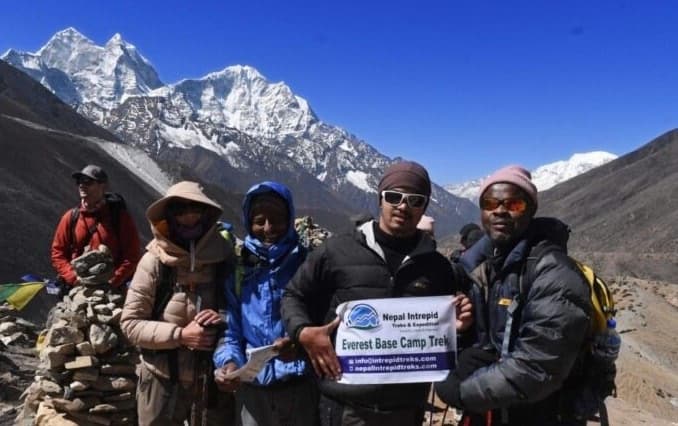
Langtang Valley to Kyanjin Gompa sits at 3,870 meters and adds optional side hikes to Kyanjin Ri at 4,773 meters or Tsergo Ri at 4,984 meters, both strong options for teenagers seeking a harder day without extending the whole itinerary. Everest Base Camp, at 5,364 meters over twelve to fourteen days, sits at the far end of the family spectrum: guides who specialize in family trekking generally reserve it for older teenagers with prior high-altitude experience and a doctor's clearance, not as an introductory family trek.
How Should Families Choose a Trek in Nepal With Children?
Families choose a trek by matching four variables to the youngest or least experienced child: trip duration, sleeping altitude, daily difficulty, and season. Getting these four right matters more than choosing a famous trek name, since a well-matched easy route produces a better family experience than a well-known but mismatched hard one.
How Does Trek Duration Affect Children?
Trek duration affects children through cumulative fatigue, which builds differently in young bodies than in adult ones. Children generally handle three-to-six-day treks better than longer expeditions, because shorter trips limit the accumulated tiredness that turns a fun adventure into a forced march by day eight.
A six-day trek gives a family two or three easier days bracketing the hardest walking day, which keeps morale high even if one day runs long. Trips beyond eight or nine days need a genuine rest day built in around the midpoint, plus a flexible exit plan in case a child's enthusiasm or energy runs out before the itinerary does.
How Does Trekking Altitude Affect Children?
Trekking altitude affects children through reduced oxygen availability, which triggers acute mountain sickness at lower thresholds and with less predictable symptoms than in adults. Pediatric mountain-medicine guidance recommends a sleeping altitude below 2,500 meters for preschool-aged children, and no higher than 3,000 to 4,000 meters even under close supervision.
Young children cannot always describe symptoms accurately, so irritability, poor appetite, disturbed sleep, and unusual clinginess often signal altitude distress before a headache or nausea does, a pattern borne out by a 2017 PLOS ONE cohort study of 197 child trekkers on Xue Mountain, Taiwan, which found sleep disturbance, not headache, was children's most common AMS symptom, present in nearly three-quarters of the group. Infants under six weeks old are not recommended for elevations meaningfully higher than their home altitude, and pediatric experts flag increased vigilance for any child above 2,500 meters, regardless of age. Nepal-based guides who work regularly with children advise reaching the day's highest point by early afternoon, so parents have several hours of daylight to watch for symptoms and descend if needed, and to plan sleeping altitude lower than the day's peak elevation whenever the route allows it.
How Difficult Should a Family Trek Be?
A family trek should stay within the physical range of its least capable member, which in practice means gentle grades, frequent flat sections, and no single day longer than five hours of walking for children under ten. Difficulty should scale to the youngest trekker, not the average age of the group.
Trails with long, sustained stone staircases, such as sections of the Everest Base Camp route, tax young leg muscles far more than distance alone suggests. A trek with the same total distance spread across gentler terrain, such as the Annapurna foothills, is meaningfully easier for a child even at an identical mileage count.
What Trekking Seasons Are Best for Families?
The best trekking seasons for families are autumn, from September to November, and spring, from March to May, both of which combine stable weather with clear mountain visibility. Autumn is generally considered Nepal's most reliable trekking season, with dry trails, comfortable daytime temperatures, and consistently clear Himalayan views.
Spring adds blooming rhododendron forests along routes such as Poon Hill and Ghandruk, which keeps children visually engaged between viewpoints. Winter, from December to February, still suits lower-altitude family routes below 3,000 meters, though mornings and evenings turn cold enough to require serious insulated layers. Monsoon season, from June to August, brings leeches, slippery trails, and obscured mountain views to most regions, making it the least suitable season for a first family trek outside rain-shadow areas.
How Can Families Prepare Children for Trekking in Nepal?

Families prepare children for trekking in Nepal through a combination of physical conditioning, gear familiarization, and mental groundwork completed in the two to three months before departure. Preparation reduces the two things that end family treks early: blisters and boredom.
What Fitness Preparation Do Children Need Before a Trek?
Children need regular walking, stair climbing, and one or two longer practice hikes before a Nepal trek, building toward sessions that approximate the planned trekking day length. Two to three weekly walks of 45 to 90 minutes, increased gradually over eight to ten weeks, build enough stamina for most family-grade routes.
Swimming, cycling, and casual sports all contribute general cardiovascular fitness, but nothing substitutes for time spent walking on uneven ground in the actual trekking boots. A weekend hike with a loaded daypack, ideally including some uphill and downhill sections, reveals fit issues with boots or backpacks while there is still time to fix them.
What Should Children Practice Before Trekking?
Children should practice wearing their trekking boots on multiple outings, using a headlamp in the dark, and, where possible, using a squat toilet before departure. Breaking in boots before the trek prevents the single most common reason young trekkers stop enjoying the trail: blisters.
A short evening walk around the neighborhood in trekking boots, repeated five or six times before departure, softens stiff leather and reveals pressure points early. Practicing with a headlamp matters because teahouse rooms and outdoor toilets are unlit after dark, and an unfamiliar light source can unsettle a young child at exactly the moment they need to be calm.
How Can Parents Prepare Children Mentally for a Mountain Trek?
Parents prepare children mentally by describing what the trek will actually involve, showing photos of teahouses and trails in advance, and setting expectations that some days will be harder than others. Children who know roughly what to expect handle discomfort better than children who are surprised by it.
Framing the trek as a shared family project, rather than an endurance test, keeps motivation intact on slower days. Letting a child help choose a snack, pack a small personal item, or pick a trail game gives them a sense of ownership over the trip that pays off in patience later on the trail.
What Should Families Pack for Trekking in Nepal With Children?
Families packing for a Nepal trek with children need a layered clothing system, altitude-appropriate accessories, and a compact child-specific first-aid kit, all organized to keep the child's own pack as light as possible. The packing goal is warmth and dryness at altitude combined with minimal weight on small shoulders.
What Clothing and Footwear Should Children Bring?
Children should bring a base layer, an insulating mid layer, a warm down or synthetic jacket, and a waterproof shell, worn in combination and adjusted throughout the day. A four-layer system covers the full temperature range a family trek passes through, from warm valley mornings to cold high-altitude evenings.
Footwear needs broken-in trekking boots with ankle support, plus lightweight camp shoes or sandals for evenings at the teahouse. Sun hats, a warm insulated hat, gloves, and UV-rated sunglasses protect against intense high-altitude sun: a 2016 peer-reviewed altitude-UV exposure model published in the International Journal of Environmental Research and Public Health found that UV exposure on snow-covered mountain terrain can rise by roughly 10% for every 100 meters of elevation gained, well above the 0.5–4% baseline increase from thinner atmosphere alone.
What Essential Items Should Parents Carry for Children?
Parents should carry sunscreen rated SPF 50, a refillable water bottle with a purification method, high-energy snacks, a headlamp, and a child-specific first-aid kit including fever reducer, oral rehydration salts, antihistamine, and blister care. A well-stocked first-aid kit resolves most minor trail problems on the spot, without needing to interrupt the day's plan.
Comfort items matter as much as medical ones: a favorite small toy, a travel journal, or a deck of cards gives a tired child something familiar to return to at the end of a long walking day. Families should also carry printed or offline copies of travel insurance details, since mobile signal disappears in many trekking valleys.
How Can Families Keep Children's Backpacks Lightweight?
Families keep children's backpacks lightweight by hiring a porter to carry the bulk of trekking gear, leaving each child to carry only a small daypack with water, snacks, and a rain layer. A child's daypack should weigh no more than about 10 percent of their body weight, and often less on longer trek days.
This is standard practice in Nepal, where porters typically carry the main duffel bags for the group while trekkers carry only what they need during the walking day. Children old enough to want independence, generally around age eight and up, benefit from carrying a light pack of their own, since the responsibility builds confidence even though the practical weight saving is small.
How Can Families Keep Children Safe While Trekking in Nepal?
Families keep children safe by controlling ascent rate, watching for early illness signs, protecting against sun and cold, and respecting mountain weather patterns. Safety on a family trek comes from steady daily habits, not from any single piece of gear.
How Can Families Manage Altitude During a Trek?
Families manage altitude by limiting net sleeping-altitude gain above 3,000 meters to no more than 500 meters per day and building in a rest day every 3 to 4 trekking days, following the Wilderness Medical Society's 2019 Clinical Practice Guidelines for Acute Altitude Illness, the same guidelines note that unacclimatized travelers face altitude-illness risk starting as low as 2,500 meters. The definitive treatment for a child showing altitude illness symptoms is descent, not medication or rest at the same elevation.
Because young children cannot reliably self-report headaches or nausea, parents need to watch behavior instead: a normally cheerful child who becomes withdrawn, refuses food, or sleeps unusually poorly at a new altitude should be treated as a possible early warning sign, even without a classic symptom like headache. If symptoms appear above 2,500 meters, guides and pediatric mountain-medicine sources agree that the family should stop ascending and, if symptoms persist or worsen, descend to a lower altitude rather than wait it out.
What Health Precautions Should Families Take?
Families should keep children well hydrated, protect them from intense high-altitude UV exposure, and avoid raw, unwashed foods at higher elevations where water quality is less certain. Dehydration accelerates altitude symptoms, so children need more frequent water breaks than adults, even without feeling thirsty.
Boiled, filtered, or chemically treated water is safer than untreated tap or stream water throughout the trek. Children with a recent cold, ear infection, or respiratory illness face a higher risk of altitude-related symptoms, so postponing a trek by a week or two after a recent illness is a reasonable precaution rather than an overreaction.
How Can Parents Recognize When a Child Needs to Rest?
Parents recognize a child's need for rest through behavioral shifts such as trailing behind the group, unusual quietness, complaining about legs or feet, or a sudden drop in appetite. A stop-and-snack break, timed before a child asks for one, prevents most minor fatigue from escalating into a meltdown.
Building rest breaks into the schedule every 45 to 60 minutes, rather than waiting for a child to request one, keeps energy levels steadier across the day. A child who recovers quickly with food, water, and ten minutes of sitting is likely dealing with ordinary fatigue; a child who does not bounce back, or who shows the behavioral changes described above, needs closer monitoring for altitude-related illness.
What Should Families Know About Mountain Weather?
Families should know that Himalayan weather shifts quickly, with clear mornings frequently giving way to afternoon cloud, wind, or light rain, and temperatures dropping 10 to 15 degrees Celsius between a valley village and a high viewpoint. Starting the day's walk early captures the best weather window and the clearest mountain views.
This is one reason family itineraries schedule the hardest climbing or the best viewpoint visits for the morning, reserving afternoons for shorter, gentler walking into the next teahouse. Packing for the coldest plausible temperature on any given day, rather than the forecast average, avoids being caught out when weather turns.
How Can Parents Keep Children Comfortable and Engaged on the Trail?
Parents keep children comfortable and engaged by pacing the walk around a child's attention span, not an adult's, and by turning transit time into a source of small discoveries. Short, frequent breaks paired with simple trail games keep morale higher than pushing through long unbroken walking stretches.
How Can Parents Make Long Trekking Days Enjoyable?
Parents make long trekking days enjoyable by breaking them into short, clearly defined stages with a specific landmark, snack, or rest point as each stage's goal. A day framed as "four short walks to four snack stops" feels far shorter to a child than the same day framed as one long hike.
Naming the destination of each short stage, whether a bridge, a chorten, or a particular teahouse, gives children something concrete to walk toward instead of an abstract distance. Involving children in simple trail decisions, such as choosing which side of a village path to take, adds a sense of agency that keeps engagement high.
What Games and Activities Can Children Enjoy While Trekking?
Children enjoy trail scavenger hunts, counting games, and storytelling while trekking, all of which require no extra gear and work well on narrow mountain paths. Counting suspension bridges, prayer flags, mani stones, or yaks turns an ordinary walking stretch into an active game.
Simple "I spy" variations built around local details, such as spotting a particular bird, a specific building color, or a certain type of prayer wheel, keep children observing their surroundings rather than fixating on tired legs. A small travel journal or sketchbook gives quieter children a way to process the day's sights during rest stops or teahouse evenings.
How Can Families Manage Food and Hydration on the Trail?
Families manage food and hydration by offering small, frequent snacks rather than relying on three large meals, and by reminding children to drink water at every stop rather than waiting for thirst. Children dehydrate faster than adults at altitude and often forget to drink unless prompted.
High-energy snacks such as nuts, dried fruit, energy bars, and local options like biscuits travel well and require no preparation. A refillable bottle with a simple purification method, paired with a habit of a few sips at every ten-minute rest stop, keeps hydration steady without turning water breaks into a negotiation.
What Should Families Expect From Accommodation and Food on Nepal Treks?
Families should expect simple, family-run teahouse lodges with basic private rooms, shared dining halls warmed by a central stove, and a predictable menu built around Nepali staples. Teahouses on the main family routes are more developed than remote trails, with reliable meals, extra blankets on request, and often paid wifi or charging.
What Are Teahouses Like for Families With Children?
Teahouses on family routes offer simple twin or triple rooms, shared or attached bathrooms depending on altitude, and a communal dining hall that functions as the social center of the evening. Lodge owners on popular family routes are used to hosting children and often provide extra blankets, simple food substitutions, and patient service without being asked twice.
Rooms are basic: a bed, a blanket, and sometimes a small table, with limited heating outside the shared dining hall. Families traveling with very young children benefit from booking rooms early in the day, since the best rooms near the dining hall or bathroom go to the first trekkers who arrive at each teahouse.
What Food Options Are Available for Children?
Food options for children on Nepal treks include dal bhat, momos, noodle soup, pancakes, porridge, and fried rice, most of which appear on nearly every teahouse menu along family routes. Dal bhat, Nepal's staple rice-and-lentil meal, typically comes with free refills, making it one of the most reliable options for a hungry child after a long walking day.
Teahouses catering to trekkers can usually prepare simple alternatives such as plain rice, boiled eggs, or chapati for picky eaters, though variety narrows at higher, more remote lodges. Bottled water is best avoided for environmental reasons on longer treks; boiled or filtered water, along with hot drinks like ginger tea or hot lemon, cover hydration needs safely.
How Can Families Handle Toilets and Hygiene on Trek?
Families handle toilets and hygiene by carrying their own toilet paper, hand sanitizer, and wet wipes, since teahouses provide the toilet itself but rarely the supplies. Toilets range from Western-style sit-down units in lower, busier villages to squat toilets in higher or more remote lodges, so practicing squat-toilet use before departure helps young children adjust faster.
Hand sanitizer before meals matters more on trek than at home, since handwashing facilities vary in quality and hot water is not always available. Packing a small hygiene kit specifically for the child, kept in an easily reachable pocket of the daypack, avoids digging through a full duffel bag during an urgent bathroom stop.
How Can Families Plan a Child-Friendly Trekking Itinerary in Nepal?
Families plan a child-friendly itinerary by shortening daily walking hours, adding rest days beyond the standard adult schedule, and building in a clear contingency plan for early descent. A realistic family itinerary usually runs 20 to 40 percent longer than the equivalent adult itinerary for the same route.
How Many Trekking Hours Should Children Walk Each Day?
Children should walk three to five hours a day on a family trek, split across multiple shorter stages with regular rest stops, rather than one long continuous push. Younger children, roughly ages five to eight, generally handle three to four walking hours well, while children aged nine to twelve manage four to five hours on moderate terrain.
Teenagers with prior hiking experience can often match adult pacing on family-grade routes, though even strong teenage trekkers benefit from the buffer days built into a family schedule. Matching the day's walking hours to the youngest capable child, rather than the group average, keeps the whole family moving together instead of splitting into faster and slower groups.
How Many Rest Days Should Families Include?
Families should include one rest or acclimatization day for every two to three trekking days on routes climbing above 2,500 meters, plus a buffer day near the end of the itinerary. A rest day is not a day of inactivity; it typically includes a short, low-effort walk to a nearby viewpoint, which helps acclimatization more than complete rest does.
On shorter treks below four days, a single buffer day at the end covers unexpected delays, weather, or a child needing extra recovery time before the return journey. On longer treks, spacing rest days through the itinerary rather than clustering them keeps energy consistent instead of allowing fatigue to build unchecked between distant rest points.
What Should Families Do If a Child Cannot Continue?
Families should stop ascending immediately, assess the child calmly, and begin descending if symptoms do not resolve with rest, food, and water within a reasonable period. A pre-arranged contingency plan, agreed before departure, removes the pressure to push forward when a child clearly needs to stop.
This is one reason a licensed, English-speaking guide matters on a family trek: guides who work regularly in a region know the nearest lower teahouse, the fastest route down, and, if needed, how to coordinate a helicopter evacuation through travel insurance. Comprehensive travel insurance covering high-altitude trekking and emergency helicopter evacuation is a mandatory legal requirement for permit issuance for any Nepal trek above 3,000 meters, not just a practical add-on.
How Can Nepal Intrepid Treks Help Families Trek Safely in Nepal With Children?
Nepal Intrepid Treks, a Kathmandu-based trekking and expedition company, helps families trek safely by handling airport transfers, permits, licensed guides, and porters, while building itineraries around the pace a child actually needs rather than a fixed template. Full logistical support removes the coordination burden that makes a first family trek in Nepal feel daunting.
Since the Nepal Tourism Board's official TIMS Card policy page confirms that the Revised TIMS Provision took effect March 31, 2023, independent trekkers in Nepal's designated protected areas are required to hire a licensed guide and carry an agency-issued TIMS Card, professional support is now a legal necessity, not just a convenience, for family groups. A guide experienced with children adjusts walking pace through the day, times rest stops before a child asks for one, and recognizes early behavioral signs of fatigue or altitude discomfort that a first-time trekking parent might miss. Porter support keeps each family member's daypack light, and pre-arranged teahouse bookings mean a tired child reaches a warm room without a long search for accommodation at the end of the day.
Can Nepal Intrepid Treks Arrange a Family-Friendly Trek in Nepal?
Nepal Intrepid Treks can arrange a family-friendly trek in Nepal by selecting a route, pace, and altitude ceiling that match the youngest child's age and fitness, from a short Annapurna foothills walk to a longer Langtang or Poon Hill itinerary. Itineraries are adjusted around the family, rather than the family being fitted into a standard group schedule.
Families interested in trekking with children can share the ages, fitness levels, and available trip length with Nepal Intrepid Treks to receive a tailored route recommendation, complete with permit arrangements, guide and porter support, and a realistic day-by-day pace.
What Are the Key Takeaways About Trekking in Nepal With Children?
Trekking in Nepal with children works best on routes below 3,000 to 3,500 meters, with three-to-six-day itineraries, three-to-five-hour walking days, and a licensed guide who understands child-specific pacing and altitude risk. The strongest family treks, including the Annapurna foothills, Ghorepani Poon Hill, Langtang Valley, and the Everest Panorama Trek, combine short daily distances with genuine mountain scenery.
Altitude risk on Nepal treks is not theoretical: a Nepal-based 2013 PLOS ONE altitude-sickness study of Gosainkunda pilgrims found acute mountain sickness in 34% of nearly 500 people ascending to 4,380 meters in the Rasuwa district, the same district the Langtang Valley route passes through, with risk rising sharply for those who ascended fastest.
Preparation matters more than raw fitness: broken-in boots, a layered clothing system, a light daypack, and a clear plan for recognizing and responding to altitude symptoms make the difference between a trip children remember fondly and one that ends early. Choosing the right season, spring or autumn, and building in enough rest days protects both morale and health. With the right route and the right support on the ground, trekking in Nepal with children is not a compromise on a family holiday; it is one of the more rewarding ways to spend one.