Cheap travel in Nepal is possible because the country combines low daily living costs, affordable transportation networks, budget trekking infrastructure, and inexpensive local food across major destinations like Kathmandu, Pokhara, Chitwan, and the Annapurna region. Budget travelers and backpackers can comfortably explore Nepal on NPR 2,500 to NPR 5,500 (USD 18 to USD 42) per day by using local buses, staying in guesthouses and teahouses, eating dal bhat at local restaurants, and choosing permit-light trekking routes instead of expensive tourist packages. Nepal remains one of the most affordable Himalayan destinations for independent travelers seeking mountains, cultural heritage, wildlife, trekking, and authentic local experiences without high travel costs.
Saving money while traveling in Nepal depends on understanding how local systems work, including off-season travel discounts, shared jeep transportation, licensed money exchange services, low-cost trekking permits, and locally priced accommodation outside major tourist zones. Travelers who avoid tourist-priced restaurants, last-minute bookings, overpriced airport services, and unnecessary guide expenses consistently reduce their total Nepal travel budget by 30% to 40%. This guide explains the best cheap travel tips for Nepal, covering budget transportation, affordable accommodation, local food, low-cost trekking, itinerary planning, travel safety, and common mistakes that increase expenses across the country.
Why Is Nepal a Budget-Friendly Travel Destination?
Nepal is budget-friendly because its cost of living is among the lowest in South Asia, with local labor, food production, and accommodation operating at domestic price levels rather than international tourism pricing. A full meal costs NPR 150 to NPR 300. A guesthouse bed in most towns costs NPR 300 to NPR 700. Budget travelers who eat local and sleep local spend far less than the published tourist rates suggest.
Nepal's low travel cost is driven by 4 structural factors: a local agriculture economy that keeps food cheap, a competitive guesthouse sector with hundreds of small operators, government-regulated trekking permit systems, and inexpensive domestic bus networks that connect the entire country.
What Makes Travel Costs Lower in Nepal Than Nearby Countries?
Travel costs in Nepal run 30% to 60% lower than comparable destinations in India's tourist circuits, Bhutan, or Tibet. Bhutan enforces a Sustainable Development Fee of USD 100 per person, per night for most nationalities, with only a narrow 24-hour waiver for visitors entering through specific border towns, according to Bhutan's Department of Immigration. Nepal imposes no such minimums for most travelers. Tibet requires a Tibet Travel Permit plus a guided tour package. Nepal imposes no such minimums for most travelers.
The average dal bhat meal, rice, lentil soup, vegetable curry, and pickles, costs NPR 150 to NPR 250 at a local teahouse compared to NPR 600 to NPR 1,200 at a tourist restaurant in Thamel. Local buses connecting Kathmandu to Pokhara cost NPR 600 to NPR 800, while tourist buses charge NPR 1,000 to NPR 1,500. The price gap between local and tourist options is real, consistent, and exploitable with the right knowledge.
Which Seasons Offer the Cheapest Travel Deals in Nepal?
The cheapest season to visit Nepal is June through August (monsoon season) or December through February (winter season), when demand from international trekkers drops significantly, and guesthouses, domestic airlines, and tour operators reduce prices by 20% to 50% to attract visitors.
When Is the Cheapest Time to Visit Nepal?
The cheapest time to visit Nepal is June, July, and August. These 3 monsoon months see the lowest guesthouse occupancy rates, the fewest international arrivals, and the deepest discounts on accommodation and domestic flights. Kathmandu hotels that charge USD 30 per night in October drop to USD 10 to USD 15 during monsoon. Domestic flights from Kathmandu to Lukla or Pokhara are more available and often 15% to 25% cheaper.
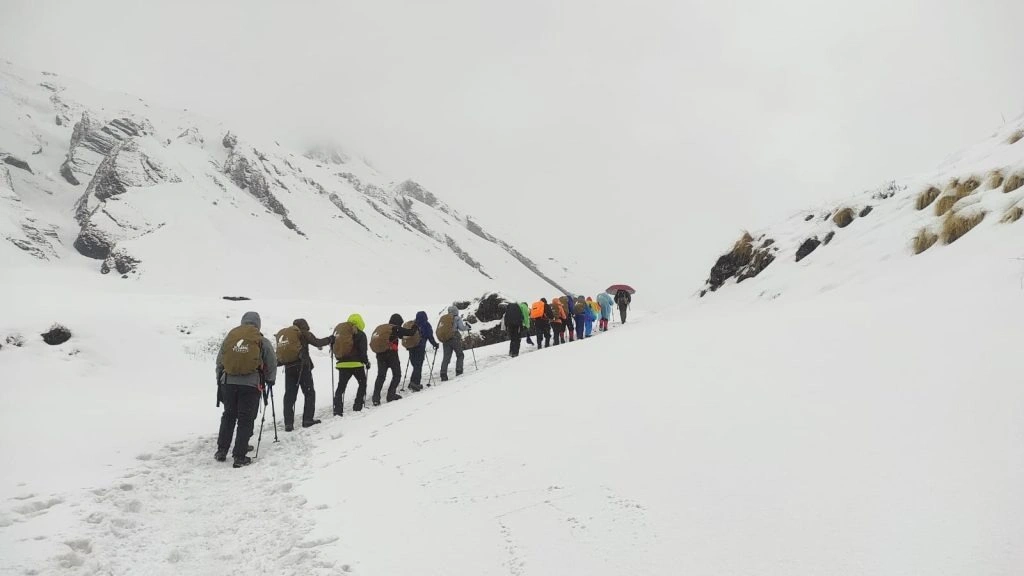
December and January are cold but cheap in the hills and lower Terai region. The Annapurna and Everest regions become difficult above 3,500 meters in January, but Chitwan, Lumbini, and Pokhara lakeside remain accessible and significantly discounted.
How Do Off-Season Months Reduce Travel Expenses?
Off-season months reduce travel expenses through 3 direct mechanisms: lower accommodation rack rates, reduced competition for guesthouse beds, and decreased pressure on food prices in tourist towns. Teahouses along the Annapurna Circuit that charge NPR 500 to NPR 800 per night in October operate on a room-for-free-if-you-eat-here model in June and July, effectively making accommodation cost nothing when you order two meals per day.
Airlines like Tara Air and Summit Air reduce Lukla flight fares during monsoon. Rafting operators on the Trishuli and Seti rivers slash day-trip prices by 30% to 40% when booking pressure drops. Trekking gear rental shops in Pokhara negotiate freely on longer rental periods during low season.
Which Festivals Affect Travel Prices in Nepal?
3 major festivals drive price spikes across Nepal: Dashain (September–October), Tihar (October–November), and Holi (March). During Dashain, Nepal's biggest festival, domestic bus fares increase 2x to 3x, hotel prices in Kathmandu and Pokhara surge, and availability drops sharply as Nepali nationals travel home.
International trekking peak season (October–November) overlaps with Dashain and Tihar, compounding the price increase. Travelers booking accommodation and transport 6 to 8 weeks ahead of these windows lock in pre-festival rates. Travelers who arrive without bookings during Dashain week pay 50% to 100% premiums on last-minute rooms.
How Can You Find Cheap Transportation in Nepal?
Cheap transportation in Nepal relies on 4 primary options: local public buses, shared jeeps, tourist buses, and domestic flights for essential long-distance legs. Local public buses are the cheapest at NPR 400 to NPR 1,200 for major routes. Shared jeeps cover mountain roads inaccessible to buses at moderate shared costs. Tourist buses offer comfort upgrades at 2x the local price. Domestic flights save time but cost 10x more than buses.
Is Local Bus Travel the Most Affordable Option?
Local public bus travel is the most affordable ground transport option in Nepal, with fares ranging from NPR 400 for Kathmandu to Chitwan to NPR 1,200 for Kathmandu to Pokhara on non-tourist services. Night buses to Pokhara depart from Kathmandu's New Bus Park at NPR 600 to NPR 800 and cover the 200-kilometer route in 6 to 8 hours.
What most budget guides omit: local buses are significantly more crowded and slower than tourist buses, with frequent stops, roof luggage, and no air conditioning. The correct trade-off assessment is time versus money. Travelers with tight schedules benefit from the tourist bus. Travelers with flexible schedules save NPR 400 to NPR 700 per leg by taking local services.
Micro-buses and tempos operate inside Kathmandu Valley for NPR 15 to NPR 30 per journey, the cheapest urban transport option available anywhere in the city.
How Can Shared Jeeps Save Money in Mountain Areas?
Shared jeeps reduce per-person transport costs on mountain routes by splitting a fixed vehicle hire cost across 4 to 8 passengers, bringing the per-person fare to NPR 600 to NPR 2,000 depending on route distance and terrain. Routes such as Besisahar to Chame (Annapurna Circuit entry), Jomsom to Beni, or Salleri to Phaplu use shared jeeps as the primary transport since buses cannot navigate rocky, narrow mountain roads.
The practical advantage of shared jeeps over private jeep hire is a cost reduction of 60% to 75%. A private jeep from Beni to Jomsom costs NPR 12,000 to NPR 16,000. A shared jeep fare on the same route runs NPR 1,500 to NPR 2,500 per seat. Asking at the local bus park rather than booking through a hotel front desk usually reveals the correct local fare rather than the inflated tourist quote.
When Is Domestic Air Travel Worth the Cost?
Domestic air travel is worth the cost in Nepal under 2 specific conditions: when the ground route takes more than 2 days each way (such as Kathmandu to Lukla), or when weather-related trail closures during monsoon make trekking approach roads impassable. Lukla flights cost USD 180 to USD 220 round trip from Kathmandu but save 8 to 10 days of walking compared to the Jiri approach.
Pokhara to Jomsom flights cost approximately USD 100 to USD 120 one way and bypass 3 to 4 days of road travel. For budget trekkers with 10 to 14 days total, flying into these remote trailheads preserves more time for the actual trek rather than approach hiking, making the flight economically justified relative to additional accommodation and food costs on the road approach.
Where Can You Stay Cheaply in Nepal?
Budget travelers stay cheaply in Nepal by choosing guesthouses, trekking teahouses, and city hostels over hotel chains. Guesthouse rates range from NPR 300 to NPR 800 per night for a private room. Hostel dorm beds in Kathmandu and Pokhara cost NPR 400 to NPR 700 per night. Teahouse accommodation on trekking routes costs NPR 200 to NPR 500, often free with meal orders.
Are Guesthouses Better Than Hotels for Budget Travelers?
Guesthouses are better than hotels for budget travelers in Nepal across 4 criteria: cost (50% to 70% cheaper than mid-range hotels), cultural experience (family-run operations with local meals), location flexibility (guesthouses exist in villages where hotels do not), and negotiability (nightly rates are negotiable for stays of 3 or more nights). A private room with attached bathroom at a guesthouse in Thamel costs NPR 800 to NPR 1,500. The equivalent hotel room in the same area costs NPR 3,000 to NPR 6,000.
The common mistake is assuming cheaper accommodation means poor hygiene. Most licensed guesthouses registered with the Nepal Tourism Board maintain clean rooms with basic amenities, hot shower, Wi-Fi, and a charging point, at their base price. Checking the NTB registration sticker on the door confirms the property meets minimum standards.
How Can Hostels Reduce Costs in Major Cities?
Hostels reduce accommodation costs in Kathmandu and Pokhara by 40% to 60% compared to private guesthouses, with dorm beds available for NPR 400 to NPR 700 per night in well-reviewed properties near tourist hubs. The traveler benefit of hostels extends beyond room cost: common areas provide free travel information exchange, staff at hostel desks know current local bus departure points, and kitchen access in some properties eliminates breakfast expenses entirely.
Kathmandu neighborhoods with the highest hostel concentrations include Thamel, Paknajol, and Jyatha. Pokhara's Lakeside (Baidam) area has the largest cluster of budget hostels, with several properties directly overlooking Phewa Lake at dorm rates below NPR 600.
Which Regions Have the Lowest Accommodation Prices?
3 regions in Nepal consistently offer the lowest accommodation prices: the Terai lowlands (Chitwan, Lumbini, Janakpur), the mid-hill towns (Bandipur, Gorkha, Tansen), and off-trail trekking corridors (Tsum Valley, Rolwaling, Kanchenjunga). Lumbini guesthouses near the Maya Devi Temple charge NPR 400 to NPR 600 for a double room. Bandipur has heritage homestays for NPR 500 to NPR 1,000 including breakfast. Kanchenjunga teahouses charge NPR 200 to NPR 300 per night, with no tourist surcharge because very few international travelers reach that trail.
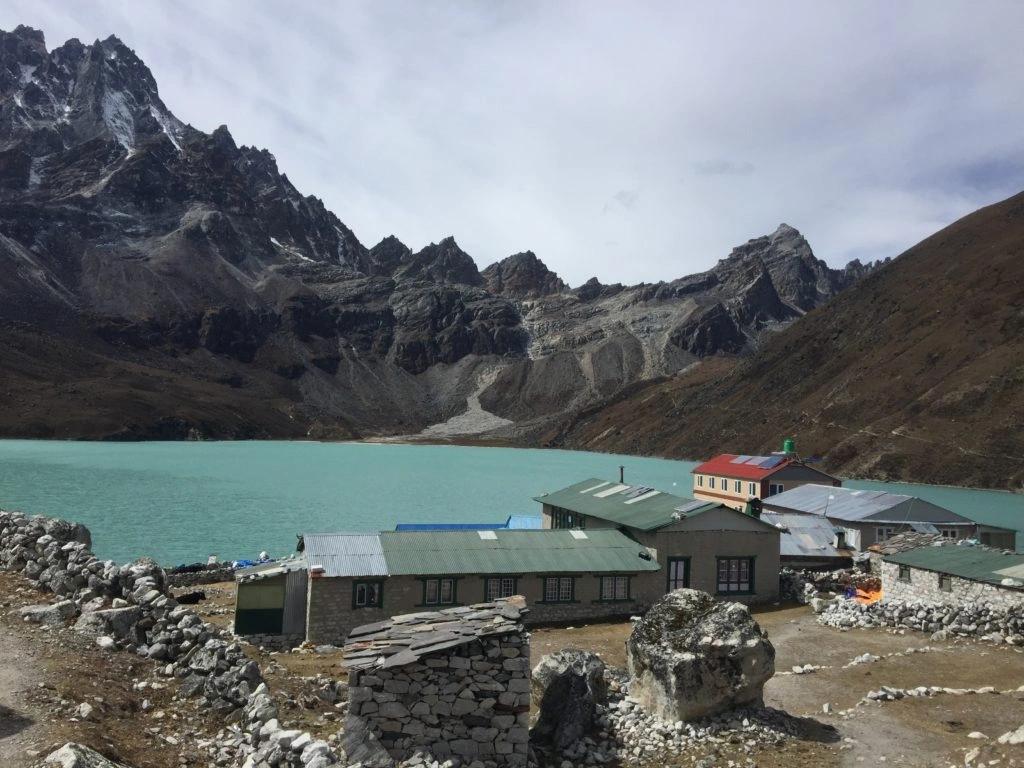
Kathmandu and Pokhara have the highest accommodation prices due to demand. Moving one district away from major tourist centers cuts room rates by 30% to 50% with minimal sacrifice in experience.
How Can You Save Money on Food in Nepal?
Budget travelers save money on food in Nepal by eating dal bhat at local restaurants, buying fruit from street vendors, drinking tap-safe filtered water provided free at many guesthouses, and avoiding Western menu items at tourist-facing restaurants. Daily food costs drop to NPR 600 to NPR 900 when eating two dal bhat meals plus one snack versus NPR 2,000 to NPR 3,500 eating at tourist restaurants.
Which Local Foods Are Cheap and Filling?
5 local foods deliver the best combination of low cost and high caloric value in Nepal: dal bhat (rice, lentil soup, vegetables), sel roti (fried rice bread), momo (steamed dumplings), thukpa (noodle soup), and chiura (beaten rice). Dal bhat costs NPR 150 to NPR 300 and includes unlimited refills at most local restaurants, a policy known as "dal bhat power, 24 hour" that trekkers rely on for sustained energy. A plate of 10 steamed momo costs NPR 80 to NPR 150 at local eateries. Thukpa in a roadside teashop runs NPR 100 to NPR 180.
The refill rule on dal bhat is one of the most underutilized budget strategies in Nepal. Ordering one plate at a local bhatti (eatery) and eating two full servings eliminates the need for a second meal entirely, cutting food costs by 30% to 40% on active trekking days.
Is Street Food a Good Budget Option?
Street food is a good budget option in Nepal for cooked items served hot, including sel roti, samosa, chatamari (rice crepe), and corn on the cob. These items cost NPR 20 to NPR 80 and are prepared fresh at the stall. The food safety distinction is important: cooked street food sold hot presents low risk, while pre-cut fruit salads, chutneys, and raw accompaniments at busy stalls carry higher contamination risk, particularly during monsoon months.
Bhaktapur's Pottery Square and Durbar Square areas are known for reliable street food including juju dhau (king curd at NPR 50 to NPR 100 per clay pot) and samay baji (traditional Newari platter at NPR 120 to NPR 200). Eating street food in busy local markets rather than quiet tourist-facing lanes reduces both price and risk.
How Can You Avoid Tourist-Priced Restaurants?
Avoiding tourist-priced restaurants in Nepal requires 3 practical tactics: walking one or two lanes away from the main tourist street, asking guesthouse staff where they eat personally, and identifying restaurants with Nepali-script menus or no English signboard. Restaurants on the main Thamel strip in Kathmandu charge NPR 600 to NPR 1,200 for a pasta or pizza dish. Restaurants on side streets 3 minutes away serve the same dish for NPR 300 to NPR 500, with identical quality.
The "Nepali price versus tourist price" gap exists because many restaurants maintain two pricing tiers, one visible on the laminated English menu, and a lower rate negotiated verbally by locals. Ordering in Nepali (even basic phrases) or arriving with a local contact immediately signals that standard tourist markup does not apply.
How Can You Travel Cheaply in the Himalayas?
Cheap Himalayan travel relies on choosing permit-light trekking routes, hiring licensed guides only when legally required, carrying personal gear to avoid daily rental fees, and eating full board at teahouses rather than carrying packed food. Trekkers who plan correctly spend USD 25 to USD 40 per day in the Himalayas including accommodation, three meals, and permit fees.
Which Trekking Routes Cost Less for Backpackers?
4 trekking routes cost significantly less for independent backpackers in Nepal: Poon Hill (Ghorepani), Langtang Valley Trek, Tamang Heritage Trail, and the Everest Three Passes route done self-guided. Poon Hill requires only the ACAP permit (NPR 3,000 or USD 23) and the TIMS card (NPR 2,000 or USD 15), has no mandatory guide requirement, and can be completed in 4 to 5 days with daily costs under USD 30.
The Langtang Valley trek costs less than the Everest Base Camp route because teahouse prices are lower, the permit fee is NPR 3,000 for Langtang National Park, and the trailhead is accessible by public bus from Kathmandu for NPR 400 to NPR 600. For the most permit-light and wallet-friendly introduction to the Himalayas, the Poon Hill Trek covers Annapurna viewpoints in 4–5 days for under USD 30 per day total. Annapurna Base Camp and Everest Base Camp are more expensive due to ACAP/SPAP permit fees (NPR 3,000) plus higher teahouse prices at elevation, rooms at Gorak Shep near EBC cost NPR 400 to NPR 600 but meals reach NPR 600 to NPR 1,200 per dish.
How Can You Avoid Overspending on Guides and Porters?
Overspending on guides and porters in Nepal follows 3 common patterns: booking through hotel desks at inflated rates, hiring individual freelancers without fixed daily rate agreements, and hiring a guide when the trail is well-marked and legally permits self-navigation. The government-regulated daily rate for a licensed trekking guide is approximately USD 25 to USD 35 per day. Porters earn USD 15 to USD 25 per day plus food and accommodation.
Booking guides through a licensed trekking agency registered with the Trekking Agencies' Association of Nepal (TAAN) provides price transparency and guide accountability. The Annapurna and Langtang circuits do not legally require a guide for independent foreign trekkers. The Kailash region, Manaslu Circuit, Upper Mustang, and Upper Dolpo require a licensed guide by Nepal government regulation, hiring for these routes is not optional.
What Permits Should You Budget for Before Trekking?
Trekkers budget for 3 to 5 permit fees depending on route, totaling NPR 3,000 to NPR 20,000 (USD 23 to USD 150) per person. The standard permits and their 2024–2025 fee structure are:
TIMS Card (Trekkers' Information Management System): NPR 2,000 for individual trekkers, NPR 1,000 for trekkers booked through registered agencies
ACAP (Annapurna Conservation Area Permit): NPR 3,000 per person
Sagarmatha National Park Permit (Everest region): NPR 3,000 per person
Langtang National Park Permit: NPR 3,000 per person
Restricted Area Permit (Upper Mustang, Dolpo): USD 500 for the first 10 days, USD 50 per additional day
Permits are purchased at the Nepal Tourism Board office in Kathmandu (Bhrikuti Mandap) or at designated checkposts at trekking route entries. Buying permits directly at these official points costs less than purchasing through a middleman agency. Carrying passport-sized photos speeds up the process.
Permit rules and fees change from year to year, always cross-check current rates against the Ministry of Culture, Tourism & Civil Aviation's official Nepal Tourism Statistics report before budgeting, but as of the 2024–2025 season, trekkers should plan for NPR 3,000 to NPR 20,000 (USD 23 to USD 150) per person depending on the route.
How Can You Plan a Cheap Itinerary in Nepal?
A cheap Nepal itinerary combines 2 to 3 days in Kathmandu Valley, a 4 to 7 day short trek, and 1 to 2 days in one secondary city to maximize experience within a 10 to 14 day trip at a total budget of USD 350 to USD 600 excluding international flights. Extending the trip beyond 14 days without increasing the daily budget requires shifting to lower-cost accommodation zones outside major tourist centers.
Which Destinations Offer the Most Value for Budget Travelers?
6 destinations offer the highest experience-to-cost ratio for budget travelers in Nepal: Kathmandu's heritage squares (Pashupatinath, Boudhanath, Swayambhunath), Pokhara Lakeside, Bandipur hill town, Chitwan jungle area, Lumbini birthplace of Buddha, and the Poon Hill trek base at Ghorepani. Most of these sites charge NPR 150 to NPR 1,500 in entrance fees, with free access to street-level cultural experiences in all of them.
Bandipur is the most underrated value destination in Nepal, a preserved hilltop Newari town 8 kilometers off the Prithvi Highway between Kathmandu and Pokhara, reachable by local bus for NPR 30 from the highway, with accommodation starting at NPR 500 and viewpoints that rival Pokhara at zero additional cost.
How Can You Combine Cities and Treks Affordably?
Combining cities and treks affordably in Nepal follows a linear route strategy that avoids doubling back on transport costs. The most cost-efficient circuit runs: Kathmandu (arrival) → Pokhara (NPR 600 to 800 by local bus) → Poon Hill Trek (4 to 5 days) → return to Pokhara → Chitwan by tourist bus from Pokhara (NPR 700 to NPR 1,000) → Kathmandu by highway bus (NPR 400 to NPR 600) → departure.
This circuit costs approximately NPR 3,000 to NPR 4,500 total in ground transport, covers 3 major destinations plus a full trek, and avoids the NPR 1,500 to NPR 2,000 per leg cost of backtracking to Kathmandu between each stop.
How Many Days Are Ideal for a Low-Cost Nepal Trip?
12 to 14 days represents the optimal duration for a low-cost Nepal trip. This window allows 3 days in Kathmandu, 5 to 7 days on a short-to-medium trek (Poon Hill or Langtang Valley), and 2 to 3 days in a secondary destination (Chitwan or Pokhara), without stretching daily costs upward through extended city stays. Trips under 8 days carry higher per-day costs because permit fees, gear rental, and guide costs are spread over fewer days. Trips over 21 days begin to increase costs as travelers exhaust budget accommodation options in primary zones and move into areas requiring higher transport spend.
What Common Mistakes Increase Travel Costs in Nepal?
5 common mistakes consistently inflate travel budgets in Nepal: last-minute accommodation and transport booking, exchanging currency at airport counters, eating only in tourist restaurants, booking permits through hotel desks, and tipping without a fixed scale. Travelers who avoid these 5 errors spend 25% to 40% less than the average visitor on the same itinerary.
How Can Last-Minute Booking Raise Expenses?
Last-minute booking raises travel expenses in Nepal through 3 mechanisms: peak season price premiums on remaining rooms, higher walk-in rates at guesthouses lacking competition from pre-booked alternatives, and panic purchasing of overpriced transport on departure day. Guesthouses in Thamel during October charge NPR 2,500 to NPR 4,000 per night for walk-in guests when occupancy exceeds 80%. Travelers with confirmed bookings made 3 to 4 weeks ahead lock in rates at NPR 1,000 to NPR 1,800 for comparable rooms.
Domestic airline tickets to Lukla purchased 7 days before departure cost USD 50 to USD 80 more per seat than tickets booked 3 to 4 weeks ahead. The cost of delay is real, measurable, and entirely preventable.
Why Do Tourist Traps Cost More Than Local Alternatives?
Tourist traps charge more than local alternatives because pricing is set based on perceived visitor willingness to pay, not on actual service cost. A taxi from Kathmandu's Tribhuvan Airport to Thamel costs NPR 700 to NPR 900 by metered taxi. Airport taxis touting at the arrivals gate quote NPR 1,500 to NPR 2,500 for the same 7-kilometer route. The fare difference represents pure willingness-to-pay exploitation, not service difference.
Trekking gear shops in Thamel quote 2x to 3x the price of identical items at shops 10 minutes away in the Chetrapati and Paknajol areas. Religious site touts near Pashupatinath and Swayambhunath collect unofficial "guide fees" of NPR 500 to NPR 1,000 for a temple walk available free of charge with a self-guided approach. Recognizing these patterns protects the travel budget at every step.
How Can Currency Exchange Choices Affect Your Budget?
Currency exchange location determines exchange rate quality and total money lost in Nepal. The 3 exchange options ranked by rate quality are: licensed money changers in the tourist district (best rates), bank counters (slightly lower but official receipts), and airport counters (worst rates, 5% to 8% below interbank rate). Exchanging USD 500 at the airport versus a licensed money changer in Thamel costs a traveler NPR 2,500 to NPR 4,000 in lost value on a single transaction.
ATM withdrawals in Nepal from VISA or Mastercard-linked accounts charge NPR 500 per withdrawal as a local bank fee plus any foreign transaction fee from the home bank. Withdrawing larger amounts less frequently (NPR 20,000 to NPR 30,000 per transaction) reduces the per-rupee cost of ATM fees. Never exchange currency with individuals on the street, counterfeit NPR 1,000 notes circulate in tourist areas.
How Can You Travel Cheaply While Staying Safe in Nepal?
Cheap and safe travel in Nepal are not opposing goals. 4 safety practices directly prevent unplanned expenses: buying travel insurance before departure, registering your trek with the Department of Immigration, carrying a first-aid kit for common altitude ailments, and using licensed transport operators. Skipping these protections exposes travelers to costs that eliminate any budget savings achieved elsewhere.
Which Safety Tips Prevent Unexpected Costs?
5 safety practices prevent unexpected costs on a Nepal trip: registering your trek route at the local TIMS checkpoint, carrying a 3-day supply of water purification tablets to avoid buying bottled water at NPR 80 to NPR 200 per bottle, treating symptoms of Acute Mountain Sickness (AMS) immediately rather than continuing upward, using only government-licensed taxi meters in Kathmandu, and keeping a digital copy of passport and permit documents to avoid replacement fees. AMS hospitalization at high altitude, including helicopter evacuation, costs USD 3,000 to USD 8,000 without insurance coverage. Understanding altitude sickness in the Himalayas, its symptoms, risk factors, and prevention protocol is the single most important pre-trip preparation for any budget trekker. This single risk makes travel insurance non-negotiable.
Altitude sickness is the single largest unexpected cost driver in Nepal. Ascending more than 500 meters per day above 3,000 meters is the primary risk factor. Following the "climb high, sleep low" acclimatization protocol eliminates most emergency evacuation risk.
How Can Travel Insurance Save Money Long-Term?
Travel insurance saves money on Nepal trips by covering 3 high-probability cost events: helicopter evacuation from altitude (USD 3,000 to USD 8,000), hospital treatment for illness or injury (USD 500 to USD 5,000), and trip cancellation due to flight delays or natural disruptions (USD 200 to USD 1,500). A comprehensive travel insurance policy with helicopter rescue coverage for Nepal costs USD 40 to USD 120 for a 2 to 3 week trip, a 40x to 100x return on investment if evacuation becomes necessary.
Policies specifically covering trekking above 4,000 meters and helicopter evacuation are not standard in all travel insurance plans. Confirming altitude coverage limits and helicopter rescue inclusion before purchasing is essential. World Nomads and Covermore are two providers with documented Nepal trekking coverage at the time of writing, always verify current policy terms directly.
Altitude illness is common enough to budget for seriously: a 2025 clinical study of the Himalayan Rescue Association's Manang aid post found that 11.6% of the 2,904 trekkers and locals treated there from 2018–2023 had acute mountain sickness or a more severe form of altitude illness, and evacuation without insurance can run USD 3,000 to USD 8,000.
How Should You Approach Cheap Travel in Nepal with Local Travel Services?
The most effective approach to cheap travel in Nepal with local support is to use licensed local agencies for specific high-value services, permit procurement, guide hire, and trekking logistics, while managing independent bookings for accommodation, food, and city transport directly. This hybrid model captures the cost savings of independent travel while accessing local expertise where it reduces errors and emergency costs.
Can a Local Travel Agency Help Reduce Nepal Travel Costs?
A licensed local travel agency reduces Nepal travel costs in 4 specific areas: group-rate trekking permits, pre-negotiated teahouse accommodation blocks, bundled porter-and-guide packages at government-regulated rates, and logistical planning that eliminates costly route errors. Agencies registered with TAAN and the Nepal Tourism Board operate under fee regulations that prevent arbitrary price inflation. Independent travelers who book identical services through unlicensed freelancers often pay higher totals with less accountability.
The correct use of a local agency is selective, not for every aspect of the trip, but for the trekking components where permits, licensed guides, and route knowledge create genuine value. Kathmandu sightseeing, guesthouse stays, and city food are cheaper managed independently. A trek to Annapurna Base Camp or Manaslu packaged through a registered agency with all permits, guide, and teahouse accommodation included typically runs USD 600 to USD 900 for 10 to 12 days, comparable to self-arranging every element individually when all costs are tallied honestly.
What Are the Key Takeaways About Cheap Travel in Nepal?
Cheap travel in Nepal is achievable, practical, and sustainable for budget travelers across experience levels. The 8 core principles that keep travel costs low are:
Visit during off-peak months (June–August or December–February) to access accommodation and transport discounts of 20% to 50%.
Use local public buses and shared jeeps for ground transport, saving NPR 400 to NPR 700 per route leg compared to tourist buses.
Eat dal bhat at local restaurants twice daily with unlimited refills, cutting daily food costs to NPR 600 to NPR 900.
Stay in guesthouses and trekking teahouses rather than hotels, saving NPR 1,500 to NPR 3,000 per night in major cities.
Choose permit-light trekking routes like the Ghorepani Poon Hill trek and Langtang Valley, with total permit costs under NPR 5,000 per person, the ideal starting point for first-time Himalayan trekkers on a budget.
Exchange currency at licensed money changers in tourist districts rather than airports, saving NPR 2,500 to NPR 4,000 per USD 500 exchanged.
Book accommodation and transport 3 to 4 weeks in advance during peak season to lock in off-walk-in rates.
Purchase travel insurance with helicopter evacuation coverage before departure, this single investment protects against the largest single unexpected cost in Nepal travel.
The Nepal Tourism Board recorded 128,443 international arrivals in October 2025 alone, a 3.3% year-on-year increase that puts the country at 95.8% of its pre-pandemic October 2019 visitor volume. Nepal rewards travelers who engage with local systems rather than defaulting to tourist-facing services. Every budget-conscious decision, from which bus to take to where to exchange money, compounds into a significantly lower total trip cost while deepening the cultural experience that makes Nepal worth visiting in the first place. For a complete overview of visas, daily budgets, and practical logistics, the backpackers guide to Nepal covers everything a first-time budget visitor needs before landing.