Nepal is a Himalayan country where towering mountain landscapes, ancient civilizations, sacred pilgrimage sites, subtropical wildlife habitats, and diverse living cultures exist within a remarkably compact geography. The best things to do in Nepal extend far beyond trekking in the Everest and Annapurna regions: travelers can explore the UNESCO-listed heritage of Kathmandu Valley, experience Pokhara and Phewa Lake beneath the Annapurna range, encounter one-horned rhinoceroses in Chitwan National Park, visit Lumbini, the birthplace of Siddhartha Gautama, and discover centuries-old Hindu and Buddhist temples and stupas. Nepal's cultural landscape is equally distinctive, shaped by Newar communities in the Kathmandu Valley and Sherpa, Tamang, Gurung, Magar, Rai, Limbu, and Tharu communities across its mountains and lowlands.
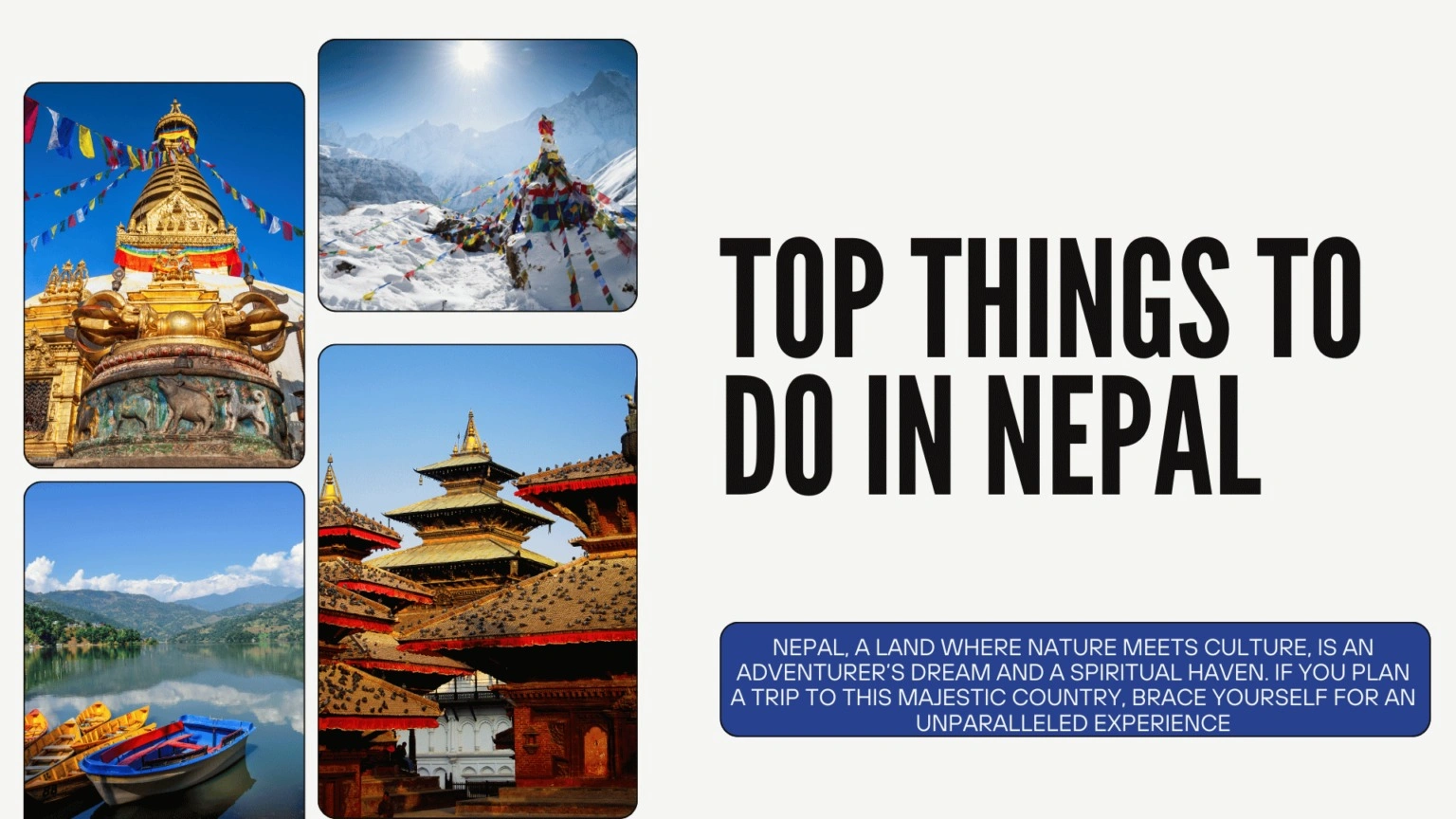
These 10 things not to be missed in Nepal bring together the country's defining natural, cultural, spiritual, culinary, and adventure experiences in one travel framework. From Himalayan trekking, high-altitude sunrises, and remote mountain communities to Nepalese food, local festivals, wildlife safaris, Buddhist pilgrimage, paragliding, rafting, and other adventure activities, each experience reveals a different dimension of the country. The guide covers the major places to visit in Nepal, the experiences that make each destination distinctive, the best seasons and practical considerations, and the cultural connections that turn sightseeing into a deeper understanding of Nepal. Together, these experiences provide a balanced route through Nepal's Himalayas, Kathmandu Valley, Pokhara, Terai, Mustang, Lumbini, and lesser-visited mountain regions.
1. Trek Through the Himalayas
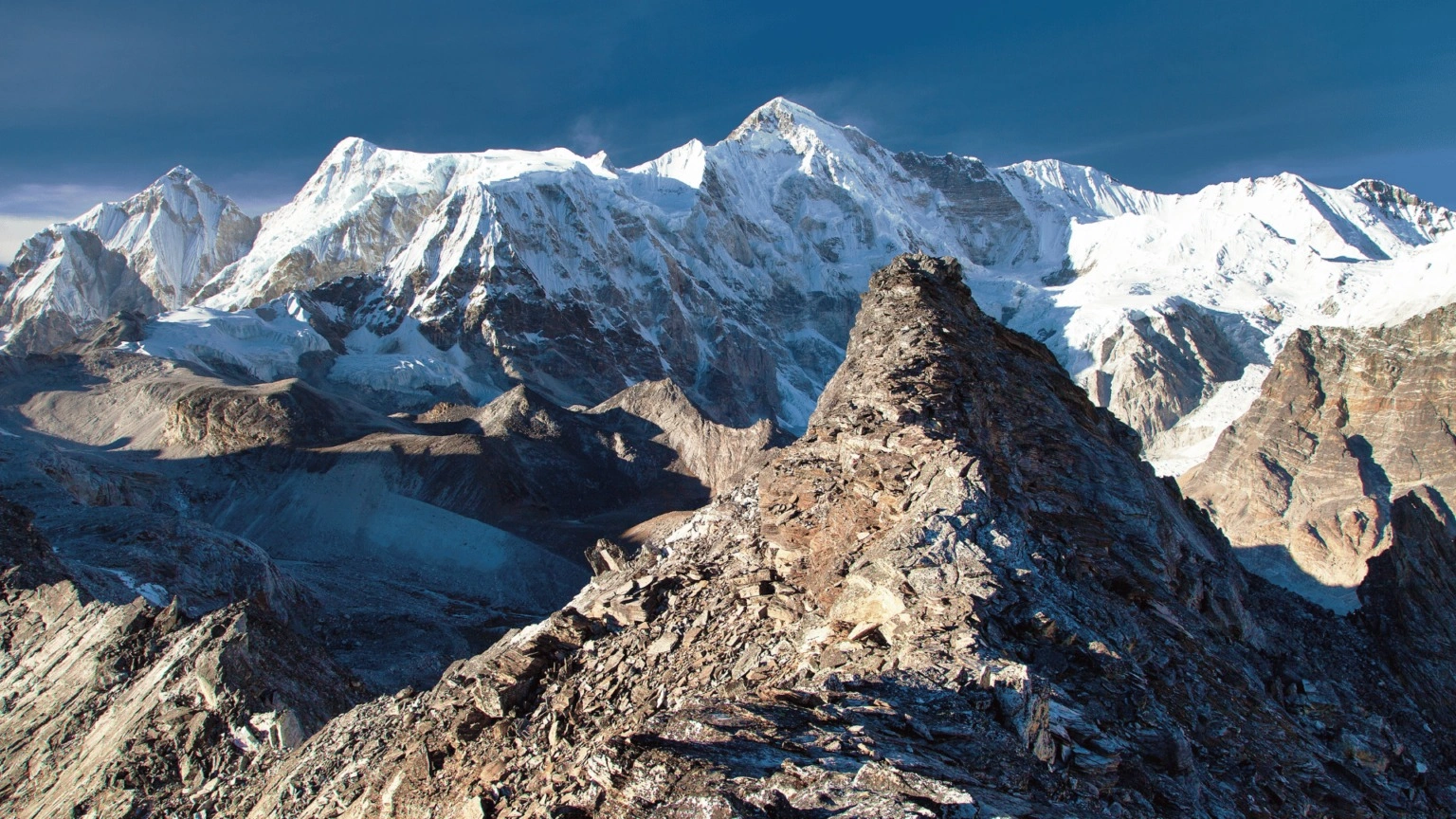
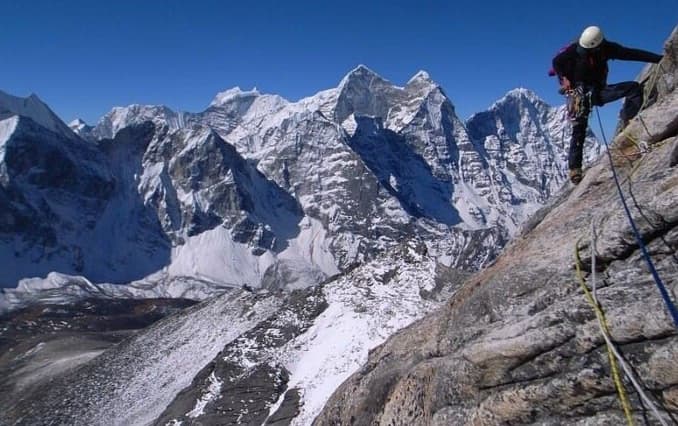
Nepal's Himalayan trail network spans over 3,000 kilometers across 7 distinct trekking regions. It connects Sherpa and Tamang villages, glacial valleys, Buddhist monasteries, and high-altitude passes that no road reaches. No other mountain range delivers this combination of trail density, cultural access, and raw vertical scale. Trekking the Himalayas is the single most direct way to experience what defines Nepal as a destination.
Which Himalayan Treks Should You Experience in Nepal?
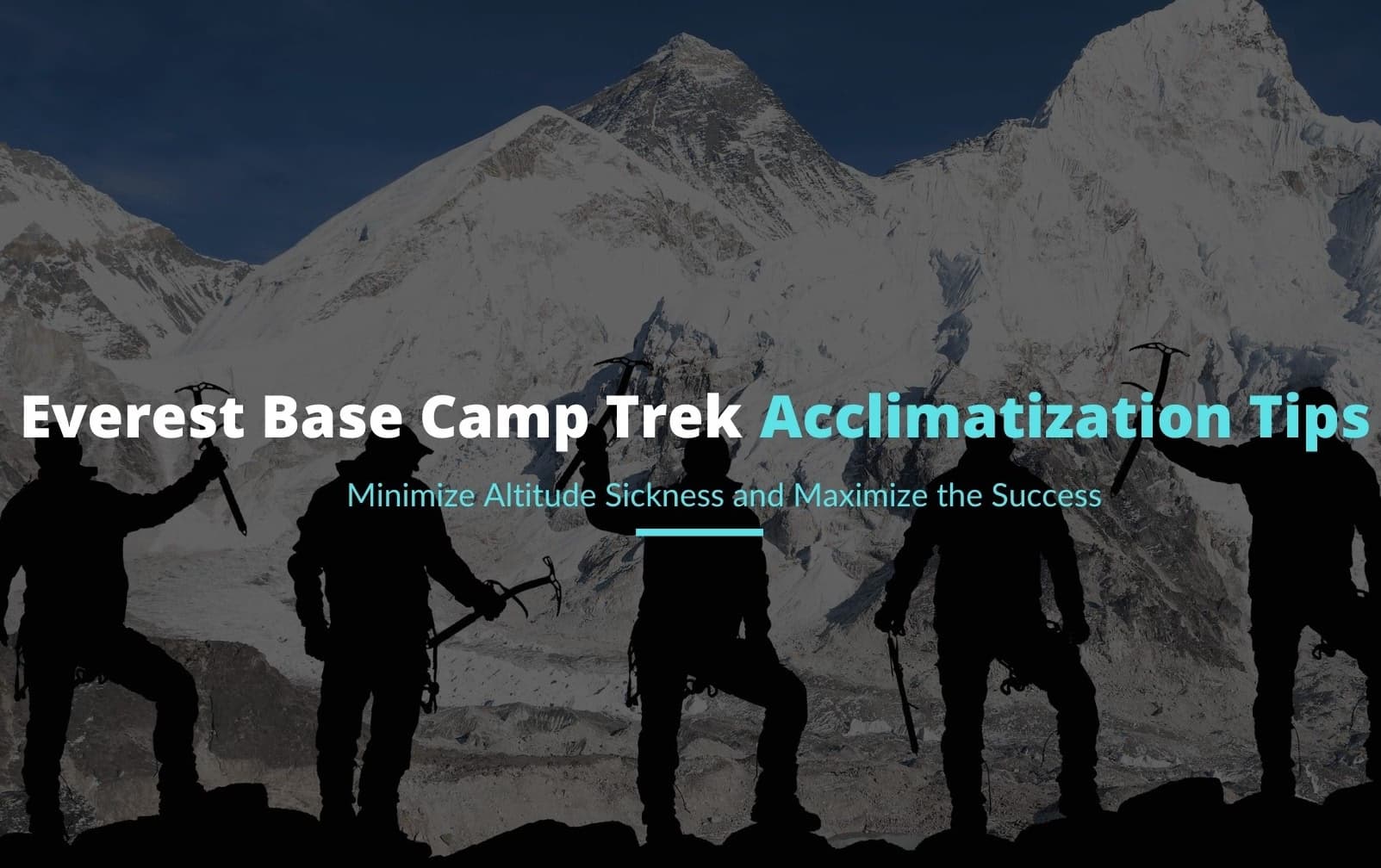
Nepal's 4 most rewarding Himalayan treks are the Everest Base Camp trek (12–14 days), the Annapurna Circuit (14–21 days), the Langtang Valley trek (7–10 days), and the Gokyo Lakes trek (12–15 days). Each route crosses a distinct ecological zone and elevation profile, from subtropical forests below 2,000 meters to glacial moraines above 5,000 meters.
The Everest Base Camp trek begins at Lukla Airport (2,860 m) and ascends through the Khumbu region to Base Camp at 5,364 m. Trekkers pass through Namche Bazaar, the commercial and cultural hub of the Sherpa people, and the Tengboche Monastery, perched at 3,867 m with direct views of Ama Dablam (6,812 m).
The Annapurna Circuit crosses the Thorong La Pass at 5,416 m, the highest point on any major trekking route in Nepal. The circuit descends into the Mustang region, a high-altitude Tibetan plateau landscape with desert valleys, carved monasteries, and apple orchards at 3,800 m. Total elevation gain across the full circuit exceeds 7,000 meters.
The Langtang Valley trek starts only 7 hours by road from Kathmandu at Syabrubesi (1,550 m). It delivers Tamang heritage villages, high-altitude alpine meadows, and close-range views of Langtang Lirung (7,227 m) with far fewer trekkers than the Everest or Annapurna routes, a significant advantage for those who prefer unobstructed ridge camps and teahouses without waiting lists.
The Gokyo Lakes trek features 6 glacial lakes above 4,700 m and the summit of Gokyo Ri (5,357 m), providing a 360-degree panorama of 4 eight-thousanders simultaneously: Everest (8,848.86 m), Lhotse (8,516 m), Makalu (8,485 m), and Cho Oyu (8,201 m).
What most trekking guides skip: The optimal trekking windows are October–November and March–May. December through February delivers cold, clear skies on lower-elevation routes like Langtang but closes the Thorong La Pass on the Annapurna Circuit with snow. Pre-booking teahouse accommodation 6–8 weeks ahead is mandatory for October departures, when Everest and Annapurna routes operate at full capacity.
Why Is Trekking Among Nepal's Must-Do Experiences?
Trekking defines Nepal because no other activity places you in direct contact with 8 eight-thousanders at close range while simultaneously immersing you in functioning mountain communities. At Everest Base Camp, you stand at 5,364 m, higher than any peak in the Alps, at the foot of the highest point on Earth. The Sherpa and Tamang communities along these routes have maintained their culture across centuries of Himalayan isolation, and teahouses at 4,000 m still serve freshly prepared dal bhat with unlimited rice refills.
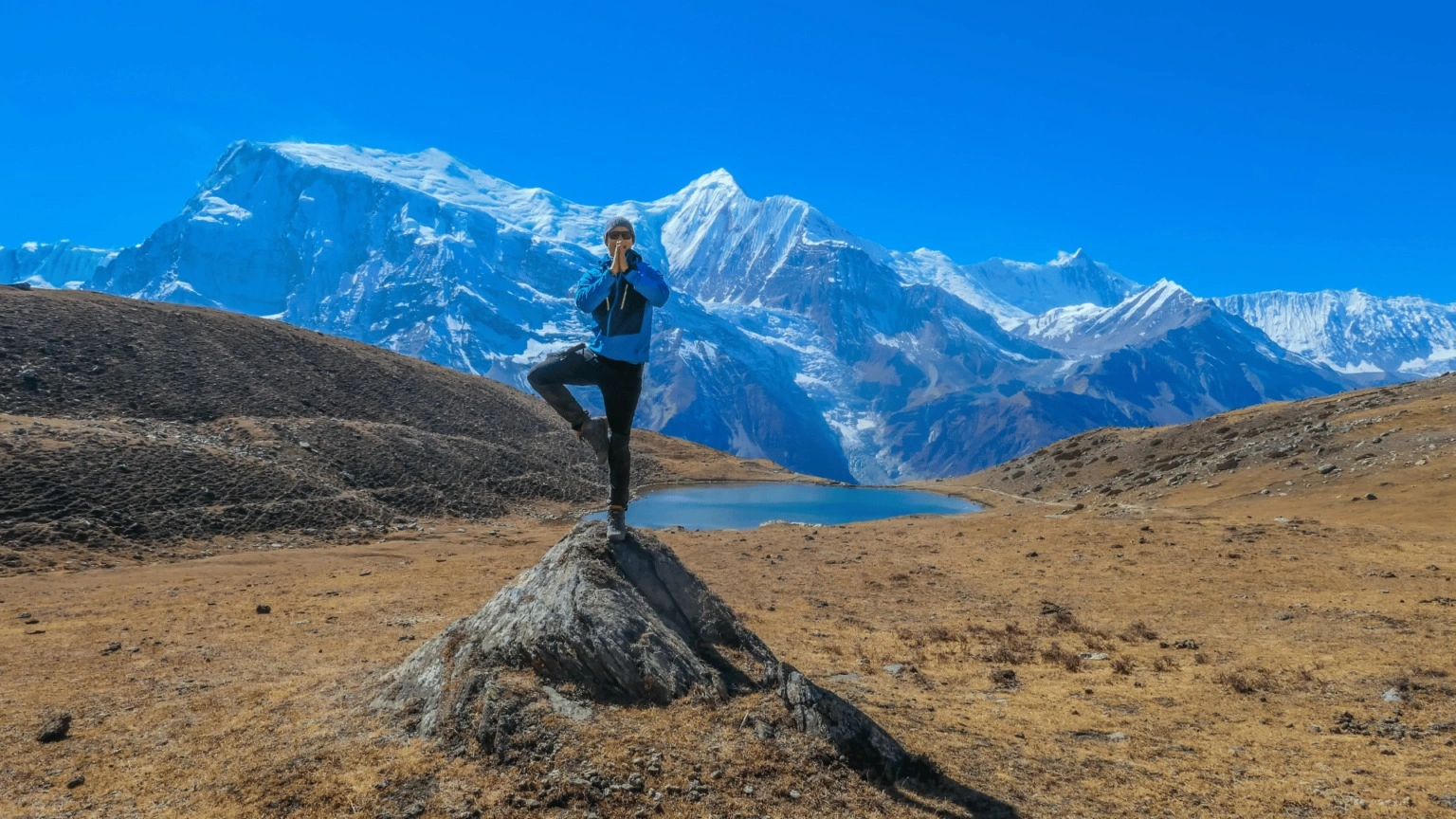
Nepal's Himalayan trail network spans over 3,000 kilometers across 7 distinct trekking regions. According to the Nepal Tourism Statistics 2025 report from the Ministry of Culture, Tourism and Civil Aviation, the Annapurna Conservation Area alone logged a record 244,045 trekker entries in 2024, underscoring just how much traffic Nepal's premier trekking corridors now carry. Altitude, landscape scale, and cultural encounter combine in a way that is impossible to replicate in any other trekking destination on the planet.
2. Explore Kathmandu Valley
Kathmandu Valley holds more UNESCO World Heritage monument zones than any valley of comparable size on Earth. Three ancient cities, Kathmandu, Bhaktapur, and Patan, form its cultural core, each preserving a distinct layer of Newar civilization from Licchavi stone sculpture to Malla-era palace architecture. The valley is not a museum environment, temples receive daily worship, festivals fill the streets on schedule, and the old city layouts remain occupied and functioning. Exploring the valley is the essential foundation of any Nepal itinerary.
Which Cultural Sites Should You Visit in Kathmandu Valley?
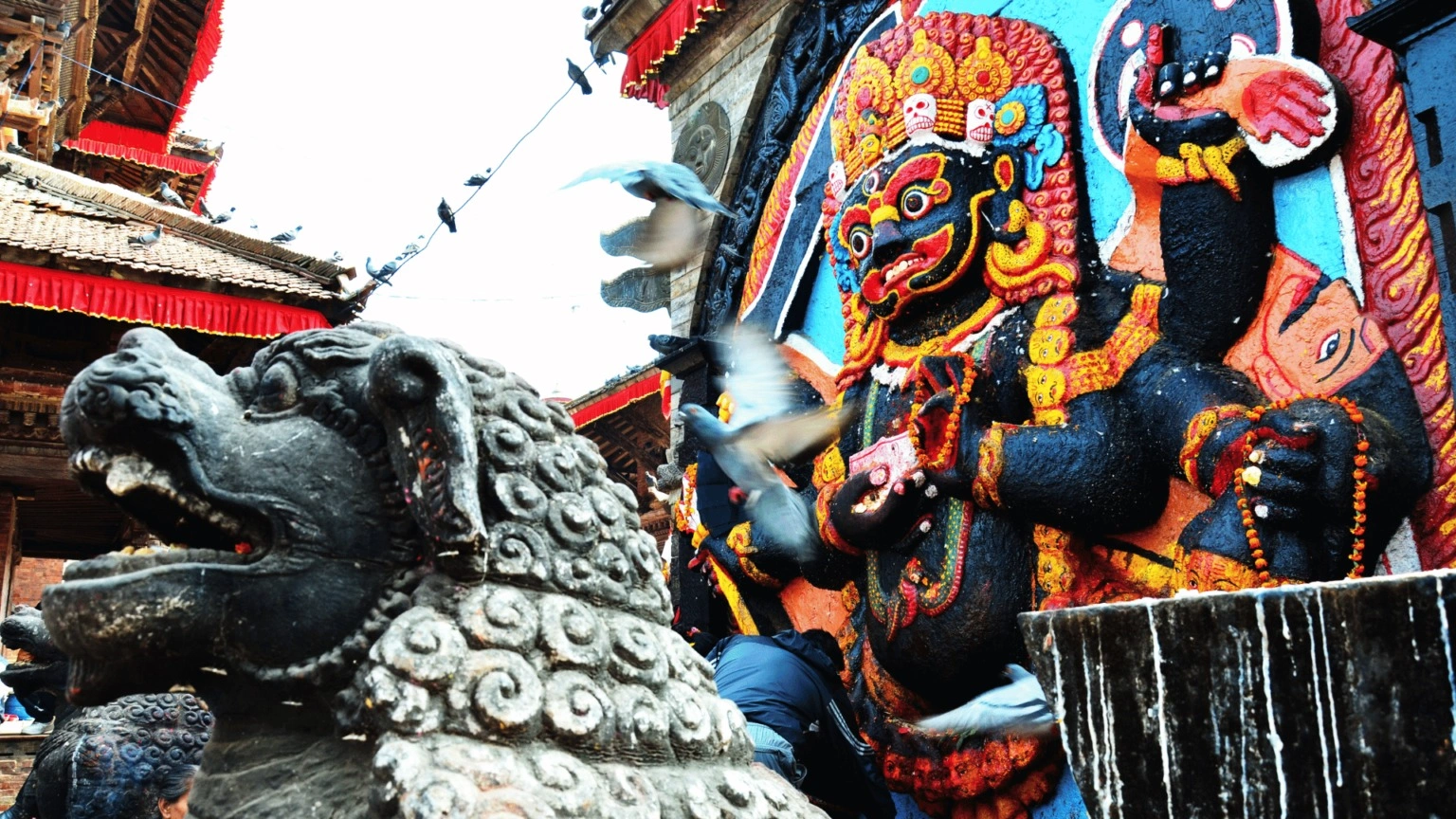
Kathmandu Valley contains 7 UNESCO World Heritage monument zones distributed across 3 ancient cities: Kathmandu, Bhaktapur, and Patan. The 6 highest-priority sites are Pashupatinath Temple, Boudhanath Stupa, Swayambhunath Stupa, Bhaktapur Durbar Square, Patan Durbar Square, and Changu Narayan Temple.
Pashupatinath Temple (built in the 5th century CE) is the holiest Shiva temple in Nepal and one of the 4 most sacred Shaivite sites in South Asia. Non-Hindus cannot enter the main sanctum but observe the cremation rituals at the Bagmati River ghats and explore the surrounding complex of 518 shrines. The site functions as a living religious center, not a heritage museum, and morning cremations occur daily along the riverbank.
Boudhanath Stupa stands 36 meters high and serves as the global center of Tibetan Buddhism outside Tibet. Over 50 Tibetan Buddhist monasteries surround the stupa within walking distance, and the kora circumambulation path, 100 meters in circumference, receives continuous foot traffic from monks, nuns, and lay practitioners from 6:00 AM to 9:00 PM daily.
Bhaktapur Durbar Square preserves medieval Newar architecture at the highest concentration in the Kathmandu Valley. The 55-Window Palace, built under King Yaksha Malla in the 15th century, contains wood-carved peacock windows recognized as the finest example of traditional Newar carpentry in Nepal.
Changu Narayan Temple, dated to the 4th century CE, is the oldest temple in the Kathmandu Valley. Stone inscriptions at the site record events from 464 CE, providing one of the oldest epigraphic records in South Asia and confirming the temple's pre-medieval origins.
What Makes Kathmandu Valley Culturally Significant?
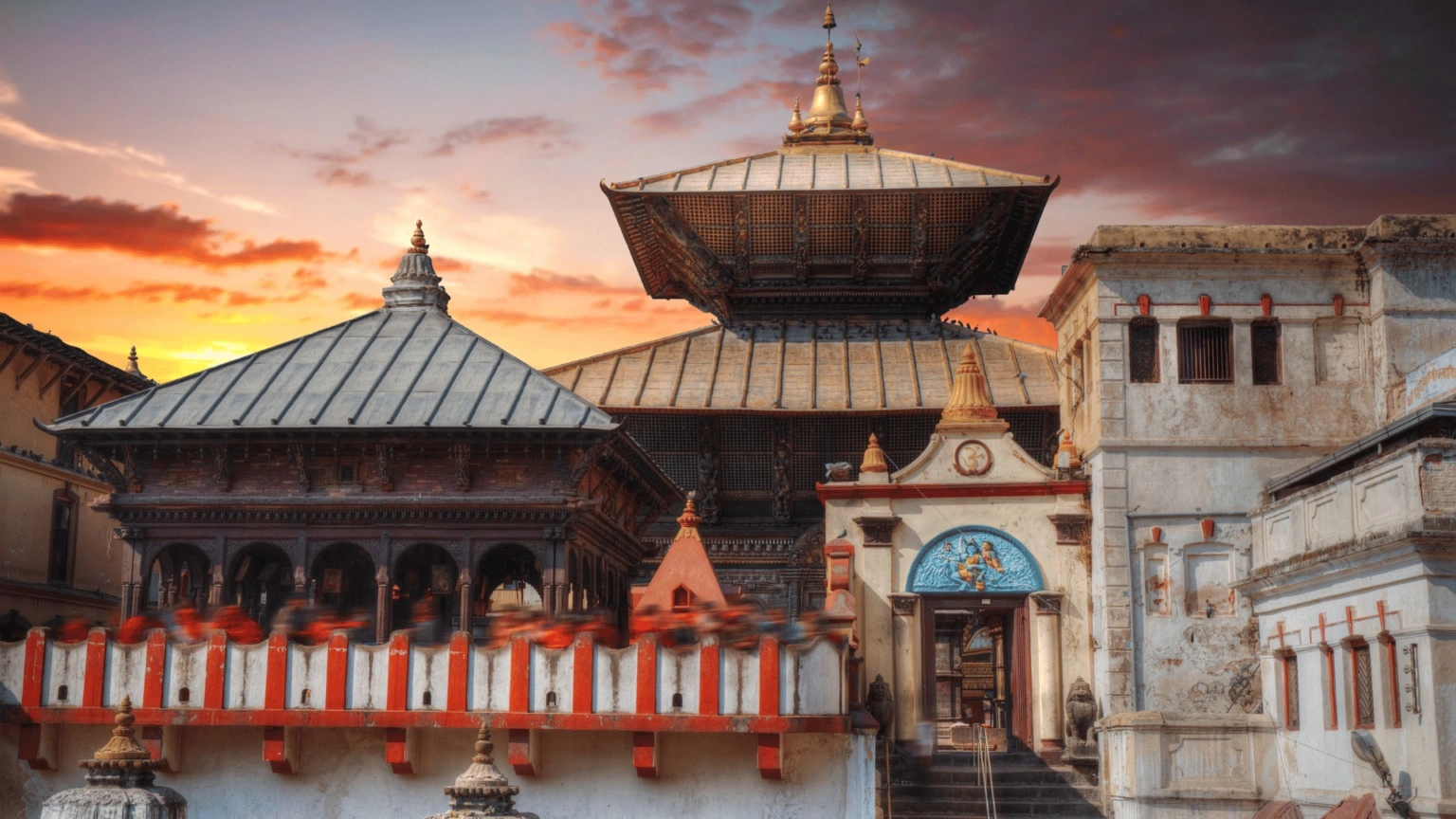
Kathmandu Valley is culturally significant because it holds the highest density of UNESCO-listed monuments per square kilometer of any valley on Earth, 7 monument zones within approximately 665 square kilometers. The valley served as the capital of the Licchavi Kingdom (4th–9th century CE), the Malla Kingdom (12th–18th century CE), and the Shah Dynasty, with each era leaving distinct architectural and artistic layers that remain intact today.
The Newar people, the indigenous inhabitants of the valley, developed a unique synthesis of Hinduism and Buddhism expressed through their art forms, festival calendar, and urban planning. Kathmandu's historic alleyways follow the same layout established in the 12th century, and over 2,700 religious sites exist within the valley boundaries.
What most visitors miss: the valley's living festival calendar transforms the experience from sightseeing to cultural participation. The Indra Jatra festival (August–September, 8 days) brings masked chhewah dances, chariot processions of the Kumari (living goddess), and neighborhood celebrations through the old city streets. Attending this event provides contact with Newar cultural traditions that predate the arrival of Hinduism in the valley.
3. Experience Pokhara and Phewa Lake
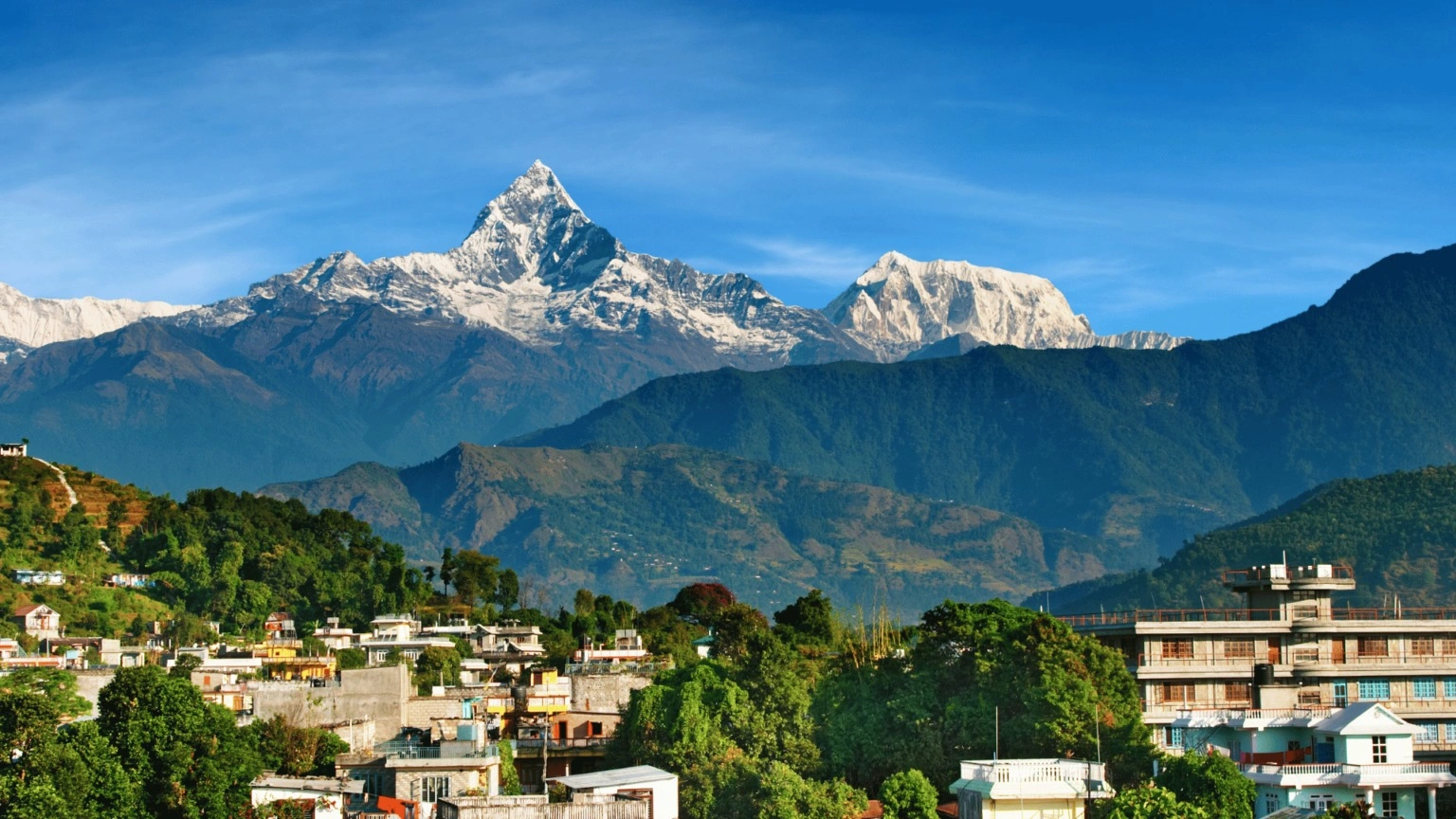
Pokhara sits at 742 meters above sea level at the edge of Phewa Lake, with the Annapurna range rising directly to the north and peaks exceeding 8,000 meters visible from the city center on clear mornings. No other city in the world places a lakeside urban environment this close to an unobstructed view of multiple eight-thousanders. The city functions simultaneously as a destination in its own right and as the primary gateway to the Annapurna trekking region. Skipping Pokhara means missing the most visually dramatic urban setting in Nepal.
What Can You See and Do Around Phewa Lake?
Phewa Lake delivers 5 primary experiences: rowing to the Tal Barahi Temple island, watching the Annapurna range reflected in the lake at sunrise, kayaking through the eastern end near Damside, paragliding from Sarangkot hill with a shoreline landing, and walking the 3-kilometer Lakeside promenade (Baidam Tole) at dusk.
Phewa Lake (also spelled Fewa) is Nepal's second-largest lake at 4.43 square kilometers, sitting at 742 meters above sea level. The lake's northern surface creates the most frequently photographed Himalayan reflection in Nepal: Machhapuchhare (Fish Tail Peak, 6,993 m) dominates the center of the mirror image on clear mornings, flanked by the Annapurna range (Annapurna I: 8,091 m; Annapurna South: 7,219 m; Hiunchuli: 6,441 m).
Tal Barahi Temple occupies an island at the center of the lake, a two-story pagoda dedicated to the goddess Barahi. Boats depart from the eastern shore throughout daylight hours (fare: NPR 100–200 per person roundtrip). The temple functions as an active Hindu worship site with daily puja, not a heritage attraction.
Paragliding from Sarangkot (1,592 m) provides 30–45 minute tandem flights over the lake and city with continuous Himalayan ridge views. Over 70 licensed paragliding operators work in Pokhara, making it South Asia's highest-volume paragliding hub. Tandem flights cost USD 80–100 per person through registered operators.
Why Is Pokhara a Must-Visit Destination in Nepal?
Pokhara is Nepal's second-largest city and the primary gateway to the Annapurna Conservation Area, a 7,629 square-kilometer protected zone containing 6 peaks above 7,000 m. The city uniquely combines Himalayan proximity, lake scenery, and a fully developed international trekking infrastructure within one location.
The Annapurna Base Camp (4,130 m) sits 65 kilometers from central Pokhara, making it the most accessible high-altitude Himalayan base camp in the world relative to a major city. Trekkers departing for the Annapurna Sanctuary (14–16 days), Annapurna Base Camp (7–10 days), or Poon Hill (4 days) all begin from Pokhara, and the Lakeside district concentrates the relevant infrastructure, trekking agencies, gear shops, guesthouses, and permit offices, within a 3-kilometer stretch along the eastern lakeshore.
4. Discover Chitwan National Park
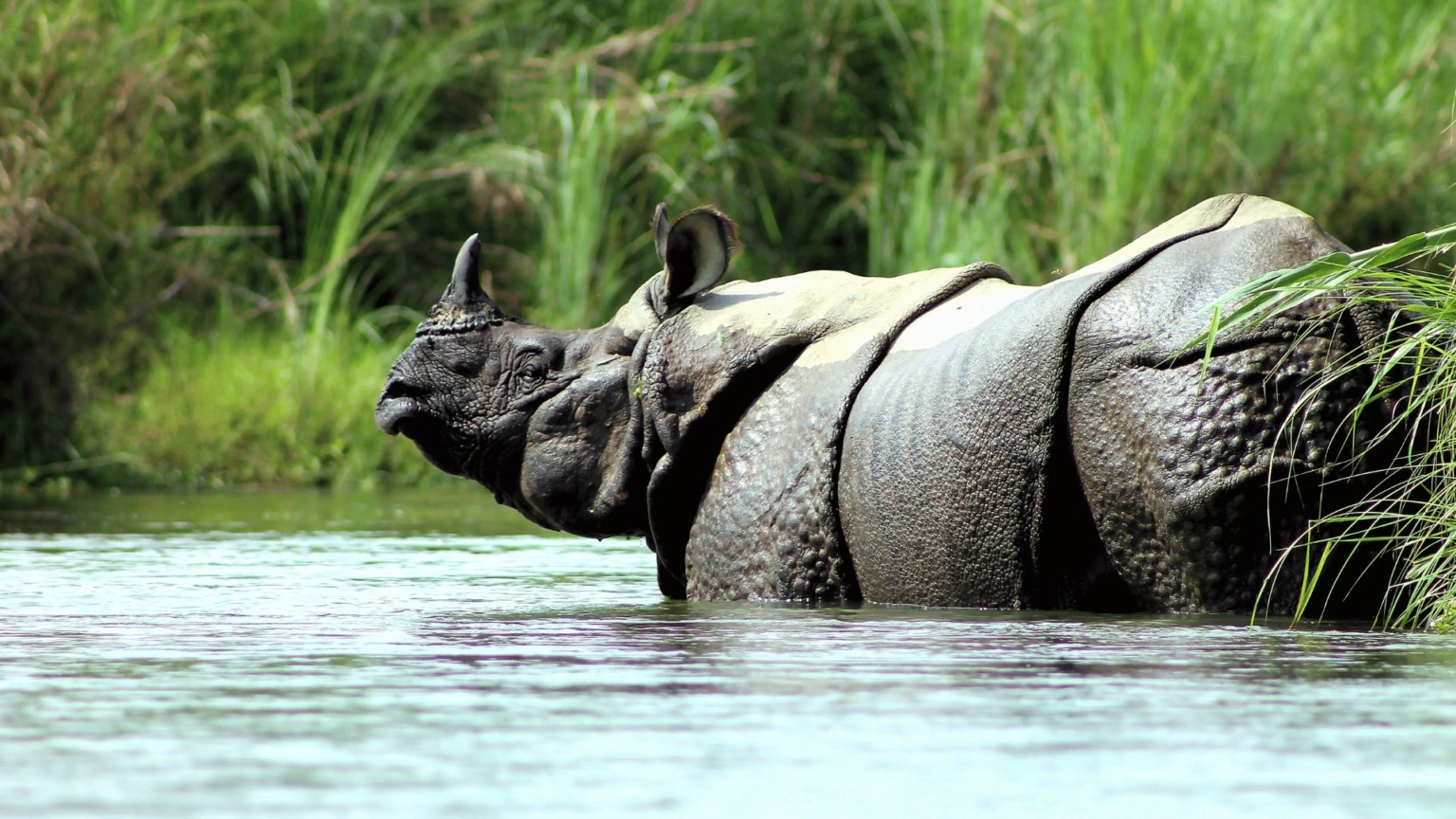
Chitwan National Park occupies 932 square kilometers of subtropical lowland forest and tall-grass savannah in Nepal's Terai region, a biome entirely different from the alpine landscapes most visitors expect. The park protects one of the most biodiverse wildlife populations in South Asia, with 68 mammal species, 544 bird species, and 3 Critically Endangered species within a single protected area. It sits at the base of the Siwalik Hills where the Narayani and Rapti rivers create a mosaic of riverine forest, wetland, and open grassland ideal for large mammal habitat. Adding Chitwan to a Nepal itinerary delivers a wilderness dimension that no Himalayan trek or city visit replicates.
Which Wildlife Can You Spot in Chitwan National Park?
Chitwan National Park protects 68 mammal species, including the one-horned rhinoceros (Rhinoceros unicornis), Bengal tiger, Asian elephant, leopard, sloth bear, and gharial crocodile. Nepal's wildlife census counted a national total of 752 one-horned rhinoceroses, with 694 of them residing in Chitwan, up from 544 in 2011, the most successful rhinoceros population recovery in Asia.
The Bengal tiger population in Chitwan has climbed to 145 individuals as of Nepal's latest National Tiger Census, part of a national total of 429 tigers, a more than threefold increase since scientific counts began in 2009, according to IUCN's coverage of the Department of National Parks and Wildlife Conservation's 2026 results. Sighting probability peaks between February and April, when controlled burning of tall elephant grass opens visibility near water sources, pushing tigers into observable areas along riverbanks.
Gharial crocodiles (Gavialis gangeticus) inhabit the Narayani and Rapti rivers bordering the park. Chitwan holds one of only 3 viable gharial breeding populations in the world. The International Union for Conservation of Nature (IUCN) classifies the gharial as Critically Endangered, with fewer than 650 adults remaining across all global populations.
The park covers 932 square kilometers of subtropical riverine forest, Terai grassland, and alluvial floodplain at an elevation ranging from 100 to 815 meters, the only lowland Terai ecosystem with continuous forest cover remaining in South Asia.
What Activities Can You Experience in Chitwan?
Chitwan offers 6 primary wildlife and cultural activities: jeep safaris (3–4 hours, morning and evening), guided jungle walks (2–4 hours with an armed wildlife naturalist), dugout canoe rides on the Rapti River, birdwatching (544 recorded species), elephant care center visits, and Tharu cultural village walks.
Guided jungle walks provide the closest wildlife encounter available in Chitwan. Armed wildlife guards accompany all groups, and naturalist guides read tracks, dung, and behavioral signs to locate rhinos, spotted deer, and monitor lizards. The standard morning walk (6:00–9:00 AM) covers 8–12 kilometers of varying terrain and reliably encounters large mammals on most departures between October and April.
Tharu cultural visits represent the most overlooked element of the Chitwan experience. The Tharu people, the indigenous inhabitants of the Terai lowlands, developed a biological resistance to malaria over centuries and established communities inside jungle areas that the surrounding hill population could not occupy. Traditional Tharu stick dance (Danda Natch) performances and community home-stays are available through park-side lodges and provide direct access to a cultural tradition with no equivalent in Nepal's hill or mountain regions.
5. Witness Sunrise Over the Himalayas
A Himalayan sunrise is a meteorological and optical event, not simply a scenic moment. The Himalayas receive the first light of the sun before any other landmass in the same longitude band, and above 3,000 meters the atmospheric clarity produces color depth and sharpness that lower-altitude environments cannot match. The alpenglow sequence transforms peaks from grey silhouettes to crimson to gold in under 20 minutes. Witnessing this from an established viewpoint resets the scale of what mountains mean.
Where Can You See the Best Himalayan Sunrises?
The 4 best Himalayan sunrise viewpoints in Nepal are Nagarkot (2,195 m) near Kathmandu, Sarangkot (1,592 m) above Pokhara, Poon Hill (3,210 m) on the Ghorepani circuit, and Kala Patthar (5,644 m) in the Khumbu region. Each viewpoint delivers a distinct elevation, peak composition, and accessibility profile.
Nagarkot (32 km east of Kathmandu, 90-minute drive) provides views across 8 Himalayan ranges, including Everest on clear days. It is the only major Himalayan sunrise viewpoint in Nepal accessible from a major city without overnight trekking, a key logistical advantage for short-itinerary travelers.
Sarangkot (30 minutes by jeep from Pokhara Lakeside, NPR 800–1,200 return) delivers the most photographically dramatic sunrise in Nepal. Alpenglow turns the Annapurna range from deep crimson to orange to gold across 45 minutes as the sun clears the eastern horizon, a light transition that peaks before the sun is visually above the horizon.
Poon Hill requires a minimum 4-day trek from Nayapul. The viewpoint at 3,210 m provides the broadest simultaneous panorama in Nepal at sunrise: Dhaulagiri (8,167 m), Annapurna I (8,091 m), Manaslu (8,163 m), Machhapuchhare (6,993 m), and over 20 additional peaks align across the northern horizon in a single sweep.
Kala Patthar (5,644 m) provides the highest sunrise viewpoint accessible by trekking in Nepal. The Everest North Face is visible 8 kilometers away at sunrise, the only non-technical vantage point that places the world's highest mountain at this proximity.
Why Is a Himalayan Sunrise Worth Experiencing?
A Himalayan sunrise is worth experiencing because the alpenglow phenomenon transforms snow-covered 8,000 m peaks from pre-dawn grey silhouettes to vivid crimson within 5 minutes, then progresses through orange to pure gold before settling to white in under 20 minutes. At elevations above 3,000 m, atmospheric particle density falls to levels that eliminate the light scatter dominating lower-altitude observations, producing color depth and visual sharpness that no sea-level location replicates.
The critical practical detail: arrive at the viewpoint 45 minutes before official sunrise time. The most intense alpenglow occurs 15–20 minutes before the sun breaks the eastern horizon. Visitors arriving at sunrise consistently miss the peak color sequence. This timing error is the single most common mistake among first-time Himalayan sunrise seekers.
6. Visit Nepal's Ancient Temples and Stupas
Nepal's temple and stupa network represents 1,500 years of continuous religious construction across Hindu and Buddhist traditions, spanning from the Terai lowlands to high-altitude sites above 3,800 meters. These sites are not historic relics preserved for tourists, priests conduct ceremonies at the same hours they have for centuries, and pilgrimages arrive daily from across Nepal and South Asia. The religious architecture of Nepal integrates Hinduism and Buddhism within single complexes in ways found nowhere else in the world. Visiting these monuments reveals a living spiritual culture that has never been interrupted.
Which Temples and Stupas Should You Visit in Nepal?
Nepal's 5 most significant religious monuments are Pashupatinath Temple (Kathmandu), Boudhanath Stupa (Kathmandu), Swayambhunath Stupa (Kathmandu), Muktinath Temple (Mustang, 3,800 m), and Manakamana Temple (Gorkha). Each occupies a distinct religious tradition, geographic zone, and architectural lineage.
Swayambhunath Stupa (also called Monkey Temple) dates to at least the 5th century CE and sits atop a hill 77 meters above the Kathmandu Valley floor. The stupa's all-seeing eyes, painted on all 4 sides of the spire base, represent the Buddha's omniscience and appear as Nepal's most recognized visual symbol internationally. The complex integrates Hindu shrines and Buddhist monuments within a single precinct, embodying the Kathmandu Valley's unique religious syncretism.
Muktinath Temple sits at 3,800 meters in the Mustang district and holds equal sanctity within 2 separate religious traditions. Hindus venerate it as 1 of 108 Divya Desams (sacred Vishnu sites across South Asia); Tibetan Buddhists recognize it as the site where Guru Rinpoche (Padmasambhava) meditated before bringing Buddhism to Tibet in the 8th century CE. Inside the temple, a natural methane flame burns from rock fissures, a geological phenomenon that has been sacred to both traditions for over 1,000 years.
Manakamana Temple (Gorkha district) is accessible by cable car (10-minute ride, 3 km from Khalte station). The goddess Manakamana, believed to grant wishes of sincere devotees, attracts over 1 million visitors annually, making it Nepal's highest-attendance mountain shrine measured by domestic pilgrimage.
What Cultural Traditions Can You Experience at These Sites?
The 3 most immersive cultural practices at Nepal's temples and stupas are dawn puja at Pashupatinath (4:30 AM), kora circumambulation at Boudhanath (dusk), and aarti fire ceremonies at Hindu ghats (6:00 PM).
Dawn puja at Pashupatinath begins at 4:30 AM with priests conducting Sanskrit rituals inside the main Shiva sanctum. The 6:00 PM evening aarti along the Bagmati River ghats involves fire lamps, bell ringing, and incense offerings visible from the eastern river bank, the observation point designated for non-Hindu visitors. The evening ceremony lasts 45 minutes and draws both pilgrims and resident sadhus (Hindu ascetics) who live within the Pashupatinath complex year-round.
Kora at Boudhanath forms the central practice of Tibetan Buddhist daily life in Nepal. Hundreds of practitioners walk the 100-meter circumambulation path clockwise, turning prayer wheels embedded in the stupa's outer wall while chanting the Om Mani Padme Hum mantra. Visitors participate by joining the clockwise flow, the only required protocol, and the experience of walking beside monks and nuns in active meditation practice is unmatched at any other Buddhist site in Nepal.
7. Experience Nepalese Food and Local Culture
Nepalese cuisine reflects the country's extraordinary ethnic and geographic diversity across 80 distinct communities and 5 ecological zones. Dishes change with altitude, region, and ethnic identity, from Tharu lowland cooking in the Terai to Sherpa staples in the Khumbu highlands to the elaborate ceremonial food of the Kathmandu Valley Newars. Food is not a secondary element of Nepal travel, it is one of the most direct entry points into understanding how Nepali communities live, celebrate, and sustain themselves. Eating the right dishes in the right places delivers cultural knowledge that no temple visit or mountain view provides.
Which Nepalese Dishes Should You Try?
Nepal's 6 essential dishes are dal bhat, momo, Newari samay baji, sel roti, gundruk soup, and tongba. Each represents a distinct regional, ethnic, or altitudinal food tradition within Nepal's remarkably varied culinary landscape.
Dal bhat (lentil soup with steamed rice, seasonal vegetables, and fermented pickle) is Nepal's national dish, consumed twice daily, morning and evening, by the majority of the population. On trekking routes, dal bhat comes with unlimited rice and vegetable refills for NPR 400–600 (approximately USD 3–4.50). This refill policy is a biological necessity for trekkers burning 3,000–5,000 calories daily above 3,500 m.
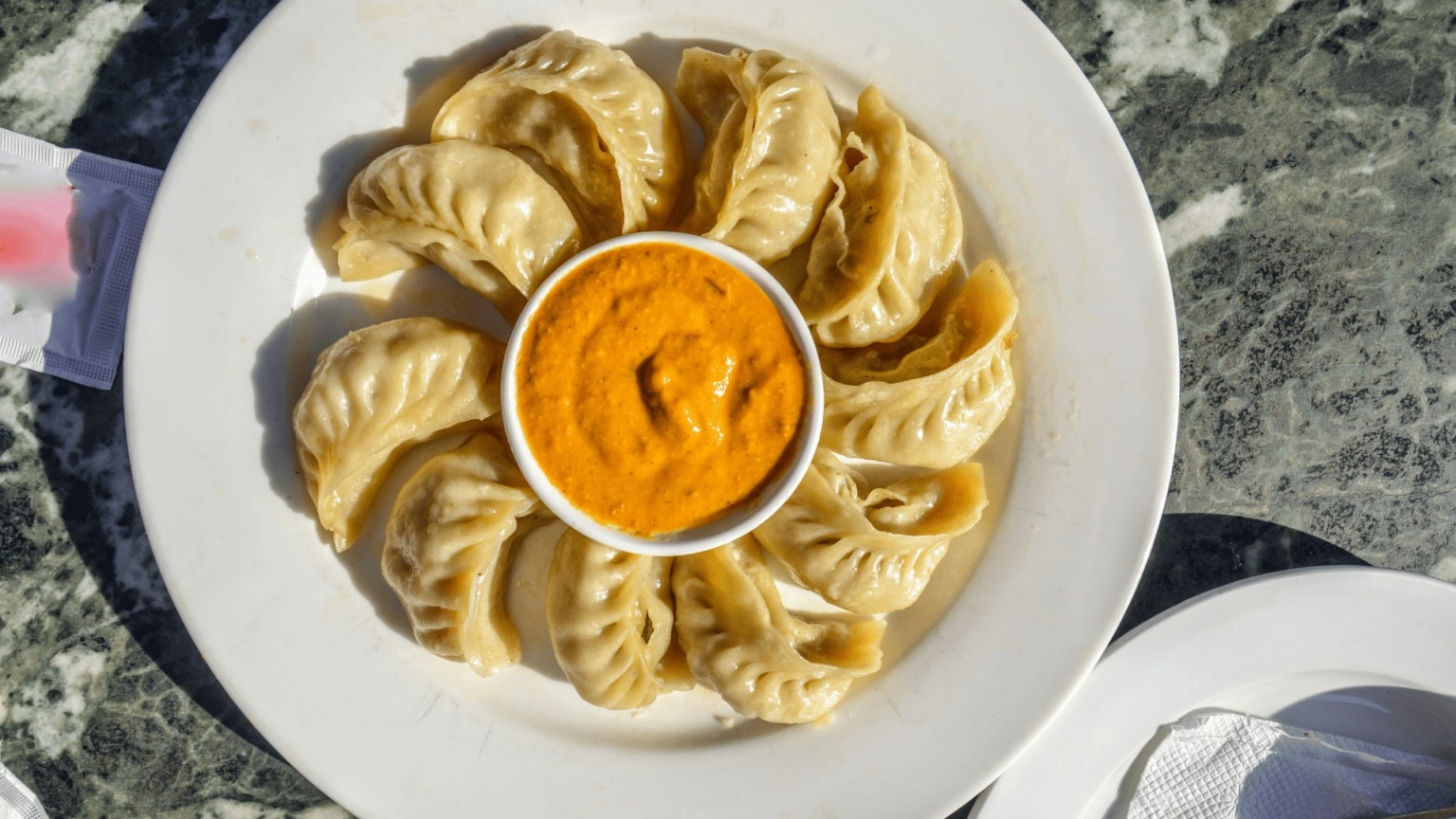
Momo (steamed or fried dumplings) are filled with minced buffalo, chicken, pork, or vegetables and served with achar (tomato-sesame dipping sauce). The Newari buff (water buffalo) momo, seasoned with traditional spices, ginger, and garlic, is an iconic Kathmandu Valley specialty. The best momos in Nepal are found at local bhojanalaya (traditional eateries) in Bhaktapur old city and street stalls in Patan.
Newari samay baji is a ceremonial platter unique to the Newar community: beaten rice (chiura), grilled buffalo meat, soybeans, ginger, black-eyed peas, and fermented vegetables arranged on a brass plate. The dish appears at Newar religious ceremonies throughout the year and at traditional restaurants in Bhaktapur and Patan, 2 cities where Newar food culture remains fully intact and accessible.
Tongba is fermented millet beer consumed hot through a bamboo straw, native to eastern Nepal's Limbu, Rai, and Tamang highland communities. A single ceramic pot provides 3–4 servings as boiling water is added sequentially to the fermenting millet grain. The alcohol content is low (3–5%) but cumulative, and the drink is culturally inseparable from highland community hospitality in eastern Nepal.
How Can You Experience Authentic Local Culture?
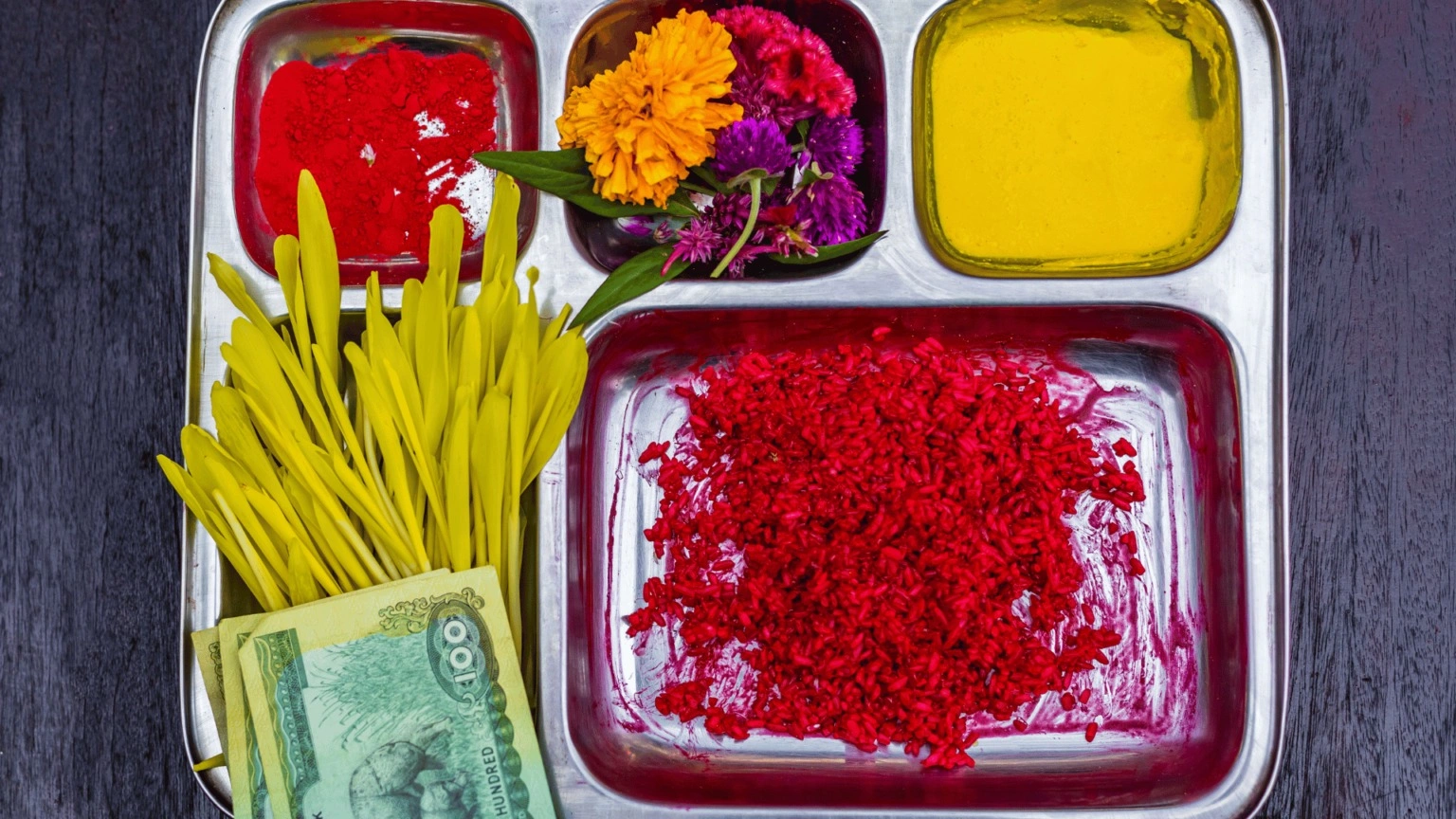
Authentic Nepali culture reveals itself through 4 specific participation practices: staying in a registered community home-stay, attending a Newar festival in the old cities, visiting a weekly haat bazaar (local market), and eating in a traditional bhojanalaya rather than a tourist restaurant.
Community home-stays are organized through the Nepal Tourism Board's Community Home Stay network, over 700 registered families across 36 districts as of 2026. A standard home-stay costs USD 10–20 per night including dinner and breakfast, with families from Gurung, Tamang, Magar, and Tharu communities across Nepal's trekking regions. The cultural exchange, shared meals, daily agricultural work, language instruction, and evening storytelling, is qualitatively different from any teahouse or hotel interaction.
Newar festival participation: the Bisket Jatra festival in Bhaktapur (April, 9 days) and the Gai Jatra procession in Kathmandu (August, 1 day) are the 2 most accessible for international visitors. Both involve city-wide participation, traditional Newar costumes, and chariot processions through medieval streets that have continued in documented form for over 600 years. No ticket or registration is required, showing up and observing respectfully is sufficient for full participation.
8. Explore Lumbini, the Birthplace of Buddha
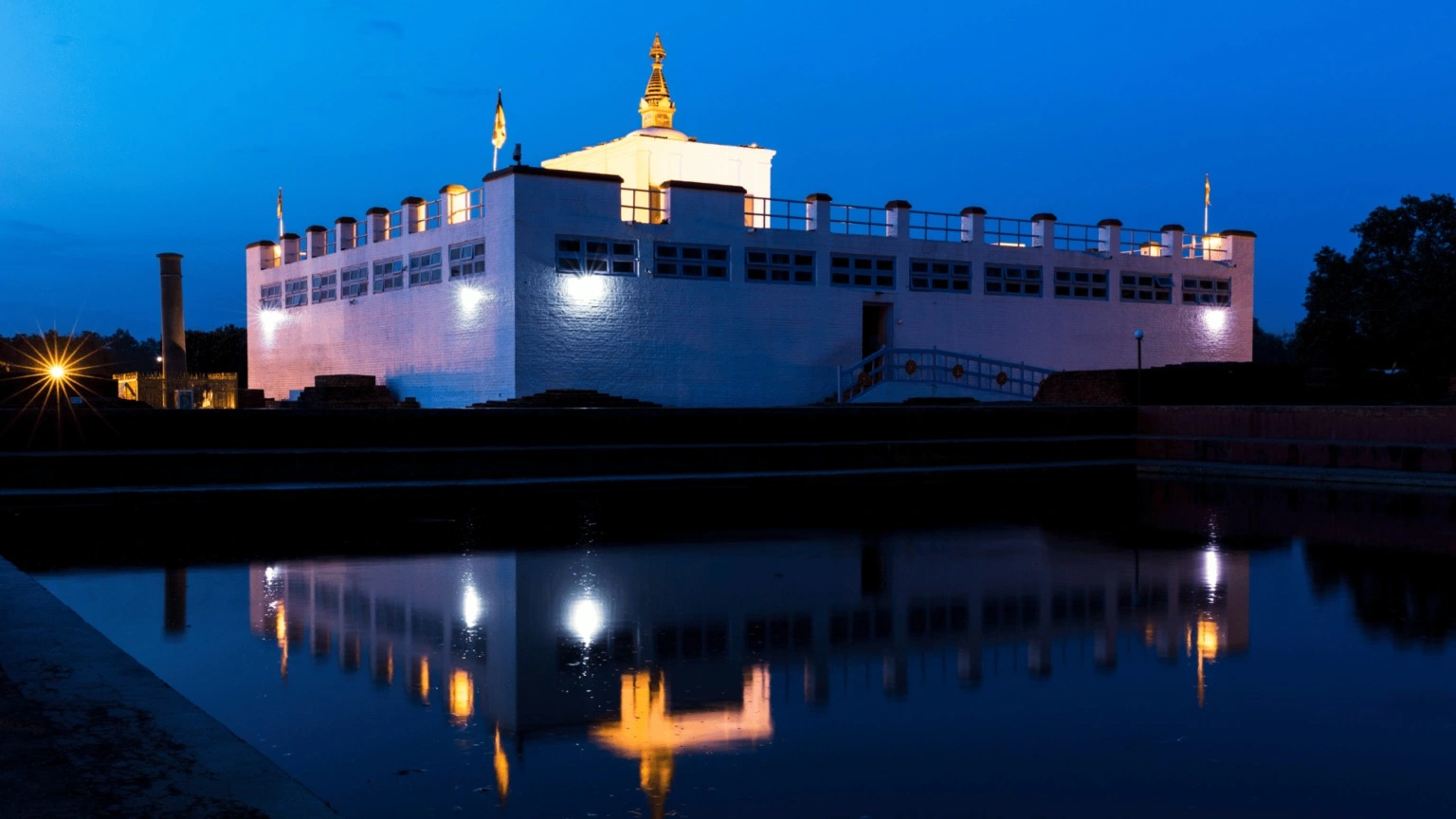
Lumbini is the documented birthplace of Siddhartha Gautama, born approximately 563 BCE in what is now Nepal's southwestern Terai. The site's historical authenticity is confirmed by the Ashoka Pillar inscription from 249 BCE, one of the oldest epigraphic records in the country. Lumbini functions as an active pilgrimage destination: the Lumbini Development Trust recorded 1,172,304 visitors in 2024 alone, a 17.36% jump from 2023, alongside a significant archaeological park with excavations still producing new findings. Its importance extends beyond religion, Lumbini is the origin point of a philosophical tradition that shaped the cultural history of an entire hemisphere.
What Can You See and Experience in Lumbini?
Lumbini's 3 primary sacred zones are the Maya Devi Temple (the precise birth site), the Ashoka Pillar (erected 249 BCE), and the Sacred Pond (Puskarini). The broader Lumbini development zone covers 4.8 square kilometers and includes an international monastic zone with completed temples from 28 countries representing all major Buddhist traditions.
Maya Devi Temple marks the exact location where Siddhartha Gautama was born approximately 563 BCE. Excavations conducted in 1996 exposed a nativity stone beneath the current temple structure, a sandstone marker with footprints and accompanying figures confirming the birth site position. The nativity stone and surrounding archaeological stratigraphy from the 3rd century BCE are visible through a glass floor inside the current temple structure.
Ashoka Pillar was erected by the Mauryan Emperor Ashoka in 249 BCE during his documented pilgrimage to Lumbini. The Brahmi-script inscription on the pillar explicitly identifies Lumbini as the birthplace of the Buddha, one of the oldest surviving epigraphic records in Nepal and the definitive historical confirmation of the site's identity.
The international monastic zone contains over 40 completed monasteries from South Korea, Japan, China, Myanmar, Sri Lanka, Germany, France, and Vietnam, each built in its national Buddhist architectural tradition. A 3–4 hour walking circuit through this zone demonstrates how a single religious tradition evolved into distinct cultural expressions across Asia over 2,500 years, an educational experience with no equivalent at any other Buddhist heritage site globally.
Why Is Lumbini Important to Nepal's Heritage?
Lumbini is a UNESCO World Heritage Site (inscribed 1997) and 1 of the 4 holiest pilgrimage sites in Buddhism, alongside Bodh Gaya (enlightenment site), Sarnath (site of first teaching), and Kushinagar (site of the Buddha's death). Approximately 1.5 million pilgrims and tourists visit annually, establishing it as Nepal's most visited heritage site outside the Kathmandu Valley.
For Nepal's national identity, Lumbini represents the country's single most significant contribution to world civilization. The Buddha's philosophical and ethical teaching system shaped the religious trajectory of 500 million practicing Buddhists globally, approximately 7% of the 2026 world population. Nepal's custodianship of the birthplace of this tradition forms the foundation of its UNESCO heritage narrative and its international cultural diplomacy.
Practical access: Lumbini sits 280 kilometers southwest of Kathmandu, adjacent to the town of Bhairahawa. Gautam Buddha International Airport connects to Kathmandu with 3–4 daily flights (30-minute flight). The overland journey by tourist bus from Kathmandu takes 6–7 hours via the Prithvi Highway.
9. Experience Adventure Activities in Nepal
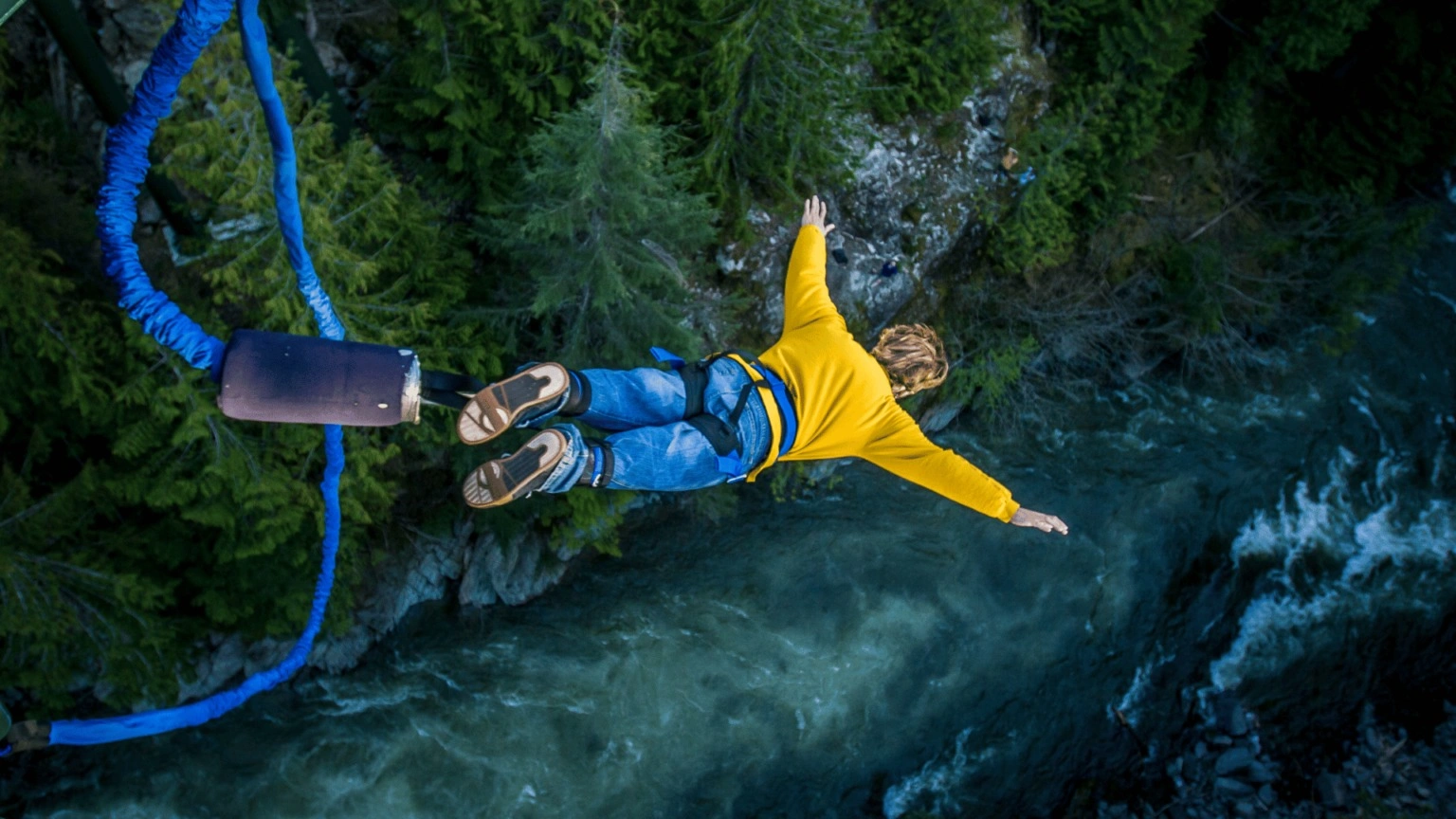
Nepal's adventure activity sector is the most diverse in Asia by category, scale, and elevation range. The country offers Grade V white water rapids, 160-meter bungee drops, world-record altitude marathons, and permitted ascents of 8,848-meter Everest, all within a single geographic corridor accessible from 2 international airports. Adventure infrastructure in Nepal is mature: guides are nationally certified, operators are government-registered, and medical evacuation services cover all major routes. The risk profile across all major activity types is manageable for prepared and experienced participants.
Which Adventure Activities Can You Try in Nepal?
Nepal offers 8 major adventure activity categories: trekking, mountaineering (permit required above 8,000 m), white water rafting, bungee jumping, paragliding, mountain biking, zip-lining, and high-altitude marathon running.
White water rafting operates on 9 major rivers in Nepal. The Trishuli River (Grade III–IV) sits 2 hours from Kathmandu and provides half-day or full-day beginner-accessible trips at USD 35–60 per person. The Karnali River in western Nepal (Grade IV–V) carries sections with 30-meter vertical drops through canyon gorges and ranks among the top 10 white water rivers in the world. A Karnali river expedition requires 7–10 days and advance permit coordination.
Bungee jumping from the Bhote Kosi Gorge suspension bridge (160-meter drop, 3 hours from Kathmandu) is one of the longest commercially operated bungee jumps in the world. The free fall takes 4.5 seconds, longer than New Zealand's famous Nevis Bungy (134 m), and cost runs approximately USD 120–150 per jump including video.
Mountain biking on the Mustang downhill trail, from Lo Manthang (3,800 m) to Jomsom (2,720 m), covers 60 kilometers of technical high-altitude descent through Tibetan plateau desert terrain. This is the longest continuous mountain bike descent in Asia accessible to experienced cyclists without technical alpine equipment, and the landscape it traverses is unlike any cycling terrain in South or Southeast Asia.
High-altitude marathon running: the Everest Marathon (26.2 miles from Gorak Shep at 5,364 m to Namche Bazaar at 3,440 m) is the world's highest annual marathon, held in late May each year. Oxygen availability at the starting altitude is approximately 50% of sea level, and the race attracts runners from 30+ countries annually.
Where Can You Find Nepal's Best Adventure Experiences?
Nepal's 3 primary adventure hubs are Kathmandu (permit and logistics center), Pokhara (paragliding and multi-sport gateway), and the Bhote Kosi corridor (rafting and bungee jumping).
Kathmandu's Thamel district houses over 600 registered adventure tour operators offering permits, guiding, gear rental, and custom itinerary design. The Nepal Mountaineering Association (NMA) and the Department of Immigration manage climbing permits: an Everest summit permit costs USD 15,000 per person in 2026, with fees funding conservation programs across Nepal's national parks and buffer zones.
Pokhara's adventure ecosystem includes over 70 paragliding operators, 15 zip-line businesses, 20 white water rafting agencies, and 30 mountain biking outfitters operating within or adjacent to the Annapurna Conservation Area. The concentration of extreme adventure options alongside a lakeside city of 450,000 with international-standard hotels, restaurants, and medical facilities creates an infrastructure combination unmatched anywhere else in Asia.
10. Connect with Nepal's Mountains and Local Communities
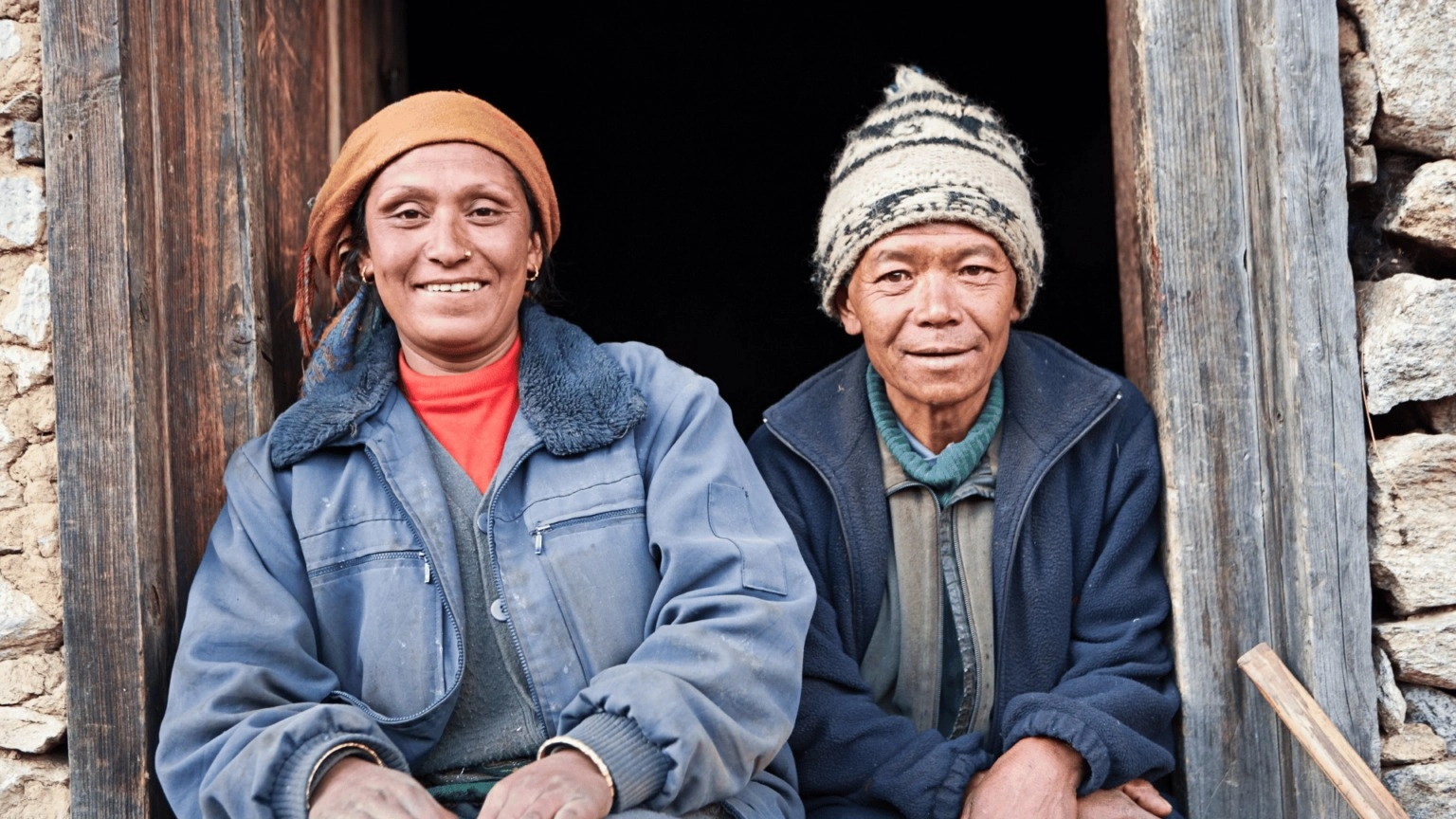
Nepal's mountains and the communities that inhabit them are inseparable. The Sherpa, Tamang, Gurung, Magar, Rai, and Limbu peoples built their entire cultural identity,, language, religion, agriculture, architecture, and social structure, around high-altitude terrain over centuries of geographic isolation. A trip that covers only landmarks and viewpoints misses the living dimension that gives those landmarks their meaning. Connecting directly with mountain communities delivers the most durable and accurate understanding of what Nepal is.
How Can You Experience Nepal Beyond Its Tourist Attractions?
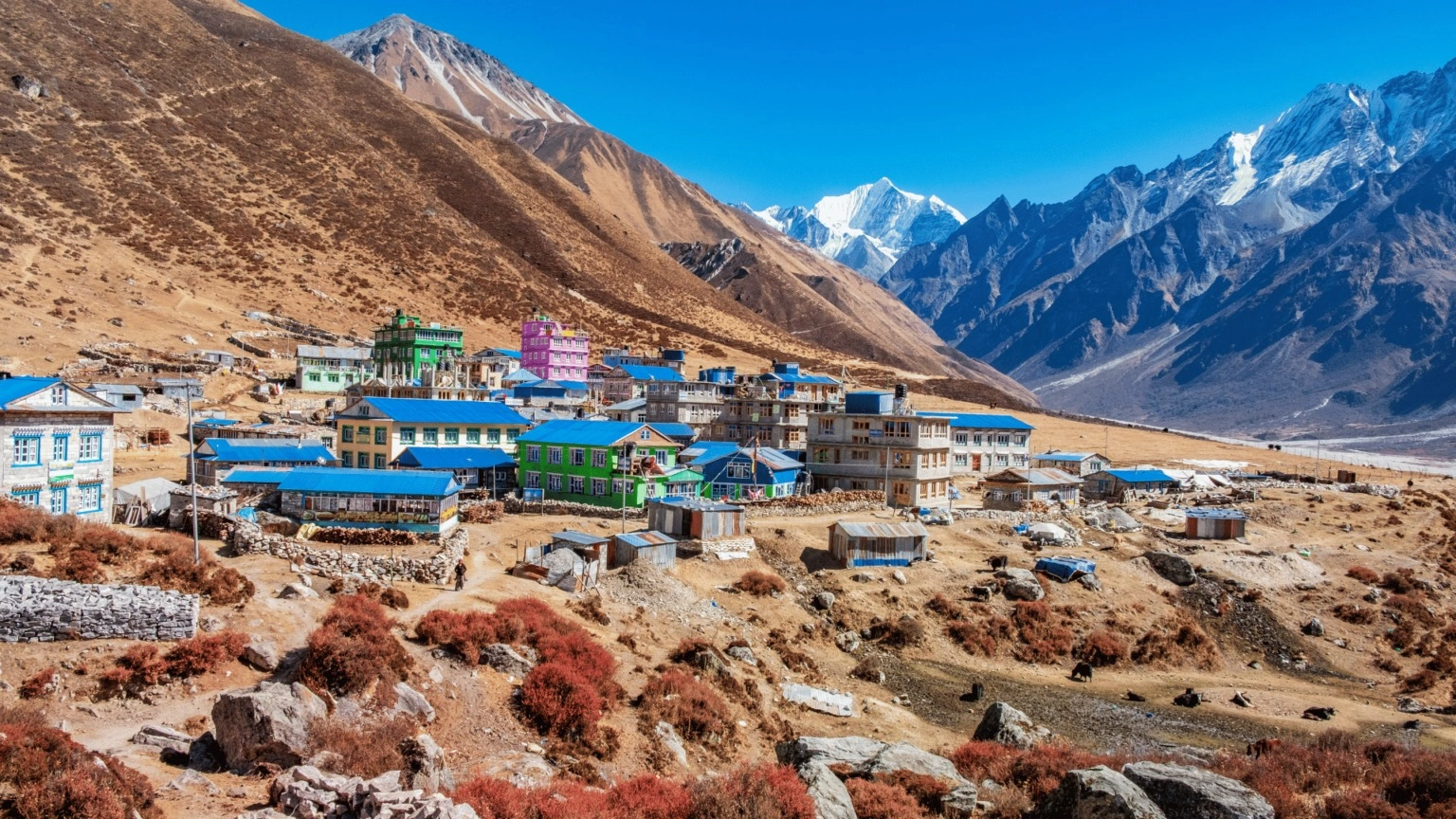
Nepal's most profound experiences exist in regions receiving fewer than 3,000 combined trekkers annually: the Dolpo region (northwestern Nepal), the Tsum Valley (northern Gorkha district), and the Kanchenjunga Conservation Area (eastern Nepal near Taplejung). These areas contrast sharply with the Everest and Annapurna routes, which receive a combined 170,000 trekkers per year.
Dolpo (accessible via restricted area permit, USD 500 per person for 10 days) borders Tibet and maintains Bon cultural traditions predating Buddhism in the region. The area contains Shey Phoksundo Lake, Nepal's deepest lake at 145 meters, with turquoise-blue water produced by suspended glacial minerals. The Dolpo monasteries, including Shey Gompa and Tshowa Gompa, function as active religious communities rather than tourism sites, and encounters with monks and lamas carry a depth absent from well-trodden routes.
Tsum Valley (opened to trekkers in 2008) preserves one of Nepal's most culturally intact highland communities. The Tsumba people maintained near-total isolation until partial road construction began in the 2020s. Rachen Gompa (3,700 m) and Mu Gompa (3,900 m) house combined monk and nun populations exceeding 100 and conduct daily religious ceremonies with no visitor management infrastructure, access is raw and unmediated.
Village stays outside the main trekking corridors in Nuwakot, Kavrepalanchok, and Sindhupalchok districts reveal agricultural life patterns unchanged in their fundamentals for generations. The April rhododendron bloom transforms hillsides from 2,000–3,000 m elevation with dense crimson forest, a seasonal spectacle that standard Kathmandu city-and-temple itineraries do not cover.
How Can Nepal Intrepid Treks Help You Experience These Highlights?
Nepal Intrepid Treks designs and operates itineraries across all 10 experiences covered in this guide, from Kathmandu Valley day tours to restricted-area Dolpo expeditions requiring specialized permit logistics and multi-day approach trekking. Guides hold certifications from the Nepal Academy of Tourism and Hotel Management (NATHM) and the Nepal Mountaineering Association (NMA), ensuring that wildlife briefings, cultural interpretation, and mountain safety protocols meet internationally recognized standards.
For travelers combining Lumbini, Chitwan, and Pokhara in a single circuit, Nepal Intrepid Treks provides multiday fixed-departure and private custom itineraries with pre-arranged accommodation, domestic flight coordination, and 24/7 in-country support. Fixed-departure groups run from 2 to 12 participants, with solo traveler join-in departures available on the Annapurna Base Camp and Everest Base Camp circuits.
First-time visitors to Nepal benefit from a structured 12–14 day itinerary: 3 days in the Kathmandu Valley (heritage sightseeing and cultural acclimatization), 2 days in Pokhara (Phewa Lake, Sarangkot sunrise), 4–6 days trekking to Poon Hill or Annapurna Base Camp, and 2 days in Chitwan (jeep safari, jungle walk). This structure delivers trekking, wildlife, cultural heritage, lakeside scenery, and adventure in a sequence that matches Nepal's geographic layout without redundant travel backtracking.
What Are the Key Takeaways About the 10 Things Not to Be Missed in Nepal?
Nepal's 10 essential experiences organize into 3 clear categories: natural wonders (Himalayan trekking, Himalayan sunrises, Chitwan wildlife, Phewa Lake and Pokhara), cultural heritage (Kathmandu Valley monuments, ancient temples and stupas, Lumbini), and active participation (Nepalese food and local culture, adventure activities, mountain community connections).
The table below summarizes each experience with its primary location, best visiting season, and logistical note:
Experience | Primary Location | Best Season | Key Logistic |
Himalayan trekking | Khumbu, Annapurna, Langtang | Oct–Nov, Mar–May | Book teahouses 6–8 weeks ahead in October |
Kathmandu Valley heritage | Kathmandu, Bhaktapur, Patan | Year-round | 3 days minimum to cover all 7 monument zones |
Pokhara and Phewa Lake | Pokhara | Sep–Nov, Feb–Apr | Base for Annapurna-region treks |
Chitwan wildlife | Chitwan, Terai Lowlands | Feb–Apr | Book lodge inside park boundary |
Himalayan sunrise | Nagarkot, Sarangkot, Poon Hill, Kala Patthar | Oct–Nov, Mar–May | Arrive viewpoint 45 minutes before sunrise |
Ancient temples and stupas | Kathmandu Valley, Mustang | Year-round | Shoes off at all temple entrances |
Nepalese food and culture | Nationwide | Year-round | Eat at bhojanalaya, not tourist restaurants |
Lumbini pilgrimage | Lumbini, Bhairahawa | Oct–Mar | 30-minute flight from Kathmandu |
Adventure activities | Pokhara, Bhote Kosi, Khumbu | Oct–May | Book operators 2–4 weeks ahead |
Community connections | Dolpo, Tsum Valley, Nuwakot | Oct–Nov | Restricted area permits needed for Dolpo |
4 practical principles govern a successful Nepal itinerary:
Acclimatize above 3,000 m. Ascend no more than 300–500 meters of sleeping altitude per day to prevent acute mountain sickness (AMS). Symptoms of AMS, headache, nausea, fatigue, disorientation, require immediate descent.
Secure permits before departure. The Annapurna Conservation Area Permit (ACAP), Trekkers' Information Management System card (TIMS), restricted area passes for Dolpo and Upper Mustang, and national park entry fees require advance coordination through a registered Nepali tour operator.
Pack for a 40°C temperature range. Nepal's climate spans subtropical Terai heat (30°C in March) to sub-zero high-altitude exposure within 24 hours of travel. A 10-day Nepal itinerary routinely crosses this range, requiring layered clothing systems rather than single-climate packing.
Respect religious protocols at every site. Remove footwear before entering temple precincts. Walk clockwise around stupas and chortens. Ask permission before photographing religious ceremonies. Avoid bringing leather goods into Hindu temples, the cow is sacred in Nepal and leather items are considered ritually impure within temple boundaries.
Nepal delivers experiences that exist at a geographic scale, cultural depth, and ecological specificity found nowhere else in Asia. The 10 experiences in this guide represent the essential framework for understanding what Nepal actually is, each one opens into weeks of additional exploration for travelers ready to look beyond the standard itinerary.