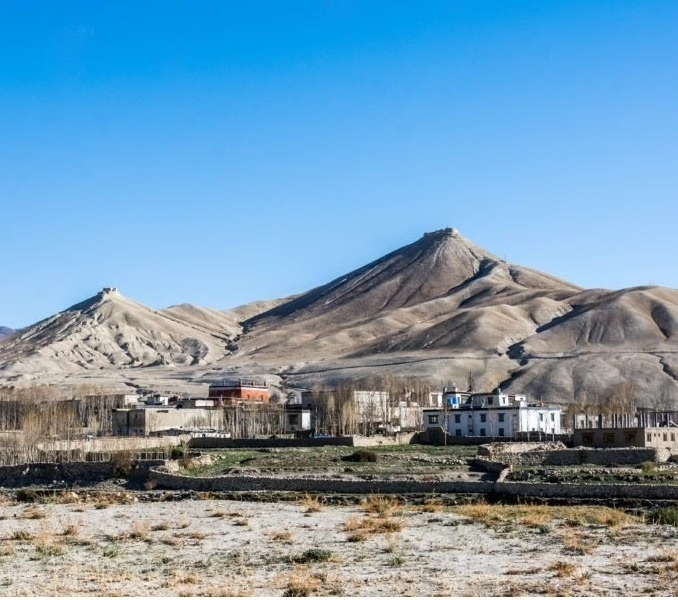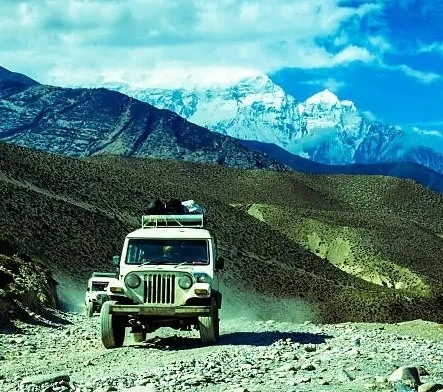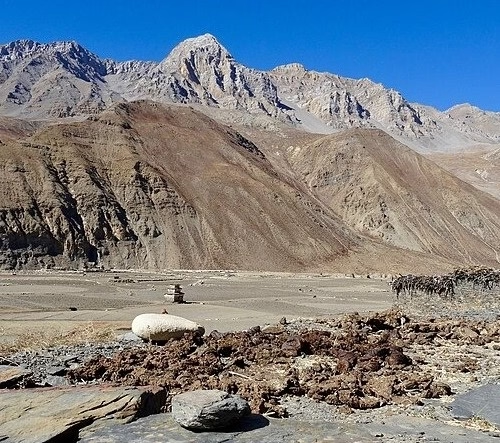
The Upper Mustang Trek is a remarkable Himalayan journey through one of Nepal's most distinctive cultural and geographical regions. Located in the trans-Himalayan landscape of northern Mustang, close to the Tibetan Plateau, Upper Mustang is known for its dramatic red cliffs, dry valleys, ancient cave settlements, traditional mud-brick villages, and centuries-old Buddhist heritage. Unlike the heavily forested trails found in many other parts of Nepal, this region offers an expansive landscape of eroded rock formations, wind-sculpted hills, barren plateaus, and snow-covered Himalayan peaks.
The 17-day Upper Mustang Trek with Nepal Intrepid Treks combines cultural exploration, village-to-village walking, domestic flights, and overland transportation. The journey begins in Kathmandu, continues to Pokhara, and proceeds by domestic flight to Jomsom before the trekking section starts near Kagbeni. From there, the route enters the restricted Upper Mustang region and follows traditional settlements toward Lo Manthang, the historic walled capital of the former Kingdom of Lo. After exploring the surrounding cultural sites, the trek follows a return route through Drakmar, Sangboche, and Chhusang before continuing toward Muktinath and Jomsom.
The defining feature of the Upper Mustang Trek is the combination of natural landscapes and living cultural traditions. Along the trail, you encounter Buddhist monasteries, prayer flags, chortens, mani walls, traditional houses, and villages shaped by the region's historical connections with Tibet. The journey also provides opportunities to learn about local livelihoods, traditional architecture, religious customs, and the challenges of living in a dry, high-altitude environment.
With a planned duration of 17 days and a maximum elevation of approximately 3,900 metres, the trek offers a different experience from Nepal's highest-altitude trekking routes. Although it does not require crossing an extreme-altitude pass such as those found on some other Himalayan itineraries, it still involves consecutive walking days, uneven trails, steep ascents and descents, dry conditions, and exposure to wind and sun. Good preparation, suitable equipment, and a realistic understanding of the route are important for completing the journey comfortably.
Nepal Intrepid Treks organizes the journey according to the confirmed package, including the specified transportation, accommodation, trekking support, and permit arrangements. The following overview explains what makes the Upper Mustang Trek distinctive, how the itinerary is structured, and what travellers should understand before choosing this cultural and highland adventure.
Discover the Former Kingdom of Lo
Upper Mustang has a distinctive historical identity shaped by its geographical position between the high Himalayas and the Tibetan Plateau. The region developed cultural and trading connections across the Himalayan frontier, and Tibetan Buddhist traditions remain visible in its monasteries, religious monuments, architecture, and community life.
The historic Kingdom of Lo played an important role in the region's cultural development, with Lo Manthang serving as its royal centre. Its walled settlement, narrow lanes, traditional houses, and religious structures provide a glimpse into the region's historical settlement patterns and traditional way of life.
Visiting Lo Manthang is a central experience of the Upper Mustang Trek. Rather than passing through only a single settlement, the itinerary allows time to explore the surrounding area and learn about the religious and cultural significance of nearby sites. The planned exploration of Namgyal Gompa and Tingkhar adds another dimension to the journey, depending on access conditions and the confirmed daily arrangements.
Upper Mustang's historical isolation helped preserve aspects of its distinctive cultural identity. However, the region is not a place where history exists separately from modern life. Residents continue to work, travel, maintain religious traditions, and adapt to changing economic and social conditions. Respectful travel means appreciating both the heritage of the region and the needs of the people who live there today.
During the trek, your guide can provide context about local customs, religious landmarks, traditional buildings, and the significance of places along the route. These explanations help you understand the landscape beyond its visual appeal and make the journey more meaningful than a simple walk between villages.
Experience the Distinctive Landscapes of Upper Mustang
The landscape of Upper Mustang is one of the strongest reasons to choose this trek. As you move away from the greener hills and valleys of lower Nepal, the environment gradually changes into a dry, open region marked by cliffs, exposed rock, deep gullies, and broad highland views.
The terrain has been shaped by geological processes, erosion, wind, and limited rainfall. Layers of sedimentary rock form striking cliffs and ridges in shades of red, brown, grey, and ochre. In certain areas, the landscape resembles a high-altitude desert, creating a distinctive contrast with the snow-covered peaks visible across the surrounding region.
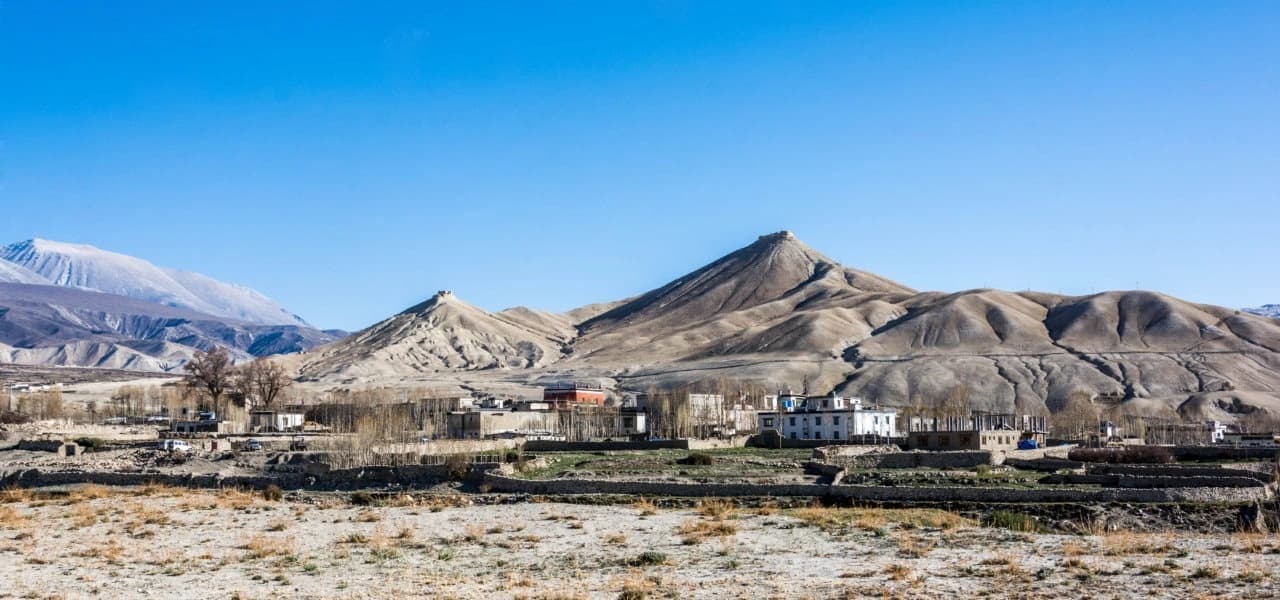
The trail passes through dry valleys and villages positioned along the available water sources and traditional travel routes. Settlements are often surrounded by terraced fields, mud-brick walls, prayer flags, and mountain slopes. The combination of cultivated land and exposed highland terrain provides a different visual experience from the rhododendron forests and densely vegetated trails of other Nepal trekking destinations.
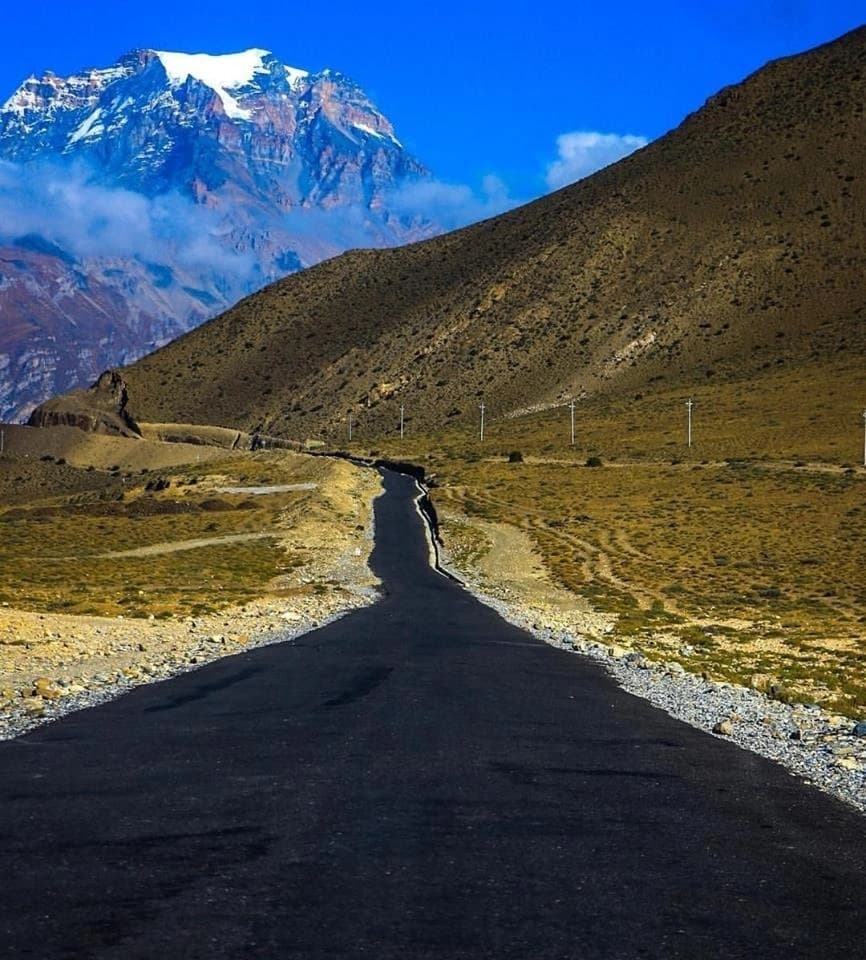
Views of the Annapurna, Dhaulagiri, Nilgiri, and other surrounding mountains may be possible from suitable locations, depending on weather and visibility. The landscape changes throughout the journey, from the Kali Gandaki Valley near Jomsom and Kagbeni to the higher plateaus and eroded formations around Lo Manthang and the return route.
Upper Mustang's scenery also changes with the light. Morning sunshine can emphasize the shapes and colours of the cliffs, while afternoon winds may lift dust along exposed trails. Clear conditions may reveal distant mountain peaks, but cloud, haze, or wind can reduce visibility.
This combination of geological features, mountain views, and traditional settlements makes the trek particularly appealing to photographers, cultural travellers, and walkers who appreciate landscapes that differ significantly from the greener Himalayan foothills.
Explore Lo Manthang and Traditional Mustang Villages
The Upper Mustang Trek follows a network of settlements that reflect the region's architecture, geography, and cultural heritage. Each village provides a different perspective on life in this dry trans-Himalayan environment.
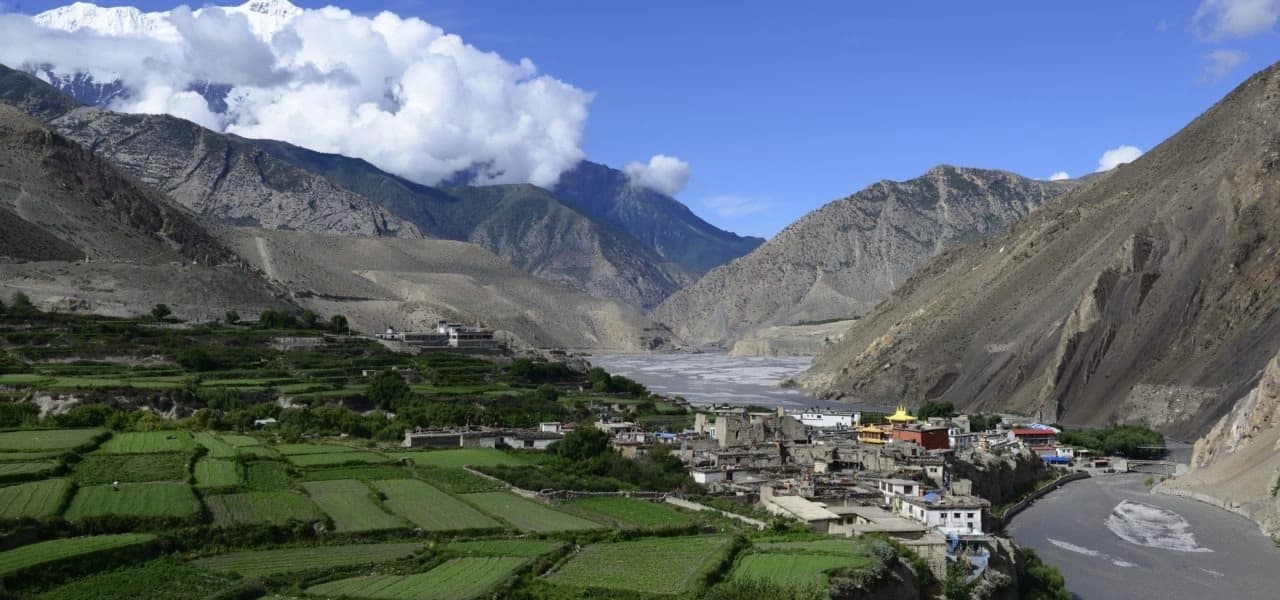
Kagbeni is an important gateway to Upper Mustang. Located near the Kali Gandaki Valley, it marks the transition toward the restricted region and provides an introduction to the area's traditional architecture and religious atmosphere. Its narrow lanes, historic structures, and surrounding landscape create a distinctive starting point for the trekking section.
The route continues through settlements such as Chele, Gheling, and Charang. These villages are positioned within a landscape of ridges, dry valleys, and agricultural terraces. Walking between them allows you to observe how buildings, cultivated land, and community spaces are adapted to a region with limited rainfall and a challenging mountain climate.
Lo Manthang is the main cultural focus of the itinerary. Its walled settlement, narrow streets, traditional homes, and religious landmarks reflect its historical importance within the former Kingdom of Lo. Time spent in and around the town allows for exploration beyond the walking route itself.
The journey also includes settlements such as Drakmar, Sangboche, and Chhusang as the route returns toward the lower Mustang region. These stages reveal further changes in the terrain and provide opportunities to observe the relationship between villages, mountain slopes, and the trails that connect them.
The route then continues toward Muktinath before reaching Jomsom, completing the main trekking section. The precise order, walking distances, and overnight arrangements should follow the confirmed itinerary because local trail conditions and logistical requirements can influence the day's plan.
Discover Buddhist Monasteries and Sacred Sites
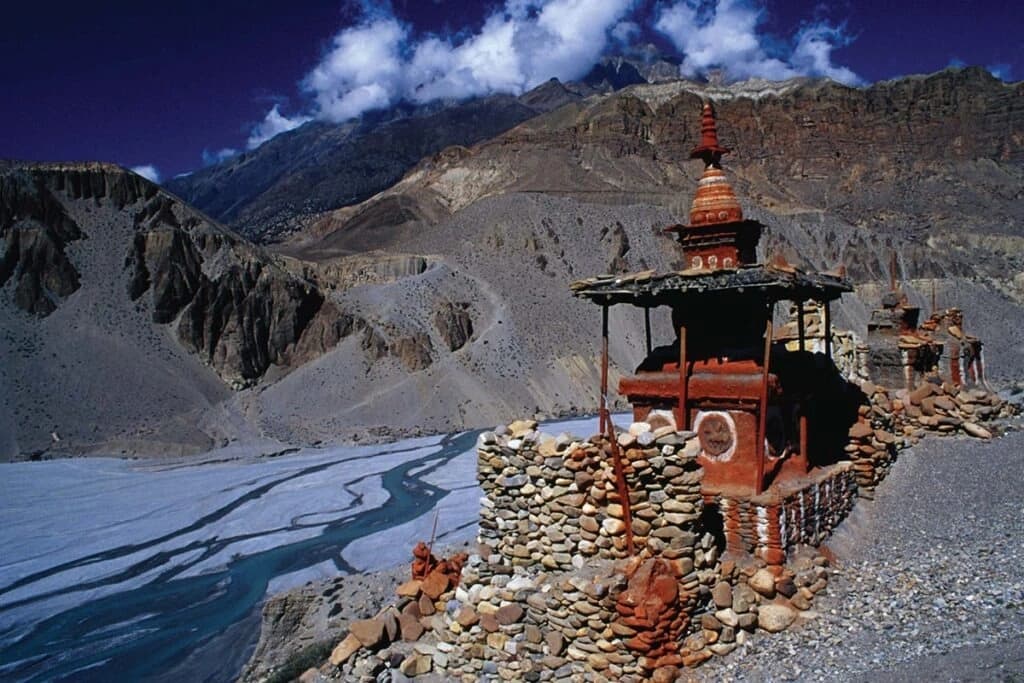
Buddhist culture is an integral part of Upper Mustang's identity. Monasteries, prayer flags, chortens, and mani walls are prominent features of the region, reflecting traditions that have influenced community life for generations.
The trek includes opportunities to visit religious sites around Lo Manthang and the surrounding settlements. The planned excursion toward Namgyal Gompa and Tingkhar provides time to explore parts of the area's cultural landscape beyond the main village-to-village route.
Monasteries can contain religious paintings, statues, ceremonial objects, and architectural features that are important to local practitioners. Access to individual buildings or religious areas may vary according to opening arrangements, local customs, and community requirements.
Visitors should dress respectfully, follow instructions from local caretakers, and ask permission before photographing people or religious interiors. Some sites may restrict photography or require visitors to remove shoes before entering.
Chortens and mani walls also deserve careful attention. These structures are often associated with religious practices and should not be treated simply as objects to walk over, touch casually, or rearrange for photographs. Follow the guide's advice about customary conduct when passing or visiting religious landmarks.
The cultural experience extends beyond formal monasteries. Prayer flags, traditional house designs, local clothing, agricultural practices, and everyday interactions provide insight into how the region's cultural traditions continue to shape daily life.
Visiting these places with an informed and respectful approach adds depth to the Upper Mustang Trek and helps support a form of tourism that values the region's cultural heritage.
Discover Upper Mustang's Ancient Cave Landscapes
Upper Mustang is known for its remarkable cave landscapes, where openings in high cliffs and eroded rock formations reveal a long history of human activity in the region. Some cave complexes are associated with ancient settlement, burial practices, religious use, or other aspects of the area's past, although the purpose and age of individual sites vary.
The surrounding cliffs create a striking visual contrast between natural rock formations and the settlements below. Their appearance is one reason Upper Mustang attracts travellers interested in archaeology, history, photography, and the relationship between human communities and challenging environments.
Some cave areas are difficult to access, and not every site is open to general visitors. Entry can depend on conservation requirements, local permissions, physical access, and the arrangements approved for a particular excursion. The standard 17-day itinerary should not be interpreted as automatically including access to every cave complex in Upper Mustang.
Where a visit is available, follow the guide's instructions and respect any restrictions imposed by local authorities or site managers. Do not climb fragile formations, enter restricted openings, remove objects, or disturb archaeological remains. These sites are part of a cultural landscape that requires protection for future generations.
The cave landscapes also provide a different perspective on how people have used the region's natural features over time. In an environment with limited vegetation and relatively few sheltered locations, cliff faces and rock formations have played an important role in shaping the way settlements and routes developed.
For travellers interested in the historical side of Upper Mustang, these landscapes provide an additional reason to explore beyond the main village streets and mountain viewpoints.
A 17-Day Journey from Kathmandu to Upper Mustang
The Upper Mustang Trek is designed to combine city preparation, road and air transportation, cultural exploration, and a substantial trekking section in one organized itinerary. Each part of the journey plays a role in connecting the starting point in Kathmandu with the remote settlements of Mustang.
The initial days are allocated to arrival arrangements and preparation in Kathmandu, followed by a road journey to Pokhara. From Pokhara, a domestic flight takes you to Jomsom, the main gateway for the trekking section. Flight operations depend on weather and other conditions, so the actual departure and arrival times can vary.
After reaching Jomsom, the trekking route begins toward Kagbeni and enters Upper Mustang once the required permit arrangements and checks have been completed. The following days involve walking through traditional villages and dry mountain terrain toward Lo Manthang.
The itinerary includes time for cultural exploration around Lo Manthang, including the planned visit toward Namgyal Gompa and Tingkhar. After this exploration, the route continues through Drakmar, Sangboche, and Chhusang toward Muktinath and Jomsom.
The return journey includes a domestic flight from Jomsom to Pokhara, followed by road transportation back to Kathmandu. Because flights in the mountain region can be delayed or cancelled, travellers should consider allowing a buffer before any fixed international departure.
The total duration includes both trekking and non-trekking days. It is therefore important to review the complete 17-day schedule instead of assuming that every day involves walking or that transportation will always operate according to the estimated timetable.
Upper Mustang Trek at a Glance
The following table summarizes the principal characteristics of the planned package. Exact prices, services, and departure arrangements should be confirmed against the current booking quotation.
Trip detail | Information |
Trekking destination | Upper Mustang, Nepal |
Trek duration | 17 days |
Trekking region | Mustang Region |
Maximum elevation | Approximately 3,900 metres |
Main cultural destination | Lo Manthang |
Trekking starting area | Jomsom and Kagbeni |
Main trekking route | Kagbeni, Chele, Gheling, Charang, Lo Manthang, Drakmar, Sangboche, Chhusang, Muktinath, and Jomsom |
Transportation | Road transfers and domestic flights, as specified in the itinerary |
Accommodation | Hotel in Kathmandu and Pokhara; teahouses or guesthouses during trekking |
Meals | Breakfast, lunch, and dinner during trekking, subject to confirmed inclusions |
Daily walking time | Approximately 4 to 7 hours on planned trekking days, depending on the stage |
Trek style | Guided cultural and highland trek |
Permit requirements | Upper Mustang restricted-area permit and other applicable permits |
Best-known experiences | Lo Manthang, Buddhist heritage, traditional villages, cliffs, caves, and trans-Himalayan scenery |
Overall difficulty | Moderate to challenging, depending on fitness, pace, and conditions |
Suitable for | Prepared travellers interested in cultural heritage, remote villages, and highland landscapes |
Upper Mustang Trek Difficulty and Walking Expectations
Although the Upper Mustang Trek does not involve the extreme elevations reached by some Himalayan summit or high-pass treks, it should not be treated as an easy sightseeing tour. The 17-day itinerary includes several consecutive days of walking, uneven trails, significant ascents and descents, and exposure to dry, windy conditions.
Many trekking days are planned for approximately 4 to 7 hours of walking, although actual durations depend on the route, rest stops, weather, individual fitness, and group pace. Some days may feel more demanding than others because of the elevation profile, trail surface, or distance between settlements.
The landscape is often dry and exposed, with limited shade in certain sections. Sunlight, wind, dust, and dehydration can contribute to fatigue if trekkers are not prepared. Comfortable footwear, layered clothing, sun protection, and regular hydration are important throughout the journey.
The route reaches elevations around 3,800 to 3,900 metres in the Lo Manthang area, meaning altitude can still affect breathing, sleep, appetite, and general energy levels. Good physical fitness does not guarantee that altitude-related symptoms will not occur.
Preparing through regular walking, hiking, stair climbing, and other aerobic activities can help build the endurance needed for multiple trekking days. Participants should also break in their boots before departure and learn how to manage their daypack comfortably.
The appropriate pace is one that allows you to walk steadily, recover during breaks, and complete the daily stage without unnecessary exhaustion. The guide may adjust the group's movement or rest schedule according to conditions, and participants should report any unusual symptoms promptly.
Upper Mustang's Restricted-Area Status
Upper Mustang is a designated restricted trekking region, and access is subject to specific permit and trekking arrangements. Visitors must comply with the applicable rules and enter the designated area through the required procedures.
The restricted-area permit is an important part of planning the journey and should be organized before entering Upper Mustang. Additional conservation-area requirements may also apply to the route. The exact documentation and current fees should be confirmed during the booking process because permit rules and charges can change.
Nepal Intrepid Treks coordinates the permit arrangements specified in the confirmed package. Participants need to provide accurate identification details and any documents required for processing. They should carry the relevant permits during the trek and follow instructions at checkpoints.
Travellers should not assume that a general Nepal trekking permit or a permit for another region allows access to Upper Mustang. Similarly, independent travel arrangements should not be assumed to satisfy the requirements for restricted-area entry.
The rules governing guides, permits, group arrangements, and access should be confirmed for the intended departure date. Preparing the documents in advance helps reduce the risk of administrative problems once the trip begins.
Accommodation, Meals, and Local Services
Accommodation during the Upper Mustang Trek is generally provided by teahouses or guesthouses along the route, while Kathmandu and Pokhara accommodation follows the hotel arrangements stated in the package. The facilities available in mountain villages vary according to location, season, and the individual property.
Mountain accommodation is usually simpler than city hotels. Rooms may have basic furnishings, and bathroom arrangements, hot water, electricity, heating, and internet access are not consistent at every stop. Private rooms may be available in some places but cannot be guaranteed throughout the itinerary.
Meals during trekking are arranged according to the package inclusions. Common mountain dishes may include rice and lentils, noodles, soups, potatoes, vegetables, eggs, and other locally available foods. The range of choices can become more limited in remote settlements, where supplies need to be transported over difficult terrain.
Optional services such as bottled drinks, additional snacks, hot showers, charging, Wi-Fi, and laundry may incur extra charges. Carry sufficient Nepalese rupees for personal expenses because card payments and ATM services cannot be relied upon along the route.
If you have dietary requirements or a serious food allergy, communicate these before departure. Meal options depend on local supplies and kitchen facilities, so specialized food arrangements should be discussed in advance rather than assumed.
Understanding the practical conditions helps you prepare for the trek with realistic expectations. The appeal of Upper Mustang comes partly from its remote character, and the services available in smaller villages reflect that environment.
Best Time to Experience the Upper Mustang Trek
The best time for the Upper Mustang Trek depends on your preferred weather, cultural interests, and flexibility with transportation. Spring and autumn are commonly favoured for trekking in Nepal, while Upper Mustang's relatively dry trans-Himalayan climate can also make it attractive during parts of the summer monsoon season.
Spring often provides milder conditions in many lower areas, although nights can remain cold at higher elevations. Autumn may offer clear mountain views after the monsoon, but temperatures can fall significantly in the mornings and evenings.
Upper Mustang receives less monsoon rainfall than many southern Himalayan regions because of its rain-shadow setting. However, this does not mean that all travel during the monsoon is free of weather-related disruption. Roads and flight routes connecting Mustang with other parts of Nepal may still be affected by rainfall, clouds, or operational conditions elsewhere.
Winter requires more careful planning because temperatures can become very cold, and snowfall or ice may affect trails and local services. The suitability of a winter departure depends on current conditions, accommodation availability, and the support arrangements for the route.
The timing of local cultural festivals may also influence your decision. Travellers interested in the Tiji Festival should confirm the dates for their intended year and establish whether the planned itinerary provides enough time to attend the relevant events.
No season guarantees specific conditions or uninterrupted transportation. The final decision should take account of current forecasts, local advice, and the practical arrangements confirmed for the chosen departure.
Who Is the Upper Mustang Trek Suitable For?
The Upper Mustang Trek is well suited to travellers who are interested in cultural heritage, traditional Himalayan settlements, Buddhist architecture, geological landscapes, and a guided multiday walking experience. It is particularly attractive to those who want to explore a less conventional part of Nepal rather than follow only the busiest trekking routes.
Photographers and cultural travellers may appreciate the combination of Lo Manthang, traditional village architecture, ancient cave landscapes, monastery visits, and the dramatic colours of the surrounding cliffs. Travellers interested in history can learn about the former Kingdom of Lo and the cultural links between Mustang and Tibet.
The trek may also suit first-time high-altitude trekkers who are physically prepared and understand the demands of several consecutive walking days. Previous experience can be helpful, but the suitability of the route depends on individual fitness, health, pace, and expectations.
Participants should be comfortable with basic mountain accommodation, limited services in remote villages, variable communication, and possible changes to the itinerary. The route is not designed for travellers who expect luxury facilities, uninterrupted internet access, or guaranteed transportation at exact times.
Older travellers and families should assess the physical demands carefully. Walking ability, health, balance, and the ability to manage changing conditions matter more than age alone. Anyone with concerns about exercising at altitude should seek appropriate professional medical advice before booking.
The best participants are those who enjoy a combination of cultural discovery and physical activity, respect local traditions, and are prepared to adapt when weather, trail conditions, or transport schedules change.
What Is Included in the Nepal Intrepid Treks Package?
The Upper Mustang Trek package is structured around the planned 17-day itinerary and the specific services listed in the confirmed quotation. Depending on the current package details, these arrangements may include airport transfers, Kathmandu and Pokhara accommodation, scheduled transportation, trekking accommodation, meals during the trekking section, guide and porter support, required permits, and specified group equipment.
The precise inclusion list should be reviewed before payment. Confirm the arrangements for the domestic flights between Pokhara and Jomsom, the road transfers between Kathmandu and Pokhara, hotel accommodation, meals, and all required permits.
Personal expenses and certain travel costs are generally separate unless explicitly included. These may include international airfare, entry visa fees, travel insurance, meals outside the stated arrangements, drinks, tips, optional excursions, and additional services at mountain lodges.
Unexpected costs can also arise if flights are cancelled, roads are blocked, or the itinerary needs to change because of circumstances outside the operator's control. The handling of those expenses depends on the confirmed booking terms and the actual situation.
Nepal Intrepid Treks provides the services identified in the booking and coordinates the planned trekking logistics. Reviewing the quotation in advance ensures that you understand what is covered and can budget accurately for the remaining expenses.
Prepare for Your Upper Mustang Trek With Nepal Intrepid Treks
The Upper Mustang Trek offers a distinctive combination of highland scenery, Buddhist culture, historic settlements, ancient cave landscapes, and traditional Himalayan life. Its 17-day itinerary combines the convenience of organized transportation with a substantial trekking experience through the region's remote villages and dramatic terrain.
From the gateway settlement of Kagbeni to the walled city of Lo Manthang, the route provides opportunities to explore the cultural and historical character of Upper Mustang. The return through Drakmar, Sangboche, Chhusang, and Muktinath adds further changes in landscape before the journey concludes in Jomsom and continues toward Pokhara and Kathmandu.
Careful preparation makes a significant difference to the experience. Review the full itinerary, understand the restricted-area permit requirements, arrange suitable travel insurance, prepare the right clothing and footwear, and build enough endurance for consecutive trekking days. Allow flexibility for domestic flight changes and road delays, and keep onward international travel arrangements realistic.
The Upper Mustang Trek is an opportunity to experience a different side of the Nepal Himalaya through its cultural heritage, unusual landscapes, and remote mountain communities. The first step is to review the itinerary and confirm the current package arrangements for your intended departure with Nepal Intrepid Treks.
Upper Mustang Trek Highlights
The Upper Mustang Trek offers a distinctive combination of Himalayan scenery, Tibetan Buddhist culture, historic settlements, and remote highland landscapes. Located in the rain-shadow region of northern Nepal, Upper Mustang differs from the forested valleys and snow-covered trails commonly associated with Himalayan trekking. Its defining features include colourful eroded cliffs, dry river valleys, traditional mud-brick villages, ancient religious sites, and the historic walled city of Lo Manthang.
The 17-day Upper Mustang Trek with Nepal Intrepid Treks takes you from Kathmandu toward Pokhara and Jomsom before continuing on foot into the restricted Upper Mustang region. Along the route, you pass through settlements such as Kagbeni, Chele, Gheling, and Charang before reaching Lo Manthang, the historic centre of the former Kingdom of Lo. The journey continues through Drakmar, Sangboche, and Chhusang before connecting with Muktinath and returning toward Jomsom.
Each section offers a different perspective on the region. Some days focus on walking through striking geological formations, while others provide opportunities to explore traditional villages, monasteries, religious landmarks, and historic cultural sites. The variety makes the journey appealing to travellers who want more than a conventional mountain walk.
The following highlights explain the principal experiences that make the Upper Mustang Trek a memorable addition to a Nepal trekking itinerary.
Explore Lo Manthang, the Historic Walled City
Lo Manthang is the principal cultural highlight of the Upper Mustang Trek. Historically associated with the Kingdom of Lo, this settlement is known for its enclosed urban layout, traditional houses, narrow lanes, and Buddhist heritage. Its distinctive architecture reflects the region's long-standing cultural connections with Tibet and the wider trans-Himalayan world.
Walking through Lo Manthang provides an opportunity to experience the settlement at a slower pace. Traditional buildings and closely arranged lanes offer insight into how communities developed in a dry, high-altitude environment where shelter, access to water, and protection from the elements have long influenced settlement patterns.
The historic character of Lo Manthang extends beyond its appearance. Religious institutions, community spaces, and traditional structures reflect the cultural importance of the town within Upper Mustang. Its historical role as the centre of the former kingdom gives it a special place in the region's identity.
The itinerary includes time to explore Lo Manthang and its surrounding cultural landscape. Depending on the confirmed daily arrangements and local access, you may visit religious sites and other points of interest within or near the settlement.
The best way to experience Lo Manthang is to take time to observe its architecture and everyday life rather than treating the town as a quick photographic stop. Local residents continue to live and work within this historic setting, and visitors should respect private property, religious customs, and restrictions around culturally important buildings.
For travellers interested in Himalayan history, Tibetan Buddhist culture, and traditional settlement design, Lo Manthang provides a particularly rewarding part of the journey.
Discover Upper Mustang's Dramatic Red Cliffs and Eroded Landscapes
Upper Mustang's unusual terrain is one of its most recognizable attractions. The landscape features exposed rock formations, layered sedimentary cliffs, dry ravines, sculpted ridges, and broad valleys shaped by geological processes and erosion.
The region's colours range from pale grey and ochre to deep red and brown. These changing tones create a dramatic contrast with the blue sky and distant Himalayan peaks, particularly when sunlight illuminates the cliffs.
The landscape differs significantly from the lush forests and densely vegetated trails found elsewhere in Nepal. Instead of walking beneath thick tree cover, trekkers often travel through open terrain with wide views across the surrounding valleys. The exposed setting allows the geological structure of the region to remain visible throughout much of the route.
Several walking stages pass through landscapes where wind and erosion have produced unusual shapes and steep-sided formations. The trail also connects traditional villages positioned within the dry terrain, creating a striking relationship between the natural environment and human settlement.
These landscapes are especially appealing to photographers and travellers interested in geology. Morning and late-afternoon light can emphasize the contours and colours of the cliffs, although cloud, dust, and weather can affect visibility.
The terrain should also be understood practically. Exposed trails may offer limited shade, and wind can carry dust through open valleys. Suitable footwear, sun protection, layered clothing, and regular hydration help make the walking experience more comfortable.
Experience the Living Culture of the Former Kingdom of Lo
Upper Mustang's cultural identity has developed through centuries of interaction with neighbouring Himalayan regions and the Tibetan Plateau. Religious traditions, architecture, local customs, and everyday practices reflect this history.
The former Kingdom of Lo is particularly significant because its historical identity remains visible in settlements such as Lo Manthang and the villages surrounding it. Traditional mud-brick structures, enclosed courtyards, religious monuments, and closely arranged homes demonstrate how communities adapted to the region's climate and landscape.
As you move between villages, you may observe agricultural activities, livestock keeping, traditional household structures, and the routines of local life. The exact activities visible depend on the season, the time of day, and community circumstances.
The cultural experience is not limited to formal attractions. The design of a traditional house, the placement of a chorten, the presence of prayer flags, or the layout of a village can reveal aspects of the region's religious and social history.
Travelling with a guide can help place these observations in context. A guide can explain local traditions and identify important cultural features, while also helping you understand appropriate behaviour at religious sites.
Visitors should approach local communities respectfully. Ask permission before photographing residents, avoid entering private spaces without invitation, and follow local instructions around monasteries and other religious landmarks.
For travellers who value cultural understanding as much as scenery, Upper Mustang offers an opportunity to explore a Himalayan region whose traditions remain closely connected with its landscape and history.
Visit Buddhist Monasteries and Religious Landmarks
Buddhist monasteries and religious monuments are important features of Upper Mustang. They reflect the influence of Tibetan Buddhist traditions and continue to hold cultural and spiritual significance for local communities.
Throughout the region, chortens, mani walls, prayer flags, and monasteries form part of the village landscape. These structures are not simply decorative features. They represent living religious traditions and are often connected to local practices, community identity, and pilgrimage.
The itinerary includes opportunities to explore the cultural surroundings of Lo Manthang, including the planned excursion toward Namgyal Gompa and Tingkhar. These locations offer a chance to experience aspects of the area's religious and architectural heritage beyond the main settlement.
The appearance and accessibility of individual monasteries vary. Some religious buildings may have limited opening arrangements, and access to their interiors depends on local permission and circumstances. Not every monastery or religious site in Upper Mustang is necessarily included in the standard itinerary.
When visiting these places, dress respectfully and follow the instructions provided by the guide or local caretakers. Ask before taking photographs, particularly inside religious buildings, and do not touch religious objects unless invited to do so.
Taking time to appreciate the purpose and setting of these landmarks gives the visit greater meaning. The monasteries and religious structures of Upper Mustang provide insight into how spirituality, architecture, and community life have influenced the region for generations.
Discover Ancient Cave Landscapes and Cliffside Formations
Upper Mustang is widely associated with cave openings and cave complexes carved into steep rock faces. These features form an unusual part of the region's landscape and have attracted interest from historians, archaeologists, and travellers.
Some cave sites are associated with ancient human activity, while the precise age, function, and history differ between locations. Their presence demonstrates how people have interacted with the region's natural features over time, although the origins of individual sites should not be assumed without archaeological evidence.
The caves also contribute to the visual character of Upper Mustang. Openings in tall cliffs create a dramatic contrast with the dry valleys and villages below, reinforcing the region's reputation as one of Nepal's most distinctive highland landscapes.
Cave areas around Chhoser are among the well-known attractions associated with Upper Mustang. However, visiting a particular cave complex should be confirmed against the itinerary. Access can depend on local rules, conservation arrangements, safety conditions, and whether an optional excursion has been included.
Where a cave visit is available, follow the guide's instructions and respect any access restrictions. Some locations may require careful movement over uneven ground, and not every opening is suitable for entry. Do not climb fragile cliff surfaces, remove objects, disturb possible archaeological remains, or enter closed areas.
For visitors interested in history, geology, and the relationship between people and the Himalayan environment, the cave landscapes add another dimension to the Upper Mustang experience.
Walk Through Traditional Villages Along the Route
The Upper Mustang Trek connects several settlements that reveal different aspects of life in the region. Walking between villages provides opportunities to observe traditional architecture, agricultural land, religious structures, and the surrounding terrain at a pace that allows closer appreciation.
Kagbeni provides the gateway experience before entering the restricted Upper Mustang region. Its traditional settlement pattern and location near the Kali Gandaki Valley introduce the cultural and geographical character of the journey.
Chele, Gheling, and Charang form important stages on the way toward Lo Manthang. These villages are set within a dry landscape where cultivated terraces, stone walls, mud-brick structures, and mountain slopes reflect the practical requirements of living in a highland environment.
After exploring Lo Manthang, the route continues through Drakmar, Sangboche, and Chhusang before approaching Muktinath and Jomsom. This return section introduces changes in terrain and settlement patterns as the trek moves back toward the wider Kali Gandaki region.
Each village offers a different perspective, but local routines continue regardless of tourism activity. Some locations may feel quiet, while others have more movement depending on the season and time of day. Facilities, shops, accommodation, and available services vary between settlements.
Walking through these villages allows you to appreciate the region beyond its famous landmarks. The everyday relationship between residents, livestock, fields, religious buildings, and mountain terrain is an important part of the Upper Mustang experience.
Experience the Unique Geography of the Trans-Himalayan Region
Upper Mustang lies in the trans-Himalayan zone north of the main Himalayan barrier, close to the Tibetan Plateau. Its geographical position contributes to the region's relatively dry climate and distinctive landscape.
While many trekking destinations in Nepal receive substantial monsoon rainfall, Upper Mustang lies within a rain-shadow area. This helps explain the relatively sparse vegetation, exposed rock formations, and dry valleys that characterize much of the region.
The surrounding mountains influence local weather and the appearance of the landscape. Trekkers can experience broad views across ridges and plateaus, with distant peaks visible when conditions are clear. The contrast between high mountain scenery and the dry terrain is one of the region's defining features.
This geography also influences daily life. Water availability, cultivated land, building materials, and traditional settlement locations are closely connected to the local environment. Villages often occupy places where access to water and workable land is possible within the wider dry landscape.
The terrain can be exposed to wind and direct sunlight, and shade may be limited along some stages. Appropriate clothing, sun protection, hydration, and a sustainable walking pace help manage these conditions.
For travellers who want to experience a different side of the Nepal Himalaya, the trans-Himalayan geography of Upper Mustang provides a distinctive alternative to trekking through forested valleys and glacier-fed mountain landscapes.
Enjoy Views of the Annapurna and Dhaulagiri Regions
The Upper Mustang Trek provides opportunities to see surrounding Himalayan peaks and mountain landscapes from suitable viewpoints along the route. Depending on the weather and location, views may include mountains associated with the Annapurna and Dhaulagiri regions, as well as other peaks along the trans-Himalayan horizon.
The scenery changes as the trail progresses from Kagbeni toward Lo Manthang and later returns through the villages toward Muktinath and Jomsom. Open terrain often provides broad sightlines across valleys and ridges, although the visibility of individual peaks varies with cloud, haze, dust, and seasonal weather.
Clear mornings may offer particularly good opportunities for mountain photography. However, not every stage provides the same viewpoint, and cloud cover can obscure distant mountains even when conditions elsewhere are favourable.
The experience is not limited to snow-covered summits. The surrounding landscape includes rugged ridges, dry river channels, eroded cliffs, and villages that provide a distinctive foreground for the mountain scenery.
Bring a camera or binoculars if these are important to you, and protect electronic equipment from dust and moisture. Allow time for photographs without delaying the group or moving away from the agreed trail.
The combination of high mountain views and the arid Mustang landscape is one of the most visually distinctive features of the journey.
Explore the Area Around Namgyal Gompa and Tingkhar
The itinerary includes time to explore the area around Namgyal Gompa and Tingkhar, providing a closer look at the cultural landscape surrounding Lo Manthang.
This part of the journey adds an excursion beyond the main village-to-village route. It provides opportunities to appreciate religious landmarks, traditional settlements, and the wider geography of Upper Mustang.
The experience depends on the exact arrangements confirmed for the departure. Walking distances, stops, site access, and available time should be checked against the detailed itinerary because conditions and local permissions can affect what is possible on the day.
Visitors should approach religious buildings with respect and follow any instructions about access. Photography inside monasteries or in sensitive areas may be restricted, and permission should be requested before photographing local residents.
The excursion is valuable because it allows the cultural experience to extend beyond Lo Manthang's main streets. It provides more time to appreciate the relationship between settlements, religious traditions, and the dry mountain landscape.
For travellers interested in the historical and spiritual side of Upper Mustang, this section contributes to a more complete understanding of the region.
Visit Muktinath and Experience Its Religious Significance
The return route from Upper Mustang continues toward Muktinath, a prominent religious destination in the Mustang region. The site is important to both Hindu and Buddhist traditions and attracts pilgrims from different parts of Nepal and beyond.
Its religious significance makes Muktinath a distinctive cultural stop at the end of the main Upper Mustang trekking section. The surrounding landscape also provides a contrast with the villages and dry valleys encountered farther north.
The experience depends on the time available, access arrangements, and the precise itinerary. Participants should confirm whether the schedule provides time for an extended visit or only a shorter stop before continuing toward Jomsom.
As at other religious sites, visitors should dress respectfully, follow local rules, and avoid behaviour that disrupts worshippers. Some areas may have specific expectations about footwear, photography, or access to religious structures.
Muktinath adds another layer to the cultural variety of the trek. Its importance demonstrates that Mustang's spiritual landscape extends beyond the Buddhist monasteries and historic settlements of Upper Mustang.
Experience the Tiji Festival, If Your Dates Align
The Tiji Festival is one of the most distinctive cultural events associated with Lo Manthang. It is connected with Tibetan Buddhist traditions and is known for ceremonial masked dances and religious performances.
Travellers interested in experiencing the festival should plan their departure around the confirmed dates for the relevant year. Festival timing should not be assumed from a previous year's schedule, and the itinerary must allow enough time to reach Lo Manthang during the event.
A visit during the festival may provide a different perspective on local religious traditions and community celebrations. However, festival access, viewing arrangements, crowd levels, and the availability of accommodation can vary.
The standard Upper Mustang Trek should not automatically be considered a festival departure. Confirm the relevant dates and whether your requested itinerary is suitable for attending the event before making travel arrangements.
Visitors should observe the ceremonies respectfully, follow local instructions, and ask before photographing people or religious activities. These are meaningful community events rather than performances arranged solely for tourists.
For travellers whose main interest is cultural heritage, the Tiji Festival can be a valuable addition when the dates and logistics align with the planned trek.
Experience the Natural Rhythm of Remote Mountain Life
Upper Mustang's appeal extends beyond its historic sites and dramatic landscape. The journey also offers opportunities to observe daily life in communities shaped by a dry climate, limited agricultural land, seasonal weather, and long-standing cultural traditions.
Depending on the season, you may see residents working in fields, caring for livestock, maintaining homes, preparing local products, or carrying out daily tasks around the village. The activities visible during the trek vary according to local schedules and seasonal conditions.
Traditional buildings and settlement layouts reflect practical responses to wind, cold, sunlight, and the availability of materials. Agricultural terraces and water channels illustrate the importance of managing resources carefully in a relatively dry environment.
Because tourism is only one part of local life, visitors should avoid interrupting work or entering private areas without permission. A respectful greeting or brief conversation can create a more meaningful interaction than treating village residents as subjects for photographs.
The pace of walking between villages encourages observation. Rather than moving quickly from one landmark to the next, trekkers have time to notice small details in architecture, religious features, landscape, and everyday activity.
These encounters provide a broader understanding of Upper Mustang as a living region rather than simply a collection of old buildings and unusual geological formations.
Photograph the Contrasting Landscapes and Architecture
The Upper Mustang Trek offers varied photographic opportunities throughout the route. Red cliffs and eroded rock formations create dramatic landscapes, while traditional villages, monasteries, prayer flags, and mud-brick buildings provide cultural subjects.
Lo Manthang is especially appealing for photography because its historic layout combines narrow streets, traditional architecture, and religious landmarks. The surrounding countryside offers contrasting views across dry valleys, plateaus, and rugged ridgelines.
The return through Drakmar, Sangboche, and Chhusang adds further variations in terrain and settlement patterns. Changes in sunlight can affect the appearance of the cliffs and the depth of the surrounding valleys, so the best photographic conditions depend on the weather and time of day.
Photography should remain secondary to safe walking and respectful behaviour. Do not stop in unstable locations, block narrow trails, or move away from the group to reach a viewpoint without permission.
Always ask before photographing local residents, religious ceremonies, or the interiors of cultural buildings. Some sites may prohibit photography or require special permission.
Protect cameras, lenses, and phones against dust and wind. Carry only the equipment you can manage comfortably during the walking stages, and keep electronic devices protected from impact and changing temperatures.
Discover a Trekking Region With a Distinctive Seasonal Character
Upper Mustang changes with the seasons, and these changes influence the appearance of the landscape, the comfort of walking, and the practical arrangements for travel.
During spring, the region can offer milder conditions in many locations, although nights may remain cold and highland winds can still affect walking comfort. Autumn often attracts travellers seeking clear mountain views after the monsoon, but early mornings and evenings can be cold.
Upper Mustang's rain-shadow location makes it attractive for summer travel compared with some wetter trekking areas of Nepal. Nevertheless, rainfall elsewhere can affect flights and road connections, and weather is never completely predictable.
Winter brings greater concerns about cold, snowfall, ice, and the availability of services in remote settlements. Whether a winter trek is appropriate depends on the conditions expected along the route and the arrangements available for the chosen departure.
The Tiji Festival may also influence when visitors choose to travel, while accommodation and transportation demand can vary during popular periods.
Choosing a suitable season requires balancing your preferred scenery and cultural experiences with the realities of temperature, weather, trail conditions, and transport reliability. Nepal Intrepid Treks can clarify the planned arrangements for your intended departure, while current conditions should be checked closer to the travel date.
Experience a Cultural Trek Without a Technical Climbing Requirement
The Upper Mustang Trek is a walking journey rather than a technical mountaineering expedition. The standard itinerary does not require participants to undertake technical summit climbing or a major glacier crossing.
However, this does not mean that the trek is effortless. The route includes uneven terrain, repeated ascents and descents, sustained walking days, highland exposure, and elevations approaching 3,900 metres. Fitness, suitable footwear, and preparation remain important.
The absence of a technical climbing requirement makes the trek appealing to travellers whose primary interests are culture, landscapes, and village-to-village walking rather than mountaineering. It also provides an alternative for those who prefer a lower maximum elevation than that of Nepal's highest trekking routes.
Participants should still understand the effects of altitude and the challenges of remote travel. The availability of medical services and communication can be limited, and adverse weather may affect transportation or the planned schedule.
The most suitable preparation includes regular aerobic exercise, practice hikes, appropriate equipment, and a realistic understanding of the daily walking demands. Those with relevant medical concerns should seek professional advice before booking.
With suitable preparation and a guided itinerary, the Upper Mustang Trek provides a rewarding way to explore the Himalayan environment without requiring technical climbing skills.
Combine Cultural Exploration With an Organized Trekking Experience
One of the main advantages of the Upper Mustang Trek is the way its cultural experiences and walking stages are combined into a single organized itinerary. The journey allows time to travel between traditional settlements, explore Lo Manthang, visit planned religious sites, and observe the changing landscape.
Nepal Intrepid Treks coordinates the transportation, accommodation, guide support, and permit arrangements specified in the confirmed package. This organization helps participants focus on the experience while the main logistical elements are arranged in advance.
The confirmed itinerary also clarifies where exploration days, trekking stages, flights, and road journeys fit into the overall 17-day schedule. Reviewing these details helps participants understand the time available for cultural visits and the practical demands of each stage.
A guided arrangement is particularly useful in a restricted trekking region, where access regulations and local customs need to be respected. The guide can help explain the cultural significance of places along the route and provide practical advice about appropriate behaviour.
The actual experience still depends on weather, site access, transportation, and local conditions. Not every attraction can be guaranteed to be open or accessible on a particular day, and optional visits should be distinguished from those included in the standard itinerary.
By combining organized travel with time for cultural exploration, the Upper Mustang Trek provides a structured way to experience the region's major highlights without overlooking the realities of remote mountain travel.
Why These Highlights Make the Upper Mustang Trek Distinctive
The Upper Mustang Trek brings together experiences that are difficult to replicate on many other Nepal trekking routes. Its dry trans-Himalayan landscape, dramatic cliffs, historic walled city, Tibetan Buddhist heritage, traditional villages, and ancient cave landscapes create a journey with a strong cultural and geographical identity.
Lo Manthang provides the central historical experience, while settlements such as Kagbeni, Chele, Gheling, Charang, Drakmar, Sangboche, and Chhusang reveal different aspects of village life and the region's changing terrain. Planned explorations around Namgyal Gompa and Tingkhar add opportunities to engage with the religious and cultural landscape.
The return toward Muktinath and Jomsom connects the Upper Mustang experience with another important part of the wider Mustang region. Mountain views, distinctive rock formations, and opportunities for photography remain important throughout the walking stages, subject to visibility and weather.
The route does not require technical climbing, but it does demand suitable fitness, preparation, and a willingness to travel through remote areas with basic services. Restricted-area permit arrangements and transportation logistics also need to be confirmed in advance.
The Upper Mustang Trek is especially rewarding for travellers who want to explore Himalayan culture and unusual landscapes together. With the route and services arranged through Nepal Intrepid Treks, the 17-day journey offers an opportunity to discover Lo Manthang, experience traditional Mustang settlements, appreciate the region's Buddhist heritage, and walk through one of Nepal's most distinctive highland environments.
Why Choose Nepal Intrepid Treks for the Upper Mustang Trek?
Choosing the right trekking operator is an important part of planning the Upper Mustang Trek. This 17-day journey involves restricted-area permit arrangements, domestic flights, overland transportation, accommodation in remote mountain villages, and several consecutive days of walking through a dry, high-altitude landscape. A well-organized trekking package helps coordinate these arrangements so you can focus on discovering Upper Mustang's cultural heritage, traditional settlements, and distinctive Himalayan scenery.
Nepal Intrepid Treks organizes the Upper Mustang Trek around the confirmed itinerary, providing coordination for the trekking services specified in the package. These arrangements help connect the journey from Kathmandu and Pokhara to the trailhead near Jomsom, through Kagbeni and the historic settlements of Upper Mustang, and back toward Pokhara and Kathmandu.
The route requires more than transportation and accommodation bookings. Upper Mustang has specific access regulations, and the trek involves villages where facilities, communication, and transportation options are more limited than in major cities. Participants also need to understand the walking demands, weather conditions, cultural expectations, and possible disruptions associated with travel in a remote mountain region.
Working with Nepal Intrepid Treks allows you to review the itinerary, clarify the package inclusions, discuss your personal requirements, and prepare for the journey before departure. The objective is to establish clear expectations about the services provided, the responsibilities of each participant, and the practical conditions you may encounter along the route.
Organized Upper Mustang Trek Itinerary
The Upper Mustang Trek includes several connected travel stages, each requiring appropriate planning. The journey begins in Kathmandu, continues overland to Pokhara, and proceeds by domestic flight to Jomsom before the trekking section starts near Kagbeni. From there, the route enters Upper Mustang and continues through traditional villages toward Lo Manthang.
The return section passes through settlements such as Drakmar, Sangboche, and Chhusang before continuing toward Muktinath and Jomsom. Domestic flights and road transportation then connect the trekking region with Pokhara and Kathmandu, completing the planned 17-day journey.
Coordinating these stages is important because a delay in one part of the itinerary can affect later arrangements. For example, a road delay between Kathmandu and Pokhara may influence the next day's travel plans, while weather-related disruption to the Jomsom flights can affect the beginning or end of the trekking section.
Nepal Intrepid Treks coordinates the transportation and other services specified in your confirmed package. Before departure, you can review the sequence of travel days, planned overnight stops, walking stages, and domestic flight arrangements to understand how the journey fits together.
The published itinerary provides a framework for organizing the trek, but estimated travel times are not guarantees. Road conditions, flight operations, weather, trail access, and the pace of the group may require adjustments. A practical itinerary should allow for these realities rather than depend on every connection taking place at an exact time.
Support With Restricted-Area Permits and Documentation
Upper Mustang is a restricted trekking region, so permit arrangements are a central part of planning the trek. Visitors must comply with the access regulations and documentation requirements that apply to the designated area.
The permit process involves providing accurate personal information and the necessary travel documents. Requirements and applicable fees can change, so they should be confirmed for your intended departure rather than copied from an older itinerary or a different trekking package.
Nepal Intrepid Treks coordinates the permit arrangements specified in the confirmed package. During the booking process, you can clarify which permits are included, what documents are required from each participant, and whether any additional administrative charges apply.
Providing accurate passport details and other requested information early helps reduce avoidable delays during permit processing. Participants should also ensure that their travel documents meet Nepal's entry requirements and that their information is consistent across relevant bookings.
During the trek, the guide can help coordinate the required procedures at checkpoints and explain the practical instructions that apply along the route. Trekkers must carry and present relevant documents when required and comply with local access restrictions.
Permit arrangements should never be treated as a minor detail to resolve after arrival at the trailhead. Confirming the applicable requirements in advance helps establish a clearer, more reliable plan for entering Upper Mustang.
Experienced Guide Support Along the Route
A trekking guide provides practical support throughout the journey, from coordinating daily walking arrangements to helping participants understand local cultural practices and conditions along the trail.
Upper Mustang has a distinctive cultural identity shaped by Tibetan Buddhist traditions, historic trade connections, and the development of settlements across the trans-Himalayan landscape. A knowledgeable guide can provide context about villages, monasteries, chortens, mani walls, traditional architecture, and other features encountered during the trek.
This guidance adds value to visits around Kagbeni, Charang, Lo Manthang, and other settlements on the itinerary. Rather than viewing the region only as a series of scenic stops, participants can develop a clearer understanding of its cultural and historical significance.
The guide also helps coordinate the practical side of daily trekking. This includes explaining the planned walking stage, identifying rest opportunities, communicating with accommodation providers, and advising the group about changing trail or weather conditions.
Participants should follow the guide's instructions, remain aware of the group schedule, and report health concerns or equipment problems promptly. If conditions require a change to the original plan, the guide helps communicate the practical arrangements according to the situation.
Guide support does not eliminate every risk or guarantee that weather and transportation will remain favourable. The route is remote, and some decisions depend on conditions outside the operator's control. However, having organized guide support helps the group respond more appropriately to the realities of trekking in Upper Mustang.
Transportation Arrangements From Kathmandu to Mustang
Transportation is a significant part of the Upper Mustang Trek because the journey combines road travel, domestic flights, and walking between villages.
The planned itinerary includes an overland journey from Kathmandu to Pokhara, followed by a domestic flight to Jomsom. The trekking section then connects the villages of Upper Mustang, with a return toward Jomsom before the scheduled flight to Pokhara and road journey back to Kathmandu.
Each mode of transport has different considerations. Road travel depends on traffic, road conditions, maintenance, and weather, while flights to and from Jomsom can be affected by visibility, wind, and other operational factors.
Nepal Intrepid Treks coordinates transportation according to the confirmed package. Before departure, review which transfers and flights are included, the planned travel dates, baggage arrangements, and any responsibilities that remain with you as a participant.
Domestic flight baggage limits may differ from those for international flights, so check the applicable restrictions before packing. Keeping your trekking essentials and important documents accessible is also useful when baggage transfers or schedules change.
If a flight is delayed or cancelled, the available alternatives depend on the circumstances, local transport options, and the remaining itinerary. Participants should not assume that an alternative flight, private vehicle, or additional accommodation will automatically be available or included without an assessment of the situation.
Because transportation disruptions can affect the total travel schedule, it is sensible to allow a buffer before an international departure from Kathmandu. This is especially important if a delayed return from Jomsom or Pokhara would cause you to miss a fixed onward connection.
Accommodation Coordination in Kathmandu, Pokhara, and Upper Mustang
Accommodation needs vary across the journey. Kathmandu and Pokhara provide more developed tourism facilities, while the trekking section relies mainly on teahouses and guesthouses in smaller mountain settlements.
The confirmed package specifies the accommodation arrangements provided for the trip. Review the stated hotel category in Kathmandu and Pokhara, the number of nights included, and the type of accommodation expected during trekking.
Mountain accommodation is generally simpler than city hotels. Room facilities, bathroom access, hot water, heating, electricity, charging points, and internet services can vary by village and property. Services may also be affected by the season, visitor numbers, and the availability of local supplies.
Nepal Intrepid Treks coordinates accommodation according to the confirmed itinerary and available arrangements. However, participants should understand that remote mountain villages do not always offer the same choice of rooms or facilities found in major cities.
If you prefer a private room or have a specific accommodation requirement, raise it during booking. Availability depends on the location, season, and property, and additional charges may apply where a private room can be arranged.
For participants travelling together, advance communication about room-sharing preferences can help clarify expectations. The final room allocation should be confirmed through the booking arrangement rather than assumed.
A realistic understanding of mountain accommodation makes it easier to prepare for the journey and appreciate the practical conditions of staying in remote settlements.
Meal Arrangements and Dietary Requirements
Food is an important part of maintaining energy throughout a multiday trek. The package provides meal arrangements according to the confirmed inclusions, while the availability of particular dishes depends on the menus and supplies of individual lodges.
Mountain meals commonly include dishes such as dal bhat, rice, noodles, soups, potatoes, vegetables, and eggs, alongside other options available locally. Menus vary between settlements, and the range of choices may become more limited in remote areas where supplies are transported over difficult terrain.
Nepal Intrepid Treks can clarify which meals are covered by the package and which expenses remain your responsibility. This distinction matters because meals in Kathmandu or Pokhara may be treated differently from meals during the trekking section.
If you have dietary restrictions, food allergies, or other requirements, communicate them before departure. Early notice helps the team explain the options that may be available along the route.
However, remote lodges may have limited ingredients and kitchen facilities. Special diets cannot be guaranteed everywhere, and cross-contact may remain a concern for travellers with serious allergies. Participants with strict dietary needs should discuss a practical plan in advance and consider carrying suitable supplementary food where appropriate.
Drinks, additional snacks, bottled beverages, and optional lodge services may require separate payment unless included in the confirmed quotation. Carrying sufficient Nepalese rupees helps you manage these personal expenses without depending on card payments or digital services in remote villages.
Pre-Trek Preparation and Equipment Guidance
Preparing the right equipment is essential for the Upper Mustang Trek. Although the route does not reach the extreme elevations of some Himalayan pass crossings, it involves dry terrain, strong sunlight, dust, wind exposure, cold mornings, and consecutive days of walking.
A suitable packing plan generally includes broken-in trekking boots, comfortable walking clothing, insulating layers, wind protection, weather-appropriate outerwear, sun protection, a daypack, a headlamp, and personal medication.
The best clothing combination depends on your travel season and the current forecast. Temperatures may change considerably between daytime walking and overnight stays, so a layering system is more practical than relying on one heavy garment.
Nepal Intrepid Treks can clarify which equipment is listed as part of the package and which items participants need to arrange themselves. If the package specifies equipment such as a sleeping bag, down jacket, or duffel bag, confirm the supply arrangements before departure rather than assuming that every item on a general packing list is provided.
Personal footwear, specialized medication, prescription glasses, preferred blister treatment, and other individual requirements should be prepared in advance. These items may be difficult to replace once the trek enters remote areas.
The agreed baggage allowance should also be confirmed before packing. Porter arrangements, where included, operate within the applicable weight limits, and participants should keep valuables, passports, cash, and essential items in their own daypacks.
A practical equipment plan helps reduce avoidable discomfort and prepares you for changing weather and varying facilities throughout the itinerary.
Advice on Physical Fitness and Walking Preparation
The Upper Mustang Trek is suitable for travellers who are prepared for repeated walking days, uneven trails, and changes in elevation. It is not a technical climbing expedition, but a reasonable level of endurance is needed to complete the itinerary comfortably.
Walking stages may involve several hours on exposed paths, rocky surfaces, and ascents or descents between settlements. Dry air, wind, dust, and direct sunlight can increase the physical demands, particularly if you are not accustomed to long outdoor activity.
Before travelling, build your endurance through regular walks, hikes, stair climbing, or other aerobic exercise. Gradually increase the duration of your training rather than relying on occasional intense sessions immediately before departure.
Practise using the boots and daypack you intend to bring. This helps identify discomfort, fit problems, or unnecessary baggage weight before the trekking begins.
Although the route reaches a lower maximum elevation than some other major Himalayan treks, altitude can still affect breathing, sleep, appetite, and energy. Fitness alone does not prevent altitude-related illness, and participants should understand the symptoms that require prompt attention.
If you have a medical condition that may affect exercise at altitude, obtain appropriate professional advice before booking. Inform the trekking operator of relevant practical requirements so that the itinerary and support arrangements can be discussed realistically.
The guide helps coordinate the daily pace, but each participant should be prepared to communicate honestly about fatigue, discomfort, or other concerns. Early communication makes it easier to consider appropriate adjustments before a minor difficulty becomes more serious.
Cultural Guidance and Responsible Travel
Upper Mustang's cultural identity is one of its defining attractions. The region's monasteries, traditional settlements, religious landmarks, and historic architecture deserve respectful treatment throughout the trek.
Visitors may encounter active religious sites where local customs govern appropriate behaviour. Dress respectfully, follow instructions from caretakers, and ask before entering restricted areas or photographing religious interiors.
When walking around chortens, mani walls, and other religious structures, follow the guide's advice about customary conduct. Avoid touching or rearranging religious objects for photographs, climbing on monuments, or entering areas that are closed to visitors.
Photography of local residents should also be approached thoughtfully. Ask permission, particularly when photographing children, older residents, religious activities, or private spaces. A friendly interaction is more valuable than taking an unwanted photograph.
Responsible travel extends to the natural environment. Upper Mustang contains fragile geological features and historically important cave areas that can be damaged by careless behaviour. Stay on appropriate paths, follow site restrictions, and do not remove stones, artefacts, or other materials from cultural and natural sites.
Supporting local businesses through appropriate purchases and using local accommodation where arranged can contribute to the regional tourism economy. Visitors should also minimize plastic waste, avoid littering, and respect the water and electricity limitations of remote villages.
Nepal Intrepid Treks can provide practical guidance on expected conduct during the journey. Ultimately, participants play an important role in protecting the cultural and environmental qualities that make Upper Mustang distinctive.
Clear Package Inclusions and Pricing
A reliable trekking arrangement should make it clear what the package price covers and which expenses remain the participant's responsibility. This is particularly important for Upper Mustang because the trip involves restricted-area permits, transportation, accommodation, and domestic flights.
Before booking, review the current quotation and confirm the services included. Depending on the package, these may cover specified hotel accommodation, trekking accommodation, meals during the trekking section, transportation, domestic flights, guide and porter support, required permits, and selected equipment.
The exact inclusion list should always come from the current written quotation. Do not assume that a service is covered simply because it is commonly included in other trekking packages.
Expenses that may remain outside the package include international airfare, Nepal entry visa fees, travel insurance, personal drinks and snacks, tips, optional excursions, laundry, internet services, and other personal purchases. Extra accommodation or transport caused by unexpected disruption may also create additional costs, depending on the booking terms and circumstances.
The price may vary according to your travel dates, group size, departure arrangement, and the services requested. A quotation for a different Mustang itinerary or a vehicle-based tour should not be assumed to apply to the full trekking package.
Nepal Intrepid Treks can confirm the current cost and explain the listed services for your intended departure. Clear information before payment helps you plan your total travel budget rather than comparing package prices without considering their differences in inclusions.
Assistance With Changes and Unexpected Disruptions
Mountain travel involves uncertainties that cannot always be prevented. In Upper Mustang, domestic flight operations, road conditions, weather, trail access, and local arrangements can affect the original itinerary.
Flights between Pokhara and Jomsom are particularly important to consider because weather and operational conditions may interrupt the planned schedule. Road travel between Kathmandu and Pokhara can also take longer than estimated because of traffic, maintenance, weather, or road damage.
If a disruption occurs, Nepal Intrepid Treks coordinates the services covered by the confirmed booking and assesses the practical options available under the circumstances. Depending on the situation, this may involve revised departure times, alternative transportation where feasible, different overnight arrangements, or adjustments to the planned itinerary.
Not every alternative is guaranteed to be available. Remote settlements have fewer accommodation and transportation options than major cities, and an unexpected change may create additional expenses.
Participants should review the booking terms covering itinerary changes, cancellation, and disruption-related costs before departure. Travel insurance should also be considered carefully, particularly for medical needs, travel interruption, and expenses arising from covered events.
A flexible approach is essential. Allowing additional time before international flights and avoiding tight onward connections reduces the likelihood that a delay in the trekking region will disrupt the entire holiday.
Pre-Trip Communication and Booking Support
Clear communication before departure helps establish the arrangements and expectations for the Upper Mustang Trek. During the enquiry and booking process, participants can review the itinerary, confirm the current price, discuss group size, and identify personal requirements that may affect the services provided.
It is helpful to provide accurate arrival details, passport information requested for permit processing, dietary requirements, accommodation preferences, and other relevant information early. This gives the trekking team an opportunity to identify practical considerations before the journey begins.
Before payment, review the deposit requirements, balance payment schedule, cancellation conditions, and procedures for changing dates. Retain the written confirmation, itinerary, and package inclusions so that you have a clear reference for the agreed arrangements.
As departure approaches, confirm the airport pickup instructions, planned transportation, baggage arrangements, permit documentation, and any equipment provided under the package. If an international flight changes or a major personal requirement arises, communicate the updated information promptly.
Upon arrival in Kathmandu, follow the confirmed transfer arrangements and use the time available to organize cash, check equipment, and complete any remaining preparation. Essential documents, maps, and emergency contact details should be saved offline because internet access is not reliable throughout the trekking region.
Pre-trip support helps organize the practical side of the journey, but participants should remain responsible for their travel documentation, suitable insurance, physical preparation, and personal equipment. A successful departure depends on both the operator's arrangements and the traveller's readiness.
A Well-Organized Approach to Exploring Upper Mustang
The Upper Mustang Trek combines cultural discovery, distinctive geology, traditional settlements, and a multiday walking experience in a remote part of Nepal. Its overall quality depends not only on the places visited but also on how well the route, transportation, permits, accommodation, and daily trekking arrangements are coordinated.
Nepal Intrepid Treks organizes the services specified in the confirmed package and helps participants prepare for the practical demands of the itinerary. Reviewing the route and inclusions in advance provides a clearer understanding of what is arranged and which responsibilities remain with the traveller.
The restricted-area permit process, domestic flights, remote accommodation, and variable mountain conditions all deserve careful planning. Appropriate physical preparation, suitable equipment, realistic expectations, and flexible onward travel plans help reduce avoidable difficulties during the journey.
At the same time, the cultural experience depends on approaching local communities respectfully. Following religious customs, protecting fragile historical sites, and minimizing environmental impact help preserve the qualities that distinguish Upper Mustang from other trekking regions.
Choosing Nepal Intrepid Treks for the Upper Mustang Trek means organizing your journey around a clearly confirmed itinerary, specified trekking services, and practical preparation for the conditions of the region. By clarifying the essential arrangements before departure, you can begin the journey with a better understanding of the route and focus on discovering Lo Manthang, the traditional villages, the ancient cave landscapes, and the remarkable trans-Himalayan environment.
Upper Mustang Trek 17-Day Itinerary
The 17-day Upper Mustang Trek itinerary with Nepal Intrepid Treks combines cultural exploration, traditional village-to-village walking, mountain landscapes, and organized transportation through one of Nepal's most distinctive regions. The journey starts in Kathmandu and continues to Pokhara before a domestic flight to Jomsom, the gateway to the Upper Mustang trekking route. From there, you walk through Kagbeni, Chele, Gheling, and Charang before reaching Lo Manthang, the historic walled capital of the former Kingdom of Lo.
The itinerary includes time to explore the cultural surroundings of Lo Manthang, including the planned excursion toward Namgyal Gompa and Tingkhar. After this exploration, the route continues through Drakmar, Sangboche, and Chhusang before reaching Muktinath and returning to Jomsom. Domestic air and road transportation then take you back to Pokhara and Kathmandu.
The planned trek reaches approximately 3,840 metres at Lo Manthang, with the overall package listing a maximum elevation of around 3,900 metres. Daily walking generally involves approximately four to seven hours, depending on the stage, terrain, rest stops, and individual pace. Some stages are longer and include substantial ascents or descents, so suitable fitness and preparation are important.
The itinerary below follows the planned 17-day package. Distances, elevations, and walking times are approximate and should be checked against the final departure itinerary. Weather, trail conditions, local access, and transportation schedules may require adjustments.