The best-known and most rewarding high-altitude trek, the Annapurna Circuit with Tilicho Lake Trek takes one on a 15-day journey from green, misty valleys and terraced fields to the barren, windswept lands of Manang and Mustang. Here, atypical detours such as trekking to Lake Tilicho, which is located at an altitude of 4,919 m, the highest lake in the world, before confronting the daunting Thorong La Pass at 5,416 m. Trekking is much more than altitude; it is cultural interaction, magnificent scenery, and raw thrills of running around in the Himalayas. For the professional who wants that extra memorable bit.
Annapurna Circuit Trek with Tilicho Lake
- DestinationAnnapurna Region
- Duration15 days
- Group TypeGroup Tours
- ActivitiesTrek
- AccommodationHotel | Tea House
- Max. Elevation5416m.
- Group SizeMin. 1 Pax
- VehicleTourist Bus and Private Vehicle
- Meals Breakfast Lunch & Dinner (BLD)
- Activity Per Day4-8 hours walking
Trip Overview
The Annapurna Circuit with Tilicho Lake Trek is a 15-day high-altitude journey that combines the classic Annapurna Circuit with an additional trek to Tilicho Lake, one of the world's highest lakes accessible by trekking. The route reaches Tilicho Lake at approximately 4,919 m and continues to Thorong La Pass at 5,416 m, creating a more demanding and comprehensive experience than the standard Annapurna Circuit.
The journey moves through some of the most dramatic geographical and cultural transitions in the Annapurna region. It begins in the lower hills around the Marsyangdi River valley, where green forests, terraced fields, waterfalls, villages, and river landscapes dominate the scenery. As the trail climbs through Dharapani, Chame, Pisang, and Manang, the vegetation gradually becomes thinner and the surrounding mountains become increasingly prominent.
From Manang, the itinerary takes a major high-altitude side journey toward Khangsar Village, Tilicho Base Camp, and Tilicho Lake before reconnecting with the Annapurna Circuit. The route then continues toward Yak Kharka and Thorong Phedi before crossing Thorong La, the highest point of the trek. After the pass, the landscape changes dramatically again as the trail descends toward Muktinath and the dry landscapes of Mustang and follows the Kali Gandaki valley toward Jomsom.
The final section returns to the lower elevations of Pokhara before the journey concludes in Kathmandu.
This combination makes the trek particularly attractive to travelers who want more than a straightforward circuit. Instead of choosing between the classic Annapurna Circuit and Tilicho Lake, the itinerary brings both experiences together in one organized journey.
Annapurna Circuit with Tilicho Lake Trek at a Glance
Trek Feature | Package Information |
Trek Duration | 15 days |
Region | Annapurna Region |
Maximum Elevation | 5,416 m |
Highest Lake | Tilicho Lake, approximately 4,919 m |
Highest Pass | Thorong La Pass, 5,416 m |
Starting Point | Dharapani |
Main High-Altitude Center | Manang |
Major Side Trip | Tilicho Lake |
Main Pass Crossing | Thorong La |
Ending Trekking Destination | Jomsom |
Major Post-Trek Destination | Pokhara |
Typical Daily Walking | 4 to 8 hours |
Trek Type | High-altitude teahouse trek |
Accommodation | Hotel and teahouse |
Meal Plan During Trek | Breakfast, lunch and dinner |
Guide | Experienced English-speaking guide |
Porter | One porter for two guests |
Group Size | From 1 traveler |
Main Transportation | Tourist bus, private vehicle and domestic flight |
A Complete Annapurna Experience With Tilicho Lake
The Annapurna Circuit is already known for its exceptional variety, but adding Tilicho Lake makes the journey substantially more diverse.
The standard circuit takes trekkers through changing elevations and landscapes around the Annapurna massif. The Tilicho extension adds a separate high-altitude environment where the terrain becomes more barren, the mountain slopes more dramatic, and the sense of remoteness more pronounced.
The route therefore includes several distinct stages.
The lower Marsyangdi Valley introduces lush Himalayan foothills and traditional settlements. Dharapani and Chame provide the transition toward higher mountain terrain. Pisang and Manang bring the trek into a colder environment with increasingly dramatic views of the Annapurna range.
From Manang, the route turns toward Khangsar and the Tilicho region. The journey to Tilicho Base Camp and onward to the lake provides one of the most memorable high-altitude experiences of the trek.
After returning toward the main circuit, the landscape changes again as the trail heads toward Thorong Phedi and the Thorong La crossing.
Beyond Thorong La, the environment becomes markedly drier. Muktinath introduces an important pilgrimage destination, while the route toward Jomsom enters the distinctive landscapes of the Kali Gandaki Valley and Lower Mustang.
The complete journey therefore offers more than a single mountain destination. It is a progression through several ecological zones, cultural environments, and trekking conditions.
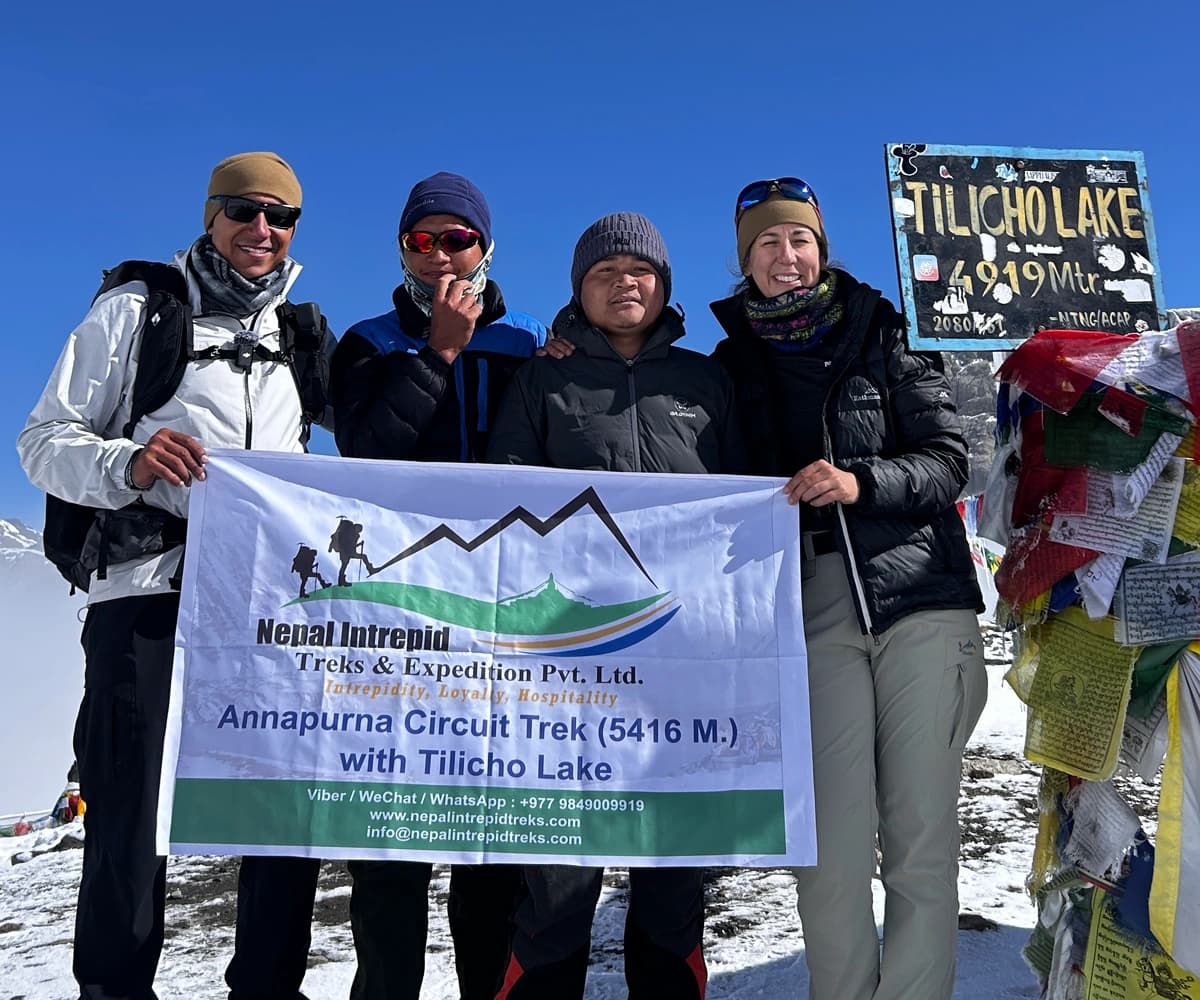
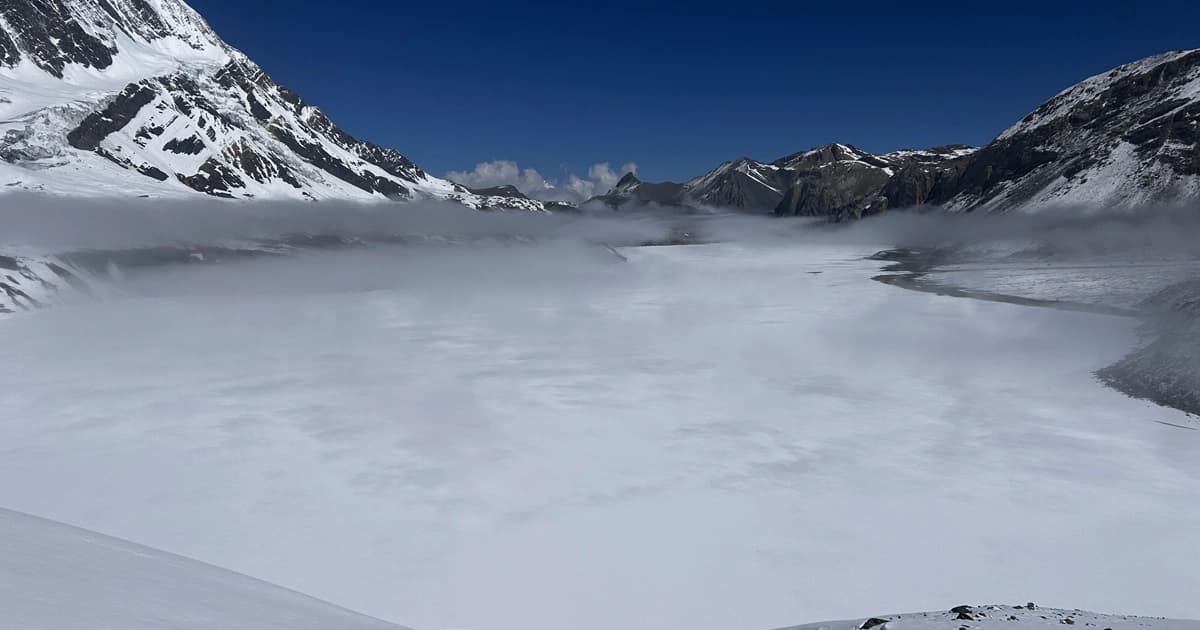
Tilicho Lake at 4,919 m
Tilicho Lake is one of the defining reasons to choose this itinerary.
Located at approximately 4,919 m, the lake sits in a dramatic high-altitude setting surrounded by rugged mountain slopes.
The approach to Tilicho is different from the main Annapurna Circuit trail. After spending time in Manang, trekkers move toward Khangsar Village and then continue into a more remote landscape before reaching Tilicho Base Camp.
From the base camp, the route climbs toward the lake.
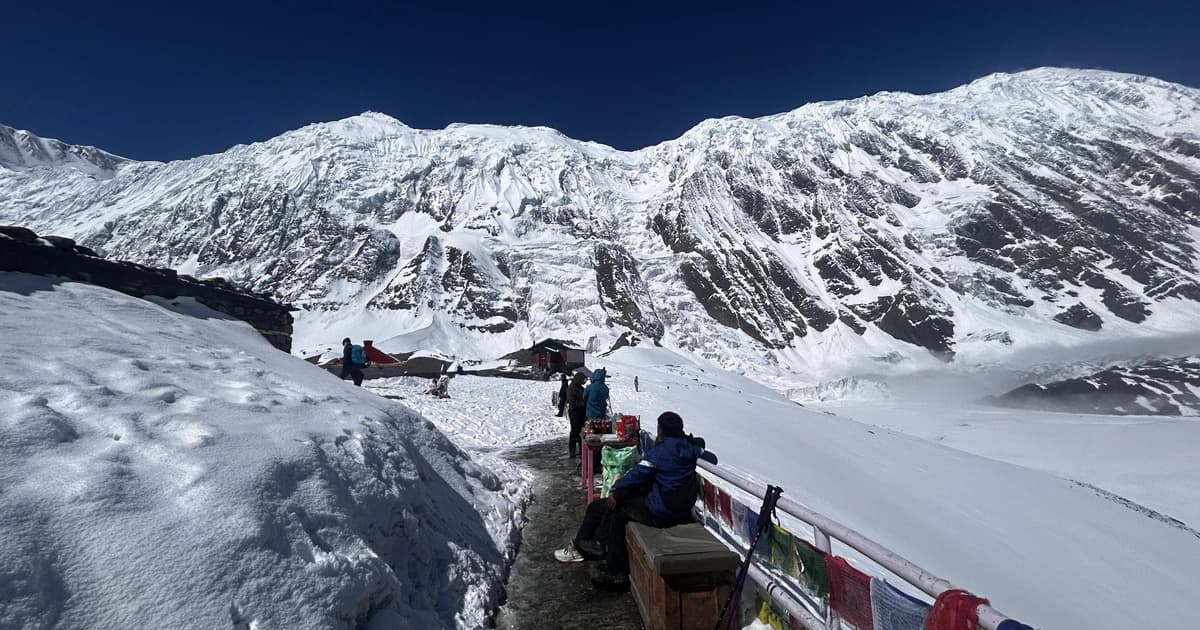
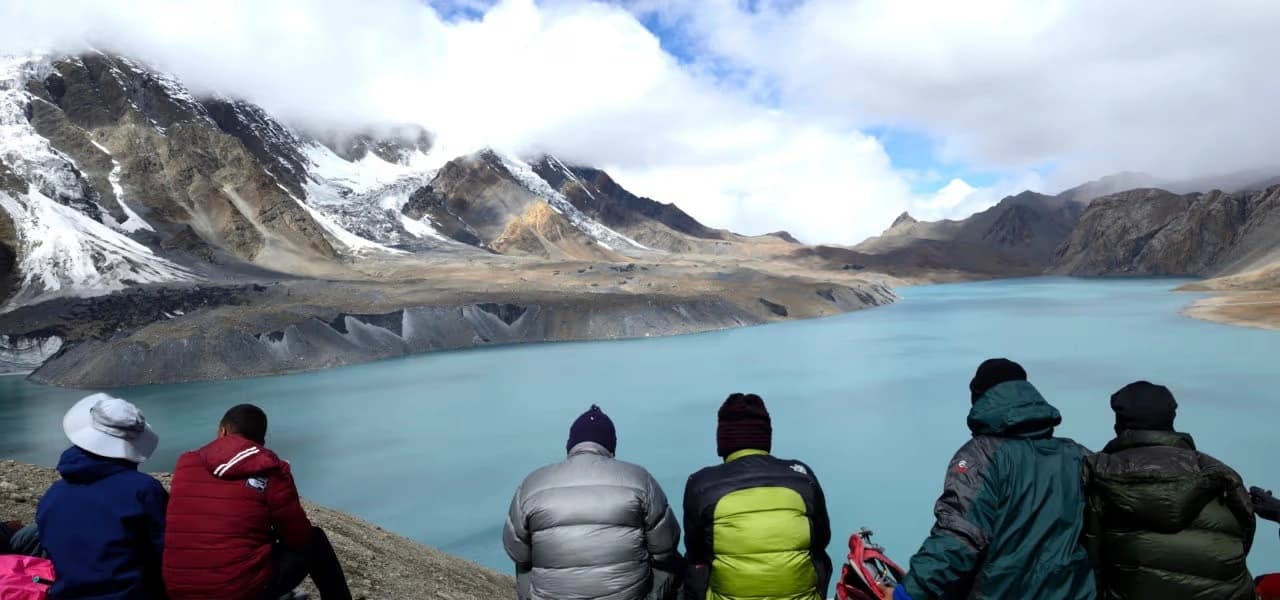
The high-altitude environment, barren slopes, surrounding peaks, and striking color of the lake create a completely different atmosphere from the forested lower sections of the circuit.
The Tilicho section also adds a sense of achievement because it requires an additional ascent and return before the itinerary reconnects with the main circuit.
This is one of the reasons the Annapurna Circuit with Tilicho Lake Trek is best suited to travelers who are prepared for a more demanding journey than a conventional circuit itinerary.
Thorong La Pass at 5,416 m
The second defining feature of the package is the crossing of Thorong La Pass at approximately 5,416 m.
Thorong La is the highest point reached during the standard itinerary and represents the major pass-crossing challenge of the trek.
The approach begins from the higher settlements around Yak Kharka and Thorong Phedi. Trekkers typically prepare for an early start before crossing the pass and descending toward Muktinath.
The day is physically demanding because of the altitude, cold, steep trail sections, long walking duration, and substantial elevation change.
Reaching the top of Thorong La provides a major trekking achievement and marks the transition from the Annapurna side of the range toward the Mustang side.
The Two High Points Make This Trek Different
Many Annapurna itineraries feature either the classic circuit or a separate excursion to Tilicho Lake. This package combines both major high-altitude objectives.
That means travelers experience:
Tilicho Lake at 4,919 m
and
Thorong La Pass at 5,416 m
The two experiences are physically different.
Tilicho involves a high-altitude side excursion from Manang, including the ascent toward the lake and the return toward the main route.
Thorong La is a major mountain-pass crossing that requires reaching Thorong Phedi, beginning early, ascending to the pass, and then descending toward Muktinath.
Together, they make the trip significantly more challenging and rewarding than a lower-elevation Annapurna itinerary.
A Journey Through the Marsyangdi River Valley
The trek begins in the Marsyangdi River valley around Jagat.
The lower section provides a green and relatively warm introduction to the Annapurna region.
The landscape includes:
Forested hills
Terraced agriculture
Mountain streams
Waterfalls
River gorges
Traditional settlements
Suspension bridges
Stone-built villages
As the trail gains elevation, the vegetation changes and the mountain environment becomes more dominant.
The Marsyangdi Valley provides an important visual contrast to the dry high-altitude environment later in the trek.
From Besishahar to Dharapani
The jeep drive section begins after Besishahar in rough road toward Dharapani.
The route passes through lower Himalayan landscapes where agriculture, forests, and villages remain prominent.
Dharapani becomes an important transition point because the character of the landscape begins changing noticeably beyond this area.
Dharapani is still relatively green at this stage, but the surrounding mountains begin to rise more dramatically.
Chame and the Changing Mountain Landscape
Chame is one of the major settlements on the route toward Manang.
As trekkers approach Chame, the environment becomes cooler and more mountainous.
Mountain views become increasingly prominent, while dense vegetation gradually gives way to more open landscapes.
This section introduces trekkers to the changing scale of the Annapurna region.
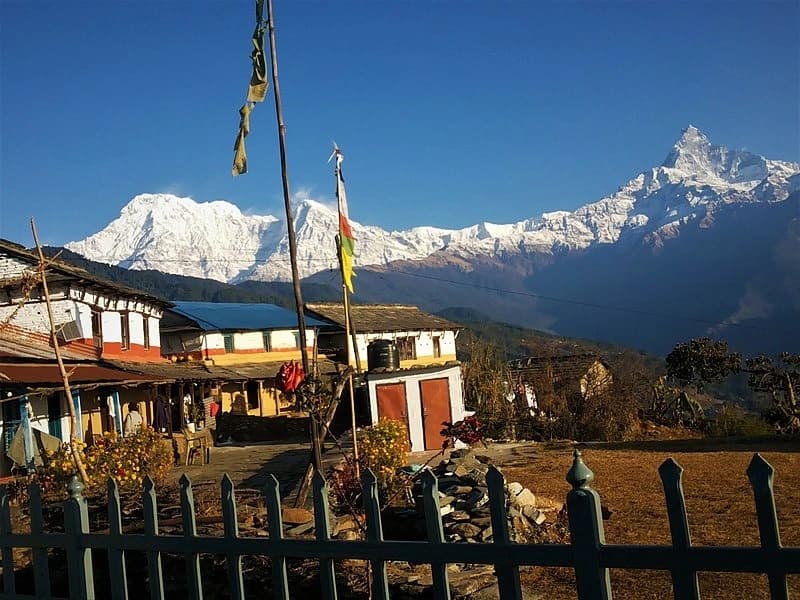
The route also provides opportunities to observe local communities, traditional architecture, prayer flags, monasteries, and everyday mountain life.
Pisang and the Upper Annapurna Valley
Pisang marks another significant stage of the journey.
The route continues into higher terrain where the landscape becomes increasingly alpine.
The Annapurna mountains appear more dominant, and the difference between the lower and upper valley becomes obvious.
The itinerary travels through the upper section toward Manang, providing both mountain views and cultural experiences.
The higher route around Pisang is particularly appreciated for its expansive views and changing landscape.
Manang as the Main Acclimatization Center
Manang is one of the most important locations on the entire journey.
At approximately 3,500 m, it provides a natural point for adjusting to higher elevation before the itinerary moves toward Tilicho Lake and eventually Thorong La.
The schedule includes an exploration and acclimatization day in Manang.
This is not simply a free day with no purpose. It provides time for the body to adjust while allowing travelers to explore the village and surrounding landscape.
The day can include short walks, cultural exploration, mountain views, and preparation for the higher-altitude sections.
A planned acclimatization period becomes particularly important because the itinerary still has two major high-altitude objectives ahead.
Manang and Himalayan Culture
Manang provides one of the strongest cultural experiences of the journey.
The settlement reflects centuries of adaptation to the high Himalayan environment.
Travelers can observe:
Stone-built homes
Buddhist traditions
Prayer flags
Mani walls
Monasteries
Traditional agricultural practices
Livestock
Local mountain trade
Tibetan-influenced cultural features
Spending time in Manang allows trekkers to appreciate that the Annapurna Circuit is not simply a route through dramatic landscapes. It is also a journey through communities whose lives are closely connected to the mountains.
Khangsar Village and the Tilicho Route
From Manang, the itinerary heads toward Khangsar Village before continuing to Tilicho Base Camp.
Khangsar provides an important transition into the side route toward Tilicho Lake.
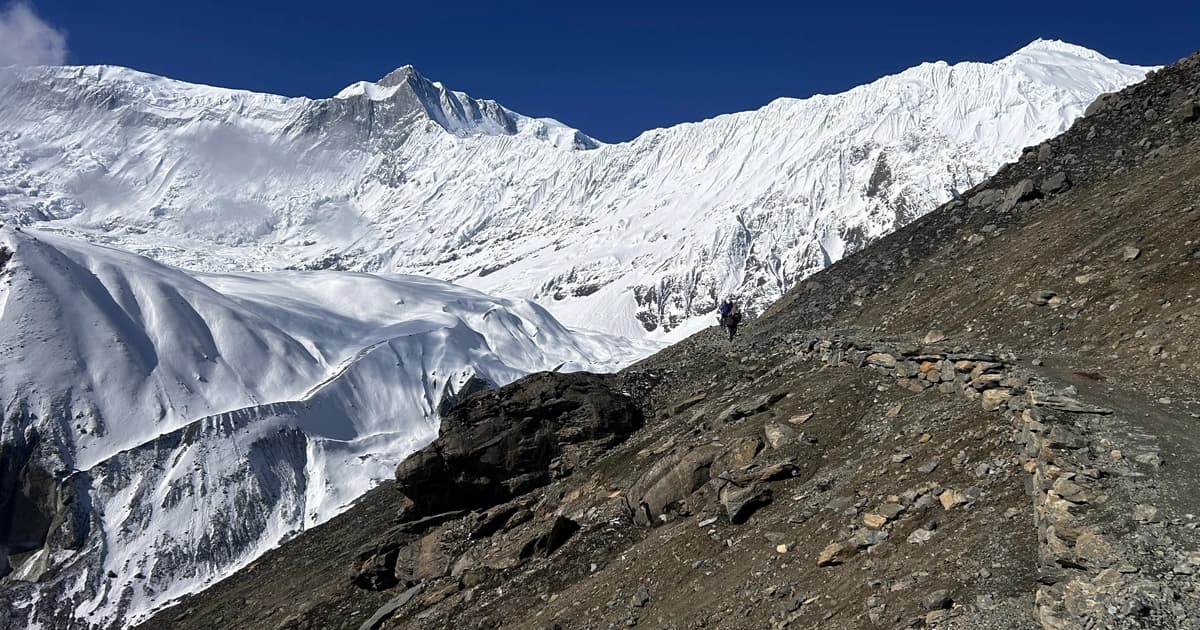
The landscape becomes progressively more rugged and less densely vegetated.
The trail also becomes more remote, increasing the importance of careful pacing, weather awareness, and following the guide.
The Tilicho section should be approached as a serious high-altitude trekking stage rather than a casual viewpoint excursion.
Tilicho Base Camp
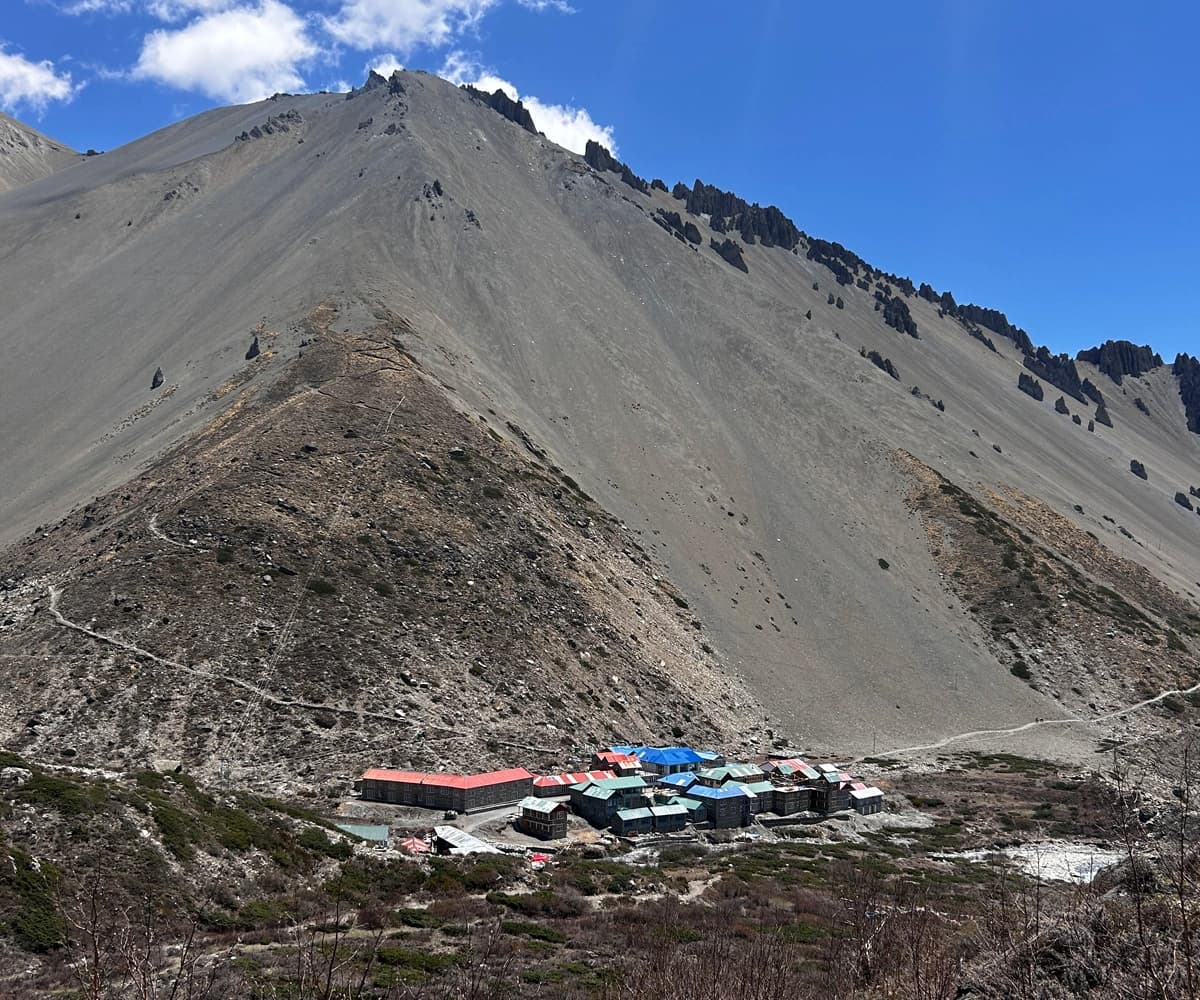
Tilicho Base Camp is approximately 4,150 m and marks the overnight stage before the lake excursion.
Reaching this elevation represents a substantial increase from Manang.
The environment is colder and more exposed, and the surrounding terrain becomes increasingly barren.
The overnight stay provides a practical base for the following high-altitude hike.
Trekkers should use the evening to eat well, hydrate, organize clothing, and prepare for the early morning journey toward Tilicho Lake.
The Tilicho Lake Experience
The hike to Tilicho Lake is one of the central experiences of this itinerary.
The trail climbs through a high-altitude environment where vegetation is limited and the mountain terrain becomes increasingly stark.
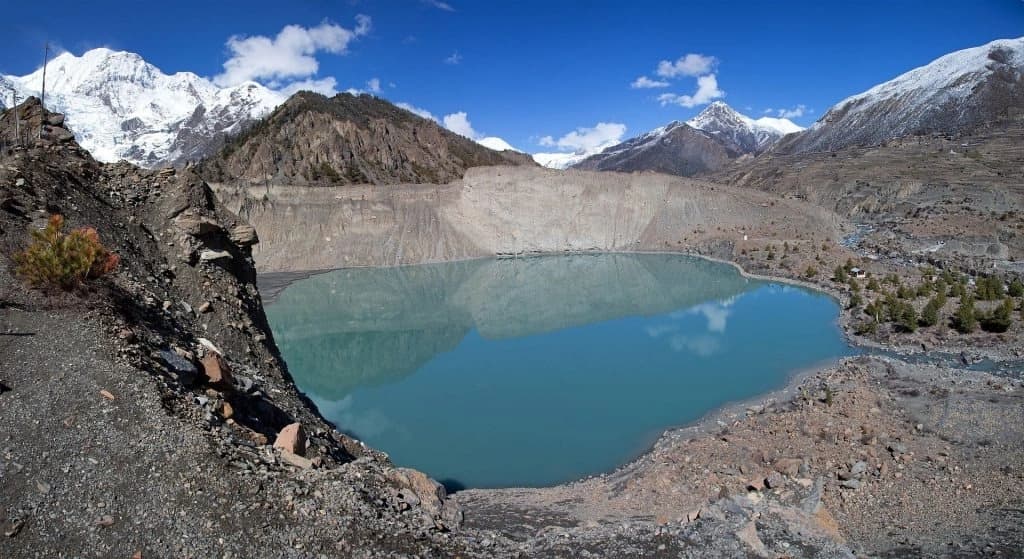
As the lake comes into view, its contrast with the surrounding rocky and snow-covered landscape creates an exceptionally dramatic setting.
Weather conditions influence how the lake appears. On a clear day, the surrounding mountains and the lake can create a broad panoramic scene. Cloud, wind, snow, or changing weather can produce a completely different atmosphere.
The goal is not simply to reach the lake, take a photograph, and immediately leave. The route provides an opportunity to experience one of the highest and most isolated landscapes of the entire Annapurna journey.
Returning From Tilicho Lake
After reaching Tilicho Lake, the route returns toward the lower point of the day's journey and continues toward the main circuit.
The return is important because the Tilicho excursion adds significant physical effort before the trek continues toward Thorong La.
Trekkers should therefore manage their energy carefully and avoid treating the lake day as an isolated activity.
Recovery after Tilicho is part of preparation for the second major high-altitude challenge.
From Tilicho Back to the Main Circuit
After the Tilicho section, the itinerary reconnects with the Annapurna Circuit.
This creates a natural transition from the side excursion back into the main circuit toward Yak Kharka.
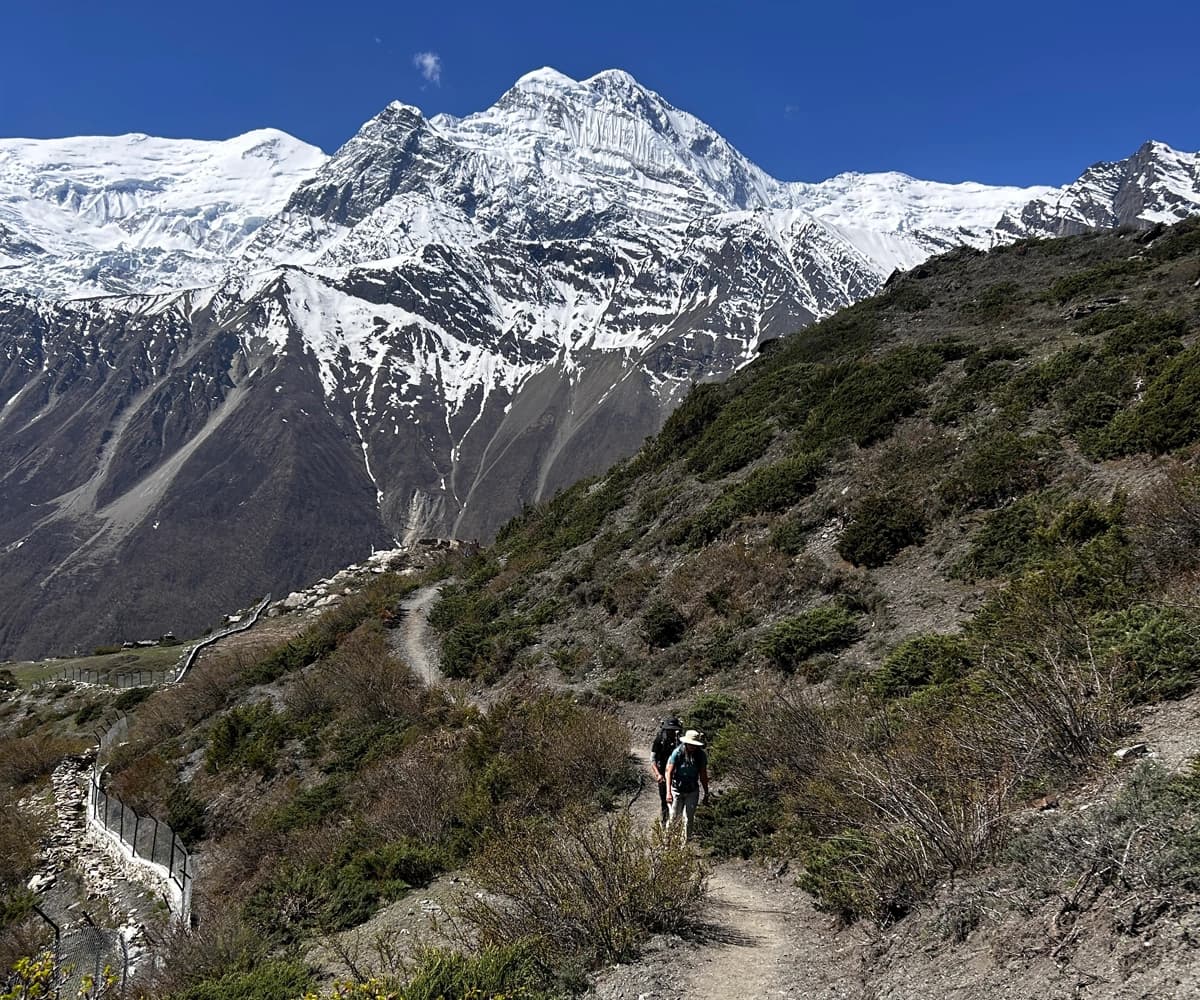
The landscape begins to feel more like the classic high Annapurna route again, with open mountain terrain, fewer trees, and dramatic views.
The next major objective is no longer Tilicho Lake but the Thorong La crossing.
Yak Kharka and High-Altitude Terrain
Yak Kharka is one of the higher settlements along the route and provides an important overnight stage before Thorong Phedi.
The surroundings are more open and alpine than the forested lower route.
The landscape features:
Dry mountain slopes
Alpine grassland
Rocky terrain
High mountain ridges
Sparse vegetation
Wide valley views
At this elevation, trekkers should pay close attention to hydration, nutrition, sleep, body condition, and symptoms of altitude-related illness.
Thorong Phedi
Thorong Phedi is the major preparation point before crossing Thorong La.
The settlement sits at approximately 4,600 m, making it one of the highest overnight locations on the trek.
The atmosphere is distinctly high-altitude.
Temperatures can be very low, particularly during the night and early morning.
The evening should be used for rest and preparation rather than unnecessary activity.
Trekkers should organize their clothing, water, snacks, headlamp, gloves, warm layers, and other essentials before going to sleep.
The Thorong La Crossing
The crossing of Thorong La is the culmination of the circuit section.
The route begins early because the pass is more commonly approached during the morning when conditions are generally more favorable than later in the day.
The trail rises steadily from Thorong Phedi toward the pass.
As elevation increases, the air becomes thinner and physical effort feels greater.
The crossing combines:
High altitude
Cold temperatures
Steep ascent
Mountain wind
Snow or ice during suitable seasons
Long walking duration
Significant descent afterward
The summit at 5,416 m provides an exceptional sense of achievement.
Descending to Muktinath
After crossing Thorong La, the route descends toward Muktinath.
This descent creates one of the most dramatic environmental transitions of the trek.
The high pass environment gradually gives way to lower and drier landscapes.
Muktinath also introduces a major cultural and religious dimension to the journey.
The area is significant to both Hindu and Buddhist traditions and is one of the important pilgrimage destinations in the region.
Muktinath and the Mustang Landscape
Muktinath provides a major contrast to the earlier Annapurna landscapes.
The environment is considerably drier, with rock formations, barren hills, and an appearance more associated with the trans-Himalayan landscape.
Travelers can experience the cultural and geographical transition from the Annapurna side to the Mustang side of the mountain range.
This dramatic change is one of the reasons the Annapurna Circuit remains such a varied trekking journey.
The Kali Gandaki Valley
From Muktinath, the route continues toward Jomsom through the Kali Gandaki region.
The valley provides another distinct landscape, with dry mountain slopes, river corridors, settlements, and views toward the surrounding peaks.
The transition from the high pass to the lower valley is physically and visually noticeable.
By the time trekkers reach Jomsom, the landscape and climate feel very different from the environment around Tilicho Lake and Thorong La.
Jomsom and the End of the Trekking Section
Jomsom marks the conclusion of the principal trekking journey.
It is an important settlement in the Kali Gandaki region and serves as the transportation connection toward Pokhara.
After many days of walking, arriving in Jomsom provides an opportunity to rest and transition back to lower-elevation travel.
The return flight from Jomsom to Pokhara is an important logistical component of the package.
Jomsom to Pokhara Flight
The itinerary includes a domestic flight from Jomsom to Pokhara.
This flight creates a convenient connection from the mountain region to the lower-elevation city.
The flight is relatively short, but it remains subject to mountain aviation conditions.
Weather and visibility can affect operations, so travelers should maintain some flexibility around the scheduled flight.
Pokhara After the Trek
Pokhara provides a major contrast to the mountain environment.
After completing the high-altitude section, travelers return to a city with more comfortable accommodation, restaurants, shops, and communication facilities.
The overnight stay provides time to recover from the trek before the flight back to Kathmandu.
Return to Kathmandu
The itinerary includes a flight from Pokhara to Kathmandu.
This marks the final transportation stage before departure.
Depending on the travel schedule, travelers may have time to rest, explore Kathmandu, complete final shopping, or prepare for their international departure.
A Trek Through Multiple Climatic Zones
One of the strongest characteristics of the Annapurna Circuit with Tilicho Lake Trek is its environmental diversity.
The journey passes through several broad climatic and ecological zones.
At lower elevations, trekkers encounter:
Green forests
Terraced fields
Waterfalls
Subtropical vegetation
River valleys
At middle elevations, the landscape becomes:
Cooler
More open
More mountainous
Dominated by conifer and alpine vegetation
Around Manang and Tilicho, the environment becomes:
Dry
Rocky
Alpine
Sparse in vegetation
Highly exposed
After Thorong La, the landscape changes toward:
Arid mountain slopes
Deep river valleys
Trans-Himalayan terrain
Mustang landscapes
This continuous transformation makes the trek much more than a single mountain trail.
Mountain Views Throughout the Journey
The trek provides numerous opportunities for mountain views.
Depending on location and weather, travelers can see prominent Himalayan peaks and surrounding mountain formations associated with the Annapurna massif and neighboring ranges.
Possible views include:
Annapurna II
Annapurna III
Annapurna IV
Annapurna South
Manaslu range
Gangapurna
Tilicho Peak
Pisang Peak
Dhaulagiri
Other surrounding Himalayan peaks
The best views are weather dependent.
Cloud, mist, snow, wind, and precipitation can reduce visibility on any particular day.
A Journey Through Traditional Mountain Villages
The Annapurna Circuit with Tilicho Lake Trek provides regular opportunities to experience traditional settlements.
Important villages and communities include:
Jagat
Dharapani
Chame
Pisang
Manang
Khangsar
Yak Kharka
Muktinath
Jomsom
Each settlement reflects different aspects of Himalayan life.
The lower villages have stronger links with agriculture and forest environments, while Manang and the higher settlements demonstrate adaptations to colder and drier mountain conditions.
Teahouse Trekking Experience
Accommodation throughout the trekking section is provided in local guesthouses and teahouses.
This style of accommodation creates an important part of the experience.
Rather than staying in isolated luxury properties, travelers spend nights in local mountain settlements and use facilities that reflect the realities of high-altitude tourism.
The standard accommodation arrangement is twin sharing.
Facilities vary according to location.
Lower-elevation lodges may offer more extensive services, while high-altitude accommodation around Tilicho and Thorong Phedi is more basic.
Travelers should expect practical rather than luxury accommodation at high altitude.
Meals During the Trek
The package includes breakfast, lunch, and dinner during the trekking section, along with a cup of tea according to the package arrangement.
Meals generally consist of practical trekking foods such as:
Dal bhat
Rice
Noodles
Pasta
Soups
Potatoes
Vegetables
Eggs
Momos
Bread
Pancakes
Other local and trekking dishes
Food options can become more limited at higher elevations.
Eating enough is particularly important during the Tilicho and Thorong La sections because these days require substantial energy.
Guide and Porter Support
The package includes an experienced English-speaking guide and porter support.
The standard arrangement provides one porter for two guests.
The guide assists with:
Route navigation
Accommodation coordination
Local communication
Daily trekking planning
Altitude awareness
Trail-condition assessment
Practical safety support
Emergency coordination
Porters carry the main trekking baggage, allowing travelers to walk with a lighter daypack.
Trekking Equipment Provided
Selected trekking equipment is included in the package.
The standard arrangement provides items such as:
Duffle bag
Sleeping bag
Down jacket
Trekking map
Nepal Intrepid Treks T-shirt
The package also includes a first-aid kit and oximeter for trekking support.
Travelers remain responsible for personal trekking equipment such as boots, clothing, gloves, hats, sunglasses, personal medication, toiletries, water bottles, headlamps, and other individual requirements.
Transportation Included in the Journey
The package combines several transportation methods.
The journey begins with ground transportation from Kathmandu toward Jagat, then continues on foot through the Annapurna region.
After reaching Jomsom, the trek transitions to domestic air transportation to Pokhara.
The itinerary then includes a domestic flight from Pokhara back to Kathmandu.
The package also includes private vehicle arrangements for airport transfers and other specified transport requirements.
High-Altitude Trekking Rather Than Technical Mountaineering
Although the itinerary reaches 5,416 m, the standard Annapurna Circuit with Tilicho Lake Trek is a trekking journey rather than a technical mountaineering expedition.
Travelers do not need advanced climbing techniques for the standard trail.
However, this does not make the route easy.
The principal challenges are:
High altitude
Long walking days
Steep ascents
Steep descents
Cold temperatures
Variable weather
Uneven terrain
Tilicho Lake approach
Thorong La crossing
Strong preparation is therefore necessary even for travelers without technical mountaineering experience.
The Physical Character of the Trek
The package generally involves around 4 to 8 hours of walking per day.
The physical difficulty changes throughout the journey.
Lower sections involve more moderate walking through valleys and villages.
The middle section becomes more demanding as elevation increases.
The Tilicho section introduces high-altitude side-trail walking.
The Thorong La crossing becomes the most physically demanding day because of elevation and distance.
After the pass, the route becomes easier in terms of altitude as it descends toward Muktinath and Jomsom.
Why the Itinerary Includes an Acclimatization Day
The Manang exploration day is an important component of the itinerary.
It provides an opportunity for:
Rest
Short acclimatization walks
Cultural exploration
Hydration
Recovery
Preparation for Tilicho Lake
Removing this day could make the itinerary more compressed and physically demanding.
For a trek that eventually reaches 4,919 m at Tilicho Lake and 5,416 m at Thorong La, allowing the body time to adapt is an important part of responsible planning.
Managing the Two High-Altitude Challenges
A major benefit of the 15-day structure is that Tilicho Lake and Thorong La are not treated as back-to-back objectives without preparation.
The trek first develops gradually through the lower circuit.
Manang provides a planned acclimatization opportunity.
Tilicho Lake then becomes the first major high-altitude objective.
The route subsequently reconnects with the main circuit before continuing toward Yak Kharka and Thorong Phedi.
Thorong La comes later, after additional time at higher elevations.
This progression provides a more structured approach to the two highest points of the journey.
A Combination of Adventure and Cultural Travel
The trek appeals to travelers who want more than mountain scenery.
The route provides opportunities to experience different Himalayan communities, local food, religious traditions, traditional architecture, and changing cultural influences.
The journey from lower Gurung-influenced communities toward Manang and later Muktinath and Jomsom shows how culture changes across geographic and elevation zones.
This creates a strong balance between physical adventure and cultural discovery.
Why the Annapurna Circuit With Tilicho Lake Is a Complete Trekking Package
The package brings together several major experiences within one organized trip:
Classic Annapurna Circuit
Tilicho Lake
Manang acclimatization
Thorong La Pass
Muktinath
Kali Gandaki Valley
Jomsom
This makes it appropriate for travelers who want an extensive experience of the Annapurna region rather than a short visit to one destination.
Suitable for Travelers Seeking a More Challenging Annapurna Trek
The addition of Tilicho Lake makes the journey more demanding than the standard circuit.
Travelers should choose this package when they are comfortable with:
Long trekking days
High altitude
Early starts
Basic teahouse accommodation
Cold conditions
Steep trails
Significant elevation changes
A 5,416 m mountain pass
It is especially suitable for trekkers who want a significant Himalayan challenge without moving into technical mountaineering.
Suitable for Travelers Who Want a Complete Annapurna Journey
The route offers a particularly broad Annapurna experience.
Instead of focusing only on the circuit's pass crossing, travelers also experience the Tilicho region.
Instead of stopping at Manang, the itinerary continues into the high-altitude landscape beyond it.
Instead of returning directly after the pass, the route continues through Muktinath and Jomsom, allowing travelers to experience the transition into Mustang.
This makes the trek feel like a complete geographical journey around and through the Annapurna landscape.
Private and Small-Group Trekking
The package can be arranged from a minimum of one traveler, allowing solo travelers and private groups to participate.
Private trekking can be particularly useful for:
Couples
Families
Friends
Experienced trekkers
Photographers
Travelers with specific dates
Travelers who prefer a flexible pace
A private arrangement can also make it easier to discuss additional rest days, accommodation preferences, special dietary needs, or selected itinerary adjustments.
A Trek Designed Around Mountain Experience
The Annapurna Circuit with Tilicho Lake Trek is not simply a checklist of destinations.
The strength of the package is the progression from low valleys to high mountains, from green forests to dry alpine landscapes, and from traditional villages to the high-altitude environments surrounding Tilicho Lake and Thorong La.
Every stage adds something different.
The lower Marsyangdi Valley introduces the cultural and natural character of the Annapurna region.
Manang provides both cultural depth and acclimatization.
Tilicho introduces one of Nepal's most dramatic high-altitude lake landscapes.
Thorong La provides the major pass-crossing challenge.
Muktinath and Jomsom bring the journey into a completely different climatic and cultural environment.
Planning the Trek With Nepal Intrepid Treks
Nepal Intrepid Treks organizes the principal logistics required for the 16-day journey, including specified transportation, accommodation, meals during the trek, guide and porter support, trekking permits, and selected equipment.
The trekking team also provides practical support throughout the route.
Travelers are responsible for preparing appropriate travel insurance, personal trekking equipment, medication, drinking water expenses, personal spending, and other excluded services.
A pre-trek briefing helps travelers understand the route, altitude, packing requirements, transportation, accommodation, safety considerations, and daily trekking routine before leaving for the mountains.
Understanding What Makes This Trek Demanding
The main challenge is not one individual climb.
It is the combination of repeated trekking days, increasing altitude, the Tilicho excursion, high-altitude overnight stays, and the Thorong La crossing.
Travelers need sufficient endurance to keep walking even after several days on the trail.
The body must also adapt to progressively higher elevations.
For this reason, physical preparation and acclimatization should be considered equally important.
Understanding What Makes This Trek Rewarding
The same factors that make the trek challenging also create its greatest rewards.
Reaching Tilicho Lake after a demanding high-altitude ascent creates a strong sense of accomplishment.
Crossing Thorong La at 5,416 m provides another major achievement.
Between these two objectives, travelers experience some of the most diverse landscapes in the Annapurna region.
The journey is therefore rewarding not only because of the destinations but because of the progression required to reach them.
The Annapurna Circuit with Tilicho Lake as a 15-Day Himalayan Journey
The 15-day itinerary provides a comprehensive introduction to the Annapurna region while incorporating two major high-altitude objectives.
From Kathmandu, the route travels by road toward Dharapani and then continues on foot through the Marsyangdi Valley.
The trail climbs through Dharapani, Chame, Pisang, and Manang before turning toward Khangsar and Tilicho Base Camp.
The trek then reaches Tilicho Lake at approximately 4,919 m before reconnecting with the main circuit.
From Yak Kharka and Thorong Phedi, travelers prepare for and cross Thorong La at 5,416 m.
The route then descends to Muktinath and continues through the Kali Gandaki Valley to Jomsom before flying to Pokhara and returning to Kathmandu.
The Complete Route in One View
Kathmandu → Dharapani → Chame → Pisang → Manang → Khangsar → Tilicho Base Camp → Tilicho Lake → Siri Kharka → Yak Kharka → Thorong Phedi → Thorong La → Muktinath → Jomsom → Pokhara → Kathmandu
This route captures the essential character of the Annapurna Circuit while adding the high-altitude Tilicho Lake extension.
Who Should Choose the Annapurna Circuit With Tilicho Lake Trek
This trek is a strong choice for travelers who want:
A longer Himalayan trekking experience
The classic Annapurna Circuit
Tilicho Lake at 4,919 m
Thorong La at 5,416 m
An acclimatization day in Manang
High-altitude mountain scenery
Traditional Himalayan villages
Muktinath and Jomsom
A changing landscape from green valleys to alpine desert
Teahouse trekking
Organized guide and porter support
A challenging but non-technical Himalayan adventure
Travelers looking for a very short or low-altitude trek may prefer a different Annapurna itinerary.
The Value of Combining Tilicho Lake With the Annapurna Circuit
Combining the two routes creates a more complete experience without requiring travelers to arrange separate trekking programs.
The major logistical components are organized within one journey, while the itinerary provides enough time to experience the principal stages.
For travelers already considering both destinations, combining them into one trek can provide better continuity than completing separate trips.
The result is a journey that includes high mountain lakes, major mountain passes, dramatic valleys, local communities, cultural sites, and a wide range of Himalayan landscapes.
Final Annapurna Circuit With Tilicho Lake Trek Experience
The Annapurna Circuit with Tilicho Lake Trek is designed for travelers who want to experience the Annapurna region at a deeper level.
The journey does not simply circle the mountains. It adds a demanding high-altitude excursion to Tilicho Lake before continuing to the famous Thorong La Pass.
The route begins in green lower valleys, climbs through forested mountain terrain, reaches Manang and its high Himalayan culture, moves into the barren landscape surrounding Tilicho Lake, crosses one of Nepal's major trekking passes, and then descends into the dry landscapes of Muktinath, Mustang, and the Kali Gandaki Valley.
The combination of Tilicho Lake at 4,919 m and Thorong La at 5,416 m defines the character of the trek, but the complete experience extends far beyond those two high points.
The villages, forests, rivers, mountain views, teahouses, cultural encounters, changing vegetation, and dramatic elevation transitions together create the full journey.
With an experienced guide, porter support, organized transportation, teahouse accommodation, trekking meals, permit arrangements, and selected equipment included, Nepal Intrepid Treks provides the logistical framework for travelers to focus on the mountain experience.
For trekkers prepared for sustained walking and high-altitude conditions, the 15-day Annapurna Circuit with Tilicho Lake Trek offers a comprehensive route through some of Nepal's most varied mountain landscapes, from the Marsyangdi River valley to Tilicho Lake, across Thorong La, and down into the Kali Gandaki Valley before returning to Pokhara and Kathmandu.
Annapurna Circuit with Tilicho Lake Trek Highlights
The Annapurna Circuit with Tilicho Lake Trek combines some of the most diverse landscapes, villages, mountain viewpoints, high-altitude environments, and cultural experiences in the Annapurna region into one 15-day journey. The route is especially appealing to trekkers who want to go beyond the classic circuit and add the spectacular high-altitude landscape of Tilicho Lake before crossing Thorong La Pass.
From the lush Marsyangdi River valley to the dry trans-Himalayan landscapes beyond Muktinath, the journey changes continuously. The trail passes through forests, cultivated hillsides, deep river valleys, traditional settlements, alpine terrain, and exposed high mountain landscapes.
The two defining highlights are Tilicho Lake at approximately 4,919 m and Thorong La Pass at 5,416 m. Together, they give this itinerary a stronger high-altitude character than a standard Annapurna Circuit trek.
The experience, however, extends far beyond these two points. Manang, Khangsar, Muktinath, Jomsom, the Kali Gandaki Valley, local teahouses, mountain communities, and the changing landscape all contribute to the character of the trek.
Tilicho Lake at 4,919 m
The most distinctive highlight of this itinerary is the journey to Tilicho Lake at approximately 4,919 m.
Tilicho is located high in the Annapurna region and is surrounded by dramatic mountain terrain. Reaching the lake requires a dedicated side journey from Manang through Khangsar and onward to Tilicho Base Camp.
The approach is a major trekking experience in itself.
The trail gradually leaves behind the more developed sections around Manang and enters a quieter, increasingly rugged environment. Vegetation becomes sparse, slopes become more exposed, and the mountain scenery takes on a distinctly high-altitude character.
When the lake comes into view, the setting changes again. The contrast between the lake, surrounding rocky slopes, and snow-covered peaks creates one of the most memorable landscapes of the entire trek.
For many travelers, reaching Tilicho Lake is the defining achievement of the journey.
Thorong La Pass at 5,416 m
The second major highlight is the crossing of Thorong La Pass at approximately 5,416 m.
Thorong La is the highest point of the standard itinerary and represents the main pass-crossing challenge of the Annapurna Circuit.
The journey to the pass begins after spending time at higher elevations around Yak Kharka and Thorong Phedi.
The crossing generally begins early in the day, when trekkers make the sustained ascent toward the pass. Cold temperatures, thin air, steep terrain, and the length of the day make this a demanding section.
Reaching the summit creates a strong sense of achievement before the trail begins its long descent toward Muktinath.
The pass also marks a dramatic geographical transition from the Annapurna side of the range into the drier landscapes toward Mustang.
Two Major High-Altitude Achievements in One Trek
A major reason to choose this package is that it combines two important high-altitude objectives.
Tilicho Lake: approximately 4,919 m
Thorong La Pass: 5,416 m
The two experiences are different.
Tilicho is a high-altitude lake excursion that involves leaving the main circuit, reaching a remote destination, and returning to the main route.
Thorong La is a mountain-pass crossing involving a long ascent to the highest point of the trek followed by a major descent to Muktinath.
Completing both gives the journey a broader range of high-altitude trekking experiences.
Classic Annapurna Circuit Experience
Although Tilicho Lake is the major addition, the itinerary still preserves the essential character of the Annapurna Circuit.
The route travels through key settlements and landscapes associated with the classic circuit, including:
Dharapani → Chame → Pisang → Manang → Yak Kharka → Thorong Phedi → Muktinath → Jomsom
This means travelers experience the mountain villages, changing elevations, valleys, and pass crossing that define the circuit while also adding the Tilicho excursion.
Scenic Marsyangdi River Valley
The lower Annapurna Circuit begins around the Marsyangdi River valley, which provides a green and dramatic introduction to the trek.
The landscape includes:
Forested hills
River gorges
Waterfalls
Terraced fields
Mountain streams
Suspension bridges
Traditional villages
The valley feels very different from the high-altitude environment encountered later.
This early section also helps illustrate the enormous elevation range covered during the journey.
Changing Landscapes From Subtropical to Alpine
One of the most impressive features of the trek is how quickly the environment changes.
Lower elevations are characterized by greener vegetation, agriculture, and forested hills.
As the trail climbs, trekkers encounter cooler mountain environments, more open slopes, and increasingly sparse vegetation.
Around Manang and Tilicho, the landscape becomes much drier and more alpine.
After Thorong La, the environment changes again into the dry Himalayan landscapes associated with Muktinath and Mustang.
This progression makes the route exceptionally varied.
Dharapani and the Transition Toward Higher Mountains
Dharapani is an important stage on the early circuit.
The settlement provides a transition between the lower valley environment and the higher mountain terrain toward Chame and Manang.
As trekkers continue from Dharapani, the valley begins to narrow and the surrounding mountains become increasingly dominant.
This is where the route starts to feel distinctly alpine even though the highest elevations are still ahead.
Chame and Mountain Village Life
Chame is one of the significant settlements on the route.
It combines practical trekking infrastructure with an opportunity to experience life in a mountain community.
The surrounding landscape features mountain slopes, forests, river scenery, and increasingly dramatic views toward the Annapurna range.
Chame also provides an important overnight stage as travelers continue their gradual ascent.
Pisang and Himalayan Mountain Views
Pisang is another major highlight.
The area provides dramatic mountain scenery and a clear sense that the trek has moved into a higher Himalayan environment.
The village surroundings combine traditional architecture with expansive mountain views.
Travelers can experience the contrast between the more sheltered lower villages and the open, rugged landscapes that appear as the route approaches Manang.
Upper Pisang and the Scenic Route
The upper route around Pisang is particularly attractive to travelers interested in mountain scenery and traditional Himalayan landscapes.
From this section, the terrain opens toward the surrounding peaks, while the villages and trails provide opportunities to observe traditional settlement patterns in the higher Annapurna region.
This section also contributes to the gradual visual transformation of the trek.
Manang at 3,500 m
Manang is one of the most important destinations on the itinerary.
At approximately 3,500 m, it provides both cultural and trekking significance.
The village is surrounded by dramatic mountain terrain and reflects a high-altitude way of life shaped by climate, geography, agriculture, trade, and Buddhist traditions.
Manang is also where the itinerary includes a dedicated acclimatization and exploration day.
Manang Acclimatization and Exploration
The acclimatization day in Manang is an important highlight because it allows travelers to spend additional time at elevation before moving toward Tilicho and eventually Thorong La.
Rather than continuing to gain elevation every day, the itinerary allows time for:
Short walks
Local exploration
Mountain views
Rest
Hydration
Recovery
Preparation for higher sections
This creates a more balanced trekking experience.
Manang's Traditional Culture
Manang provides one of the strongest cultural experiences along the route.
Travelers can see:
Traditional stone houses
Buddhist prayer flags
Mani walls
Monasteries
Local agricultural practices
Livestock
Mountain pathways
Traditional community life
The village offers a valuable opportunity to understand how people adapt to life in a high-altitude environment.
Khangsar Village
Khangsar is an important village on the route toward Tilicho Lake.
The landscape becomes more rugged after leaving the main Annapurna Circuit around Manang.
Khangsar provides a cultural transition between the larger Manang area and the more remote Tilicho route.
Traditional houses, narrow paths, mountain slopes, and prayer flags contribute to the character of the village.
The Tilicho Side Trail
The trail toward Tilicho Lake is one of the strongest highlights because it introduces a different environment from the main circuit.
The route becomes more exposed and remote.
Trekkers encounter:
Rocky slopes
High mountain ridges
Sparse vegetation
Steep terrain
Large mountain views
Dramatic valleys
High-altitude landscapes
The side trip makes the overall journey more adventurous without requiring technical climbing skills.
Tilicho Base Camp at Approximately 4,150 m
Tilicho Base Camp serves as the overnight stage before the lake excursion.
At around 4,150 m, the environment is already distinctly high altitude.
The setting is colder, more rugged, and less vegetated than the villages around Manang.
The base camp is an important part of the experience because reaching the lake the following day requires starting from this elevated location.
Sunrise and Morning Light Around Tilicho
The early hours in the Tilicho region can produce striking mountain light.
Cold morning temperatures, clear air, and changing sunlight across the surrounding slopes can create strong photographic conditions when weather is favorable.
Travelers who enjoy photography should keep their camera accessible and protect equipment from moisture and cold.
The High-Altitude Lake Landscape
Tilicho Lake's setting is one of the most dramatic aspects of the trek.
The lake is surrounded by high mountain terrain rather than forests or developed settlements.
The sparse landscape makes the lake appear especially striking against the surrounding slopes.
This combination of water, rock, snow, and open mountain space creates a very different atmosphere from the greener lower sections of the Annapurna Circuit.
Return From Tilicho to the Main Circuit
The return from Tilicho is also part of the adventure.
After reaching the lake, the route descends and reconnects with the main Annapurna Circuit.
Trekkers then continue toward the high-altitude settlements leading to Thorong La.
The experience therefore moves from one major objective directly into preparation for another.
Yak Kharka and Alpine Scenery
Yak Kharka provides another clear transition into the high-altitude environment.
The landscape is more open than the forests around the lower circuit.
The surroundings include:
Alpine grassland
Rocky slopes
Mountain ridges
Sparse vegetation
Wide valley views
The setting is particularly representative of the higher Annapurna region.
Thorong Phedi at High Elevation
Thorong Phedi is the final major stopping point before the pass crossing.
At approximately 4,600 m, it is one of the highest overnight locations on the itinerary.
The environment is cold and exposed, and the settlement provides a practical base for the early start toward Thorong La.
The evening here is less about sightseeing and more about preparing properly for the pass.
Early Morning Thorong La Crossing
The pass-crossing day typically starts early.
An early departure helps maximize daylight and provides a structured approach to the long ascent.
Trekkers move gradually from Thorong Phedi toward the pass while temperatures remain cold.
The changing light over the mountain slopes, the increasingly open terrain, and the physical challenge create a memorable trekking day.
Reaching the Top of Thorong La
Standing at 5,416 m at the top of Thorong La is one of the defining achievements of the trek.
The pass provides expansive mountain views in favorable weather and a clear sense of how high the route has climbed.
Many trekkers spend some time at the summit taking photographs and appreciating the achievement before beginning the descent.
Because the environment can be cold and windy, time at the pass should remain practical and conditions should be respected.
The Long Descent From Thorong La
After the pass, the trail descends toward Muktinath.
The descent is one of the most physically noticeable changes in the trek.
The body moves from the highest point of the itinerary toward lower elevation within the same day.
This provides relief from the altitude but places significant physical demand on the legs because of the length and steepness of the descent.
Muktinath and Religious Heritage
Muktinath is a major cultural and spiritual highlight.
It is an important pilgrimage destination for both Hindu and Buddhist traditions.
Travelers can observe the area's religious architecture, shrines, prayer flags, and pilgrimage activity while respecting local practices.
Muktinath adds a cultural dimension to the trek after the physical achievement of crossing Thorong La.
Transition Into Mustang
The landscape around Muktinath marks another major transformation.
Compared with the greener lower Annapurna valleys, the surroundings are much more arid.
The terrain features:
Dry hills
Exposed rock
Sparse vegetation
Broad mountain valleys
Wind-shaped landscapes
Distinctive trans-Himalayan scenery
This environmental transition is one of the most memorable aspects of completing the full circuit.
Kali Gandaki Valley
The route toward Jomsom follows the Kali Gandaki region.
This section offers a contrasting landscape shaped by the river valley and surrounding dry mountain slopes.
The Kali Gandaki corridor connects different geographic and cultural environments and provides another perspective on the Annapurna and Mustang landscapes.
Jomsom and the Mountain Settlement Experience
Jomsom is the final major destination of the trekking route.
The settlement provides an important link between the high mountain trail and the lower-elevation transportation network.
After completing the Tilicho Lake excursion and Thorong La crossing, reaching Jomsom marks the end of the main walking adventure.
Jomsom to Pokhara Flight
The flight from Jomsom to Pokhara creates a dramatic change in environment and travel style.
After days of walking through high-altitude terrain, travelers transition quickly toward the lower and warmer atmosphere of Pokhara.
The flight itself can also provide mountain views when weather conditions are favorable.
Pokhara as the Post-Trek Transition
Pokhara offers a comfortable transition after the high-altitude trek.
Travelers can rest, enjoy city amenities, organize their belongings, and recover from the demanding mountain section before returning to Kathmandu.
The contrast between the quiet alpine environment and the more developed lakeside city is immediately noticeable.
Diverse Mountain Views
The trek provides extensive opportunities to see Himalayan peaks.
Depending on location and weather, travelers may encounter views toward:
Annapurna II
Annapurna III
Annapurna IV
Annapurna South
Gangapurna
Tilicho Peak
Manaslu range
Dhaulagiri
Pisang Peak
Other surrounding peaks
Not every mountain is visible from every section.
Cloud and weather determine the actual views available each day.
Forests and Changing Vegetation
The lower sections of the journey provide a strong forest experience before the route moves into increasingly open terrain.
Travelers may pass through:
Pine forests
Rhododendron areas
Mixed mountain woodland
Alpine vegetation
Sparse high-altitude slopes
The contrast between the forested lower route and the barren areas around Tilicho and Thorong La is one of the trek's strongest visual characteristics.
Waterfalls and Mountain Rivers
The lower and middle sections of the route feature numerous streams, waterfalls, and river crossings.
The Marsyangdi River is an especially important feature of the early route.
Watercourses provide dramatic contrasts with the dry landscapes encountered later.
The continual presence and disappearance of water also demonstrate the major climatic changes experienced during the trek.
Traditional Stone Villages
Traditional mountain architecture is visible throughout many sections of the trek.
Stone walls, narrow paths, prayer flags, wooden elements, and compact village structures reflect the practical adaptation of communities to the mountain environment.
The architecture becomes particularly distinctive around Manang and the upper settlements.
Prayer Flags, Mani Walls and Buddhist Heritage
Travelers encounter visible signs of Buddhist traditions throughout the higher Annapurna region.
These can include:
Prayer flags
Mani walls
Chortens
Monasteries
Prayer wheels
Religious symbols
These features are part of living religious and cultural traditions rather than simply decorative elements.
Travelers should observe respectfully and follow local customs when visiting religious sites.
Gurung and Manangi Cultural Experiences
The lower sections provide opportunities to encounter Gurung communities and other Himalayan groups, while the Manang area introduces distinctive high-altitude cultural traditions.
Travelers can observe differences in:
Architecture
Clothing
Food
Agricultural practices
Religious traditions
Local language
Community structure
The cultural diversity adds depth to the physical journey.
Local Himalayan Food
Meals are an important part of the trekking experience.
The package includes breakfast, lunch, and dinner during the trekking section.
Travelers commonly encounter:
Dal bhat
Rice
Noodles
Soup
Pasta
Potatoes
Momos
Eggs
Bread
Pancakes
Local vegetable dishes
Food may become simpler as altitude increases.
Teahouse Hospitality
The overnight experience in local teahouses is itself a highlight.
Trekkers spend evenings in mountain lodges where they can:
Eat warm meals
Rest
Meet fellow travelers
Speak with local staff
Prepare for the next day
Enjoy the mountain atmosphere
At higher elevations, facilities are simpler, but this simplicity is part of the authentic trekking experience.
The Contrast Between Lower and Upper Annapurna
Few trekking routes provide such a pronounced environmental transition within one journey.
At the beginning, travelers see:
Green valleys → forests → waterfalls → terraced hills
Further along:
Mountain villages → alpine valleys → sparse vegetation
Around Tilicho:
Rocky high-altitude terrain → exposed slopes → high mountain lake
After Thorong La:
Dry landscapes → Muktinath → Mustang-style valleys → Kali Gandaki
This constant transformation keeps the trek visually diverse throughout.
A Strong Photography Route
The Annapurna Circuit with Tilicho Lake is particularly suitable for photography because of the variety of subjects.
Photographers can capture:
Mountain panoramas
Sunrises
Traditional villages
Buddhist details
Forests
Rivers
Waterfalls
High-altitude landscapes
Tilicho Lake
Thorong La
Muktinath
Jomsom
Cultural life
The route's changing light and landscape provide different photographic opportunities each day.
Best Highlights for Nature Lovers
Travelers focused on nature can experience major changes in:
Vegetation
Climate
Elevation
Wildlife habitats
Mountain geology
River systems
The transition from lower forests to high alpine terrain makes the route especially attractive to nature-oriented travelers.
Best Highlights for Adventure Travelers
Adventure-focused trekkers will find the strongest challenge in the combination of:
Tilicho Lake
High-altitude trekking
Thorong Phedi
Thorong La
Long descents
Variable mountain weather
The trek offers substantial adventure without requiring technical climbing skills on the standard trail.
Best Highlights for Cultural Travelers
The cultural highlights include:
Mountain villages
Manang
Khangsar
Traditional houses
Buddhist monasteries
Prayer flags
Mani walls
Muktinath
Jomsom
Local food
Teahouse hospitality
Travelers who spend time interacting respectfully with communities can gain a deeper understanding of Himalayan life.
The Importance of Manang in the Overall Experience
Manang is more than an overnight stop.
It serves as a bridge between the lower circuit and the extreme high-altitude stages.
It provides:
Acclimatization
Cultural exposure
Local exploration
Mountain scenery
Preparation for Tilicho
This combination makes Manang one of the most significant destinations on the itinerary.
The Physical Achievement of Tilicho Lake
Reaching Tilicho Lake involves more than simply traveling to a scenic destination.
The trail climbs into a high-altitude environment and demands steady effort.
The combination of elevation, exposed terrain, and remoteness creates a strong sense of achievement for trekkers who reach the lake.
The Physical Achievement of Thorong La
Thorong La represents a different type of challenge.
The ascent begins from high elevation and continues toward 5,416 m.
The thin air, cold, steep terrain, and long day require careful pacing.
Completing the crossing is often remembered as one of the greatest accomplishments of the entire trek.
Two Very Different High-Altitude Landscapes
Tilicho Lake and Thorong La both reach extreme elevations, but their landscapes are different.
Tilicho provides a dramatic lake environment enclosed by mountain terrain.
Thorong La provides a broad high mountain pass between major valleys.
Experiencing both gives travelers a much wider understanding of the Annapurna highlands.
The Sense of Progression Throughout the Trek
Another highlight is the continuous sense of moving deeper into the mountains.
The journey starts with accessible lower valleys and gradually progresses toward increasingly remote and demanding terrain.
Every major settlement signals a change in the route.
By the time travelers reach Tilicho and Thorong La, the transformation from the starting landscape is substantial.
The Return to Lower Elevation
The trek is not only about climbing higher.
The descent is equally important.
After Thorong La, the route drops dramatically toward Muktinath and Jomsom.
The change in temperature, vegetation, landscape, and atmosphere creates a clear sense of completion.
The Complete Circuit Experience
Completing the Annapurna Circuit with Tilicho Lake provides a sense of continuity that shorter itineraries cannot always provide.
The route begins in one environment and finishes in a completely different one.
Travelers experience a broad arc:
Marsyangdi Valley → Manang → Tilicho → Thorong La → Muktinath → Mustang → Kali Gandaki → Jomsom
This makes the trek feel like a genuine journey across the Annapurna landscape rather than a trek to and from a single destination.
Why This Trek Stands Out
The Annapurna Circuit with Tilicho Lake Trek stands out because it combines several of Nepal's strongest trekking experiences within one itinerary.
It offers:
A 4,919 m high-altitude lake
A 5,416 m mountain pass
An acclimatization day in Manang
Traditional Himalayan villages
Changing ecological zones
Dry Mustang landscapes
Muktinath pilgrimage culture
Kali Gandaki Valley scenery
Teahouse trekking
Extensive mountain views
The result is a route that is both geographically diverse and physically rewarding.
A Complete High-Altitude Annapurna Adventure
For travelers seeking a more comprehensive Annapurna experience, the combination of the classic circuit and Tilicho Lake provides a strong balance of challenge, scenery, culture, and exploration.
The journey starts with the greenery of the Marsyangdi River valley, moves through Dharapani and Chame, reaches Pisang and Manang, turns toward Khangsar and Tilicho Lake, reconnects with the main circuit, approaches Thorong Phedi, crosses Thorong La at 5,416 m, and descends toward Muktinath and Jomsom.
Every stage offers something different.
There are forests and waterfalls in the lower valleys, mountain villages around Manang, exposed high-altitude terrain near Tilicho, dramatic pass scenery around Thorong La, religious heritage at Muktinath, and dry trans-Himalayan landscapes toward Jomsom.
Highlights at a Glance
Highlight | Elevation / Location | Why It Matters |
Tilicho Lake | 4,919 m | Major high-altitude lake experience |
Thorong La | 5,416 m | Highest point and signature pass crossing |
Manang | 3,500 m | Acclimatization and cultural center |
Khangsar | High mountain village | Gateway toward Tilicho |
Tilicho Base Camp | Approx. 4,150 m | Base for lake excursion |
Thorong Phedi | Approx. 4,600 m | Preparation point for pass |
Muktinath | Lower elevation | Major Hindu and Buddhist pilgrimage destination |
Jomsom | Approx. 2,720 m | End of main trek and flight connection |
Marsyangdi Valley | Lower circuit | Green valleys, rivers and waterfalls |
Kali Gandaki Valley | Lower Mustang | Dry trans-Himalayan landscapes |
Experiencing More Than the Two Main Highlights
Although Tilicho Lake and Thorong La are the headline attractions, the strength of this package comes from experiencing the entire route between them.
The surrounding villages, forests, rivers, cultural sites, changing climate, mountain views, teahouses, and trail conditions create the context that makes the two major high-altitude achievements meaningful.
A trekker who reaches Tilicho Lake without experiencing the lower journey misses the gradual transformation that makes the destination special. Similarly, crossing Thorong La is more rewarding when it follows days of preparation through the Annapurna Circuit.
The Annapurna Circuit With Tilicho Lake as a Complete Trekking Experience
The Annapurna Circuit with Tilicho Lake Trek offers a rare combination of high-altitude adventure and geographic diversity within one organized journey.
The route provides two major objectives at exceptional elevations, while also introducing travelers to traditional Himalayan communities, changing ecosystems, ancient pilgrimage traditions, dramatic mountain valleys, and the distinctive landscapes beyond the Annapurna range.
With Tilicho Lake at approximately 4,919 m and Thorong La at 5,416 m as the two defining achievements, the 15-day itinerary creates a challenging and rewarding mountain experience for properly prepared trekkers.
From the first green valleys around the Marsyangdi River to the dry landscapes of Muktinath and Jomsom, every stage contributes to the overall journey. The result is a comprehensive Annapurna adventure that combines physical achievement, mountain scenery, cultural immersion, and the experience of traveling through one of Nepal's most varied trekking regions.
Why Choose Nepal Intrepid Treks for the Annapurna Circuit with Tilicho Lake Trek
Choosing the right trekking company is an important part of planning the Annapurna Circuit with Tilicho Lake Trek. This is not simply a route where travelers need accommodation and transportation. The journey combines long-distance mountain trekking, a high-altitude excursion to Tilicho Lake at approximately 4,919 m, an acclimatization period in Manang, and the demanding crossing of Thorong La at 5,416 m.
Good organization matters throughout the trip.
The route involves multiple transportation stages, changing accommodation environments, several days of consecutive walking, changing weather, high-altitude conditions, and a transition from the green Marsyangdi River valley to the dry landscapes beyond Thorong La. Travelers benefit from having a trekking team that understands the route, coordinates the practical details, and provides support when conditions change.
Nepal Intrepid Treks organizes the Annapurna Circuit with Tilicho Lake as a 15-day guided trekking experience built around these requirements. The package combines the classic Annapurna Circuit with the Tilicho Lake extension, giving travelers the opportunity to experience both major objectives in one carefully arranged journey.
From airport arrival in Kathmandu to the return to the capital after the trek, the package is structured around organized transportation, accommodation, trekking staff, meals during the trekking section, permit arrangements, and selected equipment.
A Complete 15-Day Annapurna Trekking Experience
One of the primary advantages of choosing this package is that the itinerary does not focus on only one part of the Annapurna region.
The journey combines:
Marsyangdi River Valley
Manang
Tilicho Lake
Yak Kharka
Thorong Phedi
Thorong La Pass
Muktinath
Kali Gandaki Valley
Jomsom
Pokhara
This creates a much broader experience than a short trek to a single viewpoint or destination.
The route progresses through different elevations and environmental zones while giving travelers enough time to experience the principal stages of the Annapurna Circuit.
Combining the Annapurna Circuit and Tilicho Lake
The standard Annapurna Circuit already offers an extensive mountain journey, but the Tilicho Lake extension adds another major high-altitude objective.
Nepal Intrepid Treks has structured this package so travelers do not need to organize separate transportation, guides, accommodation, and trekking arrangements for the two experiences.
The route moves from Manang toward Khangsar and Tilicho Base Camp before reaching Tilicho Lake and then reconnecting with the main circuit.
This integrated approach makes the journey more efficient for travelers who want both experiences.
It also provides a clear progression from the lower circuit to higher mountain terrain before the trek moves toward Thorong La.
Experienced English-Speaking Trekking Guide
The package includes an experienced English-speaking guide throughout the trekking journey.
A guide provides much more than route directions.
The guide supports travelers with:
Trail navigation
Daily route planning
Accommodation coordination
Communication with local teahouses
Pace management
Altitude awareness
Weather-related decisions
Practical safety guidance
Meal coordination
Emergency communication
Local cultural information
This support becomes increasingly important as the route reaches higher elevations.
The Tilicho section and Thorong La crossing both require careful pacing and awareness of conditions. Having an experienced guide helps travelers make informed decisions throughout these stages.
Local Route Knowledge
The Annapurna region contains a variety of terrain, from river valleys and forests to exposed high-altitude trails.
A trekking guide familiar with the route can help travelers understand how the trail changes from one section to another.
This local knowledge is particularly valuable when:
Weather changes unexpectedly
Trails become slippery
Snow affects higher areas
A traveler becomes fatigued
Accommodation needs to be coordinated
A walking pace needs to change
A local route condition requires adjustment
Travelers can focus more on the experience when they are not solely responsible for interpreting every logistical detail.
Structured Altitude Progression
The Annapurna Circuit with Tilicho Lake Trek reaches two significant high points: approximately 4,919 m at Tilicho Lake and 5,416 m at Thorong La.
The itinerary is therefore structured to avoid an immediate jump from lower elevations into the highest sections.
The journey progresses through:
Dharapani → Chame → Pisang → Manang
before continuing toward:
Tilicho Base Camp → Tilicho Lake
and later:
Yak Kharka → Thorong Phedi → Thorong La
This gradual progression is an important part of the trekking plan.
Manang Acclimatization Day
The inclusion of a dedicated acclimatization and exploration day in Manang is one of the important features of the itinerary.
Manang sits at approximately 3,500 m and provides a practical place to spend additional time before moving toward the higher Tilicho region.
The acclimatization day can be used for:
Short walks
Local exploration
Rest
Hydration
Recovery
Mountain-view experiences
Preparation for the Tilicho section
It also reduces the pressure of continuously gaining elevation without a break.
Support During the Tilicho Lake Section
The Tilicho Lake excursion is one of the most demanding parts of the trek.
The route moves away from the main circuit toward Khangsar and Tilicho Base Camp before climbing toward the lake at approximately 4,919 m.
At this stage, travelers are dealing with:
Higher altitude
Colder temperatures
More exposed terrain
Reduced vegetation
Greater physical effort
Potentially changing weather
Guide support is valuable for maintaining an appropriate pace and evaluating the conditions throughout the day.
Preparing for the Thorong La Crossing
Thorong La is the highest point of the standard itinerary at approximately 5,416 m.
The route reaches the pass after the trek to Thorong Phedi, where travelers prepare for the crossing.
The guide helps the group understand:
Early morning departure
Expected walking duration
Clothing requirements
Weather considerations
Rest opportunities
Hydration
Altitude awareness
Descent toward Muktinath
The crossing is treated as a major trekking day rather than simply another point on the route.
High-Altitude Safety Support
Safety becomes particularly important at the higher stages of the trek.
The package includes a first-aid kit and oximeter as part of the trekking support.
The trekking team can use the oximeter as an additional monitoring tool where appropriate and can observe the traveler more broadly for signs of altitude-related problems.
The guide also encourages travelers to communicate symptoms early.
This is important because altitude-related illness cannot always be predicted based on fitness or previous trekking experience.
Guide Support Does Not Mean Ignoring Personal Responsibility
An organized trek provides support, but every traveler still has an important role in staying safe.
Travelers should:
Maintain a sensible pace
Drink enough water
Eat properly
Dress appropriately
Communicate symptoms
Follow guide instructions
Avoid unnecessary risk
Respect weather and trail conditions
The guide provides professional trekking support, while travelers remain responsible for following practical safety advice and carrying appropriate travel insurance.
Porter Support for a Lighter Walking Experience
The package includes porter service with a standard arrangement of one porter for two guests.
This allows travelers to walk with a smaller personal daypack rather than carrying their complete trekking baggage.
A lighter daypack can make a substantial difference during:
Long climbs
Stone stair sections
The Tilicho ascent
High-altitude walking
Thorong La
Long descents toward Muktinath
Travelers should stay within the agreed baggage allowance so porters are not overloaded.
Responsible Porter Management
Responsible trekking includes fair treatment of porters.
Nepal Intrepid Treks organizes porter support as part of the package, while travelers should help make the arrangement practical by packing efficiently and avoiding unnecessary weight.
Useful practices include:
Carry only necessary equipment
Follow the agreed baggage limit
Pack efficiently
Keep valuable items with yourself
Avoid unnecessary duplicate gear
Communicate special baggage requirements early
A lighter load benefits both the porter and the traveler.
Organized Transportation From Kathmandu
The journey begins in Kathmandu, but the Annapurna Circuit does not start directly from the capital.
The package includes organized transportation toward the initial trekking area.
This removes one of the more complicated logistics of the journey, particularly for travelers unfamiliar with Nepal's road transportation system.
The team coordinates the relevant transport arrangements so travelers can transition from Kathmandu to the trekking route without having to manage each segment independently.
Practical Ground Transportation
Ground transportation is an important part of the first stage of the Annapurna Circuit.
The road journey passes through lower-elevation landscapes and provides a transition from Kathmandu toward the Marsyangdi Valley.
Because mountain road conditions can vary, organized transportation allows the trekking team to manage practical factors such as:
Departure timing
Driver coordination
Route logistics
Baggage
Delays
Connections with the trekking schedule
Jomsom to Pokhara Flight Arrangement
The itinerary includes a domestic flight from Jomsom to Pokhara, providing an efficient connection after the trekking section.
This eliminates the need to repeat a long overland return from Jomsom to lower parts of the Annapurna region.
The flight also creates a clear transition from the mountain environment to the more comfortable facilities of Pokhara.
Mountain flights remain weather dependent, so travelers should maintain practical flexibility around the scheduled departure.
Pokhara to Kathmandu Flight
The package continues from Pokhara to Kathmandu by domestic flight.
This keeps the 15-day journey efficient without requiring a long overland return to the capital.
The organized transportation sequence helps travelers complete a large mountain circuit while keeping the total travel duration manageable.
Airport Transfer Support
Airport transfers are included according to the package arrangements.
For international travelers, this is particularly useful because the first and final stages of a Nepal trip can be tiring after long flights.
Having the arrival and departure transportation coordinated reduces the need to find local transport immediately after landing.
Kathmandu and Pokhara Accommodation
The package includes hotel accommodation in Kathmandu and Pokhara according to the scheduled itinerary.
This provides a more comfortable environment before entering and after leaving the higher mountain sections.
Travelers can use the city stays to:
Rest
Organize luggage
Review equipment
Manage personal supplies
Exchange currency
Maintain communication
Recover after trekking
Local Teahouse Accommodation
Accommodation during the trekking section is provided through local lodges and teahouses.
This is an important part of the Annapurna experience.
Rather than isolating travelers from local communities, teahouse trekking allows them to stay within the mountain settlements along the route.
The standard accommodation arrangement is twin sharing.
As elevation increases, facilities become simpler, especially around the higher sections near Tilicho and Thorong Phedi.
Accommodation Matched to the Route
Nepal Intrepid Treks organizes accommodation around the practical needs of the itinerary.
The lower route can offer more developed lodge facilities, while high-altitude accommodation naturally has greater limitations.
Travelers should expect a difference between:
Kathmandu and Pokhara hotels
and
high-altitude teahouses
The package focuses on appropriate accommodation within the conditions of each part of the journey.
Full-Board Meals During Trekking
The package includes breakfast, lunch, and dinner during the trekking section.
Food is arranged through local teahouses and provides the energy required for long walking days.
Common choices include:
Dal bhat
Rice
Noodles
Pasta
Soups
Potatoes
Eggs
Momos
Vegetables
Bread
Pancakes
Other local trekking dishes
The menu can become more limited at higher elevations, but the meal plan provides a practical food structure throughout the trek.
Tea During the Trek
Tea is included according to the package arrangement.
A warm drink can be especially useful during the colder sections of the itinerary.
Travelers should remember that other personal beverages and drinking water may remain additional expenses.
Supporting Individual Dietary Requirements
Dietary requirements should be communicated before departure.
This can include:
Vegetarian diets
Vegan diets
Gluten-free requirements
Dairy-free diets
Food allergies
Other specific restrictions
Early communication gives the trekking team an opportunity to coordinate with the accommodation providers along the route.
Selected Trekking Equipment Provided
The package includes selected equipment that reduces the amount of specialist gear travelers need to bring.
The standard equipment includes:
Duffle bag
Sleeping bag
Down jacket
Trekking map
Nepal Intrepid Treks T-shirt
The package also includes a first-aid kit and oximeter.
Travelers should still bring appropriate personal footwear, clothing, gloves, hats, rain protection, toiletries, medication, hydration equipment, and other personal trekking essentials.
Duffle Bag and Daypack System
The porter arrangement works best when travelers separate their belongings into two categories.
The duffle bag contains clothing, spare layers, toiletries, and other items needed at the overnight lodge.
The daypack contains items needed during the walking day.
This system keeps the traveler comfortable while allowing porters to transport the main luggage efficiently.
Permit Arrangements
Required trekking and conservation permit arrangements are included in the package.
The trekking team handles the standard permit process, allowing travelers to focus on preparation rather than navigating the permit system independently.
Travelers should still carry their passport or appropriate identification because documents can be requested during the journey.
Understanding the Route Before Departure
A well-organized trekking package should begin with a clear understanding of the route.
Nepal Intrepid Treks provides a structured 16-day itinerary that moves through:
Dharapani → Chame → Pisang → Manang → Khangsar → Tilicho Base Camp → Tilicho Lake → Siri Kharka → Yak Kharka → Thorong Phedi → Thorong La → Muktinath → Jomsom → Pokhara → Kathmandu
This clear route progression helps travelers understand how the two major high-altitude objectives fit together.
Support for First-Time Himalayan Trekkers
The Annapurna Circuit with Tilicho Lake Trek can be a suitable introduction to high-altitude trekking for travelers who are properly prepared.
First-time trekkers benefit from having:
An experienced guide
Organized accommodation
Porter support
Scheduled meals
Permit arrangements
Transportation
A structured itinerary
Pre-trip guidance
The guide also helps first-time trekkers understand practical mountain habits such as pacing, hydration, layering, rest, and altitude awareness.
Support for Experienced Trekkers
Experienced trekkers can also benefit from the organized structure of the package.
Even travelers with substantial mountain experience may prefer to avoid spending time arranging:
Permits
Transport
Teahouse bookings
Domestic flights
Guides
Porters
Daily logistics
This allows experienced trekkers to focus on the actual route rather than administrative work.
Solo Traveler Support
The package can be arranged from a minimum of one traveler.
A solo traveler can therefore experience the Annapurna Circuit with Tilicho Lake without being responsible for navigating the entire journey independently.
Guide and porter support remain part of the organized service structure.
Solo travelers should still maintain their own emergency contact, travel insurance, cash reserve, and personal equipment.
Couple and Private Group Support
Couples and private groups can discuss their preferences during the booking process.
This may include:
Preferred travel dates
Room arrangements
Walking pace
Dietary requirements
Additional city accommodation
Selected itinerary adjustments
Private travel can provide a more personalized experience while maintaining the same essential route and support structure.
Family Travel Support
Families require additional consideration because the route includes high-altitude sections and long trekking days.
The trekking team can help coordinate practical requirements such as accommodation, porter support, meals, and transportation.
Families should still assess whether each member is physically and medically prepared for a trek reaching 5,416 m.
Support for Different Walking Paces
One of the advantages of guided trekking is the ability to manage a group according to actual conditions rather than forcing every participant into an identical pace.
The guide can monitor how travelers are progressing and encourage a sustainable rhythm.
This is especially important on long uphill sections and during the approach to Tilicho Lake and Thorong La.
Pre-Trek Briefing
Before leaving for the mountain route, travelers receive practical preparation and guidance.
The briefing can cover:
Route
Daily walking hours
Altitude
Packing
Accommodation
Meals
Safety
Weather
Baggage
Transportation
Emergency procedures
This gives travelers a final opportunity to clarify questions before the trek begins.
Altitude Education Before the Trek
Because the itinerary reaches 5,416 m, altitude education is an important part of pre-trip support.
Travelers should understand:
Why altitude matters
Common symptoms
When to communicate discomfort
Why rest can be important
Why further ascent may be inappropriate when symptoms worsen
Why descent is often the key response to serious altitude-related illness
The guide can reinforce these principles during the trek.
Support During the Manang Acclimatization Day
The acclimatization day in Manang provides more than a break from walking.
The guide can help travelers use the day appropriately by encouraging moderate activity rather than excessive exertion.
Short walks and local exploration can provide activity while still allowing the body to adapt.
The day's objective is preparation for the higher stages, not simply sightseeing.
Support During Tilicho Day
The Tilicho Lake day requires careful time and energy management.
The guide can help organize:
Departure timing
Walking pace
Rest points
Water breaks
Food
Weather awareness
Return timing
Because the group must continue with the overall itinerary after completing the Tilicho section, managing energy effectively is particularly important.
Support During Thorong La Day
The Thorong La crossing requires another carefully managed high-altitude day.
The guide helps coordinate an early start and maintain a practical pace.
Travelers are encouraged to follow the group plan because conditions can change rapidly at high altitude.
The descent to Muktinath also requires careful foot placement and energy management.
Local Cultural Knowledge
A trekking guide can add context to the cultural side of the journey.
Travelers can learn more about:
Gurung communities
Manangi culture
Buddhist traditions
Traditional mountain architecture
Agricultural practices
Local food
Monasteries
Prayer flags
Mani walls
Muktinath traditions
Life in the Kali Gandaki Valley
This helps transform the journey from a purely physical adventure into a broader cultural experience.
Experience in Local Teahouse Environments
Local accommodation requires an understanding of mountain hospitality and resource limitations.
The trekking team helps coordinate with lodge owners and staff and can assist with practical matters such as:
Room arrangements
Meal timing
Water
Charging
Communication
Special dietary requirements
This reduces the amount of uncertainty travelers may experience when moving between different mountain settlements.
Responsible Trekking Practices
Nepal Intrepid Treks can also guide travelers toward more responsible behavior in the Annapurna region.
This includes encouraging:
Waste reduction
Reusable water systems
Proper waste disposal
Responsible water use
Respect for local communities
Wildlife awareness
Trail protection
Fair treatment of trekking staff
The Annapurna landscape is a shared environment, and responsible trekking helps protect it for local communities and future visitors.
Supporting Local Communities
The trek supports a network of local businesses and workers.
Travelers stay in local teahouses, eat locally prepared meals, use local transportation, and work with local trekking staff.
This keeps a meaningful portion of tourism activity connected with communities along the route.
Travelers also contribute through responsible purchases from local shops and businesses.
Practical Contingency Support
Mountain travel can be affected by conditions that cannot be controlled in advance.
The trekking team can help coordinate practical adjustments when there are:
Flight delays
Road delays
Trail changes
Weather disruptions
Accommodation issues
Traveler fatigue
Medical concerns
The exact response depends on the actual circumstances.
The objective is to maintain the safest and most practical journey rather than force the itinerary to remain unchanged under unsuitable conditions.
Emergency Support
When a traveler becomes seriously unwell or injured, the guide and trekking team can help coordinate an appropriate response.
Possible actions can include:
Immediate first aid
Monitoring
Descending
Local medical assistance
Road transportation
Emergency evacuation
Helicopter evacuation may be considered when medically appropriate and operationally possible.
Travelers should have suitable insurance because emergency evacuation is not part of the standard package.
Travel Insurance Guidance
Travelers should arrange insurance that specifically covers the altitude of the itinerary.
Because the trek reaches 5,416 m, the insurance policy should be reviewed carefully rather than assuming that standard travel coverage is sufficient.
Important areas to check include:
High-altitude trekking
Emergency medical treatment
Helicopter evacuation
Emergency repatriation
Trip interruption
Cancellation
Relevant pre-existing conditions
Support for Changing Weather
The trekking team understands that mountain weather can change throughout the route.
The guide can advise travelers about:
Clothing layers
Departure timing
Rain protection
Cold-weather gear
Snow and ice
Visibility
Trail conditions
Travelers should still carry appropriate personal equipment and remain prepared for changing conditions.
Support for Transportation Disruptions
Domestic flights and road travel can occasionally experience delays.
The trekking team can assist with the practical implications of transportation changes.
This may include:
Revised transfer arrangements
Communication with accommodation
Adjusted trekking timing
Rescheduled flights
Alternative transport where practical
Actual alternatives depend on availability and conditions.
Flexible Itinerary Management
The 15-day itinerary provides a clear structure, but mountain travel always requires some degree of flexibility.
A delay or route change may affect timing without necessarily changing the overall trekking objective.
Nepal Intrepid Treks can evaluate practical alternatives while keeping the primary goals of the journey in mind.
Clear Package Inclusions
Another reason to choose an organized package is financial clarity.
The standard arrangement includes major trekking services that travelers would otherwise need to coordinate separately.
These include:
Accommodation
Domestic transportation
Trekking guide
Porter
Trekking meals
Permit arrangements
Selected equipment
First-aid support
This makes it easier to understand the core cost of the trip before departure.
Reduced Logistical Work for Travelers
An independent Annapurna Circuit with Tilicho Lake itinerary can require substantial planning.
Travelers may otherwise need to arrange:
Road transfers
Accommodation
Guides
Porters
Permits
Meals
Domestic flights
Baggage
Route timing
With an organized package, these elements are coordinated within one trip structure.
The traveler can therefore spend more time preparing physically and less time managing logistics.
Better Focus on the Trek Itself
The strongest benefit of organized trekking is that it shifts the traveler's attention toward the experience.
Instead of worrying about where to sleep each night or how to arrange the next transportation segment, travelers can focus on:
Mountain scenery
Local villages
Photography
Walking
Cultural interaction
High-altitude landscapes
Reaching Tilicho Lake
Crossing Thorong La
This is particularly valuable on a demanding itinerary.
Appropriate Balance Between Structure and Flexibility
A good trekking package should be structured enough to provide reliable logistics while flexible enough to respond to mountain conditions.
The Nepal Intrepid Treks itinerary provides the planned framework through the 16-day journey while allowing practical decisions to be made according to actual weather, trail, transportation, and group conditions.
This balance is important for a high-altitude trek containing two major objectives.
Why 15 Days Works Well for This Itinerary
The 15-day structure gives enough time to incorporate the classic circuit, a Manang acclimatization day, the Tilicho excursion, and the Thorong La crossing without turning the entire journey into a race.
The route has several distinct physical stages.
Trying to compress them too aggressively can create longer days, less recovery, and greater pressure on travelers.
The 15-day itinerary provides a more balanced approach for travelers who want the complete experience.
A Better Experience Through Proper Preparation
Nepal Intrepid Treks provides logistical support, but preparation remains important.
Travelers should arrive ready for:
Sustained walking
High altitude
Cold mornings
Basic teahouse accommodation
Steep climbs
Long descents
Changing weather
The trekking company can organize the journey, but good physical and mental preparation makes it significantly more enjoyable.
Support From Kathmandu to the Mountains and Back
The trekking relationship begins before travelers step onto the trail.
It starts with airport arrival support, Kathmandu accommodation, itinerary coordination, preparation, transportation to the trekking region, and the pre-trek briefing.
It continues through the trekking route with guide, porter, accommodation, meals, permits, and practical support.
After the trek, transportation from Jomsom to Pokhara and then onward to Kathmandu provides the final logistical connection.
This continuity helps create a smoother travel experience from arrival to departure.
Choosing Nepal Intrepid Treks for the Full Annapurna Experience
The strongest reason to choose Nepal Intrepid Treks for the Annapurna Circuit with Tilicho Lake Trek is the combination of route planning, high-altitude support, local trekking knowledge, and organized logistics.
The package is built around the realities of this particular trek.
Travelers are not simply being transported to Tilicho Lake and Thorong La. They are undertaking a multi-stage Himalayan journey that requires careful progression from lower valleys into high-altitude terrain and then a substantial descent into the Kali Gandaki Valley.
The itinerary supports that progression with an acclimatization day in Manang, experienced guide leadership, porter assistance, organized accommodation, trekking meals, permit arrangements, selected equipment, and practical transportation.
A Complete Service Structure for the Annapurna Circuit With Tilicho Lake
With Nepal Intrepid Treks, the package brings together the essential components of the journey:
Experienced English-speaking guide
Porter support
15-day structured itinerary
Manang acclimatization day
Tilicho Lake at approximately 4,919 m
Thorong La at approximately 5,416 m
Teahouse accommodation
Trekking meals
Required permit arrangements
Selected trekking equipment
First-aid kit and oximeter
Organized transportation
Kathmandu and Pokhara accommodation
Jomsom-Pokhara flight
Pokhara-Kathmandu flight
This integrated structure makes the trip easier to manage while preserving the essential character of the Annapurna trekking experience.
The Nepal Intrepid Treks Difference for a High-Altitude Trek
The Annapurna Circuit with Tilicho Lake is rewarding precisely because it is demanding.
Tilicho Lake requires a high-altitude side excursion.
Thorong La requires one of the most significant pass crossings in the Annapurna region.
The route also involves several days of sustained walking and substantial environmental changes.
A trekking team therefore needs to provide more than basic bookings.
The value lies in having experienced people managing the route, supporting travelers, coordinating local services, monitoring conditions, and helping the group respond appropriately when circumstances change.
A Well-Organized Journey to Tilicho Lake and Thorong La
The Annapurna Circuit with Tilicho Lake Trek offers two major high-altitude achievements within one route.
Nepal Intrepid Treks organizes the journey so travelers can experience these objectives within a broader circuit rather than treating them as isolated excursions.
The journey begins with lower mountain valleys and traditional communities, progresses through Chame, Pisang, and Manang, climbs toward Tilicho Lake, reconnects with the main circuit, approaches Thorong Phedi, crosses Thorong La, and then descends toward Muktinath and Jomsom.
The result is a journey that combines:
Adventure
High-altitude trekking
Mountain scenery
Cultural experiences
Local hospitality
Organized logistics
Professional trekking support
For travelers who want a comprehensive Annapurna adventure rather than a short mountain excursion, this combination offers a strong balance between challenge, scenery, culture, and structured support.
Annapurna Circuit with Tilicho Lake Trek 15-Day Itinerary
The 15-day Annapurna Circuit with Tilicho Lake Trek itinerary combines the classic Annapurna Circuit with a demanding side trip to Tilicho Lake and the high-altitude crossing of Thorong La Pass. The route begins with the overland journey from Kathmandu to Jagat, follows the Marsyangdi River valley through Dharapani, Chame, Pisang, and Manang, then diverts toward Khangsar and Tilicho Base Camp before returning to the main circuit.
The itinerary reaches Tilicho Lake at approximately 4,919 m and later crosses Thorong La Pass at 5,416 m, the highest point of the trek. Between these two major objectives, the route includes a dedicated exploration and acclimatization day in Manang, allowing trekkers to spend additional time at altitude before moving toward the higher sections.
After crossing Thorong La, the journey descends to Muktinath and continues through the dry landscapes of the Kali Gandaki Valley toward Jomsom. The trekking section concludes with a flight to Pokhara, followed by a flight back to Kathmandu before the final departure.
Daily walking generally ranges from around 4 to 8 hours, depending on the terrain, elevation gain and loss, weather, rest stops, and individual pace. The route includes forest trails, stone paths, suspension bridges, rocky sections, steep ascents, long descents, high-altitude terrain, and exposed mountain landscapes.
Annapurna Circuit with Tilicho Lake Trek Itinerary at a Glance
Day | Route / Activity | Elevation | Distance | Approx. Duration |
Day 1 | Arrival in Kathmandu | 1,355 m | Airport transfer | 20 to 25 min |
Day 2 | Kathmandu to Dharapani via Besisahar | 1,960 m | 298 km | 9 to 10 hrs drive |
Day 3 | Dharapani to Chame | 2,630 m | 15 km | 6 hr |
Day 4 | Chame to Pisang | 3,300 m | 13.9 km | 6 hr |
Day 5 | Pisang to Manang | 3,500 m | 16 km | 6.5 hr |
Day 6 | Manang Exploration and Acclimatization | 3,500 m | Variable | Flexible |
Day 7 | Manang to Tilicho Base Camp via Khangsar | 4,150 m | 19.1 km | 7 to 8 hr |
Day 8 | Tilicho Lake and return, then Siri Kharka | 4,919 m | 15 km | 6 to 7 hr |
Day 9 | Siri Kharka to Yak Kharka | 4,050 m | 11.1 km | 5 hr |
Day 10 | Yak Kharka to Thorong Phedi | 4,600 m | 8.5 km | 4.5 hr |
Day 11 | Thorong Phedi to Muktinath via Thorong La | 5,416 m | 16.4 km | 8 hr |
Day 12 | Muktinath to Jomsom | 2,720 m | 20.2 km | 6 hr |
Day 13 | Jomsom to Pokhara by flight | 822 m | Flight | 25 min flight + transfer |
Day 14 | Pokhara to Kathmandu by flight | 1,355 m | Flight | 25 min flight + transfer |
Day 15 | Departure | 1,355 m | Airport transfer | According to flight |
Trip Itinerary
Your Annapurna Circuit with Tilicho Lake Trek begins with your arrival at Tribhuvan International Airport in Kathmandu, located at approximately 1,355 m.
A Nepal Intrepid Treks representative receives you at the airport and coordinates your transfer to the hotel. After an international flight, this first day is intentionally kept light so you have time to settle into your accommodation, recover from travel, and prepare for the mountain journey ahead.
Once at the hotel, you can organize your luggage and separate the belongings that will be required during the trek from items that can remain in storage. This is also a useful opportunity to check your trekking boots, clothing layers, personal medication, documents, and other essential equipment.
The evening can include a short group meeting and introduction to the trekking guide and other members of the group. The guide can provide an initial overview of the 16-day journey, including the route through the Marsyangdi Valley, the Manang acclimatization day, Tilicho Lake, Thorong La Pass, Muktinath, and Jomsom.
Travelers can also use the evening to become familiar with the Kathmandu environment. A short walk through Thamel can provide an introduction to the city's restaurants, shops, and trekking atmosphere before the journey moves toward the mountains.
This is not a strenuous day, and no trekking is required. The main objective is to arrive comfortably, organize your preparation, and rest before the long journey toward Jagat the following morning.
Included/Excluded
All ground transportation in a private vehicle, including airport pick-up and drop-off
Two nights’ accommodation in Kathmandu and one night's accommodation in Pokhara at a 3-star category hotel on a BB basis
Flight ticket Jomsom–Pokhara and Pokhara–Kathmandu
Three times daily full board meals (breakfast, lunch, and dinner) with a cup of tea during the trek
Accommodation on a twin-sharing basis in the best available guesthouse during the trek
All necessary staff with an experienced English-speaking guide (require porters: two clients, one porter), including their food, salary, accommodation, insurance, etc. (Personal Sherpa guide provided upon request with extra charge)
Seasonable fruits during the trek
Required permits, including TIMS and ACAP permits
Nepal Intrepid Treks T-shirt, Duffle bag, and Trekking map
Sleeping Bag and down Jacket during the trek
Trip Achievement Certificate as a token of their successful journey, recognising their accomplishment and endurance
Government taxes and office service charges
Nepal entry visa fee
International airfare
Travel Insurance
Lunch and Dinner in Kathmandu and Pokhara
All cold drinks, water, and any beverages are not included in your trip price
We provide such service with an extra charge ( Note: - Our option excursions are culture trip, festival trip, monastery meditation with Lama and Monks, Bird watching, Farming trip other things as per the client’s interest)
Trekking Equipment: (Note: Clients have to arrange personal trekking equipment, such as trekking poles)
Tips for the driver, guide, and porters are not included in the cost of your package
Others:-
Personal expenses such as phone calls, Internet, laundry, bar bill, and extra porters
Costs arising out of landslide, road blockage, rescue of any form, cancellation of flight, or reasons beyond our control
Any other expenses that are not mentioned in the price include sections
Dates & Prices
Sort By Date
No group departures for this selection.
Choose another month/year or book a private date instead.
Good to Know
FAQS
Traveller Review
 5.0 Rating out of 5 based on 170 Reviews
Incredible, once in a lifetime trekking experience
We had an incredible experience with Nepal Intrepid Trek and Expedition on our 17-day Annapurna Circuit trek. From the moment we arrived until the end of the trip, the service and guidance were outstanding. Our guide, Hemlal, and porter were excellent companions, and ensured every detail was handled professionally and thoughtfully.The accommodations were excellent both in the cities and throughout the trek, and the included sightseeing tour was a great addition to the experience. We were consistently impressed with the quality of the rooms, the food, and the overall organization.What truly stood out was the level of care, advice, and support we received throughout the entire journey. The team made us feel comfortable, prepared, and welcomed every step of the way. Their knowledge, responsiveness, and attention to detail made this one of the best travel experiences we’ve had.We would absolutely recommend Nepal Intrepid Trek and Expedition to anyone considering trekking in Nepal, and we are already planning to return and use them again for future adventures. Their fee is reasonable and well-worth the cost for a safe and memorable trekking experience. 
Ibrahim Attya 28th May, 2026
Similar Trips
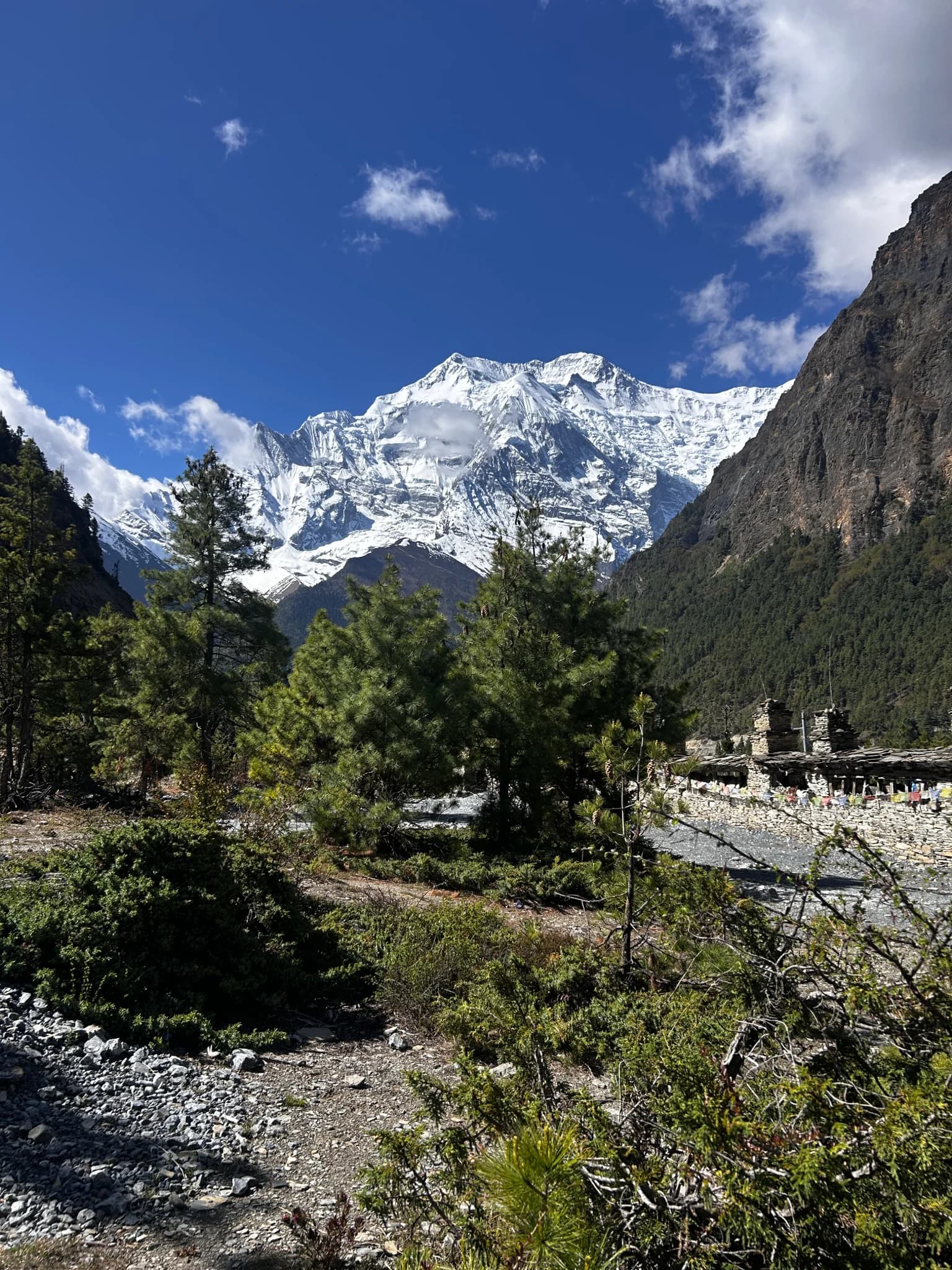
Group Tours
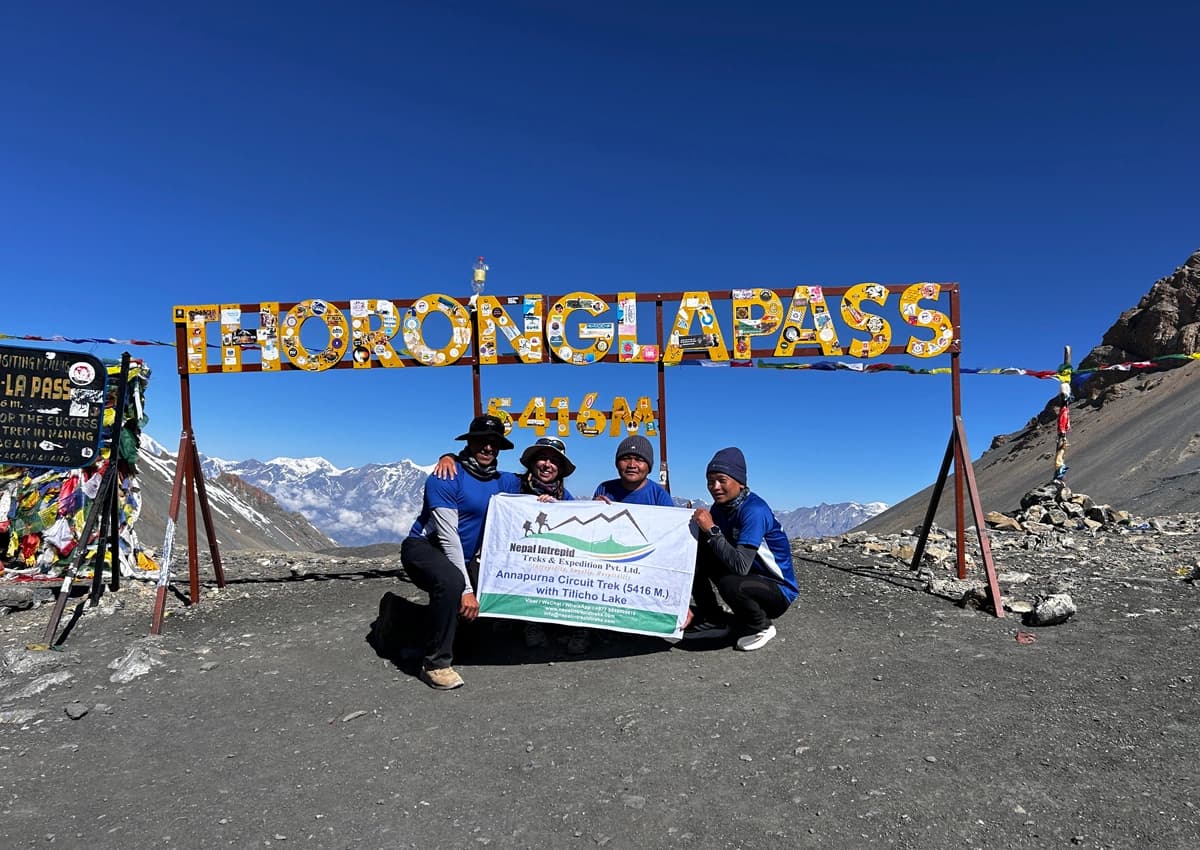
US $1335
Group Tours
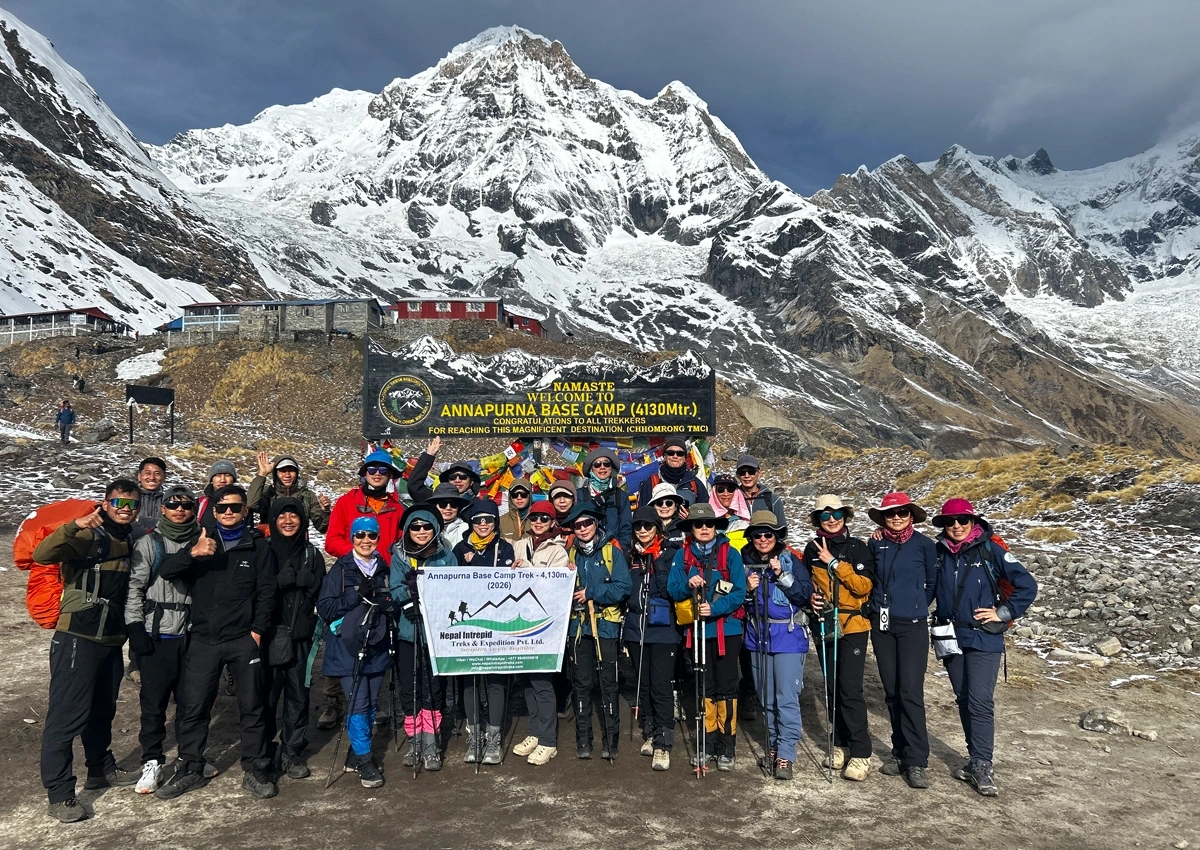
US $920