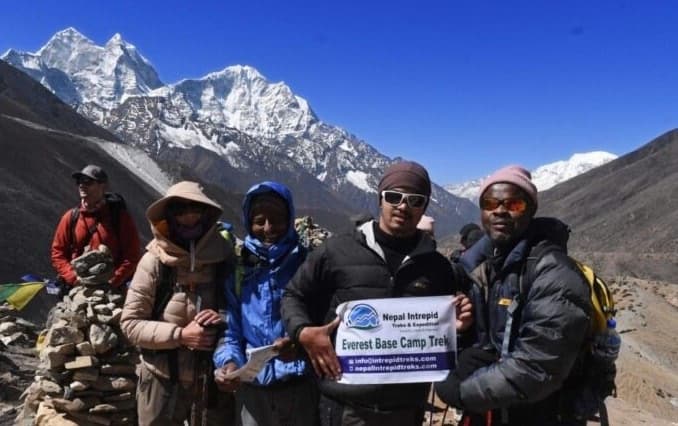
Mount Everest trekking areas in Nepal encompass a diverse network of trekking routes through the Khumbu region, offering everything from the iconic journey to Everest Base Camp to remote mountain circuits, glacial lakes, high Himalayan passes, and traditional Sherpa villages. Each trekking area provides a distinct combination of altitude, landscape, cultural heritage, physical challenge, and trekking duration, making route selection one of the most important decisions when planning an Everest adventure. Whether your priority is standing beneath the world's highest mountain, experiencing quieter alpine valleys, crossing technical mountain passes, or exploring authentic Sherpa communities, the Everest region offers a trekking experience suited to every level of high-altitude traveler.
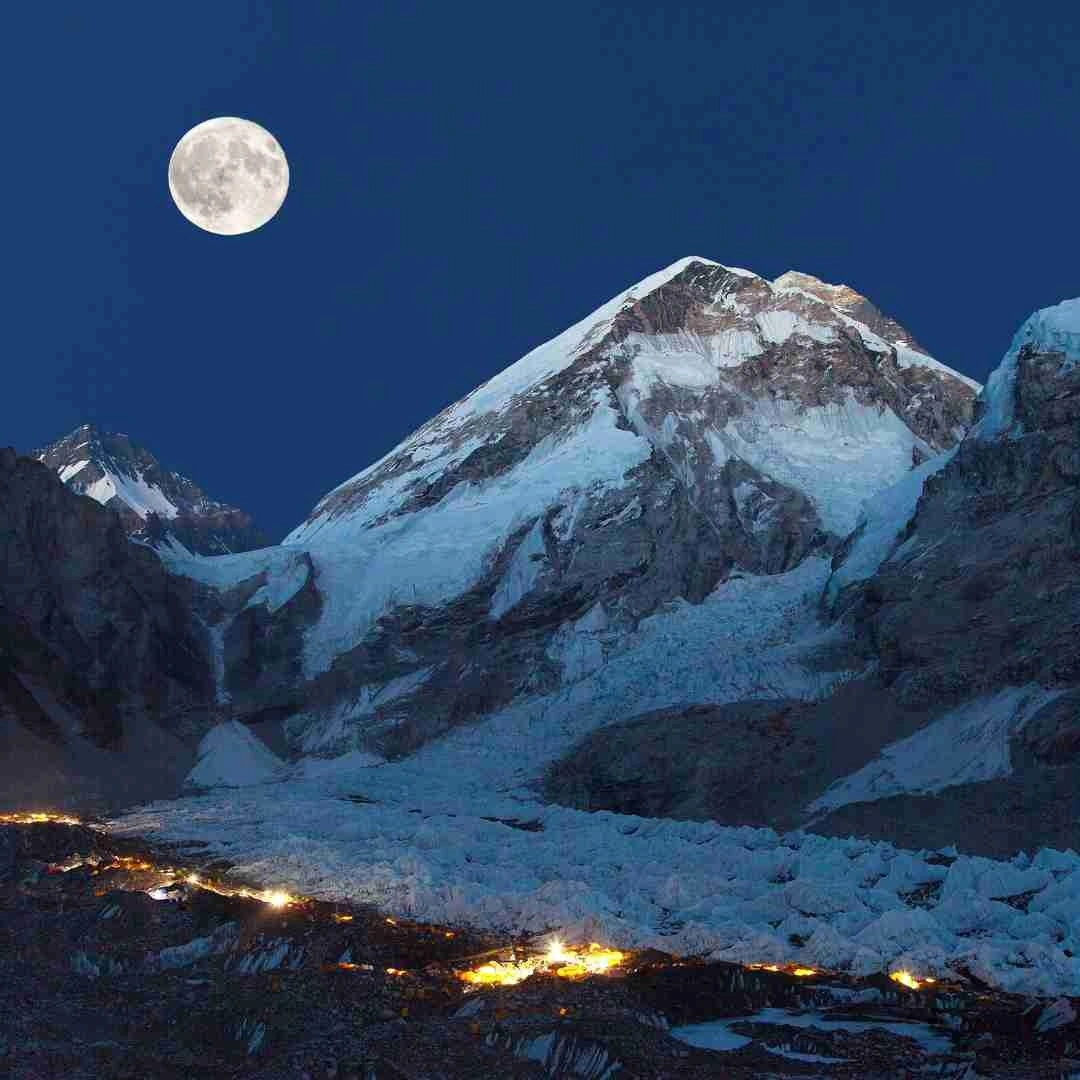
This guide compares the four principal Everest trekking areas, Everest Base Camp Trek, Gokyo Lakes Trek, Three Passes Trek, and Numbur Cheese Circuit Trek, across key factors including difficulty, maximum elevation, itinerary length, mountain views, cultural experiences, and suitability for different trekking profiles. It also explains essential permits, altitude acclimatization, trekking seasons, required equipment, safety considerations, and route planning, providing everything needed to confidently choose the Everest trekking route that best matches your experience, fitness level, available time, and Himalayan travel goals.
1. Everest Base Camp Trek
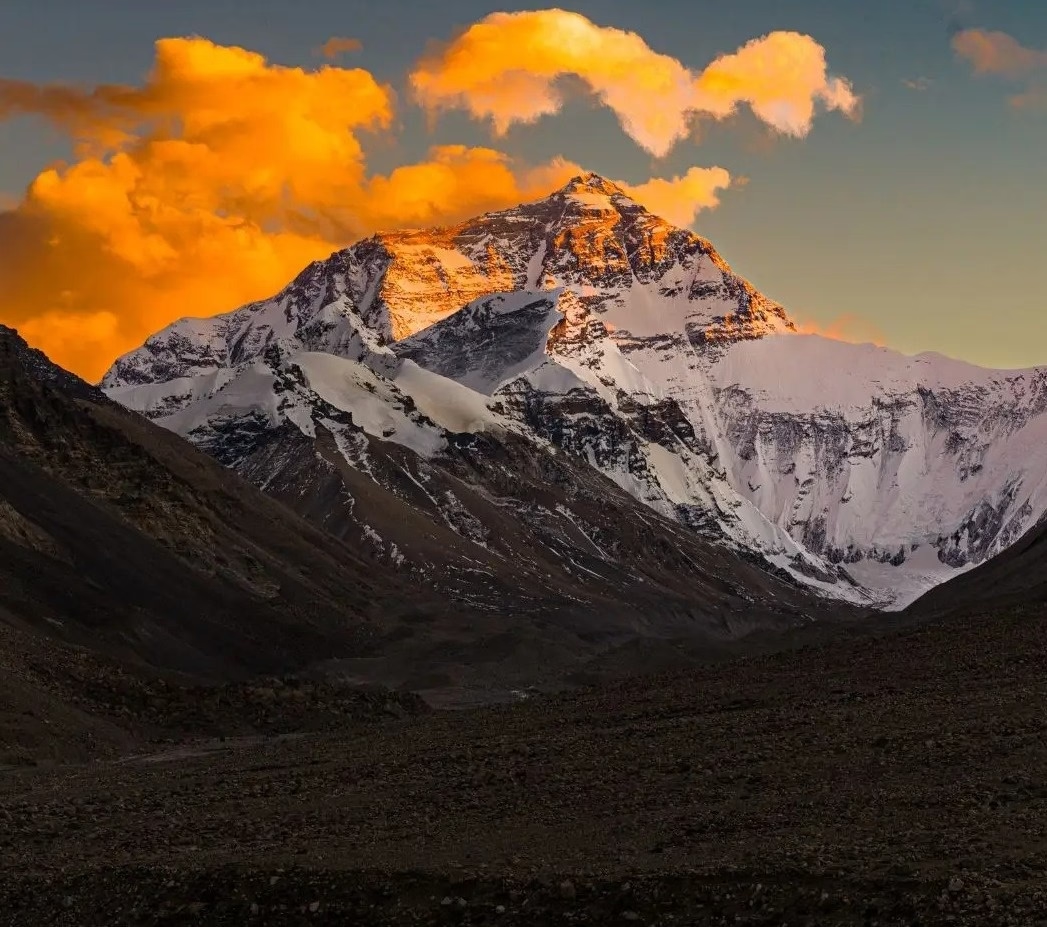
The Everest Base Camp Trek is the most recognized trekking route in the Khumbu region and among the top 3 most popular high-altitude treks globally. It delivers direct access to the southern face of Mount Everest and passes through 7 major Sherpa settlements, including Namche Bazaar, Tengboche, Dingboche, and Lobuche.
What Is the Typical Everest Base Camp Trek Itinerary?
The standard Everest Base Camp Trek runs 14 days from Kathmandu to Kathmandu, covering approximately 130 km of trail and beginning with a 35-minute flight from Kathmandu's Tribhuvan International Airport to Lukla's Tenzing-Hillary Airport at 2,860 m.
The 14-day itinerary unfolds across 8 key stages:
Fly Kathmandu to Lukla (2,860 m), trek to Phakding (2,610 m): 3–4 hours walking
Phakding to Namche Bazaar (3,440 m): 5–6 hours, entering Sagarmatha National Park
Acclimatization day in Namche Bazaar: altitude adjustment with hike to Everest View Hotel (3,962 m)
Namche to Tengboche (3,860 m): 5–6 hours, passing Khumjung and Mong La
Tengboche to Dingboche (4,410 m): 5–6 hours
Acclimatization day in Dingboche: hike to Nangkartshang Peak (5,080 m)
Dingboche to Lobuche (4,940 m): 5–6 hours via Thukla Pass (4,620 m)
Lobuche to Gorak Shep (5,164 m), hike to EBC (5,364 m); 7–8 hours total
Gorak Shep to Kala Patthar (5,644 m), descend to Pheriche (4,371 m); 6–7 hours
Pheriche to Namche Bazaar: 6 hours
Namche to Lukla: 6 hours
Fly Lukla to Kathmandu
Extended 16-day and 18-day itineraries incorporate side visits to Gokyo Valley or Island Peak Base Camp, adding 2–4 trekking days.
What Are the Main Highlights of the Everest Base Camp Trek?
The 5 defining highlights of the Everest Base Camp Trek are Kala Patthar viewpoint, Tengboche Monastery, the Khumbu Glacier, Namche Bazaar market, and the Sagarmatha National Park biodiversity corridor.
Kala Patthar at 5,644 m delivers the closest accessible panoramic view of Mount Everest's south face, visible alongside Nuptse (7,861 m), Lhotse (8,516 m), and Changtse (7,583 m). Most trekkers ascend Kala Patthar before sunrise to photograph the summit in golden light, a 2-hour climb from Gorak Shep in sub-zero temperatures.
Tengboche Monastery, seated at 3,860 m, is the largest Tibetan Buddhist monastery in the Khumbu, founded in 1916 and rebuilt after a 1989 fire. The monastery's prayer ceremonies at 6:00 AM and 3:00 PM remain active daily, offering one of the most authentic cultural encounters available on any Himalayan trek.
The Khumbu Glacier, one of the world's highest glaciers at 4,900 m to 7,600 m elevation, stretches 17 km beneath the Western Cwm of Everest. Walking along its lateral moraine between Lobuche and Gorak Shep reveals towering ice seracs and the full scale of glacial retreat, the glacier is retreating at an estimated rate of 20 to 30 meters annually and has thinned vertically by over 12 meters since 1953, providing a visible record of climate change in real time.
What most trekkers overlook: Namche Bazaar's Saturday market draws Tibetan traders carrying goods across the Nangpa La pass (5,716 m). Arriving on a Friday to shop Saturday morning adds a dimension no guide brochure captures.
Who Is the Everest Base Camp Trek Best Suited For?
The Everest Base Camp Trek is best suited for trekkers with prior multi-day hiking experience at elevations above 2,500 m, a baseline cardiovascular fitness level, and 14–16 available trekking days.
Trekkers who complete 3–5 hours of sustained hiking per week across 6–8 weeks before departure adapt significantly better to the trail's demands. The route passes through established teahouses at every major stop, eliminating the need for camping equipment. This infrastructure makes the EBC Trek accessible to a wider audience than technically challenging routes like the Three Passes Trek.
Age is not a barrier. Nepal Intrepid Treks has guided trekkers aged 16 to 72 successfully to Base Camp. The critical variable is acclimatization discipline, moving slowly, staying hydrated at 3–4 liters of water per day, and taking rest days seriously.
The trek is not suited for trekkers with uncontrolled hypertension, active respiratory conditions, or those with less than 12 days available, as compressing the schedule eliminates mandatory acclimatization stops.
How Difficult Is the Everest Base Camp Trek?
The Everest Base Camp Trek is rated moderate to strenuous, with a maximum altitude of 5,644 m at Kala Patthar and cumulative daily elevation gains ranging between 400 m and 800 m on ascent days.
Trail conditions vary across 4 distinct terrain types: stone-paved paths through Sherpa villages, rocky moraine trails above 4,500 m, suspension bridge crossings above glacial rivers, and loose scree slopes near Kala Patthar. None of these sections require technical climbing skills or ropes.
The most physically demanding day is the Lobuche to Gorak Shep to EBC to Gorak Shep circuit, 16–18 km round trip at altitudes between 4,940 m and 5,364 m, where oxygen availability drops to approximately 50% of sea-level concentration.
2. Gokyo Lakes Trek
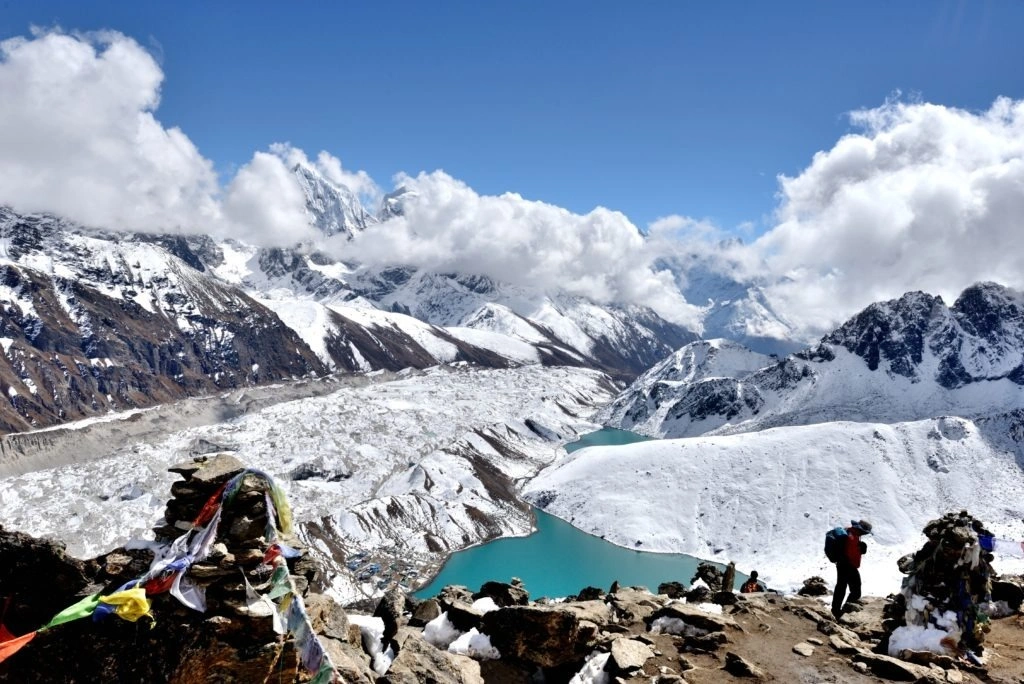
The Gokyo Lakes Trek covers the western Khumbu valley, visiting a chain of 6 sacred glacial lakes at elevations between 4,700 m and 5,000 m and summiting Gokyo Ri at 5,357 m for panoramic Everest views. This 12–14 day route attracts trekkers seeking an off-mainstream Khumbu experience without sacrificing mountain views.
What Are the Highlights of the Gokyo Lakes Trek?
The 4 defining highlights of the Gokyo Lakes Trek are the Gokyo Ri summit (5,357 m), the Ngozumpa Glacier, the 6 Gokyo sacred lakes, and views of 4 eight-thousanders from a single vantage point.
Gokyo Ri delivers simultaneous views of Everest (8,848.86 m), Cho Oyu (8,201 m), Makalu (8,485 m), and Lhotse (8,516 m), a panorama unavailable from any other trekking summit in Nepal. The climb from Gokyo village (4,750 m) to the summit takes 2–3 hours via a steep but non-technical trail.
The Ngozumpa Glacier, Nepal's largest glacier at 36 km in length, flanks the eastern edge of the Gokyo valley. Trekkers walk alongside its lateral moraine for 2 days, observing the supraglacial ponds and medial moraine ridges that define a living glacial system.
The 6 Gokyo Lakes (Dudh Pokhari, Thonak Tsho, Gyazumpa Tsho, Tanjung Tsho, Ngozumpa Tsho, and Spillway Lake) are listed as Ramsar Wetlands of International Importance, a designation confirmed in 2007 by the Nepal government. Their turquoise water reflects surrounding 6,000 m to 8,000 m peaks, creating one of the most photographed landscapes in the Himalaya.
What most trekkers miss: the fourth lake (Tanjung Tsho) and fifth lake (Ngozumpa Tsho) receive fewer visitors than the first three. Trekkers who extend 1 extra day reach these upper lakes in near-solitude, a sharp contrast to the trail congestion found on the EBC route.
How Challenging Is the Gokyo Lakes Trek?
The Gokyo Lakes Trek is rated moderate in technical difficulty but presents 3 significant altitude challenges: the 4,750 m Gokyo valley base, the 5,357 m Gokyo Ri summit, and the optional 5,420 m Cho La Pass crossing that connects this route to the EBC trail.
Daily elevation gain on ascent days reaches 600–900 m, comparable to the EBC Trek. Trail surfaces between Namche Bazaar and Gokyo are rocky and unmarked in sections, requiring focus in poor visibility. The optional Cho La Pass crossing involves a 200 m glaciated section where crampons become essential in icy conditions, a factor that separates this route from the EBC as a technical challenge.
Total trekking distance for the standard Gokyo Lakes route is 110 km over 12–14 days. The Cho La extension adds 2 days and increases the technical demand meaningfully.
Who Should Choose the Gokyo Lakes Trek?
The Gokyo Lakes Trek is the right choice for 3 types of trekkers: those returning to Khumbu after completing the EBC Trek, those who prioritize lake and glacier landscapes over the symbolic base camp endpoint, and photographers seeking less-crowded mountain panoramas.
The route shares the same Lukla entry point and Namche Bazaar hub as the EBC Trek. Trekkers who prefer the lakes and glacier landscape on its own can book a Gokyo Lake Trek as a standalone itinerary, or combine it with the Cho La Pass crossing to access both Gokyo Ri and Kala Patthar in a single 17–19 day Gokyo-EBC Circuit, rated as one of the most complete Khumbu trekking experiences available.
3. Three Passes Trek
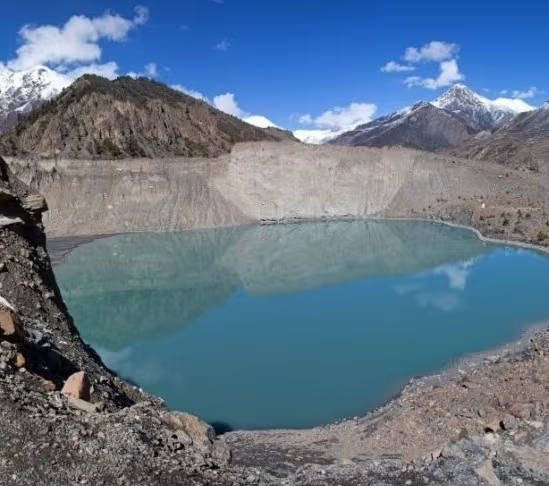
The Three Passes Trek traverses 3 high mountain passes above 5,300 m in a single circuit of the Khumbu, covering approximately 170 km over 18–21 days. This route is widely regarded as the most demanding and most comprehensive trekking itinerary in the Everest region.
Which High Passes Are Crossed on the Three Passes Trek?
The 3 passes on this trek are Kongma La at 5,535 m, Cho La at 5,420 m, and Renjo La at 5,360 m, each presenting distinct terrain, altitude exposure, and technical challenge.
Kongma La (5,535 m): The highest of the 3 passes, crossed between Chhukung (4,730 m) and Lobuche (4,940 m). The ascent covers rocky scree and a final snow field. Summit views include Makalu, Baruntse (7,129 m), and Island Peak (6,189 m). Crossing time: 6–8 hours.
Cho La (5,420 m): A glaciated pass connecting Dzongla (4,843 m) to Dragnag (4,700 m). The eastern descent crosses a 200 m glaciated slope requiring crampons and trekking poles. Trekkers who want to cross Cho La without the full three-pass circuit can join a dedicated Chola Pass Trek that combines this pass with Gokyo and EBC. Crossing time: 6–7 hours.
Renjo La (5,360 m): The westernmost pass, connecting Gokyo (4,750 m) to Lungden (4,380 m) above the Hongu Valley. Renjo La delivers the widest panorama of the circuit, Everest, Cho Oyu, Gyachung Kang (7,952 m), and the full chain of Gokyo Lakes visible below. Crossing time: 5–7 hours.
All 3 passes are accessible between March–May and September–November. Crossing outside these windows carries high avalanche and blizzard risk.
What Makes the Three Passes Trek the Ultimate Everest Adventure?
The Three Passes Trek is the most complete Khumbu circuit because it integrates 5 major trekking zones, the Khumbu Valley, Chhukung Valley, Gokyo Valley, Thame Valley, and Rolwaling approach, into one contiguous route, with access to both Kala Patthar and Gokyo Ri summits.
No other Khumbu trek covers equivalent geographic breadth. The circuit passes through 12 distinct settlements, encounters 3 major glacier systems (Khumbu, Ngozumpa, and Hongu), and visits 3 high-altitude viewpoints offering different perspectives on the same 8,000 m peaks.
What most trekking resources miss: Renjo La is the strongest pass for Mount Everest photography. At Renjo La's summit, Everest's triangular north face appears over the Gokyo Lakes chain in a single frame, an image rarely captured because fewer trekkers reach this pass than Kala Patthar or Gokyo Ri.
The Three Passes Trek also covers Thame village (3,800 m), birthplace of Sherpa mountaineering legend Apa Sherpa, who summited Everest 21 times between 1990 and 2011. Thame's monastery and Mani Rimdu festival (held in the 9th month of the Tibetan lunar calendar) represent the region's deepest cultural access point.
Who Is the Three Passes Trek Recommended For?
The Three Passes Trek is recommended for trekkers with 2 specific prerequisites: previous high-altitude trekking experience above 4,500 m and confirmed physical fitness across multi-day sustained effort exceeding 7–8 hours of daily walking.
Trekkers without prior acclimatization experience at comparable altitudes face acute mountain sickness risks that compromise both safety and trek completion. The 3 technical pass crossings, particularly Cho La's glaciated section, demand crampons, proper layered mountain clothing, and the physical capacity to respond to changing weather rapidly.
Nepal Intrepid Treks guides the Three Passes Trek with a maximum group size of 8 trekkers, ensuring individualized altitude monitoring and faster emergency response if descent becomes necessary.
4. Numbur Cheese Circuit Trek
The Numbur Cheese Circuit Trek explores the Solu-Khumbu region south of Namche Bazaar, passing through the Numbur Himal range and the traditional cheese-producing villages of the Solu highlands. This 14–16 day circuit stands apart from the 3 northern Khumbu routes as a lower-altitude, culturally focused alternative to the main Everest trekking corridors.
Where Does the Numbur Cheese Circuit Trek Take You?
The Numbur Cheese Circuit Trek traverses the Solu highland plateau at 2,800 m–4,000 m, passing through Junbesi, Phaphlu, Salleri, Ringmo, and the Dudh Kunda Sacred Lake (4,560 m) before looping back through Sherpa agricultural settlements.
This circuit typically begins and ends in Shivalaya (1,790 m) in the Ramechhap District, accessed via a 7–8 hour scenic drive from Kathmandu, removing the dependency on Lukla's notoriously weather-affected runway. Phaplu receives 3 weekly flights from Kathmandu via Tara Air, providing a more reliable access point during monsoon shoulder seasons.
The route visits the Numbur Himal (6,959 m) base area, the Thodung Cheese Factory, established in 1953 with Swiss development assistance, exploring the pristine Khimti and Likhu river valleys. The route reaches its high point at Gyajo La Pass (4,880 m) or the sacred Panch Pokhari lakes (4,605 m), offering a deeply remote alternative to the main Khumbu trails, revered as a sacred Shiva Parvati pilgrimage site active during the annual Janai Purnima festival each August.
What Makes the Numbur Cheese Circuit Trek Unique?
The Numbur Cheese Circuit Trek's 3 defining characteristics are its lower maximum altitude (4,560 m vs. 5,644 m on EBC), its agricultural Sherpa cultural immersion absent from higher northern routes, and its access to traditional cheese production facilities operating since 1953.
Thodung Cheese Factory, at 3,090 m, produces 5 types of mountain cheese using Swiss-trained methods introduced during Nepal's early development era. Trekkers visit active production floors, taste aged Emmental-style Khumbu cheese, and interact with the Sherpa cheesemakers who have sustained this tradition across 3 generations, an encounter with zero equivalent anywhere on the standard EBC or Gokyo routes.
Junbesi village (2,675 m) shelters the largest gompa in the Solu region, Thubten Choling Monastery, home to 500 monks and nuns and founded by Trulshik Rinpoche in 1969. This monastery complex represents active Nyingma Buddhist study, visible in daily prayer sessions, thangka painting workshops, and the seasonal Dumji festival.
Who Is the Numbur Cheese Circuit Trek Best For?
The Numbur Cheese Circuit Trek is best suited for 4 trekker profiles: those with altitude sensitivity requiring a lower-elevation Khumbu experience, cultural travelers prioritizing Sherpa village life over mountain summiting, photographers focused on rural landscape and monastery architecture, and repeat Nepal visitors seeking routes outside the main Everest corridor.
The circuit's maximum elevation of 4,560 m reduces acute mountain sickness risk substantially compared to EBC's 5,644 m. Trekkers who experienced altitude symptoms on previous Himalayan trips gain meaningful access to the Khumbu cultural landscape here without the physiological stress of the northern passes.
How Do These Everest Trekking Routes Compare?
Four Khumbu trekking routes, Everest Base Camp Trek, Gokyo Lakes Trek, Three Passes Trek, and Numbur Cheese Circuit Trek, deliver different outputs across 4 measurable dimensions: mountain view quality, physical difficulty, first-timer accessibility, and cultural depth.
The following comparison table defines each route across these 4 dimensions before analyzing them individually.
Route | Max Altitude | Duration | Difficulty | Mountain Views |
EBC Trek | 5,644 m (Kala Patthar) | 14–16 days | Moderate–Strenuous | Mount Everest south face panorama |
Gokyo Lakes | 5,357 m (Gokyo Ri) | 12–14 days | Moderate | 4 eight-thousanders, Ngozumpa Glacier |
Three Passes | 5,535 m (Kongma La) | 18–21 days | Strenuous–Technical | All major Khumbu peaks, 3 angles |
Numbur Cheese Circuit | 4,560 m (Dudh Kunda) | 14–16 days | Moderate | Numbur Himal range, southern Khumbu |
Which Trek Offers the Best Mountain Views?
The Three Passes Trek delivers the most comprehensive mountain views of all 4 routes, providing access to 3 distinct summit panoramas, Kongma La, Gokyo Ri, and Renjo La, each framing different aspects of the same 8,000 m chain.
Kala Patthar on the EBC Trek provides the closest view of Mount Everest's south face at 5,644 m. Gokyo Ri frames 4 eight-thousanders simultaneously. Renjo La captures Everest above the Gokyo Lakes chain. Trekkers who complete the Three Passes circuit access all 3 vantage points in a single itinerary, an advantage unavailable on any standalone route.
Which Trek Is the Most Challenging?
The Three Passes Trek is the most challenging route, rated strenuous to technical, due to its 3 passes above 5,350 m, a glaciated crossing at Cho La requiring crampons, and its 18–21 day duration requiring sustained daily effort.
The EBC Trek and Gokyo Lakes Trek occupy the moderate-to-strenuous tier. Both routes peak below 5,700 m and present no glaciated crossings on standard itineraries. The Numbur Cheese Circuit Trek is the least demanding of the 4, with a 4,560 m maximum and predominantly rural trail terrain.
Which Trek Is Best for First-Time Trekkers?
The Gokyo Lakes Trek is the strongest choice for first-time Khumbu trekkers, given its 12–14 day duration, moderate difficulty rating, 5,357 m summit at Gokyo Ri, and distinctly less-crowded trail compared to the EBC route.
First-timers on the EBC Trek frequently underestimate the psychological pressure of the trail's popularity, 30,000 to 35,000 trekkers per year mean teahouses book out during peak season (October, November, March, April). Gokyo Lakes receives approximately 30% fewer trekkers annually, offering more available accommodation and a quieter acclimatization experience.
The Numbur Cheese Circuit Trek is the correct recommendation for first-timers with altitude sensitivity, not necessarily first-time trekkers in general. EBC remains the iconic first Khumbu objective for trekkers with adequate fitness.
Which Trek Provides the Best Cultural Experience?
The Numbur Cheese Circuit Trek provides the deepest Sherpa cultural immersion of all 4 routes, with direct access to Thubten Choling Monastery, Thodung Cheese Factory, traditional Sherpa agricultural villages, and the Dudh Kunda pilgrimage circuit active in the Solukhumbu cultural calendar.
The EBC Trek delivers cultural landmarks, Tengboche Monastery, Namche Bazaar's market, Khumjung village, and the Sherpa Cultural Museum in Namche, but these encounters occur alongside hundreds of other trekkers during peak season. The Numbur Cheese Circuit's lower foot traffic creates genuine interaction rather than observation.
What Should You Know Before Trekking in the Everest Region?
Every trekker entering the Khumbu region requires 4 categories of pre-departure preparation: valid permits, appropriate technical gear, altitude sickness prevention protocols, and active safety planning.
What Permits Are Required?
Trekking in the Everest region requires 3 mandatory permits: the Sagarmatha National Park Entry Permit (NPR 3,000 per person), the Khumbu Pasang Lhamu Rural Municipality Permit (NPR 2,000 per person), which removes the need for a TIMS card, as the TIMS system has been entirely discontinued and replaced in the Everest region by the local municipality permit.
Trekkers travelling with a registered Nepal trekking agency, including Nepal Intrepid Treks, receive TIMS exemption under the government's guided trekker policy, issued under the Nepal government's strict 'No Guide, No Trek' policy, which requires all foreign trekkers to hire a licensed guide through a registered agency regardless of elevation.
Sagarmatha National Park permits are obtainable at the park entry checkpoint in Monjo (2,835 m), one day's walk from Lukla. Khumbu Pasang Lhamu permits are collected at checkpoints in Lukla or Monjo. Failing to carry permits results in fines of NPR 10,000 at trail checkpoints.
Foreign nationals require a valid Nepal visa, obtainable on arrival at Tribhuvan International Airport in Kathmandu (USD 30 for 15 days, USD 50 for 30 days, USD 125 for 90 days), and a separate Lukla flight ticket with confirmed booking.
What Essential Gear Should You Pack?
The 10 non-negotiable gear items for Everest region trekking are: layered insulated jacket system (down jacket rated to -20°C), trekking poles, broken-in waterproof trekking boots, headlamp with spare batteries, personal water filtration (Steripen or iodine tablets), SPF 50+ sunscreen, altitude sickness medication (Diamox 125 mg–250 mg, prescribed by a physician), crampons (for Three Passes Trek only), sleeping bag rated to -10°C, and a trekking insurance document covering helicopter evacuation above 5,000 m.
Teahouses above Namche Bazaar charge NPR 300–500 per night for rooms with attached bathroom, and NPR 500–800 per meal. Electricity charging costs NPR 200–500 per device above Dingboche. Wi-Fi above Namche is unavailable or unreliable, trekkers relying on communication carry Ncell or Nepal Telecom SIM cards with 4G service up to Namche (3,440 m).
What most packing guides omit: a compact journal or offline GPS app (Maps.me or Gaia GPS) downloaded with the Khumbu topo layer before departure reduces navigation errors on the moraine trails between Lobuche and Gorak Shep, where trail markers disappear in snowfall.
How Can You Prevent Altitude Sickness?
Acute Mountain Sickness (AMS) prevention in the Everest region relies on 4 physiological protocols: ascending no more than 300–500 m per day above 3,000 m, maintaining 3–4 liters of daily water intake, taking planned acclimatization days at Namche Bazaar (3,440 m) and Dingboche (4,410 m), and descending immediately at the first signs of HACE or HAPE.
AMS affects approximately 25% of trekkers above 3,500 m, with symptoms including persistent headache, nausea, loss of appetite, and disrupted sleep. For a full breakdown of symptoms, risk factors, and prevention strategies, see our detailed guide to altitude sickness in the Himalaya. High Altitude Cerebral Edema (HACE), characterized by confusion, loss of coordination, and altered consciousness, and High Altitude Pulmonary Edema (HAPE), marked by breathlessness at rest, pink frothy cough, and oxygen saturation below 80%, represent life-threatening progressions requiring immediate descent and helicopter evacuation.
Diamox (acetazolamide) at 125 mg taken twice daily starting 24 hours before ascent beyond 3,000 m reduces AMS incidence by approximately 48%, according to research published in the Wilderness and Environmental Medicine journal. Diamox is a diuretic, increasing it increases water loss, making hydration discipline critical.
The Gamow Bag, a portable hyperbaric chamber carried by Nepal Intrepid Treks expedition teams on Three Passes Trek and EBC departures, simulates a 1,500 m descent for AMS emergencies when immediate physical descent is weather-blocked.
What Safety Tips Should Every Trekker Follow?
The 5 most critical safety practices for Khumbu trekking are: never trekking alone (independent solo trekking is banned across all protected Himalayan regions under current regulations), carrying travel insurance that explicitly covers helicopter evacuation from 5,000 m altitude, checking weather forecasts at Namche Bazaar before high-pass attempts, knowing the 2 nearest Himalayan Rescue Association (HRA) clinics in Pheriche (4,371 m) and Namche Bazaar (3,440 m), and communicating daily itineraries to a confirmed contact in Kathmandu.
The HRA clinics in Pheriche and Namche diagnose and treat AMS cases daily during trekking season, offering pulse oximetry checks, AMS medication, and evacuation coordination. Clinic visits cost NPR 1,500–2,500. Trekkers who experience oxygen saturation below 85% at any altitude receive immediate evacuation recommendations from HRA physicians.
Helicopter evacuation from Gorak Shep to Kathmandu costs USD 2,500–3,500 without insurance. With verified helicopter evacuation insurance, out-of-pocket cost drops to zero. Companies including World Nomads, True Traveller, and ISOS cover high-altitude evacuation with verified policy documentation.
How Can Nepal Intrepid Treks Help You Explore the Everest Region?
Nepal Intrepid Treks is a Kathmandu-based, government-registered trekking company operating licensed guided expeditions across all 4 major Khumbu trekking routes. The company holds Nepal Tourism Board registration, employs IFMGA-affiliated Sherpa guides, and maintains a team of 35 certified mountain guides with a combined 200+ summiting seasons across the Khumbu.
Why Choose Nepal Intrepid Treks for Your Everest Adventure?
Nepal Intrepid Treks delivers 6 operational advantages over self-arranged Khumbu trekking: permit processing handled in Kathmandu before departure, acclimatization-paced itineraries built by Sherpa guides with first-hand route knowledge, teahouse accommodation reserved 4–6 weeks in advance, emergency response protocols including Gamow Bag and satellite communication, group sizes capped at 8 trekkers for individualized altitude monitoring, and post-trek debrief sessions with health and gear feedback.
Every Nepal Intrepid Treks departure includes a licensed Sherpa guide, a porter ratio of 1 porter per 2 trekkers (carrying a maximum 15 kg per porter per Nepal government regulation), and a dedicated Kathmandu-based logistics coordinator reachable by satellite phone throughout the trek.
The company operates departures across all 4 Khumbu routes between March–May and September–November, for a month-by-month breakdown of weather, crowds, and visibility, see our guide to the best season for the EBC trek, with private departures available year-round. Custom itineraries combining Gokyo Lakes with the Three Passes circuit or extending the EBC Trek to include Island Peak (6,189 m) trekking peak are available on request.
Which Everest Trekking Route Matches Your Experience and Goals?
Route selection across the 4 Khumbu trekking areas maps directly to 4 experience profiles:
First-time high-altitude trekker with 14 days: Gokyo Lakes Trek (12–14 days, moderate, 5,357 m summit, fewer crowds than EBC)
Returning trekker who completed EBC, seeking new Khumbu terrain: book the Three High Passes Trek (18–21 days, strenuous, complete Khumbu circuit)
Trekker prioritizing the iconic EBC endpoint and Kala Patthar sunrise: Everest Base Camp Trek (14 days, moderate-strenuous, 5,644 m viewpoint)
Trekker with altitude sensitivity or cultural focus: Numbur Cheese Circuit Trek (14–16 days, moderate, 4,560 m maximum)
Nepal Intrepid Treks conducts a pre-booking altitude assessment and fitness consultation with every prospective trekker, matching individuals to the route their fitness and experience profile supports, not simply the most popular option.
What Are the Key Takeaways About Mount Everest Trekking Areas in Nepal?
Nepal's 4 primary Everest trekking areas, Everest Base Camp Trek, Gokyo Lakes Trek, Three Passes Trek, and Numbur Cheese Circuit Trek, cover a combined elevation range of 2,413 m to 5,644 m across 12 to 21 trekking days, serving trekkers across all experience levels.
The Everest Base Camp Trek remains the most recognized route, reaching 5,644 m at Kala Patthar with its direct view of Everest's south face. The Gokyo Lakes Trek delivers 4 eight-thousander panoramas and the Ngozumpa Glacier approach with lower trail density. The Three Passes Trek is the most comprehensive Khumbu circuit, crossing 3 passes above 5,350 m for trekkers who have prior high-altitude experience. The Numbur Cheese Circuit Trek provides the deepest Sherpa cultural encounter at the lowest maximum elevation of the 4 routes.
Most Everest routes require 2 mandatory permits, verified travel insurance covering helicopter evacuation above 5,000 m, and compliance with Nepal's 2023 licensed guide regulation above 4,000 m.
Mount Everest trekking areas in Nepal reward preparation. The trekker who researches the route's specific altitude profile, secures proper permits, and travels with a licensed guide team returns with an experience no itinerary can fully capture, and the confidence to plan the next one.
Ready to choose your Khumbu route? For trekkers set on the classic sunrise at Kala Patthar, explore our Everest Base Camp Trek package, or contact Nepal Intrepid Treks for a complimentary pre-trek consultation, custom itinerary planning, and permit arrangements, departures available for all 4 Everest region trekking routes across the March–May and September–November seasons.