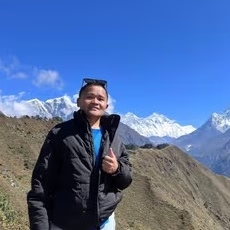
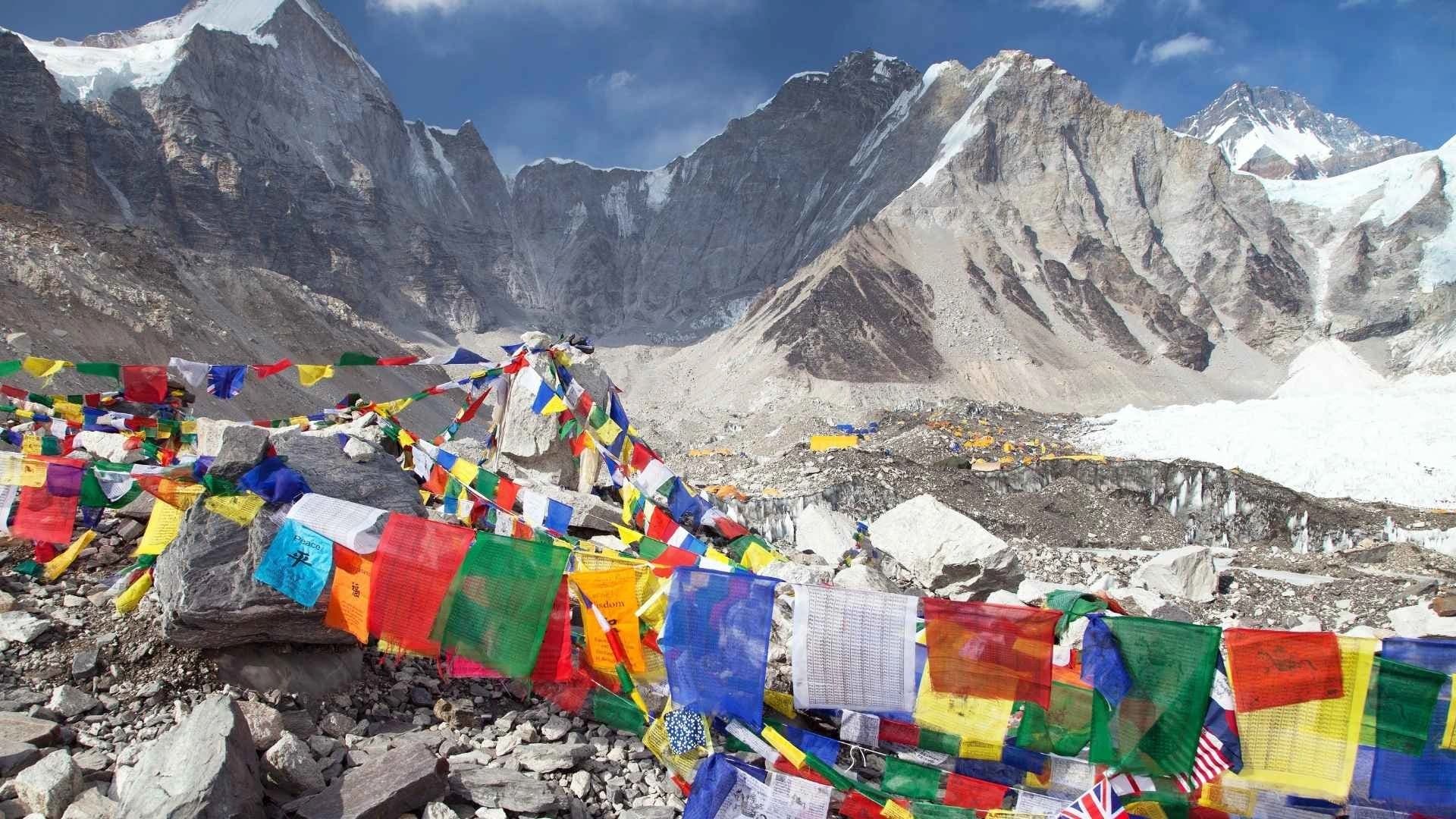
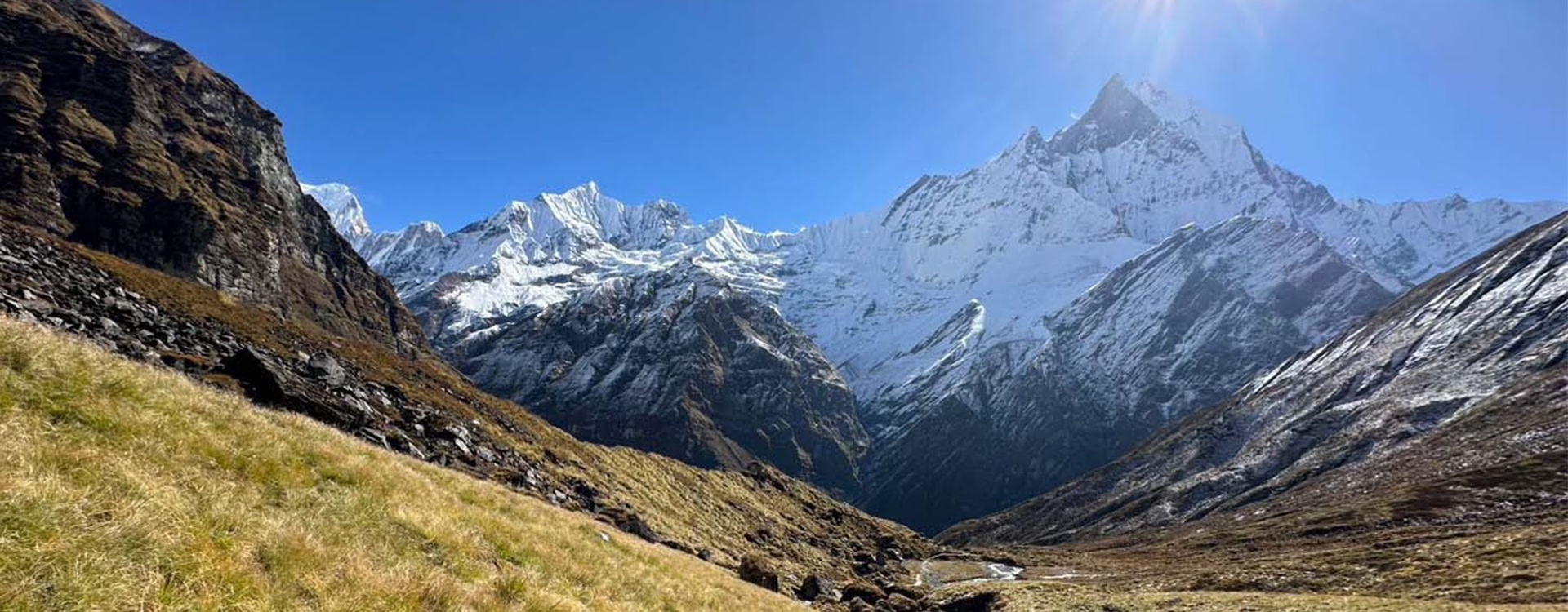
The Everest Base Camp Trek in September is a high-altitude journey through Nepal's Khumbu region from Lukla to Everest Base Camp at 5,364 meters, covering approximately 130 kilometers round trip. September marks the transition from the summer monsoon to the dry autumn trekking season, so conditions change significantly throughout the month. Early September can bring residual rain, cloud, muddy trails, and flight delays around Lukla, while the period from roughly mid-September onward generally brings drier trails, improving visibility, more stable mountain weather, and fewer trekkers than the busy October and November season. The route passes through Phakding, Namche Bazaar, Tengboche, Dingboche, Lobuche, and Gorak Shep, with acclimatization days helping trekkers adapt safely to increasing elevation.
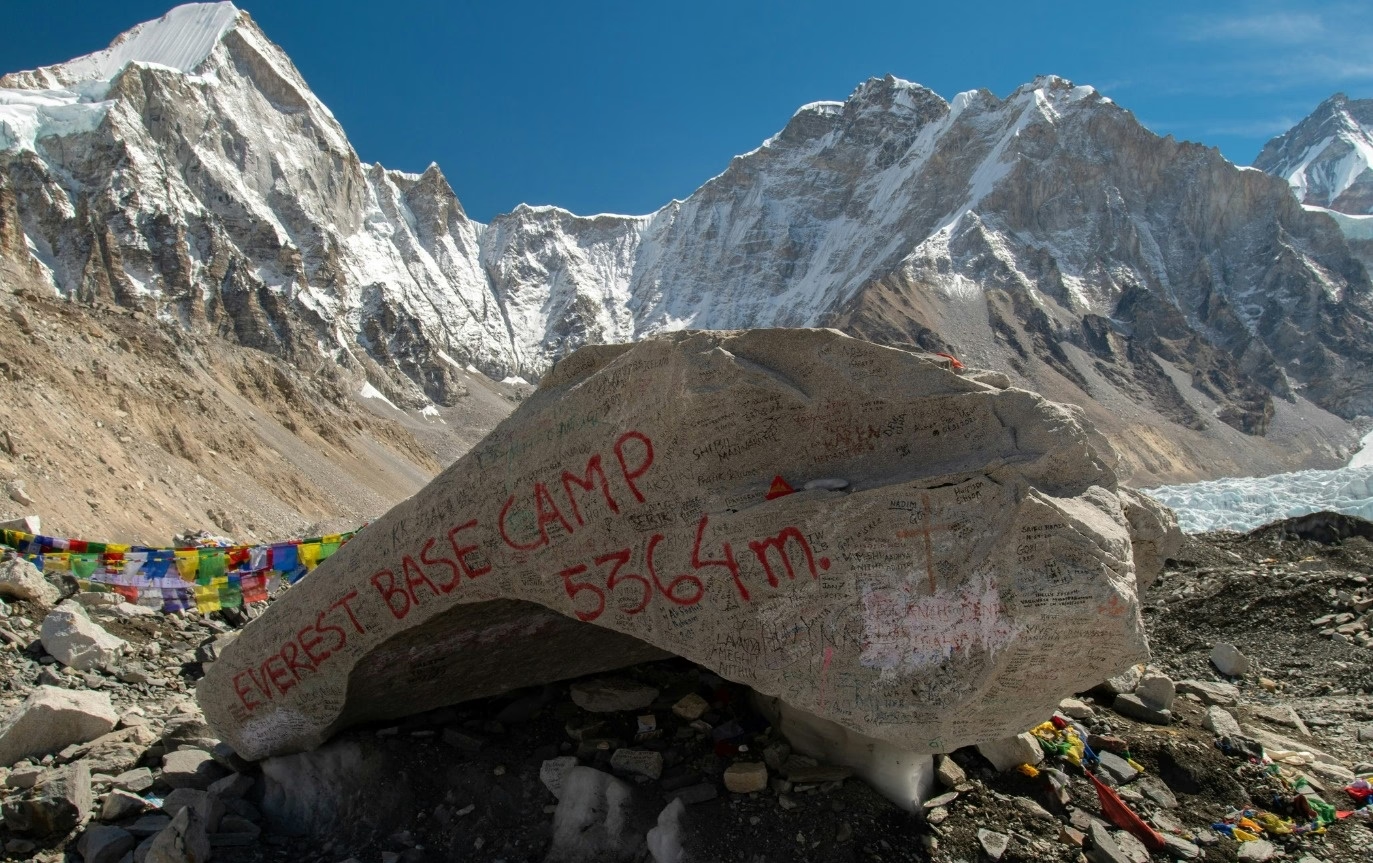
September also offers a distinctive combination of practical and scenic advantages for trekkers who choose their departure window carefully. Lush forests, active waterfalls, and green valleys remain visible from Lukla toward Namche Bazaar, while clearing skies later in the month can produce better views of Mount Everest, Ama Dablam, Lhotse, and the surrounding Khumbu peaks. A typical trek takes 12 to 14 days and requires preparation for changing temperatures, occasional rain, high-altitude exposure, and possible Lukla flight disruption. Understanding September's weather pattern, trekking route, temperatures, accommodation, flight logistics, packing requirements, altitude safety, fitness demands, permits, and costs helps trekkers choose the right departure date and prepare for the conditions they are most likely to encounter on the Everest Base Camp trail.
What Makes the Everest Base Camp Trek in September Special?
September is the only month on the Everest Base Camp calendar where trekkers get both a monsoon-fed green landscape and the season's first uncrowded trail conditions. Rhododendron and pine forests below Namche Bazaar stay lush and hydrated well into late September, a contrast to the dust and bare ground of peak October and November. Waterfalls along the Dudh Koshi valley run full, and the terraced fields around Lukla and Phakding remain a deep green rarely photographed by trekkers who arrive later in autumn.
Photographers gain a specific advantage in September that later autumn months lose: The combination of lingering green hillsides, active waterfalls, and clearing skies in the third week of the month produces a unique color contrast that the browner, drier landscapes of late autumn cannot match. Sherpa villages along the route also run at a slower pace in September, since the bulk of teahouse staff, yak trains, and porter traffic has not yet ramped up for the October surge, giving trekkers more direct conversation time with local families than the peak season allows.
A mistake we see often among first-time planners is treating September as one uniform block of weather. In practice, the first ten to twelve days behave like a tapering monsoon, and the final two weeks behave like early autumn. For Nepali trekkers, September also lines up with two culturally significant events: Teej, the women's festival celebrated in mid-September, and Indra Jatra, Kathmandu's chariot festival held in the third week of the month. Trekkers departing Kathmandu around these dates should confirm hotel and transport bookings early, since domestic travel demand spikes in the capital even though the Khumbu trail itself stays quiet. International trekkers benefit from this same local demand pattern in a different way, Lukla flights and teahouse beds are easier to secure in September than in the six weeks that follow, when Dashain and Tihar draw both Nepali and international arrivals into the same narrow window in October and November.
What Is the Weather Like on the Everest Base Camp Trek in September?
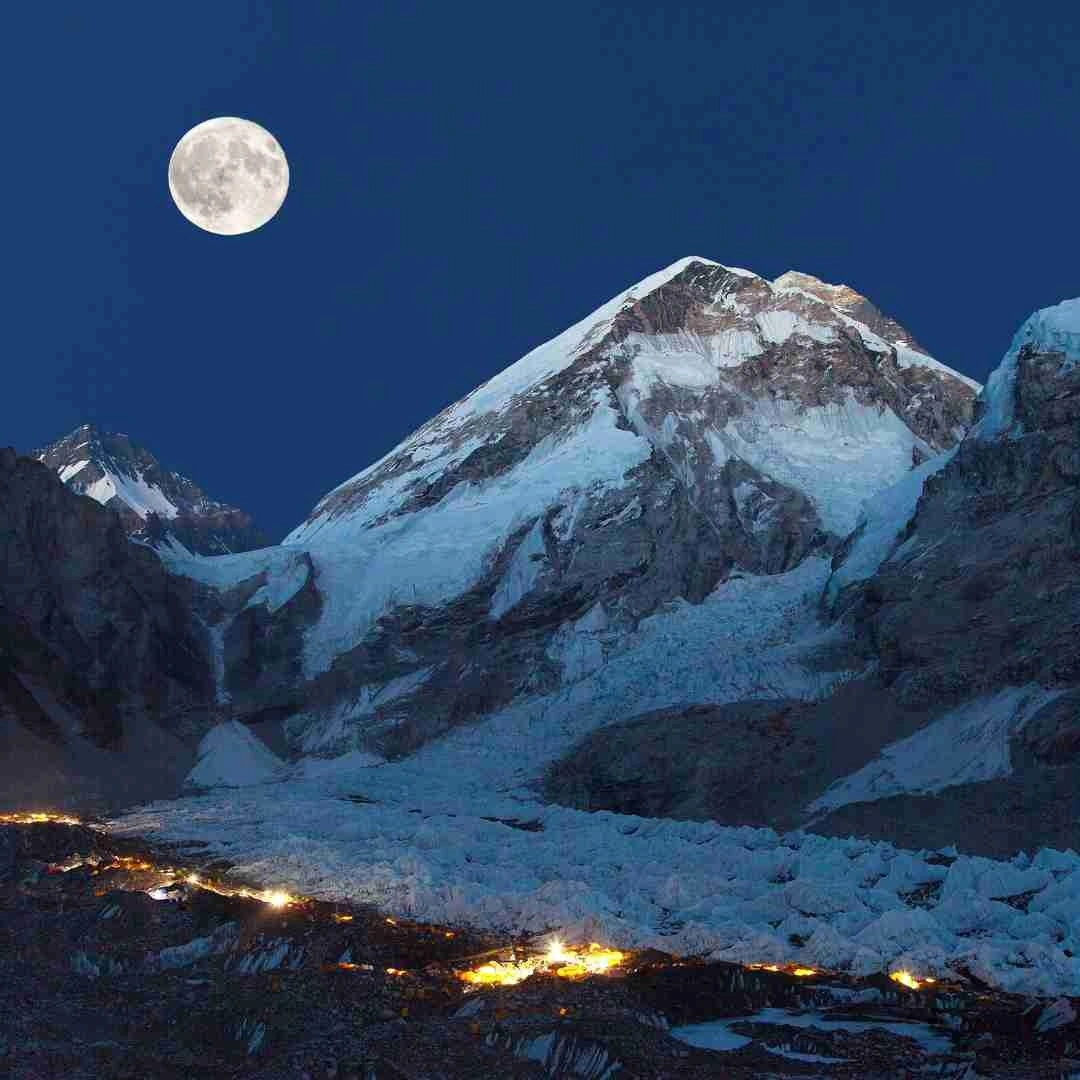
Everest Base Camp weather in September splits into two distinct halves: a humid, cloud-prone first two weeks carrying monsoon remnants, and a drying second half as the monsoon begins to retreat, though Nepal's Department of Hydrology and Meteorology puts the official normal withdrawal date at 2 October, with 2025's withdrawal arriving even later, on 10 October, so trekkers should treat late-September dryness as a trend, not a guarantee. Cloud buildup typically peaks in early afternoon through mid-September, then clears earlier in the day as the month progresses.
How Much Rain and Cloud Cover Can You Expect on the EBC Trek in September?
Rainfall in early September ranges between 50 and 70 millimeters, concentrated in short afternoon or evening showers rather than sustained monsoon downpours, and drops toward negligible levels by the final week of the month. Morning hours through the entire month tend to stay clearer than afternoons, which is why guided itineraries schedule the day's trekking segment before 1 p.m. Cloud cover behaves the same way: valley floors near Lukla and Phakding hold haze and mist longer than the ridgelines above Namche Bazaar, where afternoon wind usually breaks up cloud cover by evening.
What most people overlook is that this cloud pattern actually improves photography conditions rather than ruining them. Clouds rolling through the Dudh Koshi valley late in the day create the layered, atmospheric mountain shots that dry, cloudless October skies cannot produce. Trekkers chasing a single unobstructed summit photograph should plan flexible days near Kala Patthar and Everest Base Camp itself, since a 20-minute window of clear sky is common even on a partly clouded September afternoon.
What Are the Temperatures at Everest Base Camp in September?
Daytime temperatures at Everest Base Camp in September range from 5°C to 15°C, while nighttime temperatures drop to between -1°C and -5°C, with colder nights concentrated in the final week of the month as the monsoon fully withdraws. Namche Bazaar, at 3,440 meters, runs noticeably milder, averaging around 15°C by day and 6°C by night.
Location | Altitude | Daytime Temp (September) | Nighttime Temp (September) |
Lukla | 2,860 m | 15°C to 20°C | 5°C to 8°C |
Namche Bazaar | 3,440 m | 12°C to 15°C | 4°C to 6°C |
Dingboche | 4,410 m | 8°C to 12°C | -2°C to 2°C |
Everest Base Camp | 5,364 m | 5°C to 15°C | -1°C to -5°C |
The table above shows the altitude-driven temperature drop that defines the entire trek: roughly 1°C of daytime warmth is lost for every 150 to 200 meters gained. Pack for the coldest column, not the average, since a single overcast afternoon at Dingboche or Lobuche can feel 5°C colder than the daytime figure suggests.
What Is the Everest Base Camp Trek Route in September?
The classic Everest Base Camp trek route runs from Lukla through Phakding, Namche Bazaar, Tengboche, Dingboche, Lobuche, and Gorak Shep before reaching Everest Base Camp, then returns along the same trail with an optional detour to Kala Patthar for the closest unobstructed view of Mount Everest. September conditions do not alter this route; they only affect pacing, since wetter lower sections between Lukla and Namche Bazaar move slightly slower in the first half of the month.
How Many Days Does the Everest Base Camp Trek Take in September?
A standard Everest Base Camp trek in September takes 12 to 14 days, including two mandatory acclimatization days at Namche Bazaar and Dingboche, though 16-day itineraries exist for trekkers who prefer a slower ascent profile or add the Gokyo Lakes extension. Twelve days is the minimum realistic length once Lukla flight buffer days are factored in; attempting the trek in fewer days increases altitude sickness risk substantially, since the ascent rate above 3,000 meters is the single largest controllable safety factor on the route.
What Is the Typical Everest Base Camp Trek Itinerary?
A typical 12-day itinerary allocates one day for the Lukla flight and trek to Phakding, one day to Namche Bazaar, one acclimatization day in Namche, one day each to Tengboche and Dingboche, an acclimatization day in Dingboche, one day each to Lobuche and Gorak Shep with the Everest Base Camp hike, one day to Kala Patthar and Pheriche, two descent days back to Lukla, and a final morning to fly back to Kathmandu. The two acclimatization days are not rest days in the usual sense; both include an active hike to higher elevation followed by a return to sleep lower, which is the "climb high, sleep low" principle that drives safe altitude gain.
Day | Route Segment | Overnight Altitude |
1 | Kathmandu to Lukla, trek to Phakding | 2,610 m |
2 | Phakding to Namche Bazaar | 3,440 m |
3 | Acclimatization hike from Namche Bazaar | 3,440 m |
4 | Namche Bazaar to Tengboche | 3,860 m |
5 | Tengboche to Dingboche | 4,410 m |
6 | Acclimatization hike from Dingboche | 4,410 m |
7 | Dingboche to Lobuche | 4,940 m |
8 | Lobuche to Gorak Shep, hike to Everest Base Camp | 5,164 m |
9 | Gorak Shep to Kala Patthar, descend to Pheriche | 4,240 m |
10-11 | Descend through Namche Bazaar to Lukla (2,860 m) | 2,860 m |
12 | Morning flight from Lukla to Kathmandu | 1,324 m |
Where Are the Main Stops Along the Everest Base Camp Trail?
The six main stops along the Everest Base Camp trail are Phakding, Namche Bazaar, Tengboche, Dingboche, Lobuche, and Gorak Shep, each serving a distinct role in the trek's acclimatization schedule. Namche Bazaar functions as the trek's commercial hub, with bakeries, gear shops, and the last reliable internet access before higher elevations. Tengboche hosts the Khumbu region's most significant Tengboche Monastery, and Dingboche sits in a wide glacial valley used as the second mandatory acclimatization stop. Gorak Shep, at 5,164 meters, is the final overnight settlement and the launch point for both Everest Base Camp and Kala Patthar.
What Altitude Do You Reach on the Everest Base Camp Trek?
Everest Base Camp itself sits at 5,364 meters, while Kala Patthar, the optional viewpoint above Gorak Shep, reaches a higher elevation commonly cited between 5,545 and 5,644 meters depending on survey method, a discrepancy explained by Nepal's Survey Department, whose 2020 GNSS-and-geoid remeasurement of Everest itself (yielding the now-official 8,848.86 m) replaced decades of reliance on 1954 trigonometric survey data, the same methodological shift responsible for differing figures on nearby viewpoints. This discrepancy is a detail most trek guides skip entirely, yet it explains why two reputable sources can list different summit altitudes for the same viewpoint. Trekkers gain roughly 3,500 meters of net elevation between Lukla (2,860 m) and Kala Patthar, spread across nine days of ascent, in line with the Wilderness Medical Society's 2024 clinical guidelines, which recommend no more than 500 meters of new sleeping elevation per day above 3,000 meters, with a full rest day built in every three to four days.
What Are the Trekking Conditions in Everest Region During September?
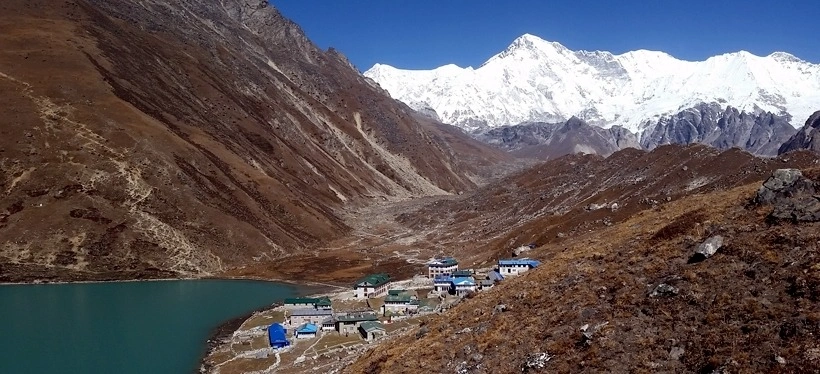
Trekking conditions in the Everest region during September shift from monsoon-affected trails and irregular Lukla flights in the first half of the month to dry trails, clear flying weather, and thinning crowds in the second half. Trekkers who start after September 15 generally encounter noticeably better conditions than those who start in the first week.
How Busy Is the Everest Base Camp Trail in September?
September carries the lowest trekker volume of the entire autumn season, with the first two weeks in particular seeing near-empty trails and teahouses compared to the fully booked lodges of October and November. This shoulder-season quiet gives trekkers first choice of teahouse rooms, shorter waits for meals during peak dinner hours, and more one-on-one time with guides and porters. The trade-off is real: a small number of lodges above Dingboche reduce staffing or limit menu options until the October surge arrives, so confirming accommodation with a local operator rather than arriving unannounced is the safer approach in early September.
Are the Everest Trails Muddy or Slippery After the Monsoon?
Trail sections below Namche Bazaar, particularly between Lukla, Phakding, and Monjo, stay muddy and occasionally slippery through the first half of September, while trail conditions above 3,500 meters dry out faster because higher elevations receive less residual monsoon rainfall. Stone steps near river crossings hold moisture longest and present the highest slip risk on the entire lower route. By the very end of September, the lower trails begin to lose their monsoon moisture, shifting rapidly toward the dustier conditions that define October.
What Are the Flight Conditions to Lukla in September?
Lukla flights in September depart from Kathmandu's domestic terminal for most of the month, switching to Ramechhap's Manthali Airport once the Civil Aviation Authority of Nepal's peak-season protocol begins, which often takes effect in late September or October 1st to manage autumn traffic. This is a genuine planning advantage: trekkers who start their trek before September 25 skip the 4- to 5-hour pre-dawn drive to Ramechhap that every October and November trekker must make, and instead fly the short 30- to 35-minute Kathmandu-to-Lukla route directly. Flight delays remain possible throughout September due to cloud buildup, particularly in the first two weeks, though cancellation rates run lower than during the height of monsoon in July and August.
How Should You Prepare for Possible Flight Delays?
Build a minimum two-day buffer into both ends of an Everest Base Camp trek itinerary in September to absorb Lukla flight delays without missing an international departure. Morning flights between 6 a.m. and 9 a.m. depart most reliably, since cloud cover typically builds through the day; booking the earliest available slot materially reduces delay risk. Carry a printed and digital copy of your permits and keep essential medication, one change of clothes, and phone chargers in your daypack rather than checked baggage, since delayed trekkers sometimes wait a full day at the airport before a flight opens. For the latest on Ramechhap diversions and seasonal scheduling shifts, check our update on the Lukla flight changes this season.
What Should You Pack for the Everest Base Camp Trek in September?
Everest Base Camp packing for September requires a layering system built around three temperature zones: warm and humid below Namche Bazaar, mild and variable through the mid-route villages, and cold with sharp day-to-night swings from Dingboche upward. The single biggest packing mistake among September trekkers is under-packing insulation because daytime temperatures at lower elevation feel deceptively warm.
What Trekking Clothes Are Suitable on Everest Trail for September?
A three-layer clothing system, a moisture-wicking base layer, an insulating mid layer such as fleece or light down, and a waterproof-breathable outer shell, covers the full temperature range encountered on the September route. Below Namche Bazaar, a light long-sleeve shirt and trekking trousers handle most daytime conditions. Above Dingboche, add a down jacket rated for temperatures at or below -10°C and thermal base layers for camp evenings, since indoor teahouse temperatures above 4,000 meters commonly sit near freezing after sunset.
Do You Need Rain Gear for Everest Base Camp in September?
Rain gear is essential for the first half of September and recommended as a precaution through the second half, since afternoon showers remain possible even after the monsoon officially retreats. A waterproof jacket, a pack cover or dry bag liner, and gaiters to keep mud off lower trouser legs address the trail's wettest sections between Lukla and Namche Bazaar. Trekkers starting after September 20 can pack lighter rain protection but should still carry a compact shell, since isolated afternoon showers occur even in stable weather windows.
What Footwear Works Best on the Everest Trail?
Waterproof, ankle-supporting trekking boots with an aggressive tread outsole perform best on the mixed mud, stone, and loose scree conditions found on the September trail. Boots should be broken in for a minimum of 80 to 100 kilometers before departure to prevent blisters on multi-day ascents. Gaiters extend boot life and keep debris out on the muddy lower sections, while a lightweight pair of camp shoes or sandals gives feet a break at teahouses each evening.
What Essential Documents and Gear Should You Carry for Everest Base Camp?
Every trekker needs a passport with at least six months' validity, passport-sized photographs, the Sagarmatha National Park entry permit, and the Khumbu Pasang Lhamu Rural Municipality permit, alongside comprehensive travel insurance covering high-altitude evacuation above 5,000 meters. While a nationwide guide mandate was proposed in 2023, the local Khumbu Pasang Lhamu Rural Municipality explicitly permits solo, unguided trekking on the Everest Base Camp trail, provided you have the required local permits. Beyond documents, carry a headlamp, a four-season sleeping bag rated to at least -15°C, water purification tablets or a filter, sun protection rated for high-altitude UV exposure, and a basic first-aid kit including altitude sickness medication prescribed before departure.
Sagarmatha National Park, the protected area covering the entire upper section of this route, was established in 1976 and inscribed as a UNESCO World Heritage Site in 1979, according to the UNESCO World Heritage Centre. It spans approximately 1,148 square kilometers (124,400 hectares) with an elevation range of 6,000 meters up to Mount Everest's summit, and is home to rare species such as the snow leopard and red panda. A park ranger checks permits at the Monjo checkpoint, so keep both permits accessible rather than packed at the bottom of your bag. A basic altimeter watch or a phone with an offline GPS altitude app is a practical, low-cost measurement tool for tracking daily elevation gain against the recommended 300- to 500-meter limit above 3,000 meters. For a full item-by-item rundown, from base layers to documentation, see our complete Everest Base Camp equipment checklist.
How Should You Prepare for the Everest Base Camp Trek in September?
Preparing for the Everest Base Camp trek in September combines cardiovascular fitness training, altitude awareness, and a realistic acclimatization schedule, since the trek's core difficulty comes from sustained elevation gain rather than technical climbing skill. No mountaineering experience or technical gear is required; the challenge is endurance and altitude tolerance.
What Fitness Level Is Needed for the Everest Base Camp Trek?
The Everest Base Camp trek demands moderate-to-high cardiovascular fitness capable of sustaining 5 to 7 hours of walking daily across 10 to 12 consecutive trekking days, with daily elevation gains of 400 to 700 meters on ascent days. Trekkers preparing for a September departure benefit from 8 to 12 weeks of training that combines hiking with a loaded daypack, stair climbing, running, or cycling, and at least one multi-day practice hike carrying trek-weight gear. Leg strength matters less than sustained aerobic capacity; trekkers who train exclusively for strength and skip cardio consistently underperform on the trail's long uphill stretches.
How Can You Prepare for High Altitude?
Altitude preparation centers on a slow, staged ascent profile rather than any fitness routine, since cardiovascular conditioning does not prevent altitude sickness. The trek's built-in acclimatization days at Namche Bazaar and Dingboche follow the "climb high, sleep low" principle: trekkers hike to a higher elevation during the day and return to sleep at a lower one, which stimulates red blood cell production without exposing the body to a full night at the day's peak altitude. Staying hydrated, avoiding alcohol above 3,000 meters, and eating enough calories to offset the trek's high energy demand all support acclimatization directly.
What Should You Know About Altitude Sickness?
Acute Mountain Sickness (AMS) is the body's response to reduced oxygen availability above roughly 2,500 meters, presenting as headache, nausea, dizziness, and fatigue, and it is far from rare: a peer-reviewed study of 332 trekkers ascending to 5,300 meters in the Everest region found 73.5% developed some degree of AMS, with just over half experiencing moderate-to-severe symptoms. Mild AMS symptoms are common and manageable with rest, hydration, and a pause in ascent; symptoms that worsen or include confusion, difficulty walking, or breathlessness at rest signal High Altitude Cerebral Edema or High Altitude Pulmonary Edema, both of which require immediate descent. The Nepal Mountaineering Association and international wilderness medicine guidelines agree on one non-negotiable rule: never ascend further while experiencing worsening AMS symptoms. For a fuller breakdown of symptoms, causes, and prevention across Nepal's high routes, see our guide to altitude sickness in the Himalaya.
How Can You Stay Safe on Everest Base Camp During September Weather?
Safety on the September route depends on flexible daily timing, since afternoon cloud buildup and occasional showers make morning departures the safer default for every trekking segment. Check trail conditions with your guide each morning rather than following a fixed departure time, carry a headlamp for early starts, and treat river crossings and stone steps as the trail's highest slip-risk points during the first half of the month. Trekkers with a licensed guide gain a practical safety advantage here: guides track daily weather patterns and can adjust pacing or rest days in response to conditions, though experienced independent trekkers who prefer to go solo are legally allowed to do so.
How Much Does the Everest Base Camp Trek Cost in September?
A standard 12- to 14-day guided Everest Base Camp trek in September costs between USD 1,200 and USD 2,500 per person for most trekkers booking through a licensed Nepali operator, with luxury or fully customized packages reaching USD 3,000 to USD 5,000. September's shoulder-season status means guide, porter, and teahouse availability come at standard rates, without the premium pricing that appears once October's peak season begins.
What Does an Everest Base Camp Trek Package Include?
A standard Everest Base Camp package typically includes round-trip Lukla flights, a licensed English-speaking guide, porter service, teahouse accommodation, three daily meals on the trail, all required permits, and airport transfers in Kathmandu. Guide fees generally run USD 25 to USD 35 per day and porter fees USD 20 to USD 25 per day when booked independently, though bundled packages fold these costs into a single per-person price. Most reputable operators also include a Kathmandu hotel night before and after the trek.
What Additional Costs Should You Budget For Everest Base Camp?
Beyond the core package price, trekkers should budget USD 100 to USD 250 for travel insurance covering high-altitude evacuation, USD 150 to USD 250 for total tips to guides and porters, and USD 100 to USD 200 for personal trail expenses such as hot showers, Wi-Fi, device charging, and snacks. These incidental costs rise with altitude: a hot shower that costs USD 2 to USD 3 in Namche Bazaar can cost USD 8 to USD 10 near Gorak Shep, since fuel and supplies must be carried in by porter or yak from lower villages.
Is Trekking Everest Base Camp in September More Expensive Than Other Trekking Seasons?
September generally costs the same as or slightly less than October and November for identical services, since flight and teahouse rates only rise once the Ramechhap flight diversion and peak crowds begin in late September. Trekkers booking flights and lodges for a September 5 to September 20 departure window typically pay standard-season rates across guide, porter, and accommodation fees, while trekkers arriving from late September onward compete for the same rooms and flight seats as the entire October surge, which pushes prices upward through supply and demand rather than any change in the underlying service.
How Can Nepal Intrepid Treks Help With the Everest Base Camp Trek?
Nepal Intrepid Treks is a Kathmandu-based trekking operator that arranges guided Everest Base Camp itineraries with licensed guides, porter support, permit processing, and airport-to-hotel logistics for both first-time and repeat trekkers. The company's local logistics team manages the practical details that make or break a September departure, Lukla flight bookings, teahouse reservations timed around the monsoon-to-autumn transition, and acclimatization schedules built around each group's fitness level.
Can Nepal Intrepid Treks Arrange a September Everest Base Camp Trek?
Nepal Intrepid Treks arranges Everest Base Camp treks year-round, including customized September departures timed to start after the first half of the month once trail conditions dry out and Lukla flights stabilize. The operator provides airport pickup on arrival in Kathmandu, three-star hotel accommodation before and after the trek, licensed guides, and porter support at a ratio designed to keep loads manageable for trekkers. Guides and ground staff bring direct, on-trail experience with September's specific weather pattern, which supports realistic day-by-day planning rather than a generic itinerary copied across every season.
For trekkers still deciding between an early-September or late-September start, the practical next step is a direct conversation with a local operator who can confirm current Lukla flight schedules, teahouse availability, and trail conditions closer to your travel date. Trekkers planning a September departure can request a customized Everest Base Camp trek package and permit arrangement directly through Nepal Intrepid Treks' team, who can also advise on combining the standard Everest Base Camp route with extensions such as Gokyo Lakes or the Chola Pass for trekkers with extra days to spare.
What Are the Key Takeaways About the Everest Base Camp Trek in September?
The Everest Base Camp Trek in September rewards trekkers who target the back half of the month: dry trails, direct Kathmandu-to-Lukla flights, quiet teahouses, and clearing mountain views arrive together after roughly September 15 to 20. Daytime temperatures stay manageable across the route, from 15°C to 20°C at Lukla down to single digits at Everest Base Camp, while nighttime cold from Dingboche upward demands genuine cold-weather gear regardless of daytime comfort. The 12- to 14-day standard itinerary and two mandatory acclimatization days remain constant no matter when in September you depart. Trekkers who plan around September's early-month monsoon tail rather than around the month as a single block get the clearest, quietest, and often most affordable version of the Everest Base Camp experience available all year.