The Annapurna Base Camp Trek in Winter is a Himalayan trekking adventure that takes you through snow-covered trails, traditional Gurung villages, frosted forests, and the spectacular Annapurna Sanctuary at 4,130 m (13,550 ft). Running from December to February, this winter trek offers clear views of Annapurna I, Machhapuchhre, Annapurna South, and surrounding Himalayan peaks, along with quieter teahouses and challenging alpine conditions.
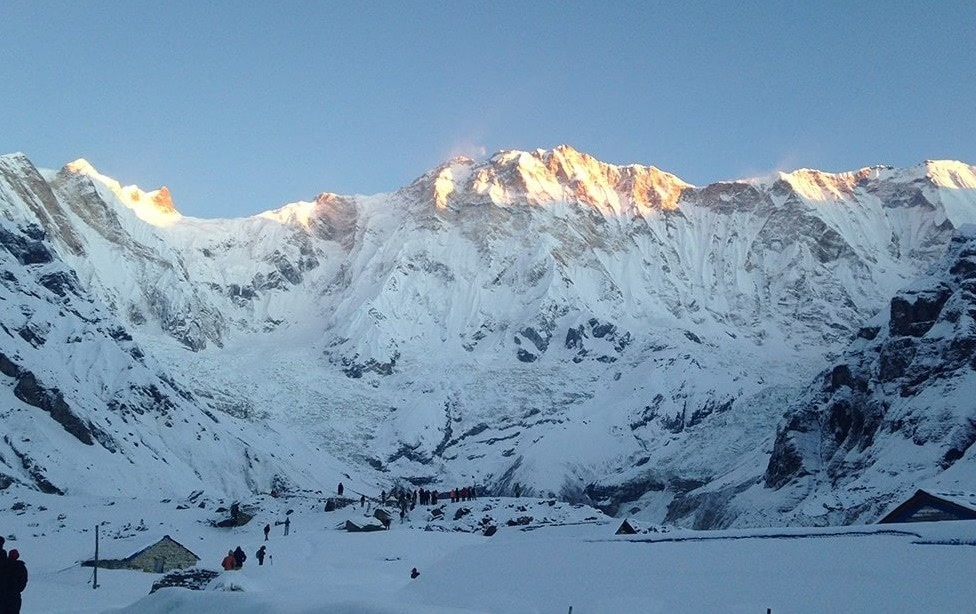
Planning a successful winter trek requires understanding seasonal weather, snowfall, trail accessibility, altitude acclimatization, and avalanche-prone sections between Hinku Cave, Deurali, and Machhapuchhre Base Camp. Explore the best trekking months, detailed itinerary, daily elevation gains, winter packing essentials, safety precautions, ACAP and TIMS permits, travel insurance, and 2026/27 trekking costs to prepare for a safe and rewarding Annapurna Base Camp journey with Nepal Intrepid Treks.
What Makes the Annapurna Base Camp Trek in Winter Unique?
The winter Annapurna Base Camp trek is unique because snow covers the upper sanctuary, the air stays dry and clear, the trail carries far fewer trekkers, and the cold turns a standard teahouse route into a real alpine journey.
Nepal's winter runs from December to February. Three conditions separate it from autumn and spring on the same trail: dryness, quiet, and severity.
Dryness comes first. The monsoon ended months earlier, so the haze that softens October views is gone and the leeches have vanished from the lower forest. Quiet comes second. Autumn fills the lodges at Machhapuchhre Base Camp (MBC) and Annapurna Base Camp (ABC), and operators book beds weeks ahead. Winter gives you the dining-room stove, your pick of table, and long evenings with the family that runs the lodge.
Severity comes third. At 4,130 m the sanctuary behaves like a cold alpine basin, not a village walk. Winter guides read snow, wind, and oximeter numbers every single day.
In our experience, trekkers who choose winter for solitude and clarity finish happy. Trekkers who choose it as a cheaper copy of autumn finish surprised. The real trade is comfort for clarity.
Why Is Winter a Special Time to Visit Annapurna Base Camp?
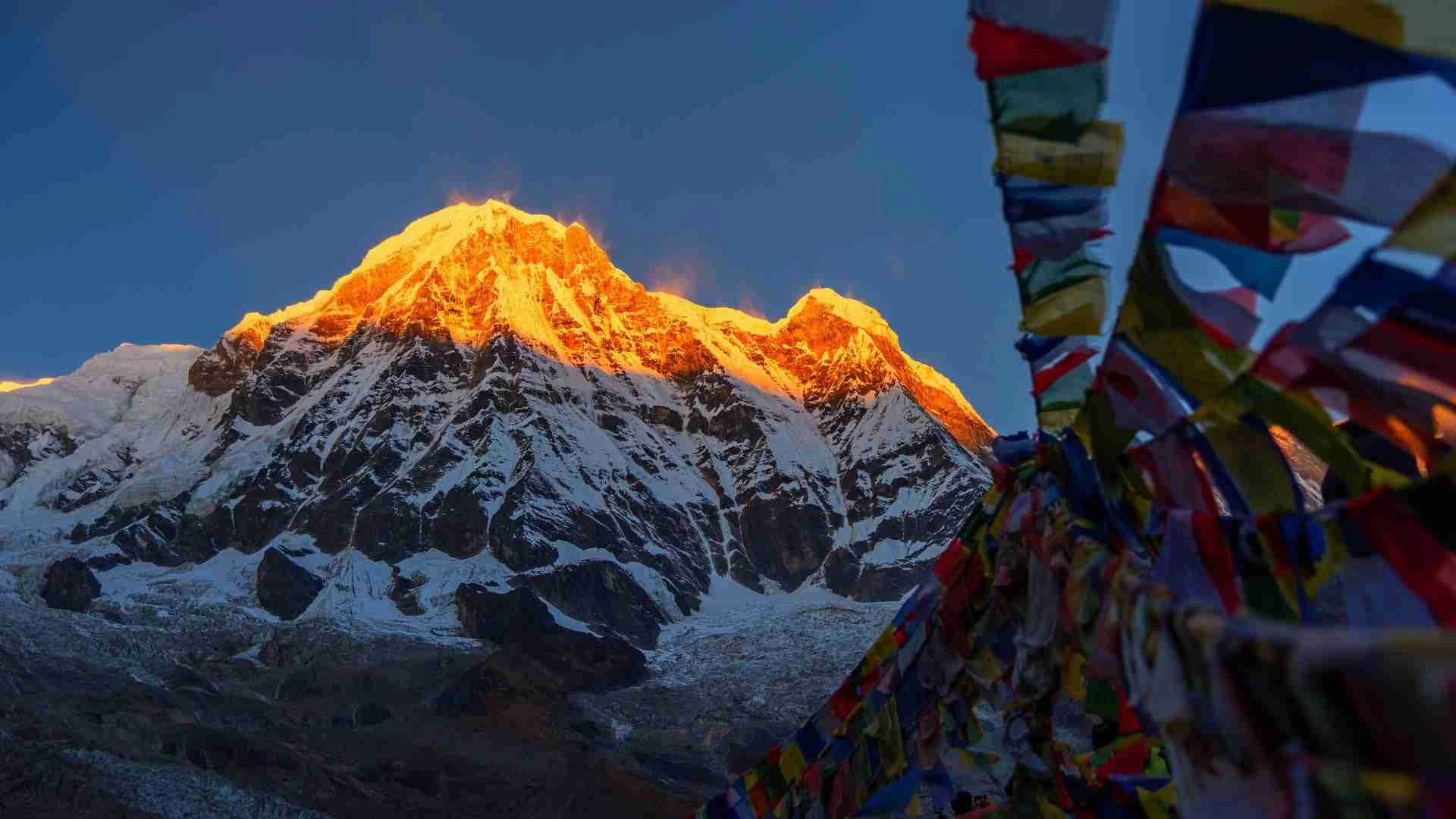
Winter is special at Annapurna Base Camp because dry, cold air gives the sharpest visibility of the year, low-angle sun lights the sanctuary walls for hours, and trail traffic drops to a fraction of autumn levels.
Winter weather in the central Himalaya comes from western disturbances, weak systems that deliver a snowfall and then several days of clear sky. Between storms the air holds almost no moisture. Summits look close enough to touch at 7:00 a.m.
Sun angle adds to the effect. At 28°N, the winter sun reaches about 38° above the horizon at noon. That low angle throws long shadows across the Annapurna South face and paints Hiunchuli orange at dusk. The same angle keeps the Modi Khola gorge in shade until mid-morning, which explains why the stone steps between Bamboo and Deurali stay icy long after sunrise.
Trail reports for 2026 describe February as the quietest month on the route. Lodges in Chhomrong and Jhinu run at a slow pace, and the family-run Gurung teahouses have time to talk. The Jhinu hot springs, at 1,780 m on the descent, feel better in January than in any other month.
What Are the Main Highlights of the Winter Annapurna Base Camp Trek?
The 7 main winter highlights are the Poon Hill sunrise, frosted rhododendron forest, Chhomrong's Machhapuchhre views, the snow-lined Modi Khola gorge, the white amphitheater at ABC, quiet Gurung villages, and the Jhinu hot springs.
The highlights read as follows:
Watch the sunrise from Poon Hill (3,210 m), where Dhaulagiri and the Annapurna massif turn orange in the cold air.
Walk through frosted rhododendron and bamboo forest between Chhomrong and Bamboo.
Study Machhapuchhre's twin summit from Chhomrong, one of the best fishtail angles on the route.
Follow the Modi Khola gorge above Deurali, where snow begins and the valley narrows.
Stand inside the Annapurna Sanctuary, a glacial basin ringed by peaks above 6,400 m.
Sleep in family-run teahouses with wood-stove dining rooms.
Soak in the Jhinu hot springs after the long descent.
The order matters. Poon Hill delivers the wide panorama on Day 3, the sanctuary delivers the close-up on Day 7, and Jhinu rewards the legs on Day 9.
What Views of the Annapurna Range Can You Expect in Winter?
Winter views include 7 major peaks: Dhaulagiri I (8,167 m), Annapurna I (8,091 m), Annapurna III (7,555 m), Gangapurna (7,455 m), Annapurna South (7,219 m), Machhapuchhre (6,993 m), and Hiunchuli (6,441 m). Mornings give the clearest visibility.
The following table lists each peak, its height, and the winter vantage point where it appears best.
Peak | Height | Best winter viewpoint |
Dhaulagiri I | 8,167 m | Poon Hill at sunrise |
Annapurna I | 8,091 m | Poon Hill, then the ABC basin |
Annapurna III | 7,555 m | ABC |
Gangapurna | 7,455 m | ABC and Tadapani |
Annapurna South | 7,219 m | Chhomrong and ABC |
Machhapuchhre (Fishtail) | 6,993 m | Chhomrong and MBC |
Hiunchuli | 6,441 m | Chhomrong, Tadapani, and ABC |
Winter views follow a daily rhythm. Skies are clearest from sunrise to about 10:00 a.m., then cloud builds in the valleys by early afternoon. Plan the Poon Hill climb for 5:15 a.m. from Ghorepani. The ascent covers about 330 m in 45 to 60 minutes, and sunrise arrives near 7:00 a.m. At ABC, the summits light up long before the sun reaches the lodges, so the first hour is cold and spectacular at once.
When Is the Best Time to Do the Annapurna Base Camp Trek in Winter?
The best winter window is early to mid-December, when trails are stable, skies are clear, and snow stays light. January is the coldest and most demanding month, and February brings longer days with continued snow and avalanche hazard.
Winter is not one season on this trail. December behaves like late autumn, January behaves like deep winter, and February behaves like a slow handover to spring. Each month rewards a different type of trekker.
Is December a Good Month for the Annapurna Base Camp Trek?
December is a good month for the Annapurna Base Camp trek, especially from December 1 to 15. Daytime temperatures at ABC sit near 0°C to 5°C, nights drop to -8°C to -15°C, and skies stay mostly clear.
Early December is the gentlest entry into winter trekking. Snow on the upper trail is usually light, the lower villages still hold autumn warmth at midday, and the trail has fewer trekkers than November. Trail reports for 2026 also single out early December as the safest point to attempt ABC before deep winter sets in.
Two cautions apply. Daylight shrinks to about 10 hours 20 minutes at the solstice on December 21, with sunrise near 7:00 a.m. and sunset near 5:20 p.m. in Pokhara. The Christmas and New Year week also pulls in more trekkers, and lodges above Chhomrong keep fewer rooms open, so book early for that week.
What Is the Annapurna Base Camp Trek Like in January?
The Annapurna Base Camp trek in January is cold, quiet, and demanding. ABC daytime temperatures run -10°C to 2°C, nights fall to -15°C or lower, and snow covers the trail from Deurali upward.
January is the coldest month on the route. Trail reports describe MBC nights between -8°C and -12°C, and sunrise at ABC often arrives with frost on every surface inside the lodge. Upper teahouses close when conditions turn unsafe, which makes flexibility more valuable than any piece of gear.
Operators disagree on whether January or February delivers the heaviest snow. One 2026 field report says snowfall has shifted toward February and March in recent years. Others still report January storms. Treat both months as snow months.
The Kathmandu Post recorded the sharpest warning for this month: on January 17, 2020, an avalanche between Hinku Cave and Deurali killed 4 South Korean trekkers and 3 Nepali guides after days of heavy snowfall. January suits trekkers who already own mountain experience and accept turn-around decisions.
Is February Suitable for Trekking to Annapurna Base Camp?
February is suitable for trekking to Annapurna Base Camp. Daylight grows by close to an hour compared with the December solstice, sunny spells lengthen, and trails stay quiet, but upper sections still hold snow, ice, and avalanche hazard.
February feels slightly easier than January. Nights at ABC still fall to -12°C to -18°C, and ice persists on the steps between Bamboo and Deurali. Longer sun hours dry the lower trail, though, and the first rhododendron buds appear below Ghorepani by month end.
Late February is still winter. Spring conditions are never guaranteed at the base camp, and one storm resets the upper trail to January. Trekkers who want a quiet teahouse and a mostly dry lower route pick February.
How Do Winter Weather Conditions Change Month by Month?
Weather changes month by month in 3 ways: nights get colder from December to January, daylight lengthens from January to February, and snow risk shifts from mid-winter storms to late-winter accumulation.
The following table compares the 3 winter months on the 6 factors that decide trip planning. All ranges are typical 2026 trail-report values, not forecasts.
Factor | December | January | February |
ABC night temperature | -8°C to -15°C | -15°C to -20°C | -12°C to -18°C |
ABC daytime temperature | 0°C to 5°C | -10°C to 2°C | -8°C to 4°C |
Snow above Deurali | Light to moderate | Moderate to heavy | Moderate, patchy ice |
Daylight (Pokhara) | 10 h 20 min | 10 h 30 min | 11 h 00 min |
Trail traffic | Moderate | Low | Lowest |
Best for | First winter trek | Experienced trekkers | Quiet trek, longer days |
Three patterns stand out. Night temperatures bottom out in mid-January. Daylight gains accelerate after February 1. Snow-related closures cluster in the 24 to 72 hours after each storm, in every month.
How Cold Does It Get on the Annapurna Base Camp Trek in Winter?
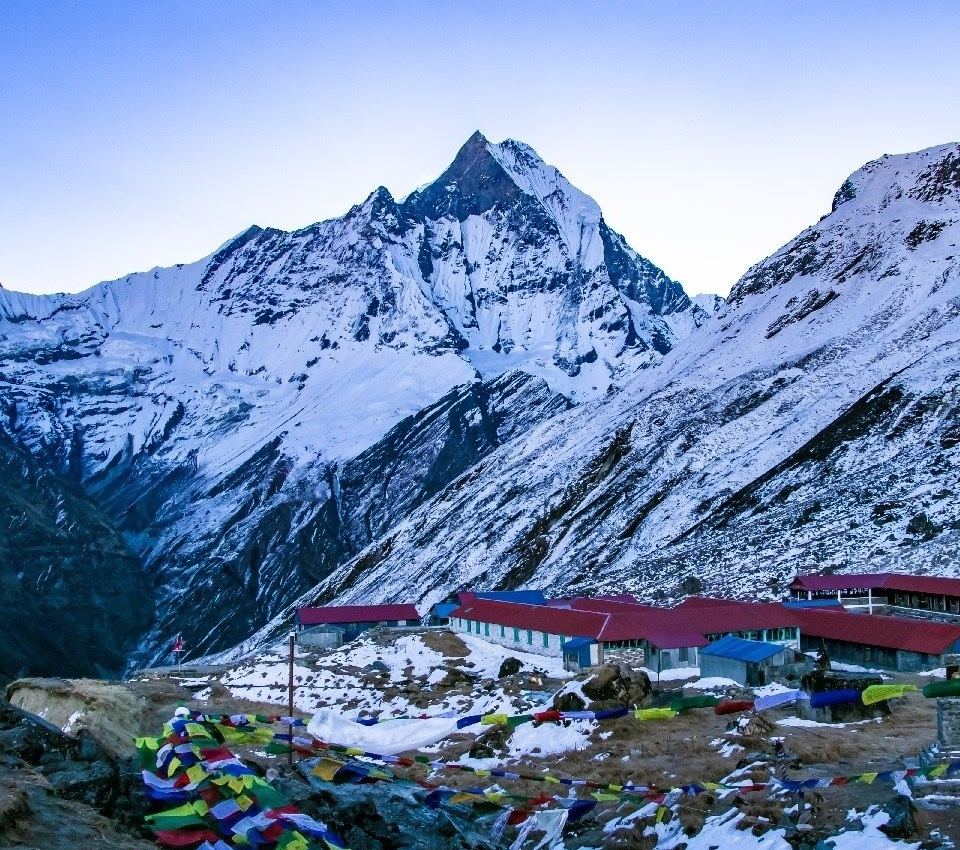
It gets as cold as -15°C to -20°C (5°F to -4°F) at night on the Annapurna Base Camp trek in winter, with daytime highs from 5°C to 10°C in the lower villages and -10°C to 2°C at base camp.
Altitude drives the numbers. The environmental lapse rate drops air temperature about 6.5°C per 1,000 m of climb. The route from Chhomrong (2,170 m) to ABC (4,130 m) climbs 1,960 m, which accounts for a drop of about 12.7°C before wind chill.
What Are the Daytime and Nighttime Temperatures Along the Annapurna Trail?
Winter daytime temperatures run 5°C to 10°C in the lower villages and fall to -10°C to 2°C at ABC. Night temperatures run -5°C to 0°C at Chhomrong and drop to -15°C to -20°C at base camp.
The following table lists typical winter temperatures at 7 stops, drawn from 2026 operator trail reports.
Stop | Elevation | Typical winter day | Typical winter night |
Pokhara | 822 m | 15°C to 21°C | 7°C to 9°C |
Chhomrong | 2,170 m | 5°C to 10°C | -5°C to 0°C |
Ghorepani | 2,880 m | 5°C to 9°C | -2°C to -5°C |
Bamboo | 2,317 m | 4°C to 9°C | -3°C to 0°C |
Deurali | 3,200 m | -2°C to 5°C | -10°C to -15°C |
MBC | 3,700 m | -5°C to 2°C | -8°C to -12°C |
ABC | 4,130 m | -10°C to 2°C | -15°C to -20°C |
Deurali holds one surprise. Winter guides report that Deurali feels colder than ABC at night even though it sits 930 m lower. Cold air sinks into the narrow Modi Khola gorge and pools there. Pack the warmest sleeping layers for Day 6, not only Day 7.
Wind adds more than the thermometer shows. A 20 km/h breeze at -10°C feels like roughly -17°C on exposed skin. Sunglasses, a buff, and a hood matter at ABC for that reason.
How Much Snowfall Can You Expect at Annapurna Base Camp?
Snow falls at Annapurna Base Camp in 2 to 3 distinct storms per winter, with ground snow from Deurali upward from December and lasting into March and April. Lower villages below Chhomrong stay mostly snow-free.
Snow cover thickens with altitude. Deurali (3,200 m) shows a thin crust or packed snow most of the winter. MBC (3,700 m) and ABC (4,130 m) hold continuous cover. Ghorepani and Poon Hill collect snow patches after storms, and Chhomrong sees snow only after the strongest systems.
The Annapurna Conservation Area Project (ACAP) and teahouse owners track snowfall day by day. Heavy snowfall sometimes triggers a temporary restriction above MBC. Chhomrong's lodges and the ACAP checkpost give the most reliable status report before the final push.
How Do Winter Weather Conditions Affect ABC Trekking Routes?
Winter weather affects ABC trekking routes in 5 ways: iced stone steps, shorter walking days, frozen water pipes, teahouse closures at the top, and flight delays between Kathmandu and Pokhara.
Each effect changes a daily decision:
Iced steps. The shaded Modi Khola gorge between Bamboo and Deurali stays frozen until late morning. Microspikes turn a 40-minute slide into a steady walk.
Short days. Ten hours of light means a 7:00 a.m. start and arrival by 3:30 p.m. The temperature drops fast once the sun leaves the valley.
Frozen plumbing. Taps freeze overnight at altitude. Hot water costs extra, and bottled or boiled water replaces tap water.
Closed lodges. A few ABC and MBC lodges shut during storms, which makes pre-booked beds essential.
Flight risk. Winter fog in Kathmandu delays domestic flights.
Winter does remove one hazard: the monsoon landslides that block the Pokhara road in July and August do not occur.
What Are the Risks of Avalanches and Snowstorms During Annapurna Base Camp Trek?
Avalanche risk on the ABC trek concentrates in 2 stretches: Hinku Cave to Deurali, and MBC to ABC. Snowstorms add whiteout, hypothermia, and trail-blockage risk, and the 24 to 72 hours after heavy snowfall carry the highest hazard.
Both stretches cross steep slopes that funnel snow into the valley floor. Past incidents show the pattern. On January 17, 2020, an avalanche near Hinku Cave and Deurali killed 7 people. On March 24, 2025, according to the Kathmandu Post, an avalanche near Deurali swept away a 28-year-old Chinese trekker returning from ABC. Searchers found his body on April 5, 2025, near the Modi Khola.
Avalanche incidents on this route are rare, and they cluster in these 2 zones. The 5 rules our guides apply every winter are:
Wait 24 to 48 hours after heavy snowfall before crossing the zone.
Cross the Hinku and Deurali stretch in the morning, one trekker at a time, with 50 m spacing.
Skip the zone entirely when the guide or ACAP checkpost reports fresh snow loading.
Set a 2:00 p.m. turn-around time for the ABC summit day.
Carry a headlamp, spare layer, and snacks on every walking day, even short ones.
The guide holds the final call. Trekkers who argue with a turn-around decision put the whole group at risk.
Is the Annapurna Base Camp Trek Difficult in Winter?
The Annapurna Base Camp trek in winter is moderate to challenging. The route covers the same 76 km as in other seasons, but cold, ice, short daylight, and thin air above 3,200 m raise the effort. Fit beginners finish it with a licensed guide and a flexible schedule.
The trail itself stays technical-free: no ropes, no crampons, no glacier crossing. Difficulty comes from stacking: stone staircases, 5 to 7 hours of walking, cold nights, and 930 m of sleeping-altitude gain on the 2 biggest days.
How Challenging Is the Winter Annapurna Base Camp Trek Compared to Other Seasons?
Winter is more challenging than autumn or spring on 6 measures: colder nights, shorter days, icier steps, higher avalanche exposure, fewer open lodges, and less margin for delay. Views and solitude improve in return.
The following table compares winter with the autumn and spring peak seasons.
Factor | Autumn and spring | Winter |
ABC night temperature | -5°C to -10°C | -15°C to -20°C |
Daylight | 11 to 12.5 hours | About 10 to 11 hours |
Trail surface above Deurali | Dry stone, some snow | Snow, ice, packed trail |
Avalanche exposure | Low to moderate | Moderate to high in 2 zones |
Lodge availability | Full, book weeks ahead | Open, a few close in storms |
Crowds | Highest | Lowest |
Delay tolerance | High | Low, add 1 buffer day |
The effort gap is real but manageable. A trekker who handles October comfortably adds about 1 gear layer per 5°C of extra cold, 1 buffer day, and microspikes. The physical fitness requirement barely changes. The decision-making requirement changes a lot.
How Many Days Are Needed to Complete the Winter Annapurna Base Camp Trek?
The winter Annapurna Base Camp trek needs 12 days from Kathmandu to Kathmandu, with 8 walking days. Winter trekkers add 1 buffer day for weather and flight delays, which makes a 13-day plan the safest choice.
Nepal Intrepid Treks' standard itinerary runs 12 days: arrival in Kathmandu, flight to Pokhara, 8 trekking days from Banthati to ABC and out through Jhinu, a flight back, and a leisure day. The plan has no spare day in the mountains. Winter changes that math, since one storm at Deurali consumes a day immediately.
Other options exist for different goals. The 10-day Annapurna Sunrise Trek stays below 3,300 m, which suits trekkers who want snow views without avalanche zones. The 13-day Luxury Annapurna Base Camp Trek adds comfort and slack. Private-date departures allow a tailored schedule, so a buffer day or an MBC overnight fits in without extra paperwork.
What Is the Daily Walking Distance and Altitude Gain of Annapurna Base Camp Trek?
The 12-day itinerary covers about 76 km over 8 walking days, averaging 9.5 km per day. The 2 biggest sleeping-altitude gains are Bamboo to Deurali (+883 m) and Deurali to ABC (+930 m).
The following table shows each day of the standard itinerary with distance, walking time, and the elevation where you sleep.
Day | Route | Distance | Time | Sleeping elevation | Change |
2 | Pokhara to Banthati, trek to Ghorepani | 6.3 km | 3 to 4 h walk | 2,880 m | n/a |
3 | Poon Hill, then Tadapani | 11.1 km | 5 to 6 h | 2,630 m | -250 m |
4 | Tadapani to Chhomrong | 8.6 km | 5 h | 2,170 m | -460 m |
5 | Chhomrong to Bamboo | 7.6 km | 5 h | 2,317 m | +147 m |
6 | Bamboo to Deurali | 7.1 km | 5 h | 3,200 m | +883 m |
7 | Deurali to ABC | 9.3 km | 5 h | 4,130 m | +930 m |
8 | ABC to Bamboo | 16.4 km | 6 to 7 h | 2,317 m | -1,813 m |
9 | Bamboo to Jhinu, drive to Pokhara | 9.6 km | 5 h | 822 m | n/a |
Day 8 is the longest and hardest descent. It covers 16.4 km and drops 1,813 m, which punishes knees on icy steps. Trekking poles and microspikes carry the load here.
The CDC Yellow Book recommends climbing no more than 500 m per day in sleeping elevation once above 3,000 m. Day 7 strictly exceeds this guideline with a 930 m jump. Slow acclimatizers split this climb with a night at MBC (3,700 m), which turns the single push into safer +500 m and +430 m days. Ask for that split on a private departure.
Can Beginners Complete the Annapurna Base Camp Trek in Winter?
Beginners can complete the Annapurna Base Camp trek in winter with 12 weeks of training, a licensed guide, a December or early February date, and the discipline to turn back when conditions change.
First-time trekkers finish this route every year. Four habits separate those who finish from those who do not:
Train 3 sessions per week for 12 weeks, with one 5 to 6 hour hike carrying 7 to 8 kg.
Climb stairs for 45 minutes twice a week to prepare the quadriceps for Chhomrong's thousands of stone steps.
Choose early December or February over January.
Accept the guide's turn-around call without argument.
Beginners also gain from medical preparation. See a travel doctor 6 to 8 weeks before departure and ask about acetazolamide for altitude prevention. Pre-existing heart, lung, or blood-pressure conditions need a clear medical opinion before booking.
What Is the Best Winter Route to Annapurna Base Camp?
The best winter route is the Poon Hill and Chhomrong approach: start at Banthati, climb to Ghorepani, cross Tadapani and Chhomrong, follow the Modi Khola to Deurali, reach ABC at 4,130 m, and descend through Bamboo and Jhinu.
Two features make this line the strongest winter option. First, the first 2 sleeping elevations (2,880 m and 2,630 m) are low, so the body adapts before the sanctuary. Second, Poon Hill puts a full Himalayan panorama on Day 3, before any weather risk enters the plan. If a storm closes the upper trail later, you still have the sunrise and the Gurung villages.
Roadheads change the first day. The Banthati start used by Nepal Intrepid Treks shortens Day 2 to 6.3 km of walking and reaches Ghorepani the same afternoon. The classic Nayapul start (1,070 m) adds a long climb past Ulleri before Ghorepani and costs a full extra day.
Where Does the Annapurna Base Camp Trek Start?
The Annapurna Base Camp trek starts at Banthati in the Nepal Intrepid Treks itinerary, reached by a 3-hour drive from Pokhara (822 m) after a 25-minute flight from Kathmandu (1,355 m). The classic alternative starts at Nayapul.
Both starts begin in Pokhara, the lakeside city that serves as the Annapurna gateway. Flights from Kathmandu cost about US$90 to US$130 one way in 2026. Winter fog in Kathmandu delays morning departures, so book the earliest slot and keep the day after arrival free.
Tourist buses cost US$10 to US$20 and take 6 to 8 hours. They cut the cost but remove the fog-delay risk only at the price of a longer day.
Which Villages and Scenic Stops Are Along the Winter Annapurna Base Camp Trek Route?
The winter route passes 10 stops: Banthati, Ghorepani, Poon Hill, Tadapani, Chhomrong, Bamboo, Himalaya, Deurali, MBC, and ABC, plus Jhinu on the descent. Each stop has a distinct winter role.
The following list gives each stop's elevation and its winter character.
Ghorepani (2,880 m): The Poon Hill base. Patches of snow and frozen puddles appear after storms.
Poon Hill (3,210 m): The 330 m pre-dawn climb needs a headlamp and microspikes on icy mornings.
Tadapani (2,630 m): A rhododendron forest stop with close Annapurna South and Gangapurna views.
Chhomrong (2,170 m): The last large village and the home of the ACAP checkpost. Check conditions here.
Bamboo (2,317 m): A forest settlement where the trail enters the Modi Khola gorge.
Himalaya (2,970 m): A cluster of lodges below Hinku Cave and the first avalanche stretch.
Deurali (3,200 m): The coldest night stop. Snow begins here.
MBC (3,700 m): The base for Machhapuchhre and the start of the second avalanche stretch.
ABC (4,130 m): The sanctuary basin with 360-degree peaks.
Jhinu (1,780 m): The hot-spring village on the return.
Between Bamboo and Deurali, the forest thins, the gorge tightens, and the snow line arrives. Most winter decisions happen on this stretch.
What Is the Highest Altitude Reached During the Annapurna Base Camp Trek?
The highest altitude on the Annapurna Base Camp trek is 4,130 m (13,550 ft) at ABC. Poon Hill reaches 3,210 m, and MBC sits at 3,700 m. ABC is also the highest sleeping point of the route.
For comparison, Everest Base Camp reaches 5,364 m and Thorong La on the Annapurna Circuit reaches 5,416 m. ABC sits more than 1,200 m lower than either. The lower number does not remove altitude risk. At 4,000 m, resting oxygen saturation of 80% to 90% is common, and a falling trend or new symptoms matter more than any single reading.
Are Winter ABC Trekking Routes Affected by Snow or Trail Closures?
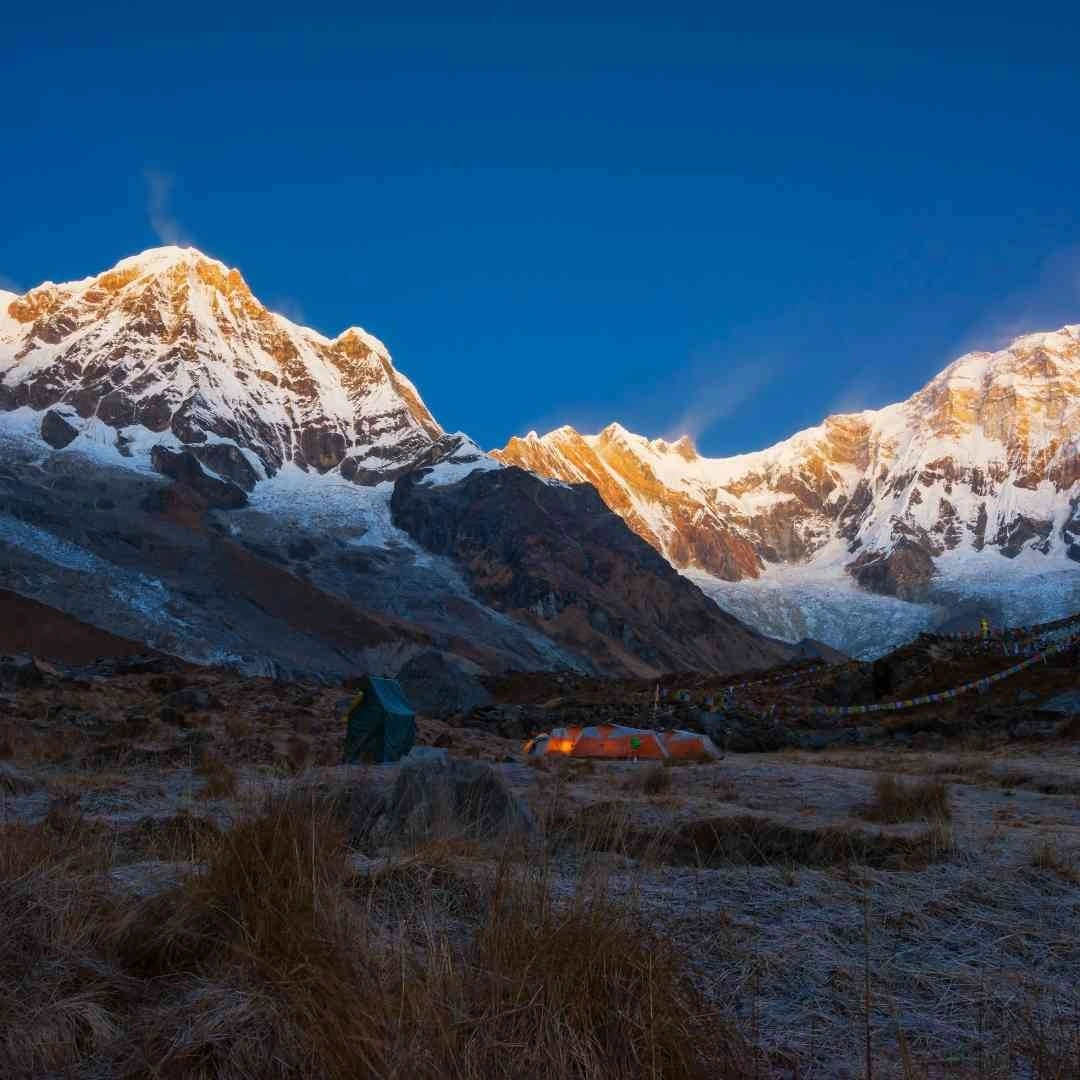
Winter ABC trekking routes face snow and occasional closures above MBC after heavy snowfall. Lower sections stay open all winter, and temporary closures usually last 1 to 3 days. Avalanche closures run longer.
ACAP sometimes restricts access above MBC after heavy snow. The longest recorded closure followed the January 17, 2020 avalanche. The Kathmandu Post reported trekkers returning to the trail by mid-February 2020, after officials cleared the damaged section.
When the upper trail closes, four fallback plans keep the trip valuable:
Wait one day at Himalaya or Deurali for conditions to settle.
Stay at MBC and view the sanctuary from below.
Return to Chhomrong and complete the Poon Hill and Jhinu loop.
Switch to the Annapurna Sunrise Trek or the Mardi Himal Trek, both of which keep to lower ground for the first days.
Closures are the reason a buffer day belongs in every winter plan.
What Should You Pack for the Annapurna Base Camp Trek in Winter?
Pack 5 insulation layers, insulated waterproof boots with microspikes, a sleeping bag rated to -15°C comfort, a 25 to 35 L daypack, and snow protection for eyes and skin. Porters carry one shared duffel for 2 trekkers, so keep personal gear near 10 kg.
Which Winter Trekking Clothes and Layers Are Essential?
Essential winter layers are a merino base layer, a fleece mid-layer, a down jacket, a waterproof shell, insulated gloves, a warm hat, and a buff. Cotton fails in winter because it holds sweat and strips body heat.
Build the system in 4 layers:
Base: 2 merino or synthetic tops and 1 thermal bottom.
Mid: 1 fleece or light synthetic jacket for walking.
Insulation: 1 down jacket for stops, dinner, and ABC mornings.
Shell: 1 waterproof and windproof jacket and 1 pair of shell trousers.
Add 2 pairs of gloves (a liner and an insulated mitt), a wool hat, a buff, and 4 pairs of merino socks. Keep 1 dry set of base layers for sleeping only. The most common winter mistake is wearing the walking base layer to bed: sweat dries cold overnight and drags core temperature down.
What Footwear and Snow Gear Do You Need?
Winter footwear and snow gear includes waterproof insulated trekking boots, gaiters, microspikes, trekking poles with snow baskets, and glare-rated sunglasses. Teahouse shoes or down booties keep feet warm at night.
Boots matter more than any other item. Pick a stiff-soled, waterproof, broken-in pair with room for a thick sock and a toe wiggle. Cold feet start with tight boots that restrict circulation.
Microspikes belong in every winter pack. They fit over regular boots and cover the icy steps from Bamboo to ABC. Full crampons are not required on the standard trail. Gaiters keep snow out of boot tops on the Deurali to ABC stretch.
At 4,000 m on snow, ultraviolet radiation runs high from above and from the ground. Wear category 3 or 4 sunglasses with side shields, and apply SPF 50 sunscreen and lip balm. Snow blindness appears within hours, not days.
Which Sleeping Bags and Personal Equipment Should You Bring?
Bring a sleeping bag rated to -15°C comfort, a bag liner, 2 insulated water bottles, a headlamp with spare lithium batteries, and a power bank. Nepal Intrepid Treks supplies a sleeping bag, down jacket, and duffel bag.
Teahouse bedrooms have no heating. The standard all-season floor is a -10°C comfort rating. Winter at MBC and ABC calls for -15°C, or the -10°C bag plus a liner and a hot-water bottle. Check the rating of any supplied bag before departure.
The remaining personal kit includes:
Hot-water bottle: A leak-proof 1 L bottle filled at dinner works as a heater inside the sleeping bag.
Water bottles: 2 wide-mouth 1 L bottles, stored upside down so the cap does not freeze first.
Headlamp: Lithium batteries outlast alkaline batteries in the cold.
Electronics: A power bank and phone stay inside the sleeping bag overnight. Cold drains batteries by half or more.
Medication and first aid: Blister kit, rehydration salts, painkillers, and personal prescriptions.
Cash: Nepali rupees, since no ATM operates above Chhomrong.
What Are the Permits and Safety Requirements for the Winter Annapurna Base Camp Trek?
Foreign trekkers need 2 permits for ABC, the ACAP at NPR 3,000 and a TIMS card at NPR 2,000 (for standard foreign trekkers), plus a licensed guide. An agency arranges both permits. Winter safety adds avalanche awareness, altitude monitoring, and insurance.
Permit costs stay constant across seasons, so winter does not change the fee schedule. Safety requirements do change in winter, because the margin for error narrows.
Which Permits Are Required for Annapurna Base Camp?
The required permits for Annapurna Base Camp are the Annapurna Conservation Area Permit (ACAP) at NPR 3,000 and the TIMS card at NPR 2,000 for standard foreign trekkers (NPR 1,000 for SAARC nationals). Together they cost about NPR 5,000, or US$35 to US$38.
The following table lists the 2026 permits and where each applies.
Permit | 2026 cost (foreign trekker) |
ACAP | NPR 3,000 (about US$22 to US$23) |
TIMS | NPR 2,000 (about US$15 for standard foreign trekkers) |
Passport photos | 2 copies |
Operators describe the TIMS rules differently in 2026, because the system moved to digital QR cards. Checkpoints at Nayapul and Chhomrong verify the ACAP first. An agency handles both and delivers the paperwork before the trek begins. Nepal Intrepid Treks includes both in its package price.
Is a Licensed Trekking Guide Necessary in Winter Annapurna Base Camp Trek?
A licensed trekking guide is necessary on the winter Annapurna Base Camp trek. The Nepal Tourism Board announced the guide rule on April 1, 2023, and winter conditions make a guide a practical safety requirement.
According to the Nepal Tourism Board, all foreign trekkers in national parks and conservation areas hire a licensed guide through a registered agency. Enforcement has varied by region. Several 2026 permit guides report that Annapurna checkpoints now verify the rule with increasing frequency.
The practical case is stronger than the legal one. In winter a guide reads avalanche conditions, breaks trail in snow, monitors oxygen saturation, and makes turn-around calls. A guide costs US$25 to US$35 per day in 2026, and a package covers the wage, food, and insurance.
How Can You Prevent Altitude Sickness and Hypothermia?
Prevent altitude sickness by climbing slowly, drinking 3 to 4 liters of water daily, and descending at the first warning sign. Prevent hypothermia by layering, changing wet clothing, eating often, and covering head, hands, and neck.
Altitude Sickness
Acute mountain sickness (AMS) is the body's reaction to thin air above 2,500 m. Symptoms include headache plus nausea, dizziness, fatigue, or poor sleep. The CDC Yellow Book sets the standard: above 3,000 m, raise sleeping elevation by no more than 500 m per day and add a rest day every 3 to 4 days.
Winter adds a trap. Cold suppresses thirst, so trekkers drink less and dehydrate faster. Set a rule of 3 to 4 liters daily, with warm tea and soup counting toward it. Skip alcohol and sleeping pills.
Pace is the biggest factor. According to a November 4, 2025 Nepalnews report, a solo trekker who went directly from Chhomrong (2,170 m) to MBC (3,700 m) in one day died of altitude sickness at MBC. The 1,530 m gain far exceeded any acclimatization guideline. A guide would have stopped the day at Himalaya or Deurali.
Know the 3 severity levels:
Mild AMS: Headache and nausea. Stop ascending, rest, drink, and recheck in 12 hours.
Severe AMS or HACE: Confusion, stumbling, or inability to walk a straight line. Descend immediately.
HAPE: Breathlessness at rest and a wet cough. Descend immediately and arrange evacuation.
Descent is the cure. A pulse oximeter helps the guide track trends, though symptoms outrank numbers.
Hypothermia and Frostbite
Hypothermia starts below 35°C core temperature. Early signs are shivering, clumsy hands, and slurred speech. The Wilderness Medical Society describes the "umbles": stumbles, mumbles, fumbles, and grumbles. Shivering that stops in a cold person signals an emergency.
Prevent it with food and layers. Eat before you feel hungry, add the down jacket at every stop, and change damp socks and gloves immediately. Warm the person with dry clothing, a hot-water bottle at the chest, and sweet warm drinks.
Frostbite attacks fingers, toes, nose, and ears. White, waxy, numb skin is the warning. Warm the area gently and never rub it. Gloves rated for -15°C and a buff over the face handle the ABC wind.
What Travel Insurance Coverage Do Winter Trekkers Need?
Winter trekkers need travel insurance that covers trekking to 4,500 m, emergency helicopter evacuation, medical treatment, and trip delay. The policy must carry no winter, snow, or avalanche exclusion.
Nepal Intrepid Treks does not include insurance in the package, so every trekker buys a policy independently. Verify 5 clauses before purchase:
Confirm the altitude limit reaches at least 4,500 m, since many standard policies stop at 3,000 m or 4,000 m.
Check that helicopter evacuation and search-and-rescue are covered.
Verify that "trekking" is not excluded as an adventure activity.
Look for trip-delay and missed-flight cover, because winter fog delays flights.
Save the 24-hour assistance number in your phone and your guide's phone.
Helicopters in Nepal fly after the insurer or the trekker guarantees payment, so a valid policy shortens a rescue.
What Does the Annapurna Base Camp Trek Cost in Winter?
A guided 12-day winter ABC trek costs US$765 to US$1,120 per person with Nepal Intrepid Treks, depending on group size. Guided ABC packages across Nepal run US$600 to US$1,300 in 2026, with private and luxury versions higher.
Permit costs, guide wages, and teahouse prices do not rise in winter. Cost differences come from group size, flights, gear, and any extra days.
How Much Does a Guided Winter Annapurna Base Camp Trek Cost?
A guided winter Annapurna Base Camp trek with Nepal Intrepid Treks costs US$920 per person for 2 to 4 trekkers and US$1,120 for 1 trekker. Prices fall to US$765 per person for 13 to 20 trekkers.
The following table shows the 2026 per-person price by group size for the 12-day package.
Group size | Price per person |
1 trekker | US$1,120 |
2 to 4 trekkers | US$920 |
5 to 8 trekkers | US$875 |
9 to 12 trekkers | US$815 |
13 to 20 trekkers | US$765 |
A US$230 single supplement applies when a solo traveler wants a solo departure and no group is available, so confirm the final total at booking.For comparison, the 10-day Annapurna Sunrise Trek starts at US$870, and the 13-day Luxury Annapurna Base Camp Trek starts at US$2,175. Across the 2026 market, guided group treks run about US$900 to US$1,300, private guided treks US$1,200 to US$1,800, and luxury versions US$1,800 to US$2,500 and up.
What Expenses Are Included in a Winter Annapurna Base Camp Trek Package?
A winter ABC package includes ground transport, flights between Kathmandu and Pokhara, hotels, trekking meals, teahouse lodging, permits, a licensed guide, porter support, and safety equipment. International flights, visa, and insurance stay separate.
The Nepal Intrepid Treks package covers these items:
Airport pickup and drop-off and all ground transport
3 nights in Kathmandu and 1 night in Pokhara in 3-star hotels with breakfast
Kathmandu to Pokhara and Pokhara to Kathmandu flights
Breakfast, lunch, and dinner on trek, plus tea and seasonal fruit
Twin-sharing teahouse lodging
TIMS and ACAP permits
An English-speaking guide, with 1 porter for every 2 trekkers
A first-aid kit and a pulse oximeter
A sleeping bag, down jacket, duffel bag, trekking map, and T-shirt
A trip achievement certificate and government taxes
Trekkers pay separately for the Nepal visa, international flights, travel insurance, lunch and dinner in Kathmandu and Pokhara, drinks, personal gear such as trekking poles, phone and laundry charges, tips, and costs from events outside operator control such as landslides, rescue, or flight cancellations.
How Can You Reduce ABC Trekking Costs Without Compromising Safety?
Reduce ABC trekking costs by joining a larger group, renting gear in Kathmandu or Pokhara, filtering your own water, and choosing a tourist bus over a flight. Never cut the guide, insurance, sleeping bag rating, or buffer day.
Five savings work in winter:
Join a group. Moving from 2 trekkers to 5 trekkers drops the price by US$45 per person.
Rent heavy gear. Renting a down jacket and sleeping bag beats buying for a single trip, and the Nepal Intrepid package already supplies both.
Filter water. Bottled water rises in price with altitude, and a filter or purification tablets remove the cost.
Take the bus. A US$10 to US$20 tourist bus replaces a US$90 to US$130 flight when your schedule allows an extra half day.
Book early. Early booking secures rooms in Christmas and New Year week.
Four items never earn a discount. A licensed guide, valid insurance, a properly rated sleeping bag, and one buffer day all cost less than a bad night at 4,000 m. A buffer day costs lodging (US$5 to US$15), meals (US$20 to US$35), and a day of guide and porter wages. Helicopter charters to ABC list at US$500 to US$1,500 per person in 2026.
How Can Nepal Intrepid Treks Make Your Annapurna Base Camp Winter Trek Safer and Easier?
Nepal Intrepid Treks makes the winter ABC trek safer and easier with a licensed English-speaking guide, 1 porter per 2 trekkers, a pulse oximeter, a first-aid kit, supplied sleeping bag and down jacket, permit handling, and private-date flexibility for buffer days.
Nepal Intrepid Treks run the 12-day Annapurna Base Camp Trek from Kathmandu, and we plan winter departures around four safety layers: guide-led daily conditions checks, oximeter readings at each stop, shared porter support that keeps your daypack light, and a schedule that bends when snow arrives.
Our team handles permits, flights, hotels, and teahouse bookings, so your energy goes to the trail. Private dates let us build in a buffer day or split the Deurali to ABC climb with a night at MBC. A November 2025 TripAdvisor review from a US couple credits our planning team for clear, honest communication when weather looked uncertain. The company holds a 5.0 rating across 169 TripAdvisor reviews.
Can Nepal Intrepid Treks Arrange a Guided Annapurna Base Camp Winter Trek?
Yes, Nepal Intrepid Treks arranges guided Annapurna Base Camp winter treks as a 12-day itinerary from Kathmandu, bookable from 1 traveler on private dates. Check the Dates & Prices tab for group departures, or request a winter private date.
Plan your winter dates. Review the full itinerary, inclusions, and prices on the Annapurna Base Camp Trek page. Questions about December, January, or February conditions go to our team through Contact Us, or by WhatsApp at +977 9849009919. Our office sits in Nayabazar-16, Kathmandu.
What Are the Key Takeaways for Planning the Annapurna Base Camp Trek in Winter?
The key takeaways for planning the Annapurna Base Camp trek in winter are: pick early December or February, book a licensed guide, pack for -15°C to -20°C nights, add a buffer day, and buy insurance that covers 4,500 m.
Winter turns the Annapurna Base Camp trek into a quieter, colder, clearer version of the classic route. Plan it around these 10 points:
Choose the month. Early December is the gentlest, January is the coldest, and February is the quietest.
Expect the cold. ABC nights reach -15°C to -20°C (5°F to -4°F), and Deurali feels colder than the base camp.
Respect 2 avalanche zones. Hinku Cave to Deurali and MBC to ABC close after heavy snowfall, and the 24 to 72 hours after a storm carry the highest hazard.
Add a buffer day. A 13-day plan absorbs storms and fog-delayed flights.
Split the climb. Days 6 and 7 gain 883 m and 930 m, so a night at MBC protects slow acclimatizers.
Pack for winter. Bring layers, a -15°C sleeping bag setup, insulated boots, and microspikes.
Carry the paperwork. ACAP costs NPR 3,000, TIMS costs NPR 2,000, and a licensed guide is the rule.
Monitor health. Drink 3 to 4 liters daily, watch for AMS, and descend at the first serious symptom.
Insure properly. Cover trekking to 4,500 m and helicopter evacuation.
Budget realistically. A guided 12-day winter trek runs US$765 to US$1,120 per person with Nepal Intrepid Treks.
The Annapurna Base Camp trek in winter rewards preparation more than any other season on this route. Trekkers who respect the cold, the snow, and the turn-around rule reach the sanctuary on a clear morning, with the whole amphitheater to themselves.

